Climb 219 Spiral Steps At Twilight For A Stunning View From This Historic Florida Lighthouse
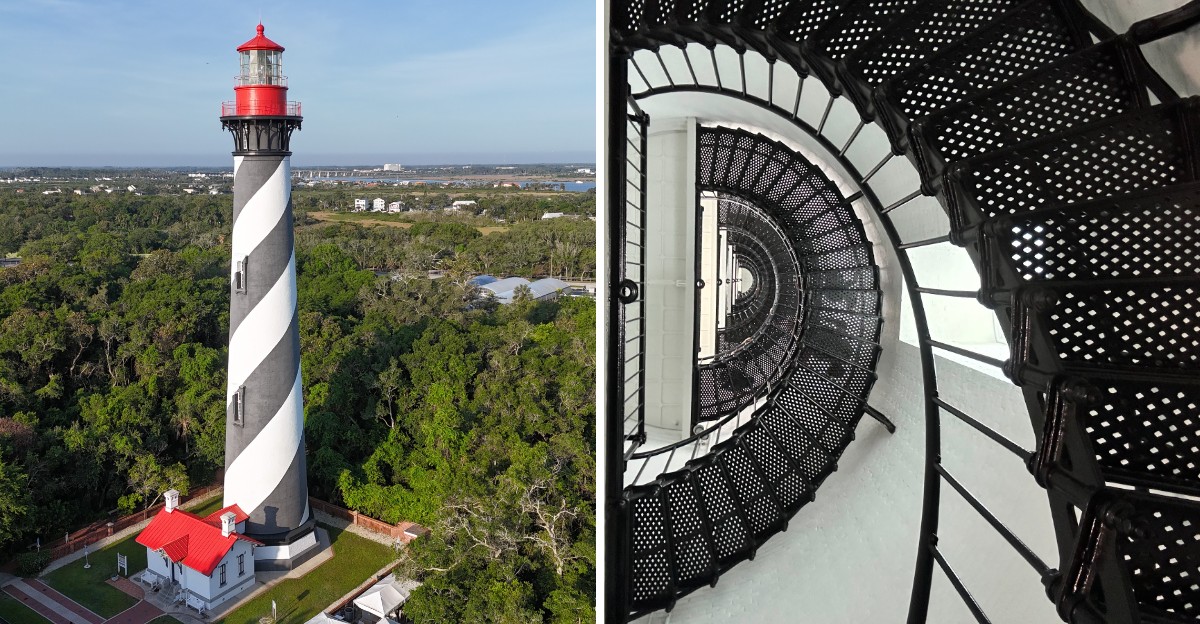
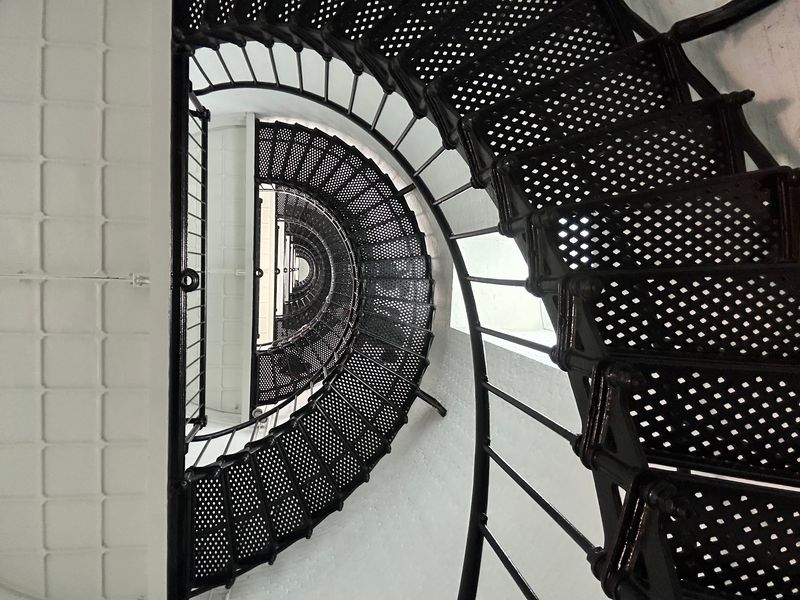
Two hundred nineteen steps stand between you and one of the best sunset views on the Atlantic coast. The tower wearing those steps is painted in bold black-and-white spirals, like a giant candy cane that got serious about its job.
It still works, too. The light at the top keeps shining over the water, just as it has since the 1870s. I love that you can climb a real, working lighthouse instead of a roped-off relic.
The twilight climbs make it even better. You head up while the sky starts to change color, then step outside at the top as the coast glows below. I can’t imagine a better reward for sore calves.
Florida has plenty of pretty views. How many of them come with ghost stories, a keeper’s house, and a shipyard full of boats?
Those 219 Steps Pay You Back In Sky
Every visit to the St. Augustine Lighthouse & Maritime Museum centers on one big climb. The tower holds 219 steps winding up to an outdoor gallery near the top.
That sounds like a lot, and honestly, it is. Your legs will notice by step 150 or so.
Good news, though. Landings along the way give you spots to stop, breathe, and pretend you’re just admiring the windows.
The tower stands about 165 feet tall. It was built between 1871 and 1874, so you’re climbing a staircase that’s older than the telephone.
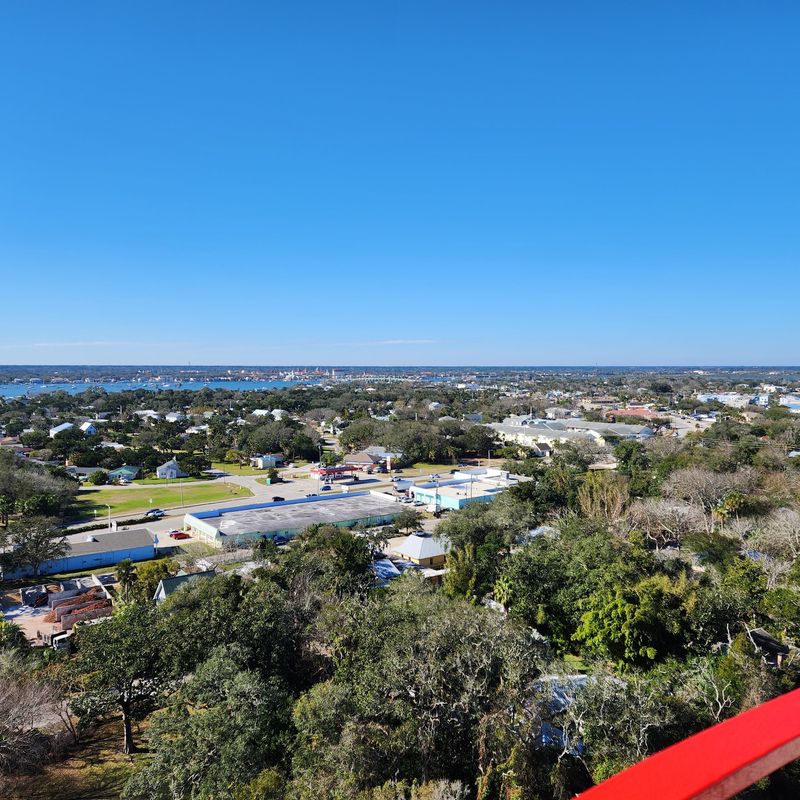
Once you reach the top, the viewing area is outside. The deck wraps around the tower and gives you a full 360-degree look at the region.
You’ll spot water, rooftops, trees, and the historic city across the bay. On a clear day, the coastline seems to stretch forever.
Heights not your thing? You might want to think twice before committing.
Comfortable shoes are a smart call for everyone else. Take it slow, enjoy the history panels, and save some energy for the trip back down. Gravity helps on the descent, but your knees still get a vote.
Sunset Changes Everything Up There
Daytime views are great. Twilight views are the kind you’ll still be talking about at dinner.
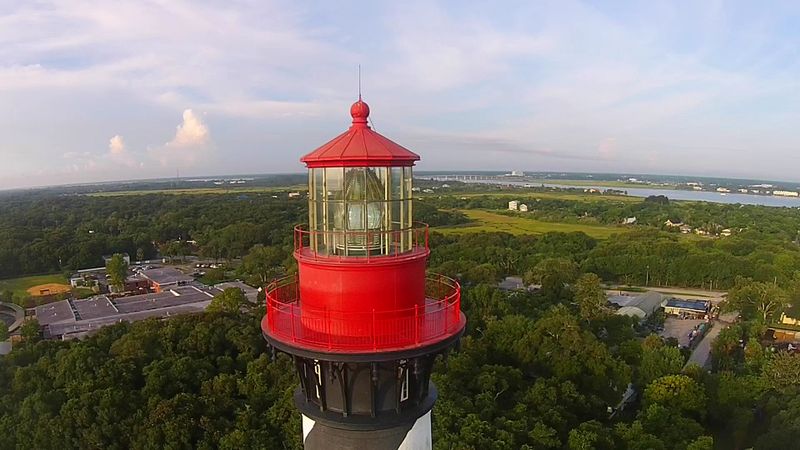
The lighthouse offers special evening climbs that let you reach the top as the day winds down. The sky shifts colors while the town below starts to light up.
Watching the coast fade from bright blue to soft gold is a real treat. Then the lights of St. Augustine start twinkling across the water.
Keep a few practical points in mind. The twilight experience works differently from the regular daytime visit, so it may not include every part of the grounds.
The keeper’s house, for example, may not be part of the evening package. If you want the full museum tour, plan a daytime stop too.
Evening tickets can sell out, so booking ahead is a wise move. Times shift with the seasons because sunsets do.
Bring bug spray, too. Florida evenings near the water can get buggy fast, and swatting mosquitoes on a narrow deck isn’t graceful.
A camera or phone with a full battery is a must. You’ll want proof that you made it up all those steps.
The Beacon Has Never Clocked Out
Plenty of old lighthouses are retired. This one still has a day job, or really, a night job.
The St. Augustine Lighthouse remains an active aid to navigation. Ships and boats along this stretch of the Florida coast can still spot its beam.
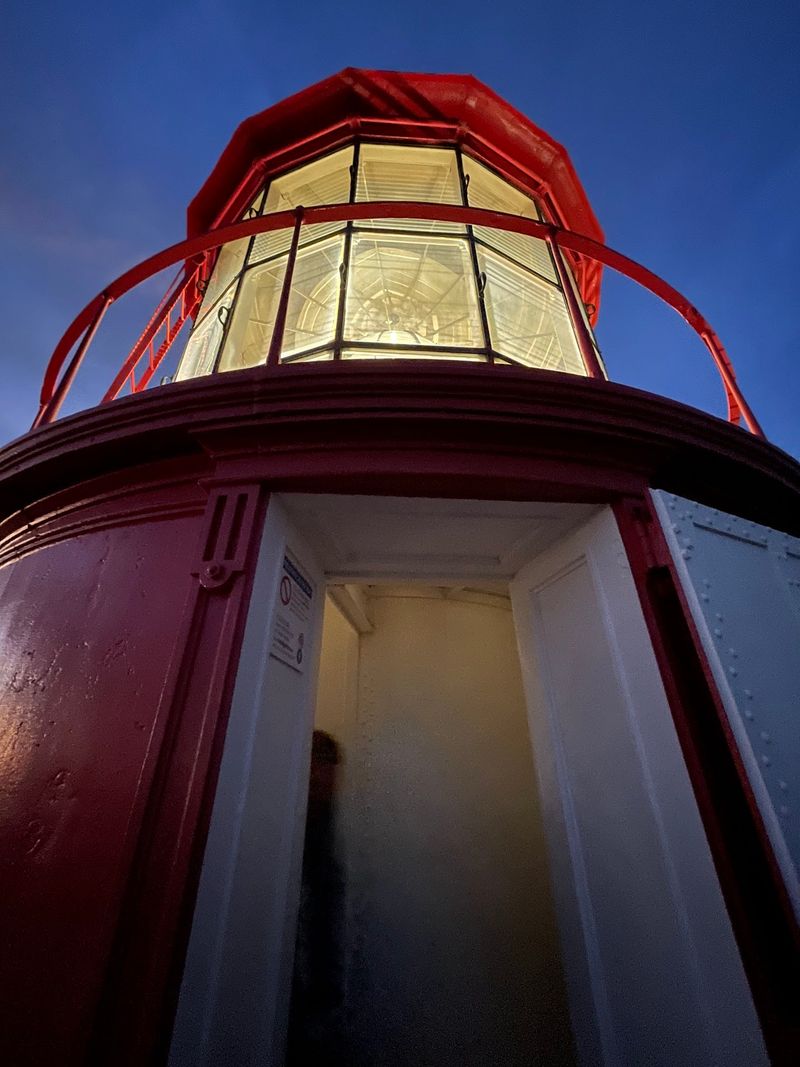
At the top sits a first-order Fresnel lens. These glass giants were the strongest lighthouse lenses of their era, built to bend light far out to sea.
The lens is made of many carefully shaped glass prisms. Together, they gather light and send it outward in a powerful beam.
The light once ran on oil and later switched to electricity. Keepers used to haul fuel up the tower, which makes your climb look easy by comparison.
Along the way up, you can learn how keepers tended the lamp and kept the glass spotless. It was steady, careful work, every single night.
Seeing that lens up close feels a little like meeting a celebrity. It’s big, shiny, and very good at what it does.
Take a moment to appreciate it. Not many attractions let you stand this close to living maritime history.
Peek Inside The Keeper’s Cozy Brick Home
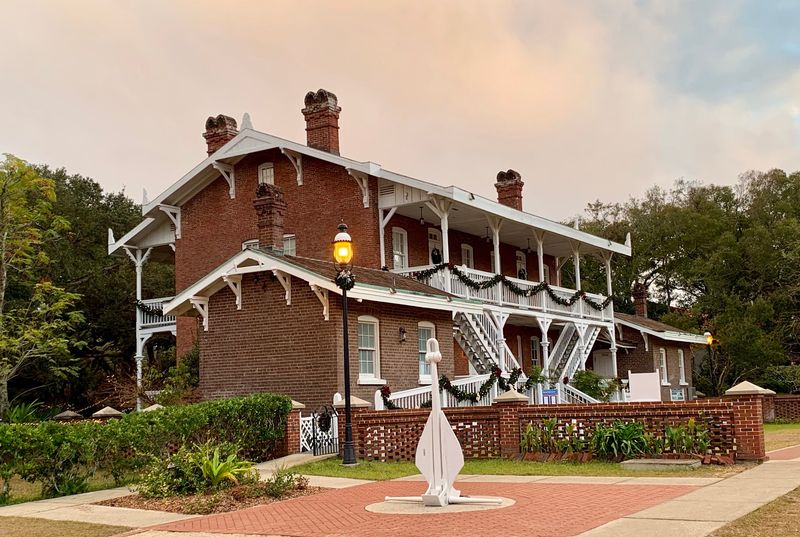
Families once squeezed into this sturdy brick house next to the tower. Two keepers’ households shared the space, which sounds cozy and maybe a little crowded.
Today, the keeper’s house serves as part of the museum. Its rooms show period furnishings and personal items that help explain everyday life at the light station.
You can see how keepers balanced family life with round-the-clock duties. The light needed care no matter the weather or the hour.
Exhibits share stories of the people who worked here. One keeper, Peter Rasmusson, served from 1901 to 1924.
Head down to the basement level for a fun surprise. Look for the portholes, which add a nautical touch to the space.
The house also gets dressed up for the holidays. Christmas decorations give the old rooms a warm, festive glow.
Restoration efforts in the 1980s helped save this home. Volunteers from the Junior Service League of St. Augustine stepped in when the property badly needed care.
Without that work, this chapter of Florida history might have vanished. Walking these rooms feels like borrowing a page from someone’s family album.
Boats Get Built Right Before Your Eyes
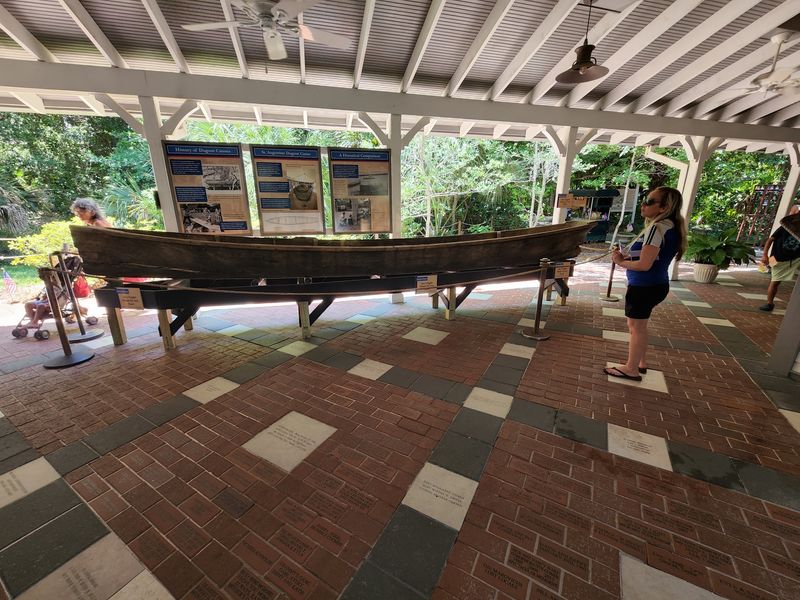
Sawdust and seafaring go together better than you’d think. The grounds include a working boat shop that keeps old craft skills alive.
Wooden boats take shape here using traditional methods. Depending on timing, you may catch a demonstration and see builders shaping wood by hand.
It’s a great reminder that boats were once built plank by plank. No factory, no shortcuts, just patience and skill.
Finished handmade boats are also on display. You can admire the curves and craftsmanship up close.
Kids tend to find this part fascinating. Grown-ups often get pulled in, too, especially anyone who likes tinkering in a garage.
The boat shop ties neatly into the bigger maritime story of this coast. St. Augustine has relied on the water for centuries, and boats were at the heart of it.
Ask questions if you get the chance. Staff and volunteers here know their stuff and clearly enjoy sharing it.
Plan a few extra minutes for this stop. It’s easy to rush toward the tower, but the woodwork deserves a slower look.
Shipwreck Treasures Wait In The Museum
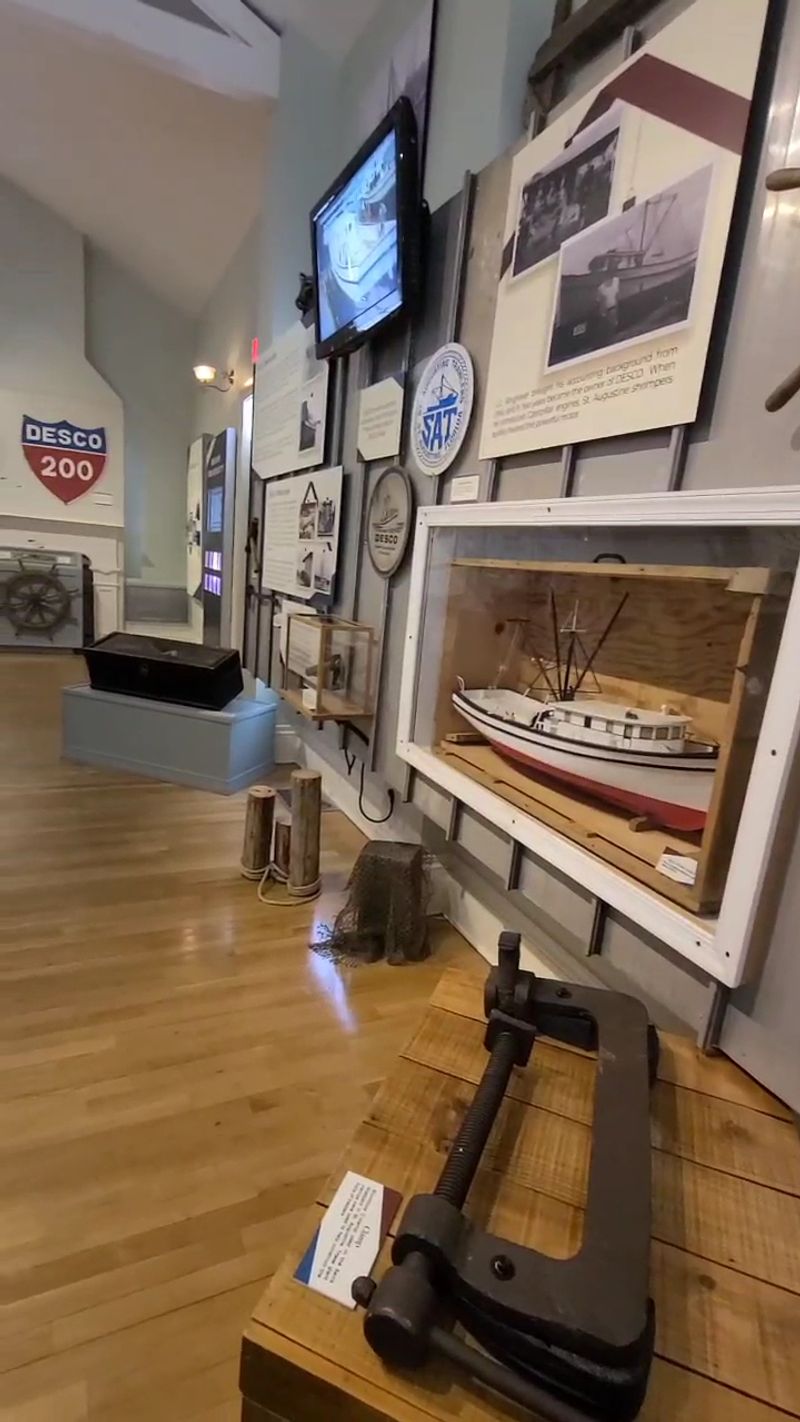
Underwater archaeology happens right here. The museum runs a research program that studies shipwrecks off the nearby coast.
The Lighthouse Archaeological Maritime Program, often called LAMP, investigates sites hidden under the waves. Finds from that work help tell the story of ships that once sailed these waters.
Exhibits show artifacts recovered from the ocean floor. You might see objects like cannons, tools, and everyday items from long ago.
Seeing them makes history feel real. Someone once held these things, packed them, and carried them across the sea.
The museum’s displays change and grow over time. New artifacts get added, so return visits can reveal something fresh.
Archaeology work also happens on land at the light station. Digs have uncovered items connected to earlier keepers and the property’s past.
Kids who dream of becoming treasure hunters will love this part. Adults may quietly wish they’d picked that career too.
Take your time reading the labels here. Each artifact has a backstory, and some of them are pretty wild.
Brave Souls Can Stick Around For Ghost Stories
Some lighthouses collect seashells. This one seems to collect spooky legends.
The St. Augustine Lighthouse & Maritime Museum offers nighttime ghost tours that share the site’s eerie tales. Guides mix local lore with real history.
One well-known story involves young girls from the 1870s construction era. Their tale has become a big part of the lighthouse’s haunted reputation.
Former keeper Peter Rasmusson also pops up in local legends. Some folks say his presence still lingers around the property.
Do you have to believe in ghosts to enjoy it? Not at all.
Skeptics can still learn plenty about the people connected to the light station. The storytelling itself is half the fun.
The lighthouse also gained attention after paranormal TV shows featured it. That fame helped turn it into a favorite stop for spooky-minded travelers.
Night tours usually require advance tickets. They’re a fun pick for older kids and teens who love a good shiver.
Bring a flashlight if the tour allows it. A brave face is optional, but recommended.
Little Sailors Get Their Own Playground
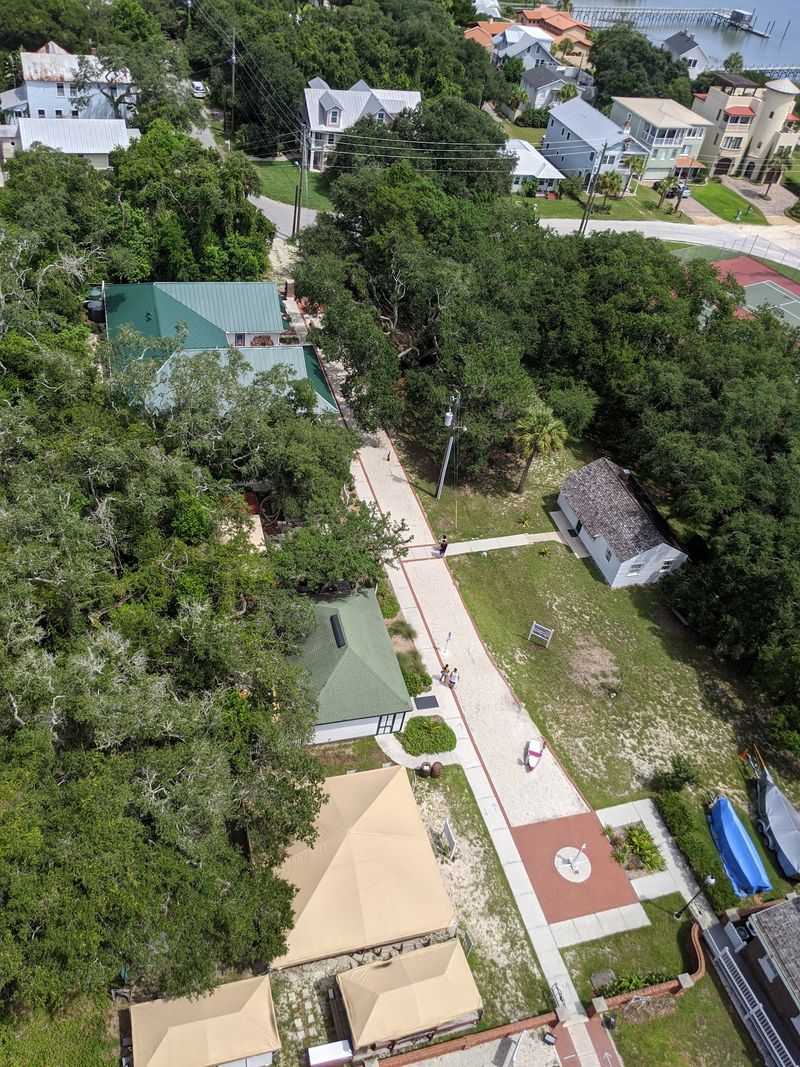
Tiny legs might not love 219 steps. Luckily, the grounds include a shipyard-themed play area built just for younger explorers.
Kids can burn off energy while grown-ups catch their breath. It’s a smart pause between the tower and the museum.
The play space fits the maritime theme nicely. Young visitors get to pretend they’re building or sailing their own ships.
Children must meet a height requirement to climb the tower. Little ones who are too short can still enjoy plenty of fun on the ground.
That makes the place easy for mixed-age groups. Toddlers, teens, parents, and grandparents can all find something to do.
Shady walking trails wind around the property as well. Big oak trees stretch their branches across the grounds and give welcome relief from the Florida sun.
Bring water and sunscreen for warmer days. Florida heat sneaks up fast, even under the trees.
A short stroll on the trails is a calm way to wrap up. After the climb, you’ll appreciate any path that stays flat.
Plan Your Climb Like A Seasoned Keeper
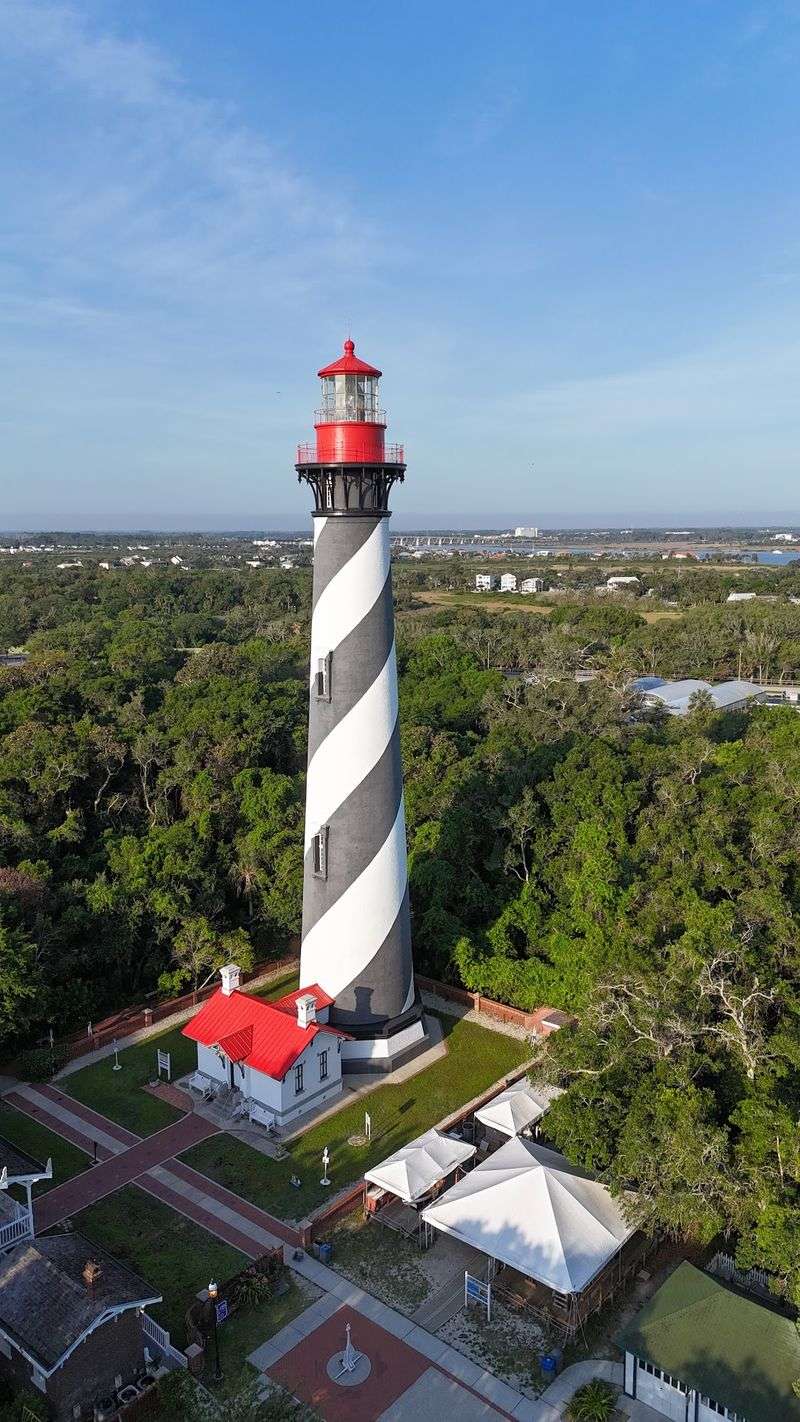
Finding the place is the easy part. The St. Augustine Lighthouse & Maritime Museum sits at 100 Red Cox Dr, St. Augustine, FL 32080.
It’s on Anastasia Island, just across the water from the historic downtown. The drive over gives you a nice preview of the coastal scenery.
Daytime hours run from 9 a.m. to 6 p.m. from October through February and until 6:30 p.m. from March through September, with some holiday and event exceptions. Evening climbs and ghost tours run on their own schedules.
Parking is free on site. That’s a small win in a town where downtown parking can test anyone’s patience.
Buying tickets online ahead of time can save you money. Seniors may also qualify for a discount.
Before leaving, swing by the gift shop. It stocks lighthouse souvenirs, shirts, cups, and plenty of fun keepsakes.
Ask about the climb certificate, too. It’s a cheerful way to prove you conquered all those stairs.
Give yourself a few hours to see everything. Between the tower, museum, boat shop, and grounds, this corner of Florida rewards a slow, curious visit.