Florida’s Oldest Street Feels Like a Charming Slice of Europe in the United States
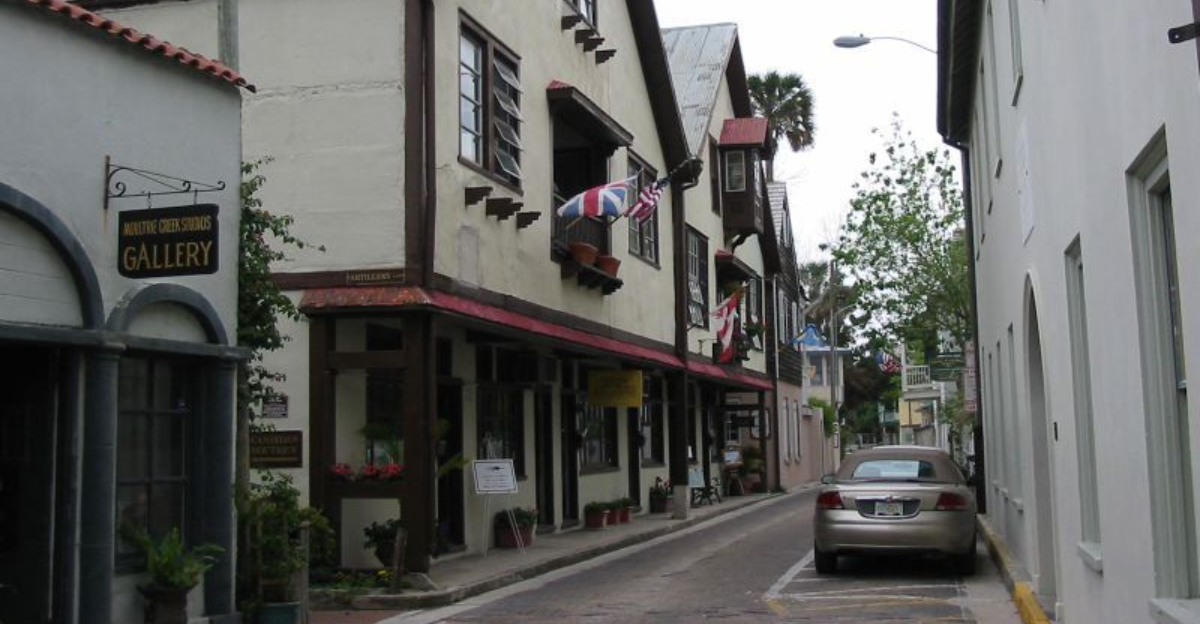
Walking down Aviles Street in St. Augustine feels like stepping into a different world—one where cobblestones tell stories from the 1570s and every corner whispers secrets from centuries past. This narrow brick lane, recognized as the oldest street in America, captures the magic of old European villages with its intimate scale, historic architecture, and artistic soul.
Whether you’re browsing artisan galleries, dining at cozy cafes, or simply soaking up the timeless atmosphere, Aviles Street offers a rare glimpse into Florida’s Spanish colonial heritage wrapped in modern charm.
The Historic Brick Pathway That Started It All
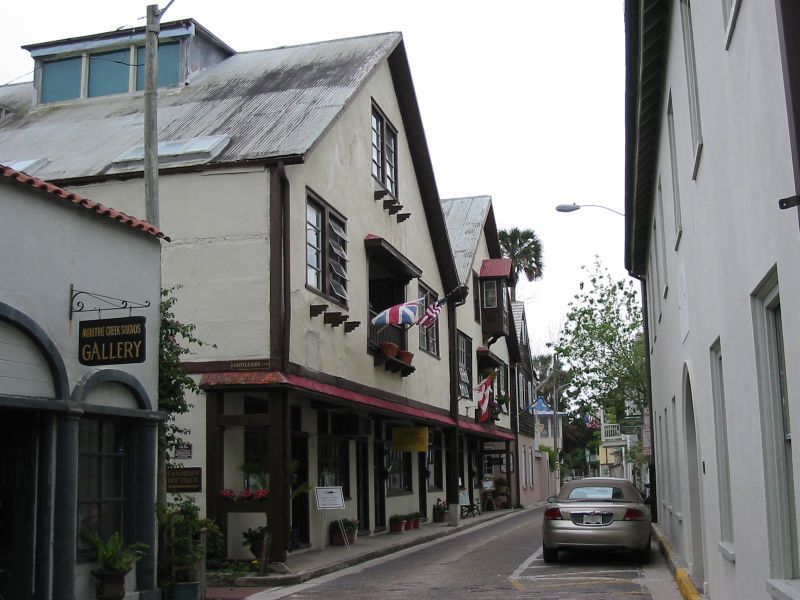
Picture a street so old that it existed before the Pilgrims landed at Plymouth Rock. Aviles Street earned its place in history books as America’s oldest continuously occupied European settlement street, dating back to the 1570s when Spanish settlers first laid these bricks.
The narrow pathway stretches just a few blocks, but every step carries weight from nearly 450 years of footsteps before yours.
The original brick pavers remain underfoot in many sections, worn smooth by centuries of wagon wheels, horse hooves, and countless pedestrians. Unlike the wide boulevards you’ll find in newer American cities, Aviles maintains that intimate European scale where buildings practically lean in to greet each other across the narrow lane.
This wasn’t accidental—Spanish city planners designed tight streets to provide shade from Florida’s brutal summer sun and create defensible spaces during uncertain colonial times.
Walking here at dawn offers something magical. Morning light filters between buildings at angles that haven’t changed since Spanish soldiers patrolled these same stones.
The quietness lets you hear your own footsteps echoing off centuries-old walls, creating an almost meditative connection to the past.
Modern preservation efforts have kept the street’s character remarkably intact. St. Augustine’s strict historic district regulations mean no neon signs, no chain stores, and no architectural shortcuts that might compromise the authentic atmosphere.
What you see today closely mirrors what visitors would have experienced a century ago, minus the horses and buggies.
The street runs from the Matanzas River westward into the heart of the old city, creating a perfect walking route that connects multiple historic sites. Most visitors stumble upon Aviles accidentally while exploring St. Augustine’s downtown, which makes the discovery even more delightful.
There’s no admission fee, no ticket booth—just an open invitation to wander through living history that happens to be paved with some of the oldest bricks in North America.
Art Galleries That Transform Every Visit Into a Treasure Hunt
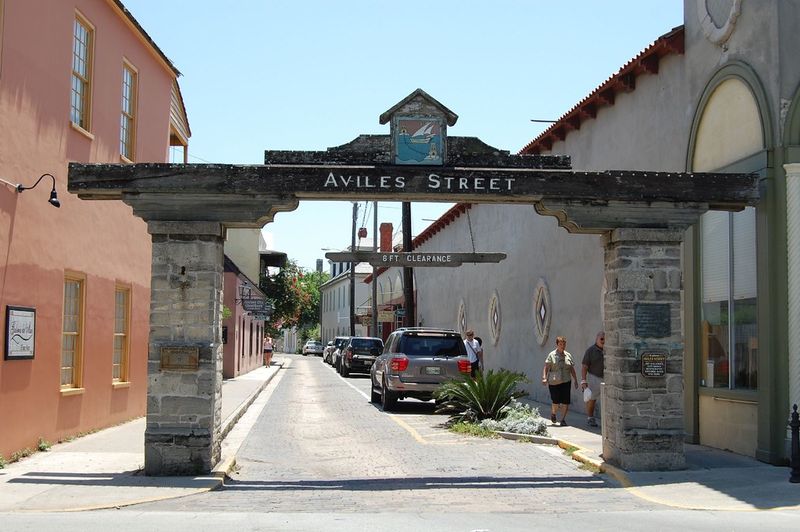
Forget stuffy museum vibes and intimidating gallery spaces. Aviles Street has become St. Augustine’s unofficial arts district, where creativity spills out of doorways and every shop window doubles as a gallery wall.
More than a dozen galleries and studios crowd into these few blocks, each offering something completely different from its neighbors.
Local artists dominate the scene here, not corporate art dealers shipping in mass-produced prints. You’ll meet painters who capture Florida’s coastal light in ways that photographs never quite manage.
Sculptors work with everything from driftwood collected on nearby beaches to metals shaped into whimsical figures. Jewelers craft pieces inspired by the ocean, Spanish colonial history, and the natural beauty that surrounds this ancient city.
Many galleries feature working studios where you can watch artists create in real time. There’s something mesmerizing about seeing a painting take shape or a glass piece being formed.
These aren’t staged demonstrations—these are actual working spaces where local creators spend their days pursuing their craft. Most artists happily chat about their process, inspirations, and the unique challenges of working in such a historic setting.
The Aviles Street Gallery stands out as a cooperative space where multiple artists share exhibition room, rotating displays regularly so return visits always reveal something new. Slightly Askew Gallery lives up to its name with quirky, unconventional pieces that challenge traditional art definitions.
The variety means whether you’re hunting for a statement piece for your living room or a small souvenir, you’ll find options at every price point.
Gallery hopping here works differently than in big cities. Spaces are small and intimate, often occupying rooms that once served as colonial-era living quarters or shops.
Low ceilings, exposed beams, and ancient walls create atmospheric backdrops that enhance rather than compete with the artwork. You might discover your new favorite artist while browsing a gallery that’s barely bigger than your bedroom, which somehow makes the whole experience feel more authentic and personal.
Spanish Colonial Architecture That Transports You Across the Atlantic
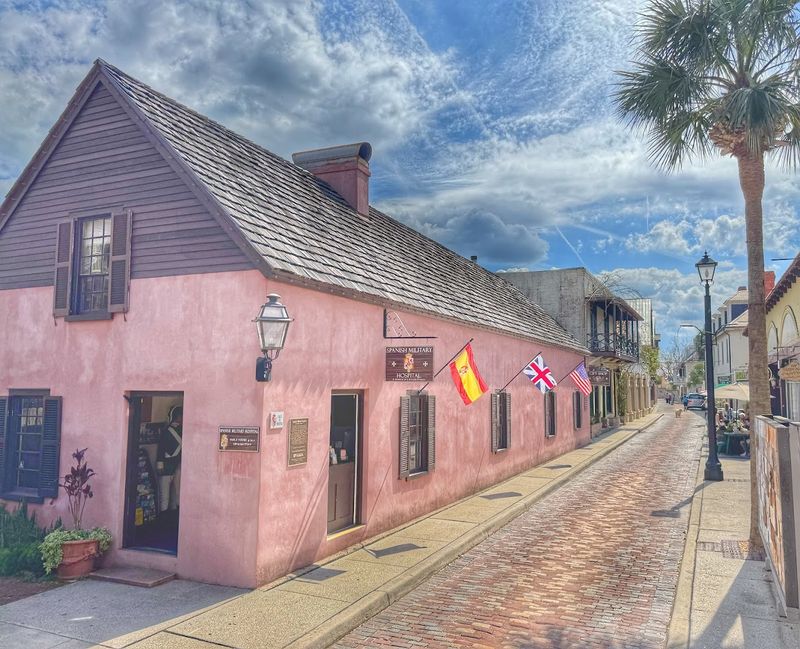
Buildings along Aviles Street don’t just look old—they embody architectural styles you’d typically need a transatlantic flight to experience. The Spanish colonial influences dominate, with thick coquina walls, wooden balconies, and intimate courtyards that could easily belong in Seville or Barcelona.
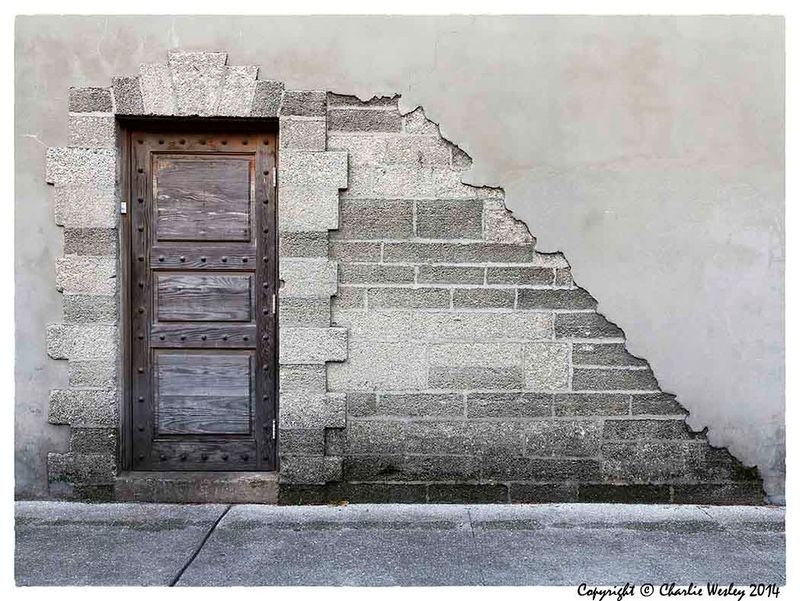
Coquina, a unique sedimentary rock made from compressed shells, gives many structures their distinctive textured appearance and provided excellent fortification during St. Augustine’s tumultuous early centuries.
Look up and you’ll notice wooden balconies jutting from second stories, many featuring intricate ironwork railings that show Spanish and Moorish design influences. These weren’t merely decorative—balconies served practical purposes in pre-air conditioning Florida, providing shaded outdoor spaces where residents could catch evening breezes while maintaining privacy from the street below.
Some buildings retain their original hand-hewn wooden beams, visible through open doorways or displayed proudly inside converted shops and restaurants.
The street’s buildings rarely exceed two or three stories, maintaining that human scale that makes European villages feel so welcoming. Thick walls, small windows, and overhanging second floors create almost continuous shade along the pedestrian pathway—a clever design choice that Spanish colonists borrowed from Mediterranean architecture to combat Florida’s intense heat and sudden rainstorms.
Several structures date to the 1700s and 1800s, though exact dating proves challenging since buildings were continuously modified, rebuilt after fires, and adapted to changing needs. The Oldest Wooden Schoolhouse sits nearby, and several Aviles Street buildings claim similarly ancient pedigrees.
What matters more than precise dates is the authentic feeling these structures convey—this isn’t a Disney-fied recreation but genuine historic architecture that’s been lived in, worked in, and loved for generations.
Preservation hasn’t meant freezing everything in amber. Modern businesses operate inside these ancient shells, creating fascinating juxtapositions where contemporary art galleries occupy Spanish colonial rooms or craft beer bars serve drinks under centuries-old ceiling beams.
This living history approach keeps the street vibrant rather than turning it into an outdoor museum where nothing changes and nobody actually lives or works.
Intimate Restaurants and Cafes Perfect for Lingering
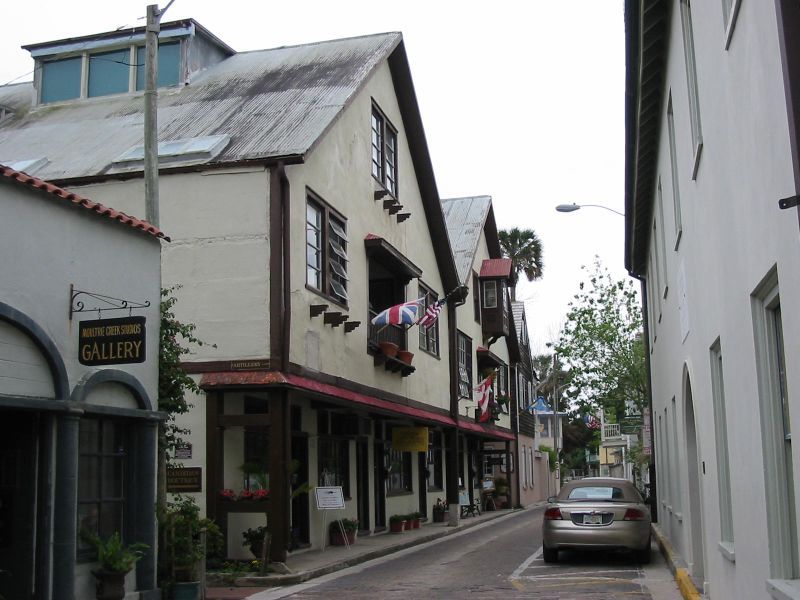
Dining on Aviles Street means trading corporate restaurant chains for locally-owned spots where owners often greet you personally and menus change based on what’s fresh and available. The European influence extends beyond architecture into the dining culture—meals here encourage lingering, conversation, and savoring rather than rushing through courses.
The Hyppo Gourmet Ice Pops occupies a tiny storefront but delivers outsized flavor with all-natural frozen treats in adventurous combinations you won’t find anywhere else. Their pops incorporate fresh fruits, herbs, and unexpected ingredients that somehow work perfectly together.
On steamy Florida afternoons, there’s something particularly satisfying about enjoying a handcrafted ice pop while sitting on a centuries-old street.
For more substantial fare, several restaurants offer courtyard dining in hidden spaces you’d walk right past without noticing. These interior patios, tucked behind street-facing buildings, provide magical dining environments surrounded by old walls, tropical plants, and that special quiet that comes from being sheltered from traffic and crowds.
String lights overhead, brick underfoot, and excellent food on your plate create experiences that feel worlds away from typical American dining.
Café seating spills onto the sidewalk at several spots, European-style, where you can people-watch while sipping locally roasted coffee or sampling Spanish-inspired tapas. The narrow street means you’re close enough to nod hello to passing pedestrians, creating a sociable atmosphere that encourages friendly exchanges with strangers—something increasingly rare in modern America.
Many establishments occupy buildings with fascinating histories. You might enjoy dinner in a room that once served as a colonial-era merchant’s shop or sip wine in a space that housed craftsmen centuries ago.
Restaurant owners often know their building’s history and happily share stories between courses, adding layers of context to your meal that chain restaurants simply cannot offer.
The scale of these dining spots matters too. Most seat fewer than fifty people, some considerably fewer, which means reservations often prove wise, especially during peak tourist seasons.
But that intimacy creates better service, more attention to detail, and dining experiences that feel personal rather than transactional.
Boutique Shops Offering One-of-a-Kind Treasures
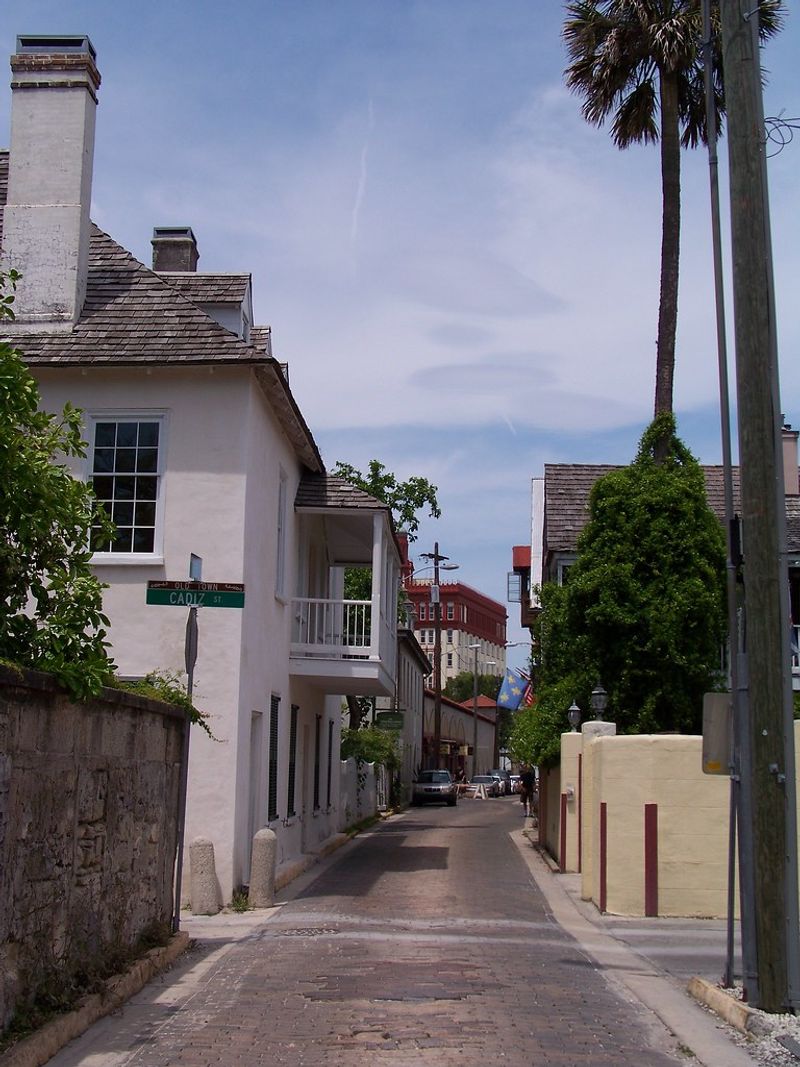
Shopping on Aviles Street rewards curiosity and patience. You won’t find the same mass-produced souvenirs sold at every tourist trap across Florida.
Instead, independent shop owners curate collections of handmade items, vintage finds, and locally produced goods that actually reflect St. Augustine’s character and history.
Several shops specialize in handcrafted goods made by local artisans—pottery shaped from Florida clay, jewelry incorporating materials found on nearby beaches, textiles dyed using traditional methods, and wooden items carved from native trees. Buying here means taking home something with genuine local connection rather than factory-made merchandise that could come from anywhere.
Many shop owners know their suppliers personally and can tell you exactly who made that bowl or necklace you’re admiring.
Vintage and antique shops dot the street, their inventories reflecting St. Augustine’s long history. You might discover Spanish colonial-era artifacts, Victorian-era household items, or mid-century modern pieces that somehow ended up in this ancient city.
Serious collectors and casual browsers alike find these shops endlessly fascinating, with new arrivals constantly refreshing the treasure hunt.
Book lovers shouldn’t miss the small bookshops tucked into Aviles Street’s historic buildings. Independent booksellers here favor carefully selected titles over bestseller lists, with strong sections on Florida history, Spanish colonial studies, and local authors.
Some shops stock rare and out-of-print volumes you’d struggle to find elsewhere, making them destinations for bibliophiles willing to dig through shelves.
Home décor shops offer items that capture St. Augustine’s aesthetic—rustic pieces with Spanish influences, coastal-themed accessories, and architectural salvage from historic buildings. These aren’t generic beach house decorations but thoughtfully curated items that bring authentic Old Florida style into modern homes.
The shopping experience itself differs from mall or big-box retail. Shop spaces are small, often occupying single rooms in historic buildings.
Owners frequently work the register themselves, offering personal service, local recommendations, and genuine conversation. They’re not pushing sales quotas—they’re sharing things they genuinely love with visitors who appreciate quality and authenticity.
This human connection transforms shopping from a transaction into a relationship, however brief, that makes purchases more meaningful and memorable.
Evening Atmosphere When the Street Transforms Into Pure Magic
Wait until the sun starts setting before you leave Aviles Street, because evening brings a completely different energy to these ancient bricks. As daylight fades, carefully placed lighting illuminates architectural details that disappear in harsh noon sun, and the street takes on an almost dreamlike quality that justifies every romantic comparison to European villages.
Gas-style lamps flicker to life along the pathway, casting warm pools of light that create dramatic shadows on textured coquina walls. Modern LED bulbs might power these fixtures, but the effect remains timelessly atmospheric.
The narrow street amplifies this lighting, with buildings reflecting and containing the glow rather than letting it dissipate into open space.
Restaurants and galleries stay open into evening, their interior lights spilling through windows and doorways to add layers of illumination. You’ll hear live music drifting from various venues—Spanish guitar from one direction, jazz from another, creating a soundtrack that enhances rather than overwhelms the historic setting.
Musicians often perform in courtyards or on small patios, their music echoing off old walls in ways that add natural reverb.
The tourist crowds thin considerably after dinner time, leaving the street to lingering diners, local residents, and visitors who’ve discovered that Aviles reveals different charms after dark. Couples stroll hand-in-hand, their footsteps on old bricks creating rhythms that could soundtrack a period film.
The temperature drops to comfortable levels, making evening the perfect time to wander without Florida’s humidity weighing you down.
Ghost tour groups sometimes pass through, guides sharing stories of Spanish soldiers, colonial settlers, and centuries of history compressed into these few blocks. Whether you believe in supernatural tales or not, there’s no denying that Aviles Street after dark carries an atmosphere thick with history and mystery.
Shadows seem deeper, sounds echo strangely, and imagination easily conjures images of this street’s past lives.
Photography enthusiasts find evening light particularly rewarding here. The mix of warm artificial lighting, remaining natural light, and architectural textures creates compositions that capture Aviles Street’s timeless character better than harsh midday shots ever could.
Even smartphone cameras produce atmospheric images that make friends back home understand why you keep raving about this little street in Florida.
The Authentic European Village Feel That Makes This Street Unforgettable
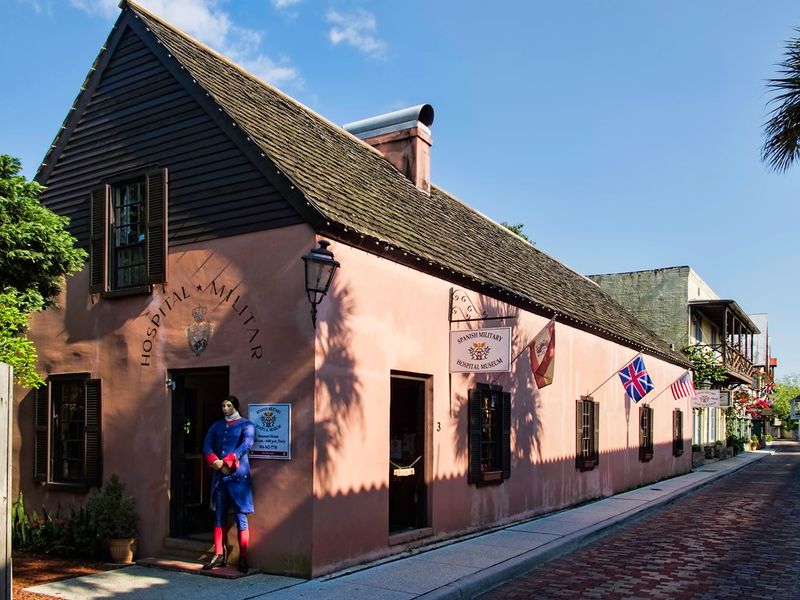
Something happens when you spend time on Aviles Street that’s hard to quantify but impossible to miss—a feeling that you’ve somehow slipped out of modern America and into a European village where time moves differently and history isn’t something locked behind museum glass. This authenticity separates Aviles from themed entertainment districts or carefully manufactured historic recreations.
The street’s narrowness contributes enormously to this effect. You can practically touch both sides simultaneously, creating intimate scale that forces you to slow down, look around, and notice details.
Modern American streets prioritize car traffic with wide lanes and generous setbacks. Aviles was designed for pedestrians and pack animals, creating proportions that feel human-sized rather than vehicle-dominated.
This immediately changes how you experience the space—you’re a participant rather than a spectator rushing past in a car.
Authenticity shows in the imperfections. Bricks sit unevenly after centuries of settling.
Buildings lean slightly, their walls no longer quite plumb. Doorways vary in height, forcing taller visitors to duck.
These aren’t flaws—they’re proof of genuine age and continuous use. Restored colonial Williamsburg has perfection that betrays its recreation.
Aviles has the beautiful imperfection that only real history provides.
The mix of residential, commercial, and artistic uses mirrors how European village streets function. People actually live in some of these buildings, hanging laundry from balconies or tending potted plants on windowsills.
Shop owners might live above their stores. Artists work in studios attached to their galleries.
This integration of life and commerce creates organic vitality that purely commercial or purely residential streets lack.
Perhaps most importantly, Aviles hasn’t been sanitized or made artificially safe. Yes, it’s well-maintained and welcoming, but it retains authentic character rather than becoming a shopping mall with historic façades.
You’ll see weathered wood, aged patina on metalwork, and surfaces that show their centuries. The street feels lived-in because it is lived-in, by people who understand they’re stewards of something precious rather than owners who can do whatever they please.
This combination—genuine historic architecture, appropriate scale, mixed uses, and authentic age—creates that rare feeling of having discovered something special, a place where past and present coexist naturally rather than in forced historical costume.