Most People Drive Past This Free Vero Beach Hidden Gem Without Knowing It’s There
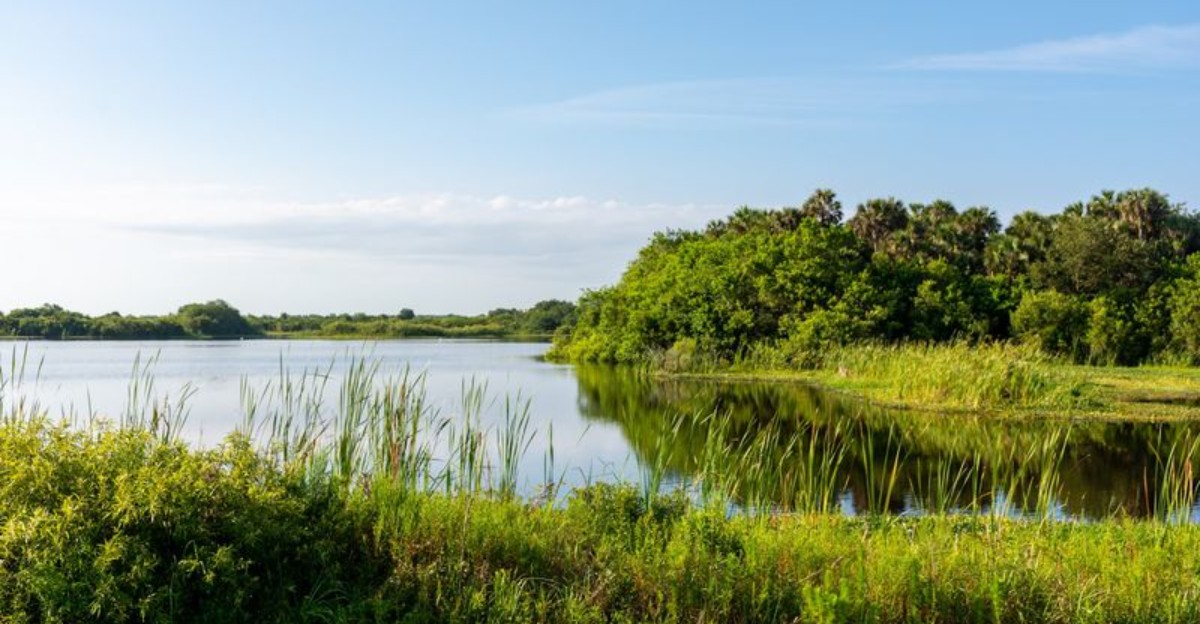
Most people drive right past this part of Florida without realizing how wild it gets just beyond the highway. Fort Drum Marsh Conservation Area, west of Vero Beach, hides a huge stretch of marsh, pine forest, oak hammocks, and open prairie where alligators bask beside canals and birds disappear into the wetlands.
There are no flashy attractions here, and that is exactly the point. You can hike quiet trails, cross a cypress boardwalk, fish, camp, watch wildlife, or simply spend a few hours surrounded by a version of Florida that feels untouched by development.
Best of all, it costs nothing to enter, making this one of those easy outdoor escapes that feels far more remote than it really is.
1. A Wild Slice of Old Florida Hiding in Plain Sight
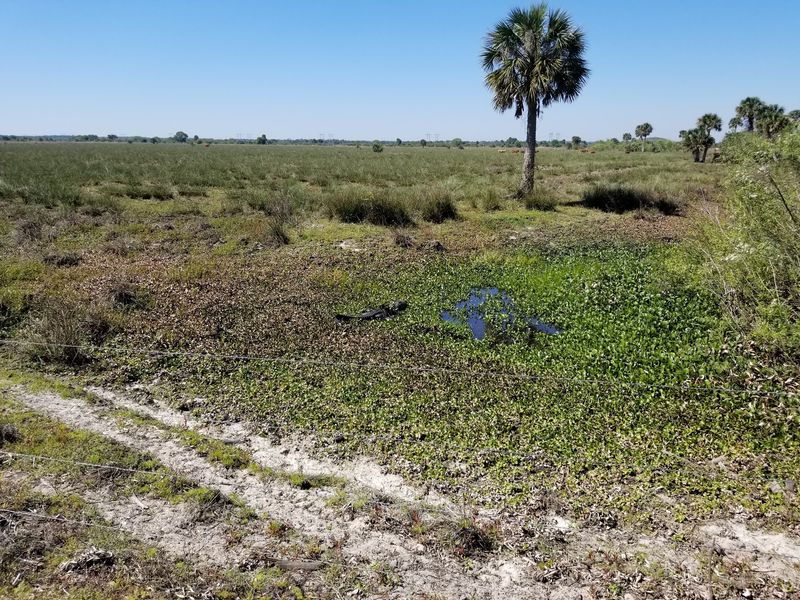
Picture Florida before the condos, theme parks, and traffic lights. That is the feeling waiting just off Highway 60. Fort Drum Marsh Conservation Area is a big stretch of wetlands, pine uplands, oak hammocks, and open prairie managed by the St. Johns River Water Management District.
One visitor described it as natural, undeveloped land the way it looked before heavy building took over the last century. The only man-made things you will notice are levees with dirt roads along the top. Everything else is grass, water, sky, and wings.
The best part is how different the land feels from one area to the next. You might walk under shady trees for a while, then step out into a bright, open marsh where the horizon seems to go on forever. That mix of habitats is why so many animals call this place home.
Most people never realize it is here because there is no big sign shouting for attention. The entrance looks more like a working gate than a tourist stop. That is part of the charm.
Plan to bring your own water, snacks, and bug spray, since there are not many facilities. Expect quiet, not crowds. If you want a break from the busy coast, this is the spot to find it.
Give yourself a few hours at least, because the area is large and the scenery changes as you go.
2. Gators Everywhere You Look
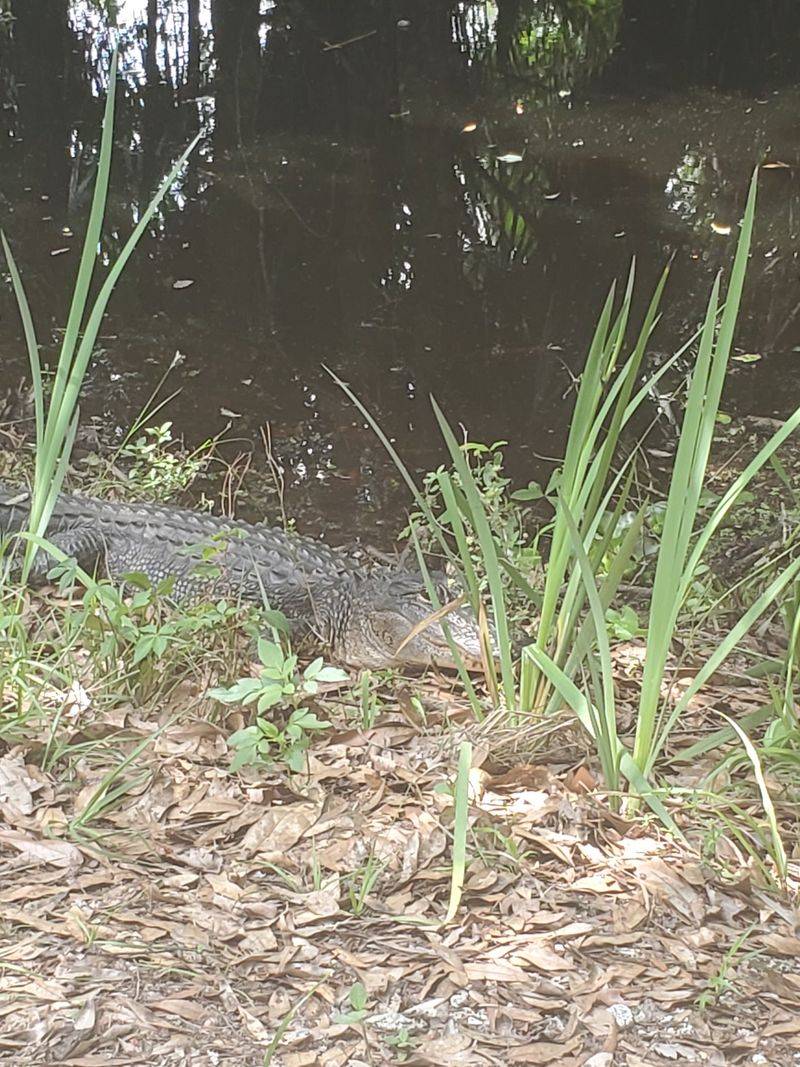
Ask regulars what they love most and the word comes up fast: gators. Reviewers mention them more than anything else. One local says the canals near the front have never failed to show off a few on every single trip.
That makes this a great place to bring out-of-town friends who want a real Florida wildlife moment. You do not need a long hike to spot them. Sometimes they are sunning on the bank right near the parking area.
Keep a respectful distance and never feed them. Gators may look lazy, but they can move quickly when they want to. Stay back from the water’s edge, especially near tall grass.
Dogs on a leash are allowed, but this is where leash rules matter most. A loose pup near a canal is a bad idea. Short leashes and watchful eyes keep everyone safe.
Fun fact: gators are most active when the air is warm, so cooler winter mornings often mean slower, sleepier animals lounging in the sun. That is a great time for photos.
Bring a zoom lens or use your phone zoom so you can capture those toothy grins without stepping closer. Patience pays off, since a still log sometimes turns out to be a gator.
3. The Cypress Boardwalk Worth the Walk
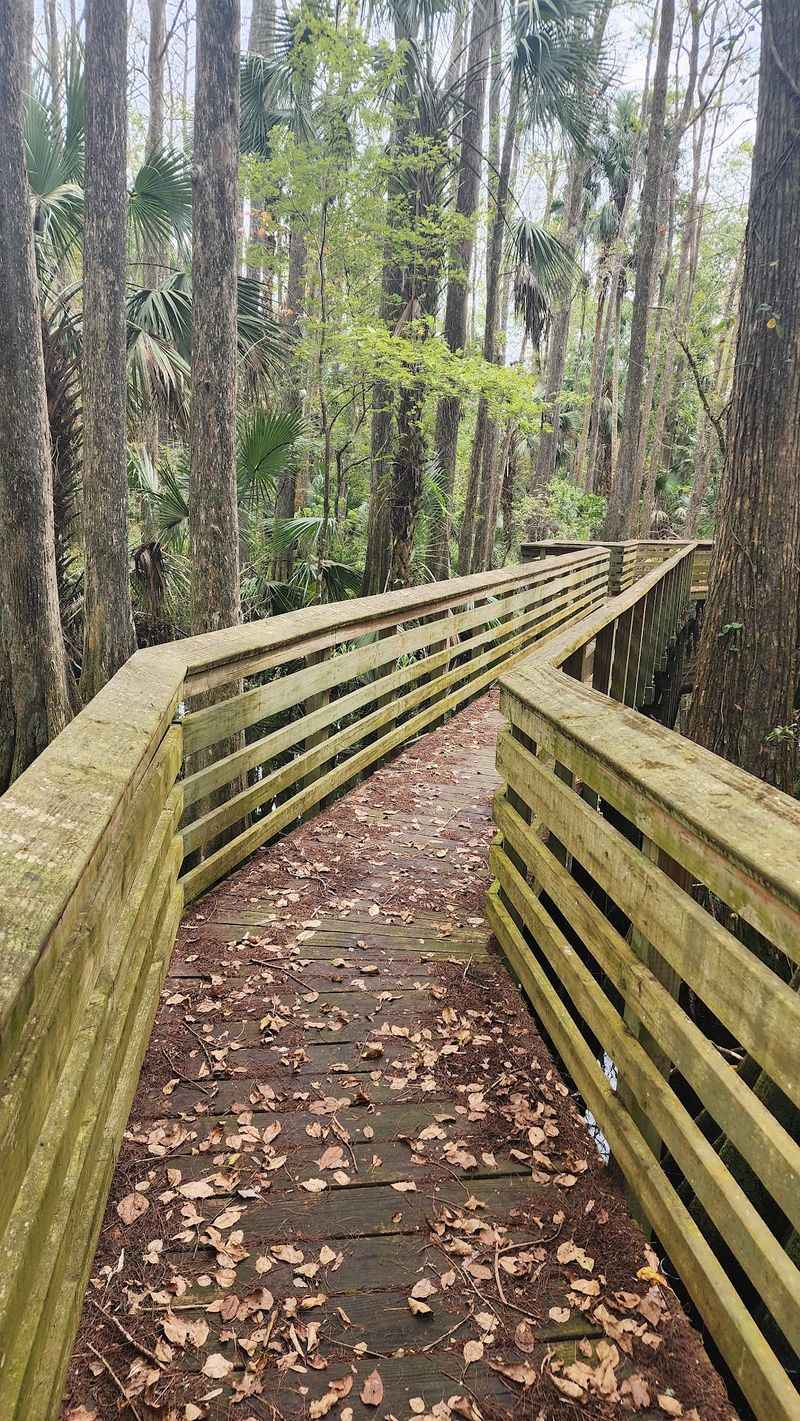
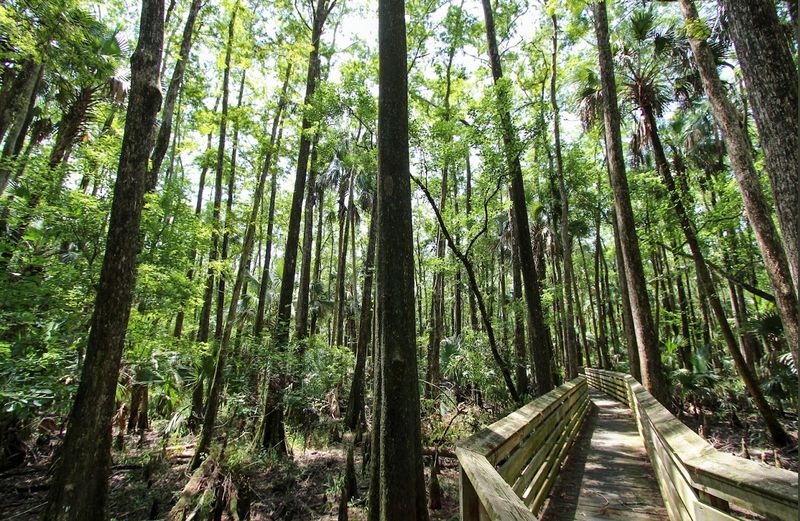
Here is the moment many hikers talk about afterward: the boardwalk through the cypress trees. Reviewers say it alone made the trip worth it. The path is flat, easy to follow, and lifts you right over the water.
Light filters through the branches and the air feels cooler under the canopy. Listen closely and you may hear birds calling or something splashing out of sight. It is a peaceful stretch that feels far from any road.
Getting there takes a bit of walking from the front area. Expect a trek past a pavilion and a couple of maps before you reach the boards. Wear comfortable shoes and bring more water than you think you need.
The boardwalk is a good turnaround point if you have kids or want a shorter day. Once you step off it, the trails get less clear and can flood after heavy rain. One camper had to retrace steps because the loop beyond was underwater.
Check recent weather before you go. Wet season changes the land quickly, and what is dry in March may be swampy in August.
Snap a few photos from the middle of the boardwalk, where the cypress knees poke out of the water like little statues.
4. Trails, Colors, and Not Getting Lost
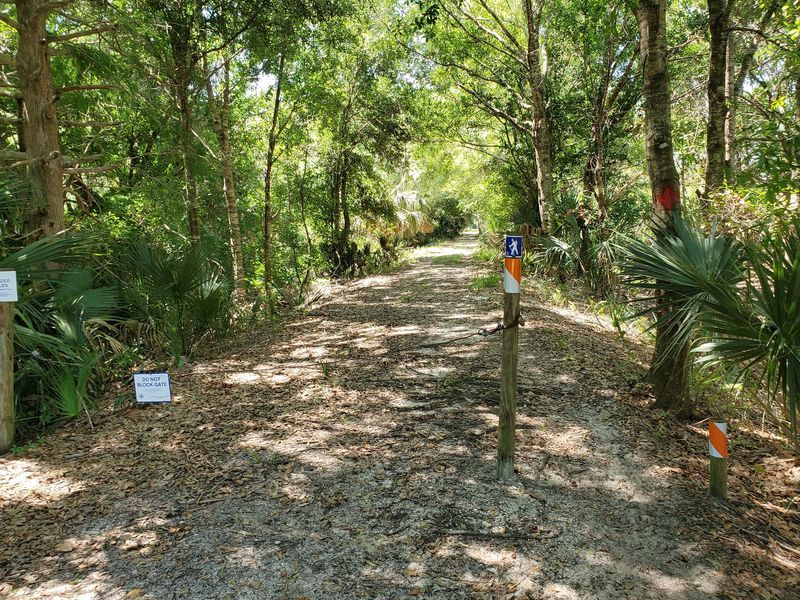
Let’s be honest: the trail system takes a little planning. Several colored routes weave through the property, and you can walk for hours. Some visitors found them easy to follow, while others got turned around.
Markers are painted squares on trees, and there are not many arrows. The maps posted along the way are simple and lack a clear you-are-here dot. That means your own prep matters.
Before you leave the parking area, snap a photo of the map or download the official PDF from the district website. Cell service fades once you reach the marsh, so do not count on a map app. Write down which colors you take.
A smart tip from past hikers: the red trail is longer but better marked than the others. If you want confidence, start there. Keep track of where the white and yellow trails meet, since that junction helped one lost family find their way.
Tell someone your plan before heading out. Carry a charged phone, a small first aid kit, and a whistle if you have one.
Go slow and enjoy it. Getting a little turned around is easier to laugh about when you have snacks, water, and a photo of the map on hand.
5. Camping Without the Crowds
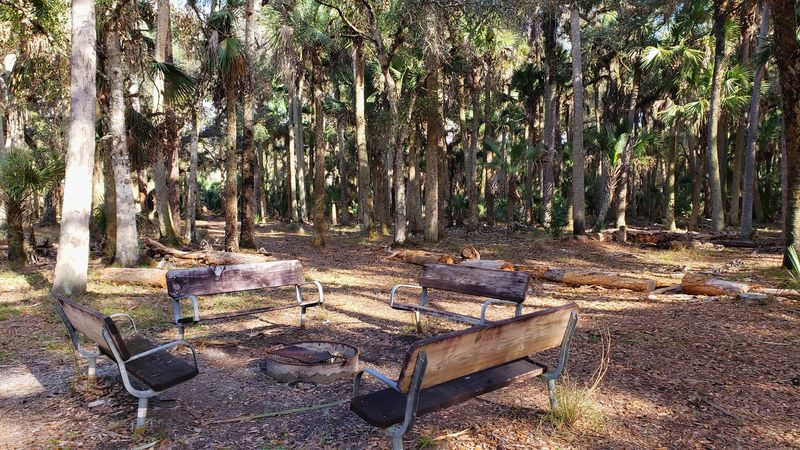
If you like falling asleep to owls instead of traffic, this is your place. Fort Drum offers primitive camping, and the reservation is free. Campers say they often have the area almost to themselves.
One visitor loved the Hog Island site, a private tent spot under a thick tree canopy. It has no frills, just a bench and a small fire pit with a grill. The group camping area has about six spots and sits in the open with little shade.
Beside the group site is a body of water that holds big gators and good fishing. Keep kids and pets well back from the edge, especially at night. Campers also report hearing coyotes and plenty of owls after dark.
You will need a gate code to reach the pavilion and camping area, and you get it by signing up through the district’s website. Skip that step and you may end up walking miles from the gate. Plan ahead so your trip starts smoothly.
Pack everything in and out, since there are no restrooms or picnic tables at most spots. Bring plenty of water, a headlamp, and bug protection.
Wildlife sightings from the campsite have included deer, raccoons, and wild pigs.
6. Fishing and Boat Ramp Fun
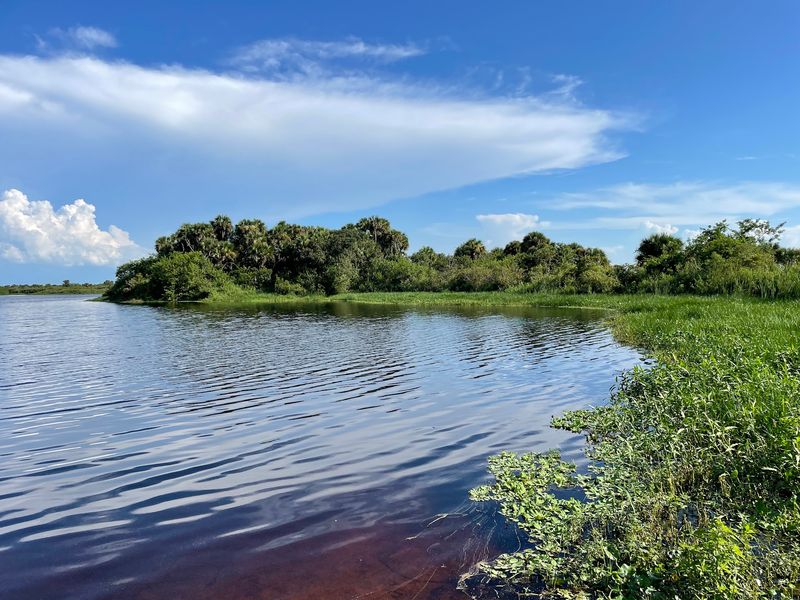
Casting a line here comes with a side of scenery. The lake near the front has a boat ramp and a pavilion, making it an easy first stop. Visitors say the water is excellent for fishing.
Bring your own gear, since nothing is sold on site. Check Florida fishing rules and license needs before you go, and see the Florida Fish and Wildlife Conservation Commission website for current regulations. Hunting is also allowed in season, so look up dates before you plan a visit.
The pavilion is a handy shaded spot for a picnic lunch. One hiker called it a nice rest stop with a view. Just know that one reviewer drove to the pavilion area expecting trailheads and camping, and found only the ramp and the shelter.
That is a good reminder to read the district map first. Different parking areas connect to different parts of the property. The front area is great for fishing and gator watching, while other access points lead deeper into the marsh.
Early mornings tend to be calm, with mist on the water and birds hunting along the edge. Keep a safe distance from the bank where gators lounge.
Pack sunscreen, a hat, and a cooler, because shade is limited.
7. Birds, Deer, and Other Wild Neighbors
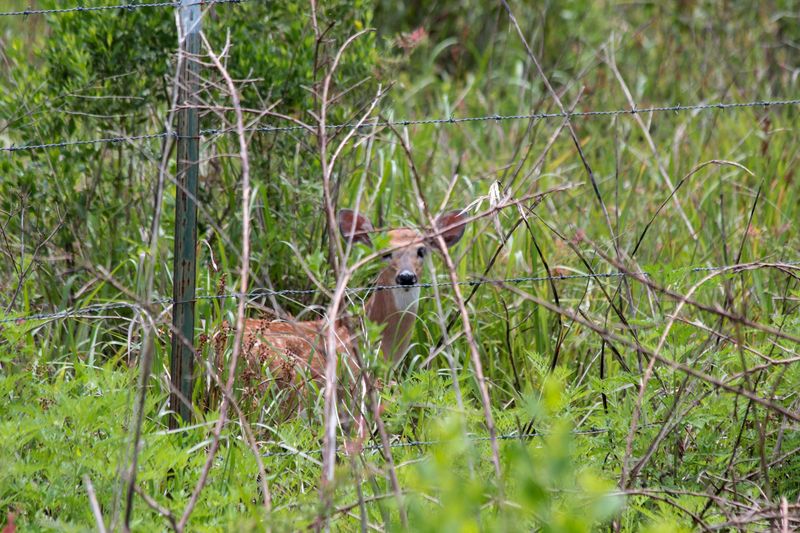
Bring binoculars, because the wildlife list is long. Hikers have spotted deer, snakes, wild pigs, raccoons, coyotes, and many kinds of birds. Birds of prey circle overhead, and wading birds work the water’s edge.
The mix of pine uplands, oak hammocks, and prairie means different animals show up in different zones. Walk slowly and stop often. Wildlife tends to appear when you are quiet.
One local calls the place simply The Spot. Sometimes neighbor cows slip through a fence and wander on the wrong side. It is a funny reminder that this wild land borders working ranches.
Early morning and late afternoon are the best times to look. The light is soft and animals are more active. Midday heat sends many creatures into the shade.
Not every trip delivers a big show, and one visitor admitted to seeing little on a quiet walk. Even then, they enjoyed the peace. Treat each visit as a chance, not a promise.
Stay on the trail, keep dogs leashed, and never approach a snake or a wild pig. Pack a field guide or bird app so you can name what you see. A notebook adds to the fun.
8. Know Before You Go
A little prep turns a good trip into a great one. The area is open around the clock and costs nothing to enter. The address is along Highway 60 in Vero Beach, and the district website has a parking and access map.
Driving on the interior roads is not allowed, since staff use them for maintenance. Park at the designated lots and walk or bike in. One visitor learned this the hard way and hiked five miles from the gate.
Bikes are welcome and so are leashed dogs. Expect no restrooms, no picnic tables at many spots, and no food service. Pack all you need, including water, sunscreen, a hat, and sunglasses.
Bugs can be a problem at certain times of year, with mosquitoes and deer flies leading the pack. Winter is a favorite season for hiking, with cooler air and fewer insects. Summer brings heat, storms, and flooded trails.
Cell service drops in the marsh, so tell someone where you are going. Take a photo of the map before you start.
Check the district phone line at (386) 329-4404 or its website for updates and gate code details. A few minutes of planning gives you a calm, wild day.