One Man Built This Mysterious Florida Castle Entirely From Coral Rock
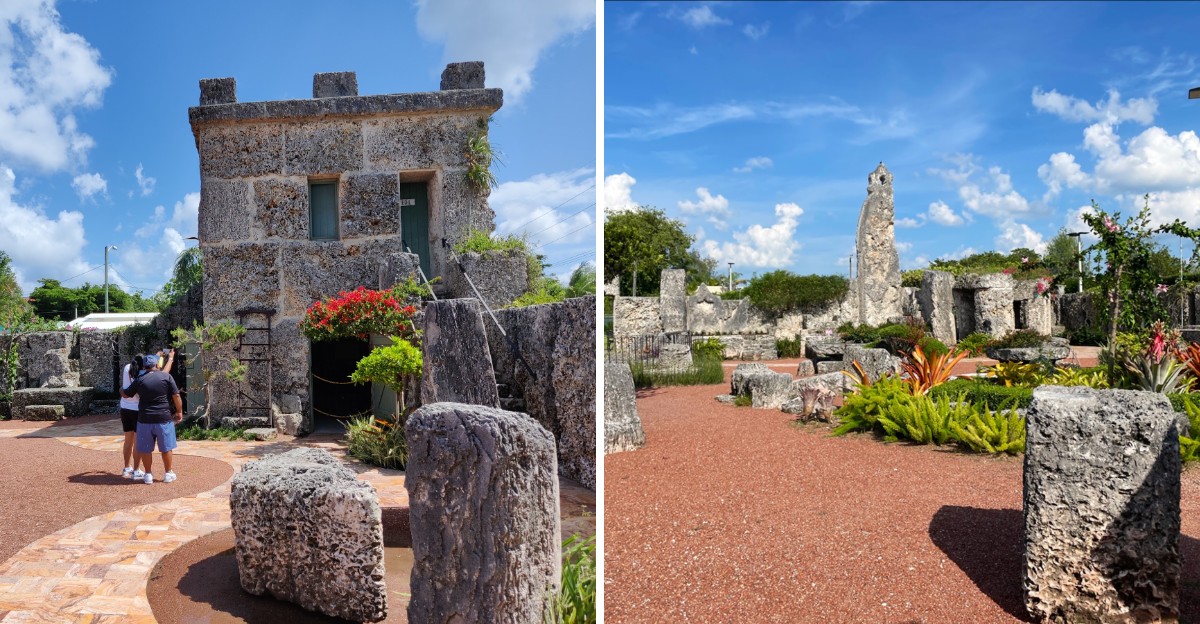
A Latvian immigrant who stood about five feet tall carved more than 1,000 tons of coral rock by himself. He worked mostly at night, alone, with tools he made from scraps and old car parts.
Nobody ever saw exactly how he moved stones weighing several tons. He just shrugged and said he knew the secrets of the pyramids. That answer has fueled rumors about magnets, levitation, and even aliens for decades.
I like how the story starts with heartbreak. He said he built the whole thing for a sweetheart back home who called off their wedding the day before. She never came to see it.
Today you can wander through his stone garden in South Florida and judge the mystery yourself. I can’t imagine hauling one of those blocks, let alone hundreds. So how did he really pull it off?
A Broken Engagement Started The Whole Wild Project
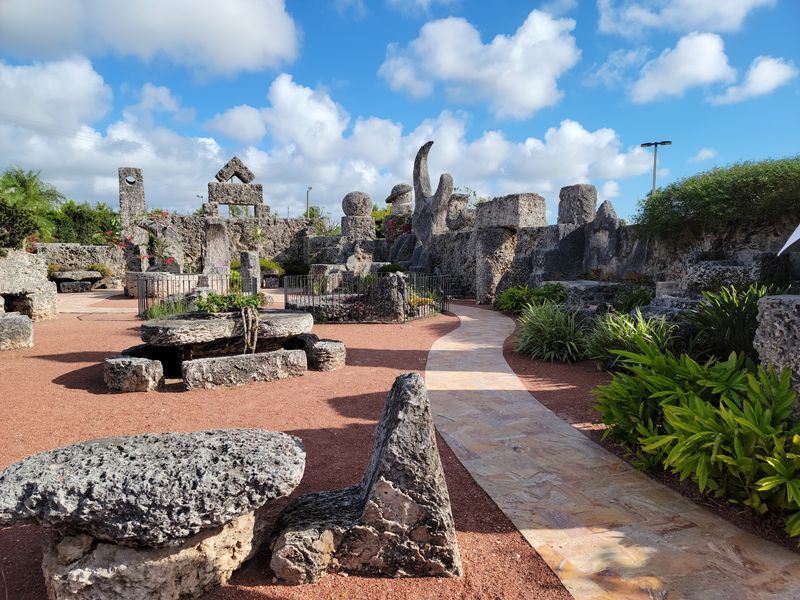
Heartbreak makes people do strange things. For Edward Leedskalnin, it meant carving a stone garden out of solid coral at Coral Castle in Homestead.
Ed was born in Latvia in 1887. He said his 16-year-old fiancée, Agnes Scuffs, called off their wedding the day before the ceremony.
He later came to the United States and eventually settled in Florida. Around 1923, he began cutting coral rock near Florida City, working alone and mostly after dark.
He called his creation Rock Gate Park. Ed referred to Agnes as his Sweet Sixteen, and many of his carvings seem built with her in mind.
She never visited, as far as anyone knows. That detail gives the whole place a bittersweet mood that’s hard to shake.
Coral Castle isn’t really a castle with turrets and moats. It’s more like an open-air sculpture garden surrounded by tall coral walls.
Knowing the backstory before you go helps a lot. The carvings feel less like random rocks and more like a very long, very heavy love letter.
He Moved His Massive Coral Carvings About Ten Miles To A New Site
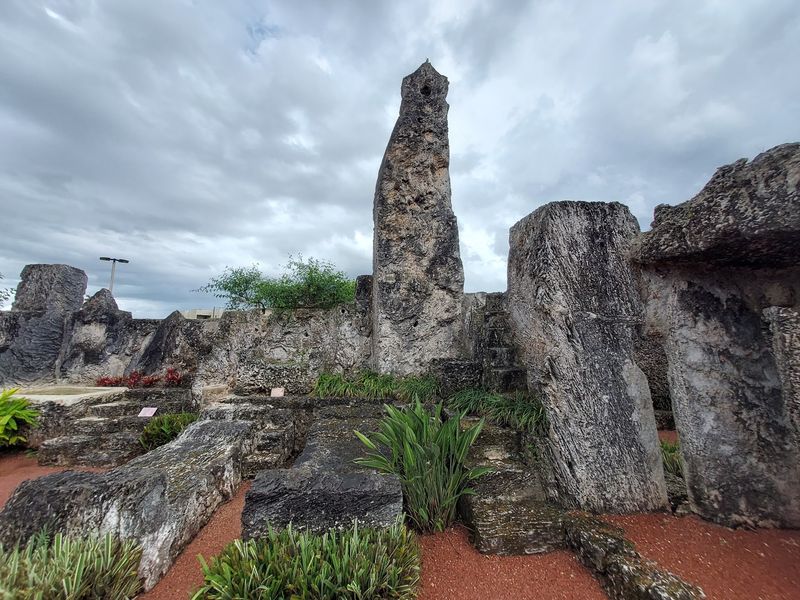
Moving apartments is exhausting enough. Ed Leedskalnin moved a whole stone garden.
He purchased the Homestead property in 1936 and began preparing to move his work there in 1939. One popular explanation says he wanted more privacy as development crept closer.
He hired a truck driver to haul the giant pieces. Ed reportedly asked the driver to leave him alone while he loaded, and the stones were somehow on the trailer by morning.
The move took around three years to finish. Then he kept carving at the new site until the early 1950s.
Here’s the part that boggles my brain. Ed weighed roughly 100 pounds, yet some of his blocks weigh several tons.
The tallest walls stand about eight feet high. Their individual blocks can top several tons each, and Ed set them in place without mortar.
Standing beside those walls makes the math feel impossible. You start doing quick calculations in your head and give up pretty fast.
That move is one of the strongest pieces of evidence that his methods worked, whatever they were. He didn’t just build it once. He built it twice.
Nobody Knows How He Did It, And He Liked It That Way
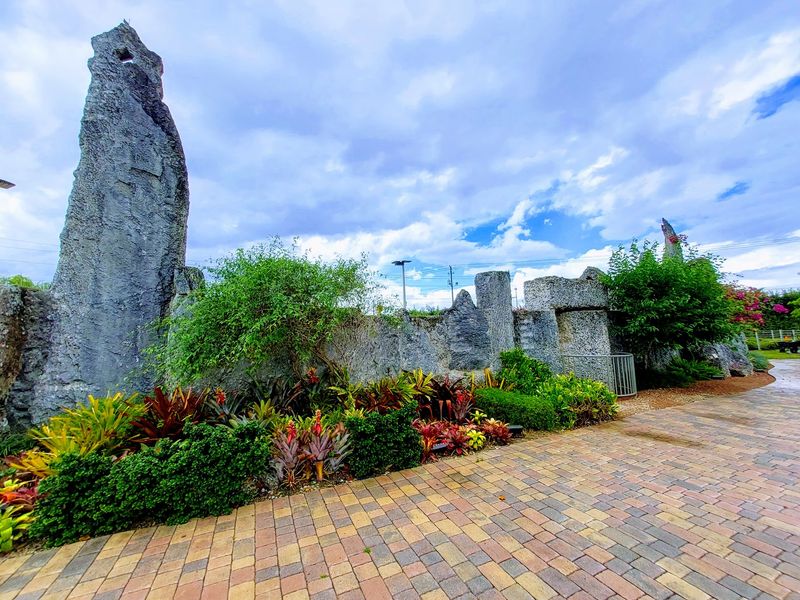
Secrets were Ed’s favorite building material. When people asked how he lifted the stones, he said he understood the secrets used to build the pyramids.
That vague answer opened the door to wild theories. Some fans talk about magnetism, levitation, or anti-gravity tricks.
Others point to simpler tools. Ed did use tripods, chains, pulleys, and wedges, and some of his homemade equipment is still on display.
He also wrote pamphlets about magnetism and cosmic force. They’re unusual reads, and they did nothing to calm the rumors.
The mystery even landed on TV shows about ancient aliens. Honestly, you don’t have to pick a side to enjoy it.
I believe the most impressive answer might be the plain one. A tiny, stubborn man used leverage, patience, and decades of night work.
That still sounds superhuman to me. Most of us can’t finish one home project in a weekend.
Decide for yourself after you see his tools up close. Then argue about it on the drive home, because you definitely will.
The Famous Nine-Ton Gate Once Spun With One Finger
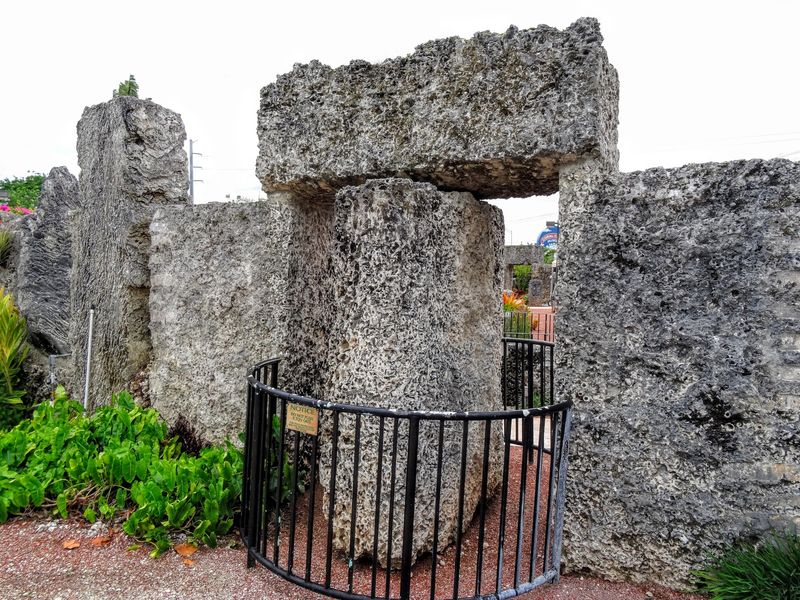
A door weighing about nine tons sounds like a workout. Yet for years, visitors could push Ed’s gate open with a single finger.
The gate pivoted on a metal shaft set right through its center of balance. It was so finely balanced that it swung with barely any effort.
The famous nine-ton gate stopped working in 1984. Engineers removed it to figure out the trick and found an old truck bearing inside.
The bearing had rusted over time. Crews repaired it, but the gate never moved quite as smoothly as before.
Today it’s one of the most photographed spots at Coral Castle. You can admire it, but touching the stonework isn’t allowed, so keep your hands to yourself.
I love that this gate fooled even modern experts for a while. Ed placed it decades earlier with no crane in sight.
It’s a perfect example of his style. Simple parts, careful balance, and a result that looks almost magical.
Snap your photo, then take a second to stare at the edges. They fit so neatly into the wall that it barely seems possible.
See The Stone Rocking Chairs That Were Built To Actually Rock
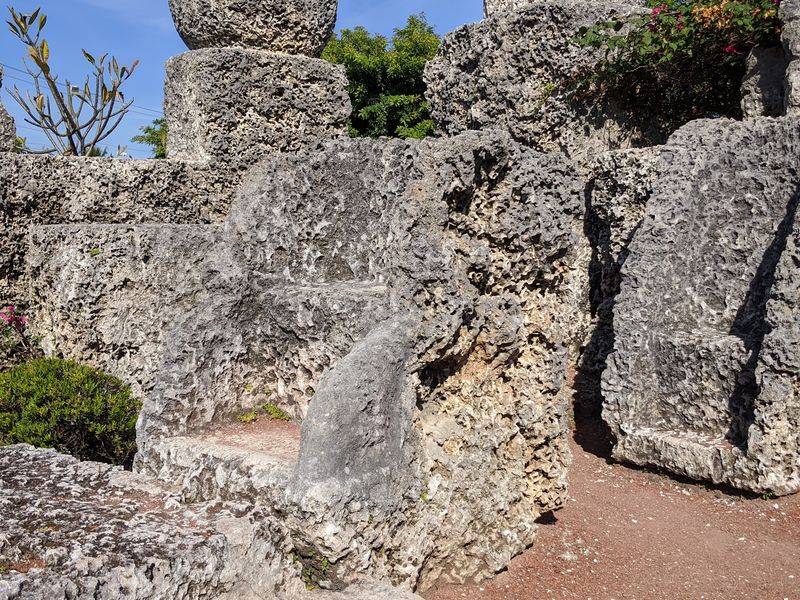
Furniture made of rock shouldn’t be comfortable. Ed apparently missed that memo.
Around the grounds, you’ll spot coral chairs, beds, and tables, all carved by hand. Some rocking chairs were balanced so well that they could actually rock.
The Feast of Love table might be the most romantic piece of furniture in Florida. It’s a heart-shaped stone table, reportedly meant for an engagement or wedding celebration.
There’s also a Florida-shaped table, with a small basin marking Lake Okeechobee. Look closely at the details because Ed clearly had fun with that one.
A sun-facing throne room, a stone bathtub, and cradles for children add to the sense of a home built for a family that never arrived. It’s sweet and a little heartbreaking.
Guided tours point out these pieces and share the stories behind them. You’ll notice tiny touches you’d otherwise walk right past.
My favorite part is how practical everything feels. Ed didn’t just carve art. He carved a whole life, then waited for someone to share it.
Bring your camera and patience. Every chair seems to have a backstory.
Planets, A Sundial, And A Telescope Carved From Coral
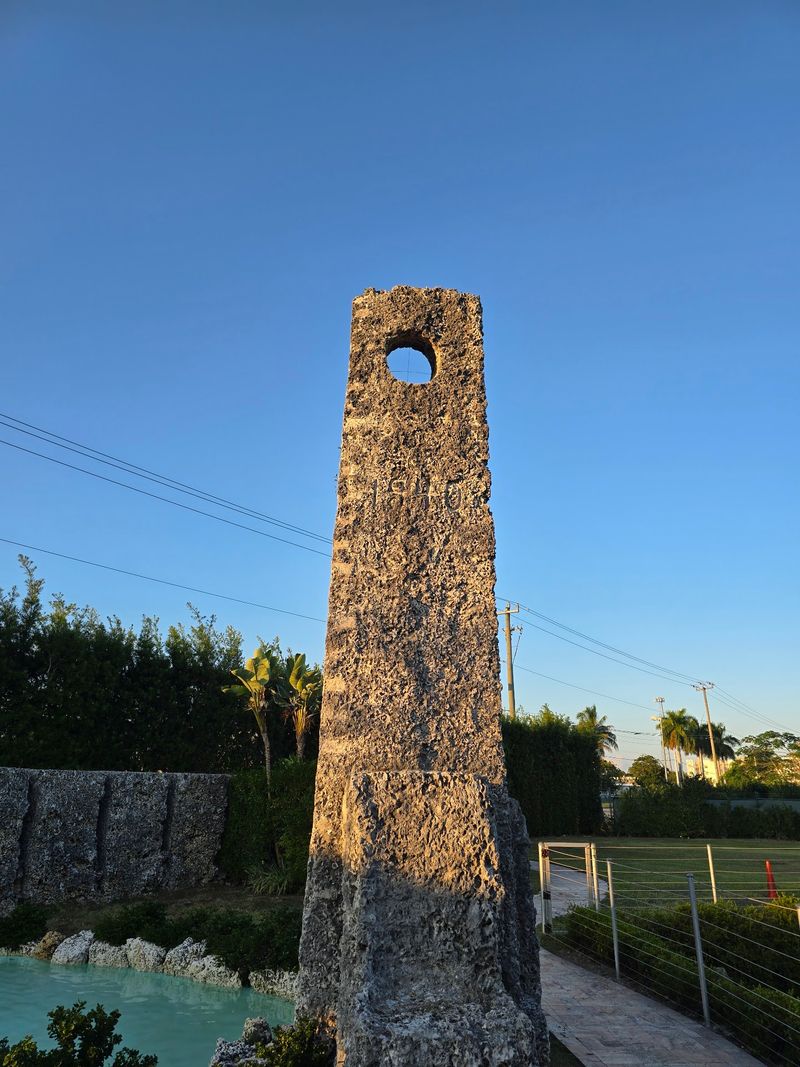
Ed may have been a sculptor, but he also had his head in the stars. Several of his biggest pieces track the sky.
The Polaris Telescope is a tall coral tower about 25 feet high. It’s aimed at the North Star, which Ed used for his astronomy.
Nearby, you’ll find carvings of Mars, Saturn, and crescent moons. The planet pieces are massive and look like a giant’s science project.
His sundial is another standout. It reportedly tells time throughout the day with impressive accuracy.
Fans of clever math will enjoy this corner most. Ed had only a fourth-grade education, but he taught himself plenty about the sky.
That fact makes me rethink every excuse I’ve made about learning something new. He picked it up with books and stubbornness.
The astronomy carvings also reveal how much time he spent outdoors at night. Working under the stars wasn’t just a habit. It shaped what he built.
Ask your guide to explain how the sundial works. It’s one of those things that clicks better when someone points while talking.
The Tiny Two-Story Tower Was His Actual Home
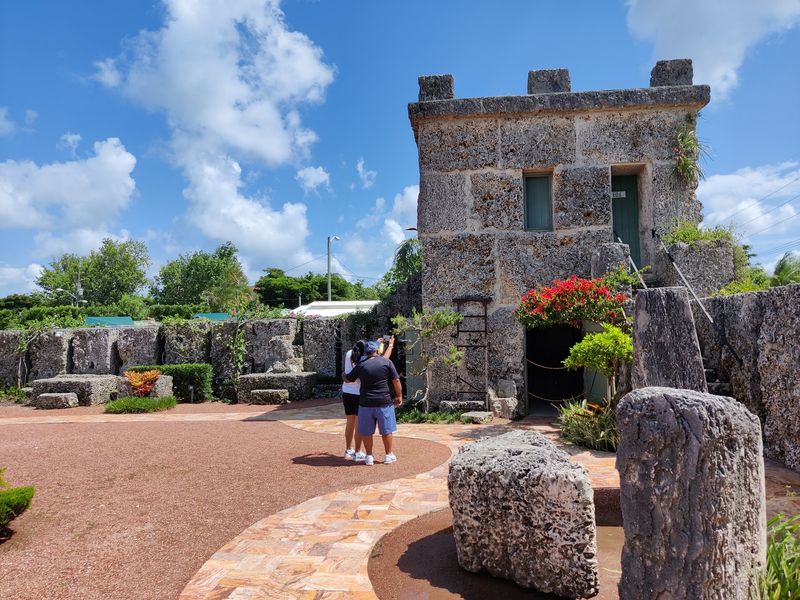
Ed didn’t build a mansion for himself. He lived in a two-story coral tower that’s surprisingly modest.
The upper level served as his living quarters. The lower level held his workshop and tools.
Each block in that tower is enormous, so the building weighs many tons. It’s basically a fortress for one quiet guy.
He gave tours of Rock Gate Park himself for a small fee. Visitors would ring a bell, and Ed would come down to show them around.
That detail makes him feel very human to me. He wasn’t hiding from the world entirely, just from nosy questions about his methods.
In 1951, Ed fell ill and went to a Miami hospital. He passed away there in December of that year.
His workshop items remain part of the museum. Seeing his homemade tools near his living space makes the scale of his effort hit harder.
Spend a minute by the tower before moving on. Picture how quiet these grounds must have been at night, with just Ed and his chains clinking.
A Guide Makes The Strange Story Way More Fun
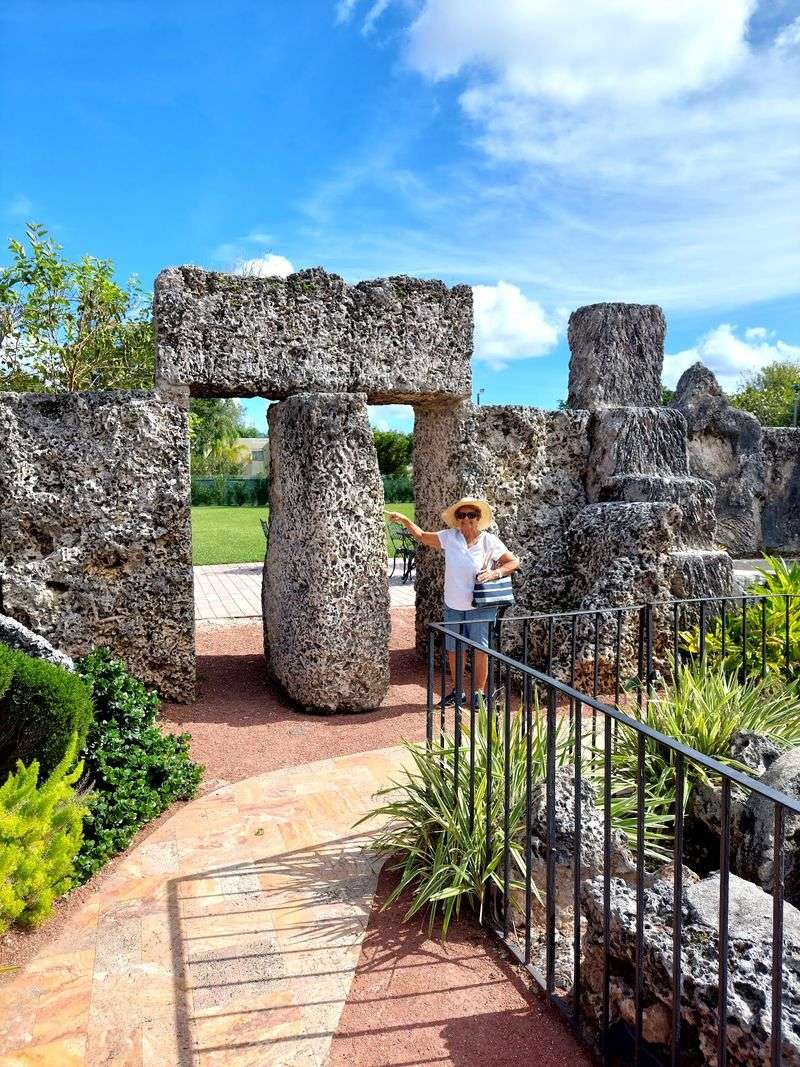
Stones don’t tell stories on their own. That’s where the guided tours come in.
Coral Castle runs guided tours that walk you through Ed’s life and the meaning behind his work. A short introductory video helps set the scene first.
Guides also cover the rumors and gossip around the place. That makes the visit feel more like a lively campfire story than a stiff history lesson.
After the guided portion, you can often keep exploring the grounds. Just remember that the stonework is off-limits for touching.
South Florida sun can feel intense, so dress for heat. The museum has offered umbrellas for shade, which is a thoughtful touch.
Plan for a visit of roughly an hour or so. The grounds aren’t huge, so pairing it with other stops nearby is smart.
Free parking makes the arrival easy. Large RVs or rigs with trailers may struggle to fit, though.
Coral Castle is currently open daily from 9 AM to 8 PM.
Make A Day Of It In Homestead
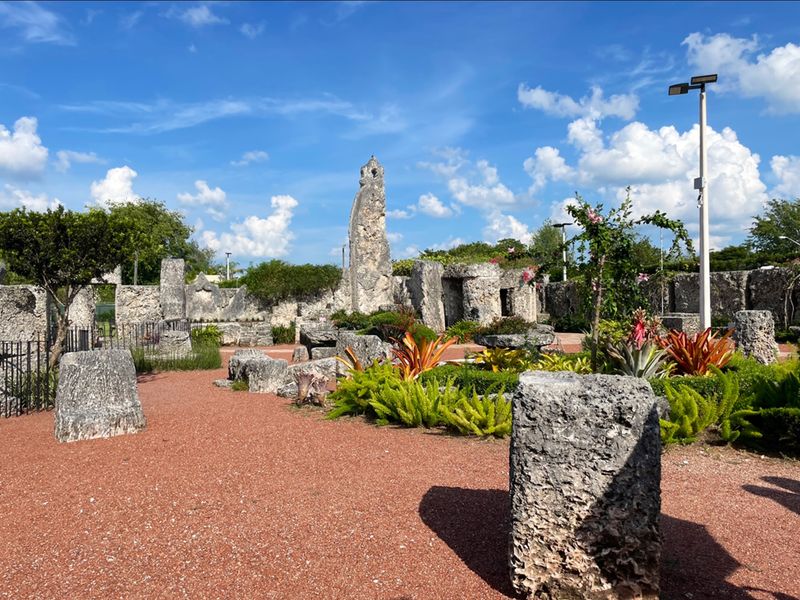
Finding the castle is easier than finding a parking spot at the beach. Coral Castle sits at 28655 S Dixie Hwy, Homestead, FL 33033.
It’s south of Miami, so it fits nicely into a road trip toward the Florida Keys. Homestead also makes a handy base for exploring South Florida’s wilder side.
Everglades National Park is within driving distance. So is Biscayne National Park, known for its clear water and coral reefs.
That pairing feels fitting to me. You can see coral rock carved by hand, then see living coral out in the bay.
Coral Castle is listed on the National Register of Historic Places. Ed’s work earned real recognition long after he was gone.
Stop by the gift shop on your way out. You’ll find souvenirs that celebrate the legend and its quirky creator.
Arriving right at opening can help you beat the midday heat. Morning light also makes the coral glow nicely for photos.
However you plan it, give yourself time to think about Ed. One small man, a lot of rock, and a mystery that still keeps Florida guessing.