One Of The World’s Largest Tiffany Glass Collections Hides Inside This St. Augustine Dining Hall
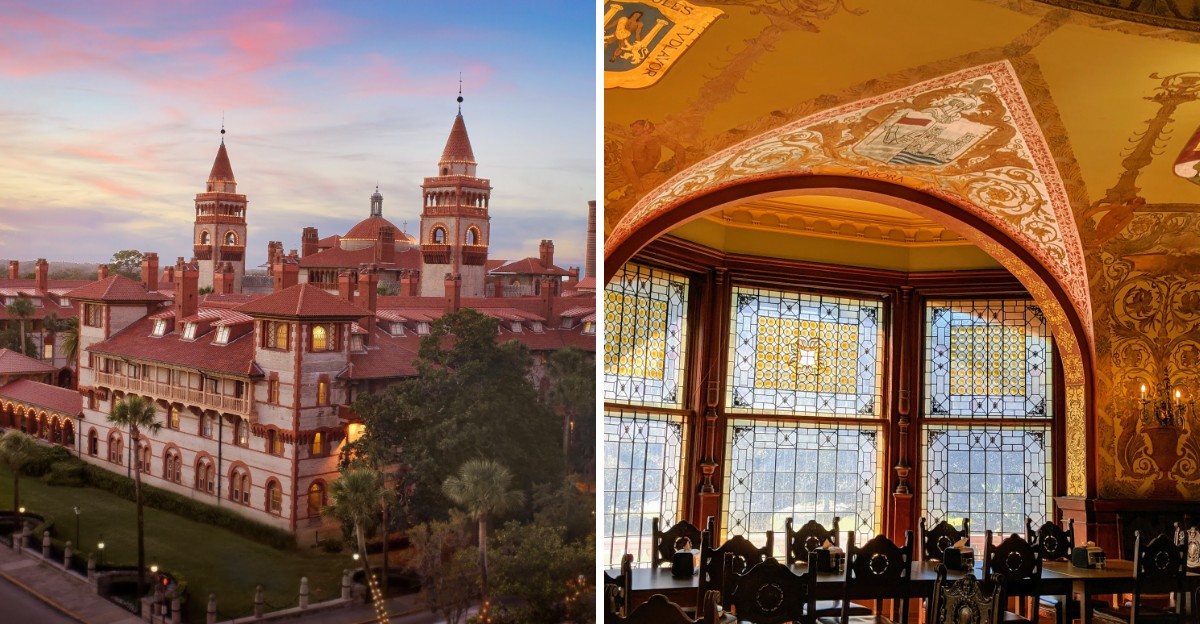
College students eat their daily meals under 79 windows designed by Louis Comfort Tiffany. Yes, the cafeteria line comes with priceless stained glass overhead.
That dining hall once served wealthy winter guests at a grand 1888 hotel. Today it’s part of a working campus, and I love that the history still gets used every single day.
The building was among the first major structures made from poured concrete. It was also wired for electricity from the start, with power supplied by Thomas Edison’s company. I can’t imagine how dazzling that looked to visitors back then.
Student guides lead the tours that open these rooms to the public in Florida. So how often do you get to tour a Gilded Age palace where people still grab lunch?
A Gilded Age Palace Now Doubles As A College Campus
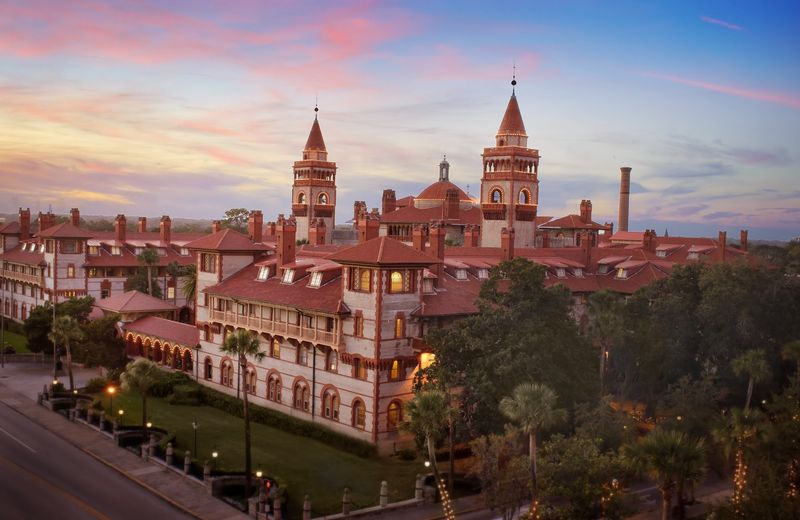
Henry Flagler had big plans for a sleepy Florida town in the 1880s. He built the Hotel Ponce de Leon, which opened in January 1888 as a winter retreat for America’s wealthiest travelers.
Today, the same building is the heart of Flagler College. Historical Tours of Flagler College is the program that lets the public explore its grand rooms with a guide.
The hotel was designed by the New York firm Carrère and Hastings. Those two young architects later designed the New York Public Library, so they clearly knew how to make an entrance.
The style is Spanish Renaissance Revival, with red tile roofs, towers, and detailed trim everywhere. It fits St. Augustine beautifully, since the city has deep Spanish colonial roots.
The hotel welcomed guests for decades before closing. Flagler College opened inside it in 1968, which saved the building and gave it a whole new life.
I like that this place never became a frozen museum. Students walk the halls, study in old hotel spaces, and keep the building busy. Few historic landmarks get such a lively second act, and that makes the tour feel surprisingly personal.
Lunch Under 79 Tiffany Windows Sounds Like A Fair Deal
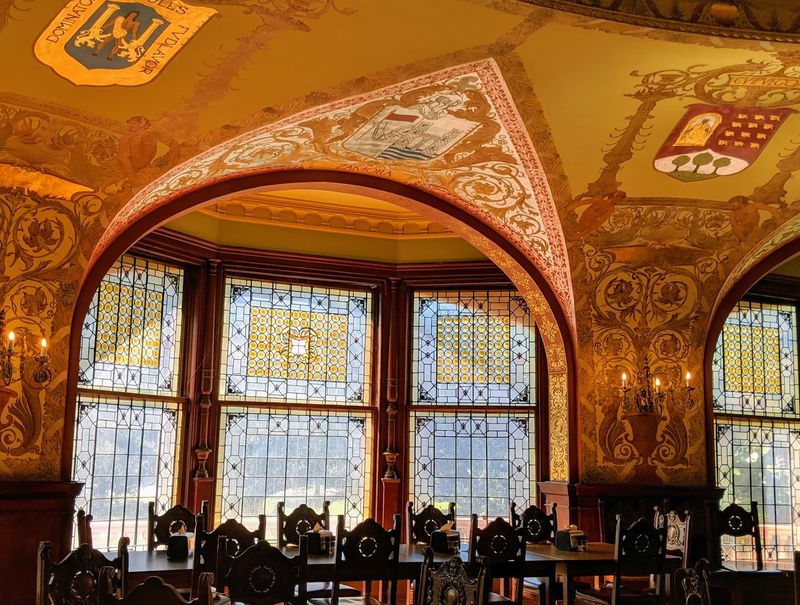
Most college cafeterias come with plastic trays and fluorescent lights. The dining hall at Flagler College comes with 79 stained glass windows created by Louis Comfort Tiffany.
The college describes it as the largest collection of Tiffany windows still used in its original setting. That detail is the star of many tours, and honestly, it deserves top billing.
The room started as the hotel’s dining hall, where rich guests enjoyed formal meals. Now students eat breakfast, lunch, and dinner in the same space, surrounded by glowing color.
Tiffany was a young designer when he worked on this project. Years later, his name would become famous for lamps and glass around the world.
Look up as well as around. The ceiling is covered with painted murals, and the carved woodwork adds even more detail to an already busy feast for the eyes.
Here’s a fun angle to consider on your visit. Picture finishing a math test, then grabbing a sandwich under art collectors’ dream windows. Flagler students do that daily. You only get to visit, but the visit still feels like a small privilege.
Your Guide Probably Has Homework Due Tomorrow
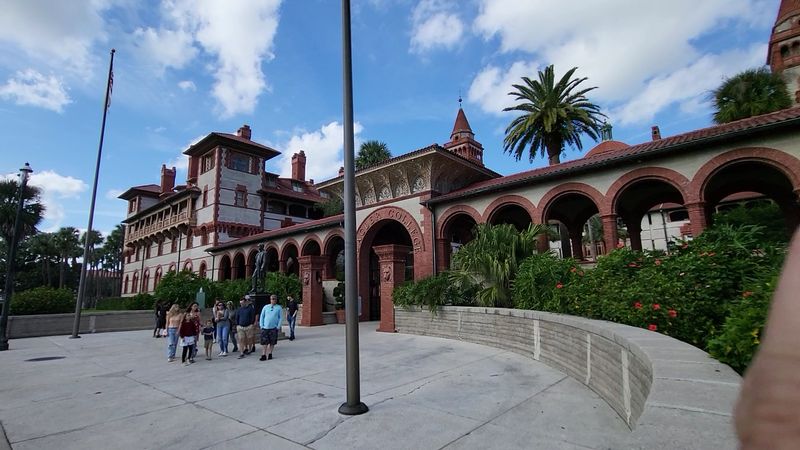
Forget stiff, scripted tours from a retired expert in a blazer. Flagler College students lead these tours, which gives each visit a friendly, youthful energy.
Guides share the story of Henry Flagler, the hotel’s construction, and the art filling the rooms. They also point out small details that most people would walk right past.
Student guides bring their own personalities to the script. Some lean into humor, while others focus on architecture or the people who shaped the building.
The program also helps students. Working as a guide gives them a paid campus job and real public speaking experience, which beats folding sweaters at the mall.
Since the tour happens on a working campus, classes may be in session during your visit. Expect to share hallways with students heading to class or grabbing coffee.
Here’s a practical tip. Stay close to your guide so you catch every story, especially in busier spaces. Asking questions is welcome, and your guide will likely enjoy showing off what they know about their school’s remarkable home.
The Rotunda Will Make Your Neck A Little Sore
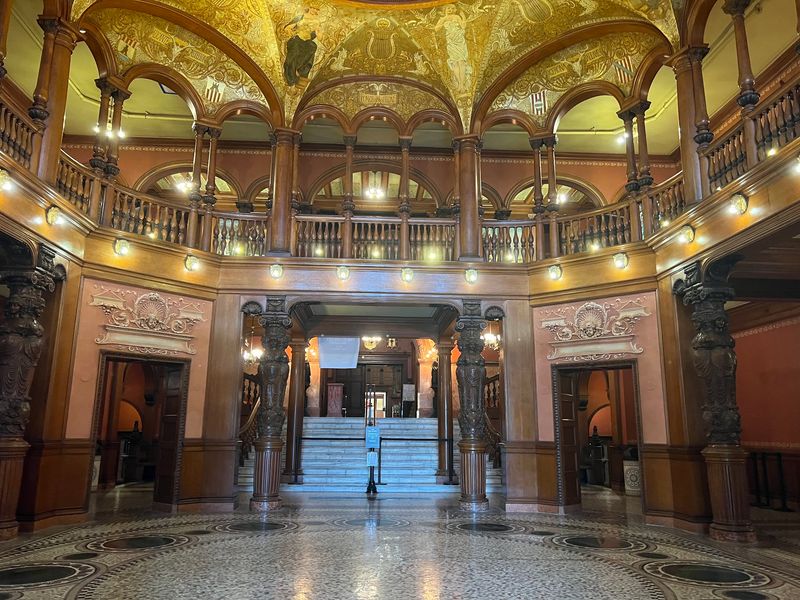
Carved wooden columns, painted figures, and a soaring dome greet you in the rotunda. It’s one of the most photographed spaces inside the old Hotel Ponce de Leon.
The rotunda served as the hotel’s grand lobby. Wealthy guests arrived here after long train rides, and the room was meant to impress them immediately.
Above you, the dome features painted decoration by artist George W. Maynard. The figures and symbols connect to Spanish history and exploration themes.
Below, the floor features detailed mosaic work. Between the floor and the ceiling, nearly every surface has some kind of carving, painting, or gold detail.
The Historical Tours of Flagler College meeting area sits nearby, so many visits begin close to this space. Exhibits and video displays near the entrance also share history while you wait.
A friendly warning seems fair here. You’ll probably spend a lot of time looking straight up, so watch your step. Bring a phone with plenty of storage, because one photo of this ceiling never feels like enough.
Concrete And Edison Power Made This Hotel Futuristic
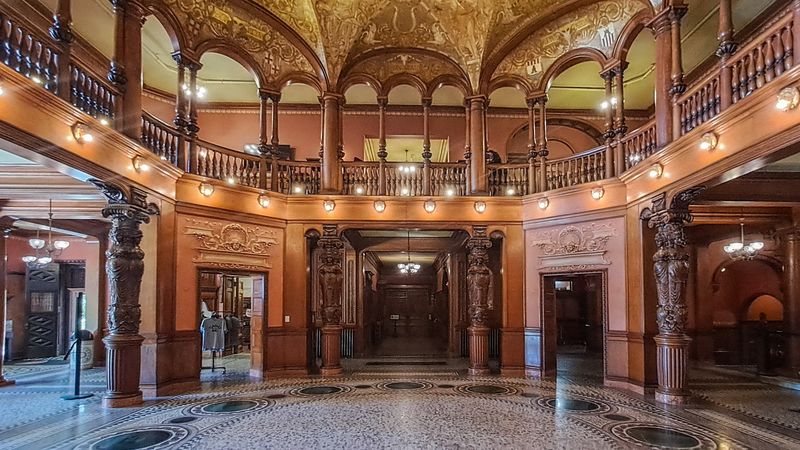
Thomas Edison’s company helped light this hotel when electric lights were still a novelty. Guests in 1888 enjoyed electricity during a time when most homes used gas or oil lamps.
The story goes that some guests feared touching the switches. Staff reportedly handled the lights for them, which is a funny reminder of how new this technology felt.
The building itself was groundbreaking too. It’s one of the earliest large buildings in the country constructed from poured concrete.
Builders mixed the concrete with coquina, a local shell stone found in the area. That mix helps give the walls their textured look, and it connects the structure to the Florida coast.
These details make the tour more than an art lesson. You also get a quick look at how inventors and builders pushed new ideas during the late 1800s.
Look closely at the walls as you move through the grounds. The texture tells a story about local materials and bold engineering. It’s a neat reminder that luxury and innovation often traveled together during the Gilded Age.
A Courtyard Fountain With Frogs And Turtles Keeps Watch
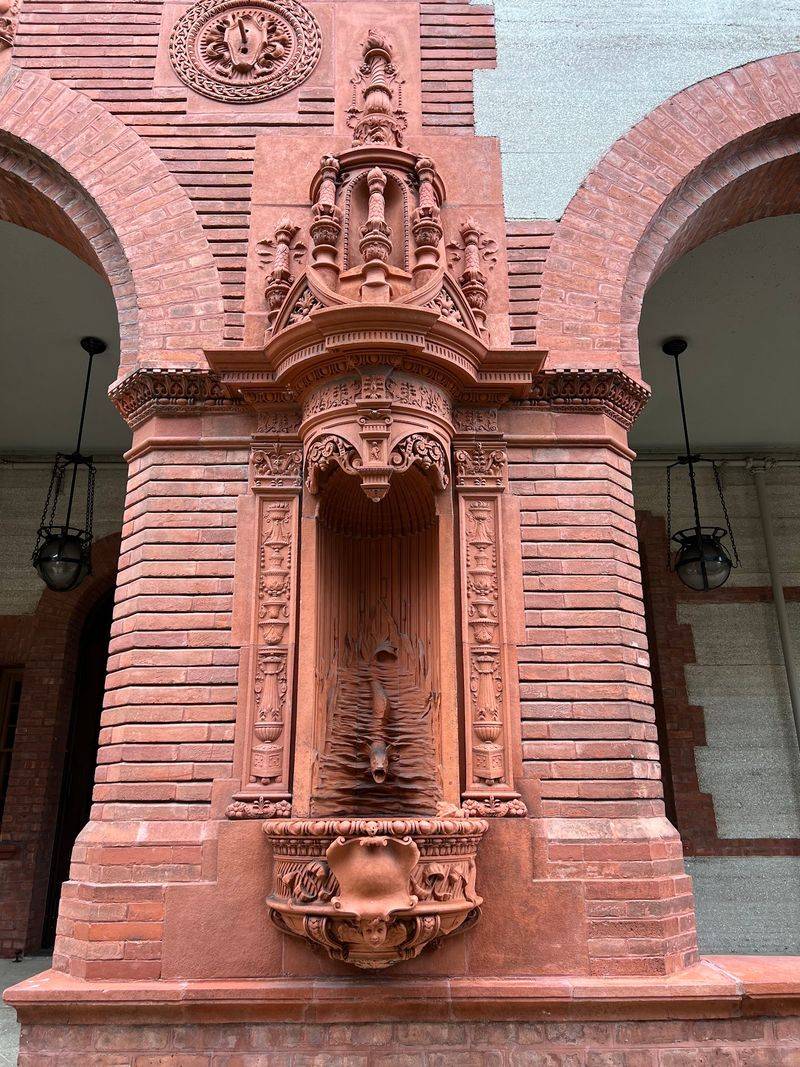
Frogs and turtles appear on the fountain in the main courtyard. They’re small details, but they add a playful touch to an otherwise formal space.
The courtyard sits just inside the main gates. Guests once strolled here between meals and social events, enjoying the Florida sunshine during their winter getaways.
Tropical plants surround the fountain, and the hotel’s towers rise above the scene. Tours often point out decorative features like terra cotta details along the rooflines.
Look high for those dragon-like heads near the top of the courtyard walls. Guides love explaining their meaning, so save your theories until after you hear the story.
This outdoor space offers a nice break between interior rooms. It’s also an easy spot for photos, especially when the sun lights up the red tile roofs.
Bring sunscreen and water on warm days. St. Augustine can feel steamy, even outside summer. The good news is that much of the tour happens indoors, so you’ll get plenty of shade and cool air along the way.
Ladies Had Their Own Fancy Hangout Here
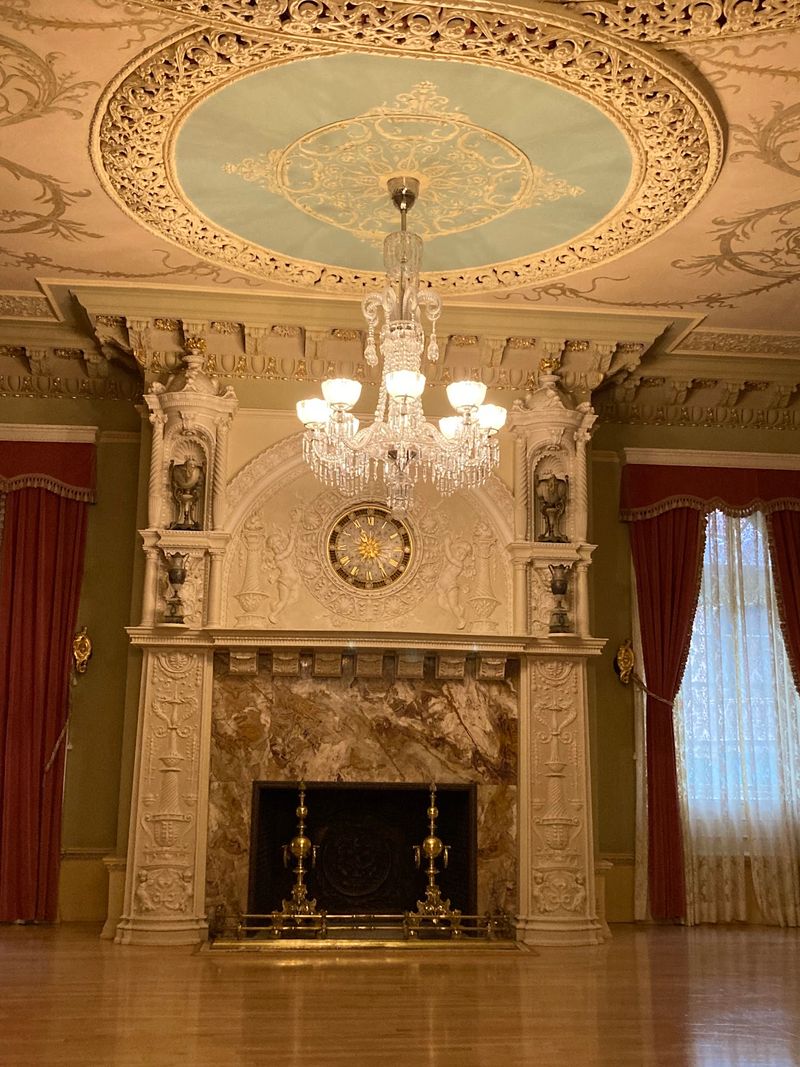
Social life in a Gilded Age hotel followed strict rules. Men and women often had separate spaces, and the Hotel Ponce de Leon included a lavish parlor once used by female guests.
That room is now known as the Flagler Room. It shines with gold details, mirrors, and sparkling chandeliers that feel straight out of a period film.
The chandeliers draw plenty of attention. Many tours highlight crystal fixtures connected to Tiffany, adding even more sparkle to the room.
This space shows how wealthy travelers spent their days. They read, chatted, played games, and showed off fine clothes while enjoying winter in Florida.
Today the room is used for special college events. It still feels formal, though, so you may notice yourself standing a little straighter inside it.
Take a moment to compare it with the dining hall. Both rooms feature amazing craftsmanship, yet each has a very different mood. The parlor feels delicate and polished, while the dining hall feels bold and colorful. Together they show how the hotel was designed to wow guests everywhere.
Plan Ahead Because Tour Spots Can Vanish Fast
Timing matters with this tour. Historic tours are currently offered daily at 10 a.m. and 2 p.m., although times may change or tours may be canceled for special events.
Booking ahead online is the smartest move. Showing up hoping for a same-day spot might leave you admiring the gates instead of the dining hall.
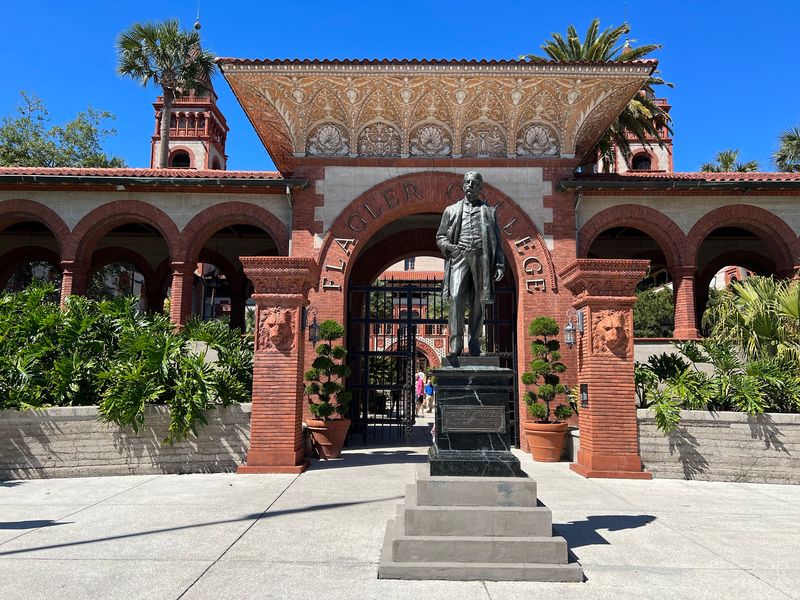
Historical Tours of Flagler College meets at 74 King St, St. Augustine, FL 32084. Look for the main entrance with the statue of Henry Flagler out front.
Tours generally last about an hour. The walking is fairly light and stays within the historic building and grounds, which makes it manageable for many visitors.
Keep in mind that this is a historical tour, not a college admissions tour. Prospective students should look for separate campus visit options through the college.
Arrive a little early to check in and browse the displays near the entrance. Some rooms may close for college events, so access can vary. Staying flexible helps you enjoy whatever spaces open up that day.
Step Outside And History Keeps Going Across The Street
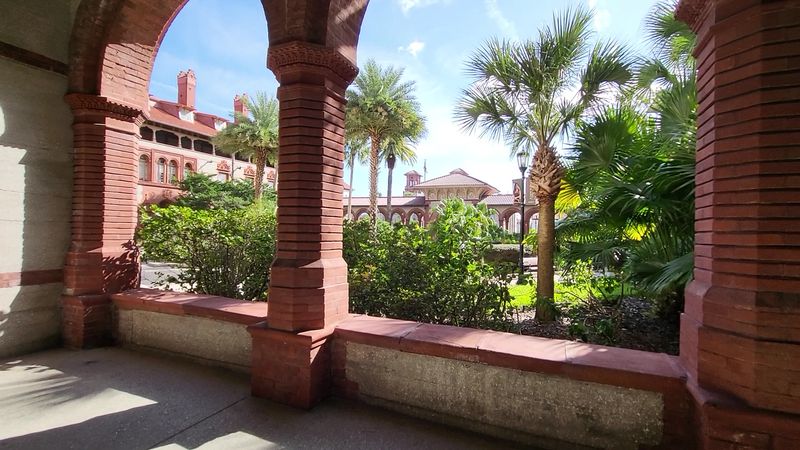
Right across King Street stands the Lightner Museum. It occupies the former Hotel Alcazar, another Flagler hotel designed by the same architects.
That makes a perfect pairing for history fans. You can tour one Flagler hotel, then cross the street and explore another with very different collections inside.
St. Augustine is the oldest continuously inhabited European-founded city in the United States. Spain founded it in 1565, and Florida history sits around nearly every corner here.
Historic St. George Street is a short walk from campus. It’s lined with shops, snacks, and old buildings, making it an easy stop after your tour.
Many visitors park once and explore on foot. The historic district is compact, so walking lets you notice details you’d miss from a car window.
I believe this tour works best as part of a full day downtown. Start with the Tiffany glass, wander the old streets, then end near the bayfront. By evening, you’ll have traveled through several centuries without ever needing a passport.