Step Back In Time At These 12 Charming Florida Heritage Villages
Florida isn’t just about beaches and theme parks. Scattered across the state are hidden gems that preserve the stories of pioneers, settlers, and early communities who shaped the Sunshine State.
These heritage villages offer a unique chance to walk through history, explore authentic buildings, and discover how Floridians lived generations ago. Whether you’re a history buff or just looking for a memorable day trip, these living museums bring the past to life in fascinating ways.
1. Historic Pensacola Village – Pensacola
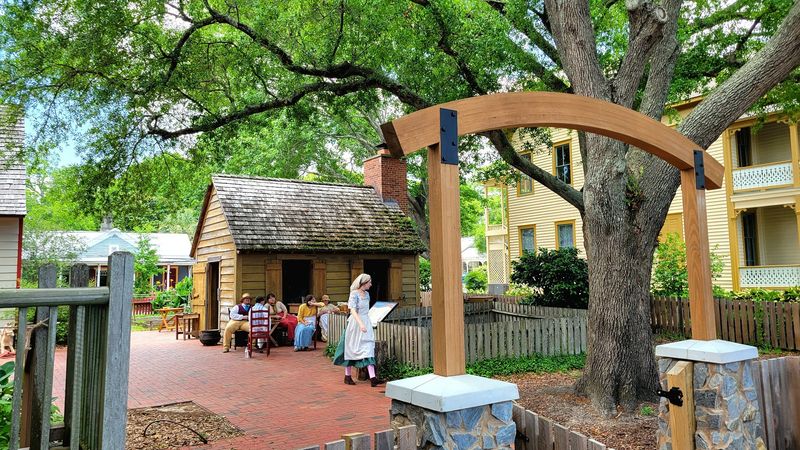
Walking through downtown Pensacola feels like flipping through a history book where five different flags have flown. The Historic Village clusters together buildings from the 1800s, each one telling stories about life in one of America’s oldest settlements.
You’ll find everything from a colonial warehouse to a Victorian home, all within a few walkable blocks.
What makes this place special is how it shows the layers of culture that built Pensacola. Spanish, French, British, Confederate, and American influences all left their mark here.
The Museum of Commerce recreates an entire 1890s streetscape with a print shop, toy store, and leather goods shop that look ready to open for business tomorrow.
Kids especially love the hands-on activities where they can try writing with quill pens or playing with old-fashioned toys. The Lavalle House and Julee Cottage tell important stories about free people of color in the 19th century, adding depth to the usual historic narratives.
Guided tours bring the buildings to life with tales of yellow fever epidemics, Civil War drama, and everyday struggles.
Plan to spend at least two hours wandering between buildings and soaking in the atmosphere. The village sits right in the heart of downtown, so you can easily combine your visit with lunch at a nearby restaurant.
Summer can get steamy, so morning visits work best. The costumed interpreters really know their stuff and love answering questions about everything from architecture to antique kitchen gadgets.
2. Cracker Country – Tampa
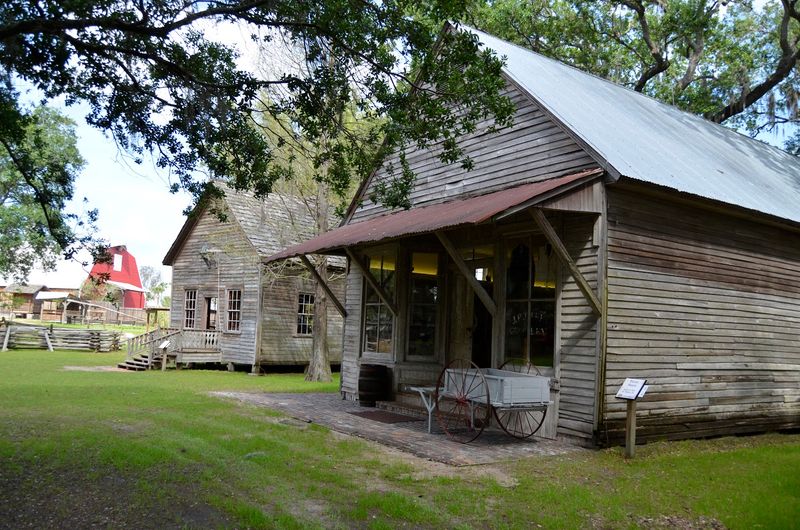
Right next to the Florida State Fairgrounds sits a collection of 13 authentic buildings that capture rural Florida life from the 1890s through 1930s. Cracker Country gets its name from Florida cowboys who cracked whips while herding cattle across the state’s vast prairies.
The term became a badge of honor for hardy pioneers who carved out lives in Florida’s challenging frontier.
Each structure was carefully moved from its original location and restored to showcase different aspects of pioneer life. You’ll explore a one-room schoolhouse where lessons were taught by candlelight, a general store stocked with period goods, and a working blacksmith shop where metal still gets shaped the old-fashioned way.
The Chinsegut House stands out as a beautiful example of Victorian architecture transplanted to the Florida wilderness.
What really brings this village alive are the living history demonstrations. Craftspeople demonstrate skills like quilting, woodworking, and soap making using techniques passed down through generations.
The herb garden shows which plants pioneers relied on for medicine and cooking before modern conveniences arrived. On weekends, you might catch musicians playing traditional folk tunes on the porch.
The village operates primarily during the State Fair in February, though special events happen throughout the year. It’s a hidden treasure that many Tampa residents don’t even know exists.
The shaded paths between buildings offer relief from Florida heat, and the stories shared by volunteers paint vivid pictures of how tough and resourceful early Floridians had to be just to survive.
3. Historic Spanish Point – Osprey
Where Little Sarasota Bay meets ancient shell mounds, history stretches back thousands of years. Spanish Point preserves not just pioneer buildings but also evidence of indigenous peoples who thrived here long before Europeans arrived.
The 30-acre site weaves together prehistoric archaeology, pioneer homesteading, and the grand dreams of early 20th-century developers into one fascinating story.
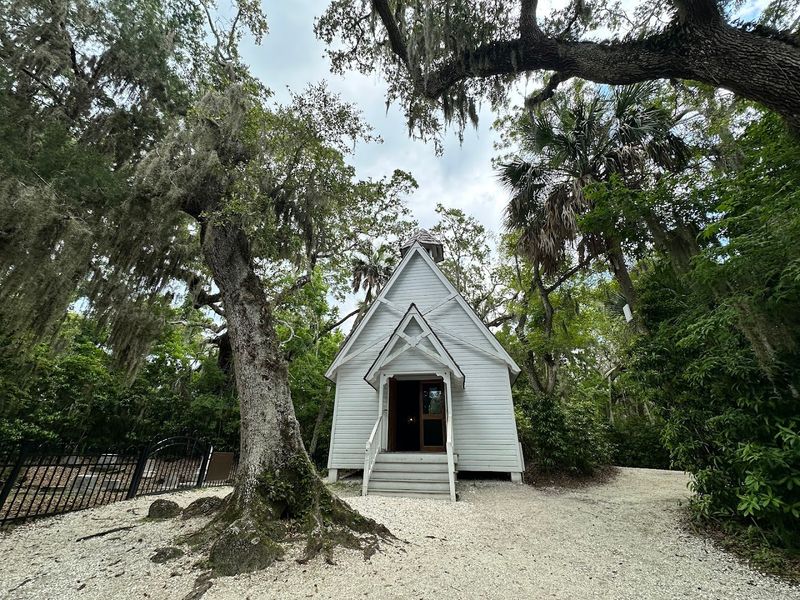
The Guptill House stands as the centerpiece of the pioneer area, showing how the family operated a successful citrus packing business in the late 1800s. Nearby, the Mary’s Chapel is a tiny white chapel built entirely from wooden packing crates, proving that resourcefulness defined early Florida settlers.
The chapel still hosts weddings today, making it one of the most charming ceremony spots on the Gulf Coast.
But the real stars here are the massive shell middens created by the Calusa people over 5,000 years ago. These aren’t just piles of discarded oyster shells but engineered structures that provided high ground in a swampy landscape.
Walking trails wind through maritime hammock forests where gumbo limbo trees twist overhead and butterflies dance between native flowers. The formal gardens showcase plants that would have grown in a prosperous 1920s estate.
Guided tours help connect all the different time periods into a coherent narrative about human adaptation to Florida’s coastal environment. The waterfront location means gorgeous views across the bay, especially during sunset.
Educational programs teach traditional crafts and archaeological techniques, making this more than just a pretty historic site.
4. Fort Christmas Historical Park – Christmas
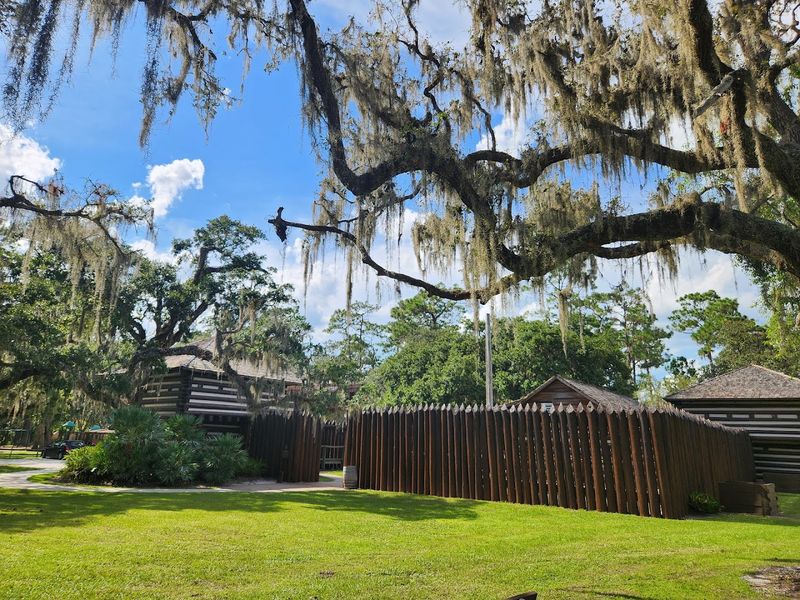
Yes, there’s really a town called Christmas in Florida, and it’s home to a fascinating piece of military history. The fort here was built during the Second Seminole War in 1837, serving as a supply depot for troops pushing through Central Florida’s wilderness.
The original fort is long gone, but a careful reconstruction stands today, complete with blockhouses and stockade walls that show how soldiers lived during this turbulent period.
Seven historic homes surround the fort, each moved here from elsewhere in Orange and Osceola counties. These structures span from the 1870s through early 1900s, showing how architecture and daily life evolved as Florida transitioned from frontier territory to settled state.
The Yates-Tison House represents typical cracker construction with its dog-trot design that caught cooling breezes. The Simmons House shows how families upgraded to Victorian styles once prosperity allowed.
Inside the fort, exhibits detail the complex and tragic history of the Seminole Wars, presenting multiple perspectives on this dark chapter. Kids can imagine what it felt like for soldiers stationed far from home in mosquito-infested swamps, surrounded by unfamiliar dangers.
The park doesn’t shy away from difficult historical truths while still making the experience accessible for all ages.
Special events throughout the year include battle reenactments, pioneer skills demonstrations, and holiday celebrations that pack the park with families. The town of Christmas embraces its unusual name with festive decorations year-round, making this a quirky destination that combines serious history with lighthearted fun.
Pack bug spray during summer months and explore the nature trails that show what wild Florida looked like to those early soldiers.
5. Manatee Village Historical Park – Bradenton
In the heart of Bradenton, a cluster of restored buildings preserves the story of Manatee County’s earliest settlers. The 1860 courthouse serves as the anchor, a dignified structure where justice was dispensed during Reconstruction and beyond.
Its thick walls and simple design reflect the no-nonsense approach of frontier communities where survival took priority over decoration.
The 1887 Methodist Church stands nearby with its graceful steeple reaching skyward, reminding visitors that faith communities formed the social backbone of pioneer towns. Inside, wooden pews and a pump organ create an atmosphere that would feel familiar to congregations from over a century ago.
The Stephens House shows how a successful merchant family lived, with period furnishings that include everything from kitchen implements to bedroom furniture.
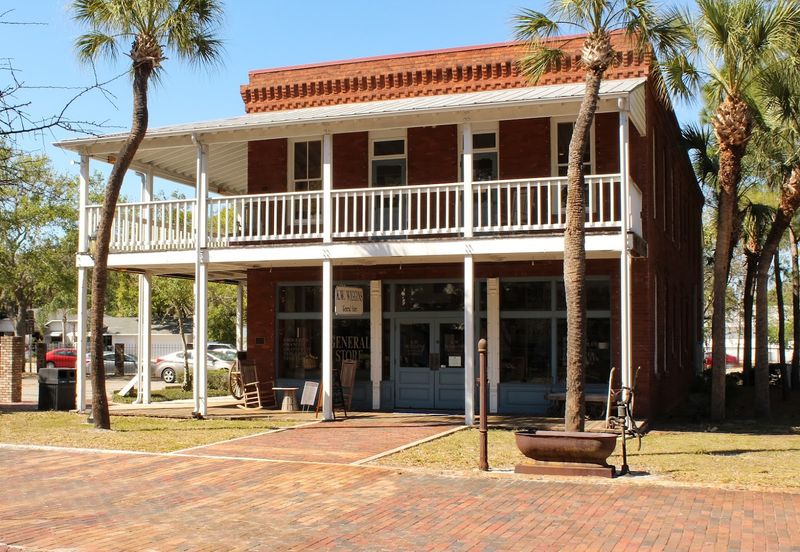
What sets this village apart is the Wiggins Store, a completely stocked general store that looks ready to serve customers right now. Shelves hold period-appropriate goods from patent medicines to dry goods, showing the incredible variety a good country store had to carry when it served as the community’s lifeline to the outside world.
The Fogarty Boat Works demonstrates Florida’s deep connection to water, displaying tools and techniques used to build the boats that were essential transportation in a state crisscrossed by rivers and coastline.
Volunteers passionate about local history staff the buildings, sharing stories passed down through generations of Manatee County families. The park hosts regular events including heritage festivals and educational programs that teach traditional crafts.
It’s completely free to visit, making it an excellent budget-friendly option for families wanting to experience authentic Florida history without the theme park price tag.
6. Heritage Village – Largo
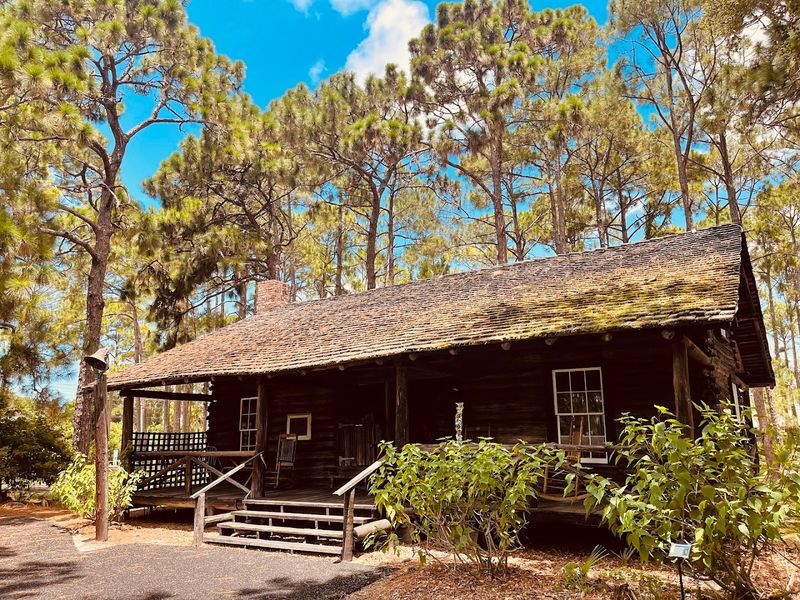
Pinellas County’s largest living history museum spreads across 21 acres with 28 historic structures that tell the complete story of the region’s development. Unlike some heritage sites that focus on a single era, this village shows evolution from the 1850s through 1940s, letting visitors see how technology and culture transformed over nearly a century.
Each building was saved from demolition and carefully relocated here, creating a timeline you can walk through.
The 1852 McMullen-Coachman Log House ranks among Florida’s oldest surviving homes, its hand-hewn logs speaking to the backbreaking work of clearing land and building shelter. Fast-forward a few decades to see Victorian homes with elaborate gingerbread trim and wraparound porches designed to catch Gulf breezes.
The collection includes a one-room schoolhouse, country store, railroad depot, and even a 1920s service station complete with vintage gas pumps.
What makes Heritage Village exceptional is how it shows the diversity of people who built Pinellas County. The Lowe House tells stories of African American families during segregation, while the Sulphur Springs Depot reflects the tourism boom that transformed sleepy fishing villages into winter destinations.
Costumed interpreters demonstrate period crafts and household tasks, showing visitors that running a home without electricity or running water required serious skills and constant effort.
The botanical gardens surrounding the buildings showcase native Florida plants and heritage fruit trees, some varieties that early settlers brought with them. A research library on-site helps genealogy enthusiasts trace family roots through local records.
Admission is free, though donations help maintain these precious buildings. Special events throughout the year include everything from Civil War reenactments to old-fashioned ice cream socials.
7. Koreshan State Park – Estero
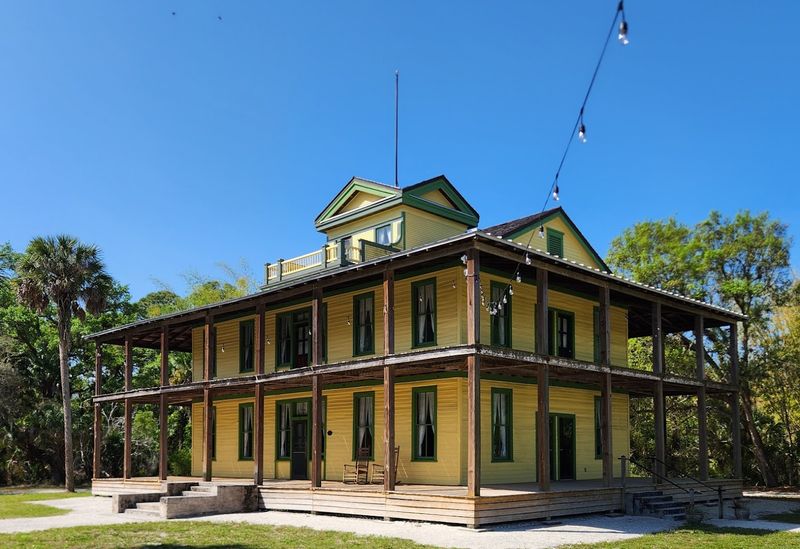
Among Florida’s heritage sites, none has a stranger story than the Koreshan Unity Settlement. In 1894, Dr. Cyrus Teed brought his followers to this spot along the Estero River to build a utopian community based on his belief that humans lived on the inside of a hollow Earth.
While that theory didn’t pan out, the community he founded created beautiful buildings and a successful communal society that lasted until 1961.
Eleven original structures remain standing, meticulously maintained to show how this unusual group lived. The Art Hall hosted concerts and lectures, its stage still ready for performances.
The Planetary Court housed leaders in surprising comfort, with indoor plumbing and other luxuries rare in frontier Florida. The bakery produced bread for the entire community using massive brick ovens that still stand.
Walking through these buildings reveals that the Koreshans, despite their unconventional beliefs, were skilled craftspeople and efficient organizers.
The community practiced gender equality decades before it became mainstream, with women holding leadership positions and working alongside men in all trades. They established successful businesses including a printing press, bakery, and boat works that traded with nearby settlements.
Exotic fruit trees they planted still produce, and their carefully planned gardens show their horticultural expertise. The grounds along the river remain peaceful and beautiful, perfect for understanding why this spot appealed to people seeking something different.
Rangers lead fascinating tours that explore both the community’s unusual cosmology and their very practical accomplishments. Kayaking the Estero River lets you see the landscape as the Koreshans did, traveling by boat to Fort Myers for supplies.
It’s a perfect example of how Florida has always attracted dreamers and visionaries alongside more conventional settlers.
8. Dudley Farm Historic State Park – Newberry
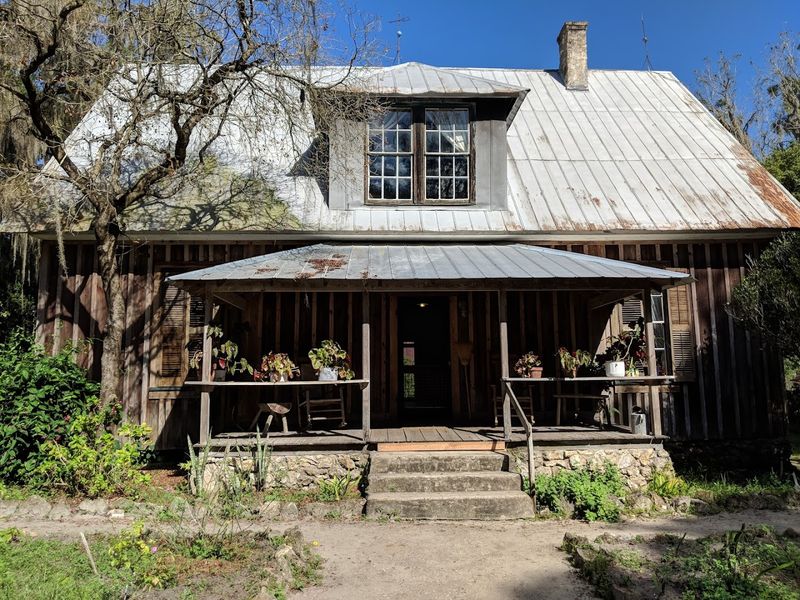
Few heritage sites feel as genuinely lived-in as Dudley Farm, where three generations of the same family worked the land from 1850s until 1940s. This isn’t a recreated village but an actual farmstead frozen in time, showing exactly how North Florida farming families lived.
The weathered buildings and well-used tools tell stories of hard work, seasonal rhythms, and the satisfaction of self-sufficiency.
The Dudley family never had electricity or indoor plumbing, so everything here represents pre-modern rural life. The farmhouse itself evolved over decades as the family prospered, with additions showing changing architectural styles.
The kitchen stands separate from the main house, a common arrangement that kept cooking heat and fire danger away from living spaces. Outbuildings include a sugarcane mill, smoke house, corn crib, and barn, each essential for processing the farm’s crops and livestock.
Today, costumed interpreters continue farming using period-appropriate methods. You might see them feeding heritage breed chickens, tending vegetable gardens, or demonstrating how to make cane syrup using the old mill.
Cows, pigs, and other farm animals roam the property, giving kids a chance to see livestock breeds that were common a century ago but rare today. The hands-on approach helps visitors understand that farming wasn’t romantic but required dawn-to-dusk labor every single day.
Nature trails wind through the property’s 325 acres, passing through pine flatwoods and hardwood hammocks that show what undeveloped Florida looks like. The farm hosts seasonal events including cane grinding in fall and old-fashioned Independence Day celebrations.
Located near Gainesville, it makes an excellent day trip that combines history, agriculture, and natural beauty in one authentic package that hasn’t been sanitized or commercialized.
9. Florida Agricultural Legacy Learning Center, Inc. – Palm Coast
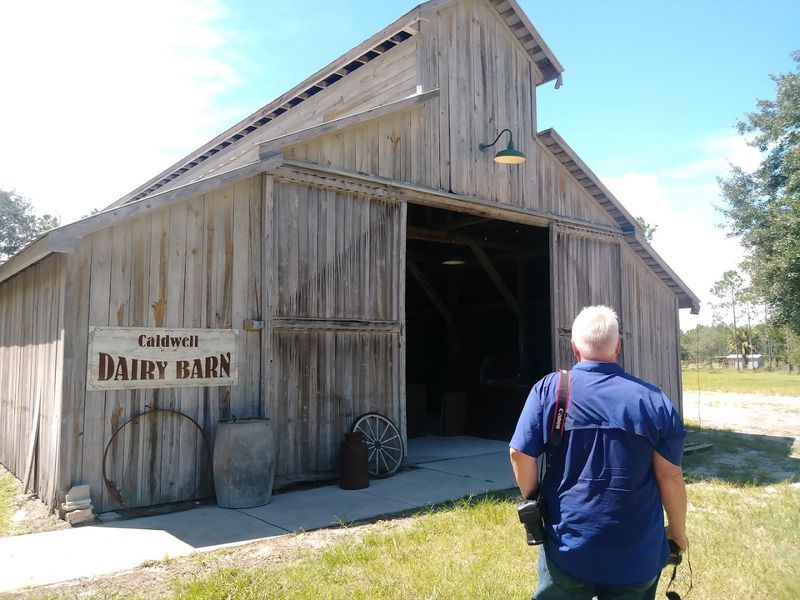
Agriculture built Florida just as surely as tourism did, and this museum celebrates the farmers who turned swamps and scrubland into productive fields. Located in Palm Coast, the museum preserves a working 1890s farm that demonstrates the techniques and tools that fed growing Florida communities.
Unlike some heritage sites that focus on wealthy settlers, this place honors the ordinary families who broke their backs cultivating difficult land.
The centerpiece is a classic cracker farmhouse surrounded by barns, chicken coops, and work sheds that held everything from plows to hand tools. Interpreters demonstrate skills like blacksmithing, woodworking, and food preservation that farmers needed to be truly self-sufficient.
The vegetable gardens grow heritage varieties of crops that Florida pioneers would recognize, from collard greens to sweet potatoes. Farm animals including cows, goats, and chickens complete the picture of a self-contained agricultural operation.
Special exhibits explore specific aspects of Florida farming history, from turpentine production in pine forests to citrus cultivation that became the state’s signature industry. You’ll learn about the Seminole people’s agricultural innovations and how they influenced later farming practices.
The museum doesn’t shy away from discussing how different groups including enslaved people, sharecroppers, and migrant workers contributed labor that made Florida agriculture successful.
Kids love the hands-on activities where they can try churning butter, grinding corn, or feeding animals. The museum hosts seasonal events including harvest festivals and heritage plant sales where you can buy seedlings of old-time crop varieties.
It’s smaller and less famous than some Florida heritage sites, but that intimacy means staff have time to really engage with visitors and answer questions. The peaceful rural setting provides welcome contrast to the developed coastal areas just miles away.
10. Pioneer Florida Museum & Village – Dade City
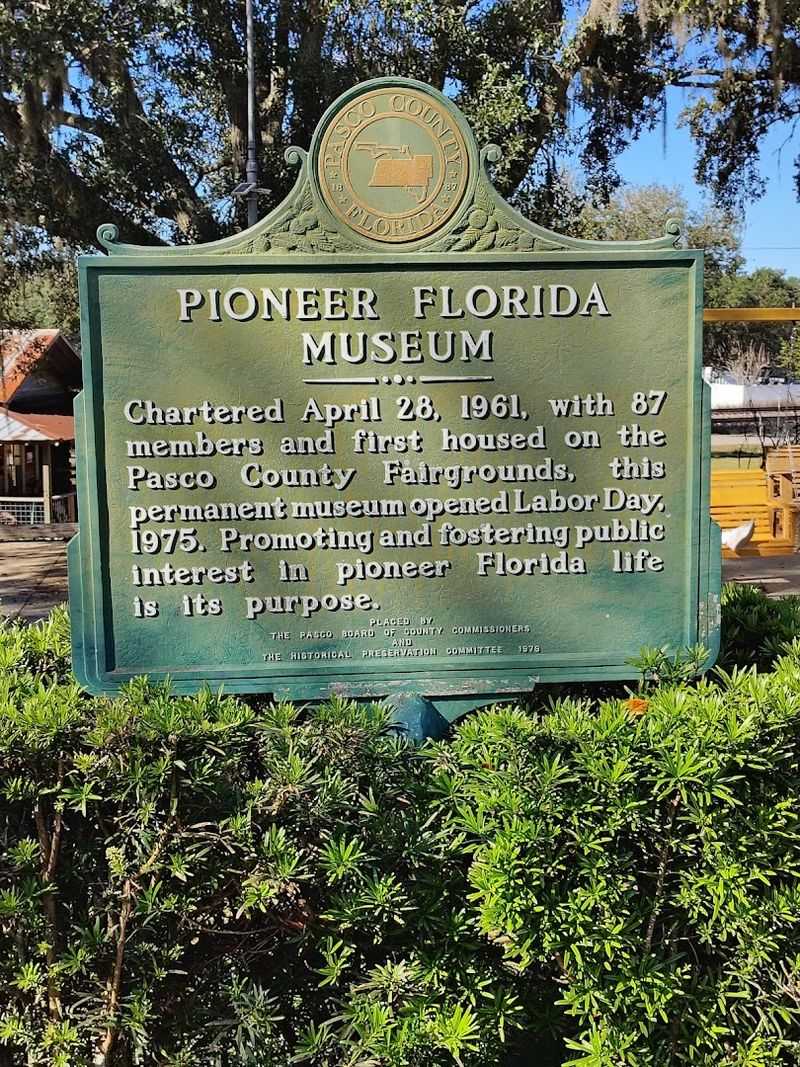
Pasco County’s pioneer history comes alive at this 20-acre museum complex where relocated historic buildings cluster around a central green. Founded in 1975 by locals determined to preserve disappearing structures, the village now includes homes, a schoolhouse, church, train depot, and various outbuildings that paint a complete picture of late 19th-century Florida life.
Each structure has its own story about the families who built them and the communities they served.
The Overstreet House showcases typical cracker architecture with its high ceilings and central breezeway designed to maximize airflow in the days before air conditioning. The Enterprise School represents the one-room schoolhouses where children of all ages learned together, often walking miles to attend.
The Atlantic Coast Line Depot reminds visitors that railroads transformed Florida, connecting isolated settlements to markets and bringing tourists who would reshape the state’s economy. Inside each building, period furnishings and artifacts create authentic room settings that help visitors imagine daily routines.
What distinguishes this museum is its extensive collection of agricultural equipment and rural tools. You’ll see everything from sugarcane presses to turpentine-making apparatus, reminding visitors that Florida’s economy once depended on extracting natural resources rather than attracting visitors.
The blacksmith shop, print shop, and general store demonstrate the specialized skills that small towns needed to function. A vintage train caboose delights kids who can climb aboard and imagine riding the rails.
Volunteers with deep roots in the community share family stories and local legends that bring the exhibits to life. Annual events include pioneer days with demonstrations of soap making, quilting, and other traditional crafts.
The museum sits in downtown Dade City, a charming town that still retains much of its old Florida character, making it easy to combine your heritage village visit with lunch and antique shopping.
11. The Old Davie School Historical Museum – Davie
Before suburban sprawl transformed this area into part of greater Fort Lauderdale, Davie was a frontier town where cattle outnumbered people. The 1917 school building that now houses this museum served generations of local children, its thick walls and high ceilings keeping classrooms cool during Florida’s long hot months.
The Mediterranean Revival architecture stands out, fancier than typical rural schoolhouses, reflecting the community’s aspirations and pride.
Inside, exhibits trace Davie’s transformation from Seminole territory through pioneer settlement to modern suburb. You’ll learn about the Everglades drainage projects that made development possible, though at enormous environmental cost.
Displays showcase the cattle industry that defined early Davie, when cowboys drove herds through streets that now carry commuter traffic. Photographs show wooden boardwalks, unpaved roads, and the general store that served as community gathering spot.
Artifacts from pioneer families include household items, farming tools, and personal possessions that humanize historical statistics.
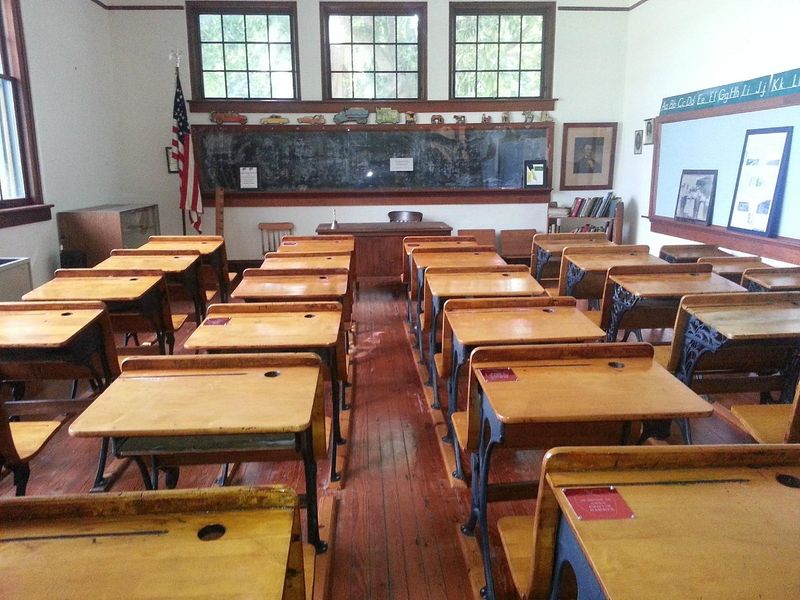
The museum preserves an authentic 1920s classroom complete with wooden desks, slate boards, and teaching materials that show how education worked before modern technology. Kids can try writing with chalk on slates or ringing the old school bell.
A separate room recreates a period home interior, showing how families lived with minimal possessions and maximum resourcefulness. The outdoor area includes a replica Seminole chickee, acknowledging the indigenous people who inhabited this land first.
What makes this museum special is its focus on very local history, telling stories of specific families and individuals who built this community. Rather than broad overviews, you get intimate details about real people’s lives.
The museum hosts lectures, workshops, and special events that connect past to present. Located in Old Town Davie, where western-themed architecture and hitching posts maintain frontier character, the museum anchors a district that resists complete modernization.
It’s a small museum with big heart, lovingly maintained by people passionate about preserving their hometown’s heritage.
12. Yulee Sugar Mill Ruins Historic State Park – Homosassa
Stone ruins rising from the forest floor tell the story of ambition, industry, and the enslaved people whose labor built Florida’s antebellum economy. David Levy Yulee, Florida’s first U.S.
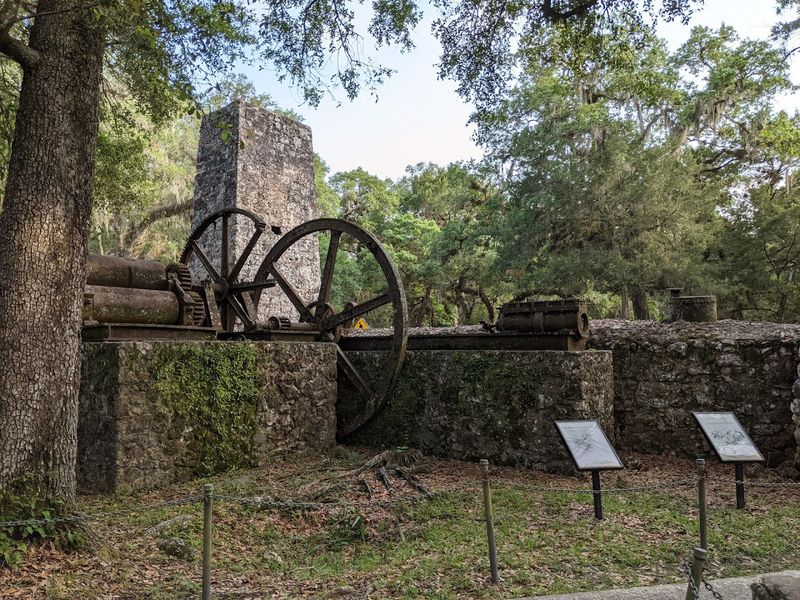
Senator, established this 5,100-acre sugar plantation in 1851, dreaming of agricultural wealth. The mill processed sugarcane into raw sugar and syrup, with massive iron kettles boiling juice extracted by steam-powered rollers.
The operation lasted only a decade before the Civil War ended this chapter of Florida history.
Today, the limestone walls and iron machinery stand as Florida’s best-preserved example of a sugar mill from this era. Walking around the ruins, you can identify the boiler room, furnace, and areas where different stages of sugar processing occurred.
Interpretive signs explain the technical process while also acknowledging that enslaved workers performed the dangerous, exhausting labor. Harvesting cane required working in Florida heat with razor-sharp leaves slicing exposed skin.
Processing meant tending boiling kettles and heavy machinery that could maim or kill careless workers.
The park doesn’t glorify plantation culture but presents it as the complex, morally troubling reality it was. Yulee himself was a complicated figure, born to a Jewish father and Christian mother, who advocated for Florida statehood while building wealth through enslaved labor.
After the Civil War, the mill never reopened, its ruins gradually being reclaimed by forest until preservation efforts began in the 1970s.
A short trail loops through the site, with native plants labeled and interpreted. The ruins are surprisingly photogenic, with sunlight filtering through empty window frames and vines softening hard stone edges.
It’s a contemplative place that encourages reflection on difficult history. The park is small and can be seen in under an hour, but those minutes provide important perspective on Florida’s past that beach vacations don’t usually include.