The Moment You Notice These 15 Florida Buildings, Everything Else Fades
Florida is famous for beaches and theme parks, but its most unforgettable experiences might actually be hiding in plain sight — built into its walls, towers, and domes. From a mysterious coral fortress to a pink palace rising out of the Gulf Coast, the Sunshine State has a collection of buildings that stop you cold the moment you spot them.
Each one carries its own story, its own personality, and its own reason to make the trip. Once you see these places, ordinary buildings just never look the same again.
1. Coral Castle – Homestead
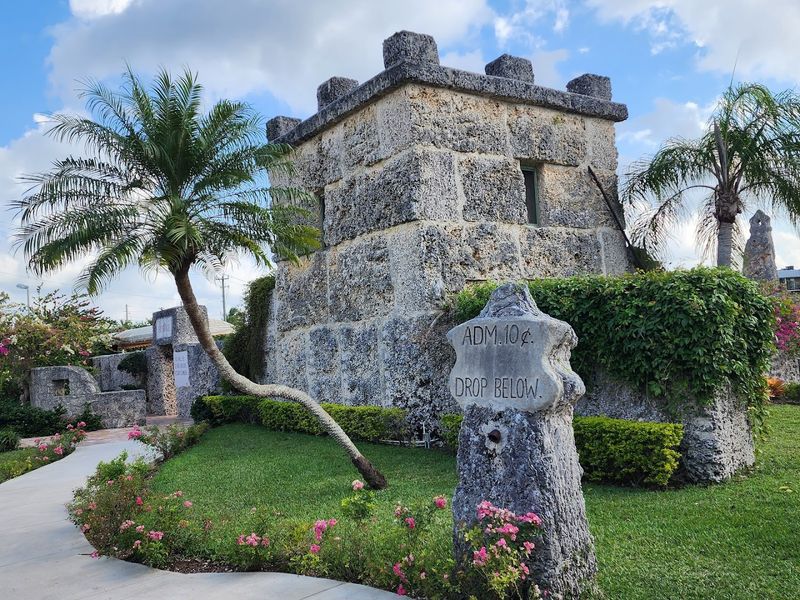
Nobody handed Edward Leedskalnin a crane, a crew, or a blueprint. Working almost entirely alone over the course of several decades, this Latvian immigrant quarried and moved more than 1,100 tons of coral rock — all by himself, mostly at night.
The result is Coral Castle, one of the most genuinely puzzling structures in the entire country.
Located in Homestead, just south of Miami, the site feels like walking into someone else’s dream. There are rocking chairs carved from solid rock, a nine-ton gate that once swung open with a single finger, and a telescope aimed permanently at the North Star.
Every piece was shaped with hand tools and an obsessive level of precision that engineers still scratch their heads over today.
Leedskalnin built it all for a woman who left him the day before their wedding. Whether that story is legend or fact, the heartbreak angle gives the place an emotional weight that most tourist attractions simply don’t have.
You’re not just looking at rocks — you’re looking at one man’s entire life’s work poured into stone.
Visiting is straightforward: the site is open most days, and guided tours are available. Kids tend to love the sheer weirdness of it, while adults get caught up in the engineering mystery.
Plan at least an hour and a half to really take it all in. Bring water because Homestead heat is no joke, especially in summer.
Coral Castle sits quietly off U.S. Highway 1, easy to miss if you’re not looking.
But once you’ve been, you won’t forget it. Some buildings just anchor themselves in your memory, and this is absolutely one of them.
2. Futuro House – Pensacola Beach
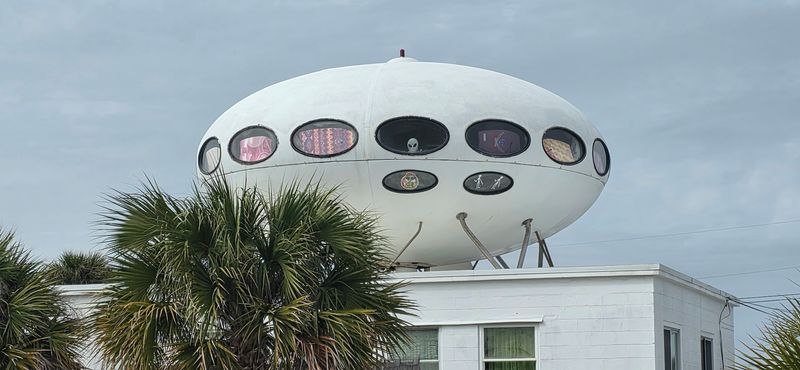
Picture a flying saucer that decided to skip the return trip home and just set up shop on a Florida beach. That is essentially what the Futuro House looks like, and honestly, that description barely does it justice.
Designed in the late 1960s by Finnish architect Matti Suuronen, these oval fiberglass pods were originally meant to serve as portable ski chalets — a concept that somehow ended up parked on Pensacola Beach.
Only about 60 Futuro Houses were ever made worldwide, and Florida is lucky enough to have one. The structure sits on legs like a retro robot waiting to lift off, with an oval door hatch that swings down like something out of a science fiction film.
The interior is just as wild — curved walls, built-in furniture, and a circular layout that makes you feel like you’ve stepped into a 1970s space fantasy.
The Pensacola Beach Futuro became something of a local legend over the years. It has survived hurricanes, ownership changes, and decades of curious tourists pressing their faces against the windows.
The building’s durability is actually a testament to how thoughtfully it was engineered, even if it looks like it belongs on the moon rather than the Gulf Coast.
Spotting it from the road is half the fun. You’re driving along, windows down, salt air coming in, and then — there it is.
A UFO on stilts. Your brain takes a second to catch up with your eyes.
That moment of confused delight is something you genuinely cannot manufacture.
If you’re already heading to Pensacola Beach for the white sand and emerald water, tack on a walk past the Futuro. It costs nothing and delivers everything in terms of sheer visual surprise.
3. The Don CeSar – St. Pete Beach
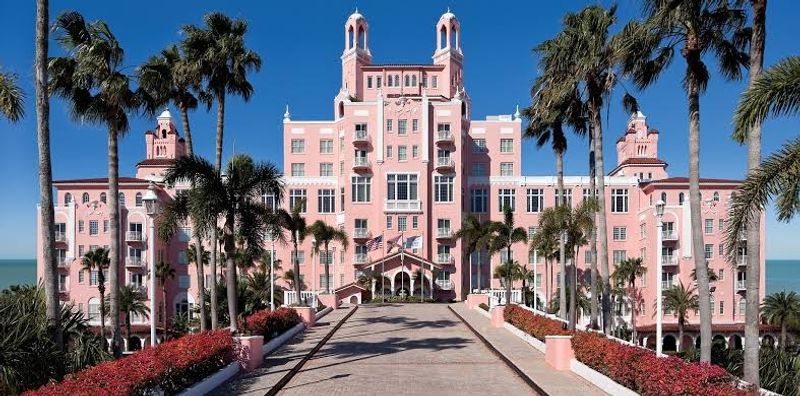
There is no mistaking the Don CeSar once it comes into view. Standing like a pink Mediterranean palace at the edge of St. Pete Beach, this hotel has been turning heads since it opened in 1928.
Locals call it the Pink Palace, and once you see it rising above the Gulf of Mexico, you understand exactly why the nickname stuck so hard and so fast.
Developer Thomas Rowe built the Don CeSar with the kind of ambition that was almost theatrical. He wanted something grand, something that felt like it belonged on the French Riviera but was planted firmly on Florida sand.
The Spanish-Moorish architecture, with its towers, arched windows, and terracotta details, delivers that feeling completely. It looks like a place where old Hollywood stars would have lounged, and many of them actually did.
The hotel has hosted F. Scott Fitzgerald, Franklin D.
Roosevelt, and a roster of celebrities too long to list here. During World War II, it was converted into a military hospital and administrative center — a chapter in its history that adds unexpected depth to all that pink glamour.
After the war, it fell into disrepair before being rescued and restored in the 1970s.
Today, staying at the Don CeSar is a full experience, but you don’t have to be a guest to appreciate it. The beachfront and lobby areas give visitors a taste of the grandeur.
Even just driving past on Gulf Boulevard and catching that pink silhouette against the sunset sky is worth the trip down the coast.
Some buildings age gracefully. The Don CeSar ages magnificently, wearing its nearly 100-year history like a crown that never needs polishing.
4. Weeki Wachee Mermaid Theater – Weeki Wachee
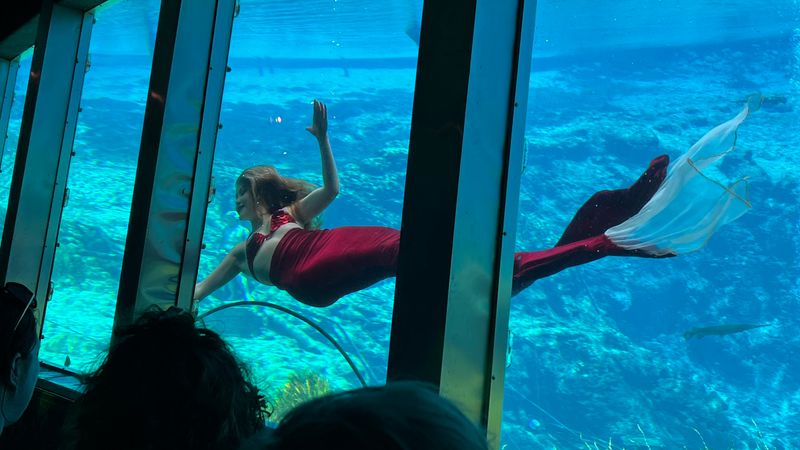
Underneath the surface of a natural freshwater spring in central Florida, performers in mermaid tails have been putting on underwater shows since 1947.
That sentence sounds like it was pulled from a fever dream, but Weeki Wachee Springs is absolutely real, still operating, and still just as magical as it was when it first opened along a lonely stretch of U.S. Highway 19.
Newton Perry, a former Navy frogman, came up with the idea after figuring out how performers could breathe through air hoses hidden at the bottom of the spring. He built an eight-seat theater into the side of the spring, and the first mermaids performed for anyone willing to pull off the highway and pay a small admission fee.
The concept was simple, strange, and completely irresistible.
The theater has since grown into a full state park, but the mermaid shows remain the undisputed centerpiece. Sitting in the underwater theater and watching performers glide through crystal-clear spring water — eating bananas, drinking soda, waving at kids pressed against the glass — is one of those experiences that feels suspended in time.
It belongs to an era of American roadside wonder that most people thought had disappeared forever.
Families with kids will find this place completely captivating, but adults often end up just as enchanted. There is something deeply charming about a show built entirely on imagination, athleticism, and a little bit of theatrical magic.
The spring water stays around 74 degrees year-round, which means the mermaid shows go on rain or shine.
Weeki Wachee is the kind of place that reminds you Florida has always been a little wonderfully weird, long before any theme park arrived to stake a claim on the magic.
5. Ca’ d’Zan – Sarasota
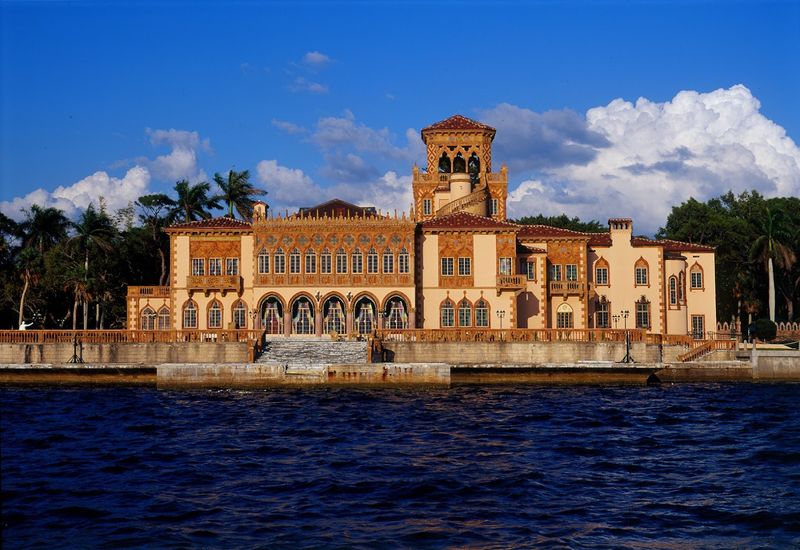
John and Mable Ringling were not people who did things halfway. As the co-owner of the most famous circus in American history, John Ringling had both the resources and the theatrical instinct to build something truly spectacular — and Ca’ d’Zan, which translates to House of John in Venetian dialect, is exactly that.
Sitting right on the edge of Sarasota Bay, this Venetian Gothic mansion is so ornate it almost looks painted rather than built.
Construction wrapped up in 1926, and the house was a full expression of Mable Ringling’s love for Venice. She and John had traveled there multiple times, falling hard for the city’s palaces and waterfront grandeur.
Ca’ d’Zan captures that admiration in terracotta towers, arched loggias, Venetian glass chandeliers, and marble floors that catch the Gulf Coast light in the most extraordinary way.
The mansion is now part of The Ringling, a museum complex that also includes a world-class art museum, circus museum, and historic rose garden. Walking through Ca’ d’Zan feels like stepping into a different world entirely — one where circus money met European elegance and somehow produced something genuinely beautiful rather than just excessive.
Tours of the interior are available and absolutely worth booking. The rooms are filled with original furniture, artwork, and personal touches that make the Ringlings feel surprisingly human.
Mable’s bedroom, in particular, has a warmth to it that cuts right through all the grandeur.
Even from the outside, standing on the bayfront terrace and looking up at those towers, Ca’ d’Zan earns its reputation as one of Florida’s most breathtaking private homes ever built. The word mansion barely covers it.
6. Solomon’s Castle – Ona
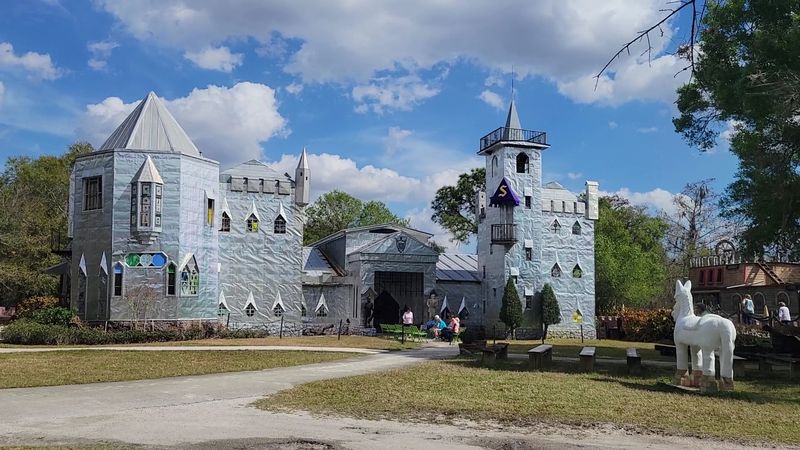
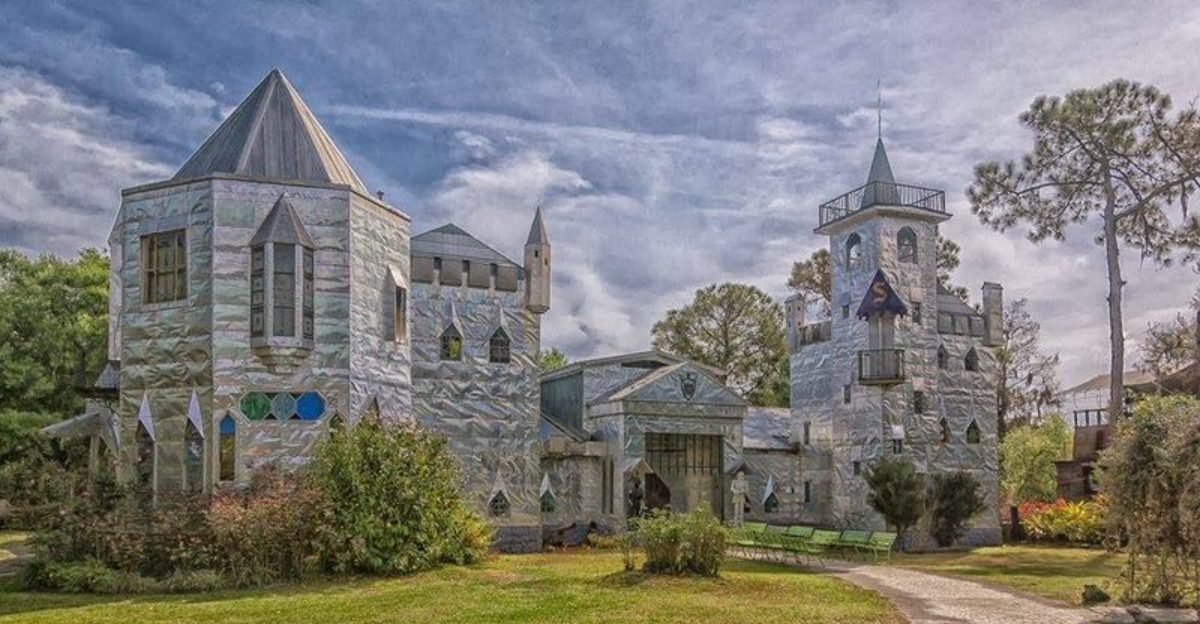
Howard Solomon spent decades turning other people’s junk into something nobody has ever seen before or since. Out in the middle of Hardee County, in a small community called Ona, he built an entire castle — complete with a moat — almost entirely from recycled aluminum newspaper printing plates.
The result is a building that shimmers in the Florida sun like something out of a fairy tale written by someone with a very specific sense of humor.
Solomon started construction in the 1970s and never really stopped. The castle grew room by room, floor by floor, filled with thousands of his own sculptures, carvings, and stained glass windows made from salvaged materials.
Every corner holds something unexpected — a life-size knight, a whimsical sea creature, a scene carved with the kind of detail that makes you stop mid-step and just stare.
The moat is real, and so is the boat restaurant shaped like a giant galleon that floats on it. Howard Solomon had a gift for turning the absurd into the charming, and the boat restaurant is a perfect example.
You can actually eat lunch there, which is one of the stranger and more delightful dining experiences Florida quietly offers.
Getting to Solomon’s Castle requires a genuine commitment. It sits deep in rural Florida, surrounded by orange groves and cattle pastures, with no major highway running close by.
That remoteness is part of its personality. You have to want to find it, and finding it feels like a reward in itself.
Solomon passed away in 2016, but the castle remains open to visitors through his family. Going there feels like honoring one man’s completely uncompromising creative vision, and that is a rare thing to experience anywhere.
7. Skunk Ape Research Headquarters – Ochopee
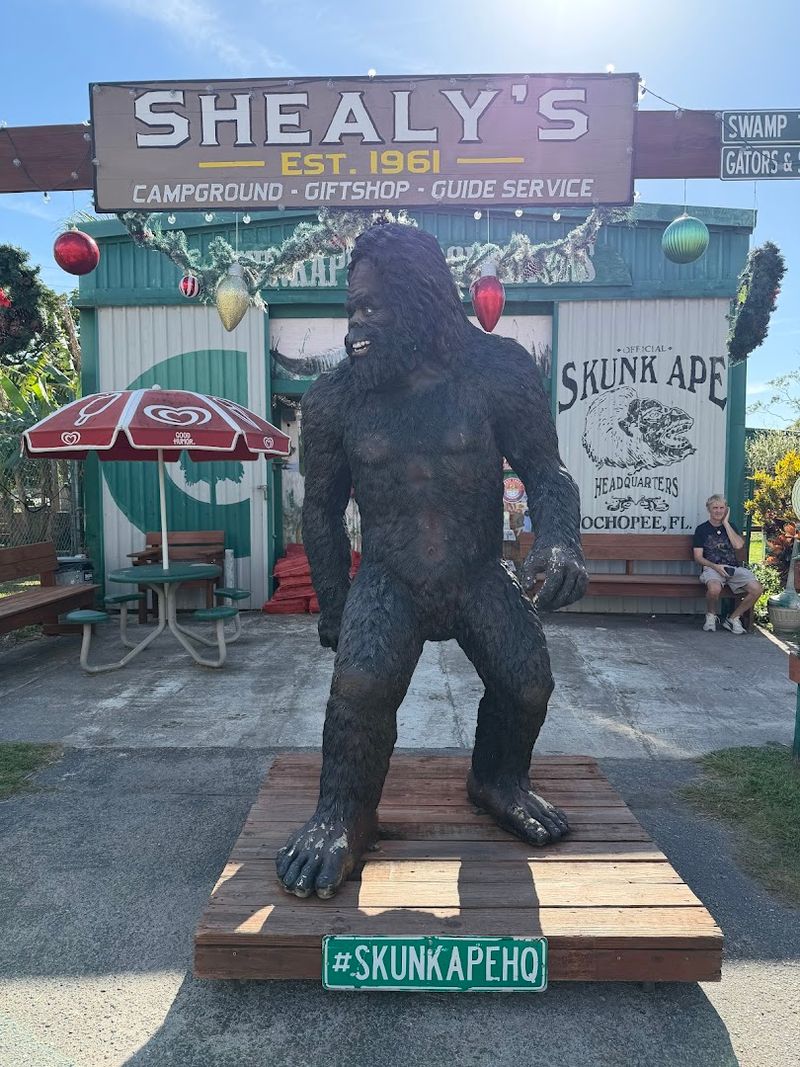
Florida has its own Bigfoot, and it smells worse. The Skunk Ape is the Sunshine State’s answer to the Pacific Northwest legend — a large, hairy, deeply unpleasant-smelling creature reportedly spotted throughout the Everglades for decades.
Whether you believe in it or not, the Skunk Ape Research Headquarters in Ochopee is one of the most entertaining stops along the Tamiami Trail.
Dave Shealy runs the place, and he is arguably the world’s most committed Skunk Ape investigator. His roadside headquarters doubles as a gift shop, wildlife exhibit, and museum dedicated to documenting sightings, evidence, and the broader mythology of Florida’s most elusive cryptid.
Walking in feels like entering someone’s lifelong passion project, which is exactly what it is.
The building itself is wonderfully scrappy — part tin-roofed shack, part jungle outpost, decorated with handmade signs, taxidermy, and an assortment of Skunk Ape memorabilia that you simply cannot find anywhere else on the planet. There are also live animals on the property, including reptiles native to the Everglades, which gives the stop some genuine wildlife education value alongside all the cryptid entertainment.
Located right at the edge of Big Cypress National Preserve, the headquarters sits in one of the most wild and atmospheric corners of Florida. The surrounding landscape — sawgrass, cypress domes, and open sky — makes the idea of something undiscovered lurking out there feel almost plausible.
Even hardcore skeptics tend to leave with a smile and a Skunk Ape t-shirt. The place leans fully into its own absurdity without ever feeling cynical about it.
That sincerity is exactly what makes it so surprisingly endearing and worth every mile of the drive to get there.
8. Morikami Museum – Delray Beach
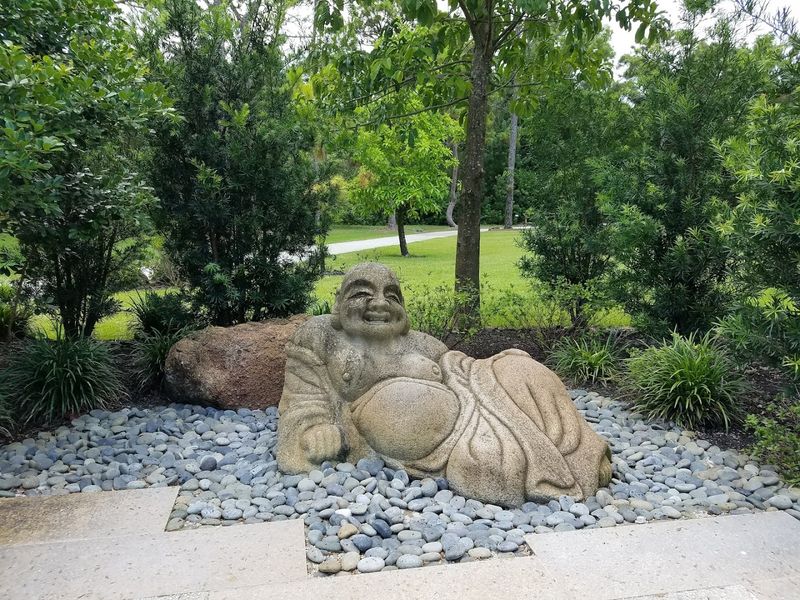
A Japanese museum sitting peacefully in the middle of South Florida sounds like an unlikely combination, but the Morikami Museum and Japanese Gardens in Delray Beach makes complete sense once you know its history. It exists because of a group of Japanese farmers who came to Palm Beach County in the early 1900s with dreams of building an agricultural colony.
Most of them eventually left, but one man — George Morikami — stayed for the rest of his life and ultimately donated his land to the county.
That land became one of the most quietly beautiful cultural destinations in all of Florida. The museum building is designed with clean Japanese architectural lines, and the surrounding gardens are meticulously maintained across several distinct styles — from a traditional dry rock garden to a more naturalistic strolling garden with koi ponds, stone lanterns, and wooden bridges that make you forget you’re in South Florida entirely.
The museum’s permanent collection focuses on Japanese art and cultural objects, and rotating exhibitions bring in work from contemporary Japanese artists alongside historical pieces. The Yamato-kan, a replica of a Japanese villa on the property, adds another layer of architectural beauty to the experience.
Cornell Cafe, the on-site restaurant, serves Japanese-inspired cuisine that draws locals even when they’re not planning to tour the museum. Bento boxes on the terrace overlooking the gardens is a combination that is genuinely hard to beat on a cool Florida morning.
The Morikami is the kind of place that slows you down in the best possible way. In a state that tends to run loud and fast, this museum offers something rare: genuine stillness.
Walking the garden paths, you get the sense that George Morikami’s quiet dedication to his adopted home was something truly worth honoring.
9. Bok Tower Gardens (Singing Tower)
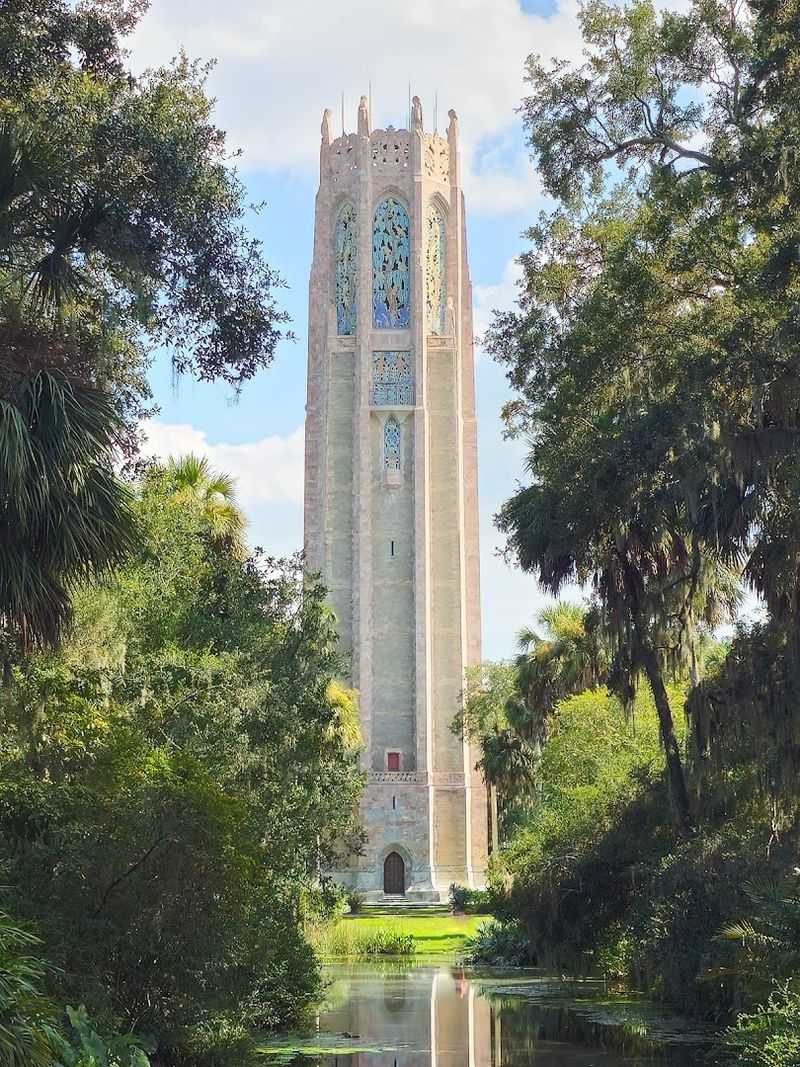
Edward Bok was a Dutch-born magazine editor who became one of the most influential publishers in American history. When he retired to Florida, he decided to give something back to the country that had given him so much.
What he gave was Bok Tower Gardens — and at its heart, rising 205 feet above the highest point on the Florida peninsula, stands the Singing Tower, one of the most unexpectedly moving structures in the entire state.
The tower is a masterpiece of Gothic and Art Deco design, built from Florida coquina stone and Georgia marble. Its surface is covered in intricate carvings of Florida wildlife — herons, pelicans, turtles, and deer — wrapping around the tower like a nature journal etched in stone.
Architect Milton Medary designed it with a reverence for detail that rewards slow, careful looking.
The name Singing Tower comes from the 60-bell carillon housed inside. Twice daily, a carillonneur plays live concerts that carry across the gardens in a way that genuinely stops people in their tracks.
Hearing those bells roll out over the reflecting pool and the ancient live oaks is one of those Florida moments that feels sacred in a completely secular way.
The gardens themselves were designed by Frederick Law Olmsted Jr., son of the man who designed Central Park. Meandering paths, rare plants, and a blue-sky serenity make the grounds just as compelling as the tower itself.
A historic 1930s cottage on the property can even be rented for overnight stays.
Bok Tower sits near Lake Wales, making it an easy stop for anyone driving between Orlando and the Gulf Coast. Skip it once and you’ll regret it.
Go once and you’ll almost certainly go back.
10. Castle Otttis – St. Augustine
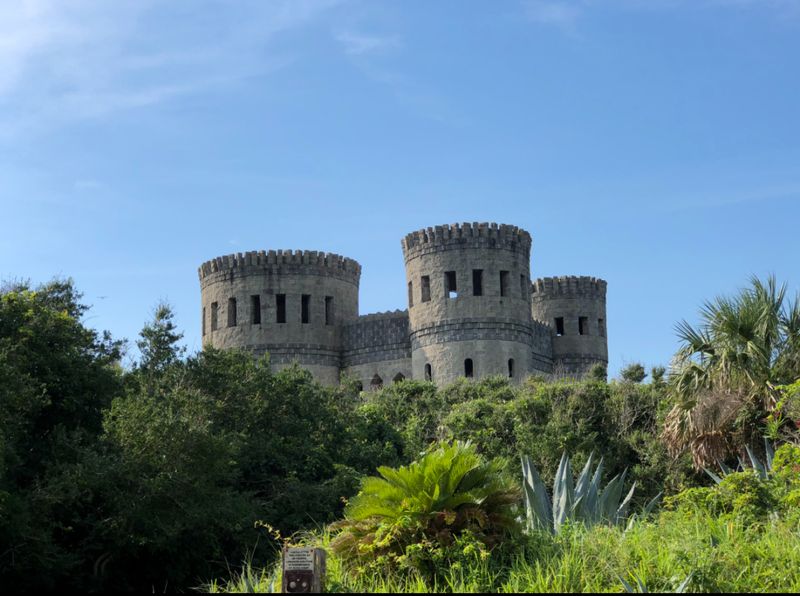
Most people drive through St. Augustine for the Castillo de San Marcos or the historic district’s cobblestone streets, never realizing that a hand-built Gothic castle is sitting quietly on the Intracoastal Waterway just outside of town. Castle Ottis — note the distinctive triple-T spelling — was constructed largely by two men, Ottis Sadler and his partner Christopher Gay, beginning in the 1980s.
It was built as a labor of love and a place of worship, stone by stone, over many years.
The castle is constructed from coquina and other natural materials, with towers, arched doorways, and medieval architectural details that look like they were transported directly from the European countryside. From the water, it is genuinely jaw-dropping.
From the road, it is the kind of thing that makes you slam on the brakes and question whether you actually just saw what you think you saw.
Unlike most historic sites, Castle Ottis is not a state-run attraction with gift shops and guided tour schedules. It is a private property that has been opened for limited visits and special events over the years.
This exclusivity gives it an air of mystery that only adds to its appeal. Catching a glimpse from a boat tour of the Intracoastal is one of the more reliable ways to see it up close.
The dedication required to build something like this — without institutional funding or a professional construction crew — is staggering to think about. Every stone placed by hand, every arch shaped with intention, every tower raised through sheer personal conviction.
St. Augustine already has centuries of history layered into its streets. Castle Ottis adds something different: a reminder that extraordinary things are still being built by determined individuals, right now, in our own time.
11. Bubble House (Dome Homes) – Various locations
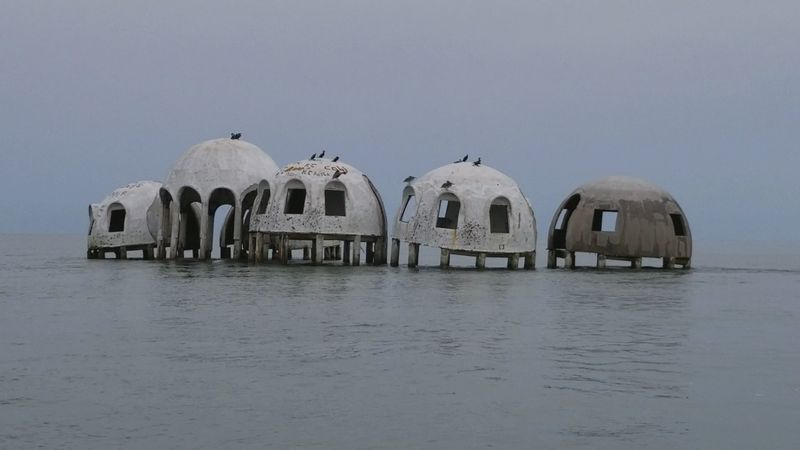
Cape Romano, just off the southwestern coast of Florida near Marco Island, is home to one of the most surreal sights in the entire state. A cluster of white concrete dome homes — sometimes called Bubble Houses — sits partially submerged in the Gulf of Mexico, slowly being reclaimed by the sea.
They look like something between a futuristic colony and a slowly sinking dream, and the image of them rising from the water is almost impossible to look away from.
Bob Lee, an oil producer from Mississippi, built the original domes in 1982 as a self-sufficient vacation home. The structure was designed to be off-grid and hurricane-resistant, with each dome connected to the others by curved corridors.
For a while, it worked. The property sat on a barrier island accessible only by boat, giving it the feeling of a private world entirely apart from the mainland.
Erosion and storm damage gradually shifted the domes toward the water’s edge, and today they sit in the Gulf itself, accessible only by boat or kayak. That precarious, half-submerged state has made them even more compelling to visit.
Paddling out to the domes on a calm morning, with the Gulf light bouncing off those white curves, is a genuinely otherworldly experience.
Several kayak tour operators in the Marco Island area offer guided trips to the domes, which is probably the easiest and most reliable way to see them up close. The structures are not safe to enter, but they are extraordinary to circle and photograph from the water.
Florida has no shortage of unusual architecture, but the Cape Romano domes occupy a category all their own — part ruin, part wonder, and entirely unforgettable once you’ve seen them sitting quietly in the sea.
12. Vizcaya Museum – Miami
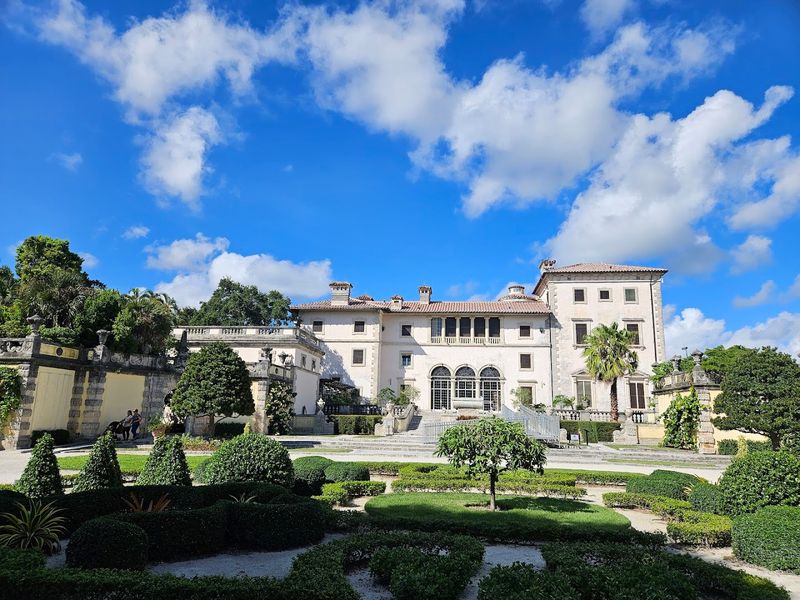
James Deering was a farm equipment heir with a passion for European art and architecture so intense that he essentially transplanted a piece of Renaissance Italy onto the shores of Biscayne Bay. Vizcaya, completed in 1916, is the result — a 34-room Italian-style villa surrounded by ten acres of formal gardens that look like they belong in Tuscany rather than Miami-Dade County.
The whole thing is so extravagant and so beautiful that it almost defies easy description.
Deering worked with architect F. Burall Hoffman and artist Paul Chalfin to create a home that felt genuinely aged from the moment it was finished.
Antique European architectural elements were incorporated throughout — columns, doorways, fireplaces, and decorative pieces gathered from across the continent. The goal was a house that looked like it had been there for centuries, and walking through the rooms today, that illusion holds up remarkably well.
The gardens are a full destination in themselves. Stone terraces descend toward the bay, where a decorative stone barge serves as a breakwater and one of the most photographed features on the entire property.
Fountains, hedgerows, grottos, and garden sculptures create a landscape that feels formal yet somehow still alive with the energy of South Florida’s wild subtropical light.
Vizcaya hosts events throughout the year, from art installations to outdoor concerts, and the museum’s rotating exhibitions complement the permanent collection of European decorative arts. The combination of architecture, landscape, and programming makes it one of Miami’s most genuinely enriching cultural stops.
Arriving at Vizcaya for the first time, especially by water, is a moment that tends to produce actual gasps. In a city full of spectacle, this is the kind of beauty that requires no noise to make its point.
13. Wat Florida Dhammaram – Kissimmee
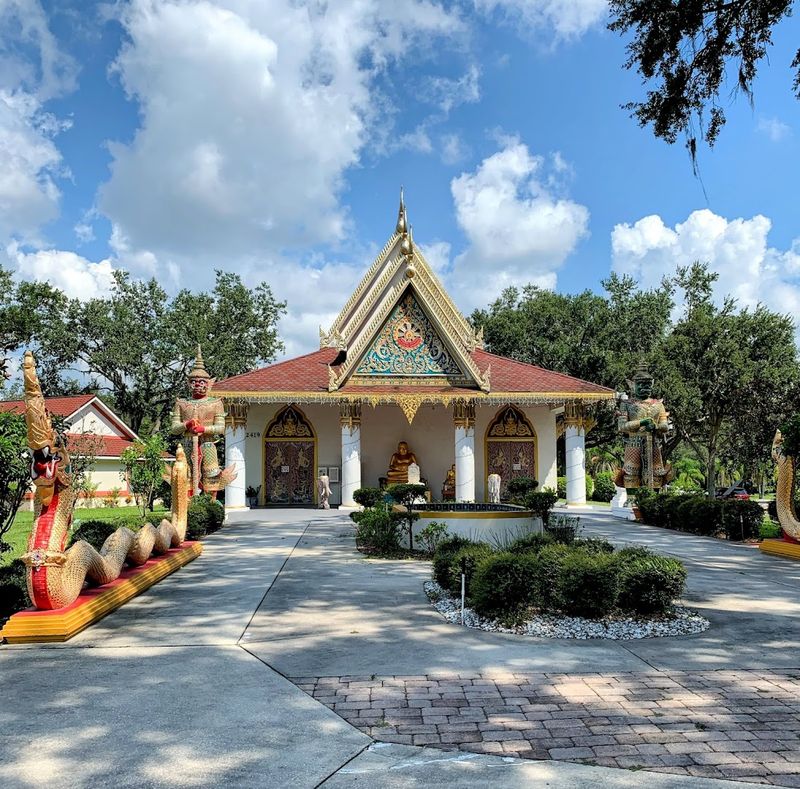
Driving through Kissimmee, you might expect strip malls, chain restaurants, and the general visual language of Central Florida tourism. What you do not expect is a full Thai Buddhist temple rising from the suburban landscape with golden spires, intricate tile work, and the kind of architectural grandeur that stops you mid-thought.
Wat Florida Dhammaram is exactly that kind of surprise — vivid, sacred, and completely unapologetic about its presence.
The temple was established to serve Florida’s Thai Buddhist community, and it functions as a genuine place of worship rather than a tourist attraction. That distinction matters.
The beauty here is not staged for visitors — it is the natural expression of a living religious tradition, which gives the whole place an authenticity that is immediately felt when you step onto the grounds.
The main temple building is decorated in the classical Thai style, with layered rooflines sweeping upward in curves that end in gilded points. The exterior features intricate murals and sculptural details depicting scenes from Buddhist teachings.
Inside, the main hall houses a large Buddha image surrounded by offerings, flowers, and the quiet reverence of regular worshippers.
Visitors are welcome to explore the grounds respectfully, and the experience of walking through the temple complex is both visually stunning and genuinely calming. The contrast between the temple’s ornate golden surfaces and the flat Florida sky creates a visual tension that is hard to put into words but impossible to forget once you’ve seen it.
Wat Florida Dhammaram is a reminder that Florida’s cultural landscape runs far deeper than its tourist economy suggests. Communities from all over the world have planted their traditions here, and some of those traditions happen to come with breathtaking architecture attached.
14. Castillo de San Marcos – St. Augustine
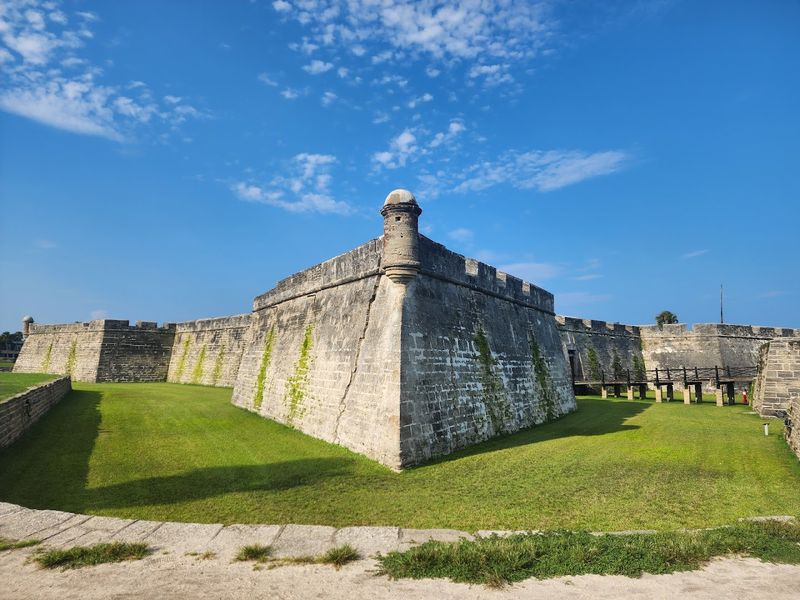
Standing at the edge of Matanzas Bay in St. Augustine, the Castillo de San Marcos has been watching over Florida for more than 350 years. Built by the Spanish beginning in 1672, it is the oldest masonry fort in the continental United States — a title that carries real weight when you’re standing inside walls that have absorbed centuries of conflict, negotiation, and survival.
The fort was constructed from coquina, a local shellstone that turned out to be one of the most effective building materials the Spanish could have chosen. Unlike harder stone that shatters under cannon fire, coquina absorbs and holds the impact, allowing the walls to take hits without crumbling.
British cannonballs fired during the siege of 1702 are literally still embedded in some sections of the wall, which is the kind of detail that makes history feel startlingly immediate.
The star-shaped design — a style known as a bastion fort — was cutting-edge military architecture for its era. Walking the upper ramparts and looking out over the bay, you can see exactly how the geometry of the walls was calculated to eliminate blind spots and expose attackers from multiple angles.
It is simultaneously a work of military engineering and one of the most dramatic viewpoints in all of Florida.
The National Park Service manages the Castillo today, and rangers offer programs that cover everything from the fort’s construction to its role in the lives of enslaved people and Indigenous communities during the colonial period. The history here is layered and sometimes uncomfortable, which is exactly what honest historical education looks like.
No trip to St. Augustine is complete without time spent inside these walls. The Castillo does not just tell you about Florida’s past — it lets you stand inside it.
15. Coral Gables Biltmore Hotel – Coral Gables
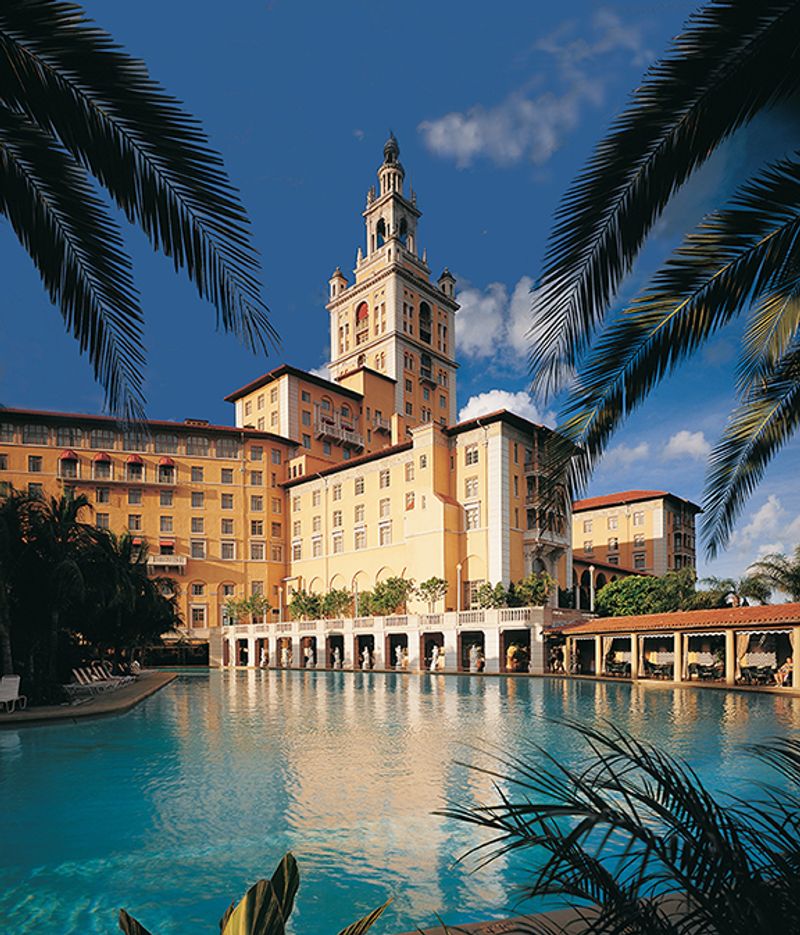
When the Biltmore Hotel opened in Coral Gables in January 1926, it was immediately the most glamorous address in Florida. The tower alone — modeled after the Giralda bell tower in Seville, Spain — rises 315 feet and can be seen from miles away, a terracotta-colored beacon over the quiet streets of one of America’s first planned cities.
Nearly a century later, it has lost exactly none of its authority.
George Merrick, the visionary developer who created Coral Gables from scratch, built the Biltmore as the crown jewel of his master-planned community. He wanted a hotel that would attract the world’s wealthy and famous, and it worked.
Al Capone reportedly had a speakeasy on the 13th floor. Johnny Weissmuller, the original Tarzan, gave swimming lessons in what was then the largest hotel pool in the continental United States.
The guest list reads like a who’s-who of early 20th century celebrity.
World War II converted the hotel into a military hospital, and for decades afterward it sat vacant and deteriorating. A major restoration effort in the 1980s brought it back to its original splendor, and today the Biltmore operates as a full-service luxury hotel with all the grandeur of its original vision intact.
The lobby, with its painted ceilings and marble floors, is worth a visit even if you’re not staying the night.
Sunday brunch at the Biltmore has become a local institution, drawing Coral Gables residents and visitors alike to the poolside setting that somehow manages to feel both lavish and completely relaxed. The pool area alone — massive, surrounded by arched loggias — is one of the most photographed spots in South Florida.
The Biltmore is the kind of place that makes you dress up a little just to feel worthy of walking through the front door.