These 12 Senior-Friendly Florida Walking Trails Are Perfect for a Peaceful Day Outdoors
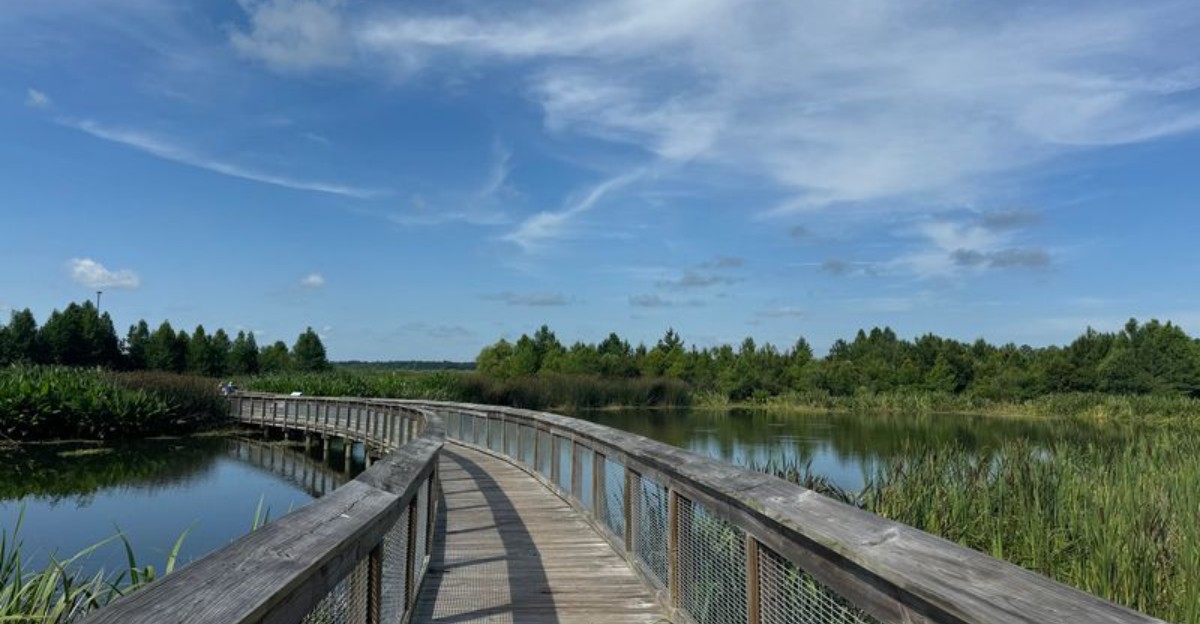
Florida’s natural beauty doesn’t have to mean rugged hikes or steep climbs. Across the state, you’ll find gentle, accessible trails designed with comfort and ease in mind, perfect for seniors who want fresh air without the strain. These paths wind through cypress swamps, coastal wetlands, and shady parks, offering wildlife sightings, peaceful scenery, and plenty of benches for rest stops.
Whether you’re looking for a quick morning stroll or a leisurely afternoon outdoors, these 12 trails deliver nature at your own pace.
1. Spring Run Boardwalk at Blue Spring State Park (Orange City)
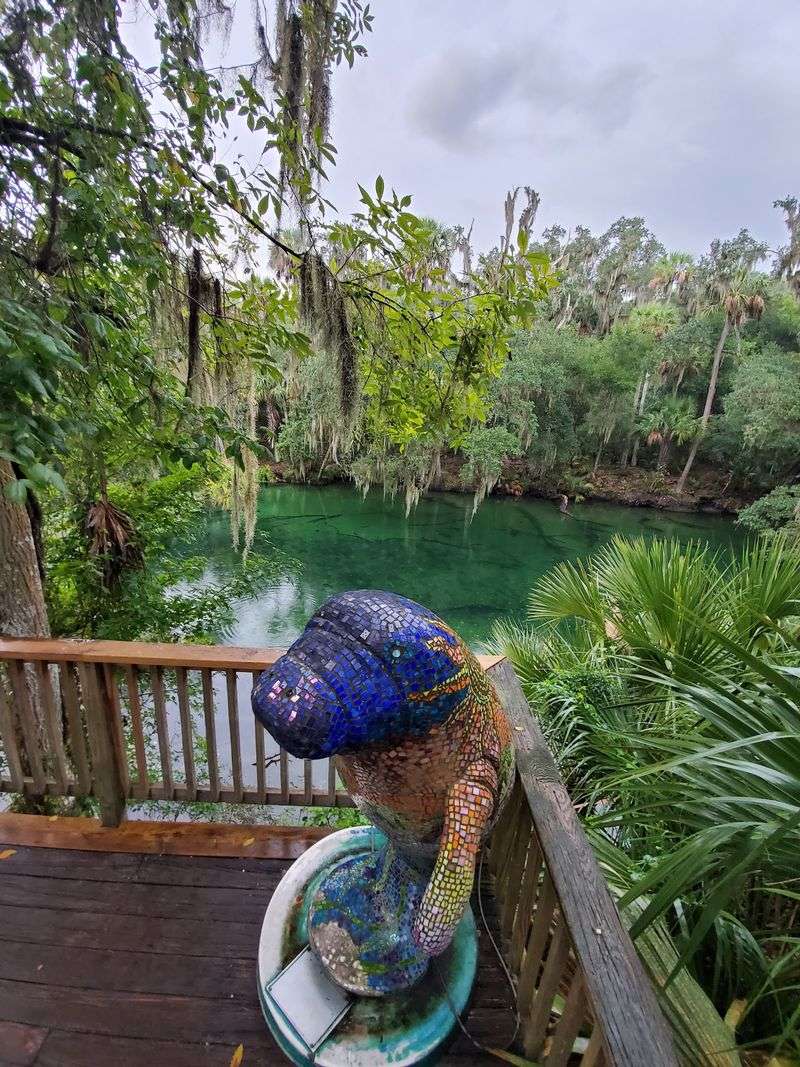
Clear spring water bubbles up from the ground at a steady 72 degrees year-round, creating a mesmerizing aqua-blue channel that’s visible right from the boardwalk. This short, flat pathway stretches just 0.4 miles, making it ideal for a quick outing that doesn’t demand stamina or special gear. Railings line both sides, and the surface is smooth enough for walkers, wheelchairs, and anyone who prefers a steady, predictable path.
Manatees gather here in winter, drawn by the warm spring water when river temperatures drop. You might spot a dozen or more floating lazily near the surface, their whiskered faces breaking the water for air. It’s one of the most reliable manatee-viewing spots in the state, and you don’t need binoculars or a boat to see them.
Benches appear at regular intervals, so you can pause to watch turtles sunbathing on logs or listen to the calls of herons overhead. The boardwalk stays shaded by oak and palm canopy for most of its length, keeping the walk comfortable even on warmer days. There’s a small visitor center at the trailhead with restrooms and water fountains, plus ample parking close by.
Early morning visits tend to be quieter, with softer light filtering through the trees and fewer crowds sharing the view.
2. De Leon Springs Paved Nature Trail (De Leon Springs)
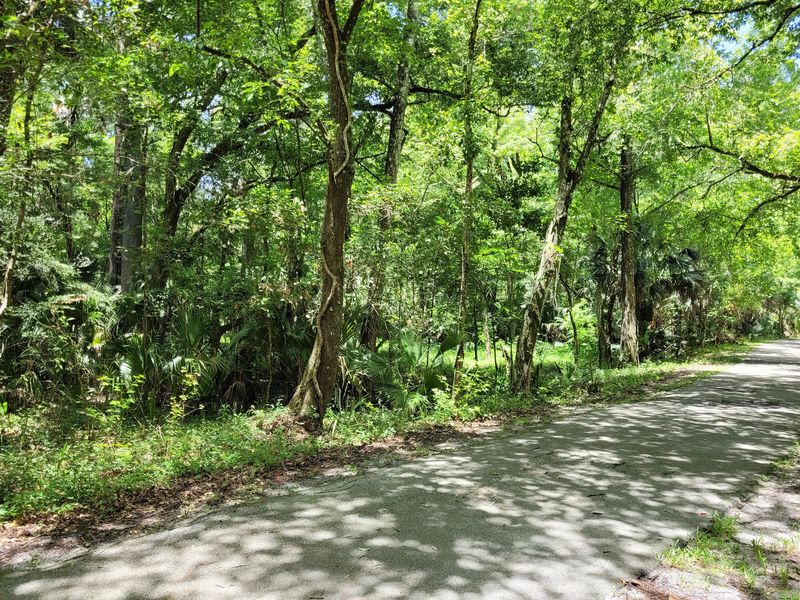
Just steps from the historic spring-fed pool, this half-mile paved loop offers a shaded escape into old Florida woodlands. The trail surface is smooth asphalt, wide enough for two wheelchairs to pass comfortably, and completely level from start to finish. Towering oaks draped in Spanish moss form a natural roof overhead, keeping the temperature noticeably cooler than the open parking area.
Interpretive signs along the route highlight native plants and local history, giving you plenty of reasons to pause and read. You’ll pass palmettos, ferns, and wildflowers that shift with the seasons, plus occasional glimpses of the spring run through breaks in the vegetation. Birdsong fills the canopy, with woodpeckers, cardinals, and warblers making regular appearances.
The trail connects directly to the park’s main facilities, so restrooms, picnic tables, and drinking fountains are never far away. If you time your visit right, you can finish your walk and grab a pancake breakfast at the Old Spanish Sugar Mill Grill, a quirky on-site restaurant where you cook your own pancakes at your table. Parking is plentiful and close to the trailhead, with designated accessible spots near the entrance.
Mornings bring the best light and the most active wildlife, though the shade keeps the trail pleasant throughout the day.
3. Tarkiln Bayou Trail (Pensacola)
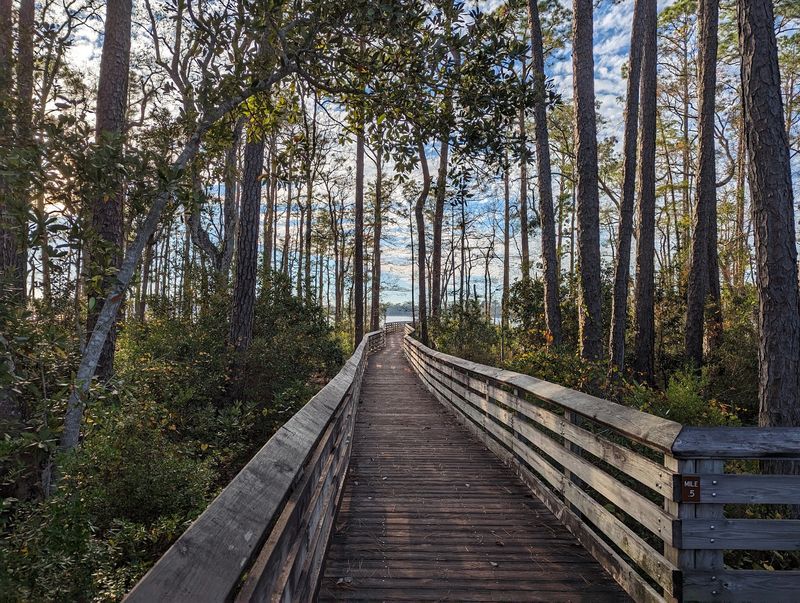
Carnivorous pitcher plants line the edges of this half-mile boardwalk, their tubular leaves filled with rainwater and unlucky insects. Tarkiln Bayou Preserve protects one of the few remaining habitats for these rare Florida natives, and the ADA-accessible trail puts you right in the middle of their habitat without disturbing the fragile ecosystem. The boardwalk surface is firm and stable, with handrails and benches spaced generously along the route.
Coastal breezes drift in from nearby Perdido Bay, carrying the scent of salt and pine. The trail meanders through wet prairie and scrubby flatwoods, offering a mix of open sky and scattered shade. Wildflowers bloom in spring and summer, attracting butterflies and bees, while fall brings cooler temperatures and migrating songbirds.
You might spot gopher tortoises plodding through the underbrush or hear the trill of frogs after a rain.
Benches appear at scenic overlooks, perfect for catching your breath or simply soaking in the quiet. The preserve feels remote despite being just minutes from Pensacola’s suburban sprawl, with minimal traffic noise and wide-open views. Restrooms and parking are available at the trailhead, and the lot is paved and well-maintained.
Visiting in the cooler months is ideal, as summer heat and humidity can be intense in this exposed landscape.
4. Six Mile Cypress Slough Boardwalk (Fort Myers)
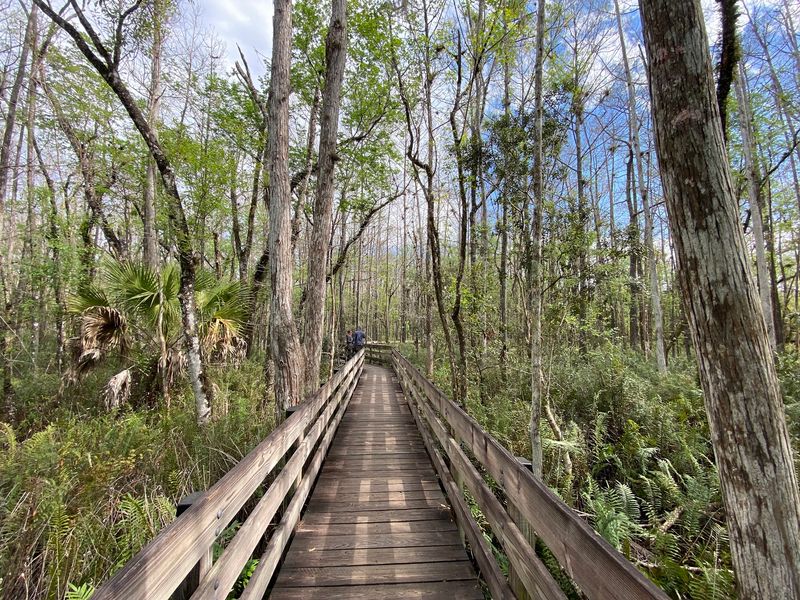
A ribbon of boardwalk floats above a slow-moving wetland system, giving you a front-row seat to one of Southwest Florida’s most vibrant ecosystems. The short loop clocks in at 0.75 miles, while the full route extends to 1.2 miles, both completely wheelchair-accessible and lined with interpretive signs explaining the plants and animals you’re seeing. Cypress trees rise like cathedral columns on either side, their knobby knees poking up from the dark water below.
Alligators sun themselves on the banks, often close enough to photograph from a safe distance. Wading birds stalk through the shallows, including herons, egrets, and the occasional roseate spoonbill with its shocking pink plumage. Turtles stack themselves on logs, and otters sometimes make surprise appearances, sliding through the water with playful grace.
The boardwalk stays mostly shaded, with breaks in the canopy offering sunny spots and views of the sky. Benches and observation decks appear regularly, so you can rest and watch without feeling rushed. The Interpretive Center at the trailhead features air-conditioned exhibits, clean restrooms, and helpful staff who can answer questions about what you might see.
Parking is free and plentiful, with accessible spaces near the entrance. Early morning hours bring the coolest temperatures and the most active wildlife, though the trail remains pleasant year-round thanks to its natural shade.
5. Corkscrew Swamp Sanctuary Boardwalk (Naples)
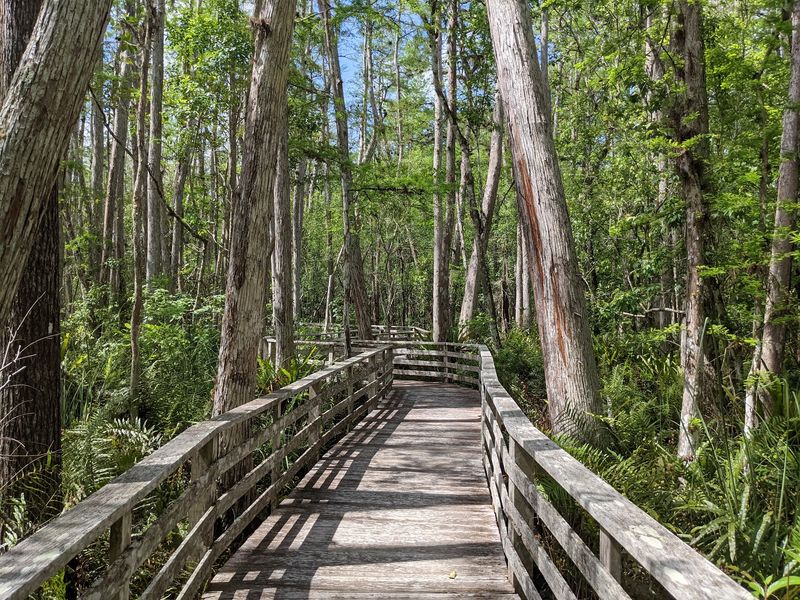
Ancient cypress trees tower overhead, some more than 500 years old, their massive trunks draped in ferns and air plants. This 2.25-mile boardwalk winds through one of the largest remaining stands of old-growth bald cypress in North America, offering a rare glimpse into what Florida looked like before development. The pathway is completely wheelchair-accessible, with a smooth, level surface and gentle curves that make the distance feel manageable even for slower walkers.
Wildlife thrives here, from alligators and turtles to wood storks and barred owls. During nesting season, the sanctuary becomes one of the most important breeding grounds for wood storks in the southeastern United States, with dozens of pairs raising chicks in the towering trees. Interpretive signs and volunteer docents help identify species and explain the ecology of this unique wetland.
Benches appear frequently, often positioned at scenic overlooks where you can watch for movement in the water or listen to the chorus of frogs and insects. The canopy provides near-constant shade, keeping temperatures comfortable even in summer. The visitor center at the entrance offers air conditioning, restrooms, and a gift shop with field guides and souvenirs.
Parking is ample and close to the trailhead, with accessible spaces clearly marked. Plan for at least two hours to walk the full loop at a leisurely pace, with plenty of time for wildlife watching and rest stops.
6. Bobcat Boardwalk Trail at Shark Valley (Everglades National Park)
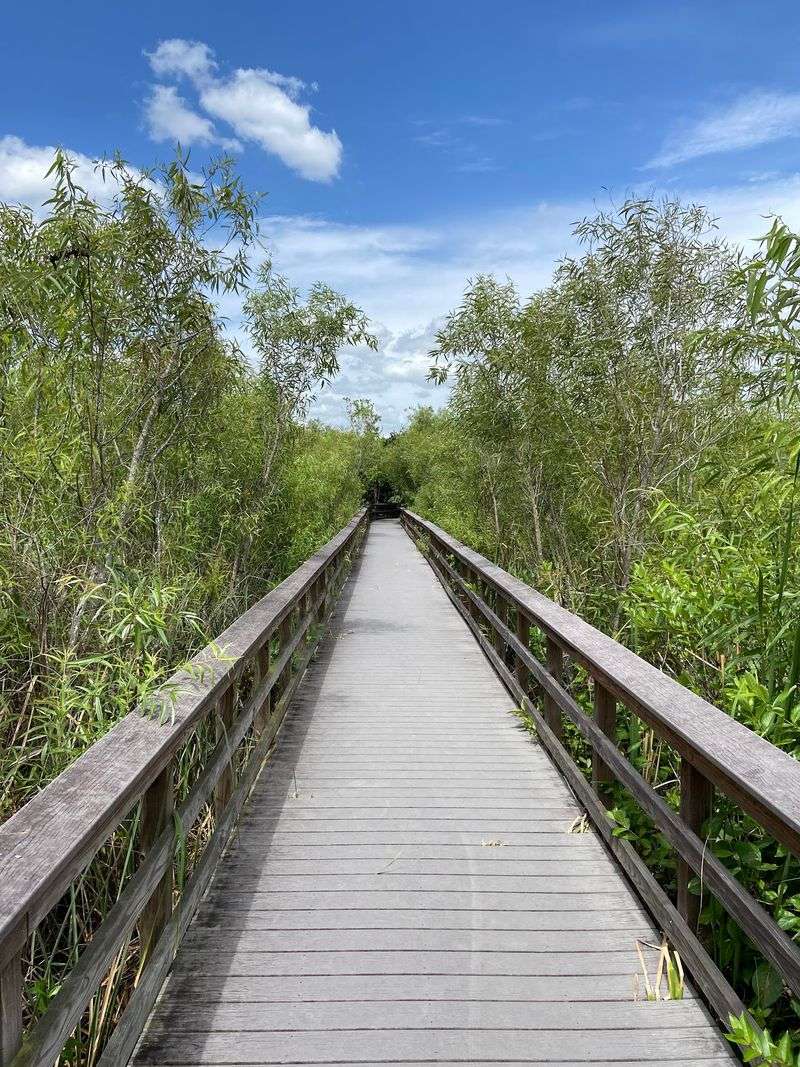
Sawgrass stretches to the horizon in every direction, broken only by scattered tree islands and the occasional alligator basking in the sun. This half-mile wheelchair-accessible boardwalk extends from the Shark Valley Visitor Center into the heart of the Everglades, offering a taste of the River of Grass without requiring a long trek. The path is wide, flat, and sturdy, with railings and an observation platform at the halfway point.
Alligators are practically guaranteed here, often visible from the boardwalk as they float in the shallow water or rest on the banks. Wading birds stalk through the marsh, and turtles sun themselves on exposed logs. The openness of the landscape gives you sweeping views of the wetland ecosystem, with big skies and distant horizons that feel worlds away from Florida’s crowded coasts.
Benches line the trail, providing rest spots and opportunities to simply sit and absorb the unique environment. The observation platform offers elevated views and interpretive panels explaining the Everglades’ hydrology and ecology. Restrooms and drinking fountains are available at the visitor center, along with a small bookstore and ranger-led programs.
Parking is plentiful, though the lot can fill up during peak season. Early morning and late afternoon bring cooler temperatures and the best light for photography, with fewer crowds and more active wildlife.
7. Sweetwater Wetlands Park Trails (Gainesville)
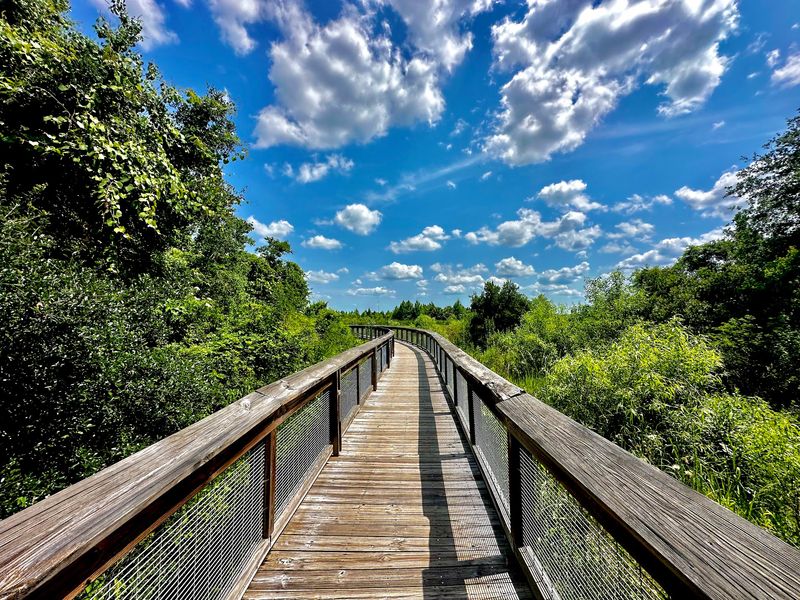
Water treatment never looked so good. Sweetwater Wetlands Park transforms reclaimed water into a thriving bird habitat, with miles of crushed-gravel paths and boardwalks that let you explore ponds, marshes, and open water at your own pace. The trails are mostly flat and accessible, with viewing platforms positioned at prime birdwatching spots and benches scattered throughout the park.
More than 200 bird species have been recorded here, from common moorhens and purple gallinules to rare visitors like roseate spoonbills and painted buntings. Alligators patrol the waterways, and turtles pile onto every available log. Butterflies and dragonflies add flashes of color, while otters occasionally make surprise appearances.
The variety of habitats attracts different species depending on the season, making repeat visits worthwhile.
Crushed gravel provides a firm, stable surface that works well for walkers and many wheelchairs, though it’s slightly softer than pavement. Boardwalk sections cross wetland areas, offering close-up views of aquatic plants and the creatures that depend on them. Shade is limited in some sections, so hats and sunscreen are smart additions to your gear.
The park entrance has restrooms, parking, and a small information kiosk. Mornings bring the most bird activity and the coolest temperatures, though the park stays open dawn to dusk year-round. Bring binoculars if you have them, but you’ll see plenty even without optical aids.
8. Sawgrass Lake Park Boardwalk & Nature Trail (St. Petersburg)
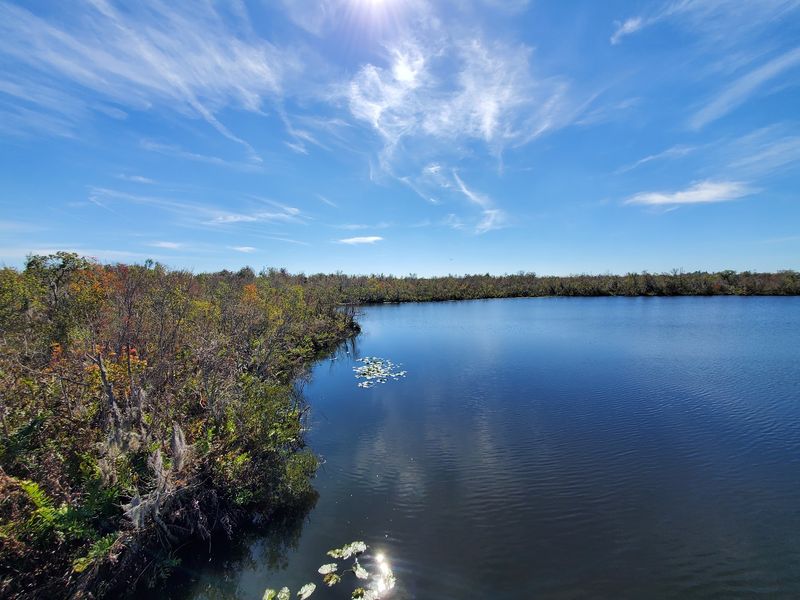
An observation tower rises above the wetland canopy, offering panoramic views of the marsh and distant Tampa Bay skyline. The boardwalk and nature trail at Sawgrass Lake Park wind through maple swamp and willow marsh, creating a peaceful escape just minutes from St. Petersburg’s urban center. The pathway is smooth and accessible, with gentle slopes and sturdy railings throughout.
Alligators, turtles, and wading birds are daily residents, often visible from the boardwalk as they hunt or rest in the shallows. The tower provides a bird’s-eye perspective on the wetland ecosystem, showing how water flows through the landscape and where different habitats meet. Interpretive signs explain the plants and animals you’re seeing, with details about the park’s restoration efforts and ecological importance.
Benches appear at regular intervals, many positioned at scenic overlooks where you can watch for movement in the vegetation. The trail stays mostly shaded, with breaks in the canopy offering glimpses of sky and sunlight. A small nature center at the trailhead features exhibits, restrooms, and helpful staff who lead guided walks and educational programs.
Parking is free and close to the entrance, with accessible spaces clearly marked. The park tends to be quieter on weekday mornings, though it’s worth visiting anytime for the wildlife and natural beauty. Pack water and insect repellent, especially during warmer months when mosquitoes can be active.
9. Lettuce Lake Park Paved Exercise Trail (Tampa)
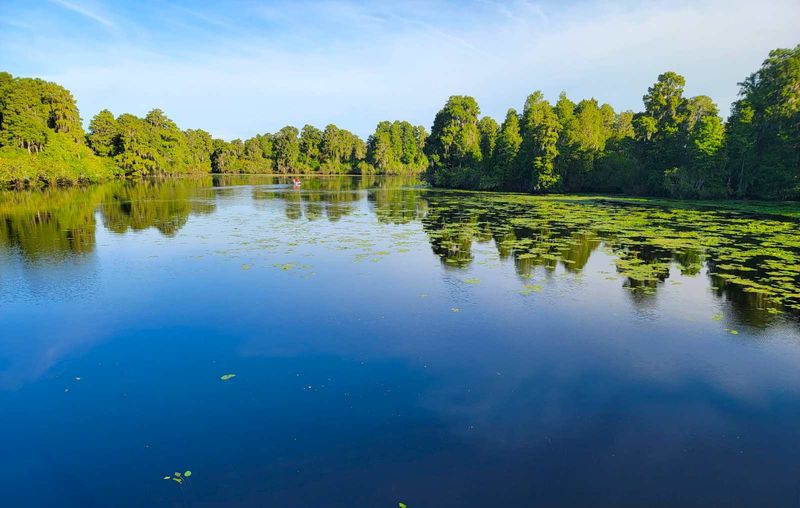
Spanish moss sways from oak branches overhead, creating a living curtain that filters sunlight into soft, dappled patterns on the pavement below. The 1.25-mile paved loop at Lettuce Lake Park offers a shaded, accessible route through hardwood hammock and along the Hillsborough River. The trail surface is smooth asphalt, wide enough for walkers, joggers, and cyclists to share comfortably, with gentle curves and zero elevation change.
Benches line the route at frequent intervals, many positioned near scenic views of the river or tucked into shady alcoves. A separate boardwalk spur extends over the water, offering close-up views of alligators, turtles, and wading birds. An observation tower provides elevated views of the surrounding wetlands and forest canopy, accessible via ramp for those who want the climb without stairs.
The park also features picnic pavilions, playgrounds, and a canoe launch, making it easy to combine your walk with other activities or a family outing. Restrooms and water fountains are available near the parking area, and the lot is paved with designated accessible spaces. The trail stays busy on weekends, especially in cooler months, but weekday mornings offer a quieter experience.
Shade keeps the route comfortable even in summer, though early or late visits avoid the peak heat. Wildlife sightings are common, so keep your eyes open for deer, armadillos, and a variety of bird species moving through the understory.
10. Timucuan Trail at Little Talbot Island State Park (Jacksonville)
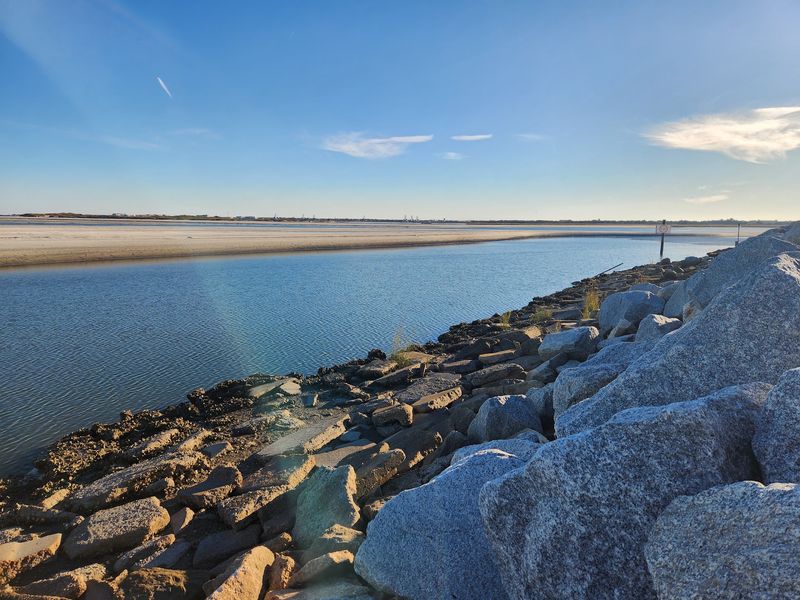
Barrier island forests feel different from inland woods, shaped by salt spray and coastal winds into twisted, wind-sculpted forms. The Timucuan Trail at Little Talbot Island offers 2.5 miles of wheelchair-friendly paved pathway through this unique maritime habitat, with benches positioned at scenic overlooks and rest stops. The trail is mostly flat, with only gentle grades, and the surface stays smooth and well-maintained year-round.
Live oaks and cabbage palms create a canopy overhead, while saw palmetto and wax myrtle fill the understory. The path occasionally opens to views of salt marsh and tidal creeks, where herons and egrets stalk through the shallows. You might spot dolphins offshore if you venture to the beach access points, or catch sight of shorebirds probing the sand at low tide.
Benches appear frequently, offering shaded spots to rest and watch for wildlife. The trail connects to other park facilities, including picnic areas, restrooms, and beach access, making it easy to extend your visit beyond the walk itself. Parking is plentiful near the trailhead, with accessible spaces and paved paths leading to the trail entrance.
Cooler months bring the most comfortable walking conditions, though sea breezes keep the route pleasant even in summer. The park charges a small entrance fee, but the natural beauty and well-maintained facilities make it worthwhile for a peaceful day outdoors.
11. Blackwater Heritage State Trail (Milton)
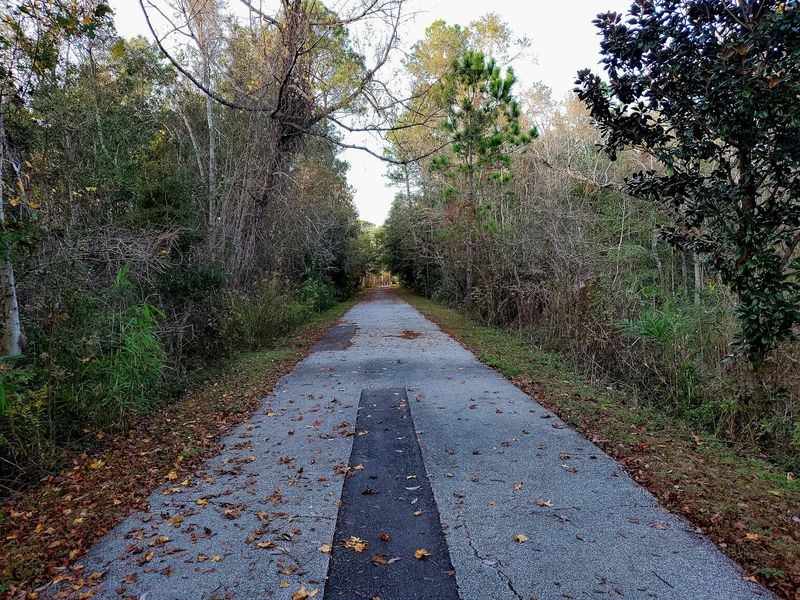
Abandoned railroad corridors make excellent walking trails, and the Blackwater Heritage State Trail proves the point with miles of paved, mostly level pathway stretching from Milton into the surrounding countryside. The surface is smooth asphalt, wide enough for walkers, cyclists, and wheelchairs to pass easily, with minimal grades and long, straight stretches perfect for a steady, relaxing pace.
Pine forests and oak hammocks line the route, offering shade and habitat for birds, squirrels, and occasional deer. The trail crosses several small bridges over creeks and wetlands, providing glimpses of flowing water and aquatic wildlife. Benches and rest areas appear at regular intervals, often positioned near scenic spots or historical markers explaining the railroad’s history and the communities it once connected.
The trail extends for many miles, but you can turn around whenever you’re ready, making it easy to customize the distance to your comfort level. Trailheads offer parking, restrooms, and water fountains, with accessible facilities at major access points. The path stays open year-round, though cooler months bring the most pleasant walking conditions.
Early mornings and late afternoons offer softer light and fewer users, creating a more peaceful experience. Wildlife sightings are common, especially in the quieter sections away from road crossings. Pack water and snacks if you plan a longer walk, and consider bringing binoculars for birdwatching along the wooded sections.
12. Withlacoochee Bay Trail (Inglis)
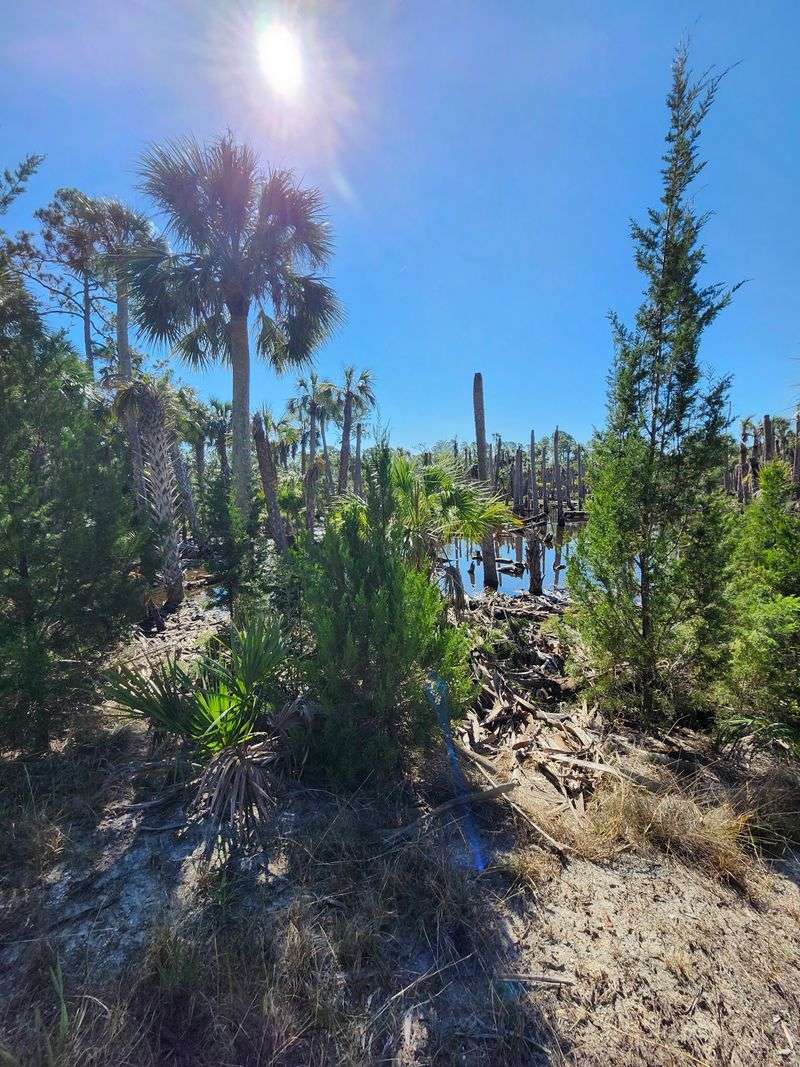
Gulf breezes sweep across open water, carrying the scent of salt and the calls of gulls and pelicans. The Withlacoochee Bay Trail follows the waterfront in Inglis, offering a wide, paved pathway with accessible observation platforms positioned at prime viewing spots. The trail is flat and smooth, perfect for wheelchairs, walkers, and anyone who prefers an easy, scenic route with minimal effort required.
Views stretch across the bay toward the Gulf of Mexico, with fishing boats and sailboats dotting the horizon. Dolphins sometimes surface near shore, arching through the water in pursuit of fish. Shorebirds probe the mudflats at low tide, while pelicans dive-bomb the shallows with spectacular splashes.
The observation platforms provide elevated vantage points and benches where you can sit and watch the water for as long as you like.
The trail connects to local parks and fishing areas, making it easy to combine your walk with other activities or a waterfront picnic. Restrooms and parking are available at trailhead access points, with paved lots and designated accessible spaces. The route stays open and exposed, so sun protection is important, especially during midday hours.
Early morning and late afternoon bring cooler temperatures and beautiful light on the water, with stunning sunsets if you time your visit right. The trail is popular with local walkers and cyclists but rarely feels crowded, offering plenty of space to enjoy the coastal scenery at your own pace.