These 8 Abandoned Florida Factories Come With Stories Locals Still Whisper About
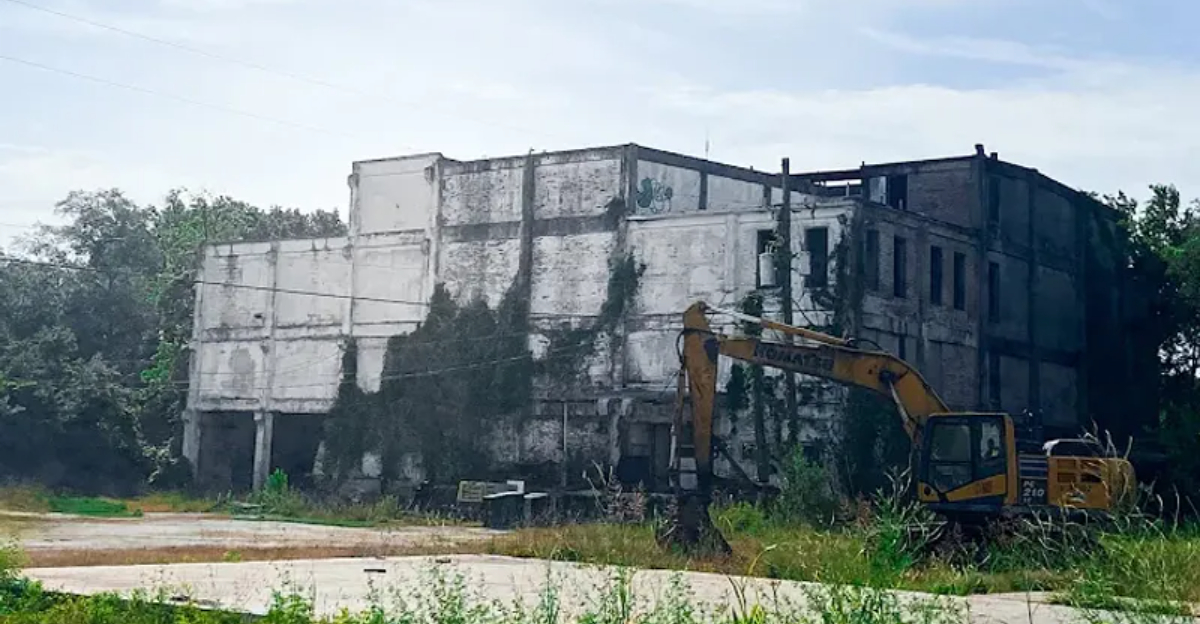
Florida’s industrial past hides in plain sight across the state, crumbling quietly in forests, swamps, and forgotten corners of small towns. Old sugar mills, phosphate plants, and meatpacking facilities stand as eerie monuments to boom-and-bust economies that shaped the region generations ago. These abandoned factories aren’t just empty buildings—they’re wrapped in local legends, wartime destruction, and whispered ghost stories that refuse to fade away.
1. Disston Sugar Mill Ruins (St. Cloud)
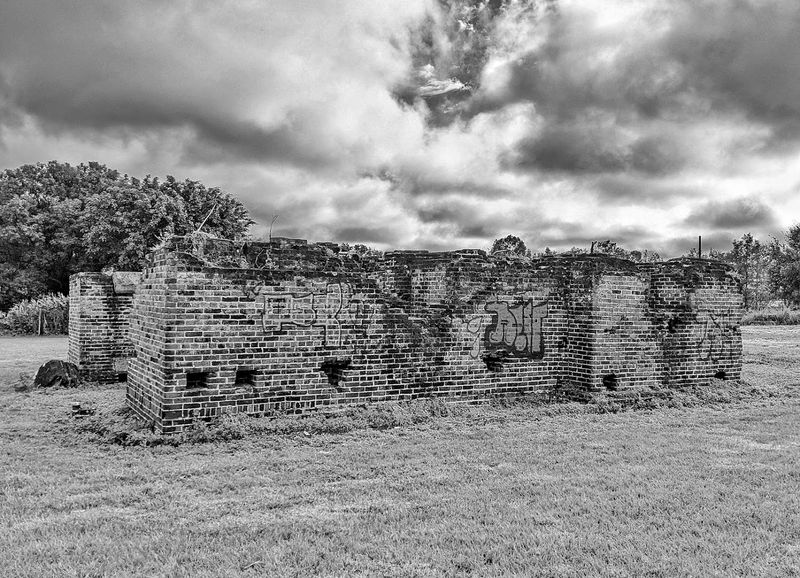
Hamilton Disston dreamed big when he bought four million acres of swampland in the 1880s, hoping to transform Central Florida into a sugar empire. His St. Cloud operation sprawled across reclaimed wetlands, complete with a massive brick mill that processed cane by the ton. Workers lived in company towns, and for a while, the gamble seemed to pay off.
Then the freezes came. Sugar prices tanked, and Disston’s fortune collapsed along with his health. The mill shut down, and nature started taking the buildings back piece by piece.
Today, the ruins sit half-hidden among palmettos and vines, their brick walls cracked and blackened by decades of weather. Old iron gears rust in the shadows, and locals say the place feels heavy, like the weight of all those failed ambitions still hangs in the air. Photographers love the “forgotten empire” vibe, but most residents just call it sad.
The site isn’t officially open to the public, but that hasn’t stopped curious explorers from slipping through the fence. Some say they’ve heard strange echoes—machinery grinding, voices shouting—though no one’s worked there in over a century. It’s the kind of place that makes you wonder what Florida could have been.
2. Sugar Mill Ruins / Cruger-dePeyster Sugar Factory (New Smyrna Beach)
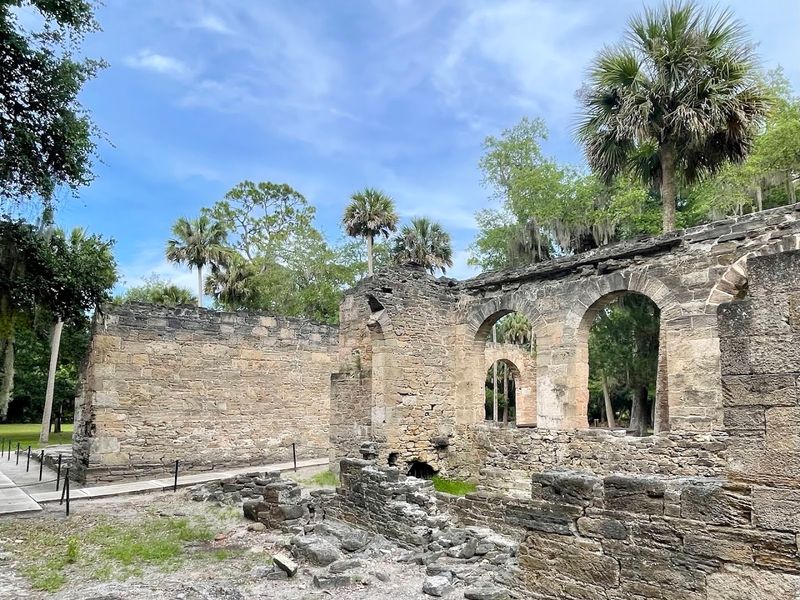
Built in the early 1800s from coquina stone, this sugar operation was already struggling when the Second Seminole War erupted in 1835. Tensions between settlers and Seminole forces turned violent, and the mill became a casualty of the conflict. Raiders torched the factory, and the plantation owners fled, leaving behind only the shell of what they’d built.
The coquina walls still stand, pocked and weathered, with empty windows that frame the sky. Moss clings to the stone, and the whole site feels like a monument to something darker than just economic failure. Locals have passed down stories for generations—tales of workers who never made it out, of restless spirits wandering the grounds after dark.
Some visitors report sudden cold spots even on humid summer days. Others swear they’ve seen shadows moving inside the ruins when no one else is around. Whether it’s ghosts or just the wind playing tricks, the place definitely carries an unsettling energy.
The site is part of a state park now, so you can walk right up to the ruins during daylight hours. Historians love it for the mix of industrial and military history, but most people come because they’ve heard the whispers. It’s one of those spots where Florida’s past feels uncomfortably present.
3. Yulee Sugar Mill Ruins (Homosassa)
David Levy Yulee built this mill in the 1850s, back when he was one of Florida’s most powerful men—a U.S. senator, railroad magnate, and plantation owner. His sugar operation ran smoothly until the Civil War ripped through the South. Union forces raided the coast, and Yulee’s workers scattered.
The mill fell silent, and it never started up again.
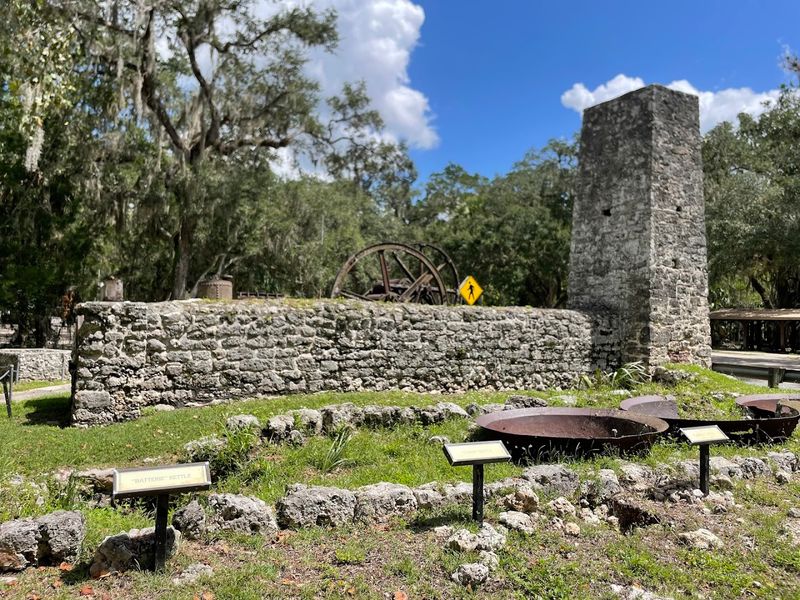
What’s left behind feels like a time capsule. The limestone chimney tower still reaches toward the sky, and the original iron gears and cane press sit exactly where they were abandoned over 150 years ago. Rust and vines cover everything, but the machinery is intact enough that you can picture how it all worked—the grinding, the boiling, the endless labor.
The state turned the site into a historic park, complete with interpretive signs explaining the sugar-making process. But reading about it is one thing; standing next to those massive iron wheels is something else entirely. The scale of the operation hits you hard, along with the realization that enslaved people powered every turn of those gears.
Locals say the place has a strange stillness, like time stopped the day the last worker walked away. Some believe you can still hear the faint clang of metal on metal if you visit at dusk. True or not, the ruins carry a weight that lingers long after you leave.
4. Bulow Plantation Sugar Mill Ruins (Flagler Beach)
John Bulow ran one of East Florida’s most successful sugar plantations in the 1820s and early 1830s, with a sprawling estate and a mill that processed cane from hundreds of acres. His operation employed dozens of enslaved workers and churned out barrels of sugar and molasses for markets up and down the coast. Then the Second Seminole War arrived, and everything burned.
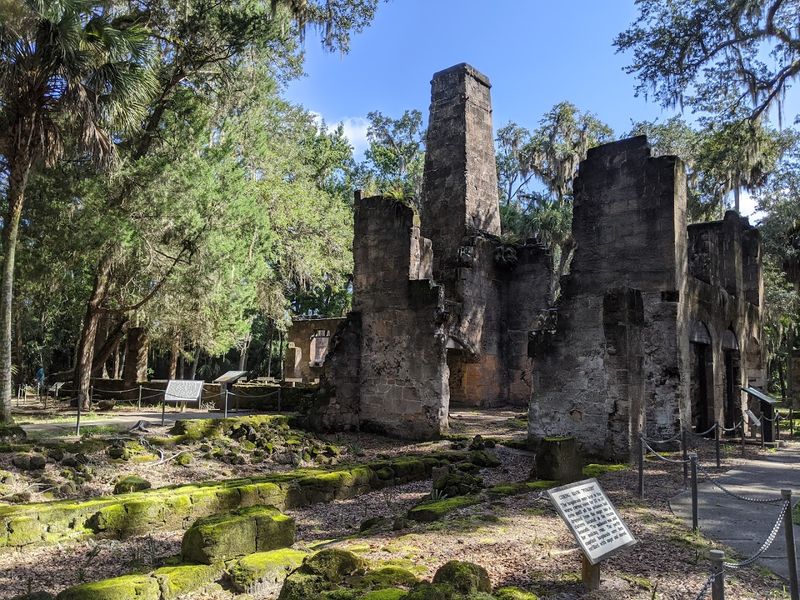
In 1836, Seminole forces attacked and destroyed the plantation, leaving behind only stone foundations and shattered machinery. Bulow himself died shortly after, and the property was never rebuilt. The ruins sat untouched for decades, slowly disappearing under Spanish moss and palmetto scrub.
Now the site is a state park covering 150 acres of forest and marsh. You can hike trails that wind past the old mill foundations, the plantation house footprint, and the remains of a spring house. It’s peaceful in a haunting way—birdsong and rustling leaves, but also the unmistakable sense that you’re walking through a graveyard of ambition and violence.
Local stories claim the plantation is haunted by both the enslaved workers who suffered there and the soldiers who died in the raid. Some visitors report feeling watched, or hearing voices in the trees when no one else is around. The park doesn’t advertise the ghost stories, but rangers will quietly admit they’ve had their own strange experiences after closing time.
5. Mosaic Phosphate Plant / Bone Valley Industrial Ruins (Polk County)
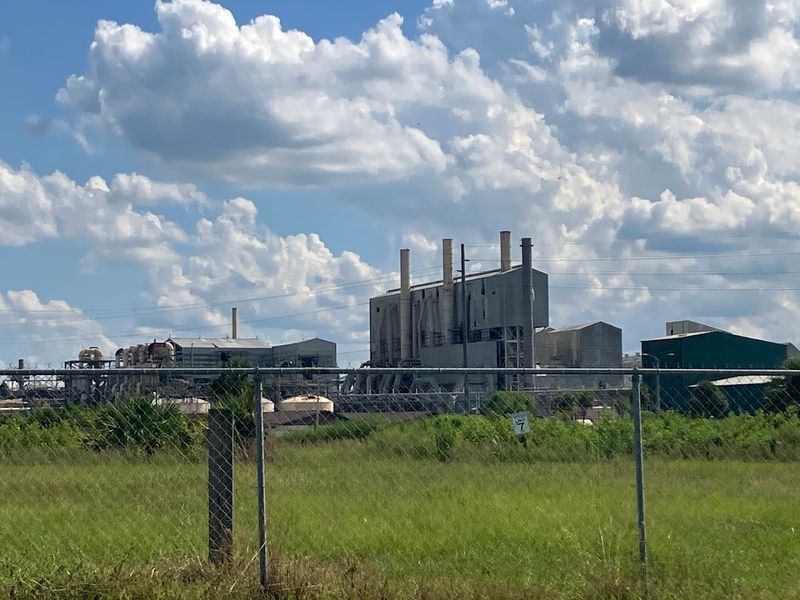
Bone Valley earned its name from the massive fossil deposits buried beneath Central Florida’s soil—ancient marine creatures turned to stone, then mined for phosphate to make fertilizer. For over a century, this region powered Florida’s economy, with processing plants dotting the landscape and company towns springing up around the mines. The Mosaic plant was one of the last holdouts, running until 2004 before shutting down for good.
What’s left behind is pure industrial decay. Rusting conveyor belts stretch across empty fields, and enormous processing buildings sit gutted and silent. Graffiti covers the walls, and nature is slowly reclaiming the cracked concrete.
It’s the kind of place that urban explorers dream about—massive, eerie, and completely abandoned.
Locals have mixed feelings about the ruins. Some see them as symbols of jobs lost and communities hollowed out. Others view them as environmental scars, reminders of the damage phosphate mining inflicted on the land and water.
Either way, the site carries a heavy vibe that’s hard to shake.
Trespassing is technically illegal, but that hasn’t stopped people from sneaking in to explore or take photos. Stories circulate about strange noises echoing through the empty buildings—machinery sounds, even though nothing’s running. Some say it’s just the wind rattling loose metal, but others aren’t so sure.
The place feels alive in a way that doesn’t quite make sense.
6. Nichols Phosphate Mine Ruins (Nichols / Polk County)
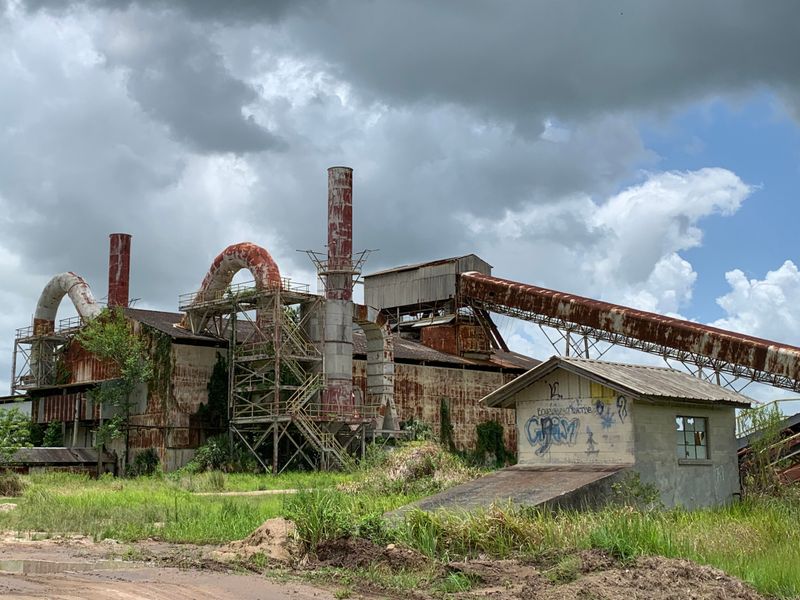
Nichols wasn’t just a mine—it was a whole town built by the Virginia-Carolina Chemical Company in 1905 to house workers and their families. The company provided homes, a school, a store, and steady paychecks in exchange for backbreaking labor extracting phosphate from the earth. For decades, Nichols thrived as part of Florida’s mining boom, its population swelling with immigrants and laborers chasing the promise of work.
Then the phosphate ran out. The company pulled up stakes, and the town emptied almost overnight. Buildings were abandoned or dismantled, and the forest crept back in.
Today, only scattered ruins mark where Nichols once stood. Crumbling foundations poke through the underbrush, and rusted mining equipment lies half-buried in the dirt. It’s a ghost town in the truest sense—barely anything left, but the echoes of a lost community still linger.
Locals love to swap stories about Nichols, mixing fact and legend until it’s hard to tell what’s real. Some claim the town is haunted by miners who died in accidents, their spirits still wandering the old work sites. Others say you can hear children’s laughter near the ruins of the schoolhouse, even though no kids have lived there in nearly a century.
The site is on private property now, so visiting isn’t easy or legal. But that hasn’t stopped the stories from spreading, and Nichols remains one of Polk County’s favorite pieces of creepy local lore.
7. Balbin Brothers Cigar Factory (Tampa)
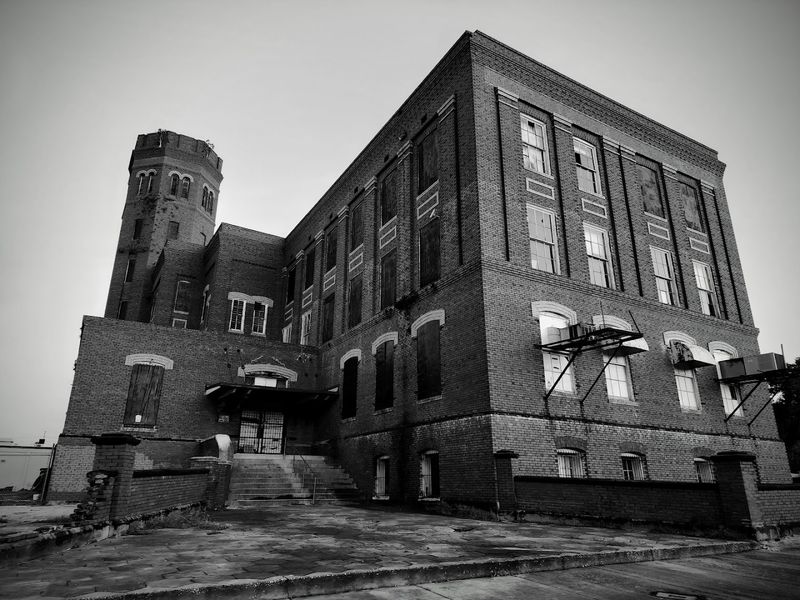
Tampa’s cigar industry once rivaled Havana, with Ybor City and West Tampa churning out millions of hand-rolled cigars every year. Cuban, Spanish, and Italian immigrants filled the factories, rolling tobacco leaves while lectors read aloud from newspapers and novels to keep workers entertained. The Balbin Brothers factory was part of that golden age, a bustling operation that employed hundreds and helped define Tampa’s identity.
But the cigar boom didn’t last. Automation, changing tastes, and economic shifts gutted the industry by the mid-20th century. One by one, the factories closed, and workers moved on.
The Balbin Brothers building eventually emptied out, leaving behind only the shell of what it once was.
Now the factory sits abandoned, its windows broken and its floors littered with debris. Graffiti covers the walls, and the smell of old tobacco has long since faded. Urban explorers love the place for its dramatic decay and the way light filters through the shattered glass, casting eerie patterns on the floor.
Local legends say the factory is haunted by former workers—cigar rollers who died on the job or couldn’t let go of the life they knew. Some visitors claim to hear footsteps echoing through the empty rooms, or catch the faint scent of tobacco smoke even though no one’s rolled a cigar there in decades. Whether it’s ghosts or just imagination, the Balbin Brothers building definitely holds onto its past.
8. Farris and Company Slaughterhouse (Jacksonville)
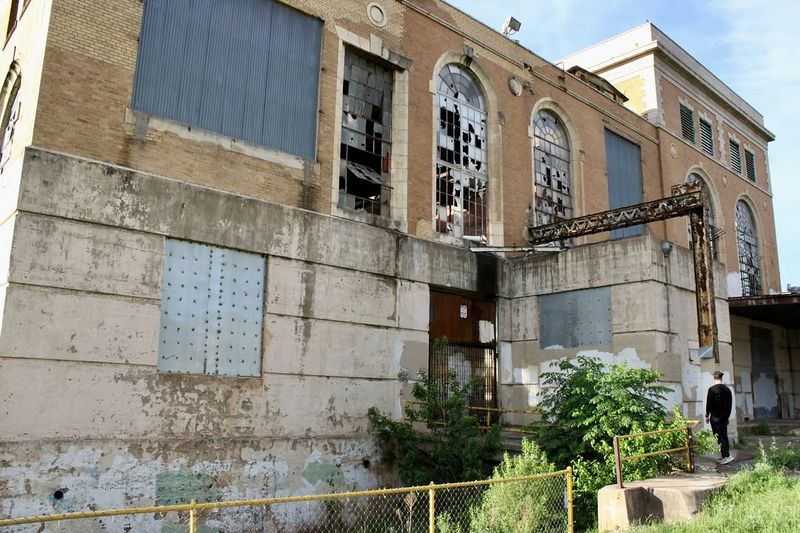
Jacksonville’s meatpacking district was a gritty industrial hub in the early 1900s, with slaughterhouses and processing plants lining the riverfront. Farris and Company was one of the biggest operations, handling thousands of animals and shipping meat across the Southeast. The work was brutal, bloody, and dangerous, and the building soaked up decades of that violence before finally shutting down.
No one’s quite sure when the slaughterhouse closed for good, but it’s been abandoned long enough to earn a seriously dark reputation. The interior is a nightmare of rusted hooks, stained floors, and collapsed ceilings. Graffiti covers the walls, and the whole place reeks of rot and decay.
Urban explorers consider Farris and Company a legendary spot—equal parts fascinating and terrifying. The building’s layout is a maze of narrow hallways and pitch-black rooms, and the atmosphere is suffocating. Most people don’t last long inside before the creepiness drives them back out.
The stories locals tell about the slaughterhouse are darker than most. Some say workers died in accidents on the killing floor, and their spirits never left. Others claim the building itself absorbed so much death and suffering that it became cursed.
Visitors report hearing screams, feeling sudden cold spots, and seeing shadows move when they’re alone.
Whether you believe in ghosts or not, there’s no denying the place feels wrong. It’s the kind of abandoned factory that doesn’t just sit empty—it seems to watch you back.