This Enchanting Florida Hike Feels Straight Out of a Fairytale
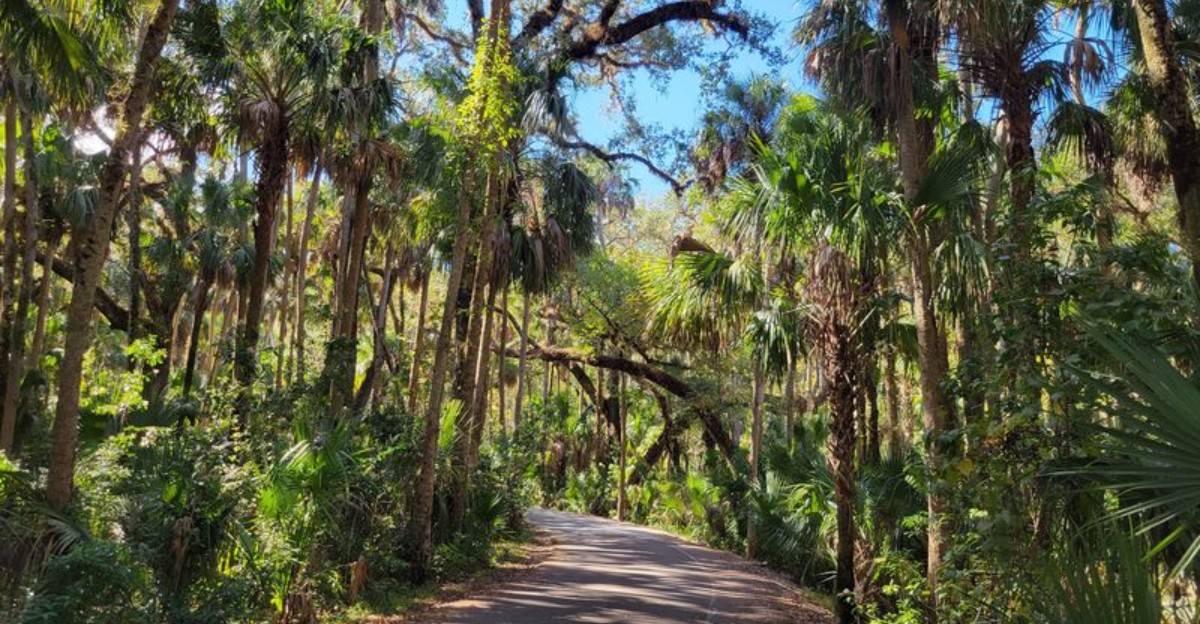
Highlands Hammock State Park feels like stepping into another world entirely. Ancient cypress trees draped in Spanish moss tower overhead while boardwalks wind through swamps that look lifted from storybook pages. With wildlife around every corner and trails that transport you back to old Florida, this hidden gem offers an experience that truly feels magical.
1. Ancient Hammock Forest That Whispers History
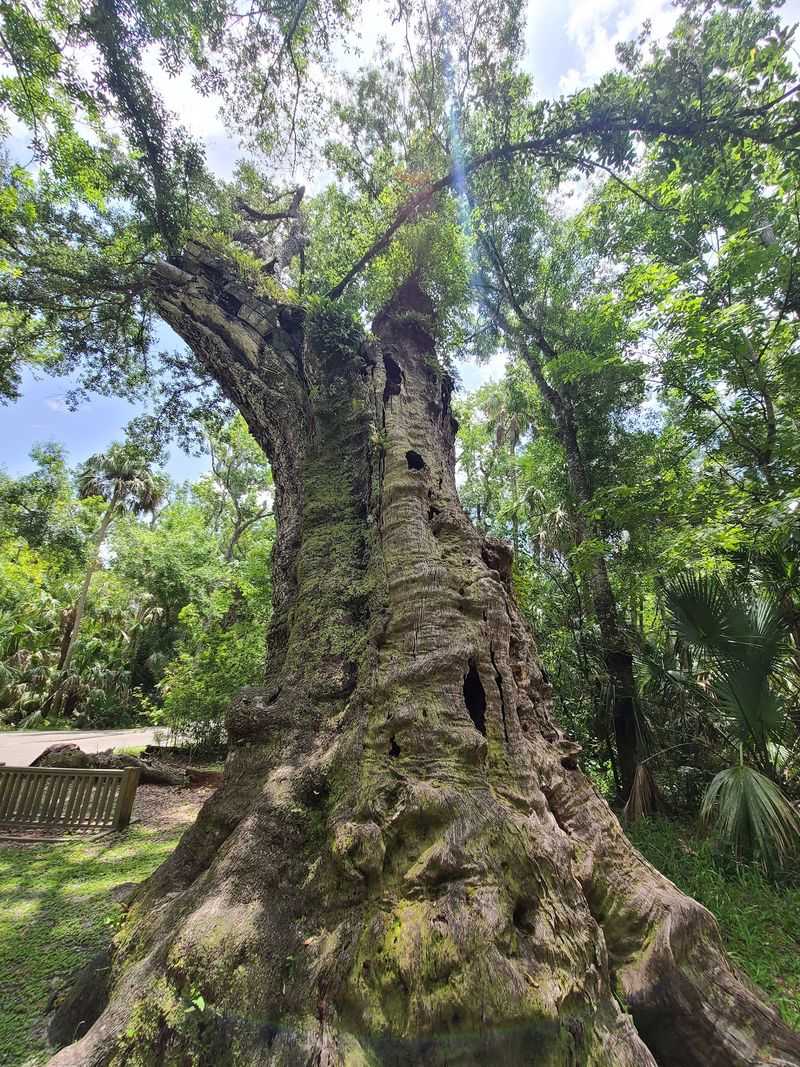
Walking among trees that have stood for centuries creates an almost sacred feeling. The ancient hammock forest at Highlands Hammock shelters some of Florida’s oldest living giants, their massive trunks telling stories from long before modern civilization arrived. Sunlight filters through the dense canopy in golden shafts that illuminate the ferns and air plants below.
These aren’t your typical Florida woods. The hammock ecosystem creates a unique microclimate that stays noticeably cooler than surrounding areas, sometimes dropping temperatures by 10 to 20 degrees. That natural air conditioning makes summer hikes surprisingly comfortable, especially when you’re surrounded by such towering beauty.
The trails wind through this primeval landscape with well-marked paths that make navigation easy even for first-time visitors. You’ll spot palms mixing with hardwoods, creating the distinctive hammock environment that gives the park its name. Fungi sprout from fallen logs while bromeliads cling to living branches overhead.
Take your time here because rushing through would mean missing the small wonders. The interplay of light and shadow, the subtle sounds of the forest, and the feeling of walking where nature has remained largely unchanged for generations all combine to create something genuinely special.
2. Cypress Swamp Boardwalks Straight from Fantasy
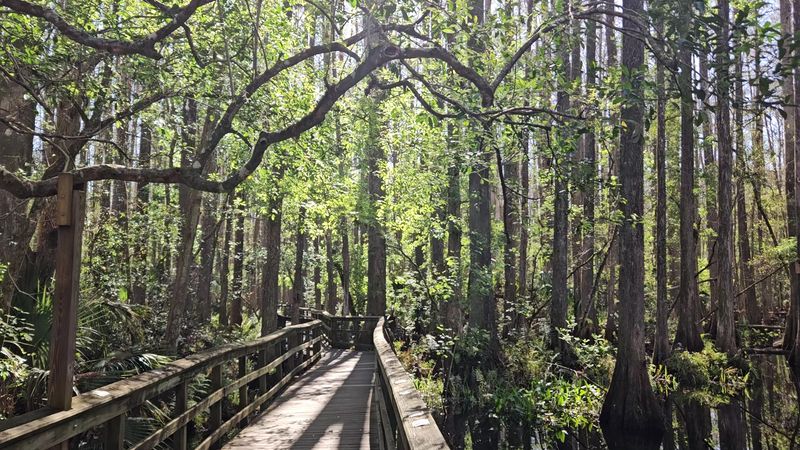
Few places capture the essence of mystical Florida quite like the cypress swamp boardwalks. Dark tannin-stained water reflects towering bald cypress trees while their knobby knees break the surface in otherworldly formations. Spanish moss drapes everything like nature’s own curtains, swaying gently in breezes that barely penetrate this sheltered world.
The elevated boardwalks let you explore deep into the swamp without getting your feet wet. These aren’t rickety old planks either but well-maintained pathways that wind through scenery so dramatic it hardly seems real. During evening hours, the sounds intensify with cicadas buzzing, owls hooting, and frogs calling from hidden spots.
Alligators often sun themselves along the water’s edge or float motionless like living logs. They’re part of what makes this experience authentic rather than sanitized, though they generally ignore human visitors on the elevated walkways. Turtles, wading birds, and water snakes add to the wildlife show.
The swamp changes character throughout the day and seasons. Morning mist creates ethereal scenes while afternoon light penetrates the canopy in dramatic rays. Winter visits mean fewer bugs and clearer views, though summer brings the full tropical atmosphere complete with humidity that hangs thick in the air.
3. Wildlife Encounters Around Every Bend
Spotting a gator watching you from the water creates a thrill that never gets old. Highlands Hammock hosts an impressive population of alligators ranging from tiny youngsters to impressive adults that command respect. They’re most visible during warmer months when they bask along shorelines and canal edges throughout the park.
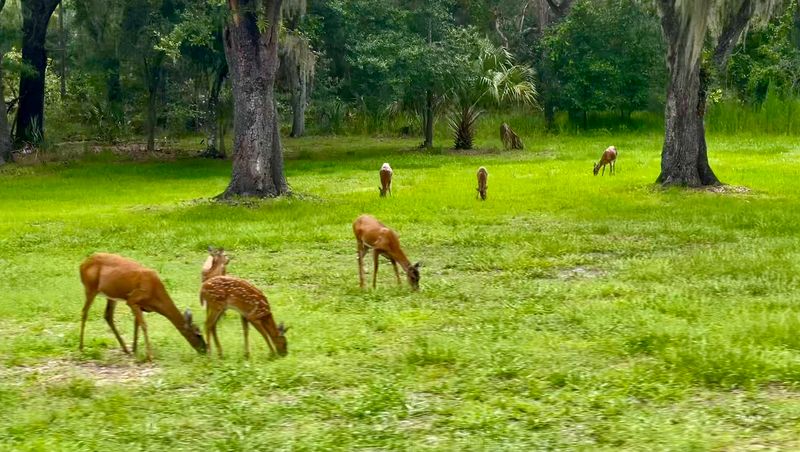
The wildlife diversity extends far beyond reptiles though. Deer browse peacefully in clearings, often unbothered by quiet observers. Wild boar families root through underbrush, armadillos waddle across trails, and bobcats occasionally make rare appearances for lucky visitors.
The bird population includes herons, egrets, ibis, hawks, and owls that call this protected habitat home.
Bring binoculars because many critters stay just far enough away to require magnification for good views. Early morning and late afternoon provide the best wildlife activity when animals emerge to feed and move about. Midday heat sends most creatures into shade or water for relief.
Respect wildlife by maintaining distance and never feeding anything. These are wild animals in their natural environment, which is precisely what makes encounters so special. A mother gator’s protective growl when you get too close to her babies serves as a powerful reminder that you’re visiting their home, not the other way around.
4. Educational Tram Tours Through Hidden Areas
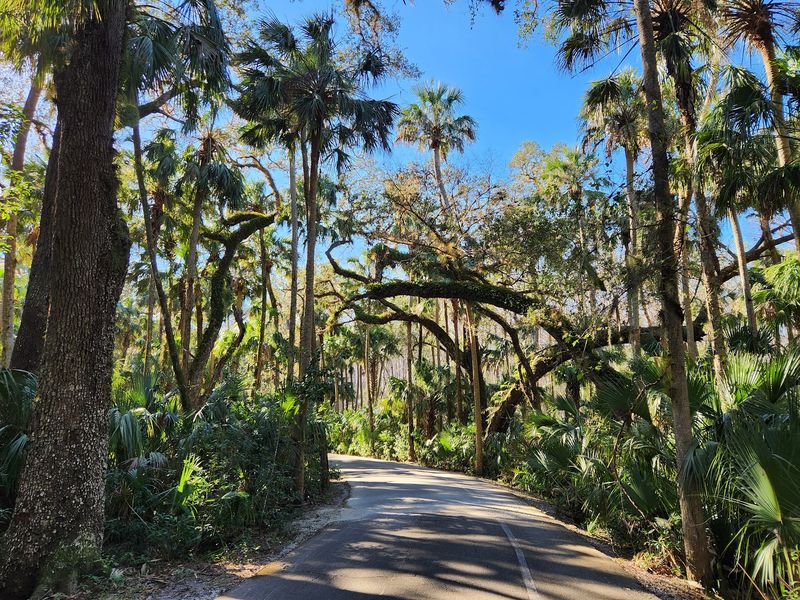
Sometimes the best way to cover ground is by letting someone else do the driving. The park’s tram tours take visitors deep into areas that would require hours of hiking to reach on foot. Knowledgeable guides share insights about the ecosystem, history, and wildlife while navigating trails that wind through the entire park.
These tours typically last around two hours, though special extended tours can stretch to three hours for those wanting the full experience. The open-air vehicles allow for excellent viewing and photography opportunities while providing shade and breeze as you roll through the landscape. Groups stay small enough that everyone can hear the guide and ask questions freely.
Tour guides stop frequently when wildlife appears, giving passengers time to observe and photograph gators, birds, and whatever else crosses your path. They know the best spots for sightings and can identify species that casual visitors might overlook. The historical information about the Civilian Conservation Corps that built much of the park adds fascinating context to what you’re seeing.
Booking ahead is smart, especially during peak season when tours fill quickly. Bring water, bug spray, and sun protection even though you’re riding rather than walking. The combination of education and exploration makes this experience worthwhile for all ages and fitness levels.
5. Multiple Trail Options for Every Skill Level
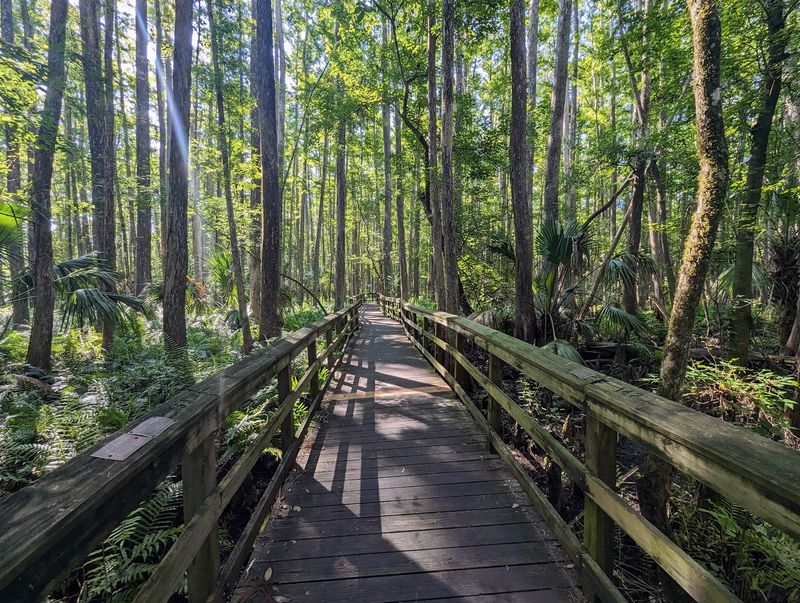
With eight different trails totaling several miles, you can customize your adventure to match your energy and interests. The Young Hammock Trail offers an easy introduction at just under a mile, perfect for families with small children or anyone wanting a quick nature fix. More ambitious hikers can tackle the Primitive Camping Trail for a longer wilderness experience.
All trails feature clear markings and well-maintained surfaces that make navigation straightforward. You won’t need GPS or worry about getting lost, which lets you focus on enjoying surroundings rather than route-finding. Most paths stay relatively flat, making them accessible even for those with moderate fitness levels.
Each trail showcases different aspects of the park’s ecosystems. Some wind through dense hammock while others skirt swamp edges or cross through pine flatwoods. The variety means you could visit multiple times and have fresh experiences by choosing different routes.
Shaded sections dominate most trails, providing relief from Florida’s intense sun.
Bikes aren’t allowed on hiking trails but the park features separate paved loops for cycling. Trail runners appreciate the softer surfaces and scenic routes for training. During summer weekdays, you might have entire trails to yourself, creating an almost private wilderness experience that’s increasingly rare in popular parks.
6. Historic CCC Museum and Park Heritage
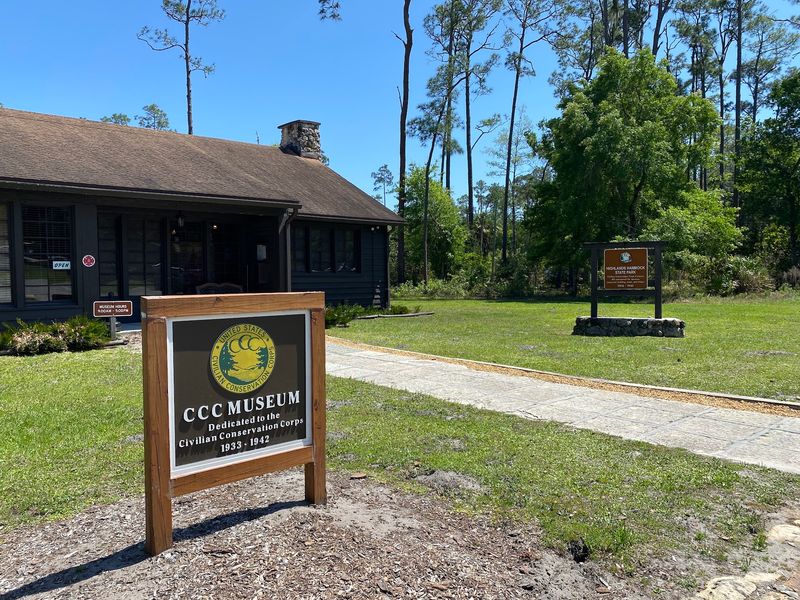
The Civilian Conservation Corps left an incredible legacy when they developed this park during the 1930s. Young men from the Great Depression era built roads, bridges, trails, and structures that visitors still use today. The CCC Museum preserves this history with exhibits showcasing tools, photographs, and stories from those early days of park development.
Understanding this background adds depth to your visit because you’re literally walking on paths that were hand-built nearly a century ago. The craftsmanship shows in details like the sturdy boardwalks and carefully placed stone work. These Depression-era workers created something that has served generations of Florida visitors while protecting precious natural resources.
Museum staff members are typically enthusiastic about sharing knowledge and answering questions. Even if you’re not normally a museum person, the exhibits here connect directly to the landscape you’re exploring. Seeing vintage photos of the same locations helps you appreciate how well the park has been preserved.
The museum and gift shop operate on a schedule that varies by season, so check ahead if this is a priority for your visit. Weekdays during summer may find it closed, though the natural attractions remain accessible. The general store offers ice cream and snacks that make a perfect end to your park exploration.
7. Peaceful Solitude Away from Crowds
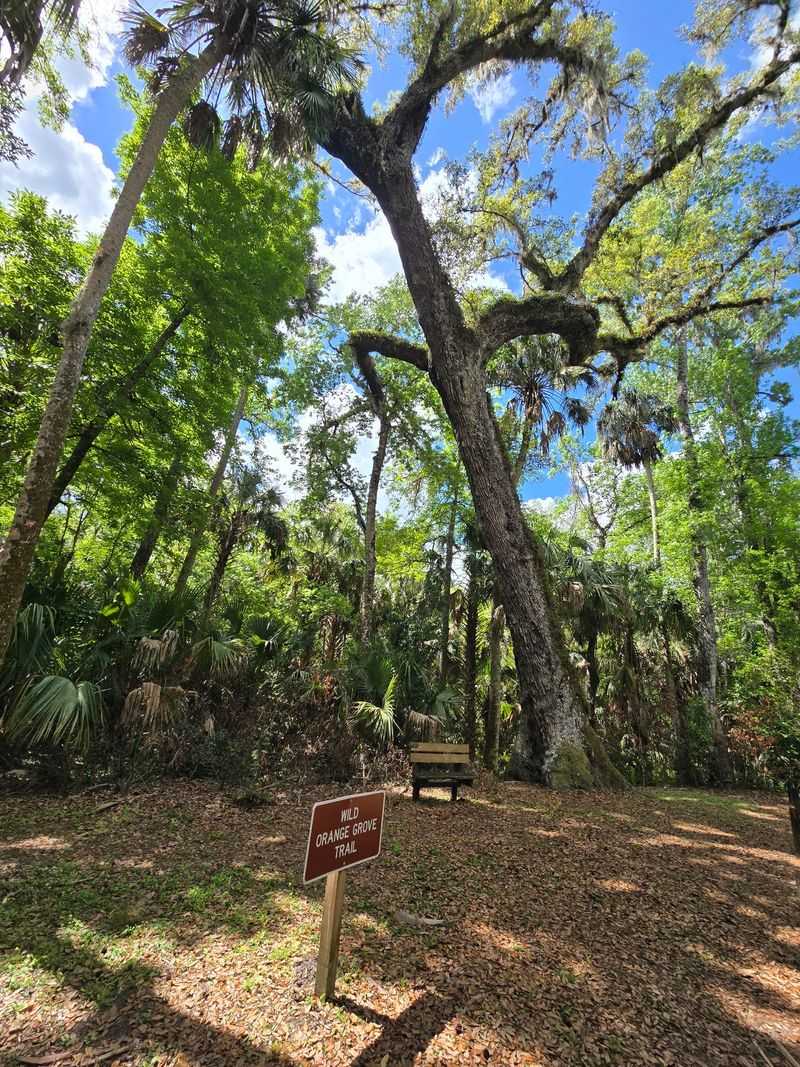
Finding genuine solitude in Florida’s popular parks can be challenging, but Highlands Hammock delivers. Visit on a weekday, particularly during summer months, and you might wander trails for hours without encountering another soul. That sense of having an entire wilderness preserve to yourself creates a meditative experience that’s increasingly precious in our crowded world.
The trade-off for fewer crowds sometimes means certain facilities are closed. Campgrounds have been undergoing renovations, and some amenities operate on reduced schedules during slower periods. But if your priority is connecting with nature rather than accessing every possible service, the exchange feels more than fair.
Even during busier weekend periods, the park’s size means crowds disperse naturally across multiple trails and areas. You’re not stuck in a conga line of hikers or jockeying for parking like at some famous natural attractions. The peaceful atmosphere remains largely intact regardless of season.
This tranquility lets you notice details that might escape attention in busier settings. Bird calls become clearer, rustling in the underbrush catches your ear, and the subtle play of light through leaves demands attention. Some visitors describe it as almost spiritual, this chance to slow down and simply exist in a beautiful natural space without constant human interruption or distraction.
8. Natural Temperature Relief and Comfort
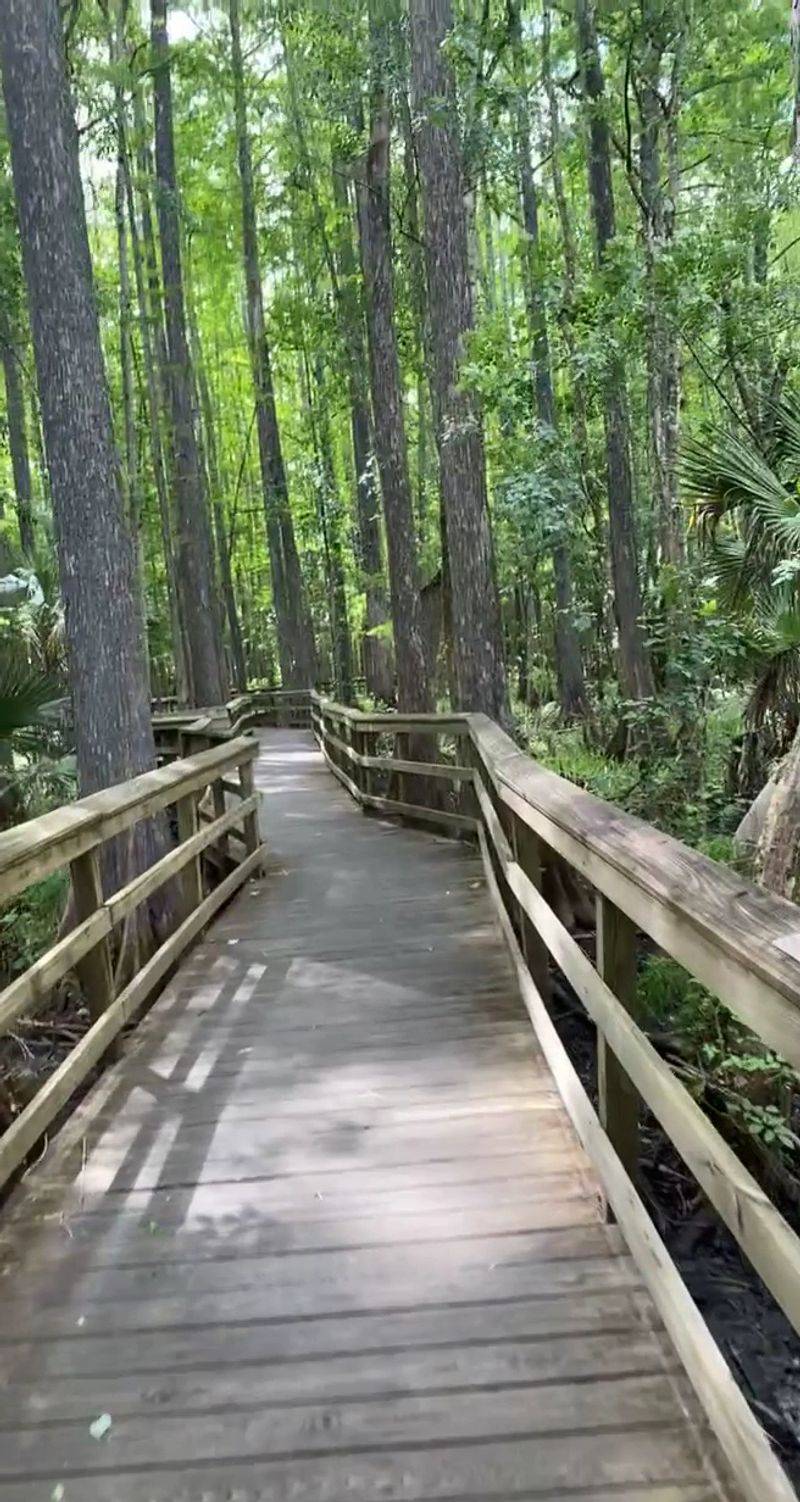
Stepping from the parking area into the hammock feels like entering a natural cathedral with built-in air conditioning. The temperature drop is immediately noticeable, sometimes reaching 20 degrees cooler under the dense canopy. This microclimate effect makes summer hiking surprisingly pleasant when other Florida outdoor activities become miserable in the heat.
The phenomenon occurs because the thick vegetation blocks direct sunlight while moisture from the swamp and plants creates natural evaporative cooling. Ancient trees with massive canopies act like living umbrellas, filtering harsh rays into gentle dappled light. Even humidity feels less oppressive under this protective cover compared to open areas.
Cyclists particularly appreciate this natural climate control since the paved bike paths wind through heavily shaded sections. You can maintain a good pace without overheating the way you might on exposed trails. Runners training for events use these trails specifically because the cooler conditions allow for longer workouts.
The comfort factor extends your enjoyment and lets you explore longer without exhaustion. You’ll still want water and should prepare for mosquitoes, but the oppressive heat that characterizes much of Florida becomes manageable here. Winter visits offer the bonus of comfortable temperatures with minimal bugs, though you miss some of the lush green intensity that summer brings to the landscape.