This Florida Barrier Island Has Dolphins, Sea Turtles, and Not a Single Paved Road
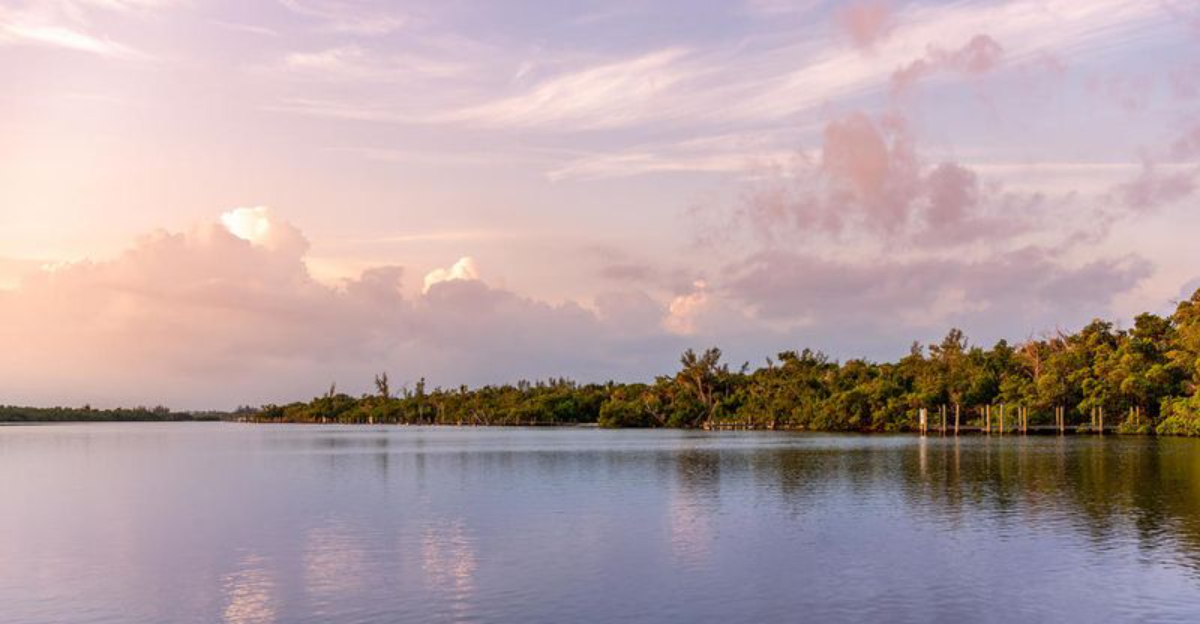
Tucked between Naples and Marco Island along Florida’s southwest coast, Keewaydin Island is one of those rare places that still feels genuinely wild. No roads, no cars, no crowds — just powder-white sand, emerald water, and wildlife that shows up like it owns the place.
You can only get here by boat, which keeps things beautifully quiet and surprisingly uncrowded even on sunny weekends. If you have never heard of Keewaydin, get ready to add it straight to the top of your Florida bucket list.
No Roads, No Cars, No Problem: The Bliss of a Car-Free Island
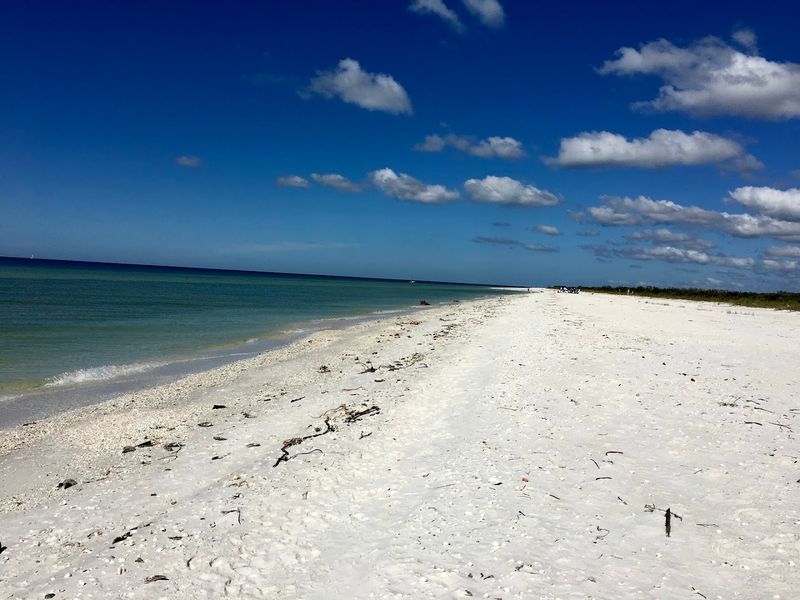
Forget traffic jams and parking headaches — Keewaydin Island does not have a single paved road, and honestly, that is the whole point. The moment you step off a boat onto this barrier island, something shifts.
The noise drops away. Your shoulders relax.
You realize how rarely you experience a place that has not been carved up by asphalt.
Keewaydin stretches roughly eight miles along Collier County’s coastline, sitting just south of Naples. Despite being so close to a busy city, it has managed to stay almost entirely undeveloped.
There are no resorts, no gift shops, no parking lots. What you get instead is raw, unfiltered Florida the way it looked before everything got built over.
Walking the island feels like exploring a place that belongs to nature first and visitors second. The sandy pathways that cut across from the bay side to the Gulf side are soft underfoot and shaded by coastal scrub.
Birdsong replaces car horns. The only traffic you will notice is a pelican gliding overhead or a great blue heron picking its way along the shoreline.
For families, this car-free setup is actually a huge bonus. Kids roam freely without anyone worrying about traffic.
Parents can actually relax. There is something deeply refreshing about a place where the biggest obstacle between you and the water is a few steps of warm sand rather than a crosswalk signal.
Weekdays tend to be quieter, and off-season visits are especially peaceful. If solitude is what you are after, a Tuesday morning in October on Keewaydin might be the closest thing to paradise you will find in Florida without buying a plane ticket.
Boat-Only Access Makes Every Visit Feel Like an Adventure
There is no bridge to Keewaydin Island. No ferry schedule to memorize, no shuttle bus waiting in a parking lot.
The only way in is by water, and that single fact is responsible for everything wonderful about this place. It filters out the casual crowd and rewards the people willing to make the effort.
From Naples, the boat ride takes roughly 20 to 30 minutes depending on where you launch. Several local rental companies offer powerboats by the hour or the day, making it accessible even if you do not own a vessel.
Kayakers and paddleboarders also make the crossing, though it is worth checking tidal conditions first — a few reviewers have noted that paddling back against an incoming tide can be a solid workout.
Guided boat tours depart from spots like Tin City in Naples, and they are a fantastic option for first-timers or families with young children. The captains know the waters well and often point out dolphins, manatees, and osprey nests along the way.
The journey itself becomes part of the experience rather than just a means to an end.
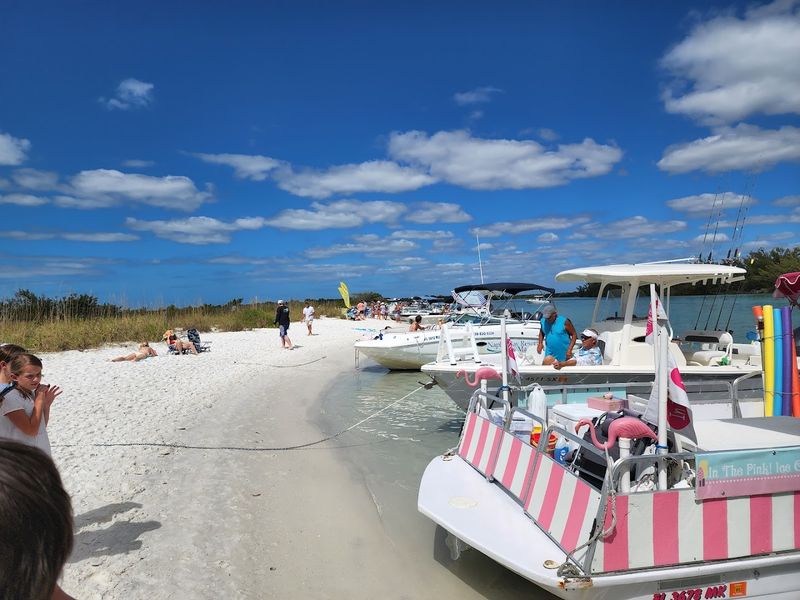
Once you arrive, you can anchor offshore or pull your boat right up onto the sandy shoreline on the bay side. Watching a line of boats parked along the beach with people splashing around in the shallows has a laid-back, old-Florida energy that is hard to find anywhere else in Collier County.
Planning ahead makes a real difference. Arriving early on weekends secures a good spot near the food boats.
Bringing extra dock lines or a sand anchor keeps your boat stable while you explore. The logistics are simple, and the payoff is enormous every single time.
Dolphins in the Wild: What to Expect on the Water
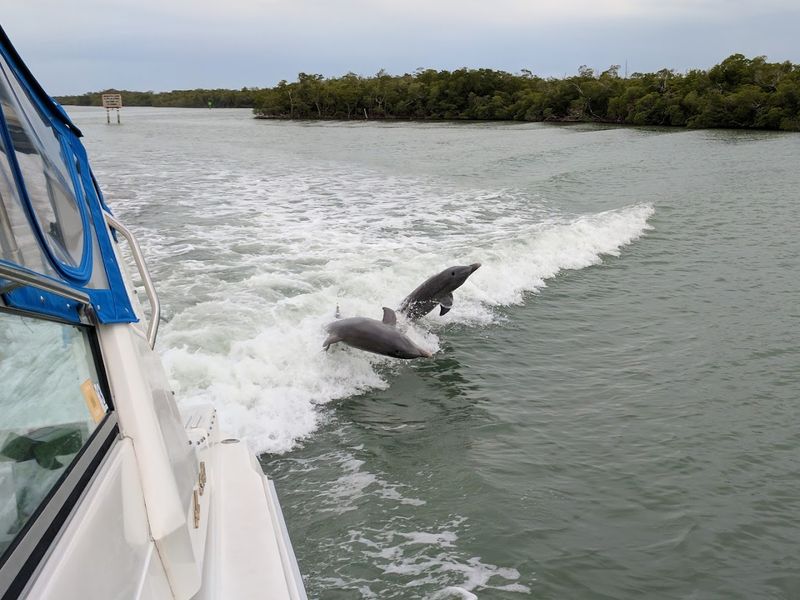
Spotting a dolphin in the wild never gets old. The waters surrounding Keewaydin Island are home to resident pods of bottlenose dolphins, and encounters happen with enough regularity that locals barely pause to point them out — while first-time visitors scramble for their phones in pure delight.
The channels and shallow bays around Keewaydin create ideal feeding grounds. Dolphins use a technique called strand feeding, where they work together to chase fish toward shore, sometimes beaching themselves momentarily to scoop up their meal.
It is one of the most dramatic wildlife behaviors you can witness in Florida, and the waters near this island are one of the better spots to catch it.
Boaters heading out from Naples frequently encounter dolphins riding bow waves before they even reach the island. The animals are curious and playful, often approaching boats on their own terms.
Resist the urge to feed them — it is illegal and genuinely harmful to their health and natural behaviors. Watching them from a respectful distance is the right move and honestly more impressive anyway.
Kayakers and paddleboarders have some of the most intimate dolphin encounters because they sit low in the water and move quietly. Paddling the backwater channels on the east side of the island during early morning gives you the best chance of seeing dolphins actively hunting in calm, clear conditions.
Guided eco-tours that include Keewaydin in their route often build dolphin watching into the itinerary. Captains know the regular feeding spots and timing.
Even if no dolphins show up — which is rare — the bird life, manatee sightings, and sheer beauty of the backcountry waterways make the trip completely worth every minute on the water.
Sea Turtle Nesting Season: Nature’s Most Inspiring Spectacle
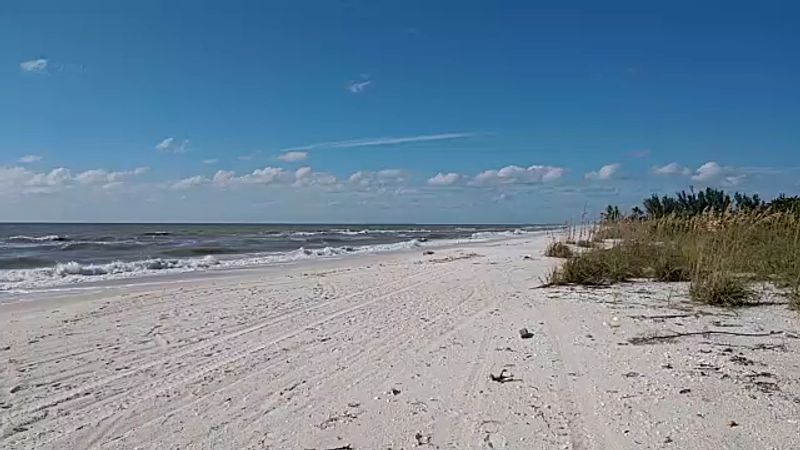
Every summer, something extraordinary happens on the quiet beaches of Keewaydin Island. Loggerhead sea turtles — ancient, enormous, and somehow graceful — haul themselves out of the Gulf of Mexico under the cover of darkness to lay their eggs in the warm sand.
It is one of Florida’s most awe-inspiring wildlife events, and Keewaydin’s undeveloped shoreline makes it one of the better places in Collier County to witness the signs of their presence.
Nesting season runs roughly from May through October. Female loggerheads return to the same beaches where they were born, sometimes traveling thousands of miles to do so.
They dig deep nests with their rear flippers, deposit around 100 eggs, cover everything up, and return to the sea — all within a couple of hours. The tracks they leave in the sand, wide and distinctive, are often visible to early morning beachcombers.
Because Keewaydin has no artificial lighting from buildings or streetlamps, the beach stays naturally dark at night. That darkness matters enormously for sea turtles.
Light pollution confuses hatchlings, causing them to crawl toward roads instead of the ocean. Keewaydin’s undeveloped state makes it a genuinely safer nesting habitat compared to heavily developed beaches nearby.
Visitors should know that disturbing nests or approaching nesting turtles is illegal and harmful. Admiring the tracks in the morning, learning about the nesting process, and understanding why dark, quiet beaches matter is the respectful way to engage with this wildlife story.
Conservation organizations monitor Keewaydin’s nests throughout the season. Their work helps protect one of Florida’s most iconic and endangered species — and every nest that successfully hatches on this island is a quiet victory worth celebrating.
Shell Hunting Heaven: Finding Treasure Along the Shoreline
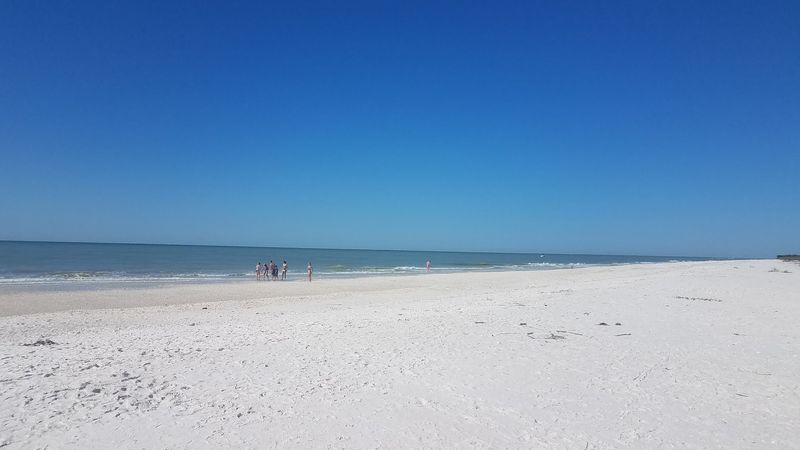
Ask any regular visitor what they love most about Keewaydin, and shelling comes up almost every time. The beaches here produce an impressive variety of shells — lightning whelks, horse conchs, fighting conchs, tulip shells, augers, and the always-celebrated sand dollar.
Low tide is when the real magic happens, exposing sandbars that glitter with finds.
The Gulf-facing side of the island is your primary shelling destination. Waves push shells up from the seafloor and deposit them along the tide line in long, colorful rows.
Walking the shoreline slowly with your eyes down is the classic technique, though the best shellers develop a kind of sixth sense for spotting a good find half-buried in wet sand. Early morning, especially after a storm, delivers the most impressive hauls.
What makes Keewaydin particularly rewarding for shellers is the lack of development. No beach raking machines come through to tidy things up overnight.
No crowds of thousands picking the beach clean by 9 a.m. The natural rhythm of tides and storms deposits fresh shells constantly, and because access requires a boat, the competition is genuinely lower than at popular Naples or Marco Island beaches.
Sandbars exposed at low tide are worth wading out to explore. Several reviewers have found sand dollars in excellent condition on these shallow flats, sometimes in clusters.
The water is clear enough that you can spot shells underwater before picking them up, which adds a fun snorkeling-adjacent element to the whole experience.
One important note: only collect empty shells. Live shells still contain animals, and removing them is both ecologically harmful and illegal in Florida.
A quick check before pocketing anything keeps the ecosystem healthy and your souvenir guilt-free.
The Floating Food Boats: A Quirky Keewaydin Tradition
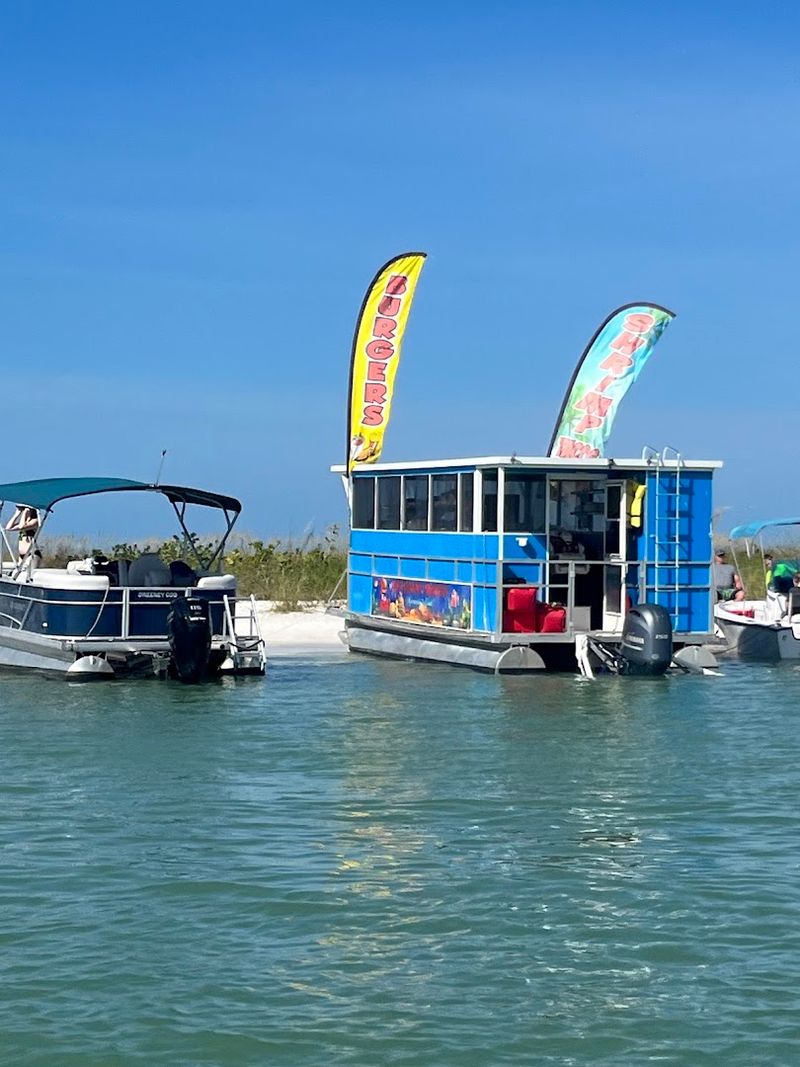
Only in Florida would you find a burger boat parked next to a pristine barrier island, and only in Keewaydin’s particular universe would it somehow feel completely right. The floating food vendors that show up on the bay side of the island have become one of its most beloved and talked-about features — a quirky, only-here experience that visitors remember long after the sunburn fades.
The most famous of these is a burger boat that earned a spot on Guy Fieri’s Diners, Drive-Ins and Dives, which tells you something about the quality. Island burgers, loaded with toppings and served right off the water, hit differently when you have been swimming and exploring all morning.
There is also typically an ice cream boat, a pizza boat, and sometimes additional vendors depending on the season and day of the week.
Food boats are most reliably present on weekends and busier days during the warmer months. If you are planning a weekday trip — especially off-season — bring your own food and drinks just in case.
Packing a cooler with sandwiches, fruit, and cold drinks is standard practice for regulars who know the vendors keep their own schedule.
The social scene around the food boats is half the fun. Boaters raft up, music plays from various vessels, and the bay side transforms into a floating neighborhood cookout.
It is lively without being rowdy, social without being overwhelming. Kids love it, adults love it, and even the pelicans hovering hopefully nearby seem to approve.
Bringing cash is smart since not every vendor accepts cards reliably on the water. Arriving with a full tank of fuel and a healthy appetite sets you up for one of the most memorable lunch experiences Collier County has to offer.
Bird Watching on Keewaydin: A Birder’s Quiet Paradise
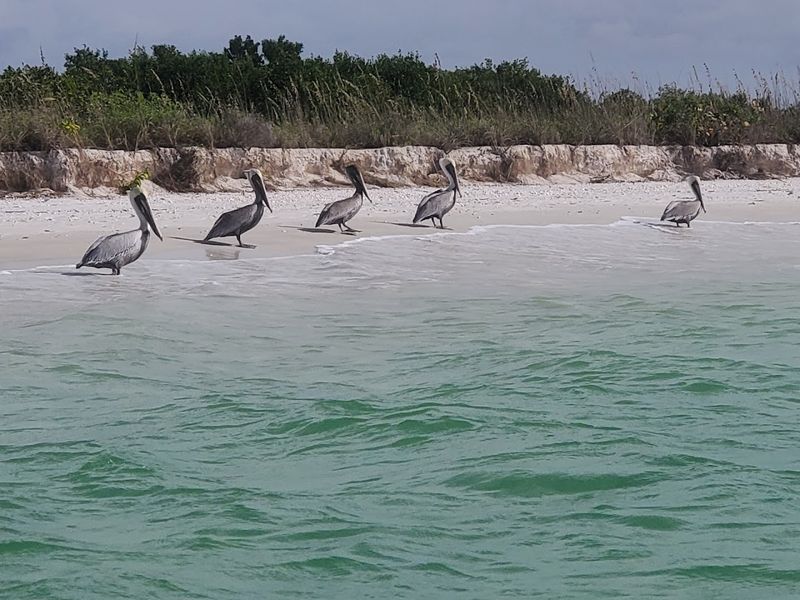
Birders who make the boat trip to Keewaydin are rarely disappointed. The island sits within a stretch of southwest Florida coastline that serves as critical habitat for dozens of resident and migratory species.
From roseate spoonbills to osprey, great blue herons to snowy egrets, the variety of birds here rewards both serious listers and casual observers equally.
The bay side of the island, with its shallow flats and mangrove edges, is particularly productive. Wading birds patrol the shoreline methodically at low tide, and it is common to see multiple species working the same stretch of beach simultaneously.
Brown pelicans are everywhere, plunge-diving for fish with theatrical precision. Black skimmers skim the glassy surface of the water in elegant, low-altitude runs.
Shorebirds congregate on exposed sandbars during tidal changes, and the mix can include Wilson’s plovers, least sandpipers, and dunlins depending on the season. During spring and fall migration, warblers and other small songbirds sometimes show up in the coastal scrub vegetation, making even the pathway between the bay and Gulf sides worth scanning carefully.
Osprey nests are a regular fixture around Keewaydin, often built in dead trees or on channel markers near the island. Watching an osprey dive feet-first into the water and emerge with a fish is one of those wildlife moments that makes you stop mid-sentence and just stare.
Off-season visits, particularly in late fall and winter, bring different species as northern birds move into Florida for the cooler months. The island is quieter then, which means less boat noise and more opportunities for close, unhurried observation.
Bring binoculars, move slowly along the shoreline, and let the birds come to you — Keewaydin rewards patience generously.
Sunset on the Gulf Side: Why Keewaydin Evenings Hit Different
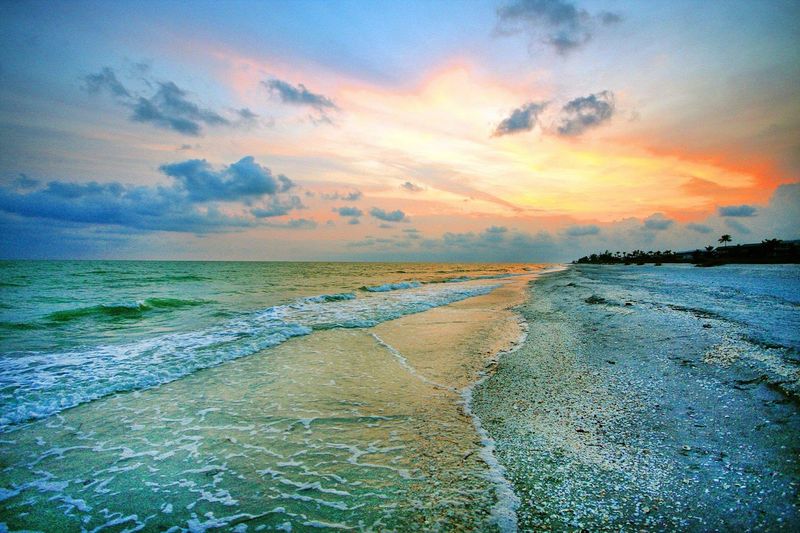
There is a specific kind of quiet that settles over Keewaydin Island as the afternoon crowd heads back to their boats. The bay side empties out, the music fades, and the Gulf-facing beach becomes almost meditative.
That is exactly when the island reveals its most beautiful side — literally and figuratively.
Southwest Florida sunsets are famous for a reason. The Gulf of Mexico’s western horizon gives you an unobstructed view of the sun going down, painting the sky in shades of orange, pink, and deep violet that no filter can improve.
On Keewaydin, with no buildings or streetlights interrupting the scene, those colors reflect off the water in a way that feels almost surreal. Reviewers consistently mention coming specifically for sunset, calling it one of the best in the region.
The trick is timing your visit so you are on the Gulf side of the island as the sun gets low. The walk across from the bay takes only a few minutes along the sandy pathway.
Arriving 45 minutes before sunset gives you time to find a comfortable spot, let the warmth of the day settle around you, and watch the light shift gradually from afternoon gold to that electric pre-sunset glow.
Weekday evenings are ideal. The island is noticeably quieter, and you may find yourself sharing the beach with only a handful of other people — a remarkable thing given how close Keewaydin sits to Naples.
Bring a blanket or a lightweight beach chair, a snack, and something cold to drink, and let the evening unfold at its own pace.
As the stars appear and the last light drains from the sky, the island goes completely dark and completely still. It is a reminder that some of Florida’s best experiences cost nothing except the willingness to show up and pay attention.