This Hidden Florida Preserve Turns A Simple Paddle Into A Wild Coastal Adventure
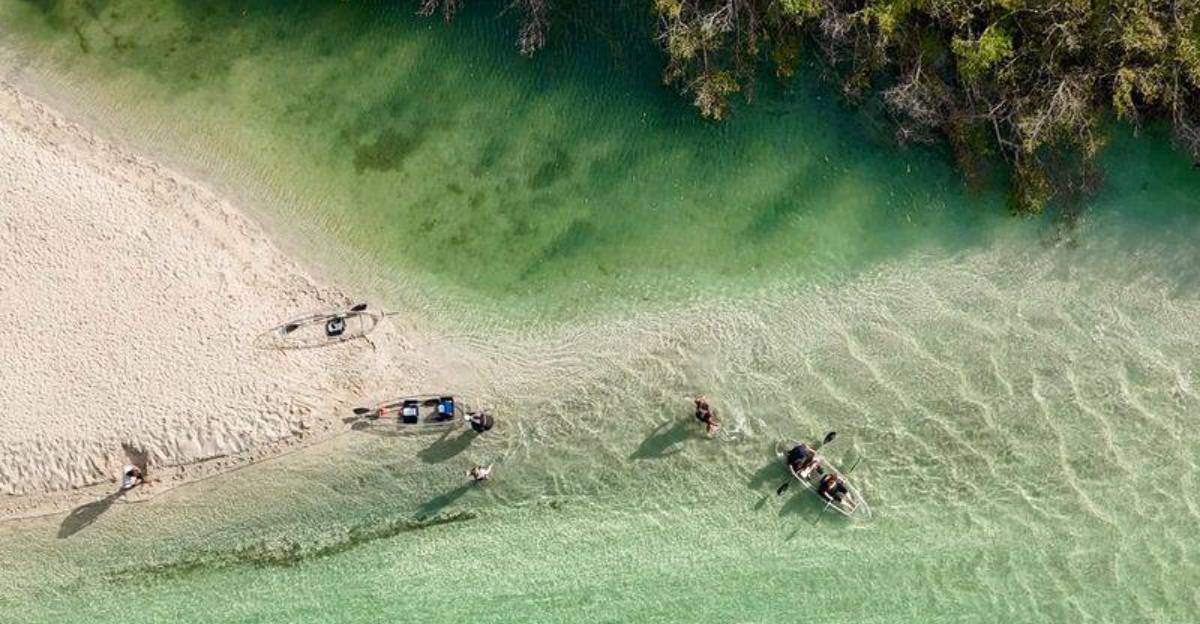
Tucked away in Little Sarasota Bay lies a paddler’s paradise that most tourists never discover. Jim Neville Marine Preserve offers crystal-clear shallow waters, winding mangrove channels, and wildlife encounters that’ll make you forget you’re just minutes from busy Siesta Key. Named after a local environmentalist who fought to protect this fragile ecosystem, the preserve transforms an ordinary kayaking trip into an unforgettable coastal exploration that feels worlds away from civilization.
1. Launch From Turtle Beach for Easy Access
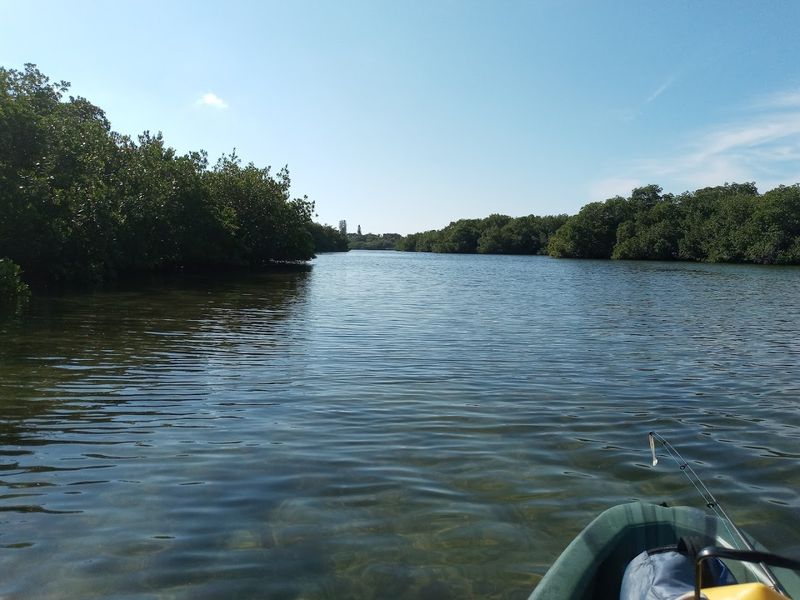
Getting on the water here couldn’t be simpler. Turtle Beach serves as the main launch point, offering straightforward access without the headaches you’d find at busier spots.
The boat ramp area provides plenty of space to unload your gear and slide your kayak into the calm waters. You won’t need to wrestle with waves or fight strong currents since the bay stays protected and mellow most days.
Several rental companies operate nearby if you don’t own equipment. Economy Tackle gets high marks from locals for their 24-hour rental deals and peaceful service that won’t interrupt your nature experience with loud tours.
Parking fills up fast during peak season and weekends, so arriving early makes sense. The shallow launch area works perfectly for beginners who might feel nervous about deeper water entries.
From this starting point, the preserve sits just a short paddle away through a scenic canal. The route stays clearly marked and easy to follow, even for first-timers.
Local paddlers also recommend Vamo Road as an alternative put-in spot. This location offers quieter surroundings with excellent parking and even easier water access for those who prefer a more secluded starting point away from beach crowds.
2. Navigate Shallow Waters Perfect for Beginners
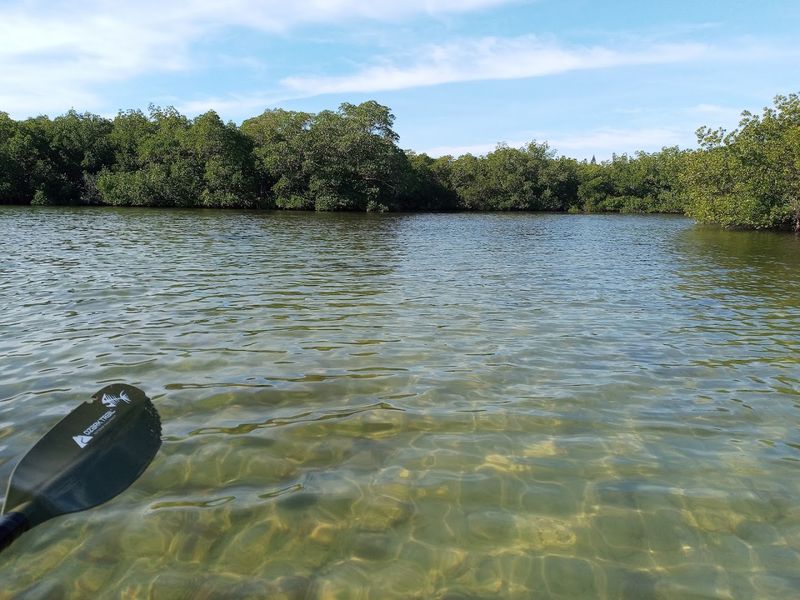
Forget about deep-water anxiety. The preserve’s shallow conditions make it ideal territory for nervous paddlers or families with kids learning the ropes.
You can actually see the sandy bottom beneath your kayak throughout most of the preserve. This visibility creates a calming effect that helps beginners relax and enjoy the scenery instead of worrying about what lurks below.
The water depth rarely exceeds a few feet in most areas, meaning you could stand up if you tipped over. That safety net gives newcomers confidence to explore without fear.
During summer months, the water warms up considerably, making accidental splashes far less shocking than they’d be in colder seasons. Some locals joke that the fish actually leave because it gets too hot for them.
These shallow conditions do require some awareness of your surroundings. Watch for sandbars that appear suddenly, especially during low tide periods.
The clear water also lets you spot wildlife more easily. Mullet jump around your kayak, stingrays glide across the bottom, and you might catch glimpses of crabs scuttling through the grass beds.
Experienced paddlers appreciate how the shallow environment creates perfect conditions for photography, allowing stunning shots of marine life without needing underwater equipment.
3. Explore Mangrove Islands and Hidden Channels
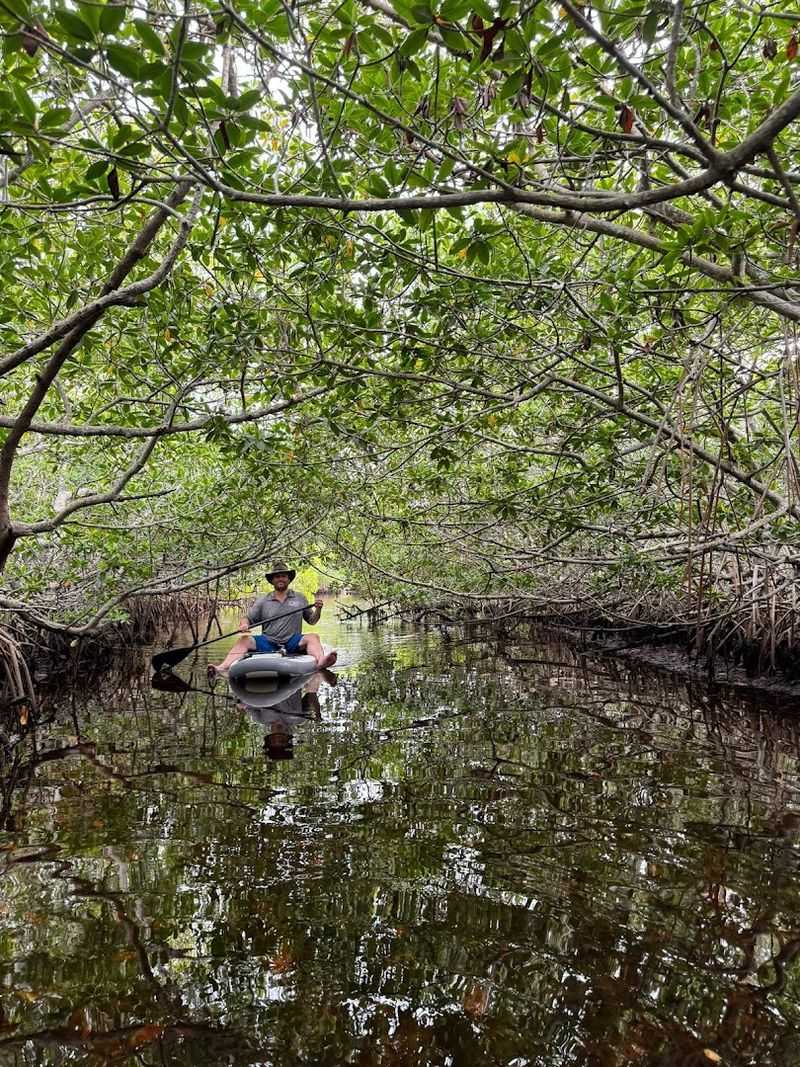
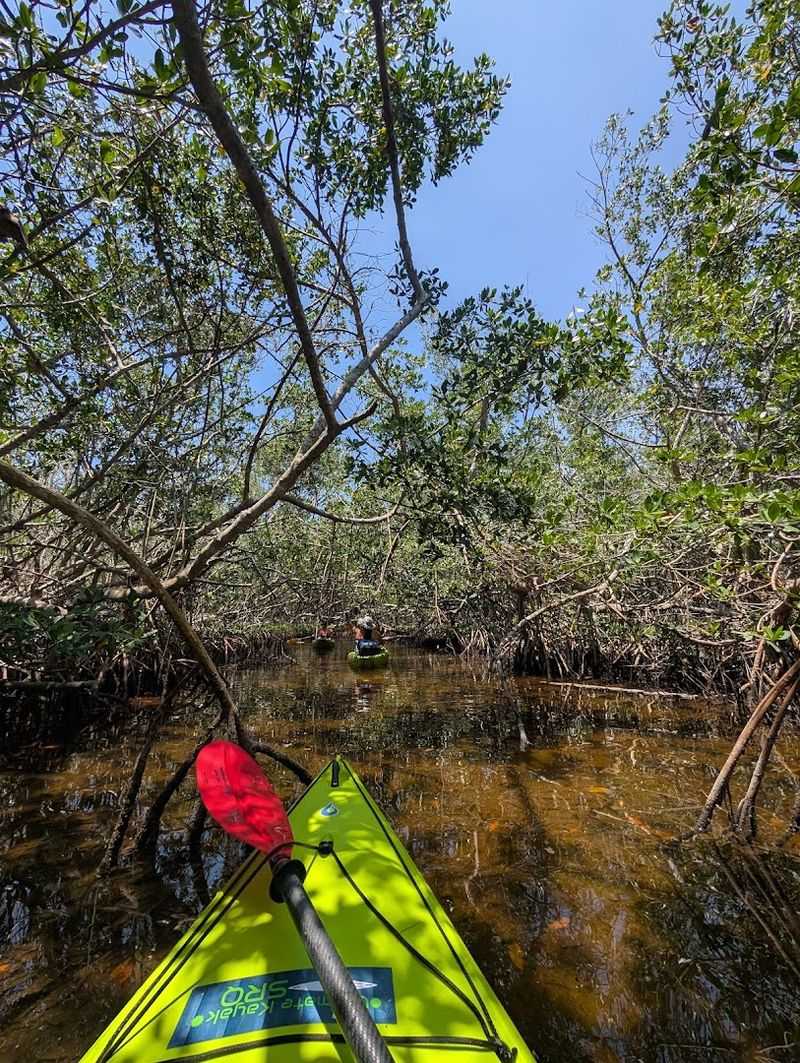
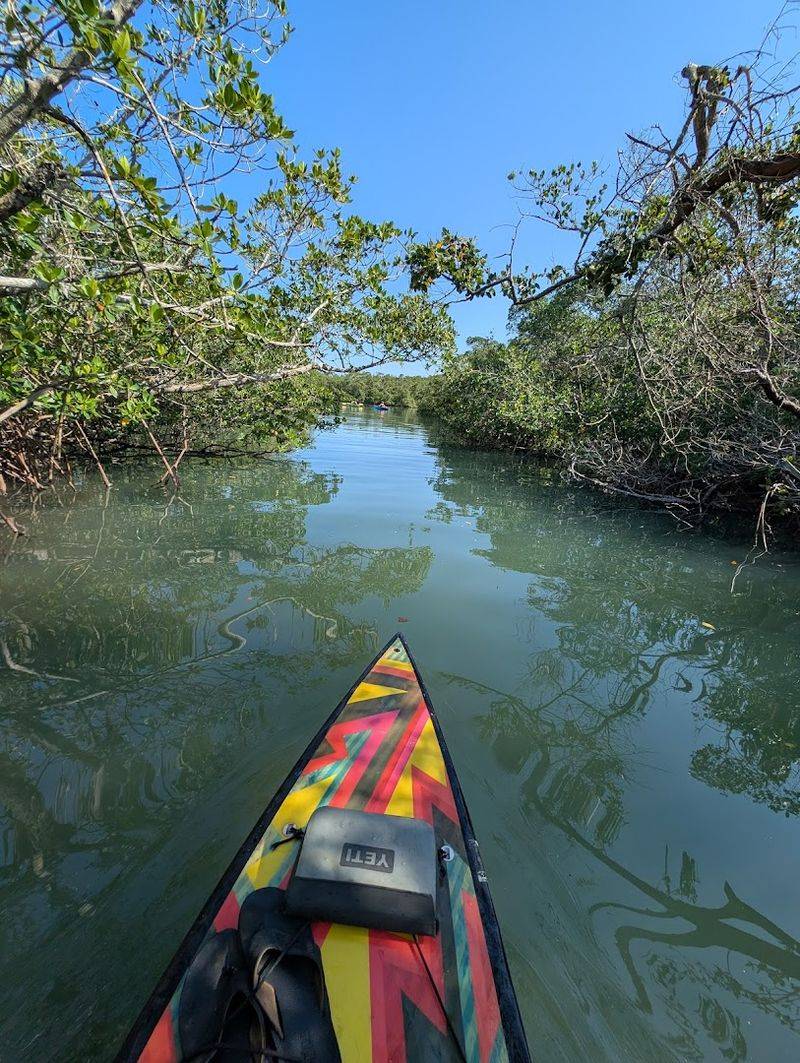
Mangrove islands dot the preserve like natural sculptures, creating a maze of channels that beg for exploration. Each twist and turn reveals something different, from tiny fish nurseries to roosting birds.
The main attraction involves paddling around the central island, which forms roughly a one-mile loop. This circuit takes about an hour at a leisurely pace, giving you time to soak in the scenery.
Some paddlers report that the famous “mangrove tunnels” can be overgrown and limited, especially during certain seasons. The vegetation grows thick and fast in Florida’s climate, sometimes blocking passages that were clear months earlier.
Still, the surrounding channels offer plenty of visual interest even without full tunnels. The mangrove roots create intricate patterns above and below the waterline, providing shelter for countless small creatures.
Watch for black-crowned night herons perched in the branches, waiting patiently for their next meal. Cormorants dry their wings on exposed roots, and limpkins call out with their distinctive wailing cries.
The narrow passages between islands create a sense of adventure and discovery. You never quite know what wildlife might appear around the next bend, keeping the experience fresh and exciting throughout your paddle.
4. Discover the Secret Beach and Sandbar Hangouts
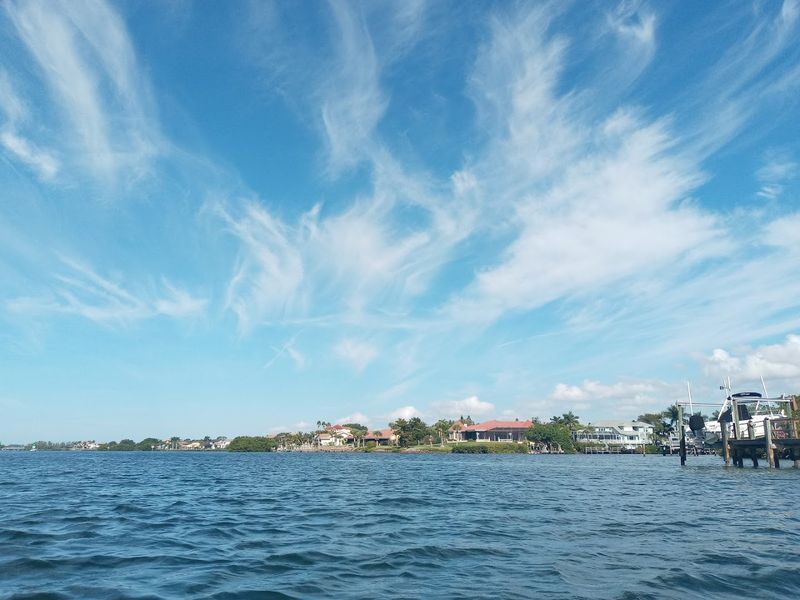
Local paddlers whisper about a “secret beach” tucked within the preserve. Finding it feels like stumbling onto your own private island, complete with soft sand and zero crowds.
This hidden gem provides the perfect lunch spot where you can pull your kayak ashore and stretch your legs. The sand stays clean and the surroundings remain peaceful, offering a true escape from tourist-packed beaches.
Multiple sandbars emerge throughout the preserve, especially during lower tides. These temporary islands become popular gathering spots for paddlers wanting to socialize or simply rest their arms.
The sandbars also attract shelling enthusiasts who comb the exposed areas for treasures. You’ll find various shells scattered across the sand, though nothing like the commercial shelling beaches farther south.
Summer storms can roll in quickly across the open water, so keep an eye on the sky. One reviewer got caught in a sudden downpour after visiting the secret beach, turning their peaceful paddle into an exciting dash back to shore.
These sandy areas serve as important habitat for shorebirds and other wildlife. Practice leave-no-trace principles by packing out everything you bring and respecting nesting areas marked with signs during breeding season.
5. Spot Wildlife From Herons to Jumping Mullet
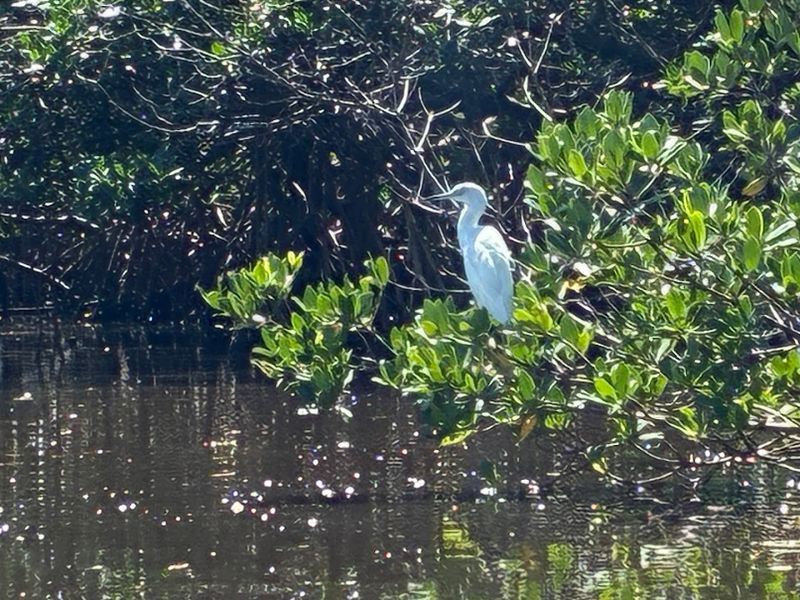
Wildlife watching reaches another level when you’re gliding silently through their habitat in a kayak. The preserve hosts an impressive variety of creatures that you’ll encounter throughout your paddle.
Black-crowned night herons hunt along the shorelines, and lucky paddlers have witnessed them catching and swallowing frogs whole. These patient predators freeze like statues before striking with lightning speed.
Mullet constantly leap from the water in spectacular displays that startle first-time visitors. Nobody knows exactly why they jump, but theories range from parasite removal to pure playfulness.
Cormorants perch on exposed branches, their wings spread wide to dry in the sun. Limpkins wade through shallow areas, using their curved beaks to extract apple snails from their shells.
Manatees sometimes visit the preserve, though sightings aren’t guaranteed. These gentle giants prefer slightly deeper channels and tend to appear more frequently during cooler months when they seek warmer waters.
Stingrays glide gracefully across the sandy bottom, their wing-like fins rippling in hypnotic patterns. The clear water lets you watch them from above without disturbing their peaceful cruising.
Bring binoculars if you’re serious about bird watching. The preserve attracts dozens of species throughout the year, making it a favorite spot for local ornithologists and casual nature lovers alike.
6. Visit the Abandoned Mote Aquarium Shark Tanks
History buffs get an unexpected bonus when they stumble upon the old Mote Aquarium shark tanks. These abandoned concrete structures sit as reminders of earlier marine research efforts in the area.
The tanks once held sharks for scientific study before Mote Marine Laboratory moved to its current facility. Now they’re slowly being reclaimed by nature, with algae covering the walls and fish darting through the spaces.
Paddling around these relics creates an eerie yet fascinating experience. The structures look almost prehistoric against the natural mangrove backdrop, like ruins from some forgotten civilization.
Photographers love the contrast between man-made concrete and wild vegetation. The tanks provide unique compositional elements that you won’t find in typical nature preserves.
These historical remnants also serve as artificial reefs now, attracting fish and other marine life. What was once a research facility has transformed into valuable habitat for the creatures it once studied.
The location connects visitors to Sarasota’s marine research heritage. Mote Marine Laboratory remains a world-class institution, and these old tanks represent its humble beginnings and evolution over decades.
Finding the tanks requires some exploring since they’re not marked on most maps. Local paddlers can point you in the right direction, or you can enjoy the thrill of discovering them yourself during your wanderings.
7. Fish the Productive Waters Year-Round
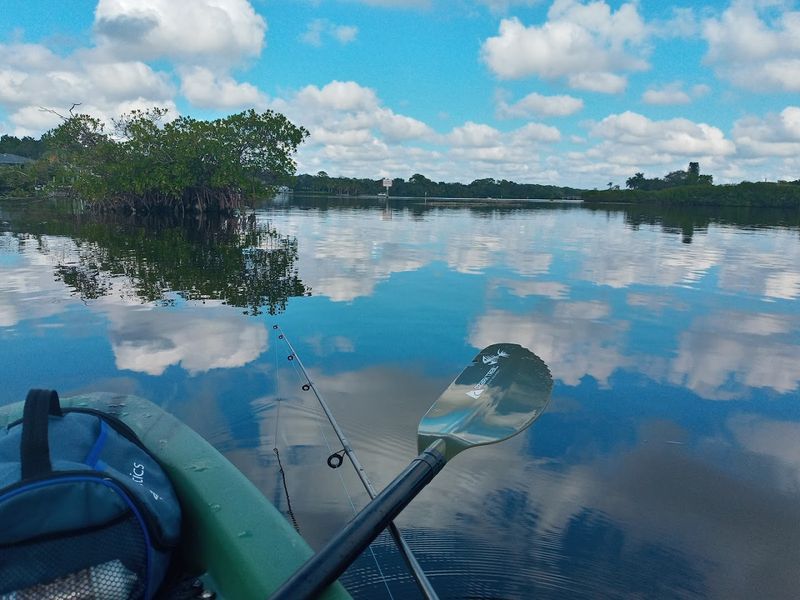
Anglers rave about the preserve’s fishing opportunities, calling it some of the best in the Sarasota area. The mangrove-lined shores and grass flats create perfect conditions for multiple species.
Snook, redfish, and sea trout cruise these waters regularly. The structure provided by mangrove roots gives predator fish perfect ambush points where they wait for baitfish to swim past.
Casting near the mangrove edges during incoming tides often produces strikes. The fish move into the shallows to feed, making them more accessible to kayak anglers who can reach spots larger boats can’t.
Summer fishing does slow down considerably as water temperatures climb. The extreme heat drives many species into deeper, cooler areas, leaving mostly mullet behind in the preserve’s shallows.
Fall through spring offers the most productive fishing periods. Cooler water temperatures bring fish back into the flats and channels where they feed aggressively to prepare for seasonal changes.
The preserve’s protected status means you’ll need to follow all Florida fishing regulations carefully. Check size and bag limits before keeping any fish, and practice catch-and-release for species you don’t plan to eat.
Kayak fishing here requires minimal gear since you’re targeting inshore species. A simple spinning setup with artificial lures or live shrimp works perfectly for most situations.
8. Honor Jim Neville’s Environmental Legacy
The preserve carries the name of Jim Neville, a Sarasota environmentalist who dedicated his life to protecting local coastal ecosystems. His advocacy helped establish this protected area for future generations to enjoy.
Understanding this history adds deeper meaning to your paddle. You’re not just exploring pretty scenery but experiencing the fruits of conservation efforts that took years of hard work and dedication.
Neville recognized that rapid development threatened Florida’s fragile coastal habitats. His vision included preserving spaces where wildlife could thrive and people could connect with nature without destroying it.
The preserve demonstrates how conservation and recreation can coexist successfully. Paddlers enjoy unrestricted access while the ecosystem remains protected from development and degradation.
Visiting responsibly honors Neville’s legacy and ensures the preserve stays healthy for decades to come. Simple actions like not disturbing nesting birds and packing out all trash make real differences.
The preserve also serves as an outdoor classroom where people learn about mangrove ecosystems, coastal processes, and marine life. Education was central to Neville’s conservation philosophy, believing informed citizens become better environmental stewards.
Local environmental groups continue Neville’s work through habitat restoration and educational programs. Supporting these organizations helps maintain the preserve and expand conservation efforts throughout the region.