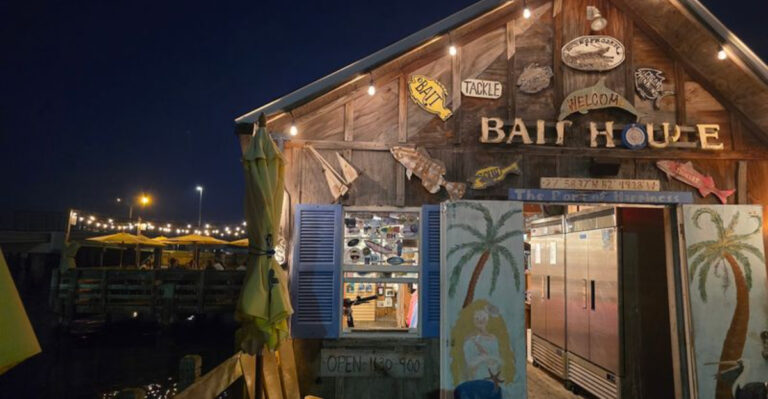
This Hidden Florida Road Trip Route Feels Like Driving Through Old Florida
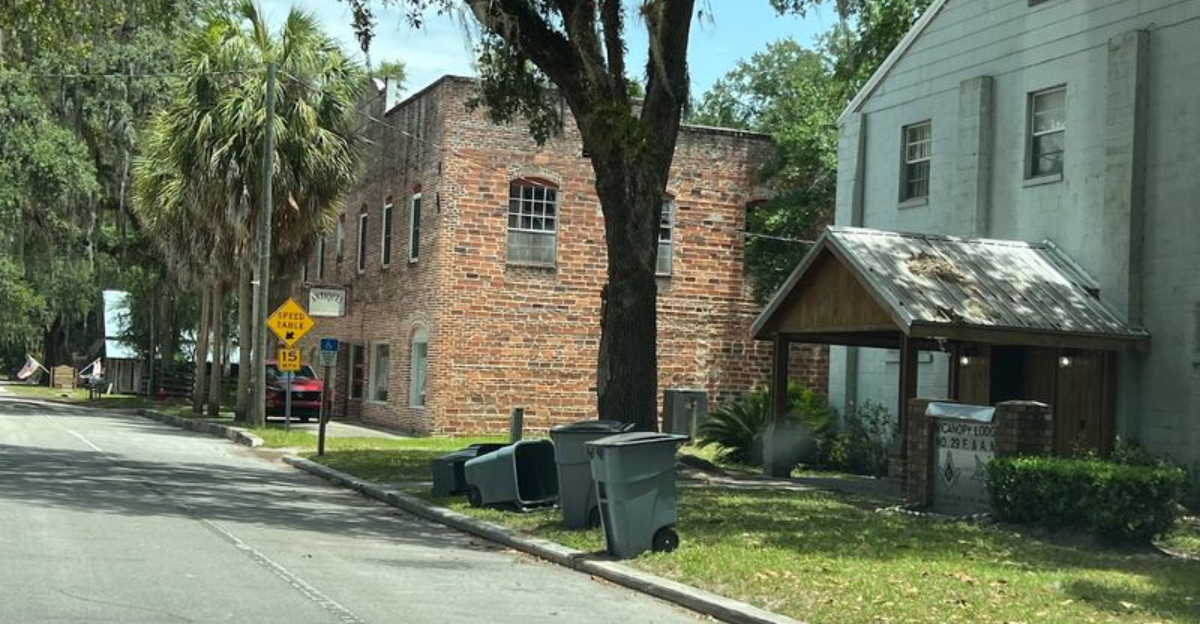
Forget the theme parks and crowded beaches for a minute. There’s a stretch of north-central Florida that still looks and feels like the state did decades ago—before the billboards, before the sprawl, before everything got paved over. This route winds through sleepy towns, moss-draped oaks, and places where time seems to have slowed down on purpose.
It’s the kind of drive where you’ll want to roll the windows down, turn off the GPS, and just see where the road takes you.
1. Paynes Prairie Preserve State Park (Micanopy)
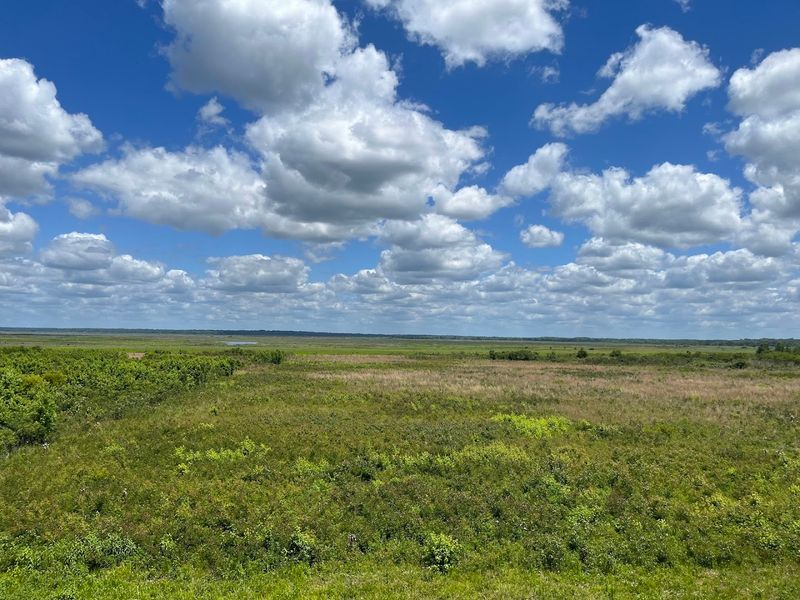
Picture a landscape so wide open you can see weather systems rolling in from miles away. Paynes Prairie stretches out like Florida looked before anyone thought to drain a swamp or build a subdivision. Wild bison roam here, along with horses, alligators, and more bird species than you can count in an afternoon.
The observation tower gives you a view that goes on forever—just prairie, sky, and whatever wildlife happens to be passing through. On foggy mornings, the whole place feels prehistoric, like you’ve stepped back thousands of years. It’s quiet in a way that makes you realize how much noise you’re used to.
Trails loop through different habitats, from wetlands to hardwood hammocks. You might spot a sandhill crane doing its weird little dance or catch a gator sunbathing by the water’s edge. The park doesn’t try to entertain you with gift shops or guided tours—it just exists, wild and unbothered.
Bring binoculars if you’ve got them. The bird-watching here is ridiculous, especially during migration seasons. And if you’re lucky enough to visit after a good rain, the prairie floods into a shallow lake that reflects the clouds like a giant mirror.
It’s the kind of place that reminds you why Florida was worth exploring in the first place.
2. Historic Downtown Micanopy (Micanopy)
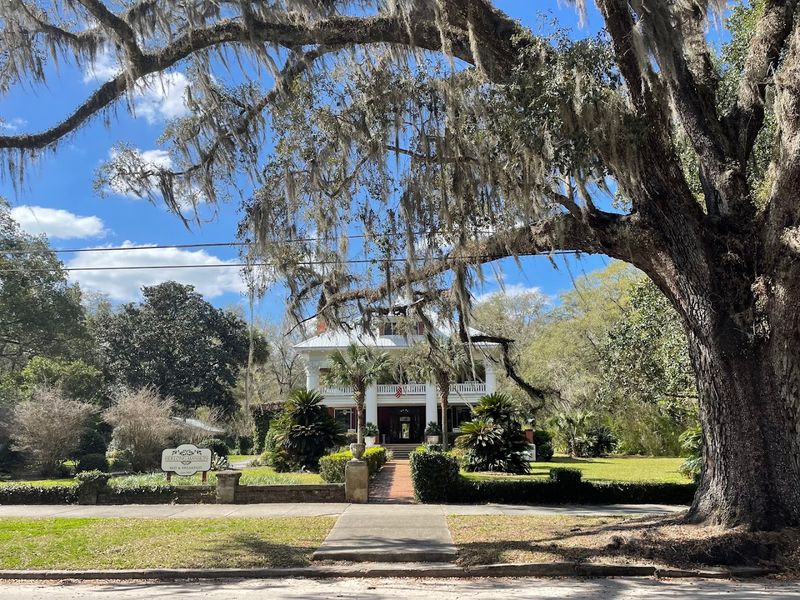
Micanopy moves at its own speed, which is to say: not fast. This tiny town, tucked just off the interstate, feels like it was built for porch-sitting and slow conversations. The main drag is only a few blocks long, lined with antique shops, galleries, and buildings that have been standing since before the Civil War.
Walking through downtown feels like flipping through an old photo album. The storefronts are genuinely historic, not theme-park recreations. You’ll find everything from vintage furniture to rare books to handmade crafts, all tucked into spaces that creak when you walk across the floor.
The oak trees here are massive, their branches heavy with Spanish moss that sways in the breeze. Locals know each other by name, and they’re not in any hurry to change things. There’s no chain store in sight—just family-owned spots that have been around for generations.
Stop into one of the cafes and you’ll probably end up chatting with whoever’s behind the counter. They’ll tell you about the town’s history, recommend a good hiking trail, or just talk about the weather. Micanopy doesn’t put on a show for tourists.
It’s just genuinely, unapologetically itself, which is exactly what makes it worth visiting.
3. Pearl Country Store & Barbecue (Micanopy)
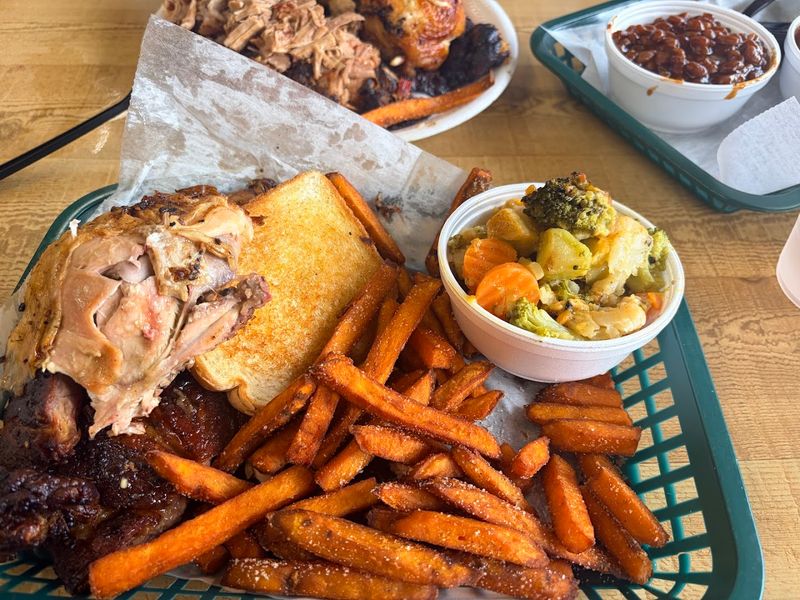
Some places earn their reputation through fancy marketing. Pearl earns it through smoke, meat, and decades of doing things the same way. This roadside spot has been feeding travelers and locals since the 1950s, and it still looks like it—in the best possible way.
The building itself is nothing fancy: weathered wood, a few picnic tables outside, and a smoker that’s been working overtime for longer than most people have been alive. But what comes out of that kitchen is the kind of barbecue that makes you understand why people take road trips for food.
The pulled pork is tender enough to fall apart with a fork, and the ribs have that perfect balance of smoke and char. They don’t mess around with a dozen different sauces—just good meat cooked right. The sides are classic Southern comfort: coleslaw, baked beans, cornbread that’s still warm when it hits your plate.
You’ll probably have to wait for a table, especially on weekends. That’s fine. Use the time to read the old photos on the walls or chat with whoever’s in line behind you.
Everyone here has a story about their first visit or their favorite menu item. Pearl isn’t trying to be trendy or Instagram-famous. It’s just been quietly serving some of the best barbecue in Florida for seven decades, and that’s enough.
4. Marjorie Kinnan Rawlings Historic State Park (Cross Creek)
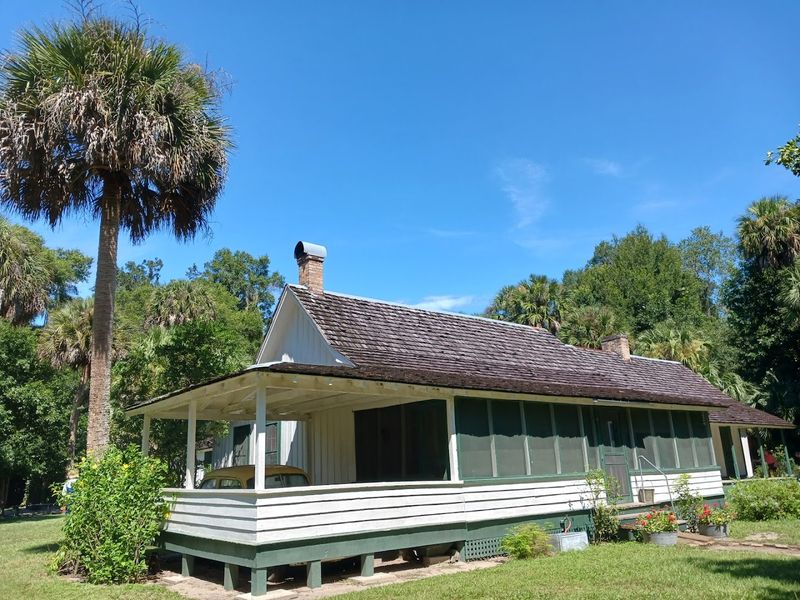
Cross Creek is where Marjorie Kinnan Rawlings wrote The Yearling, and walking through her property feels like stepping into the pages of that book. The house is a classic Florida cracker-style farmhouse, simple and functional, built to catch every breeze in the days before air conditioning.
Rangers lead tours through the home, which is still furnished much like it was when Rawlings lived here in the 1930s and ’40s. You’ll see her typewriter, her books, her kitchen where she cooked the meals that would later become recipes in Cross Creek Cookery. The screened porch overlooks the orange grove and the hammock beyond—the same view she had while writing.
The grounds are as much a part of the experience as the house itself. Citrus trees, palms, and native plants create the kind of lush, subtropical landscape that inspired her writing. Chickens still scratch around the yard, and the whole place feels lived-in rather than museum-perfect.
What makes this spot special isn’t just the literary history—it’s how well-preserved the sense of place is. You can imagine what rural Florida life was like nearly a century ago, before development changed everything. The park hosts special events throughout the year, including cooking demonstrations using Rawlings’ own recipes.
It’s a small piece of Old Florida that’s been protected and shared, rather than paved over and forgotten.
5. The Yearling Restaurant (Cross Creek)
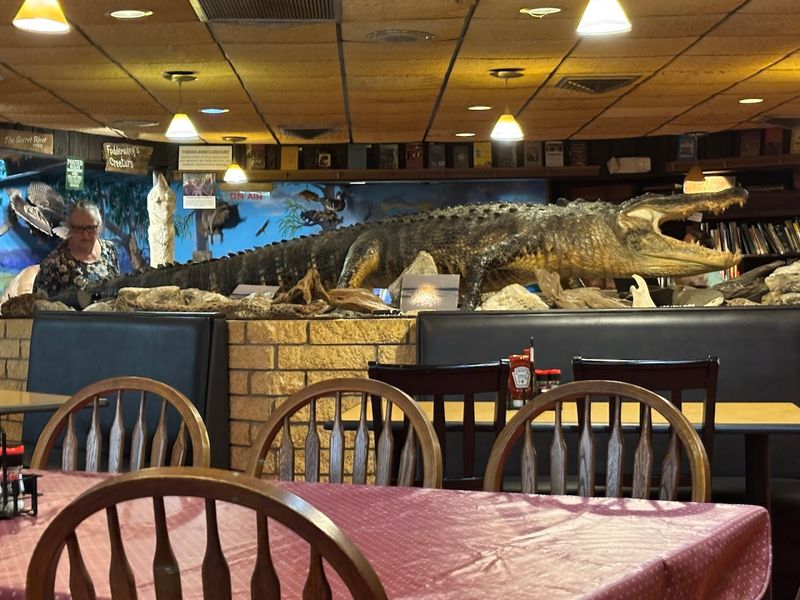
Named after Rawlings’ most famous novel, The Yearling sits right on the edge of Cross Creek, surrounded by the same wild Florida landscape she wrote about. The restaurant has been serving up Southern and Florida-style cooking since the 1950s, in a building that fits perfectly into the scenery.
The menu leans into traditional Cracker cuisine—think fried catfish, frog legs, alligator tail, and soft-shell turtle. These aren’t novelty items for tourists; they’re dishes that have been part of Florida’s culinary heritage for generations. If you’re not feeling adventurous, the fried chicken and catfish are absolutely solid choices.
Dining here feels like eating at someone’s country home, assuming that home happens to overlook a beautiful creek filled with water birds. The interior is casual and unpretentious, with wood paneling and windows that look out over the water. On warm evenings, you might spot herons or egrets fishing in the shallows.
The service is friendly without being fussy, and the portions are generous. People drive from Gainesville, Ocala, and beyond specifically to eat here, which tells you something about the food quality. After your meal, take a walk around the property.
The views of Cross Creek are peaceful and photogenic, especially near sunset when the light turns everything golden. It’s the kind of place that makes you slow down and appreciate where you are.
6. Evinston Historic Wood & Swink Store and Post Office (Evinston)
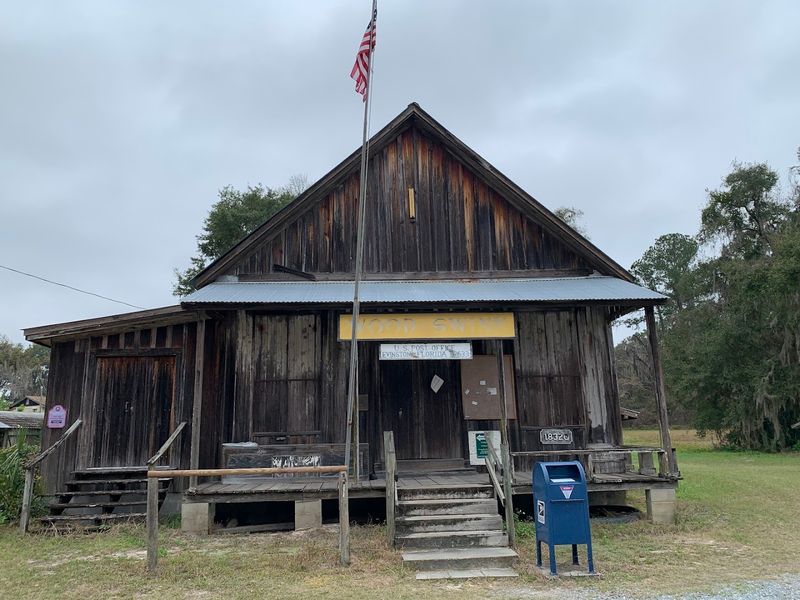
Blink and you’ll miss Evinston entirely—it’s barely a dot on the map. But this tiny community has one gem worth stopping for: the Wood & Swink Store, which has been operating since 1882. Yes, you read that right.
This place has been selling goods and sorting mail since before Florida even had paved roads.
The building looks like it was pulled straight from a Western movie set, all weathered wood and old-timey charm. Inside, you’ll find a working post office on one side and a general store on the other. The shelves are stocked with local products, handmade crafts, jellies, honey, and various knickknacks that make for great souvenirs.
What’s remarkable is that this isn’t a recreation or a tourist trap—it’s a functioning business that serves the local community. People actually come here to mail packages and buy supplies, just like their grandparents did. The creaky wooden floors, vintage fixtures, and hand-lettered signs create an atmosphere you can’t fake.
The folks running the place are usually happy to chat about the store’s history or the area’s past. They’ve got stories about how things used to be, back when Evinston was a bustling railroad town. Now it’s quiet, almost forgotten, but this little store keeps a piece of that history alive.
It’s a quick stop, but it’s one of those places that sticks with you long after you’ve left.
7. Sweetwater Wetlands Park (Gainesville)
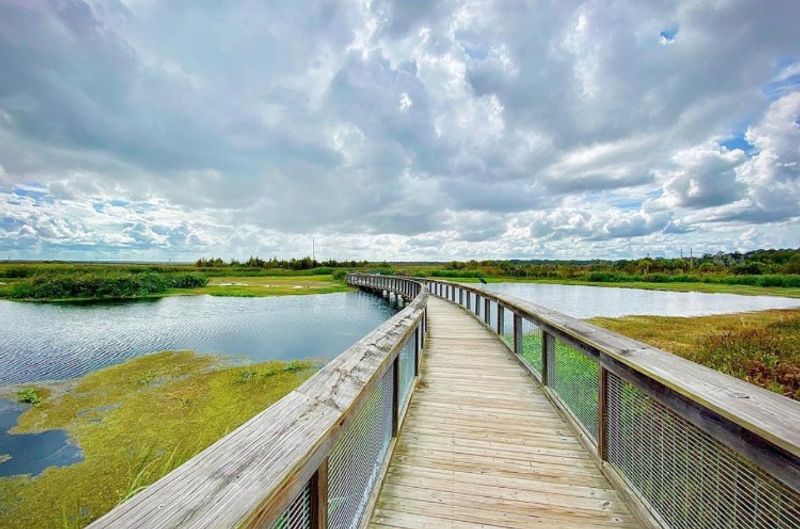
Gainesville’s Sweetwater Wetlands started as a wastewater treatment project and evolved into one of the best bird-watching spots in north Florida. Funny how that works. What was once purely functional became a thriving ecosystem that attracts photographers, nature lovers, and anyone who wants to see Florida wildlife up close.
The park has miles of trails and boardwalks that wind through different wetland habitats. You’ll see alligators—lots of them—along with herons, ibises, anhingas, and if you’re lucky, a roseate spoonbill or two. The bird diversity here is legitimately impressive, especially during migration seasons when rare species pass through.
Unlike some nature parks that require hiking deep into the wilderness, Sweetwater makes wildlife viewing accessible. The boardwalks are well-maintained and easy to navigate, and the animals seem pretty unbothered by human presence. You can get surprisingly close to wading birds and watch gators sunbathing just a few feet away.
Sunrise and sunset are prime times to visit when the light is soft and the animals are most active. Bring a camera with a decent zoom lens if you have one—you’ll want it. The park is free to enter, which makes it an easy addition to any Gainesville stop.
It’s proof that conservation and recreation can coexist beautifully, creating spaces where both wildlife and people can thrive. Plus, it’s just plain peaceful, which is something everyone needs more of.
8. Ichetucknee Springs State Park (Fort White)
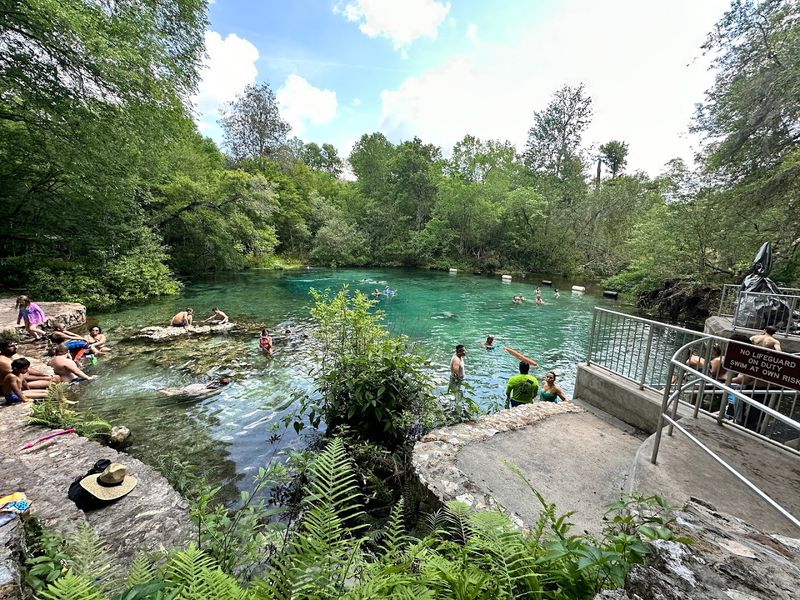
Ichetucknee Springs is where locals go when summer heat becomes unbearable. The spring-fed river stays a cool 72 degrees year-round, which feels absolutely perfect when it’s 95 degrees and humid outside. The water is so clear you can count fish from your inner tube as you float downstream.
Tubing the Ichetucknee is a north Florida tradition. You rent a tube, hop in at the north entrance, and let the gentle current carry you downstream for a few hours. There’s no paddling required—just floating, chatting with friends, and watching the trees slide by overhead.
It’s about as relaxing as outdoor recreation gets.
The river winds through lush hardwood forest, with cypress trees and Spanish moss creating natural shade. You’ll pass several springs along the way, where cold, clear water bubbles up from underground. Some people stop to swim or snorkel in these springs, where the visibility is incredible and fish swim right up to your mask.
The park gets busy on summer weekends, so arrive early if you want to avoid crowds. Weekdays and off-season visits offer a quieter experience with the same beautiful scenery. Beyond tubing, there are trails for hiking and swimming areas for those who prefer to stay put.
The water is refreshing in that bone-deep way that only spring water can be. It’s pure Old Florida—simple, natural, and absolutely worth the drive.