This Is One of the Oldest Roads in Florida And It Still Keeps Drivers on Edge
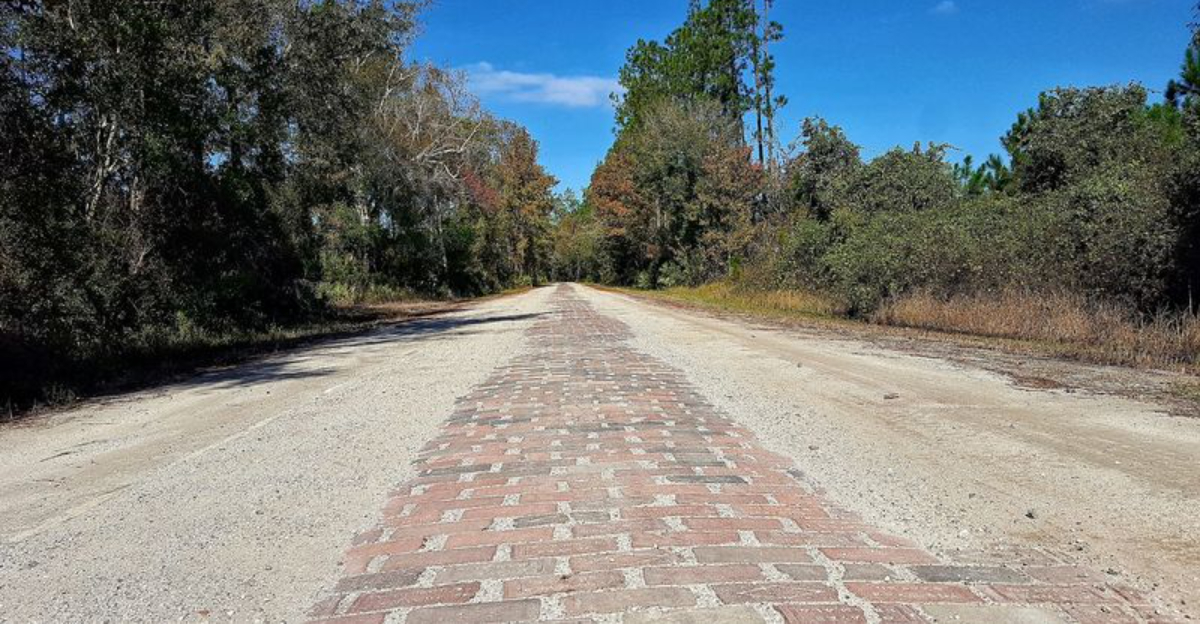
Tucked away in the rural backwoods of St. Johns County, Old Brick Road near Hastings, Florida is one of those places that feels frozen in time. Stretching roughly nine miles between U.S.
Highway 1 and Espanola along the old Dixie Highway corridor, this crumbling relic of early 20th-century Florida still carries cars, log trucks, and curious history hunters every single day. Sand swallows the bricks in places, the road rattles your teeth, and the trees close in around you — but that is exactly what makes it unforgettable.
If you have ever wanted to drive on a piece of living Florida history, this road is calling your name.
The Surprisingly Old Origins of This Forgotten Road
Before Florida had interstates, before GPS, and long before anyone dreamed of a Sunpass, there was the Dixie Highway. Old Brick Road near Hastings is one of the last surviving stretches of that original route, and it is older than most people realize.
Built in the early 1900s, this road was once part of a grand national effort to connect the eastern United States by automobile from Michigan all the way down to Miami.
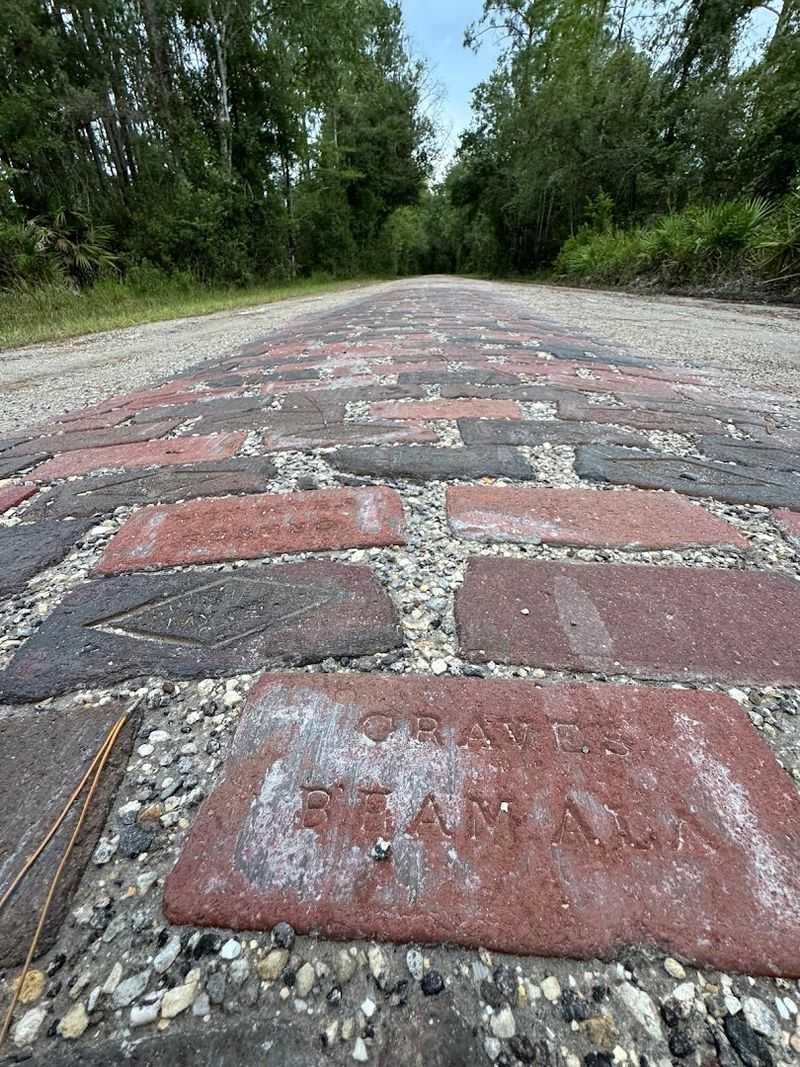
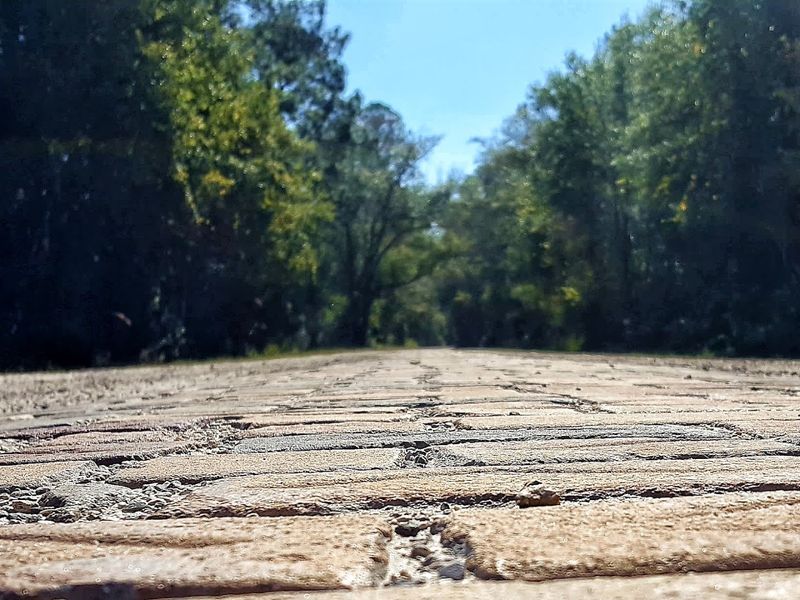
The bricks themselves tell a story. Visitors who have stopped to crouch down and look closely have noticed markings from the Graves Company, a manufacturer based in Birmingham, Alabama.
Those bricks were fired in kilns, loaded onto trains, and laid by hand across sandy Florida soil — a massive undertaking for the era. It is the kind of detail that makes the road feel less like a drive and more like a living museum exhibit.
Back in the early days of automobile travel, roads like this one were a genuine luxury. Paved roads were rare, and a brick surface meant you could actually travel without getting hopelessly mired in Florida’s notorious sugar sand.
Families packed into early Model T Fords and made real journeys down this very corridor, likely marveling at the smooth ride the same way we might marvel at a new highway today.
Now, more than a century later, the road still exists — though barely on some stretches. Sand has crept over the bricks, and the crown of the road is sometimes the only visible hint that something solid lies beneath.
Knowing the age and ambition behind this road makes every bump and rattle feel strangely meaningful rather than just inconvenient.
Nine Miles of Sand, Bricks, and Pure Florida Wildness
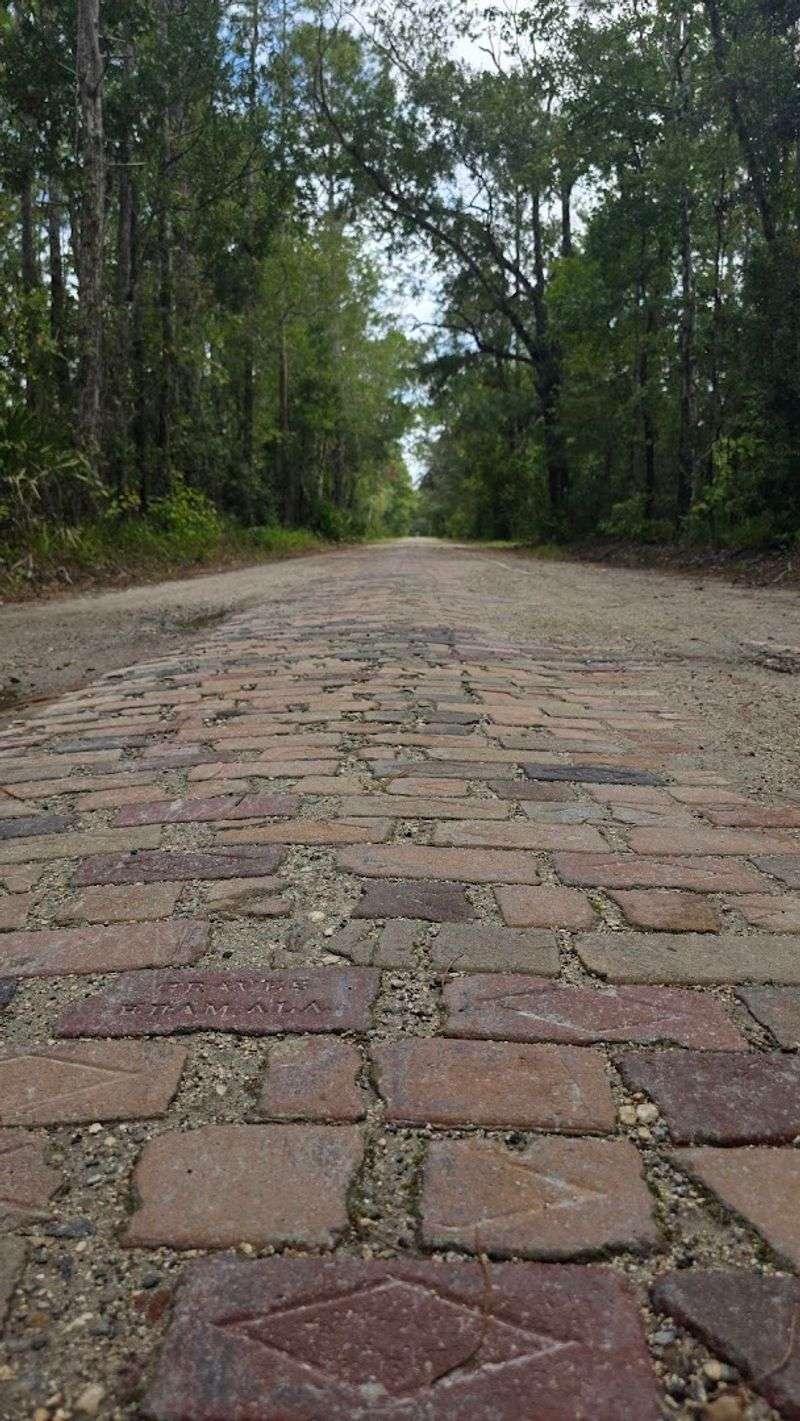
Nine miles does not sound like a long drive until you are actually on Old Brick Road. The stretch runs from near U.S.
Highway 1 all the way south toward Espanola, and the terrain keeps you focused every single minute. Sand drifts across the road in unpredictable patches, the surface is uneven from a century of settling, and the surrounding scrub forest presses in close on both sides.
One visitor described the drive as “super bumpy and dusty,” which is honestly a pretty accurate summary. Another came on a motorcycle — a heavy Goldwing — and admitted they were not sure how they made all nine miles without getting stuck in the sand.
That kind of honest, boots-on-the-ground feedback tells you more about this road than any brochure ever could. It is not a leisurely Sunday cruise; it is an adventure with a historical twist.
What makes the distance special is how isolated it feels. One reviewer noted they passed only a single other vehicle during the entire nine-mile stretch.
That kind of solitude is increasingly rare in Florida, where development seems to find every quiet corner eventually. Out here, it is just you, the pines, and the occasional log truck rumbling past on bricks that have been in place for over a hundred years.
The road rewards patience. Go slow, keep your eyes open, and you will spot stretches where the brick crown rises above the sand and the old surface is clearly visible.
Those moments feel like small discoveries, like brushing dirt off something buried and forgotten. For anyone who loves wide-open Florida wilderness paired with a genuine sense of history, these nine miles deliver something truly hard to replicate anywhere else in the state.
What Drivers Actually Experience Behind the Wheel
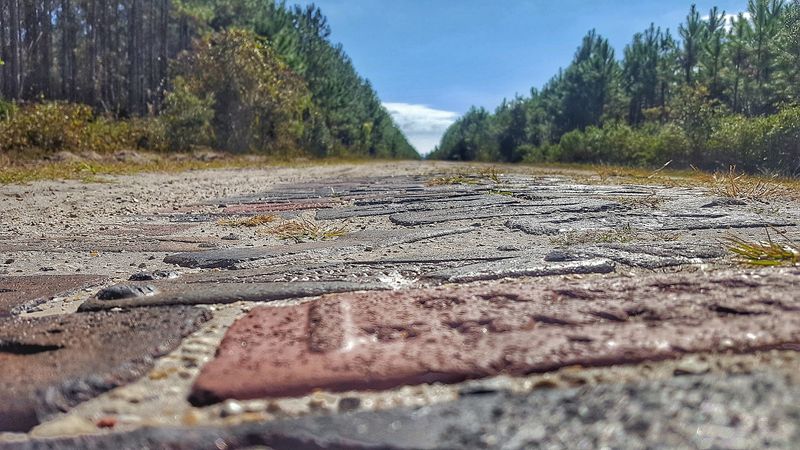
Forget smooth pavement. Old Brick Road is a genuine physical experience from the moment your tires leave the blacktop.
The brick surface — where it is still exposed — creates a constant rumbling vibration that you feel in your hands, your seat, and your back teeth. Add in the sandy patches that can swallow a low-clearance car up to its door sills, and you have a drive that demands your full attention.
Reviewers have been refreshingly blunt about what to expect. One person specifically recommended knobby tires for the deeper sand sections — the kind of advice that makes it clear this is not your average scenic byway.
Another noted that the road is constantly being used by log trucks, which means you might round a bend and find a massive timber rig coming straight at you on a road barely wide enough for two vehicles. That alone keeps your pulse elevated.
Low-profile cars are a gamble out here. The road sits on a slight crown in many areas, meaning the edges slope off into soft sand.
If you drift too far to one side, getting unstuck becomes a real project — especially since, as one visitor pointed out, there is nobody around for miles. Cell service can be spotty in the area, so coming prepared is genuinely smart, not just cautious.
Despite all of that, most people who make the drive come away grinning. There is something about navigating a rough, century-old road through remote Florida scrub that feels like a small personal victory.
It is not dangerous in a reckless way — it is challenging in a way that wakes you up and reminds you that not every road in Florida was built for cruise control and coffee cup holders.
The Bricks Themselves — A Detail Worth Stopping For
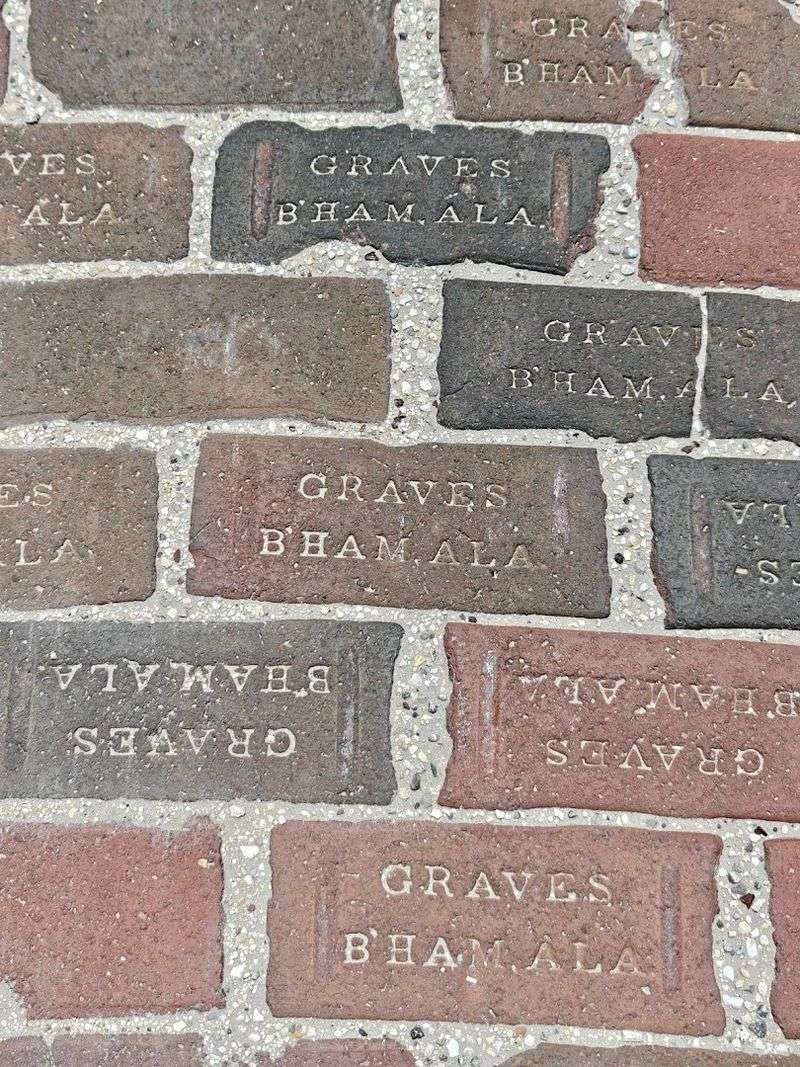
Most people drive over the bricks without realizing they are looking at a century-old manufacturing story embedded right in the road. Stop the car, get out, and crouch down — and you might spot the name stamped right into the surface: Graves Company, Birmingham, Alabama.
That small detail connects this quiet Florida backroad to a whole chain of American industrial history that most visitors never think about.
Brickmaking in the early 1900s was serious business. Companies like Graves produced massive quantities of paving bricks that were shipped by rail across the South to build the new road network that automobiles were demanding.
Each brick was made from clay, pressed into a mold, fired at extreme heat, and inspected before shipping. The ones on this road have survived more than a hundred years of Florida heat, rain, and heavy truck traffic — which is a quiet testament to how well they were made.
The texture of the bricks has changed over time, of course. Edges have worn smooth in places, and the surface has developed that slightly irregular, rolling quality that makes driving on them feel so different from modern pavement.
Some bricks have cracked or shifted, creating little ridges and dips that keep your speed naturally in check. In a strange way, the road enforces its own pace.
Touching the bricks is a surprisingly moving experience for history lovers. One visitor described it as the highlight of their stop — just the act of placing a hand on something that was laid down before World War I, before commercial aviation, before television.
Old Brick Road is not just a drive. It is a tactile connection to a Florida that most people only read about in old books and faded photographs.
How to Access the Road and What to Bring Along
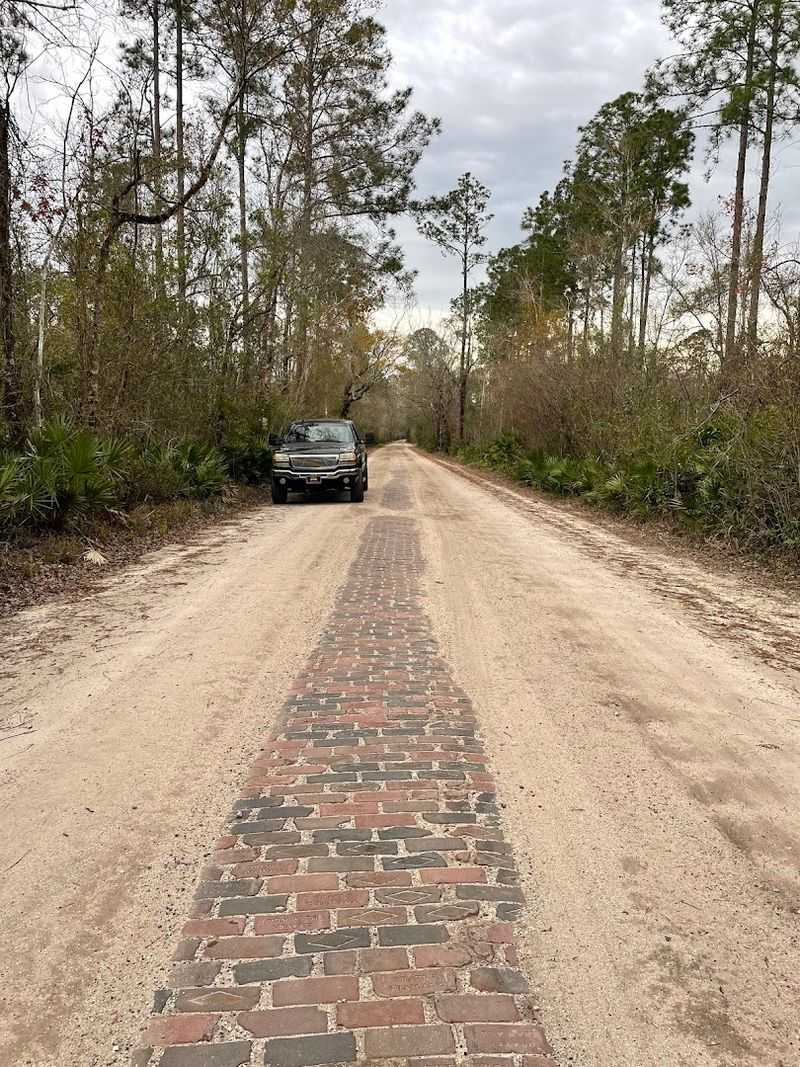
Getting to Old Brick Road is straightforward once you know the approach. The most common entry point is off U.S.
Highway 1 near Hastings, taking Highway 204 west until you reach the road itself. From Interstate 95, take the exit toward Highway 204 and follow it to the Old Brick Road turnoff — several visitors have used this exact route and found it easy to navigate without any special equipment or advance planning.
There is no admission fee, no ranger station, and no official parking lot. You simply pull onto the road and go.
That accessibility is part of the charm, but it also means you are entirely on your own once you head in. The road runs about nine miles to the south end near Espanola, and you can drive the full length or turn around whenever you feel like it.
Nobody is keeping score.
Vehicle choice matters more than most people expect. High-clearance SUVs and trucks are the most comfortable option, especially after dry spells when the sand is particularly loose and deep.
Sedans and low-profile cars can make it, but drivers have reported getting nervous in the sandier sections. Motorcycles are possible but risky — one Goldwing rider made it through all nine miles but admitted it was a near thing in the deeper sand patches.
A few things worth tossing in the car before you go: a full tank of gas, a charged phone, a bottle of water, and maybe a small shovel if you are driving something low-slung. There are no services along the road and no nearby gas stations once you are out there.
Come prepared, take your time, and you will have a genuinely memorable Florida experience without spending a single dollar on admission.
Wildlife, Wilderness, and the Quiet Charm of the Surrounding Landscape
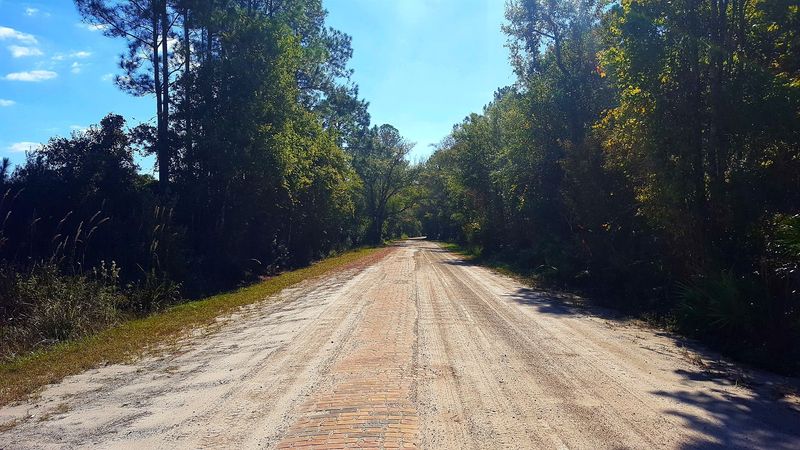
Old Brick Road does not just offer history — it drops you into the middle of one of Florida’s quieter natural landscapes. The road cuts through a mix of pine flatwoods and scrub habitat, the kind of terrain that feels genuinely untamed compared to most of what visitors see along Florida’s coasts.
Spanish moss hangs from the trees in places, and the canopy creates a filtered, golden light that makes the whole drive feel cinematic.
Wildlife sightings are not guaranteed, but the habitat is right for plenty of Florida natives. Gopher tortoises are common in scrub environments like this, and birds like red-tailed hawks and sandhill cranes are frequently spotted in rural St. Johns County.
White-tailed deer are also regulars in the area, especially in the early morning or late afternoon hours when the road is at its most peaceful and the light is at its most beautiful.
The isolation itself is part of the experience. One reviewer described the road as being “in the middle of nowhere” with no one around for miles, and that observation was clearly meant as a compliment.
In a state as densely populated and heavily developed as Florida, finding nine miles of road where you might not see another person is genuinely remarkable. It resets something in you that you did not even know needed resetting.
Seasonal changes add another layer of interest. After rains, the landscape turns vivid green and the sand darkens, making the exposed bricks stand out more sharply.
In dry months, dust kicks up behind every passing vehicle and the scrub takes on a golden, almost desert-like tone. Either way, the natural setting around Old Brick Road is as much a reason to visit as the road itself.
Why This Road Still Matters to Florida History Enthusiasts
There are plenty of historic sites in Florida that have been polished, fenced off, and turned into tidy tourist experiences. Old Brick Road is not one of them, and that rawness is exactly why serious history lovers keep showing up.
The road has not been restored or prettified. What you see is what survived — bricks buried under sand, a crown that rises and falls with the original grade, and a surface that log trucks still pound every single week.
The Dixie Highway itself was a visionary project for its time. Conceived in the 1910s as a way to connect American cities by automobile, it helped spark a national road-trip culture that eventually led to everything from Route 66 to the Interstate Highway System.
Old Brick Road is one of the few places in Florida where you can actually stand on that original infrastructure and feel the weight of that history under your feet rather than just reading about it in a museum.
Local historians and preservation advocates have noted the road’s significance for years. It represents not just transportation history but also the story of early Florida development, the citrus and timber industries that depended on reliable roads, and the ambitions of a state that was just beginning to imagine its future.
Every brick in that road was part of someone’s plan to make Florida more connected, more modern, more reachable.
Visiting is free, it requires no reservation, and it takes less than an hour to drive the full length. For history enthusiasts, that is an extraordinary return on a very small investment of time and effort.
Old Brick Road is not a relic that needs protecting behind glass — it is a living piece of Florida’s past that you can actually drive on, touch, and carry with you long after you have left.