Walk Beneath Swimming Sharks at This Incredible Florida Aquarium Tunnel
Tampa’s waterfront hides one of Florida’s most thrilling underwater experiences where massive sharks glide overhead while you walk safely beneath them. The Florida Aquarium delivers an unforgettable journey through marine habitats that’ll make you feel like you’ve stepped into the ocean itself. With over 20,000 aquatic animals calling this place home, you’ll discover everything from playful penguins to mysterious jellyfish, all while staying perfectly dry.
Coral Reef Gallery: Where Sharks Rule the Waters
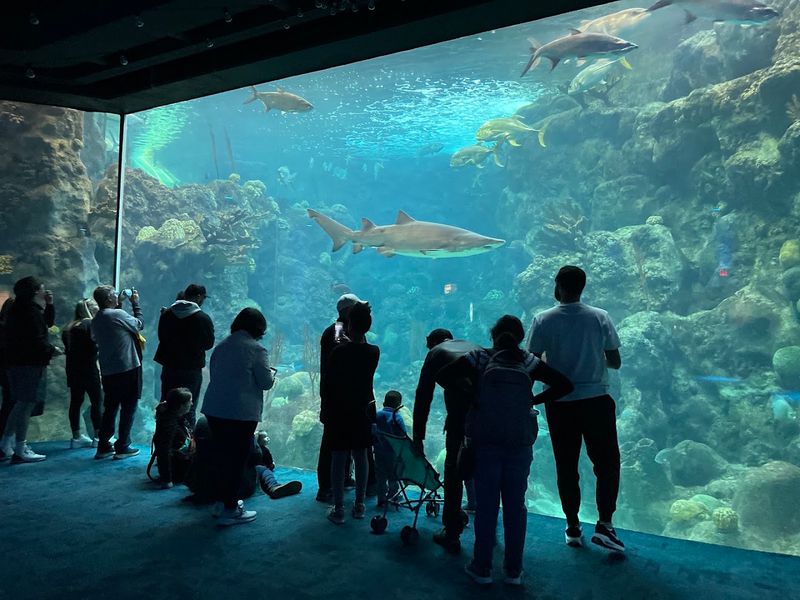
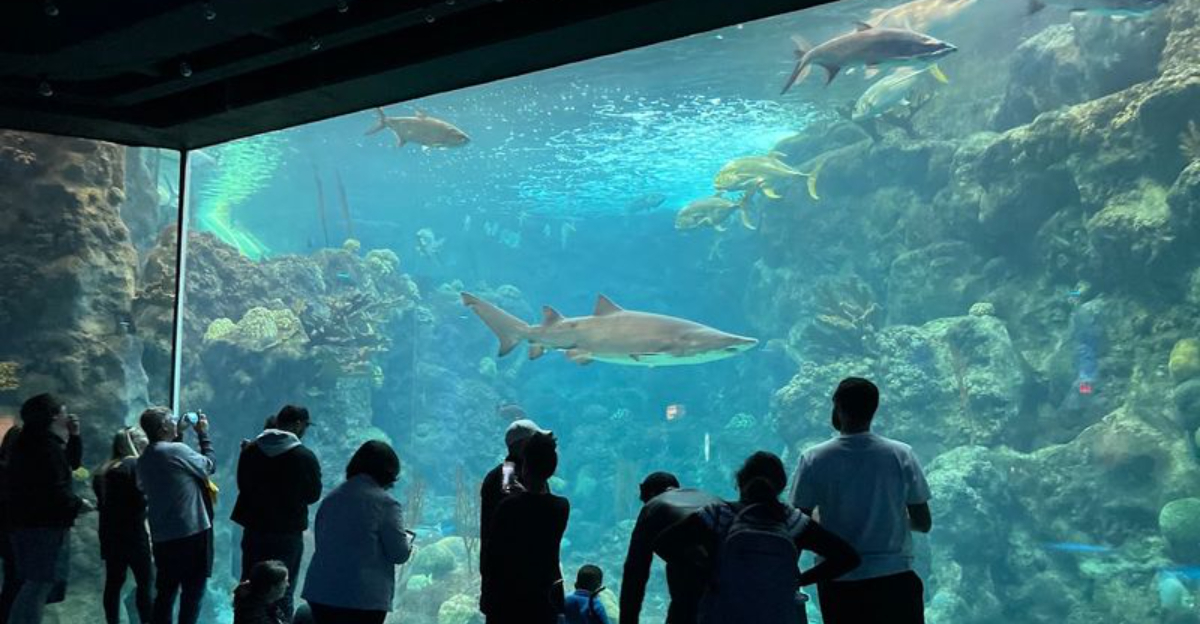
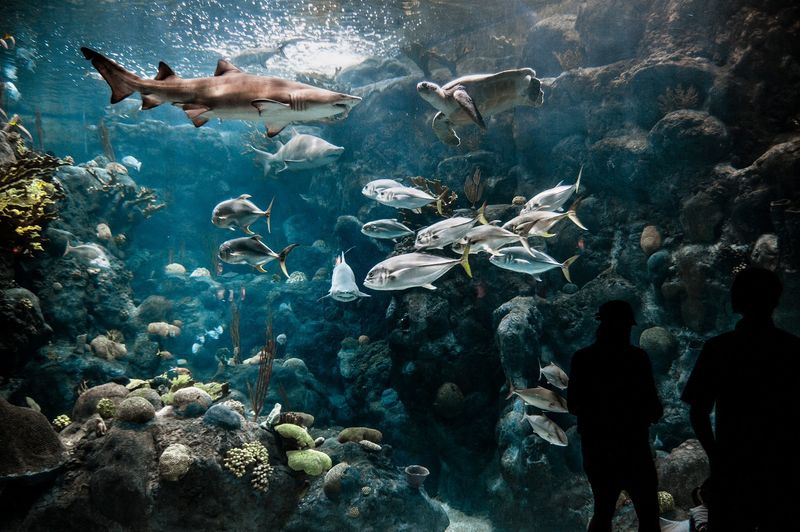
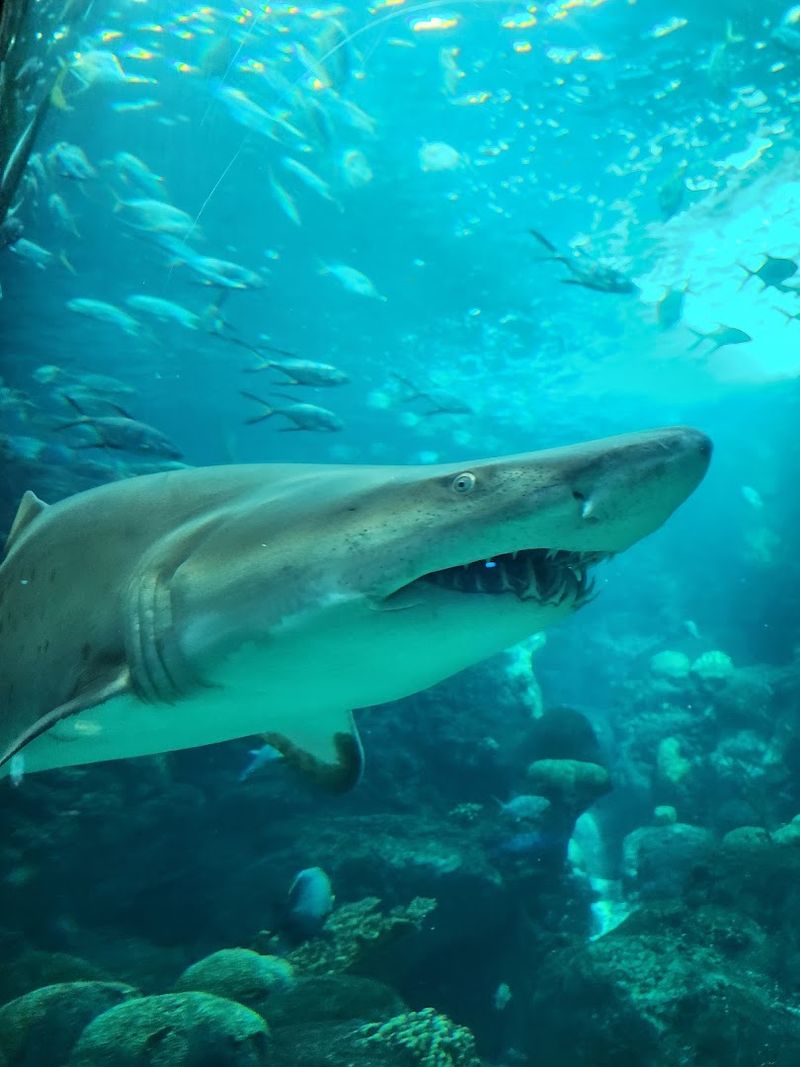
The Coral Reef Gallery puts you face-to-face with some of the ocean’s most misunderstood predators in a way that’ll make your heart race. Massive sharks patrol the 93-foot-long, 43-foot-wide, and 14-feet-deep habitat that holds an incredible 500,000 gallons of saltwater. You’re not just peeking through a small window here—the viewing area wraps around you, creating an immersive experience that feels like you’ve actually descended into the Caribbean.
Sand tiger sharks, with their menacing teeth permanently on display, cruise past at eye level while graceful rays float overhead. The aquarium’s design brilliance shines through the multiple viewing angles that let you watch these creatures from below, creating that famous tunnel effect without an actual enclosed walkway. Comfortable seating areas invite you to pause and observe the complex social dynamics playing out in this underwater world.
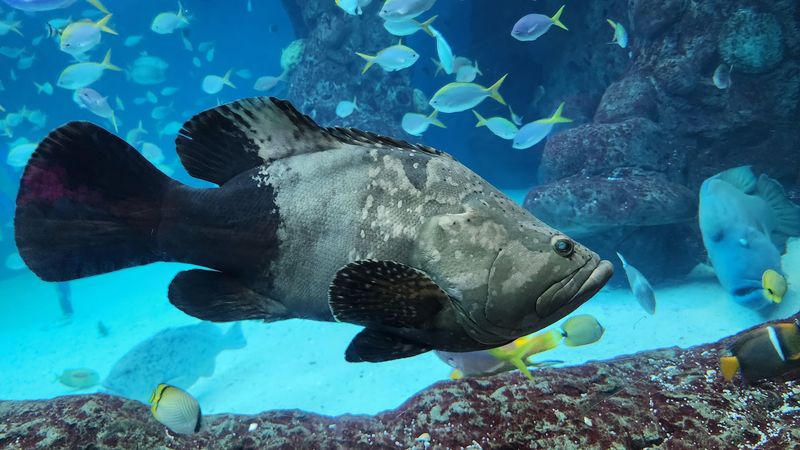
Goliath groupers, some weighing hundreds of pounds, claim their territory among the artificial reef structures. These gentle giants share space with schools of colorful tropical fish that dart between coral formations. The exhibit recreates a living reef ecosystem where predators and prey coexist in a delicate balance that’s fascinating to witness.
Educational displays surrounding the tank explain shark biology and conservation efforts. Staff members regularly station themselves nearby to answer questions and share feeding schedules. The sharks eat three times weekly, and watching them hunt is something you won’t forget anytime soon.
Photography enthusiasts love this spot because the lighting mimics natural ocean conditions without creating harsh reflections. Early morning visits on weekdays offer the calmest viewing experience before school groups arrive. The tank’s inhabitants become most active during feeding demonstrations, which are announced throughout the facility.
Accessibility features include ground-level viewing for wheelchair users and mobility scooter rentals available at the entrance. The temperature-controlled environment makes this a perfect escape from Tampa’s summer heat while delivering an adventure that rivals any theme park attraction.
Touch Tanks: Get Hands-On with Marine Life
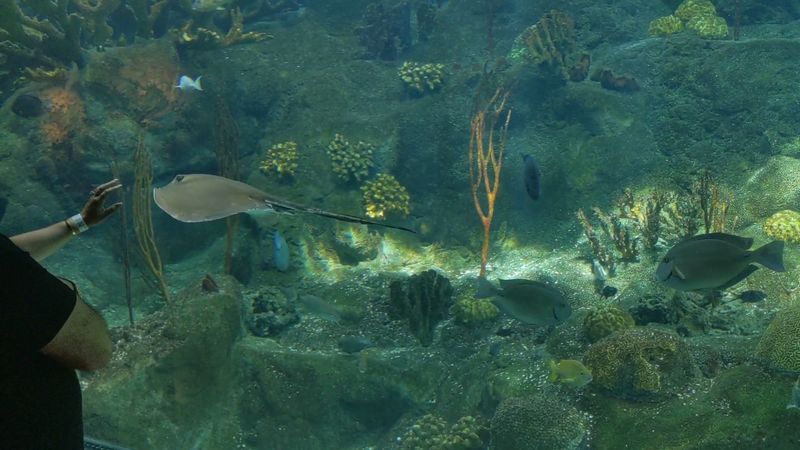
Rolling up your sleeves and plunging your hands into cool saltwater to touch a living stingray creates a connection with marine life that no glass barrier could ever provide. The Florida Aquarium’s touch tanks offer multiple opportunities to interact with creatures that most people only see in pictures. Cownose rays and Atlantic stingrays glide beneath your fingertips, their velvety skin surprising first-time touchers who expect something slimy or rough.
Staff members stand ready with fascinating facts and gentle guidance about proper touching techniques. Two fingers, light pressure, and following the direction of movement ensures both you and the animals have a positive experience. These rays have been conditioned to human interaction and often seem to enjoy the attention, circling back for repeated encounters.
The tide pool touch area introduces you to Florida’s coastal ecosystem in miniature form. Sea stars cling to rocks while hermit crabs scuttle across the sandy bottom. Anemones wave their tentacles, and if you’re brave enough to touch them, you’ll feel the slight stickiness that helps them capture food in the wild.
Sanitization stations flank both sides of the touch tanks because protecting these animals from harmful bacteria is paramount. The water undergoes constant filtration and monitoring to maintain pristine conditions. Temperature regulation keeps the environment comfortable for species adapted to Florida’s warm coastal waters.
Children absolutely lose their minds over these interactive exhibits, but adults find themselves equally captivated. There’s something primal about touching a wild animal, even in a controlled setting. The experience transforms abstract ocean conservation into something personal and urgent.
Moon jellyfish touchings happen during special demonstrations led by aquarium educators. These translucent creatures feel like firm gelatin and won’t sting when handled properly from the top of their bells. Limited spots fill quickly, so arriving early or checking the daily schedule maximizes your chances of participation.
Wetlands Trail: Birds Flying Free Above Your Head
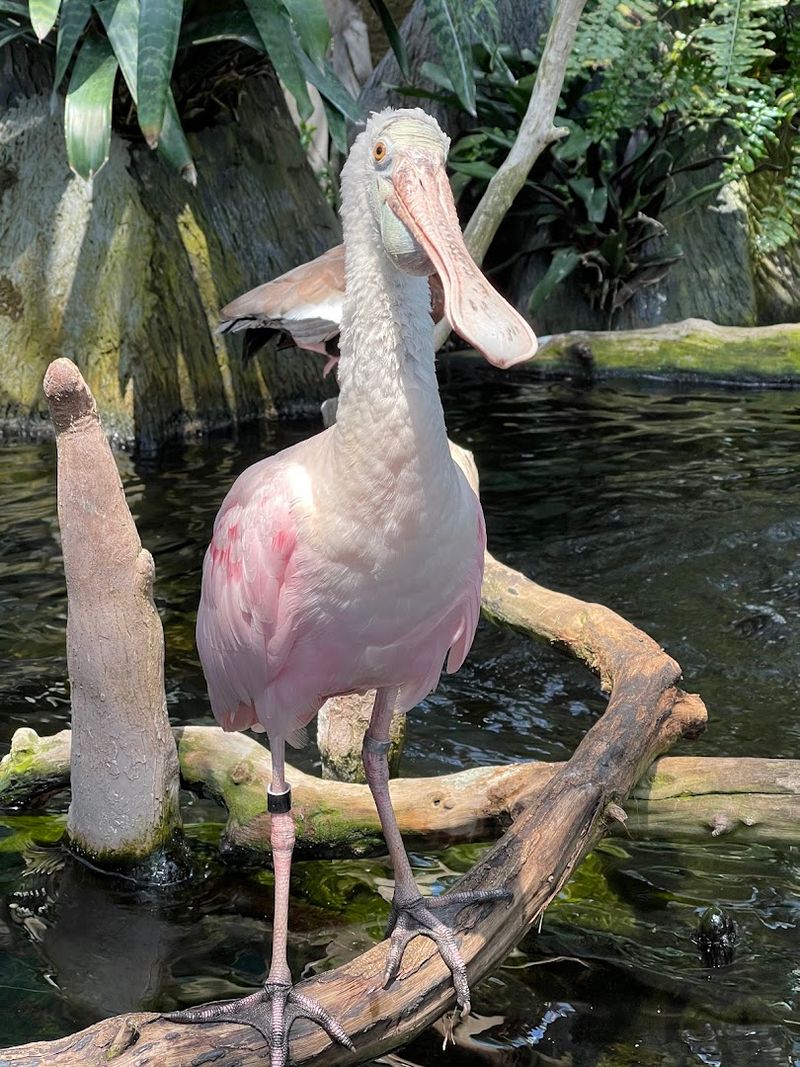
Stepping into the Wetlands Trail feels like you’ve been transported to the Everglades without leaving the building. Free-flying birds swoop overhead in a climate-controlled environment that recreates Florida’s freshwater ecosystems with stunning accuracy. Unlike traditional zoo exhibits where birds are caged, these feathered residents have the entire space to explore, often landing on railings just inches from amazed visitors.
Roseate spoonbills, with their shocking pink plumage, wade through shallow waters searching for food. Their distinctive spoon-shaped bills sweep side to side in a feeding behavior that’s mesmerizing to watch. Herons stand statue-still waiting to strike at fish, demonstrating the patience that makes them such effective hunters.
The habitat design incorporates native Florida plants including cypress trees, mangroves, and sawgrass. Water trickles over rocks creating a soundtrack of babbling brooks that drowns out the outside world. Humidity levels match actual wetland conditions, which might make your glasses fog up but creates an authentic experience that benefits the animals.
Alligators bask on muddy banks below the boardwalk, reminding visitors that Florida’s wetlands belong to reptiles as much as birds. Baby gators, when present, draw crowds with their prehistoric appearance and surprisingly loud vocalizations. Educational signage explains the crucial role wetlands play in water filtration and storm surge protection.
Photography challenges abound here because the birds refuse to stay still and lighting mimics natural forest conditions. Patient observers get rewarded with incredible shots of birds in flight or dramatic close-ups of hunting behavior. The wooden boardwalk creaks authentically underfoot, adding to the immersive quality.
Seasonal changes affect which species you might encounter as the aquarium participates in breeding programs for endangered wetland birds. Spring brings nesting behaviors and sometimes even eggs visible in carefully constructed nests. This living exhibit demonstrates conservation success stories while educating visitors about threats facing Florida’s rapidly disappearing wetlands.
Penguin Point: Antarctic Ambassadors in Tampa
African penguins waddle across rocky beaches and dive into crystal-clear water at Penguin Point, bringing a slice of coastal South Africa to Florida’s Gulf Coast. These charismatic birds, also called jackass penguins for their donkey-like braying calls, captivate audiences with their clumsy land movements and graceful underwater acrobatics. The exhibit maintains cooler temperatures that keep these temperate-climate penguins comfortable year-round.
Underwater viewing windows reveal the penguins’ true athleticism as they torpedo through the water chasing fish. Their black and white tuxedo pattern, which looks formal on land, becomes camouflage in the ocean—dark backs hide them from predators above while white bellies blend with sunlight when viewed from below. Watching them hunt during feeding times showcases evolution’s genius in action.
The colony includes breeding pairs that sometimes produce adorable fuzzy chicks. Baby penguins look nothing like their sleek parents, covered instead in brownish-gray down that makes them appear perpetually grumpy. Staff members share updates on chick development and explain the intensive care required to raise healthy penguins in human care.
Conservation messaging hits hard at Penguin Point because African penguins face extinction in the wild. Overfishing, oil spills, and climate change have decimated populations along the South African coast. The aquarium participates in breeding programs designed to maintain genetic diversity and potentially support wild population recovery.
Scheduled keeper talks provide insider information about individual penguins’ personalities and quirks. Some are bold and curious, approaching the glass to investigate visitors, while others prefer hanging back with their established social groups. Learning their names and backstories transforms them from generic penguins into individuals worth protecting.
The rocky beach habitat includes nesting boxes where penguins retreat for privacy and shade. Careful landscaping with drought-resistant plants mimics their native environment while withstanding Florida’s humidity. The exhibit proves that penguins aren’t just Antarctic residents—these birds thrive in surprisingly warm climates when given proper care.
Journey to Madagascar: Lemurs and Exotic Wildlife
Ring-tailed lemurs with their distinctive black-and-white striped tails and bright orange eyes bring Madagascar’s unique biodiversity to Tampa in an exhibit that’ll make you question whether you’re still in an aquarium. These primates, found nowhere else on Earth in the wild, represent the aquarium’s commitment to showcasing diverse ecosystems beyond traditional marine environments. Their playful antics and social interactions provide endless entertainment while highlighting conservation challenges facing the world’s fourth-largest island.
The lemurs share their Madagascar habitat with other island-endemic species including colorful chameleons and massive Madagascar hissing cockroaches. This ecosystem approach demonstrates how interconnected species rely on each other for survival. Lemurs disperse seeds through their diet of fruits and leaves, while insects break down organic matter, creating the nutrient cycles that sustain tropical forests.
Climbing structures encourage natural behaviors like leaping between trees and sunbathing with arms outstretched. Lemurs are remarkably vocal, producing sounds ranging from purrs to alarm calls that echo through the exhibit space. Social hierarchies become apparent as you observe which individuals eat first or claim the prime basking spots.
Educational components explain why Madagascar matters to global biodiversity. The island’s 88 million years of isolation created evolution’s laboratory where species developed found nowhere else. Deforestation threatens to erase this biological treasure before scientists even catalog all the species.
The aquarium supports conservation programs working to protect remaining lemur habitat.
Children connect immediately with lemurs because their expressive faces and active behavior mirror human characteristics. Adults appreciate the deeper message about habitat destruction and species extinction. The exhibit succeeds in making a distant island’s problems feel urgent and relevant to Florida residents.
Climate control maintains tropical warmth and humidity levels that keep Madagascar species comfortable. Naturalistic landscaping with tropical plants creates photo opportunities that transport you to another continent. Staff presentations detail individual lemurs’ personalities and explain ongoing research into lemur communication and social structures that rival primate complexity.
Bays and Beaches: Florida’s Coastal Ecosystems
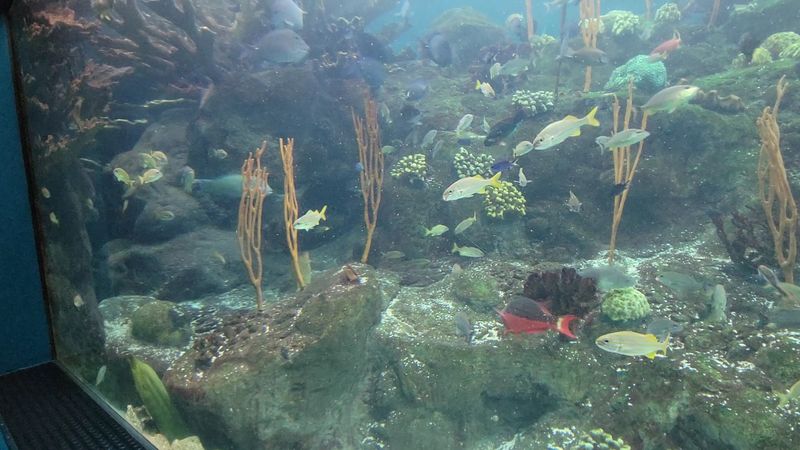
Florida’s backyard beaches and bays come alive in exhibits that celebrate the incredible diversity hiding in waters most residents take for granted. Seagrass beds sway in simulated currents while juvenile fish dart between the blades seeking shelter from predators. This habitat serves as the ocean’s nursery, where countless species spend their vulnerable early life stages before venturing into deeper waters.
Horseshoe crabs, living fossils unchanged for 450 million years, plow through sandy bottoms in their endless search for food. Their prehistoric appearance fascinates visitors who learn these creatures possess blue blood used in medical testing that’s saved countless human lives. Touching their hard shells during interactive sessions reveals the armor that’s protected them since before dinosaurs walked the Earth.
Mangrove roots dip into brackish water creating the transitional zone where freshwater meets saltwater. These twisted roots provide attachment points for oysters, barnacles, and sponges while offering hiding spots for small fish and crustaceans. The exhibit explains how mangrove forests protect Florida’s coastline from storm surge and erosion while filtering pollutants from runoff.
Native fish species including snook, redfish, and tarpon demonstrate why Florida is considered a fishing paradise. These gamefish, displayed in their natural habitat context, help anglers understand the environments they should protect for future generations. Conservation messages about catch-and-release fishing and habitat preservation reach an audience that directly impacts these populations.
Seasonal changes affect what you might see as the aquarium rotates species to reflect natural migration patterns. Summer brings different inhabitants than winter, mimicking the real coastal ecosystem’s dynamic nature. This attention to seasonal accuracy creates educational opportunities about climate’s influence on marine life.
Beach habitat components include shorebirds, sand dollars, and the tiny coquina clams that burrow frantically when waves recede. These familiar beach companions gain new appreciation when you understand their ecological roles. The exhibit transforms a casual beach day into a scientific expedition revealing hidden complexity in seemingly simple environments.
Jellies Gallery: Mesmerizing Translucent Dancers
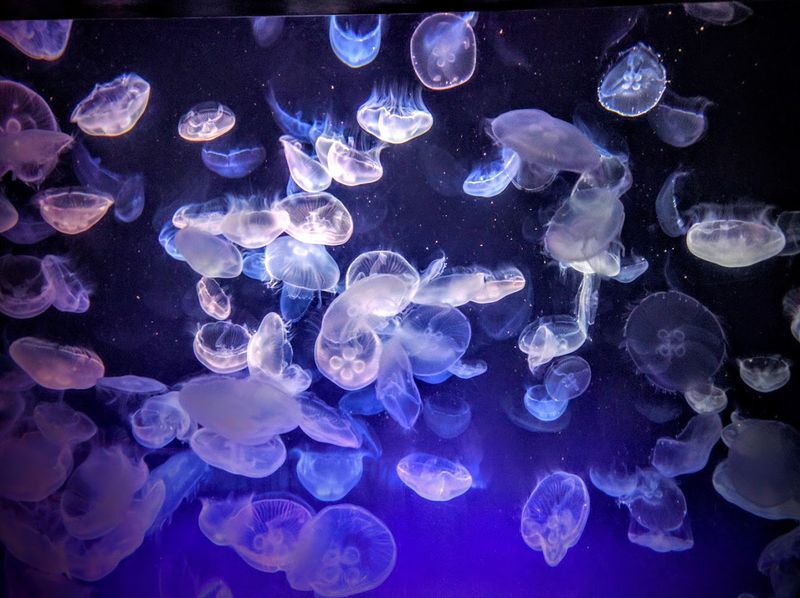
Pulsating jellyfish drift through illuminated cylinders in a darkened gallery that transforms these simple creatures into living art installations. Moon jellies, with their translucent bells and delicate trailing tentacles, move in rhythmic contractions that hypnotize viewers into meditation-like states. The strategic lighting shifts through color spectrums, highlighting the jellies’ ethereal beauty while creating an atmosphere more nightclub than natural history museum.
Different species occupy separate tanks, each with unique characteristics that challenge the assumption that all jellyfish look alike. Upside-down jellies rest on the bottom with tentacles pointing skyward, hosting symbiotic algae that provide nutrients through photosynthesis. Sea nettles trail long, lacy tentacles capable of delivering painful stings in the wild but safely contained behind glass here.
The circular tank design creates endless flow patterns that keep jellies suspended and healthy. Without this current, these brainless drifters would sink and die because they lack the swimming ability to maintain their position. Engineering meets biology in life support systems that replicate ocean conditions down to precise salinity and temperature levels.
Touch opportunities with moon jellies happen during scheduled presentations where educators explain proper handling techniques. The sensation surprises most people—firm yet gelatinous, like touching a barely-set panna cotta. These interactions create memorable moments while teaching respect for creatures often dismissed as simple blobs.
Photography enthusiasts obsess over the Jellies Gallery because the dramatic lighting and slow-motion movements create frame-worthy shots with minimal effort. Long exposure captures create trailing light paintings while fast shutter speeds freeze the jellies mid-pulse. The dark environment challenges phone cameras but rewards those who understand manual settings.
Scientific information reveals jellies’ importance in ocean food webs and their increasing populations in warming, polluted waters. Climate change creates conditions where jellyfish thrive while fish struggle, potentially shifting ocean ecosystems in frightening directions. The beautiful display carries an urgent environmental message about the consequences of human impacts on marine environments.
Dragon Down Under: Australian River Adventure
Australian water dragons bask under heat lamps in an exhibit that transports you to tropical river systems on the opposite side of the planet. These impressive lizards, reaching up to three feet in length, showcase the reptilian diversity thriving in Australia’s freshwater ecosystems. Their dinosaur-like appearance and prehistoric lineage make them living connections to Earth’s ancient past.
The habitat recreates Australian riverbanks with native vegetation and rocky outcrops that provide basking sites and hiding spots. Water dragons are semi-aquatic, equally comfortable on land or swimming through the water with powerful tail strokes. Watching them dive and maneuver underwater demonstrates adaptations that blur the line between terrestrial and aquatic lifestyles.
Native Australian fish species share the exhibit, including colorful rainbowfish and aggressive freshwater predators. The aquarium’s commitment to ecosystem representation means showing complete food webs rather than isolated species. This approach educates visitors about ecological relationships that maintain healthy river systems.
Behavioral enrichment keeps the water dragons active and engaged. Staff hide food in puzzle feeders that require problem-solving to access, demonstrating reptilian intelligence that surprises people who assume cold-blooded means simple-minded. These intelligent lizards recognize their keepers and respond to training for medical procedures and health checks.
Educational signage explains Australia’s unique evolutionary history and the threats facing its freshwater ecosystems. Introduced species, pollution, and habitat destruction endanger native wildlife populations. The aquarium participates in conservation education programs that reach beyond Florida to support global biodiversity protection.
Temperature gradients within the exhibit allow the dragons to thermoregulate by moving between warmer and cooler zones. This behavior, essential for reptile health, demonstrates how ectothermic animals actively manage their body temperature. Observing these natural behaviors provides insights into reptile biology that transform them from scary to scientifically fascinating.
Seasonal breeding behaviors sometimes result in eggs or juvenile dragons on display. Watching young water dragons develop from tiny hatchlings into impressive adults creates opportunities to discuss growth, development, and the lengthy timeline required for reptile maturation compared to mammals or birds.
Behind-the-Scenes Tours and Special Experiences
Peeking behind the curtain reveals the incredible infrastructure and dedication required to maintain a world-class aquarium through special tours that take you into restricted areas. Massive filtration systems process thousands of gallons hourly, removing waste and maintaining water chemistry within precise parameters. The mechanical rooms resemble industrial facilities more than the serene exhibits they support, showcasing the hidden complexity of aquarium operations.
Animal care specialists share their daily routines during exclusive experiences that might include food preparation, behavioral training sessions, or medical examinations. Learning how staff members build relationships with individual animals transforms your understanding of aquarium work from simple feeding to sophisticated animal husbandry. These professionals combine marine biology knowledge with hands-on skills that keep animals healthy and thriving.
The Sleeping with the Fishes program offers overnight adventures where participants bed down beside the massive shark tank. Falling asleep to the sight of sharks patrolling overhead creates memories that last lifetimes. Morning arrives with the tank’s lighting gradually increasing, mimicking sunrise while the nocturnal shift in animal activity unfolds before drowsy eyes.
Wild dolphin cruises operated by the aquarium venture into Tampa Bay searching for bottlenose dolphins in their natural habitat. These excursions combine education with adventure as marine educators explain dolphin behavior, communication, and the conservation challenges facing Florida’s coastal dolphins. Spotting wild dolphins from the boat creates entirely different connections than viewing captive animals.
Squid dissection classes provide hands-on anatomy lessons that would make high school biology teachers jealous. Participants examine the complex internal structures of these fascinating cephalopods while learning about their evolutionary adaptations. Getting your hands messy while exploring real specimens beats textbook learning every single time.
Meeting baby alligators during special presentations allows safe interactions with Florida’s most iconic reptile. Feeling their surprisingly soft skin and powerful muscles while they remain calm demonstrates proper animal handling and builds respect for wildlife. These controlled encounters create positive associations that support conservation messaging.
Advance reservations are essential for special experiences because limited capacity ensures quality interactions and animal welfare. Prices reflect the exclusive nature and extended access to areas and animals unavailable during regular admission. These premium experiences cater to serious enthusiasts willing to invest in deeper educational opportunities.