You Haven’t Experienced Old Florida Until You’ve Eaten at These 10 Historic Restaurants
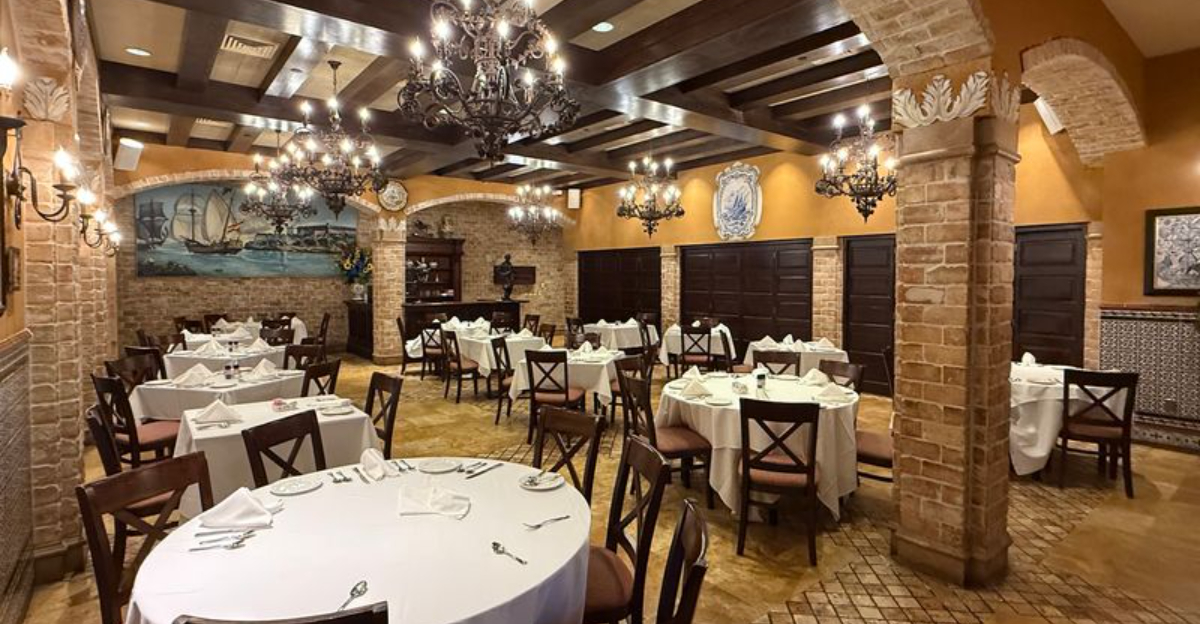
Florida’s culinary landscape stretches back more than a century, and some of its best dining experiences still happen in restaurants that have been feeding locals and visitors for generations. These aren’t just places to grab a meal; they’re living museums where you can taste history alongside your dinner. From Spanish-Cuban feasts in Tampa to stone crabs in Miami Beach, these ten legendary spots offer authentic flavors and stories that capture the real spirit of Old Florida.
1. Columbia Restaurant (Tampa)
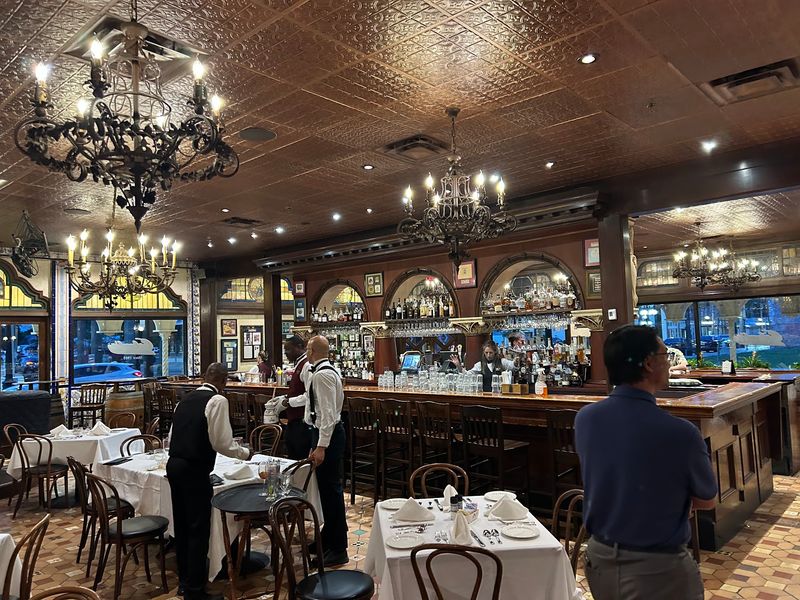
Walking into Columbia Restaurant feels like stepping onto a stage where Florida’s immigrant history comes alive through food. The original location opened its doors in 1905 when Ybor City was the cigar capital of the world, and Cuban and Spanish workers needed a place that reminded them of home.
Today, the restaurant sprawls across an entire city block, filled with hand-painted tiles, wrought-iron balconies, and dining rooms that each tell their own story. The menu hasn’t forgotten its roots either. You’ll find black bean soup, Cuban sandwiches, and the famous 1905 Salad tossed tableside with a flourish that’s part theater, part culinary tradition.
Paella arrives in pans big enough to feed a family, loaded with saffron rice, seafood, and chorizo. The flan is silky and traditional, exactly as it should be.
What makes Columbia special isn’t just longevity but consistency. Four generations of the same family have kept the recipes and atmosphere authentic while the city around it transformed. Flamenco dancers still perform on weekend evenings, adding live music and movement to meals.
Whether you’re celebrating something special or just hungry for a taste of Tampa’s past, Columbia delivers history you can actually eat.
2. Joe’s Stone Crab (Miami Beach)
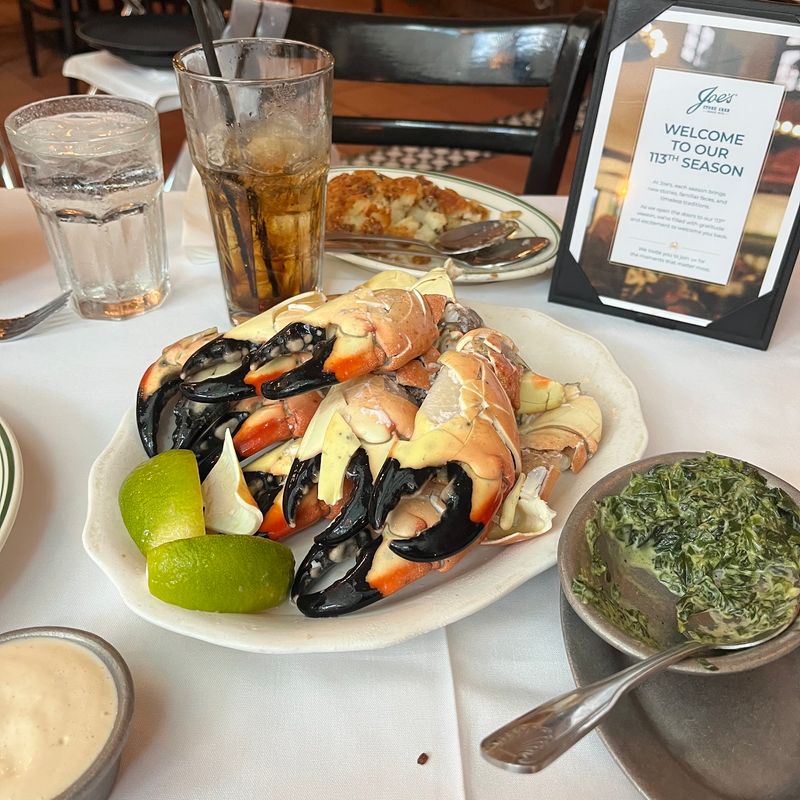
Before Miami Beach became a city, before the art deco hotels lined Ocean Drive, Joe Weiss was already cracking stone crab claws at a modest lunch counter he opened in 1913. That humble beginning grew into one of Florida’s most iconic seafood institutions, where reservations are nearly impossible and the wait is always worth it.
Stone crab season runs from October through May, and Joe’s serves them ice-cold with a tangy mustard sauce that’s become as legendary as the claws themselves. The crabs are harvested sustainably. Fishermen remove one claw and return the crab to the water, where it regenerates a new one.
But stone crab isn’t the only reason people line up. The hash browns arrive golden and crispy, almost like a potato pancake. Creamed spinach is rich and garlicky.
Key lime pie finishes the meal with tart sweetness that cuts through all that butter and seafood.
Joe’s operates only during stone crab season, closing completely in summer. The dining room buzzes with energy, servers move fast, and the no-reservation policy means everyone waits together. It’s chaotic, crowded, and completely unforgettable, exactly as Old Florida dining should be.
3. Cap’s Place (Lighthouse Point)
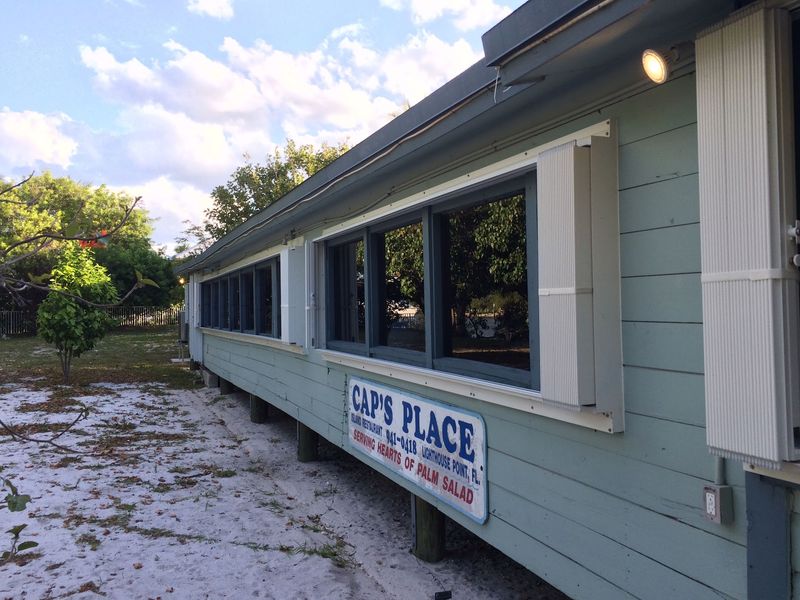
Getting to Cap’s Place requires a boat ride, which is your first clue this isn’t your average dinner reservation. The restaurant’s motor launch picks you up from the dock and ferries you across the Intracoastal Waterway to a low, rambling building that looks like it survived a hurricane or two because it has.
Originally called Club Unique, the spot opened in 1928 as a speakeasy and gambling den during Prohibition. Rum runners, bootleggers, and wealthy tourists looking for a good time all made the trip. The floors still slope at odd angles, ceilings hang low, and black-and-white photographs cover the walls, showing famous guests like Winston Churchill and Franklin Roosevelt who dined here decades ago.
The menu focuses on fresh seafood: grouper, snapper, shrimp, and whatever else came in that day. Preparations are straightforward because the fish doesn’t need much help. Hush puppies and coleslaw come on the side, and Key lime pie is always available for dessert.
Cap’s Place survived because it refused to modernize too much. The crooked charm, the boat ride, the old wood and faded photos all work together to create an experience that feels genuinely frozen in time, like Florida before the condos took over.
4. Cabbage Key Inn & Restaurant (Cabbage Key)
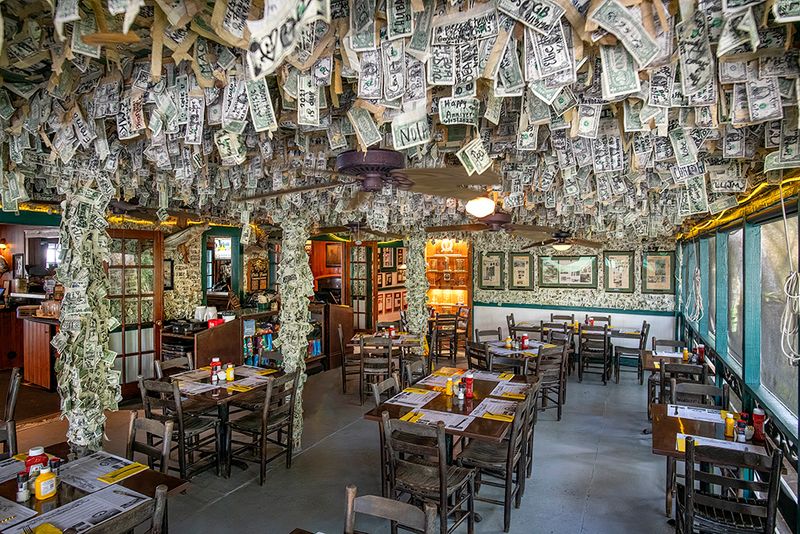
Cabbage Key sits in Pine Island Sound, reachable only by private boat or water taxi, which immediately filters out the casual tourist crowd. The main house dates back to the 1930s when mystery novelist Mary Roberts Rinehart built it as a winter retreat. By the 1940s, it had become an inn and restaurant serving boaters exploring the Ten Thousand Islands.
What really sets Cabbage Key apart is the Dollar Bill Bar, where more than 80,000 signed dollar bills plaster the walls and ceiling. The tradition started in 1971 when a fisherman pinned up a bill to ensure he’d have money for a beer on his next visit. Now every surface is covered in currency from visitors who want to leave their mark.
The cheeseburger here claims to have inspired Jimmy Buffett’s famous song, and whether that’s true or not, it’s a damn good burger: juicy, messy, and served with crispy fries. Grouper sandwiches and conch fritters round out a menu designed for hungry boaters who’ve been on the water all day.
Eating at Cabbage Key means slowing down. There’s no rushing, no traffic, no noise except gulls and boat engines. It’s island time in the best sense, where lunch stretches into afternoon and nobody minds.
5. Okeechobee Steakhouse (West Palm Beach)
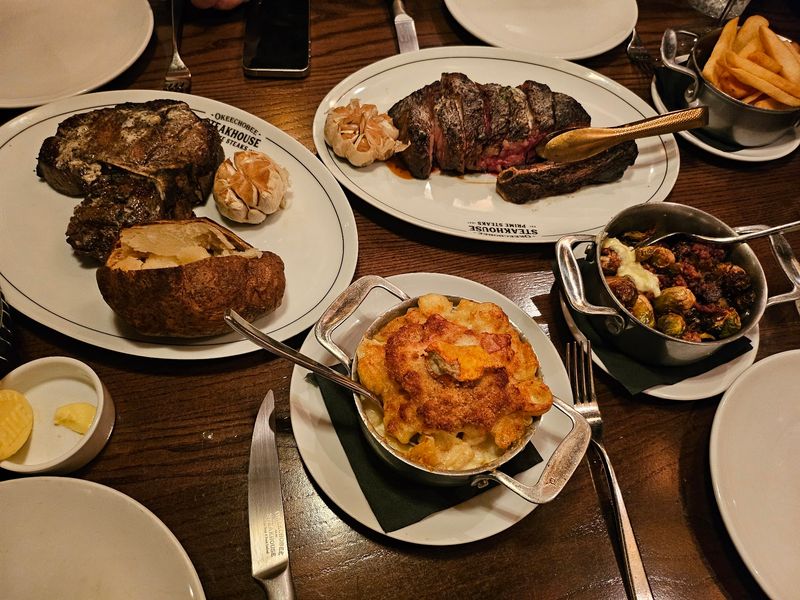
Florida isn’t all seafood and citrus. Cattle ranching has deep roots here, and Okeechobee Steakhouse represents that grittier, landlocked side of the state’s history. What started as the Okeechobee Drive-In in 1947 has stayed in the same family and the same building ever since, serving steaks to locals who remember when this part of West Palm Beach was mostly pastureland.
The dining room feels like stepping into the 1970s, with dark wood paneling, red leather booths, and dim lighting that makes everything feel a little more intimate. The menu focuses on what the restaurant does best: big, well-marbled steaks cooked over high heat. Ribeyes, filets, and New York strips arrive sizzling, charred on the outside and tender inside.
Sides are classic steakhouse fare. Baked potatoes come loaded with butter and sour cream. Creamed spinach is rich and garlicky.
Onion rings are thick-cut and crispy. Nobody’s reinventing anything here, and that’s exactly the point.
Okeechobee Steakhouse survives because it never chased trends or tried to be something it wasn’t. It’s a family-run, old-school steakhouse that still does everything the same way it did decades ago, and regulars wouldn’t want it any other way.
6. Lee & Rick’s Oyster Bar (Orlando)
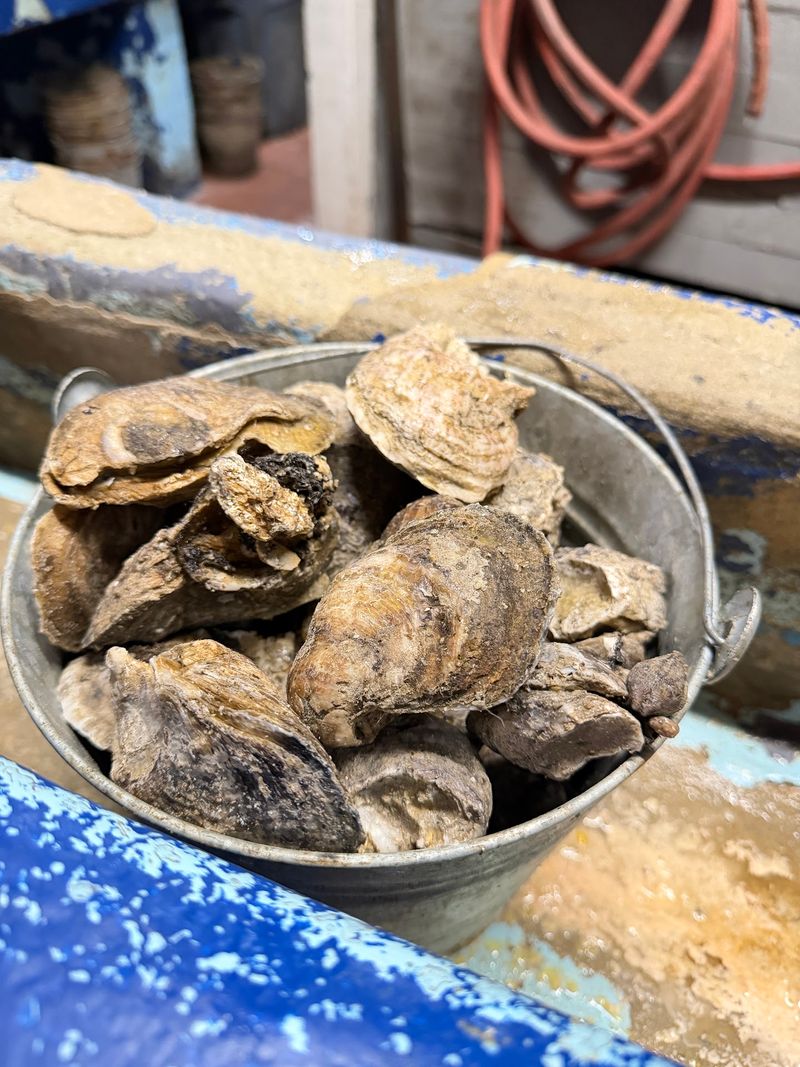
In 1950, Lee and Rick opened a tiny oyster bar in Orlando with just nine counter stools and one item on the menu: oysters. That simplicity still defines the place today, even though the family eventually expanded the counter and added a few more options. If you want fancy, look elsewhere.
If you want fresh oysters shucked right in front of you while you sit elbow-to-elbow with strangers, this is your spot.
The oysters come from the Gulf, Apalachicola Bay mostly, and they’re served raw on the half shell with crackers, hot sauce, and lemon wedges. You can watch the shucker work, cracking shells open with practiced efficiency and sliding them across the counter still dripping with brine. There’s something mesmerizing about the rhythm, the quick knife work, the pile of empty shells growing throughout the night.
The menu has grown slightly over the decades. You can get shrimp, clam chowder, and a few fried options now. But oysters remain the main event, and regulars come back week after week for the same experience they’ve been having for years.
Lee & Rick’s survives in a city that’s changed beyond recognition because it never tried to be anything other than a no-frills oyster bar. It’s unfussy, unpretentious, and unapologetically itself.
7. Ted Peters Famous Smoked Fish (South Pasadena)
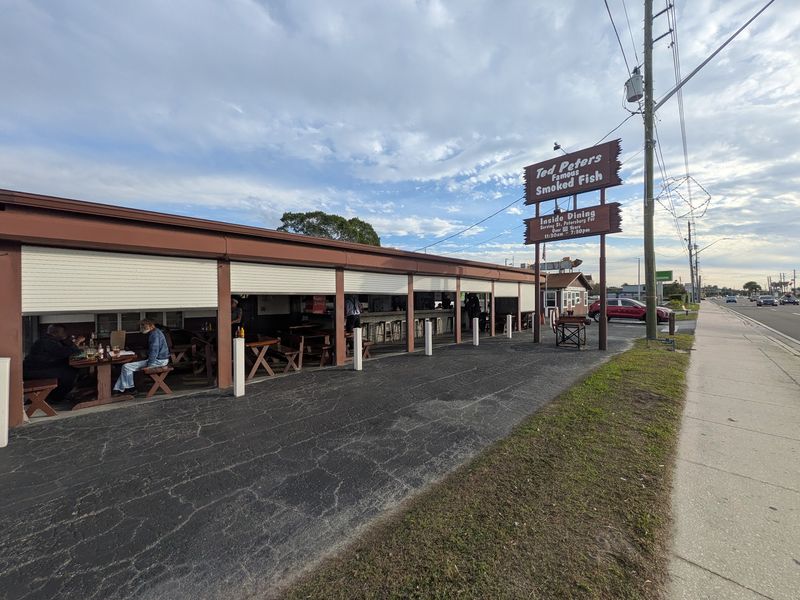
Smoke drifts across the parking lot before you even park your car, a thick, sweet-smelling haze that comes from red oak burning under racks of fresh mullet, mackerel, and whatever else Ted Peters is smoking that day. The operation started in 1951 as a roadside stand, and it hasn’t changed much since. Picnic tables sit under a covered patio.
Orders are shouted through a window. Fish comes out on paper plates with German potato salad and coleslaw on the side.
Florida mullet is the signature fish here, caught locally and smoked low and slow until the skin crisps and the flesh turns tender and flaky. The smoke flavor goes deep without overpowering the fish itself. Smoked fish spread comes with crackers and makes a perfect appetizer, rich and smoky with just enough mayo to hold it together.
There’s nothing fancy about Ted Peters. You sit outside regardless of weather. Seating is first-come, first-served.
Service is fast but not particularly warm. And yet people drive from across the state to eat here because the fish is that good and the experience feels that authentically Old Florida.
This is Florida before air conditioning, before theme parks, when roadside fish shacks fed locals and snowbirds alike, and nobody expected anything more than good food and honest prices.
8. The Yearling Restaurant (Cross Creek)
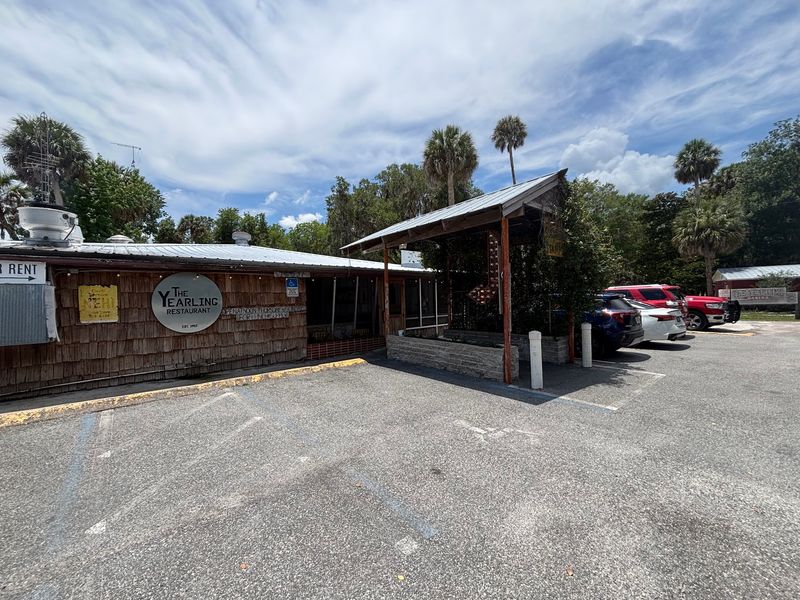
Cross Creek is Marjorie Kinnan Rawlings country, the rural stretch of North Central Florida where the Pulitzer Prize-winning author lived and wrote about Florida’s backwoods life in the 1930s and 40s. The Yearling Restaurant opened in 1952, named after her most famous novel, and it celebrates the same wild, untamed Florida she documented.
The menu reads like a dare to modern diners: frog legs, alligator tail, turtle, venison, and other game that most restaurants wouldn’t touch. Southern sides like cheese grits, collard greens, hush puppies, and sweet potato casserole round out plates that feel pulled straight from a 19th-century farmhouse table. Frog legs are surprisingly tender, tasting a bit like chicken but more delicate.
Alligator is mild and slightly chewy, best with a squeeze of lemon.
The dining room is simple and wood-paneled, decorated with hunting trophies and old photographs. Large windows look out over the surrounding scrubland and oak hammocks that Rawlings described so vividly in her writing. The landscape here hasn’t changed much since her time, which makes eating at The Yearling feel like a genuine step backward into Florida’s rural past.
This isn’t food for everyone, but it’s honest, regional cooking that tells the story of a Florida most tourists never see.
9. Rustic Inn Crabhouse (Fort Lauderdale)
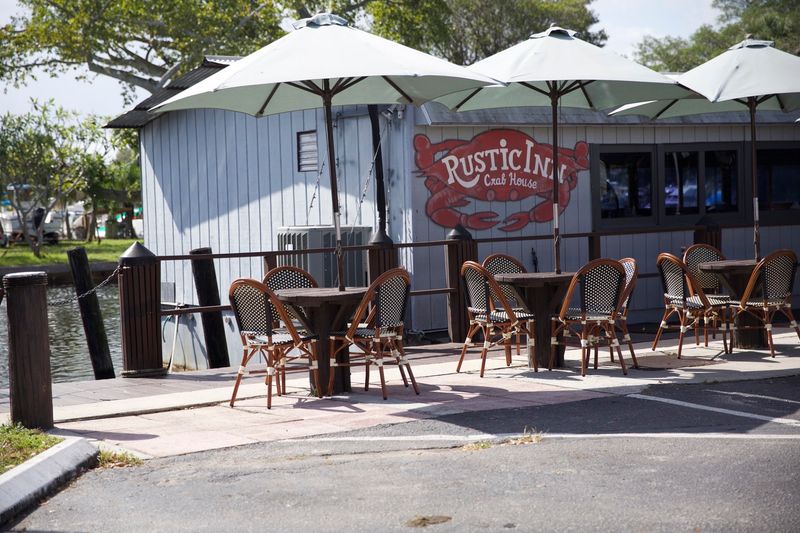
Rustic Inn started in 1955 as a small roadhouse saloon along a quiet canal in Fort Lauderdale, back when this area was more fishing village than tourist destination. Over the decades, it grew into a full-scale crabhouse where cracking shells with wooden mallets became the main event and getting messy became mandatory.
Garlic crabs are the specialty, served by the bucket and drenched in butter, garlic, and spices. You wear a bib, you get a mallet, and you go to work. Cracking the shells, digging out the meat, and soaking up garlic butter with bread is a hands-on, interactive experience that turns dinner into a kind of delicious demolition project.
Blue crabs, Dungeness, and stone crabs rotate through depending on the season.
Tables are covered with paper that gets replaced after every meal. The atmosphere is loud, casual, and fun in a way that fancy restaurants can never quite replicate. Families, tourists, and locals all sit side-by-side, cracking shells and laughing at how ridiculous they look covered in butter.
Rustic Inn survives because it never took itself too seriously. It’s messy, it’s loud, and it’s exactly the kind of unpretentious, flavor-packed experience that defines Old Florida dining at its best.
10. The Mai-Kai (Fort Lauderdale)
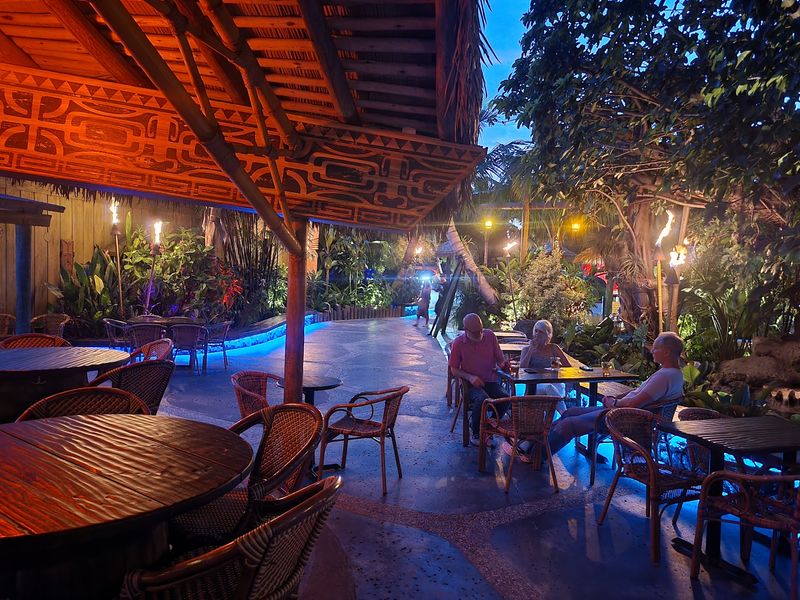
The Mai-Kai opened in 1956 during Florida’s golden age of roadside spectacle, when restaurants competed to be the biggest, the weirdest, the most over-the-top. This enormous Polynesian palace delivered on all fronts, with carved tiki gods, tropical gardens, waterfalls, and a dinner show that transported diners straight to the South Pacific without ever leaving Fort Lauderdale.
The menu offers Cantonese and Polynesian-inspired dishes: pu pu platters, teriyaki, sweet-and-sour pork, and other mid-century tiki classics that feel nostalgic rather than authentic. But authenticity isn’t really the point. The Mai-Kai is about escapism, about sipping a rum cocktail served in a ceramic volcano while dancers perform with fire and drums pound in the background.
The cocktail menu deserves special mention. The Mai-Kai’s bartenders are serious about their craft, mixing classic tiki drinks with fresh juices, house-made syrups, and multiple rums in recipes that date back decades. The Mystery Drink arrives smoking.
The Barrel o’ Rum serves four people and requires advance notice.
After years of uncertainty, The Mai-Kai underwent a major restoration and earned a spot on the National Register of Historic Places. It’s a survivor, a piece of Florida’s roadside attraction era that refused to fade away, and eating here feels like time travel to a Florida that was louder, weirder, and a whole lot more fun.