10 Florida Restaurants That Have Been Around for More Than 75 Years
Florida’s culinary scene isn’t just about the latest food trends or flashy new openings. Scattered across the state are dining institutions that have been serving guests for three-quarters of a century or more, each with stories baked into their walls and recipes passed down through generations. These restaurants have survived hurricanes, economic downturns, and changing tastes while maintaining the character that made them special in the first place.
Whether you’re a history buff, a foodie, or just someone who appreciates a good meal with a side of nostalgia, these ten legendary spots offer a delicious taste of Old Florida.
1. Columbia Restaurant (Tampa) – Since 1905
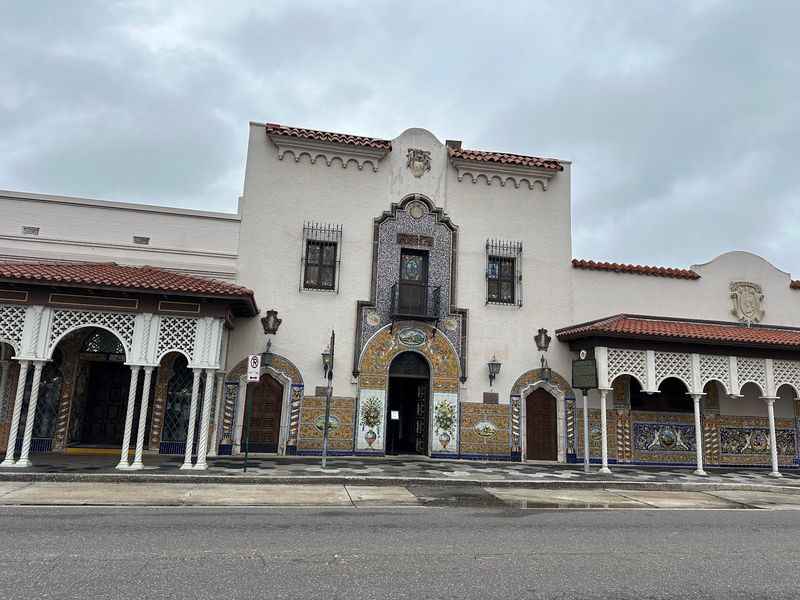
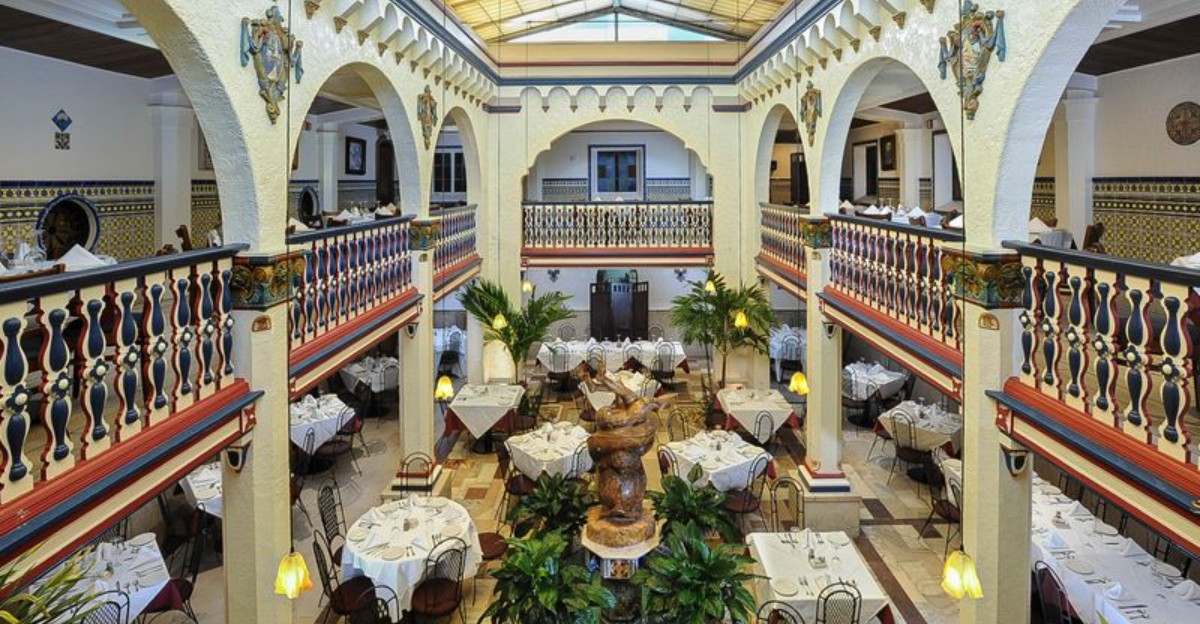
Walking into Columbia Restaurant feels like stepping onto a film set for old Havana. The hand-painted tiles alone tell decades of stories, while the arched doorways and wrought-iron details transport diners to another era entirely. Founded by Cuban immigrant Casimiro Hernandez Sr., this Ybor City landmark has been family-owned through five generations and holds the title of Florida’s oldest restaurant.
The menu reads like a love letter to Spanish and Cuban cuisine. Their 1905 Salad gets tossed tableside with theatrical flair, a tradition that never gets old no matter how many times you’ve seen it. The ropa vieja practically melts on your fork, and the Cuban sandwich here sets the standard that others try to match.
What really sets Columbia apart is how it’s grown without losing its soul. The original location has expanded to fill an entire city block, with fifteen dining rooms each decorated in distinct Spanish provincial styles. Live flamenco shows add energy to weekend evenings, with dancers’ footwork echoing off those famous tiles.
Tourists flock here, sure, but locals return generation after generation for birthdays, anniversaries, and Sunday dinners. That kind of loyalty doesn’t happen by accident. It’s earned through consistent quality and respect for tradition, something Columbia has mastered over 119 years in business.
2. Pepe’s Cafe & Steakhouse (Key West) – Since 1909
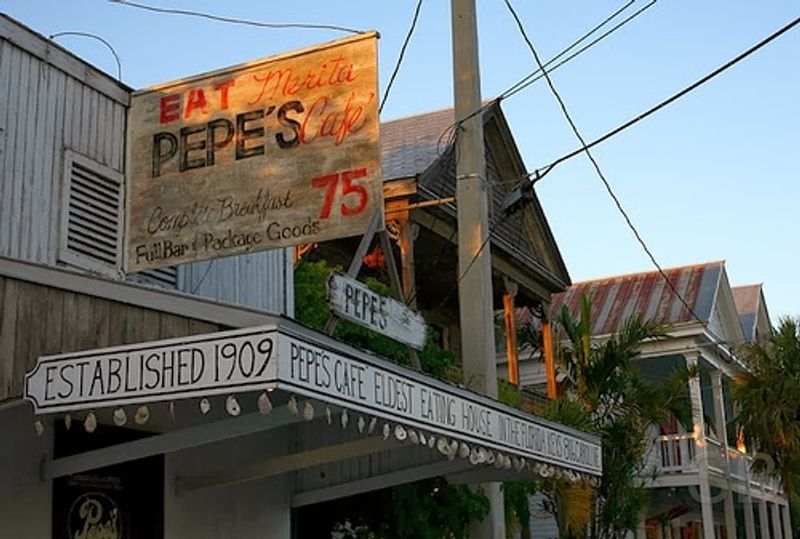
Pepe’s sits tucked on Caroline Street like it’s been there forever, because it pretty much has. Opening its doors in 1909, this Key West institution predates most of the island’s current landmarks. The building itself exudes that ramshackle Key West charm, with outdoor seating under leafy trees where chickens occasionally wander through like they own the place.
Breakfast here is practically a religious experience for locals. The eggs Benedict arrives perfectly poached, while their hash browns achieve that ideal crispy-on-the-outside, tender-inside balance that most places can’t nail. But don’t sleep on dinner either.
Their steaks are thick-cut and cooked exactly how you order them, which sounds basic but becomes rare the farther south you travel in Florida.
The atmosphere splits the difference between casual and special-occasion worthy. You can show up in flip-flops and a T-shirt without feeling underdressed, but the quality of food makes it memorable enough for celebrating something important. The staff treats regulars like family and newcomers like future regulars.
Key West has changed dramatically over the past century, morphing from a working fishing village to a tourist destination. Pepe’s has weathered all of it by staying true to what worked from day one: straightforward American fare done right, served without pretension in a space that feels authentically Keys.
3. Cap’s Place (Lighthouse Point) – Since 1928
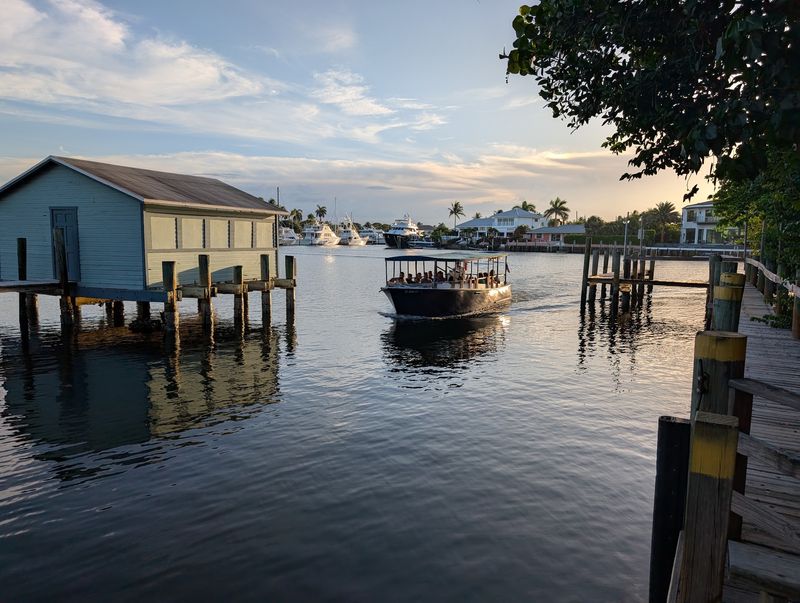
Getting to Cap’s Place requires a boat ride, which immediately sets it apart from every other restaurant on this list. A small ferry shuttles guests across the Intracoastal Waterway to this former gambling den and rum-running hub that’s been serving seafood since Prohibition. The journey itself becomes part of the experience, building anticipation as you approach the weathered wooden structure.
Once a hideout for celebrities and politicians looking for discretion, Cap’s maintains that speakeasy vibe even though the illegal activities are long gone. The dining room feels frozen in time, with knotty pine walls covered in vintage photographs and nautical memorabilia. Dim lighting and close-set tables create an intimate atmosphere that encourages conversation.
The menu focuses on what Florida waters provide. Their hearts of palm salad uses fresh-cut palm, not the canned stuff most places serve. The catch of the day arrives broiled with Key lime butter, simple preparation that lets quality ingredients shine.
Portions are generous without being wasteful, the kind of sizing that satisfies without leaving you uncomfortably stuffed.
Cap’s has hosted everyone from Winston Churchill to Franklin D. Roosevelt, though today’s crowd skews more toward locals celebrating special occasions and tourists seeking authentic Old Florida. The boat access keeps away the casual drop-in crowd, which means everyone here made a deliberate choice to visit.
That intentionality creates a dining room full of people ready to enjoy themselves.
4. Old Captiva House (Captiva) – Since 1931
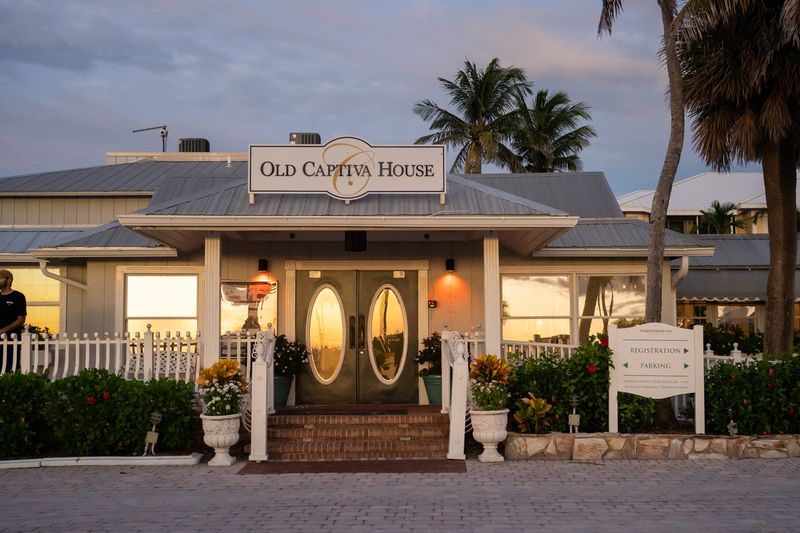
Captiva Island moves at its own pace, slower and more deliberate than mainland Florida. The Old Captiva House fits right into that rhythm, operating out of a building that started life as a vacation cottage in 1931. Its transformation into a restaurant preserved the residential feel, making diners feel like they’re eating at a friend’s beach house rather than a commercial establishment.
The Gulf Coast location means seafood dominates the menu, but they handle it with more finesse than typical beach shacks. Grouper gets prepared multiple ways, from blackened to stuffed with crabmeat, each preparation highlighting different aspects of the fish’s mild flavor. Their conch fritters arrive hot and crispy, with just enough kick to wake up your taste buds without overwhelming them.
Dining here follows island tradition: early seating catches the sunset, while later reservations trade views for a more relaxed pace. The porch seating puts you close enough to hear waves, though trees block direct water views. Inside tables offer air conditioning and a cozier atmosphere, better for conversation without competing with tropical breezes.
What makes Old Captiva House special isn’t flashy innovation or celebrity chef credentials. Instead, it’s the steady reliability of a place that’s been doing the same thing well for over ninety years. The building has survived hurricanes that leveled newer structures, a testament to both solid construction and the community’s determination to preserve their history.
5. Angel’s Dining Car (Palatka) – Since 1932
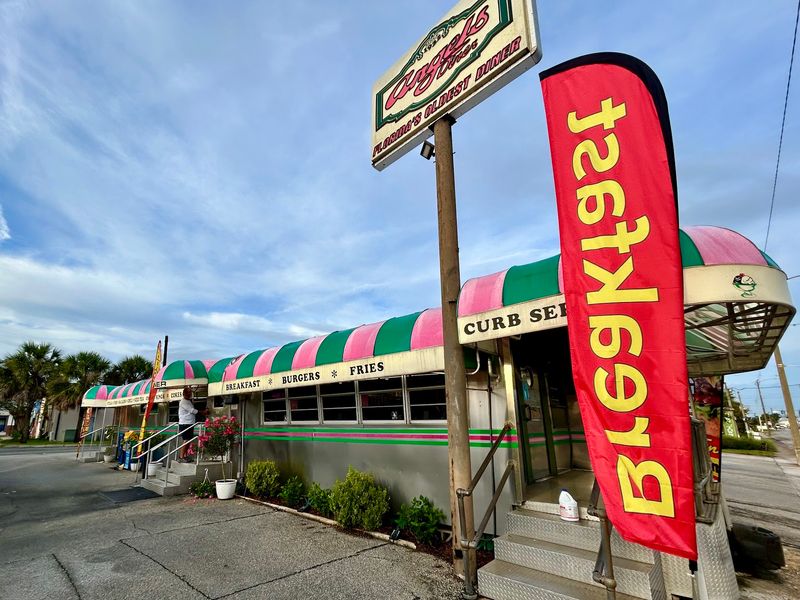
Housed in an actual 1932 dining car, Angel’s delivers nostalgia you can touch. The narrow space forces a linear layout, with counter seating along one side and a few booths squeezed in where physics allows. Chrome fixtures and red vinyl upholstery complete the time-capsule effect, though everything stays clean and well-maintained rather than genuinely old and worn.
This is diner food executed the way it should be but rarely is anymore. Burgers come thick and juicy, cooked on a flat-top that’s been seasoned by decades of use. The breakfast menu runs all day because Angel’s understands that sometimes you need pancakes at 2 p.m., and who are they to judge?
Their grits achieve the perfect creamy consistency, neither too thick nor too runny.
Palatka isn’t a tourist destination, which means Angel’s survives on local loyalty rather than passing trade. The same faces appear morning after morning, occupying preferred counter spots while bantering with servers who know their orders by heart. First-timers get welcomed into this routine rather than treated as outsiders, though you’ll need to accept that service moves at conversation speed, not fast-food pace.
The dining car concept could easily feel gimmicky, but Angel’s earns authenticity through longevity. When you’ve been serving the same community for over ninety years, you’re not playing dress-up anymore. You’re the real deal, still chugging along while flashier concepts have come and gone like so many trains passing through.
6. Green Turtle Inn (Islamorada) – Since 1947
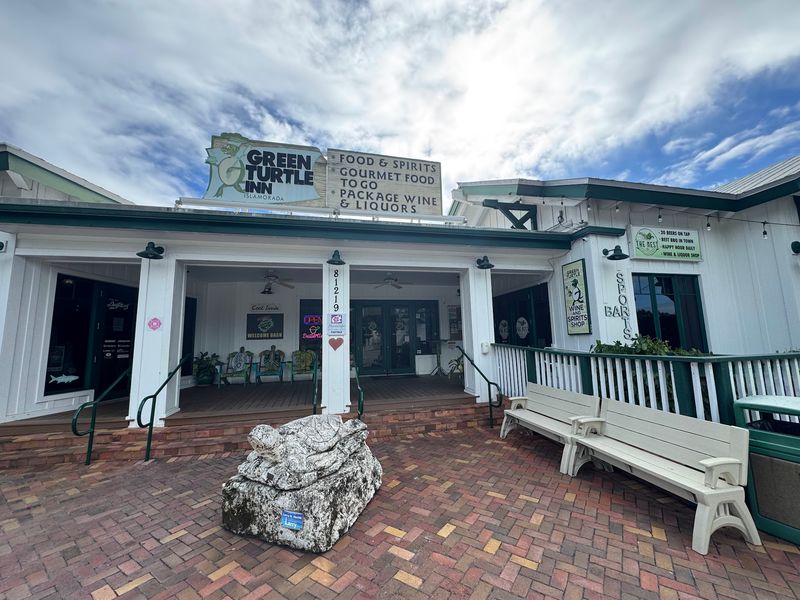
Green Turtle Inn embodies that relaxed Upper Keys attitude where nobody’s in a rush and everyone’s dressed for the beach. The building sits right on the Overseas Highway, making it easy to spot but also meaning road noise occasionally drifts through. That’s just part of eating in the Keys, where indoor-outdoor boundaries blur and climate control battles tropical humidity.
Their turtle soup remains a signature dish, though these days it’s made with farm-raised turtles rather than the wild-caught green sea turtles that inspired the restaurant’s name. The recipe hasn’t changed much since 1947, rich and slightly spicy with chunks of tender meat. Conch chowder offers another taste of traditional Keys cuisine, thicker and heartier than New England clam chowder but just as satisfying.
The menu balances seafood with landlubber options, acknowledging that not everyone in your party may want fish for the third meal in a row. Their prime rib gets carved thick and served with au jus, a solid choice that holds its own against the ocean fare. Key lime pie arrives in a proper graham cracker crust, tart enough to pucker your lips slightly but sweet enough to balance.
Green Turtle has changed hands over the decades, but each owner understood the assignment: preserve what works while keeping things fresh enough to stay relevant. The result is a restaurant that feels both historic and current, honoring its past without becoming a museum piece.
7. Okeechobee Steakhouse (West Palm Beach) – Since 1947
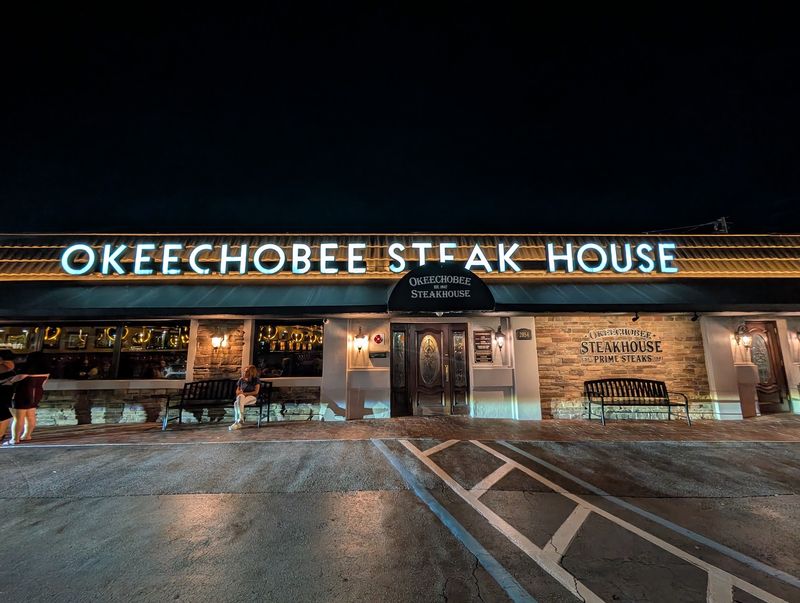
Okeechobee Steakhouse doesn’t apologize for being a throwback. Dark wood paneling, red leather booths, and dim lighting create an atmosphere that screams old-school steakhouse in the best possible way. This is where power lunches happened before that term existed, where deals got sealed over martinis and medium-rare ribeyes.
The menu reads like a greatest hits of American steakhouse classics. Wedge salads arrive properly chilled with chunky blue cheese dressing. Steaks come in cuts and sizes that would make a cardiologist nervous, but you’re not here for health food.
You’re here for beef cooked over high heat until it develops that perfect crust while staying pink and juicy inside.
Their sides deserve equal attention to the mains. Creamed spinach is rich without being heavy, while the baked potato arrives big enough to share, loaded with all the fixings. Onion rings come thick-cut and beer-battered, crispy enough to maintain structure even as they cool.
Service follows the old-school steakhouse model: professional but not stuffy, attentive without hovering. Servers know the menu inside and out and can guide you toward the best choice for your appetite and preferences. They’ll also steer you away from ordering too much, which shows they care more about your experience than padding the check.
West Palm Beach has gentrified significantly since 1947, with new restaurants opening constantly. Okeechobee Steakhouse endures because it does one thing exceptionally well rather than trying to be everything to everyone.
8. A&B Lobster House (Key West) – Since 1947
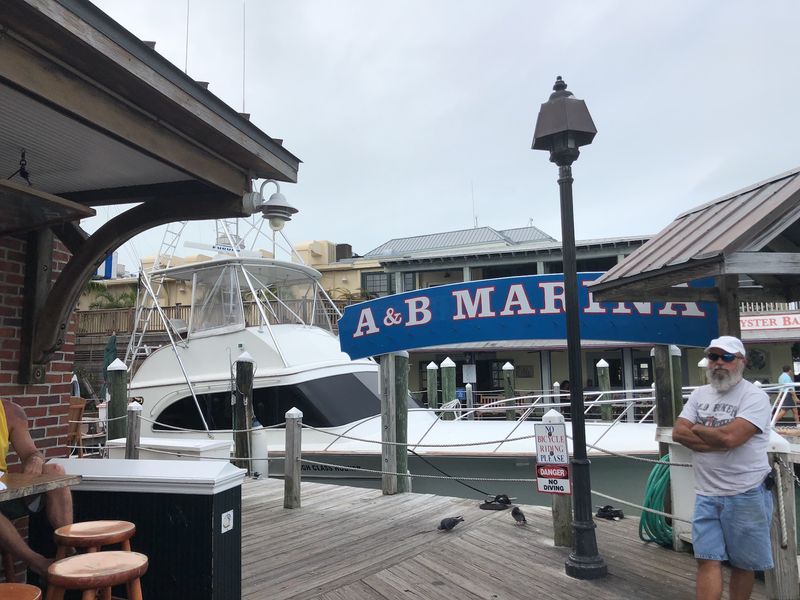
Perched right on Key West Harbor, A&B Lobster House offers front-row seats to one of the island’s most photogenic views. Fishing boats and sailboats drift past while you crack into fresh seafood, creating that perfect vacation moment where the setting enhances already excellent food. The upstairs dining room captures the best views, though the downstairs Raw Bar serves the same quality in a more casual atmosphere.
Maine lobster shares menu space with Florida spiny lobster, letting diners compare the two species side by side. The Maine version brings that classic sweet flavor and tender claw meat, while Florida lobster offers firmer texture and slightly different taste. Both arrive properly cooked, which sounds obvious but becomes surprisingly rare at tourist-heavy seafood restaurants.
Stone crab claws appear seasonally, served chilled with mustard sauce that strikes the right balance between tangy and sharp. Hogfish, when available, gets prepared simply to showcase its mild, slightly sweet flavor. The kitchen understands that great seafood needs minimal interference, just proper cooking and complementary accompaniments.
A&B’s longevity in Key West, where restaurants turn over faster than rental cars, speaks to consistent quality and smart management. They’ve avoided the trap of coasting on location alone, instead maintaining standards that keep locals coming back alongside tourists. The prices reflect the waterfront real estate and quality ingredients, but you’re paying for an experience, not just a meal.
9. Brocato’s Sandwich Shop (Tampa) – Since 1948
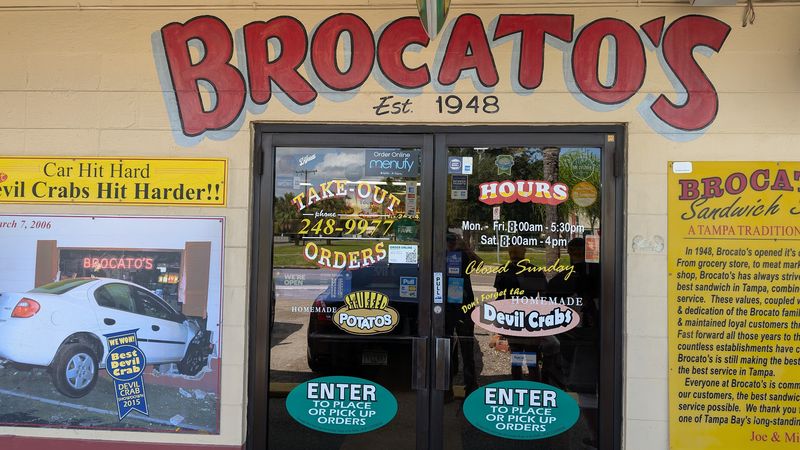
Brocato’s occupies a tiny space that hasn’t changed much since Harry Truman was president. The counter seats maybe a dozen people, while a handful of small tables accommodate those who prefer not to eat elbow-to-elbow with strangers. This isn’t a place for lingering over coffee; it’s built for quick lunches where the food does the talking.
Their Cuban sandwich has earned legendary status among Tampa locals, who debate its merits against other contenders with religious fervor. The bread comes from La Segunda bakery, pressed until crispy outside but still soft enough to bite through cleanly. Roast pork, ham, Swiss cheese, pickles, and mustard layer together in proportions perfected over seventy-plus years of repetition.
Italian sandwiches showcase Brocato’s heritage, piled high with quality cold cuts and provolone on fresh bread. The Devil Crab, a Tampa specialty that’s harder to find than it used to be, arrives as a fried croquette of spiced crab meat that packs surprising heat. It’s messy finger food that requires napkins and complete attention.
The no-frills approach extends to service: you order at the counter, grab your own drinks from the cooler, and bus your own table. Some might call it bare-bones, but regulars appreciate the efficiency. You’re not paying for ambiance or tableside service.
You’re paying for sandwiches that have kept Tampa fed for three-quarters of a century, and that’s more than enough.
10. Tropical Acres Steakhouse (Fort Lauderdale) – Since 1949
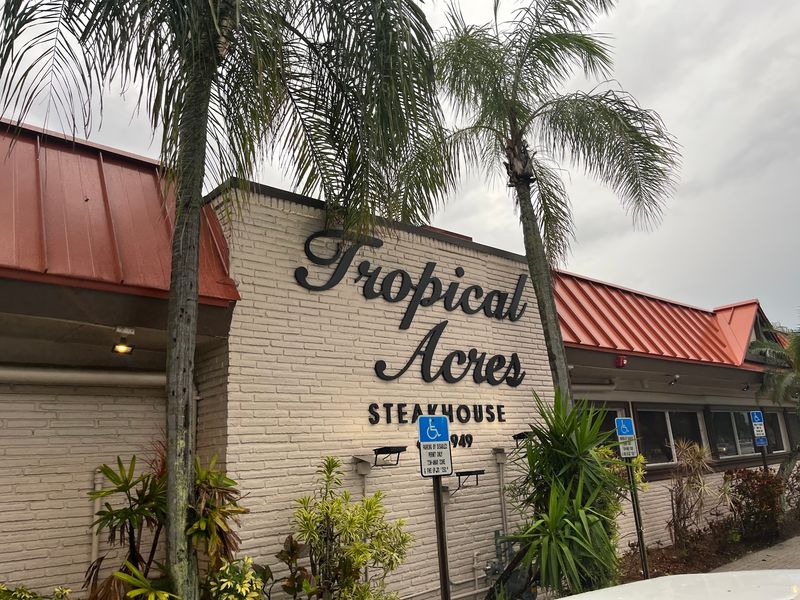
Tropical Acres feels like discovering your grandparents’ favorite restaurant, assuming your grandparents had excellent taste in steakhouses. The decor leans heavily into vintage Florida tropical themes, with plenty of bamboo, dark wood, and greenery creating a space that’s both kitschy and somehow sophisticated. It’s the kind of place where you half expect to see someone’s parents celebrating their 40th wedding anniversary at the next table.
Prime rib is the move here, slow-roasted and carved to order in thick slabs that drape over the plate’s edges. The au jus comes served on the side, letting you control moisture levels, while horseradish adds sharp contrast to the rich beef. New York strips and filets hold their own, but the prime rib built this restaurant’s reputation and continues earning it today.
Sides arrive family-style in portions meant for sharing, though you might be tempted to keep the garlic mashed potatoes all to yourself. The salad bar offers a throwback experience that’s become rare in modern restaurants, with fresh vegetables and classic toppings rather than trying to reinvent the concept.
Fort Lauderdale has transformed from sleepy beach town to major city since 1949, but Tropical Acres has maintained its identity through all the changes. New ownership took over in recent years but wisely left the formula alone, understanding that some things don’t need improving. When you’ve been making people happy for 75 years, you’ve clearly figured something out.