10 Florida Spots Where the Ground Is Made of Ancient Shells
Florida’s landscape holds secrets that go back thousands of years, and some of the most fascinating are literally beneath your feet. Across the state, you’ll find beaches, trails and islands where the earth itself is composed of countless shells left behind by ancient peoples and prehistoric seas. These remarkable sites offer a tangible connection to Florida’s deep past, from Indigenous shell mounds built over millennia to fossilized shorelines cemented by time.
Walking these grounds means treading on history that’s both ancient and surprisingly visible.
1. Blowing Rocks Preserve (Hobe Sound)
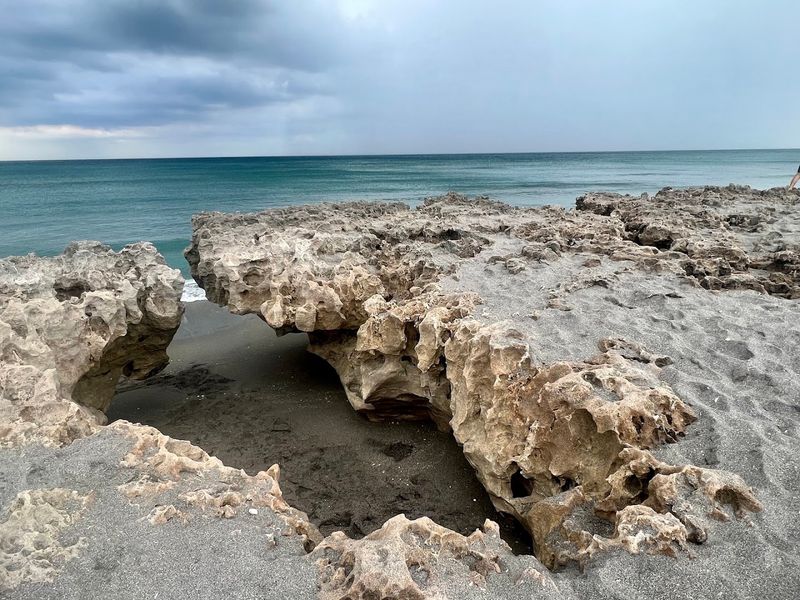
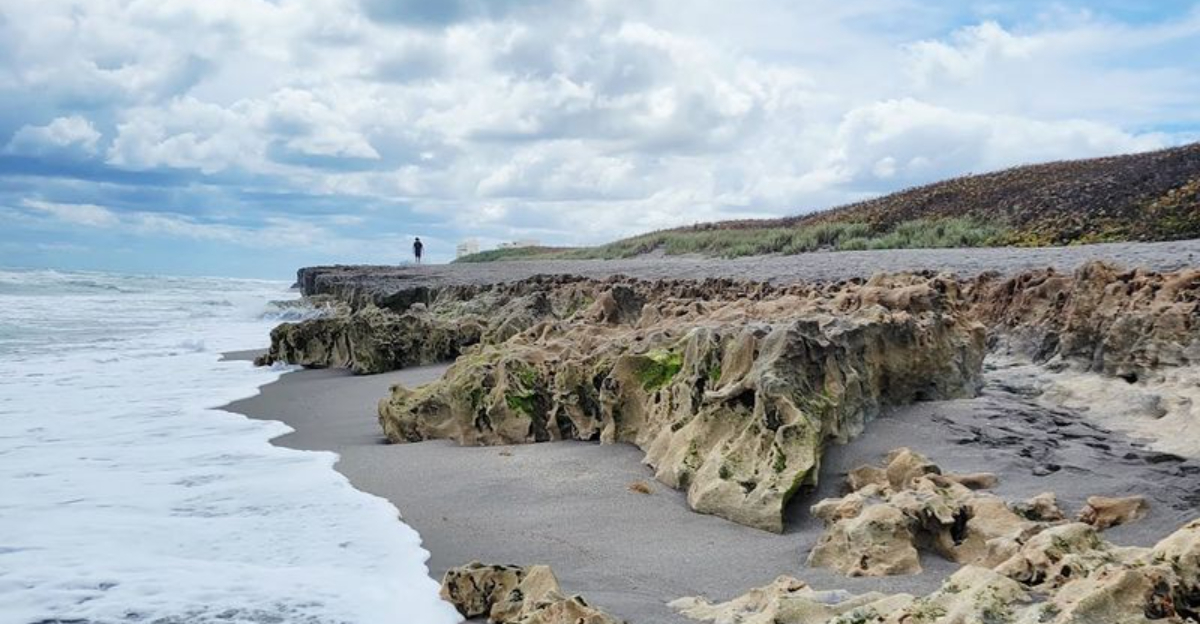
Waves crash dramatically against a shoreline that’s completely different from Florida’s typical sandy beaches. Instead of soft sand, you’re standing on Florida’s largest exposed stretch of Anastasia limestone, a rock formation that tells a story millions of years old.
This isn’t ordinary rock. Look closely and you’ll spot the building blocks: ancient shell fragments, fossilized coral pieces, and sand all cemented together by time and mineral deposits. The limestone formed during the Pleistocene epoch when sea levels rose and fell repeatedly, creating layers of marine life that eventually hardened into the rugged surface you see today.
High tide brings the preserve’s most spectacular show. Water forced through holes and crevices in the porous limestone can shoot skyward in dramatic geysers, sometimes reaching heights of 50 feet. It’s a powerful reminder that this ancient shell-rock shoreline is very much alive with ocean energy.
The preserve protects 73 acres of this unique geological feature along with coastal dune habitat. A short trail leads from the parking area to the limestone outcrop, where you can explore tide pools teeming with marine life. The best time to witness the blowing rocks phenomenon is during high tide with strong onshore winds, particularly in winter months when nor’easters push waves against the coast with extra force.
2. Washington Oaks Gardens State Park (Palm Coast)
Picture a beach where the sand gives way to expansive sheets of honeycombed rock, each pockmark and crevice filled with the unmistakable shapes of ancient shells. Washington Oaks delivers exactly that, offering one of Florida’s most photogenic and geologically fascinating coastlines.
The star attraction is coquina rock, a sedimentary formation created during the Pleistocene era roughly 100,000 to 150,000 years ago. Unlike the powdery limestone at some sites, coquina is essentially a natural shell concrete where millions of individual shells remain distinct and visible, cemented together with calcium carbonate and sand. You can actually identify specific shell types frozen in the rock.
Walking across these formations feels like exploring an outdoor museum of marine life. Tide pools form in the weathered depressions, creating miniature ecosystems where crabs scuttle and small fish dart between shadows. The contrast between the dark coquina and white-capped waves makes for stunning photography, especially during golden hour.
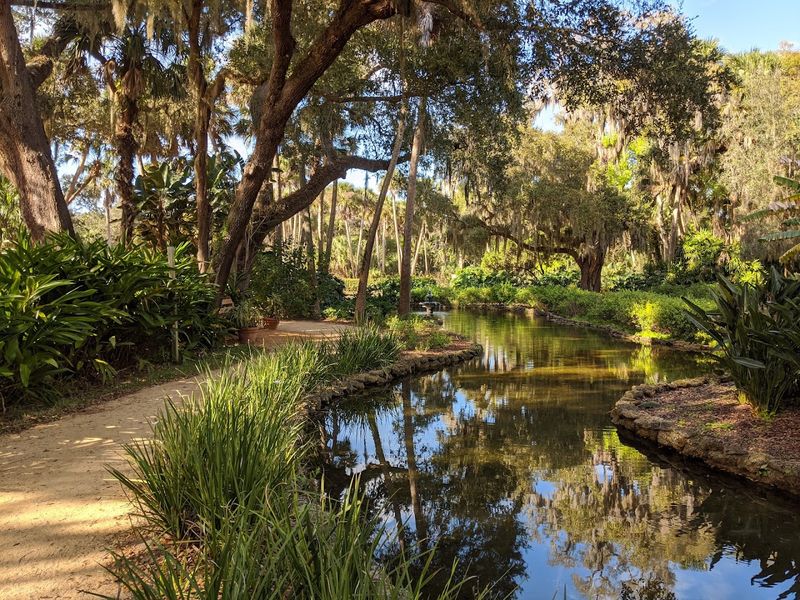
Beyond the beach, the park offers formal gardens with azaleas, camellias and reflecting pools, plus hiking trails through coastal hammock. But it’s that rugged coquina shoreline that truly sets this place apart. Wear shoes with good grip since the wet rock can be slippery, and time your visit for low tide when more formations are exposed and accessible for exploration.
3. Mound Key Archaeological State Park (Estero)
Accessible only by kayak, canoe or boat, this 125-acre island in Estero Bay exists largely because of one thing: discarded shells. The Calusa people didn’t just visit Mound Key—they essentially built it, transforming what may have been a small natural feature into a substantial island through roughly 2,000 years of continuous occupation and shell accumulation.
Archaeological evidence suggests this was once the ceremonial center and capital of the powerful Calusa kingdom. As master fishermen and seafood harvesters, the Calusa consumed massive quantities of oysters, clams, conchs and other shellfish. They deposited the shells, along with fish bones and pottery fragments, creating layers that built up dramatically over centuries.
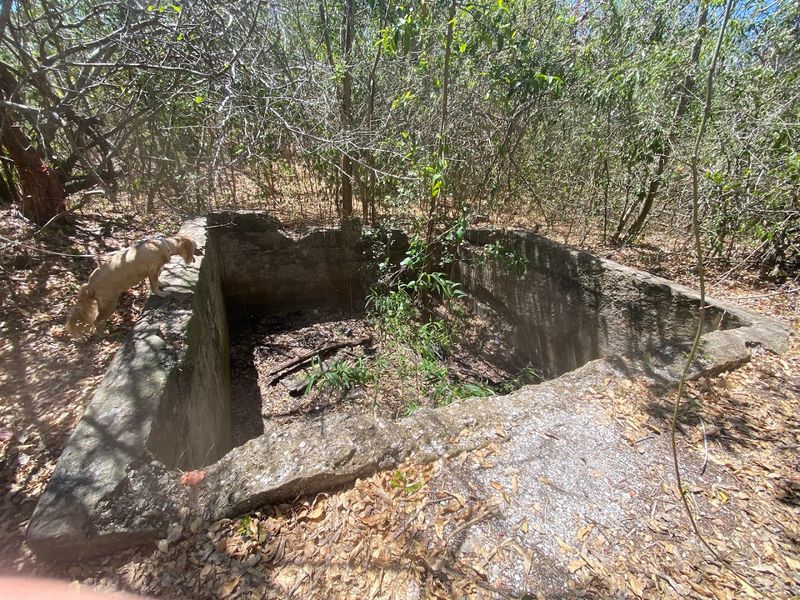
The island’s highest point reaches about 30 feet above sea level—impressive for Florida and entirely human-made. A trail system winds through the island, climbing over and around shell mounds where you can see the stratified layers of shells, some crushed to powder, others still intact. It’s humbling to realize you’re walking on the accumulated refuse of generations of people who called this place home.
Spanish explorers visited in the 1560s, and some historians believe this was the location where they first encountered Calusa chief Carlos. Today, the island is protected and undeveloped. Bring water, insect repellent, and sturdy shoes.
The shell surfaces can be sharp and uneven, but they offer an unparalleled connection to Florida’s pre-Columbian past.
4. Calusa Heritage Trail at Randell Research Center (Pineland)
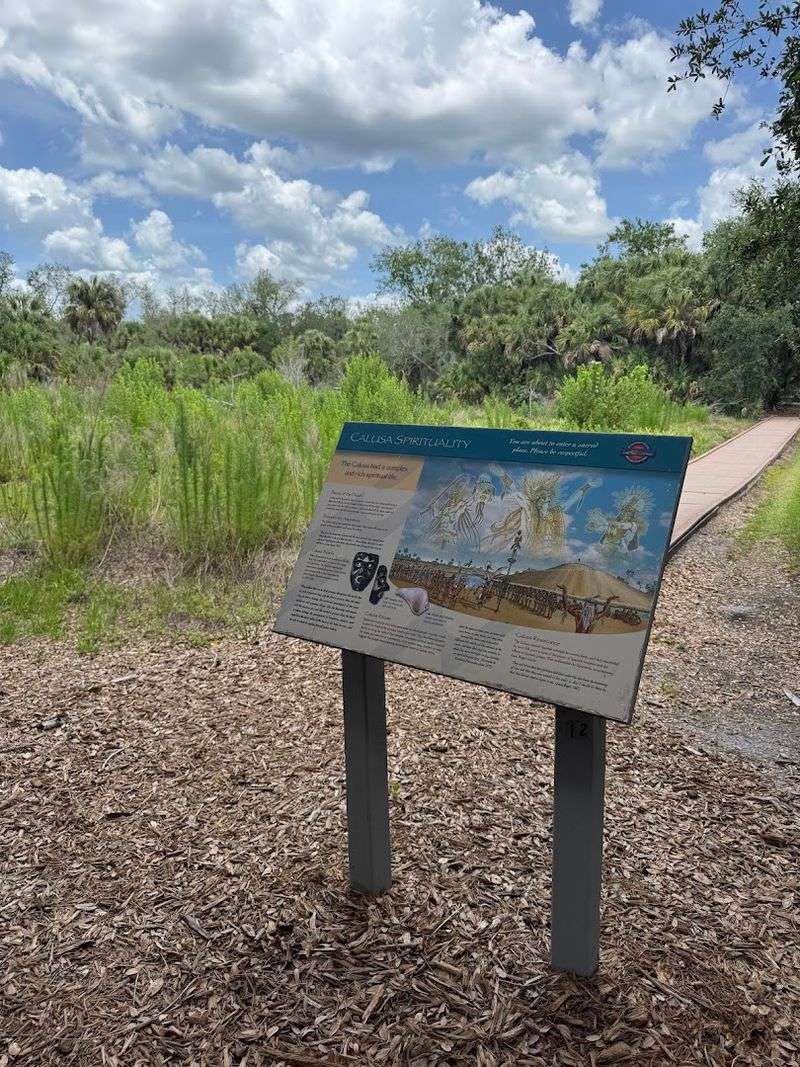
Some hills in Florida are natural. Others were engineered over centuries by Indigenous peoples with specific purposes in mind. The Calusa Heritage Trail takes you across and around some of the most significant shell mound complexes in the southeastern United States, offering views that are both scenic and deeply historical.
The trail system covers about a half-mile through the Randell Research Center property, where ongoing archaeological research continues to reveal details about Calusa life. You’ll cross massive shell middens—basically ancient trash heaps that accumulated as the Calusa harvested and consumed shellfish in enormous quantities. These weren’t just garbage dumps; they became the foundation for structures, ceremonial spaces and elevated living areas above flood-prone ground.
The highlight is an observation platform positioned atop the site’s tallest mound. From this vantage point, you can look out over Pine Island Sound and imagine the strategic advantage this height provided the Calusa. They could spot approaching visitors, monitor fishing grounds, and assert their presence across the landscape.
Interpretive signs explain the archaeological significance and what researchers have learned from excavations. Currently, the outdoor trail remains open while indoor facilities undergo construction, so you can still explore the mounds themselves. The shells beneath your feet represent generations of meals, trade, and daily life.
They’re not just geological curiosities—they’re tangible evidence of a sophisticated culture that thrived in Florida’s coastal environment for thousands of years.
5. Shell Mound Archaeological Site (Cedar Key)
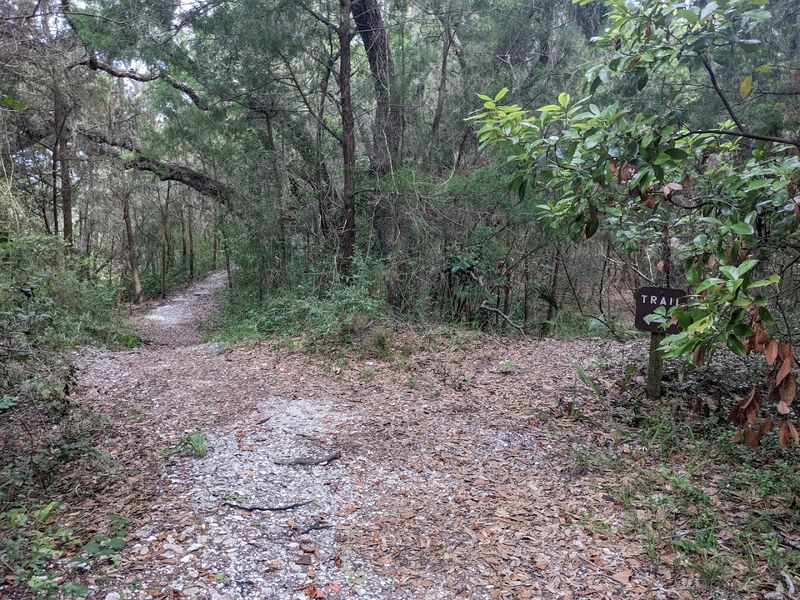
Numbers can be abstract until you stand at the base of something truly monumental. The shell ridge at Cedar Key stretches roughly 28 feet high and contains an estimated 1.2 billion oyster shells—a figure so staggering it’s almost impossible to comprehend. This isn’t the work of a single generation or even a single century; it represents approximately 6,000 years of continuous human habitation and shellfish harvesting.
Indigenous peoples lived along this part of Florida’s Gulf Coast for millennia before European contact. Oysters were a dietary staple, abundant in the shallow waters and easy to harvest. After consuming the meat, they discarded the shells, which accumulated year after year, century after century, eventually forming the enormous ridge that dominates the landscape today.
Walking the trail that circles the mound, you’ll notice the shells aren’t just piled randomly. Archaeologists have identified distinct layers representing different time periods and cultural groups. Some areas show evidence of intentional construction, suggesting the mound served purposes beyond simple waste disposal—possibly as a foundation for structures or as a prominent landmark visible from the water.
The site is now protected and interpreted for visitors. A short trail with informative markers explains the archaeological significance and the cultures that created this monument. Cedar Key itself is worth exploring, with its laid-back island vibe and fresh seafood restaurants.
But the shell mound reminds you that people have been drawn to these productive waters for thousands of years, leaving behind a legacy literally built from shells.
6. Seminole Rest Historic Site (Oak Hill)
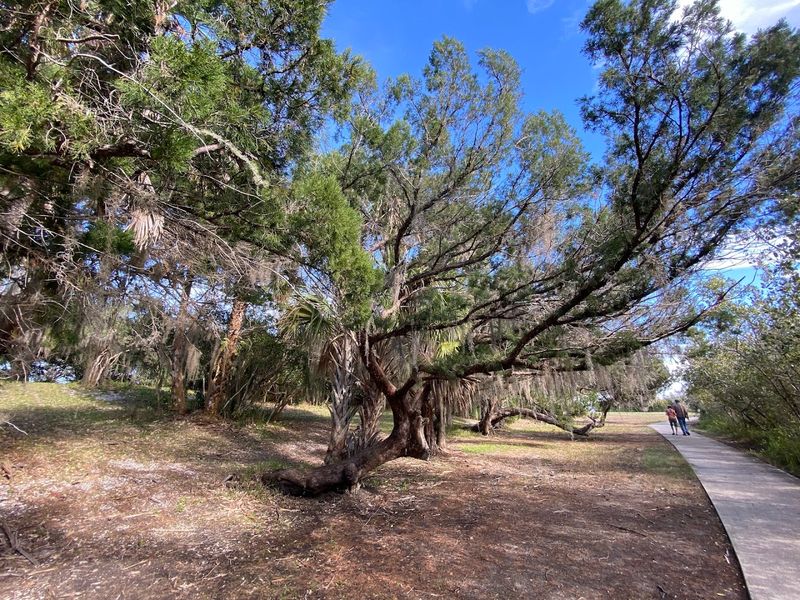
A half-mile loop trail might not sound like much, but when it circles prehistoric shell mounds dating back 4,000 years, every step carries weight. Seminole Rest preserves multiple mounds created by Indigenous peoples who recognized this spot along the Indian River as prime real estate long before modern Florida existed.
Snyder’s Mound is the showstopper, rising 13 feet above the surrounding landscape. That might not seem dramatic compared to mountains out west, but in pancake-flat Florida, any elevation is significant. The mound is composed almost entirely of shells—primarily oysters and clams—mixed with soil, bone fragments and artifacts.
Climbing to the top (where permitted) gives you a commanding view of the river and surrounding marshlands, the same strategic advantage ancient inhabitants enjoyed.
The site shows evidence of occupation dating back to around 2,000 BCE, making it one of the older documented shell mound sites in Florida. Different cultural groups used this location over millennia, each adding to the shell accumulations. Archaeologists have found pottery, tools and other artifacts that help piece together how people lived, what they ate, and how their cultures evolved.
A more recent chapter involves the Seminole people, who used the area during the 19th century, giving the site its current name. Later still, a winter estate was built here in the early 1900s. Today, interpretive signs along the trail explain both the ancient and more recent history, creating a layered narrative of human presence spanning thousands of years.
7. Green Mound at Ponce Preserve (Ponce Inlet)
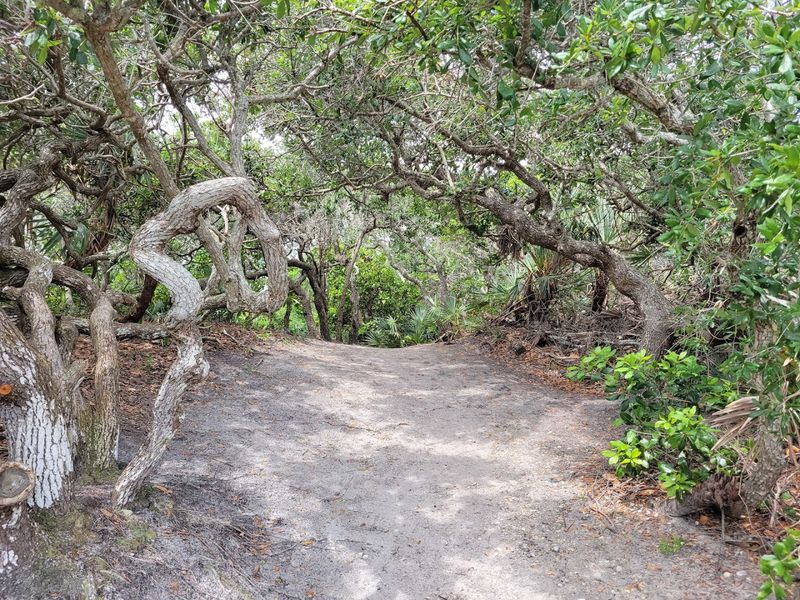
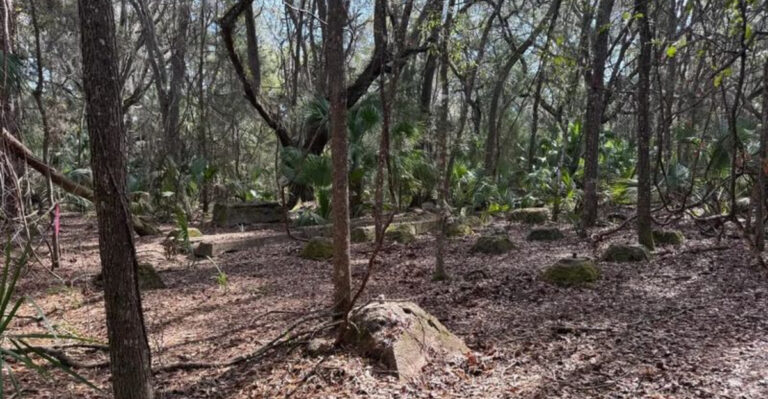
Not every ancient monument announces itself with signs and interpretive centers. Green Mound sits quietly within Ponce Preserve, looking for all the world like a natural wooded hill covered in native vegetation. But beneath that greenery lies something entirely human-made: a massive shell midden created by Indigenous peoples who harvested shellfish from nearby waters centuries ago.
The mound represents the largest such feature within the town of Ponce Inlet, and it’s preserved within the community’s biggest park. Unlike some shell mounds that have been excavated or heavily studied, Green Mound remains largely intact and undisturbed, allowing vegetation to grow naturally across its surface. This creates an interesting visual contrast—what appears to be a natural landscape feature is actually an archaeological site.
Walking the preserve’s trails, you might pass the mound without realizing its significance if you’re not paying attention. That’s part of its charm. There’s something powerful about knowing that beneath the oaks and palmettos lies layer upon layer of shells deposited by people who lived, worked and raised families in this exact location hundreds or thousands of years ago.
The preserve itself offers several miles of trails through different coastal habitats, including maritime hammock and scrub. Birdwatching is excellent, and you might spot gopher tortoises or other wildlife. But take a moment when you reach Green Mound to consider what it represents: generations of people making a living from the sea, leaving behind evidence that has quite literally shaped the landscape you’re walking through today.
8. Historic Spanish Point (Osprey)
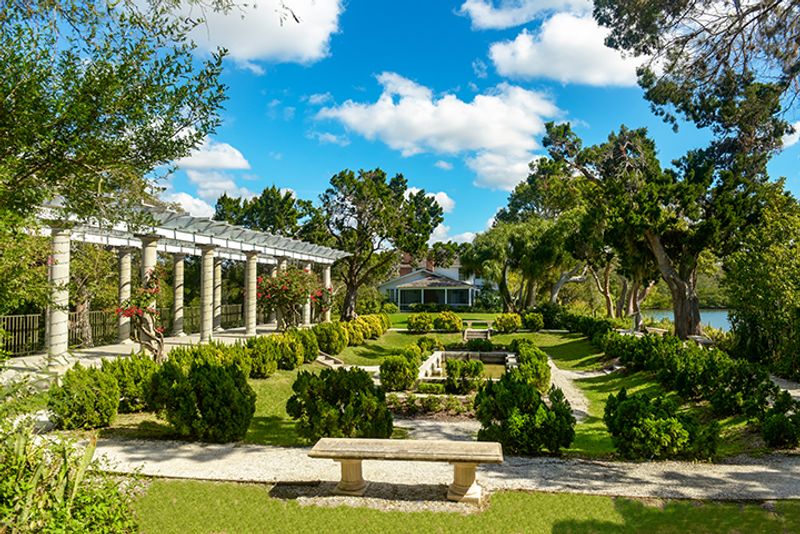
History doesn’t always progress in a straight line, and Historic Spanish Point proves it. This waterfront property contains a 4,500-year-old shell ring and a 2,500-year-old shell ridge—two distinct archaeological features created by different cultures separated by millennia, both resulting from the same basic activity: harvesting and eating shellfish from Little Sarasota Bay.
The older shell ring is a circular formation roughly 250 feet in diameter. Archaeologists believe such rings weren’t just garbage dumps but may have served ceremonial or communal purposes, with the central area used for gatherings or rituals. The shells form a raised ring around a depressed center, a pattern seen at other ancient sites throughout the southeastern United States.
The shell ridge came later, built by a different cultural group through generations of seafood harvesting. These accumulated shells created an elevated area above the wet, mosquito-prone lowlands—a practical solution to living comfortably in Florida’s coastal environment. Both features demonstrate sophisticated understanding of the local ecosystem and how to exploit its resources sustainably over long periods.
Today, Historic Spanish Point combines these ancient archaeological features with later history, including a pioneer-era homestead and early 20th-century buildings. You can walk trails that wind through the shell formations, visit a restored cottage overlooking the bay, and explore gardens planted in the 1920s. It’s a place where multiple layers of Florida history overlap, but those ancient shell formations remain the most impressive, representing human presence stretching back 45 centuries.
9. Madira Bickel Mound State Archaeological Site (Terra Ceia)
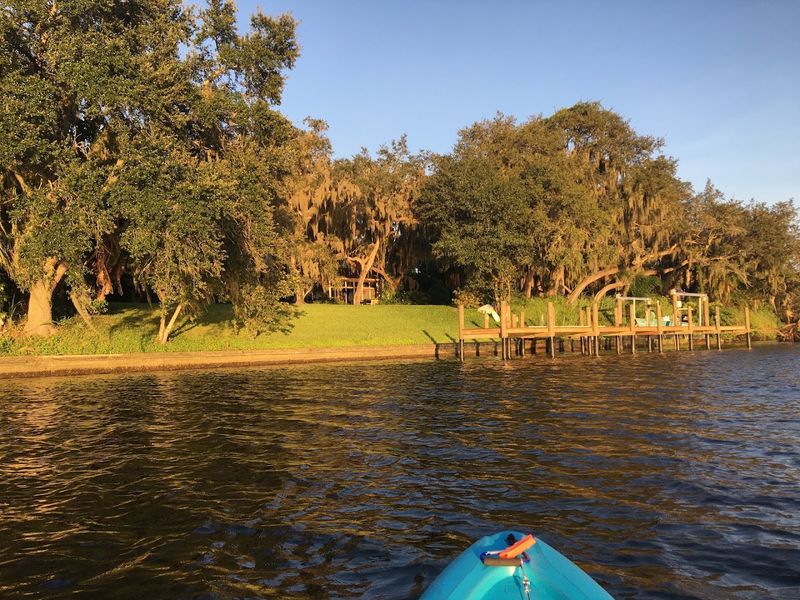
Climbing wooden stairs to reach the top of a 20-foot-high ceremonial mound, you’re ascending through layers of history compressed into shells, sand and artifacts. Madira Bickel Mound isn’t just tall by Florida standards—it’s architecturally significant, representing intentional construction rather than simple accumulation of refuse.
Archaeological evidence suggests cultures lived at this site for approximately 2,000 years, with the major mound construction occurring during what’s known as the Safety Harbor period (roughly 900 to 1700 CE). Unlike shell middens that grew organically as people discarded oyster and clam shells after meals, this mound appears to have been built deliberately as a platform for ceremonies, important structures, or to honor the dead.
The composition tells the story: shells provide the primary building material, but mixed throughout are sand, pottery fragments, and debris from daily village life. The mound’s height would have made it visible from the water, serving as a landmark and a statement of the community’s presence and importance. Standing on top today, you can see across the surrounding landscape toward Tampa Bay, understanding the strategic and symbolic value of this elevated position.
The site is named after Madira Bickel, a pioneering archaeologist who worked to preserve Florida’s archaeological heritage in the early 20th century. Her efforts helped protect this mound from destruction. Today, it remains one of the best-preserved ceremonial mounds in the region.
The site is small and undeveloped, but that simplicity allows you to focus on the mound itself and imagine the generations of people who built and used it.
10. Crystal River Archaeological State Park (Crystal River)
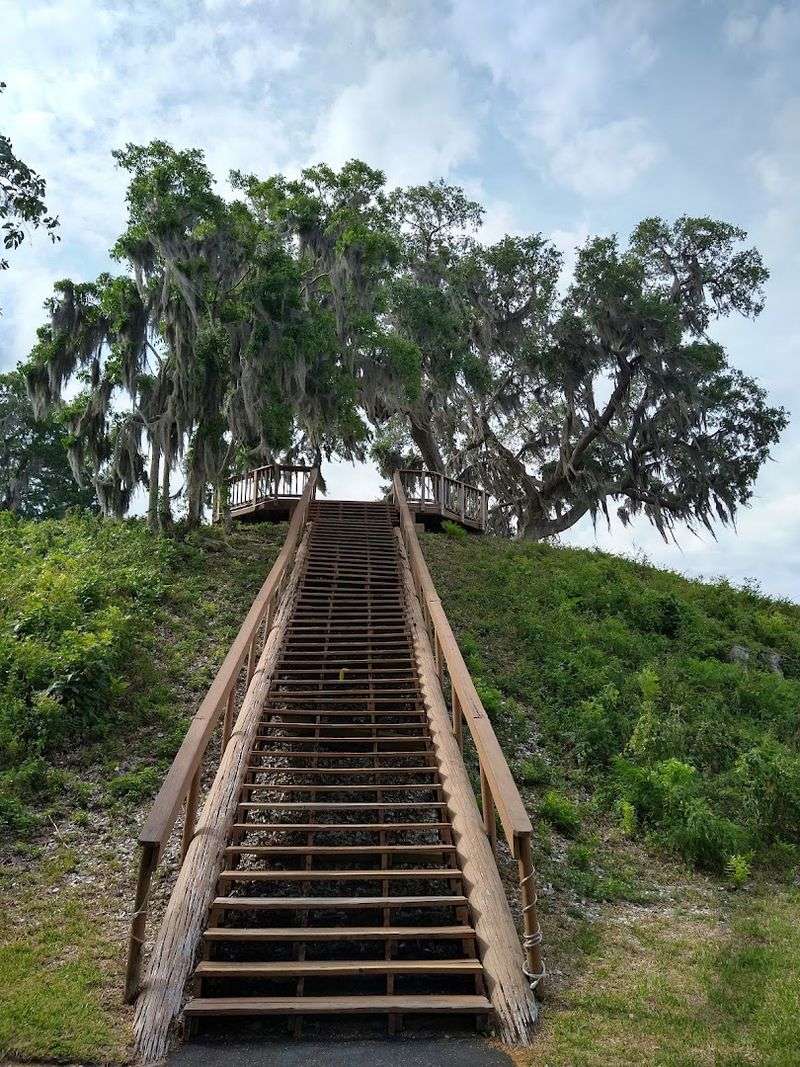
Some places draw people back generation after generation, and Crystal River is one of them. This riverside complex shows evidence of Indigenous occupation spanning more than 1,600 years, from around 200 BCE to 1400 CE. What makes it remarkable isn’t just one feature but the entire collection: shell middens, burial mounds, ceremonial platforms, and temple mounds all concentrated in one location.
The site functioned as a major ceremonial center, attracting people from across Florida and beyond. Two impressive platform mounds dominate the landscape, both built primarily from shells mixed with earth and other materials. The larger mound rises about 30 feet and likely served as a foundation for temples or chiefs’ houses.
Climbing the modern stairs to the top, you’re following paths that ancient priests and leaders once walked.
Shell middens surround the ceremonial structures, representing the everyday life that supported the religious activities. People lived here year-round, harvesting oysters, fish and other seafood from the productive river waters. The accumulated shells from countless meals built up over centuries, creating the foundation for the entire complex.
Archaeological excavations have uncovered artifacts from distant regions, including copper from the Great Lakes and exotic shells from the Gulf Coast, proving Crystal River was a hub in extensive trade networks. Burial mounds contain remains of hundreds of individuals, some buried with valuable grave goods indicating social stratification. A museum on-site displays artifacts and explains the site’s significance.
Walking the trails, you’re exploring one of Florida’s most important pre-Columbian sites, where shells form the literal foundation of a complex society.