13 Florida Observation Towers With Views Most Visitors Never See
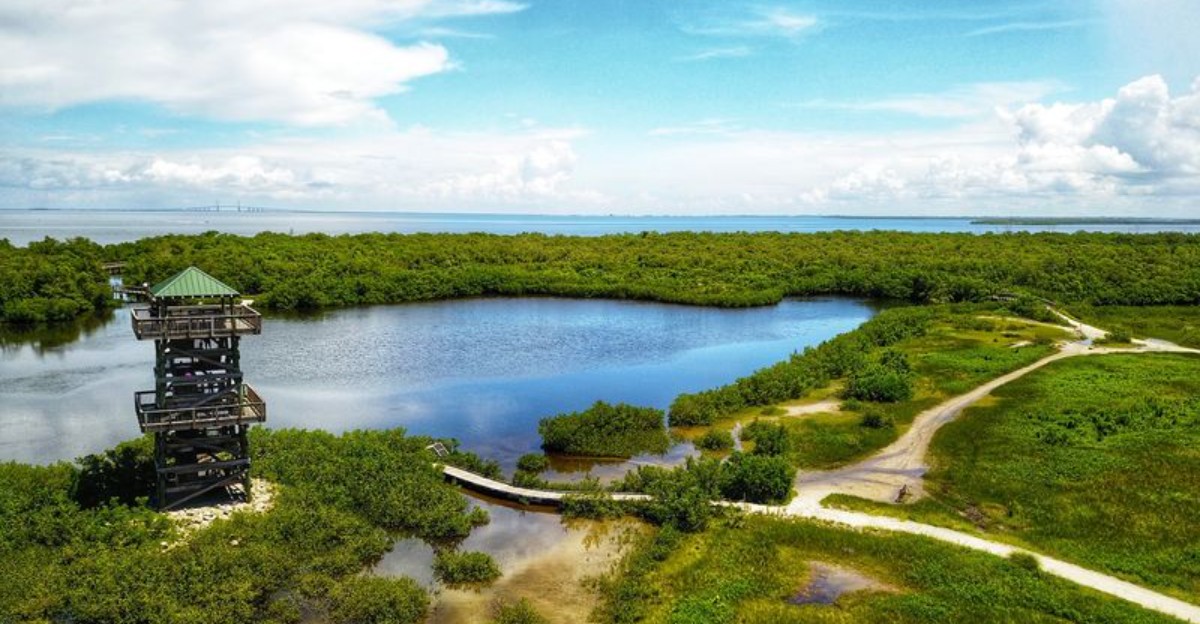
Florida’s observation towers offer some of the most stunning views in the state, yet many people drive right past them without a second thought. These elevated platforms give you a bird’s-eye perspective of marshlands, forests, coastal waters, and wildlife that you simply can’t experience from ground level. Whether you’re watching alligators glide through sawgrass prairies or scanning the horizon for dolphins in Gulf waters, these towers transform ordinary nature walks into unforgettable adventures that reveal Florida’s hidden beauty.
1. Shark Valley Observation Tower (Everglades National Park)
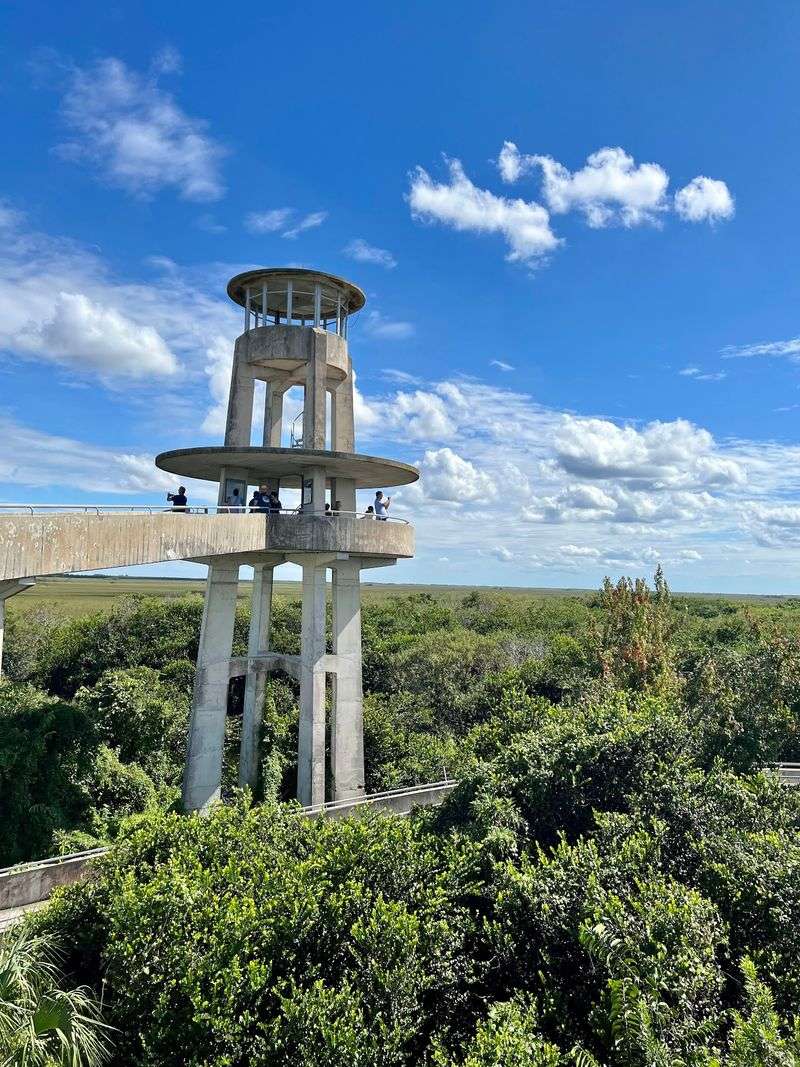
Rising 65 feet above the River of Grass, this concrete spiral tower sits at the heart of one of Florida’s most iconic landscapes. The 15-mile loop trail leading here is flat and perfect for biking, but the real payoff comes when you climb the ramp to the top. From up there, the Everglades stretches endlessly in every direction, a sea of golden sawgrass punctuated by tree islands called hammocks.
Alligators are practically guaranteed sightings along the trail, often sunning themselves right beside the path. Wading birds stalk through shallow water, while anhinga spread their wings to dry in the subtropical sun. Winter months bring cooler temperatures and lower water levels, concentrating wildlife and making viewing even better.
The tower itself was designed by architect Robert M. Little and completed in 1984. Its spiral design allows wheelchair access all the way to the observation deck.
Early morning visits offer the best light for photography and fewer crowds.
Park rangers lead tram tours that stop at the tower, providing expert commentary about the ecosystem. But cycling or walking gives you more freedom to pause whenever wildlife appears. Bring plenty of water and sunscreen because shade is scarce out here.
The experience of standing above this World Heritage Site is humbling and beautiful in equal measure.
2. Myakka Canopy Walkway Observation Tower (Sarasota)
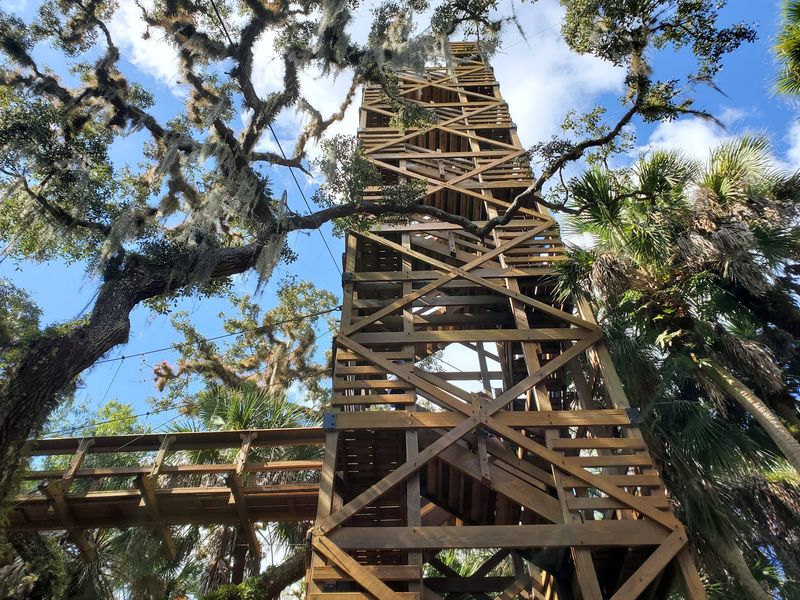
Suspended 25 feet above the forest floor, this canopy walkway gives you a squirrel’s perspective of one of Florida’s oldest state parks. The 100-foot-long bridge sways gently as you cross, connecting to a 74-foot tower that punches through the tree canopy. Once you reach the top platform, the view opens across thousands of acres of wetlands, prairies, and hammocks that define Myakka River State Park.
Oak trees draped in Spanish moss surround the walkway, creating an enchanted forest feeling. Birds flit through branches at eye level, and you might spot barred owls roosting in the daytime. The tower platform provides 360-degree views that change dramatically with the seasons.
During dry season, the lake shrinks and wildlife congregates around remaining water sources. Wet summer months transform the landscape into a lush green wonderland. Alligators cruise the river below, and if you’re patient, you might catch sight of wild turkeys or white-tailed deer moving through the understory.
The walkway has weight limits and can get crowded on weekends, so weekday mornings offer the most peaceful experience. Photographers love the golden hour light filtering through the canopy. The entire structure is accessible and well-maintained, making it suitable for most fitness levels.
This unique vantage point reveals layers of the ecosystem that ground-level hikers never witness.
3. Paynes Prairie Preserve State Park Observation Tower (Micanopy)
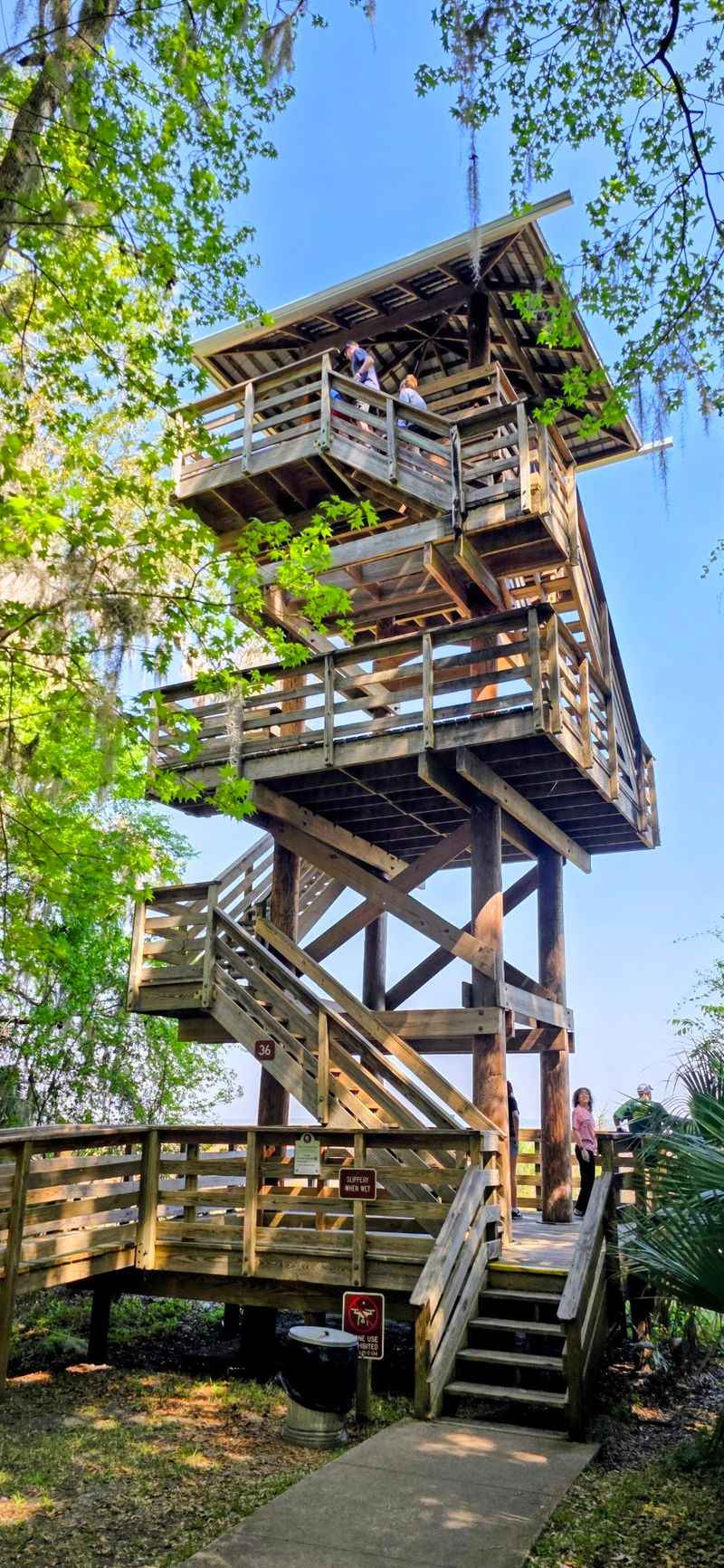
This 50-foot tower stands at the edge of a 21,000-acre savanna that once held Florida’s largest lake. Now it’s a vast prairie where wild horses and bison roam freely, creating scenes that feel more like the American West than typical Florida. The tower gives you an unobstructed view across this remarkable landscape, where you can watch herds grazing in the distance.
Alachua Sink drained the original lake in 1891, transforming the area into the prairie you see today. The tower’s height lets you appreciate the sheer scale of this ecosystem. Sandhill cranes perform their elaborate courtship dances in winter months, and dozens of bird species pass through during migration.
Bring binoculars because wildlife spotting from up here is exceptional. Alligators dot the remaining wetlands, and the bison herd numbers around 50 animals. These aren’t native to Florida historically, but they’ve become a beloved part of the preserve’s character since their introduction in 1975.
The La Chua Trail provides an alternative ground-level experience, but the tower offers context you can’t get anywhere else. Sunrise visits are magical when mist rises from the prairie and golden light washes across the grasslands. The parking area is small, so arrive early on weekends.
This view connects you to Florida’s natural history in a profound way that few other places can match.
4. Big Lagoon State Park Observation Tower (Pensacola)
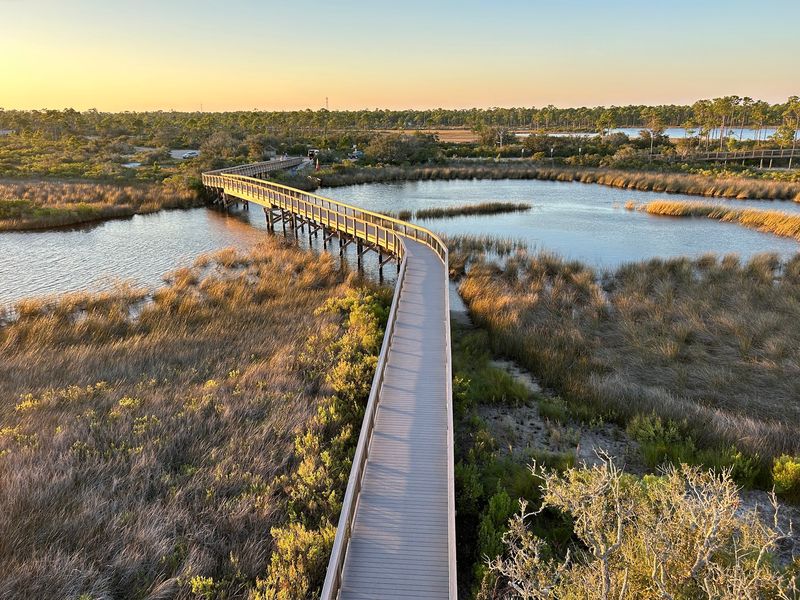
Perched on the edge of the Intracoastal Waterway, this tower gives you sweeping views of Big Lagoon’s azure waters and the barrier islands beyond. The panhandle’s coastal ecosystem looks completely different from South Florida’s, with longleaf pines and white sand beaches defining the landscape. From the tower, you can watch boats navigate the waterway while dolphins occasionally surface in the lagoon.
The water here glows with different shades of blue and green depending on depth and light conditions. On clear days, you can see all the way to the Gulf of Mexico. Ospreys nest in the area and can often be spotted diving for fish.
This park sees fewer visitors than many Florida destinations, giving it a peaceful, undiscovered quality. The tower itself is modest compared to some others, but the view is no less impressive. Salt marshes fringe the shoreline, providing crucial habitat for countless species.
Kayakers love launching from the park to explore the lagoon’s protected waters. The tower gives you a preview of potential paddling routes and helps you understand the geography. Sunset transforms the scene into a painter’s palette of oranges and purples reflecting off the water.
Beach access is nearby if you want to combine tower views with swimming. The park’s campground offers overnight stays for those who want to experience sunrise from the tower. Northwest Florida’s natural beauty shines from this elevated perspective, revealing why locals treasure this quiet corner of the state.
5. Anne Kolb Nature Center Observation Tower (Hollywood)
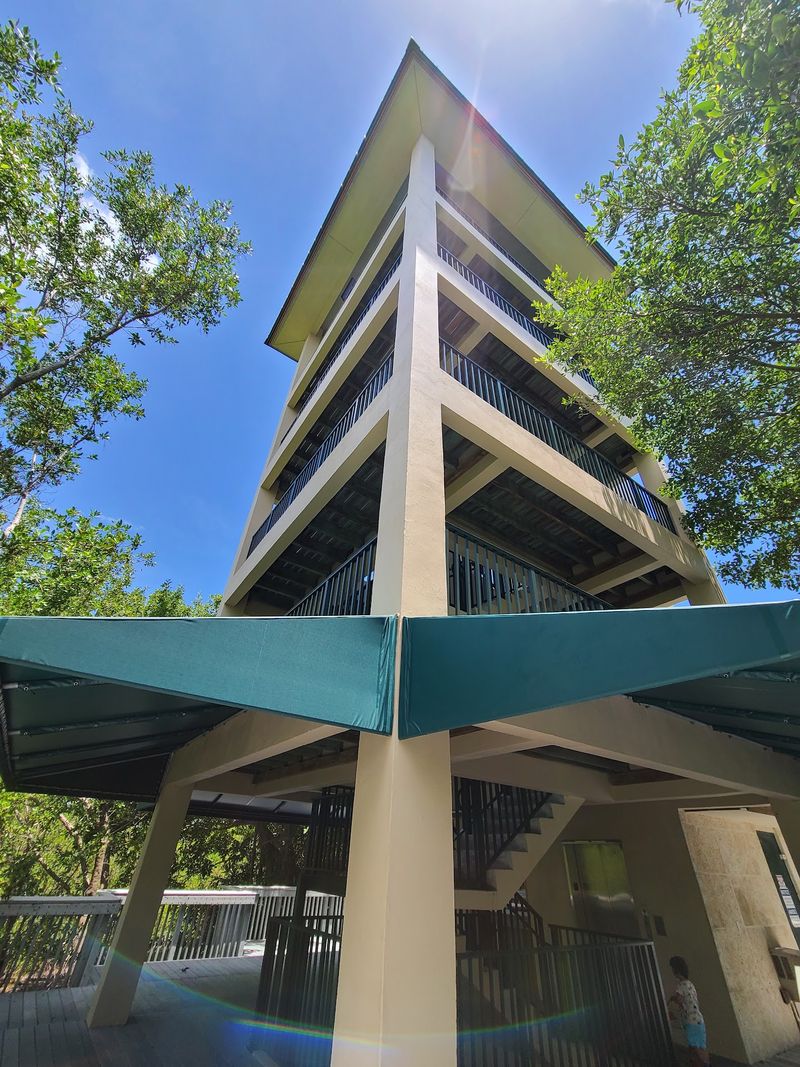
Standing 68 feet tall, this tower is the highest point in West Lake Park and offers a striking contrast between wild mangroves and Hollywood’s urban skyline. The three-story structure includes exhibits on each level before you reach the open-air observation deck. Once at the top, the Intracoastal Waterway sparkles to the east while dense mangrove forests spread in every direction.
West Lake is one of South Florida’s few remaining coastal mangrove wetlands, making this preserve critically important. The tower helps visitors appreciate the scale of this 1,500-acre ecosystem tucked between development. Manatees frequent the area, especially during winter when they seek warmer waters.
Kayak rentals are available at the park, and the tower view helps you plan your route through the mangrove tunnels below. Roseate spoonbills, wood storks, and other wading birds feed in the shallows. The nature center itself features aquariums and interactive displays that enhance your understanding of what you’re seeing from above.
Because it’s so close to Fort Lauderdale and Miami, this tower provides an accessible escape without driving hours into wilderness. The paved trail to the tower is stroller and wheelchair friendly. Air conditioning in the lower levels offers relief from summer heat.
Guided walks and kayak tours depart regularly, led by knowledgeable naturalists who share insights about the ecosystem. The juxtaposition of nature and city creates a unique perspective on South Florida’s environmental challenges and conservation successes.
6. Weedon Island Preserve Observation Tower (St. Petersburg)
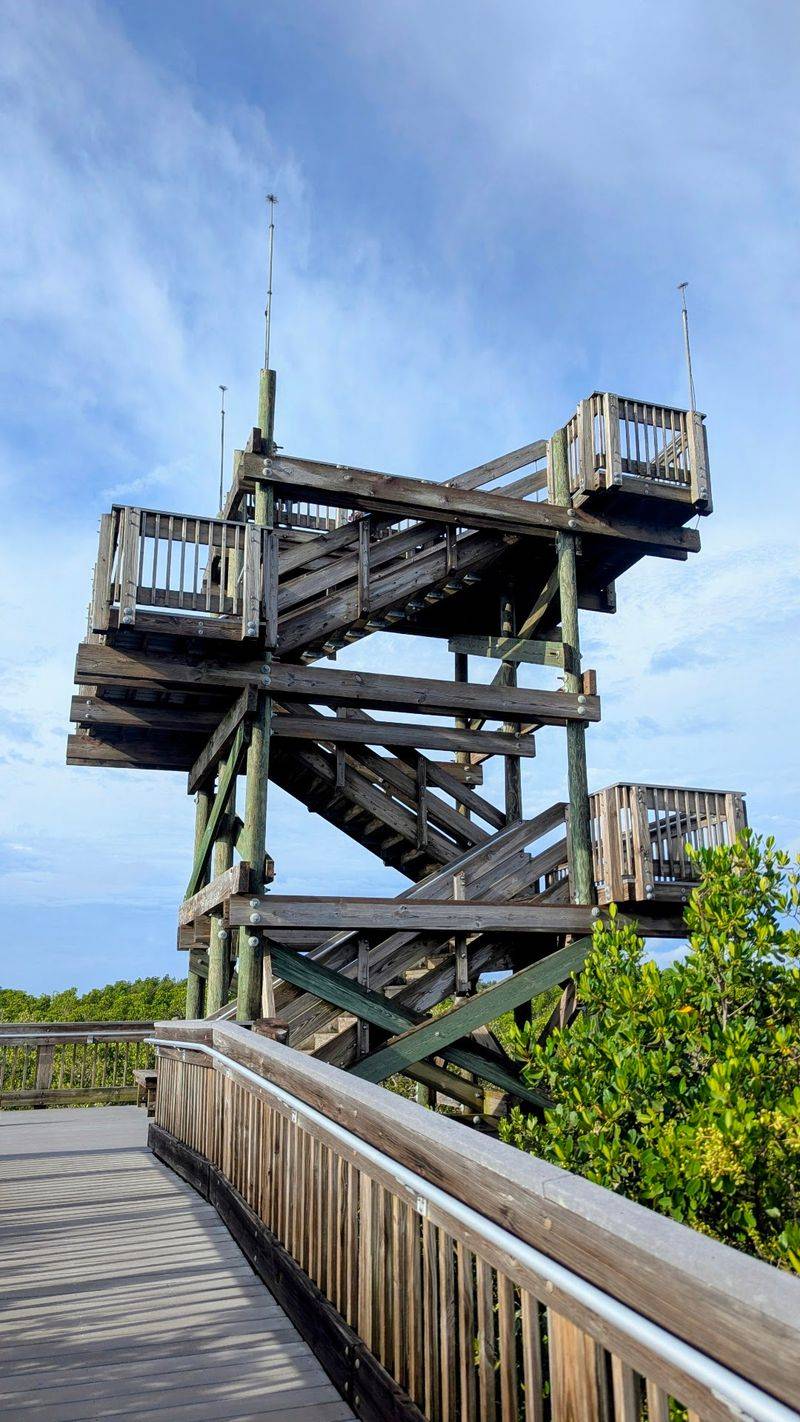
This tower rises above 3,190 acres of mangrove forest and tidal flats on Tampa Bay’s eastern shore. The preserve protects archaeological sites dating back thousands of years, and the tower provides perspective on both natural and human history. From the top, Tampa Bay’s waters stretch toward the horizon, with boat traffic and marine life creating constant movement.
The preserve’s boardwalk system winds through mangroves before reaching the tower, giving you an intimate look at this crucial coastal habitat. Fiddler crabs scuttle across mud flats at low tide, while herons stalk through shallow water hunting for fish. The tower’s elevation reveals patterns in the landscape that ground-level visitors miss entirely.
St. Petersburg’s urban development surrounds the preserve, making this protected area even more valuable. Dolphins are common sightings in the bay, and manatees visit seasonally. The Cultural and Natural History Center on site provides context about the Weedon Island culture that thrived here between 500 and 1500 AD.
Kayakers launch from the preserve to explore Tampa Bay’s coastline and smaller islands. The tower helps you understand navigation routes and tidal patterns. Sunrise and sunset visits are particularly beautiful when light plays across the water.
The preserve offers free admission, making it an accessible destination for locals and visitors alike. Educational programs run throughout the year, including guided hikes and kayak tours. This combination of archaeological significance and natural beauty creates a layered experience that rewards repeat visits.
7. Robinson Preserve Observation Tower (Bradenton)
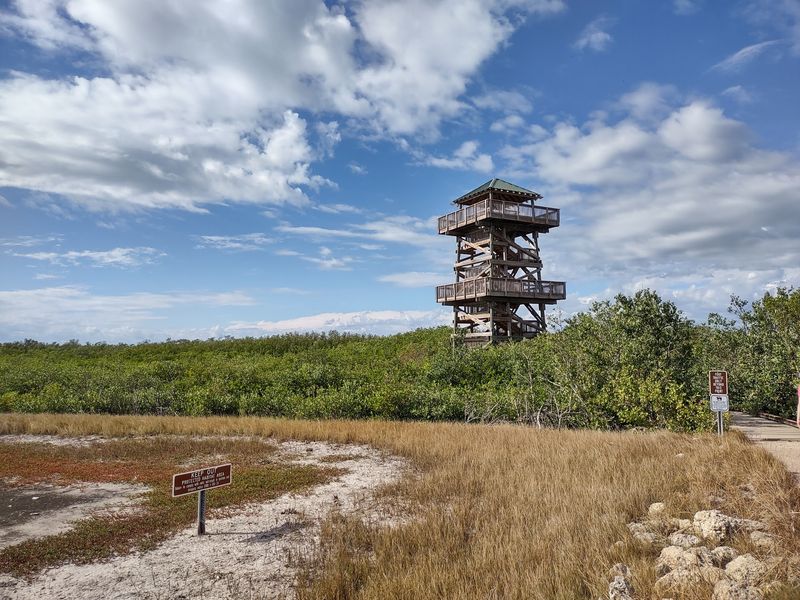
At 682 acres, Robinson Preserve represents one of Florida’s most successful environmental restoration projects. The observation tower stands as a centerpiece, offering views across restored wetlands, mangrove islands, and tidal creeks that were once a degraded industrial site. The transformation is remarkable, and the tower lets you see the full scope of what conservation efforts can achieve.
Miles of trails wind through the preserve, popular with runners, cyclists, and nature lovers. The tower provides a mental map of the trail system and helps you plan your route. Manatee Viewing Center is nearby, and during winter months, you might spot these gentle giants in the preserve’s waters too.
Roseate spoonbills have returned to the area, their pink plumage standing out against green mangroves. Ospreys nest on specially installed platforms, and the tower gives you eye-level views of their massive stick nests. The preserve’s location on Tampa Bay makes it a crucial stopover for migratory birds.
Kayak launches provide water access, and paddling through the restored tidal creeks feels like exploring untouched wilderness despite being surrounded by Bradenton’s suburbs. The tower’s design includes interpretive signs explaining the restoration process and the species that benefit from it.
Photography enthusiasts love the changing light conditions throughout the day. The preserve’s proximity to residential areas makes it heavily used but well-maintained. Early morning visits offer the best wildlife viewing before recreational users arrive.
This tower symbolizes hope for Florida’s environmental future, showing what’s possible when communities prioritize conservation.
8. Emerson Point Preserve Observation Tower (Palmetto)
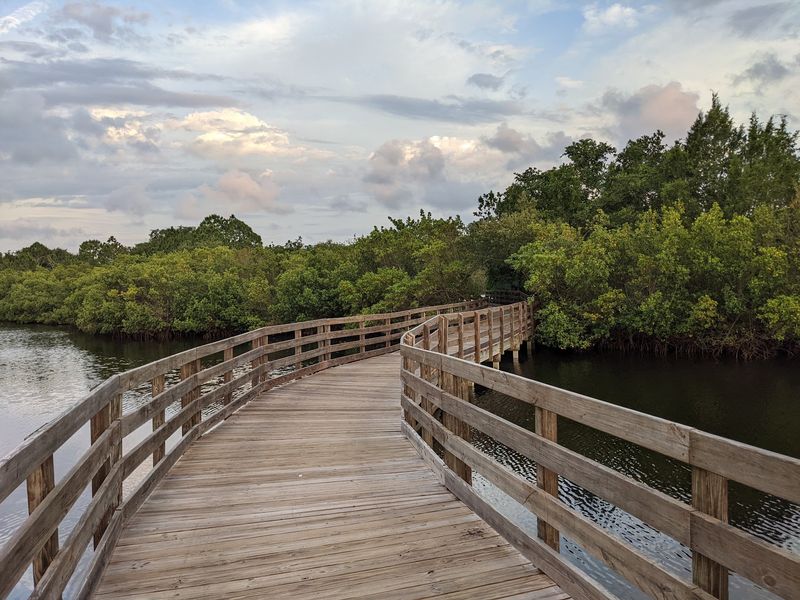
Situated at the mouth of the Manatee River where it meets Tampa Bay, this tower offers commanding views of one of Florida’s most historically significant coastal areas. The preserve contains a Timucuan Indian mound and the ruins of a Civil War fortification, adding layers of human history to the natural beauty. From the tower, you can see the Sunshine Skyway Bridge in the distance and watch sailboats navigate the bay.
The preserve’s varied habitats include mangrove swamps, coastal hammocks, and tidal flats. This diversity attracts an impressive array of wildlife. Reddish egrets perform their distinctive feeding dance in the shallows, while pelicans dive for fish offshore.
Multiple trails crisscross the preserve, and the tower helps orient you to the different ecosystems. The beach area provides a quiet alternative to crowded tourist beaches, and fossil hunters search the shoreline for shark teeth. Kayakers can launch directly into Tampa Bay or explore the protected waters near the mangroves.
The preserve’s location makes it ideal for watching both sunrise over the mainland and sunset over the bay. The tower’s height gives you unobstructed views in all directions. Interpretive signs explain the area’s significance to indigenous peoples and its role in Florida’s development.
Because it’s slightly off the beaten path, Emerson Point sees lighter visitation than some other Tampa Bay preserves. This makes it perfect for those seeking solitude and authentic nature experiences. The combination of cultural history and pristine habitat creates a uniquely enriching visit that educates while it inspires.
9. Boca Ciega Millennium Park Observation Tower (Seminole)
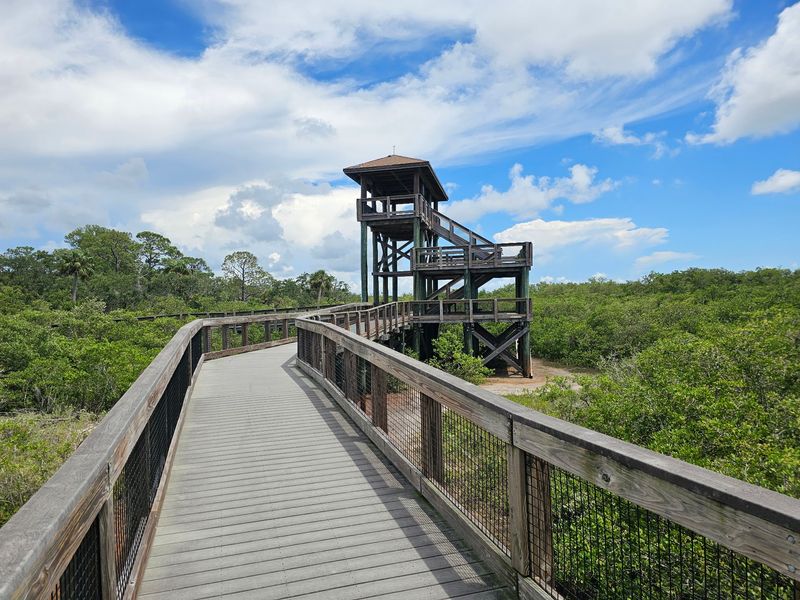
This tower provides panoramic views of Boca Ciega Bay, a vital estuary system between St. Petersburg and the Gulf beaches. The 182-acre park preserves one of the last undeveloped stretches of bayfront in this heavily urbanized area. From the tower, you can watch the constant interplay between natural systems and human activity that defines modern Florida.
The bay’s shallow waters support seagrass beds that serve as nurseries for countless fish species. Dolphins patrol the deeper channels, and during winter, manatees seek refuge in warmer pockets of water. The tower gives you a privileged view of these marine mammals as they surface to breathe.
Kayakers and paddleboarders launch from the park to explore the bay’s protected waters. The tower helps you identify promising routes and understand how tides affect navigation. Birding is excellent year-round, with both resident species and seasonal migrants using the preserve.
The park includes archaeological sites from the Tocobaga people who lived here for thousands of years. Interpretive signs connect past and present, showing how this landscape has sustained life throughout history. The tower’s modern design contrasts with ancient shell mounds visible from the trail.
Seminole residents treasure this park as a green space in an otherwise developed area. The tower offers perspective on how much natural habitat has been lost and how precious remaining preserves have become. Sunset views across the bay are spectacular, with the Gulf beaches visible in the distance.
This accessible urban oasis proves that conservation and development can coexist when communities make thoughtful choices.
10. Apollo Beach Nature Preserve Observation Tower (Apollo Beach)
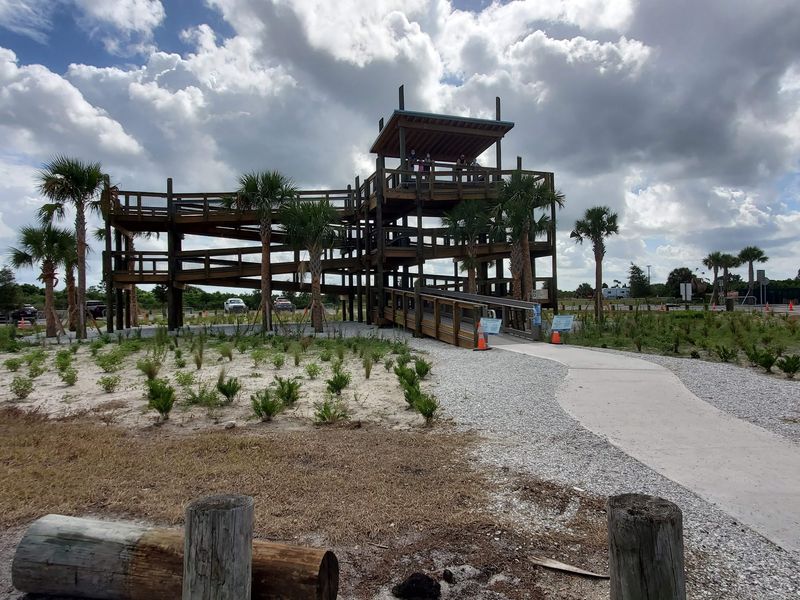
The juxtaposition here is fascinating and uniquely Florida. The observation tower overlooks pristine wetlands and Tampa Bay waters while the distinctive cooling towers of a power plant stand in the background. This unlikely pairing creates one of Florida’s most important manatee habitats because warm water discharge from the plant attracts hundreds of manatees during cold weather.
The preserve itself protects 67 acres of coastal habitat including mangrove forests, salt marshes, and upland areas. The tower provides the best vantage point for spotting manatees in the discharge canal, especially from November through March. On cold mornings, you might see dozens of these marine mammals clustered in the warm water.
Beyond manatees, the preserve attracts impressive bird diversity. Roseate spoonbills, white pelicans, and various herons feed in the shallows. The tower helps you scan large areas for wildlife that would be invisible from ground level.
Dolphins also frequent the bay waters visible from the platform.
A boardwalk and observation deck at the manatee viewing area complement the tower, offering different perspectives on the same ecosystem. The preserve’s trails wind through coastal hammocks where gopher tortoises dig their burrows. This combination of viewing opportunities makes it a favorite for families and photographers.
The preserve operates as a partnership between Tampa Electric and environmental groups, demonstrating how industry and conservation can work together. Free admission and ample parking make it accessible to everyone. The tower experience here is enhanced by the unusual setting and the almost guaranteed manatee sightings during winter months.
11. Wellington Environmental Preserve Observation Tower (Wellington)
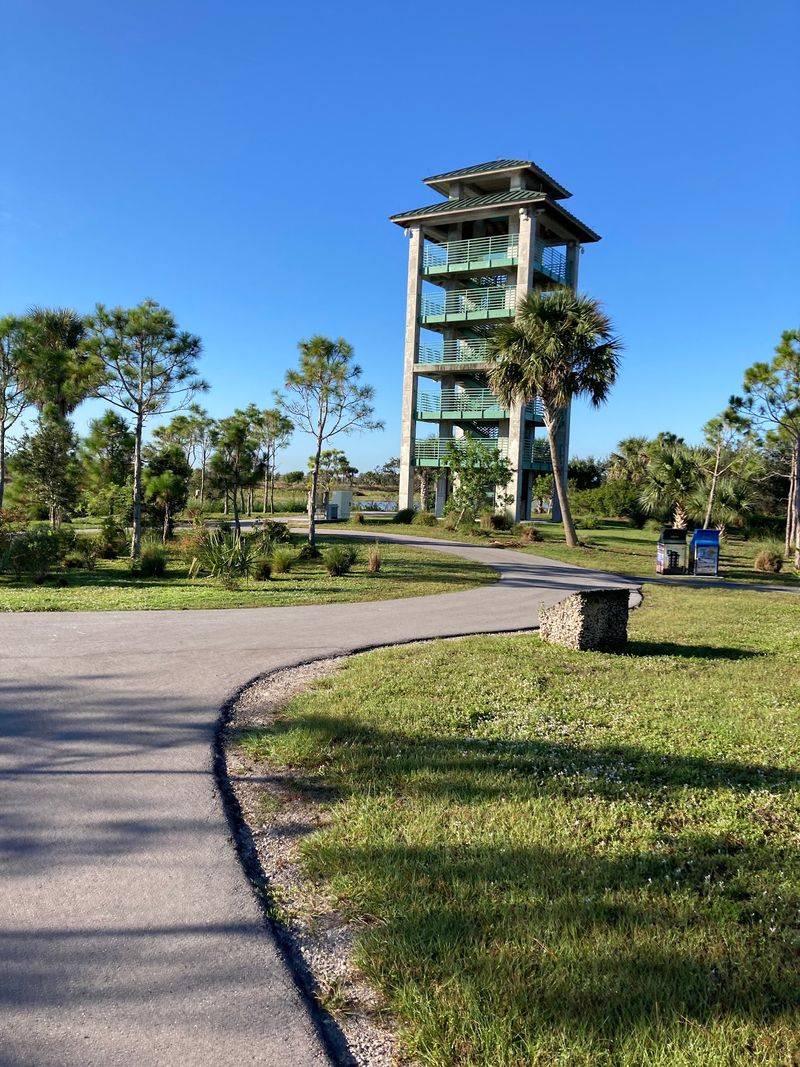
Tucked into suburban Palm Beach County, this 365-acre preserve protects remnant wetlands that once covered much of South Florida. The observation tower rises above sawgrass marshes and cypress strands, offering views across a landscape that has largely disappeared under development. From up here, you can imagine what the region looked like before drainage and urbanization transformed it.
The preserve includes 4.5 miles of trails that wind through different habitat types. The tower helps you understand how these ecosystems connect and support each other. Alligators are common residents, and the elevated view lets you spot them basking along canal banks or gliding through open water.
Wellington’s equestrian culture is famous, but this preserve offers a completely different side of the community. Wading birds including wood storks and white ibis feed in the marshes. During migration, the preserve becomes a stopover for neotropical songbirds traveling between North and South America.
The tower’s design includes covered areas that provide shade, making it comfortable even during hot summer months. Interpretive signs explain the Everglades ecosystem and the importance of preserving these wetland remnants. Photographers appreciate the unobstructed views and changing light throughout the day.
Because it’s surrounded by development, the preserve serves as a crucial wildlife corridor and water filtration system. The tower experience reminds visitors what’s been lost and what’s worth protecting. Sunrise visits are particularly beautiful when mist rises from the marsh and birds begin their morning routines.
This urban preserve proves that even small protected areas can make a significant difference for wildlife and people alike.
12. Doris Leeper Spruce Creek Preserve Observation Tower (Port Orange)
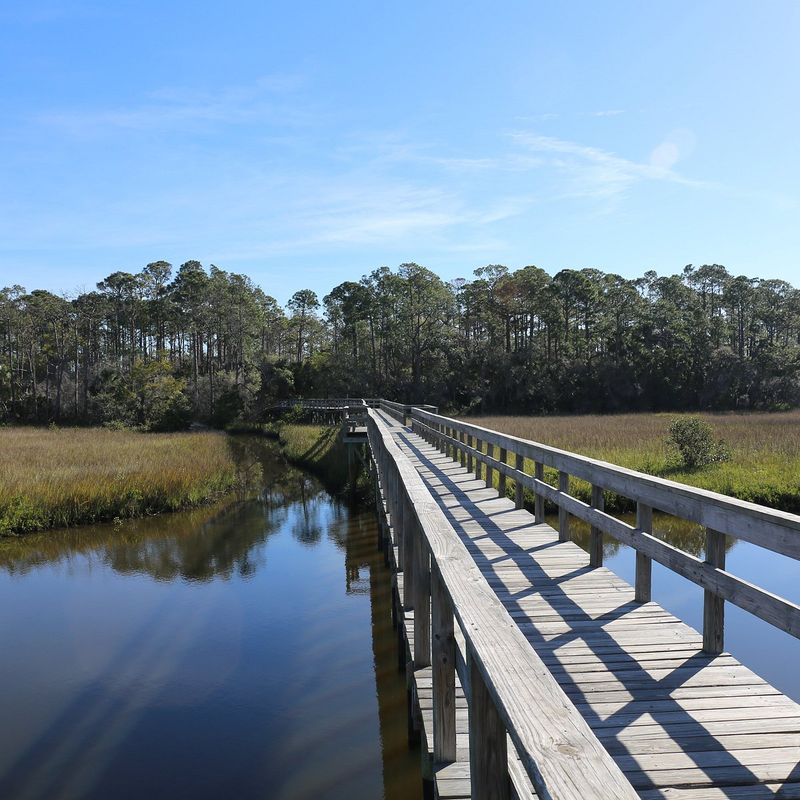
This 1,580-acre preserve protects the Spruce Creek watershed, one of Central Florida’s most pristine estuaries. The observation tower provides sweeping views across tidal creeks, salt marshes, and coastal hammocks that support incredible biodiversity. From this vantage point, you can watch the tide’s influence on the landscape as water rises and falls through the creek system.
Named after environmental artist and activist Doris Leeper, the preserve represents decades of conservation effort. The tower stands as a testament to her vision and the community’s commitment to protecting natural areas. Multiple hiking trails total over seven miles, and the tower helps you navigate the extensive trail system.
Spruce Creek flows into the Halifax River, creating brackish conditions that support unique plant and animal communities. Manatees travel up the creek, and dolphins sometimes follow fish into the estuary. The preserve’s location on the Atlantic Flyway makes it exceptional for bird watching during spring and fall migrations.
Archaeological evidence shows human occupation dating back thousands of years, and shell middens dot the landscape. The tower gives perspective on how indigenous peoples might have used this waterway for transportation and resources. Today’s visitors can kayak the same routes, experiencing the creek from water level before climbing the tower for aerial views.
Port Orange residents value this preserve as a natural retreat close to home. The tower offers educational opportunities for school groups and families learning about coastal ecosystems. Sunset views across the marshes paint the landscape in gold and purple hues that photographers dream about capturing.
13. Indrio Savannahs Preserve Observation Tower (Fort Pierce)
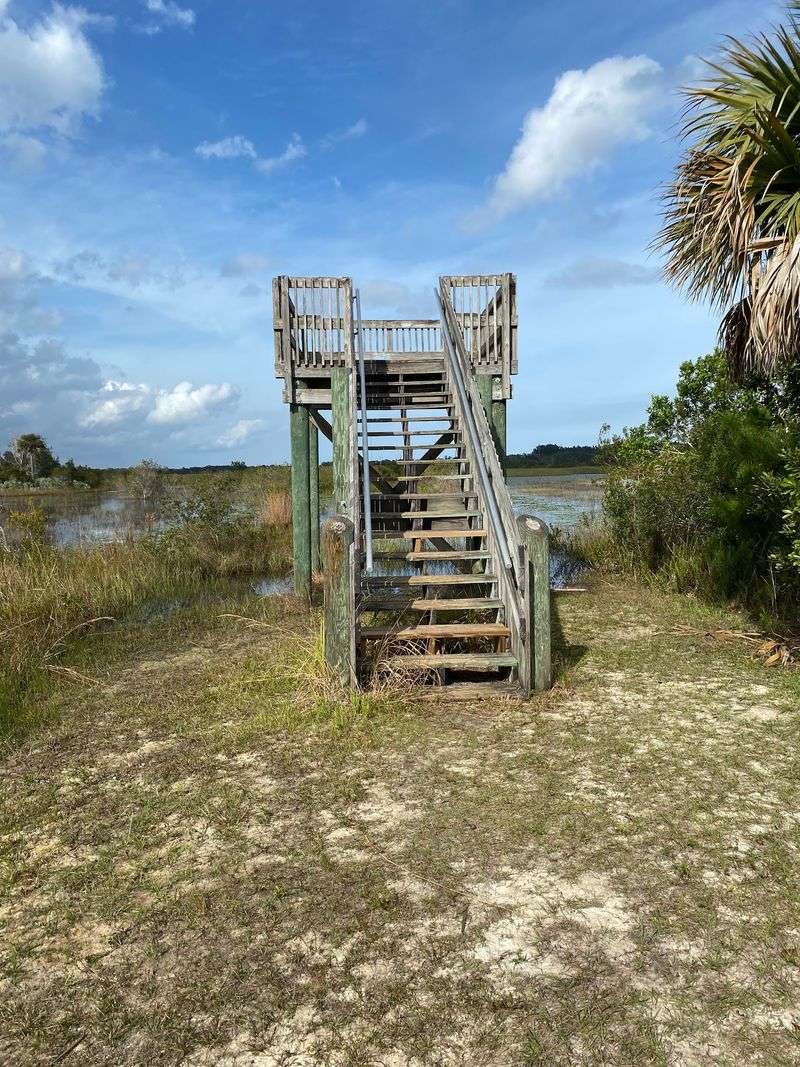
This preserve protects a rare ecosystem type that once covered thousands of acres along Florida’s east coast. The observation tower overlooks wet prairies dotted with slash pines and saw palmettos, a landscape that looks distinctly different from typical Florida scenery. From the top, the flat expanse stretches toward the horizon, interrupted only by scattered trees and seasonal wetlands.
The 1,100-acre preserve serves as a crucial buffer protecting water quality in the Indian River Lagoon. The tower helps visitors understand the connection between upland habitats and coastal waters. During wet season, water covers much of the savannah, creating shallow marshes that attract wading birds and waterfowl.
Gopher tortoises thrive here, their burrows visible from the tower as they dot the sandy soils. These burrows provide shelter for over 350 other species, making the tortoise a keystone species. Eastern indigo snakes, Florida’s longest native snake, also inhabit the preserve though spotting one requires luck.
The preserve’s trails are mostly flat and sandy, perfect for hiking and nature observation. The tower provides a reference point for navigation and helps you spot distant wildlife. Sandhill cranes nest in the area, and their bugling calls echo across the savannah.
Fort Pierce residents appreciate this preserve as an example of Old Florida that predates development. The tower experience is especially dramatic during wildflower season when the prairie blooms with color. Summer thunderstorms create spectacular cloud formations visible for miles from the elevated platform.
This preserve shows that Florida’s diversity extends far beyond beaches and swamps, encompassing rare ecosystems that deserve protection and appreciation.