8 Florida Boardwalks That Take You Through Swamps Without Ever Touching The Water
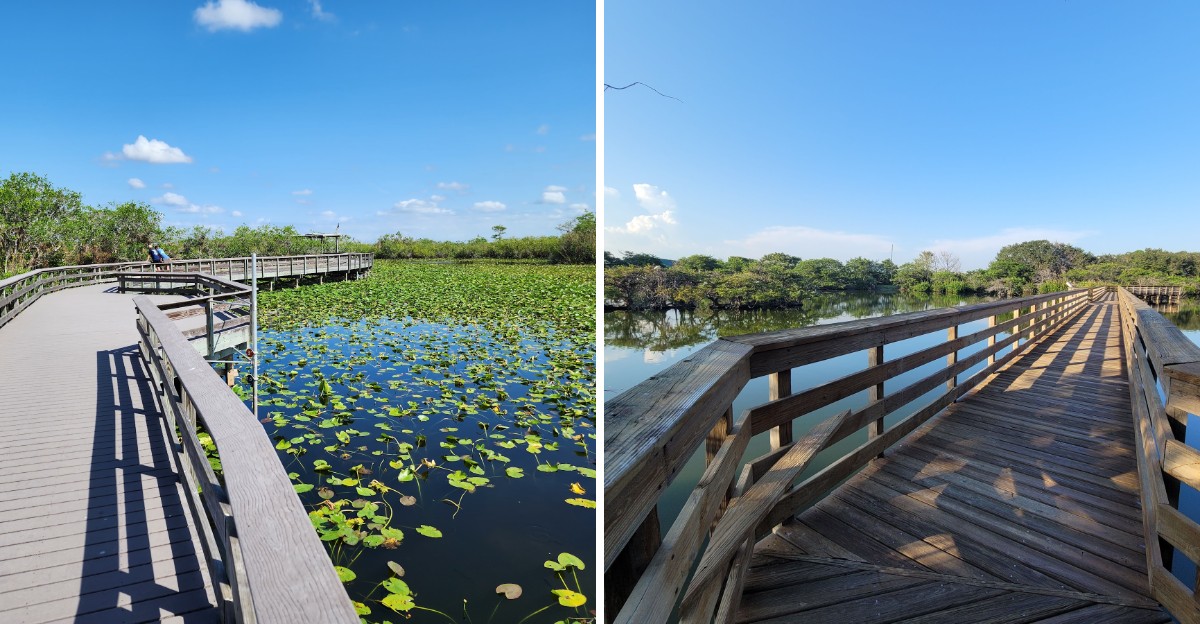
Some of the bald cypress trees along one Florida boardwalk are more than 500 years old. They were already growing before anyone had heard of Disney or orange juice. And you can stroll right past them in regular sneakers.
That’s the magic of a good swamp boardwalk. Alligators doze below you, wading birds stalk fish, and ferns grow on tree trunks. Meanwhile, your socks stay perfectly dry.
I love that these wooden paths make wild places feel so easy to reach. You don’t need a canoe, a guide, or tall rubber boots. You just need comfy shoes, a little patience, and maybe some bug spray.
The swamp also turns out to be way more beautiful than its reputation. Think shady trails, quiet water, and surprise wildlife sightings around nearly any bend. So which boardwalk will you try first?
1. Corkscrew Swamp Sanctuary
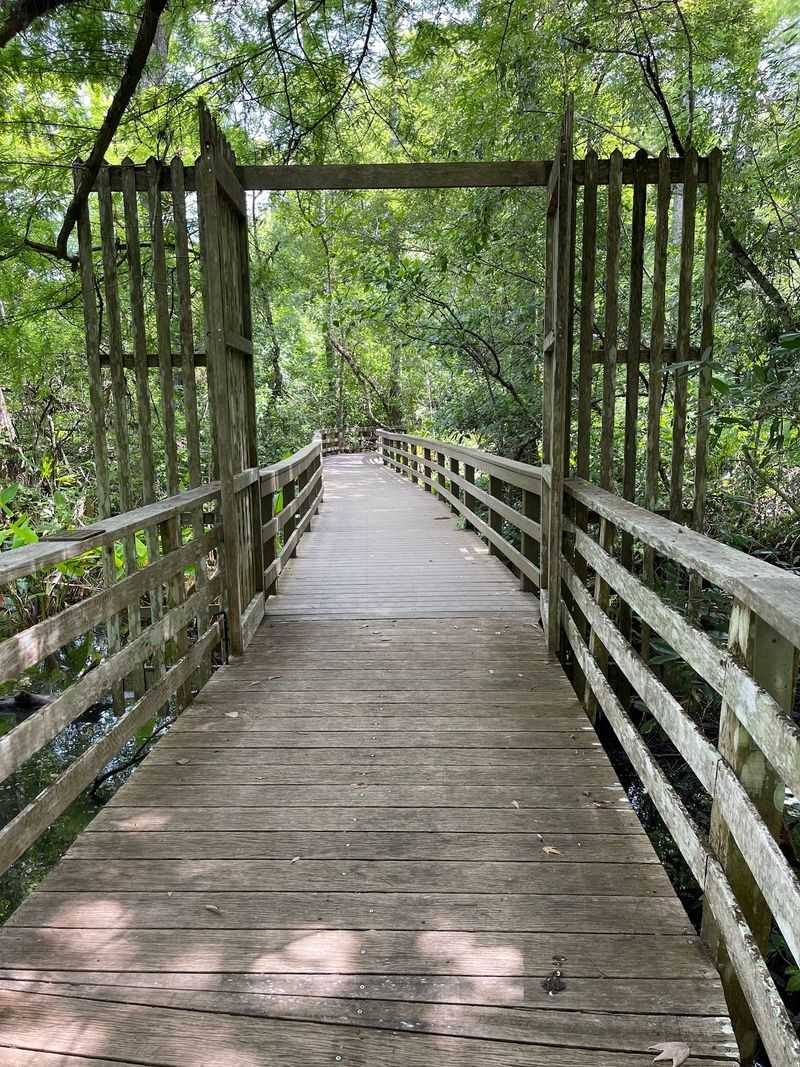
Walking among trees older than the United States is a pretty great way to spend a morning. Audubon Florida protects this sanctuary, which holds the largest old-growth bald cypress forest in North America.
The boardwalk loops for about 2.25 miles through several habitats. You pass pine flatwoods, wet prairie, a marsh, and the giant cypress forest itself.
Some of those cypress trees are more than 500 years old. Craning your neck to see their tops is basically required.
Wildlife shows up in many shapes here. Look for wading birds, turtles, alligators, and colorful songbirds moving through the branches.
The sanctuary is also known for its rare plants, including orchids. Bring binoculars so you can spot small details high in the trees.
Benches and shelters along the way give you spots to rest. That helps a lot on a humid Florida afternoon.
Plan to go slowly instead of racing to the end. The best moments often happen when you stop, stay quiet, and simply watch the water.
There’s a visitor center near the entrance with exhibits about the swamp. It’s a smart first stop before you head out.
Check the sanctuary’s hours before you visit, since they can change. Then pack water, a hat, and plenty of curiosity.
Address: 375 Sanctuary Rd W, Naples, FL 34120
2. Anhinga Trail
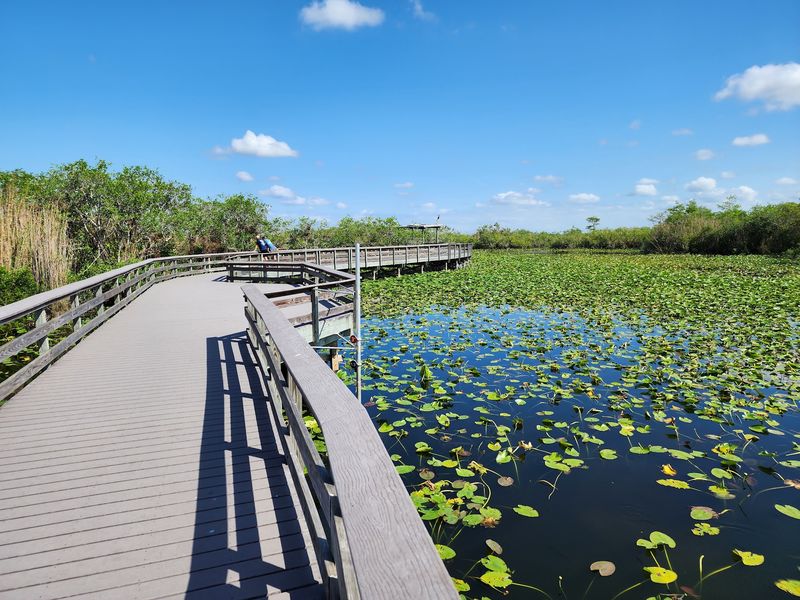
Alligators get top billing here, but a strange bird gets the name. The anhinga swims underwater to spear fish, then perches with its wings spread out to dry.
This famous trail sits near the Royal Palm area of Everglades National Park. It’s a short path of about 0.8 mile round trip, with paved sections and a boardwalk over the marsh.
Because the trail is short and flat, it works well for beginners. Little kids and grandparents can usually handle it without trouble.
Wildlife viewing can be excellent, especially in the dry season. During those months, animals often gather near the remaining water.
You might spot herons, egrets, turtles, and fish. Gators often float or bask close to the trail, so keep a respectful distance.
Bring a camera with a decent zoom. Those birds pose like models, but they won’t wait forever.
Remember that this is a national park, and an entrance fee applies. Rangers sometimes lead programs nearby, so check the schedule ahead of time.
Mosquitoes can be intense, especially in the wet season. Long sleeves and repellent will make your walk much happier.
Pair this stroll with the nearby Gumbo Limbo Trail for a shady change of scenery. Two very different trails, one easy stop.
Address: 40001 State Road 9336, Homestead, FL 33034
3. Fakahatchee Strand Preserve State Park
Ghost orchids made this swamp famous, and they’re as mysterious as their name suggests. The rare flower grows here in the wild, deep in the strand.
Fakahatchee Strand is a long, narrow swamp forest in southwest Florida. Many people call it the Amazon of North America because of its rich plant life.
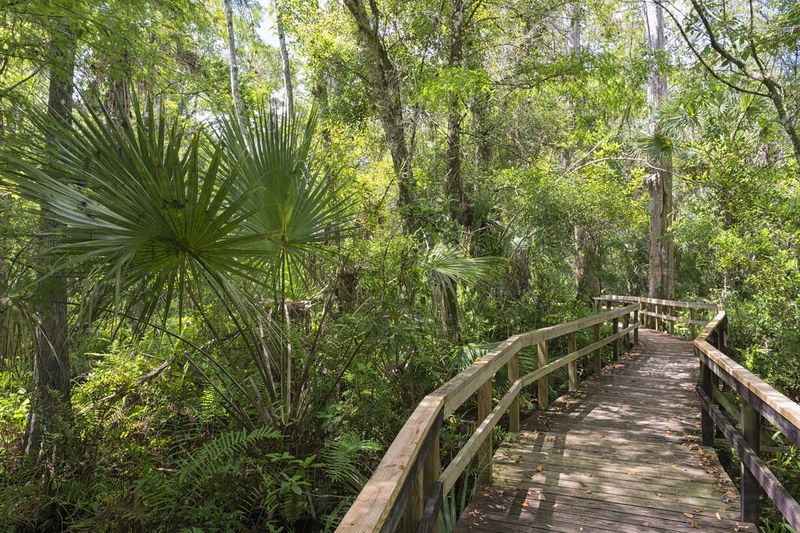
The easiest way to enjoy it is the Big Cypress Bend Boardwalk along the Tamiami Trail. The path leads you into an old-growth cypress area and ends near a pond.
Look up as you walk. Air plants, ferns, and bromeliads cling to branches like tiny hanging gardens.
The preserve also has native royal palms growing among the cypress. That combo looks almost unreal.
Keep your expectations honest about ghost orchids, though. They’re rare, hard to spot, and protected, so enjoy any sighting from the boardwalk.
Wildlife here can include wading birds, alligators, and plenty of insects. Move quietly, and the swamp may show you more.
The boardwalk sits away from the main park office, so map it before you leave. Cell service can be spotty in this area.
Bring water and snacks, since services are limited nearby. A quiet wild walk is worth a little planning.
Address: 137 Coastline Dr, Copeland, FL 34137
4. Six Mile Cypress Slough Preserve
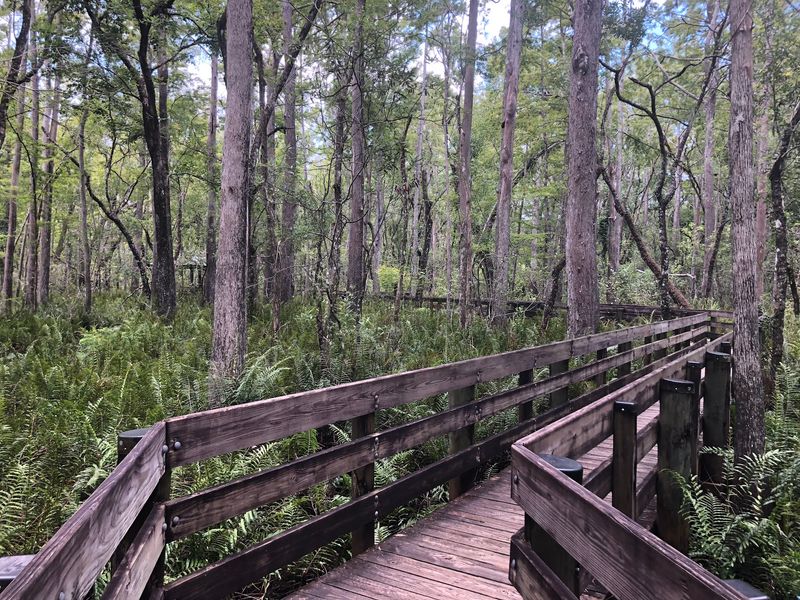
A slough sounds like a sneeze, but it’s actually a slow-moving strip of wetland. This one stretches for miles through Lee County and acts like a natural drain during rainy months.
The preserve’s boardwalk follows a 1.2-mile loop through the wetland and shady cypress forest, with observation decks and resting spots along the way.
Along the route, you’ll find observation spots near ponds. Those are great places to pause and scan for wildlife.
Visitors may see turtles, wading birds, alligators, and otters. Sightings change with the seasons and water levels.
The wet season brings deeper water and lush green scenery. The dry season can concentrate animals near the ponds.
An interpretive center sits near the start of the trail. Inside, you can learn about how the slough works and what lives there.
Volunteers often lead guided walks, which are perfect for first-timers. Check the preserve’s calendar before you go.
The boardwalk makes this place a breeze for families. Strollers and wheelchairs can usually manage the route.
Bring a notebook if you have young naturalists along. Turning it into a scavenger hunt keeps eyes busy and voices quieter.
Plan for a parking fee at this Lee County preserve. Then take your time, because rushing a slough misses the point.
Address: 7791 Penzance Blvd, Fort Myers, FL 33966
5. Highlands Hammock State Park
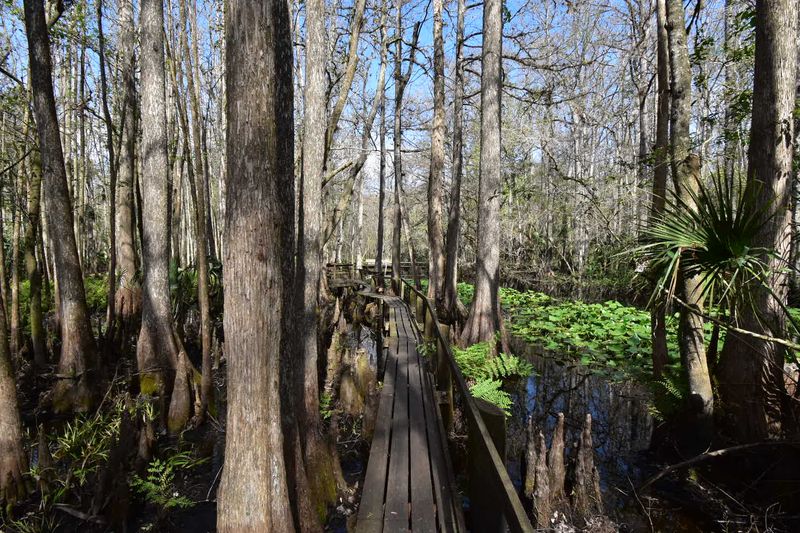
Cypress knees poke out of the water here like a crowd of curious gnomes. They’re part of the tree roots, and they make this swamp look wonderfully odd.
Highlands Hammock is one of Florida’s oldest state parks. It protects old-growth hammock forest along with swampy cypress areas.
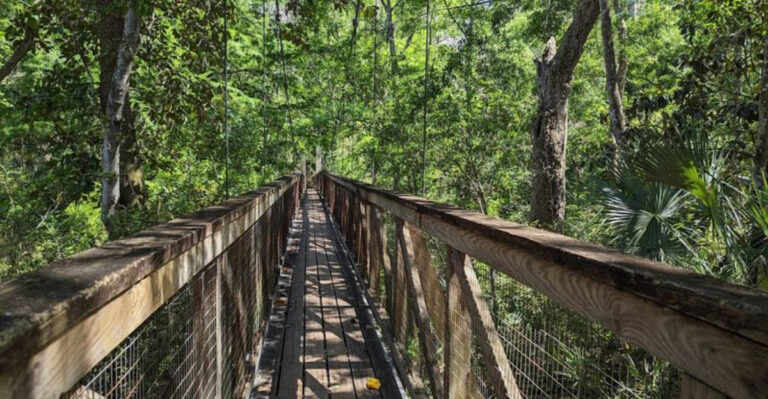
The Cypress Swamp Trail is the star for boardwalk fans. A wooden catwalk winds over dark water and through the trees.
Watch the water closely as you go. Alligators, turtles, and wading birds sometimes appear along the route.
The park also has many other short trails worth exploring. Some lead through tall oaks, while others pass huge old trees.
You can rent bikes or ride your own along the scenic loop drive. It’s an easy way to link several trailheads together.
The park’s regular family campground is temporarily closed for renovations, with camping currently limited to organized youth groups. Check the park’s website for reopening updates before planning an overnight stay.
Inside the park, a museum shares the history of the Civilian Conservation Corps. Those workers helped build much of the park’s early setup.
Bring bug spray, since swamps and mosquitoes are close friends. A light jacket can help on cooler winter mornings too.
Address: 5931 Hammock Rd, Sebring, FL 33872
6. Arthur R. Marshall Loxahatchee National Wildlife Refuge
Just west of busy suburban streets sits a slice of the northern Everglades. The change happens fast, and that’s what makes it so fun.
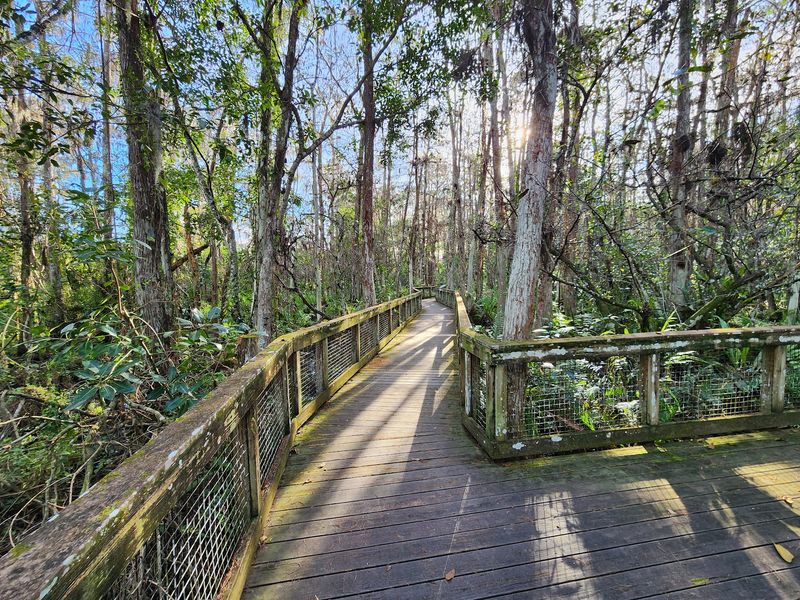
This national wildlife refuge protects a large area of wetlands. Its Cypress Swamp Boardwalk is a short loop near the visitor center.
The boardwalk is about 0.4 mile long. That makes it great when you want swamp time without a big hike.
Tall cypress trees shade the path, which helps on hot days. Ferns and air plants add pops of green everywhere you look.
Nearby, the Marsh Trail offers a totally different view. It follows levees around open wetland pools, where birds often gather.
Birdwatchers love this refuge, and it’s easy to see why. You may spot herons, ibises, ducks in winter, and maybe a snail kite.
Gators also live here, so stay on the trails and keep your distance. Never feed wildlife, no matter how hungry they look.
The visitor center has exhibits about the Everglades and refuge wildlife. Stop in before you head outside.
An entrance fee applies, so plan for that. Morning visits often bring cooler temps and more active birds.
Address: 10216 Lee Rd, Boynton Beach, FL 33473
7. Wakodahatchee Wetlands
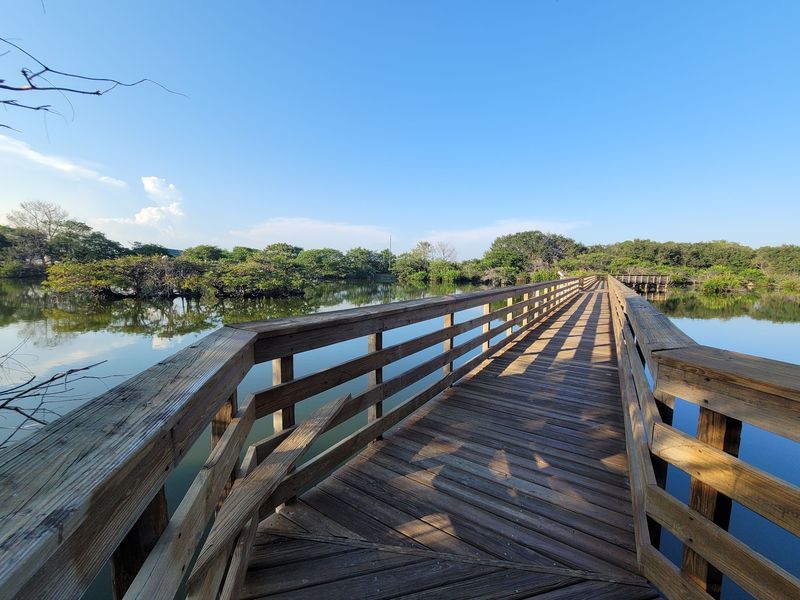
Treated water from a nearby utility plant helped create one of the best bird spots in Palm Beach County. Yes, really, and the birds don’t seem to mind one bit.
Palm Beach County built these wetlands to filter highly treated water naturally. The result is a set of ponds and islands full of life.
A boardwalk of about 0.75 mile loops over the water. It’s flat, easy, and packed with viewing spots.
Nesting season can be a real show here. Wood storks, herons, egrets, and other birds may build nests close to the boardwalk.
Keep your camera ready but stay respectful. Nesting birds need space, even when they seem calm.
You may also see turtles, alligators, and iguanas. Florida likes to keep things interesting.
Gazebos along the route offer shade and a place to rest. Interpretive signs explain how the wetlands clean water.
The best part is how easy it feels to visit. Admission is free, and the loop takes about an hour at a slow pace.
Arrive early if you can, since the parking lot can fill up. Early light also makes bird photos look much sharper.
Address: 13270 Jog Rd, Delray Beach, FL 33446
8. Lettuce Lake Park
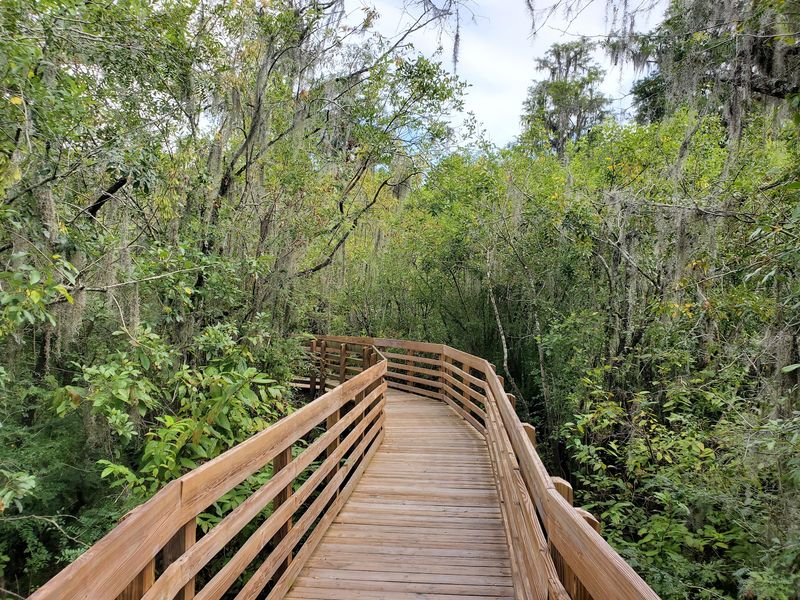
Tampa hides a cypress swamp right off a busy road near the university. It feels surprising, which is exactly why people love it.
Lettuce Lake Park sits along the Hillsborough River. Its boardwalk winds through a cypress swamp and hardwood forest.
The park’s observation tower is currently closed for reconstruction, but the boardwalk is open again, offering views of the cypress swamp and Hillsborough River from ground level.
Wildlife sightings here can include alligators, turtles, and many wading birds. Keep scanning the water and the tree branches.
The park gets its name from water lettuce, a floating plant. It’s not a salad, so please leave it alone.
Beyond the boardwalk, you’ll find a paved trail loop. It’s popular with walkers, joggers, and families on bikes.
Picnic shelters and playgrounds make this a solid family stop. You could easily spend a lazy afternoon here.
Canoe and kayak access also brings paddlers out on the river. Still, the boardwalk lets you enjoy the swamp without getting wet.
A small parking fee applies at this Hillsborough County park. Bring sunscreen for the open trail and bug spray for the shady parts.
It’s a fun way to end your Florida swamp tour close to the city. Gators below, skyline nearby, dry shoes guaranteed.
Address: 6920 E Fletcher Ave, Tampa, FL 33637