Long Before Disney, These 10 Florida Destinations Were Creating Their Own Magic
Florida’s enchantment didn’t start with a mouse. Long before theme parks and roller coasters transformed Central Florida into an entertainment capital, the Sunshine State was already casting spells on visitors with natural wonders, architectural marvels, and quirky attractions.
From ancient Spanish streets to mysterious castles built by hand, these historic destinations have been creating unforgettable memories for generations, proving that Florida’s real magic has always been homegrown.
1. St. George Street – St. Augustine
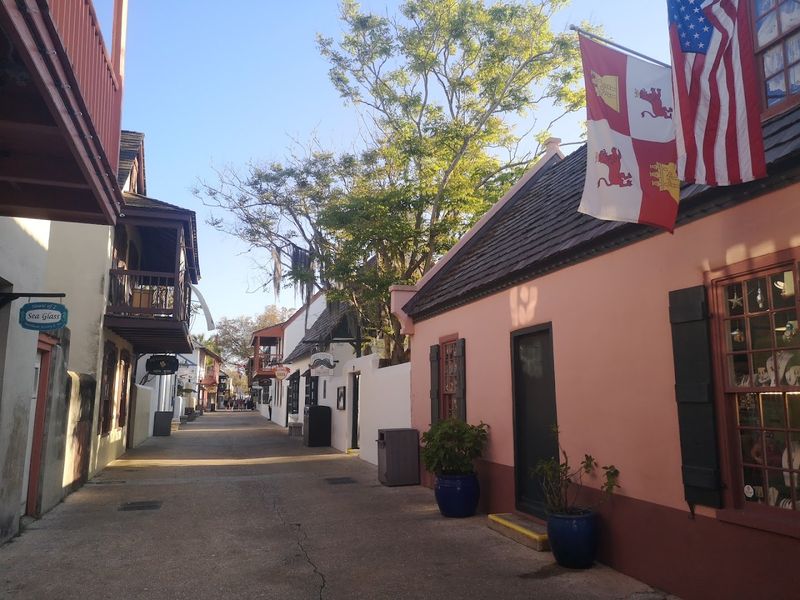
Walking down this pedestrian-only street feels like stepping into a time machine set for the 1700s. Cobblestones beneath your feet have been worn smooth by centuries of footsteps, and the buildings around you whisper stories from when Florida belonged to Spain.
St. George Street runs through the heart of America’s oldest continuously occupied European settlement, and every corner reveals another layer of history.
Street performers juggle and play music while visitors browse through shops selling everything from handmade leather goods to old-fashioned candy. The smell of fresh empanadas drifts from family-owned restaurants that have been serving the same recipes for decades.
You can watch blacksmiths hammer hot iron just like colonial craftsmen did, or step into museums housed in buildings that actually date back to Spanish rule.
What makes this street truly special isn’t just its age—it’s how alive it feels. Unlike many historic sites that feel frozen behind velvet ropes, St. George Street buzzes with energy.
Kids chase pigeons near the old city gates while their parents sip Cuban coffee at outdoor cafes. Local artists set up easels to capture the architecture in watercolors.
The street connects major landmarks like the Castillo de San Marcos and the Colonial Quarter, making it the perfect starting point for exploring St. Augustine. Whether you’re hunting for unique souvenirs, craving authentic Spanish cuisine, or simply soaking in atmosphere that predates the American Revolution, this magical mile delivers history you can actually touch and taste.
2. Bok Tower Gardens – Lake Wales
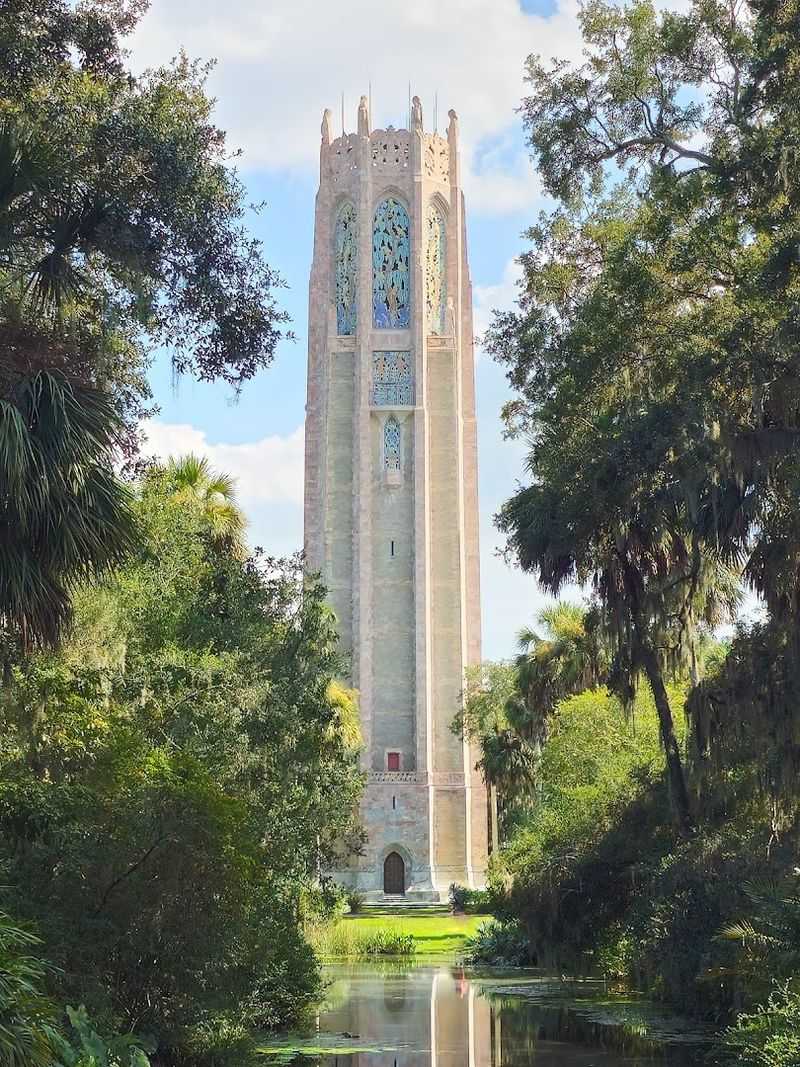
Perched atop Iron Mountain—one of Florida’s highest points—sits a singing tower that seems plucked from a European fairy tale. The 205-foot carillon rises above subtropical gardens like a pink and gray sentinel, its bells chiming melodies across the landscape since 1929.
Edward Bok, a Dutch immigrant who became a successful magazine publisher, created this sanctuary as a thank-you gift to his adopted country.
The tower itself is an architectural wonder, covered in sculptured Florida wildlife and plants carved into Georgia marble and coquina stone. But what truly sets it apart are the 60 bronze bells housed inside, ranging from 16 pounds to nearly 12 tons.
A live carillonneur plays concerts daily, and the music floating through the gardens creates an otherworldly atmosphere you won’t find anywhere else in Florida.
Beyond the tower, 250 acres of gardens showcase native plants, ferns, palms, and oaks draped in Spanish moss. Winding pathways lead to hidden groves and peaceful spots perfect for reflection.
The gardens represent old Florida at its finest—no thrill rides or cartoon characters, just natural beauty carefully preserved.
Families spread blankets for picnics while the bells play overhead. Photographers wait for perfect light to capture the tower’s reflection in the pool below.
The whole place feels like a secret that somehow survived Florida’s explosive growth, a reminder that magic doesn’t always need electricity or admission gates—sometimes it just needs vision, beauty, and bells that sing to the sky.
3. Weeki Wachee Springs State Park – Spring Hill
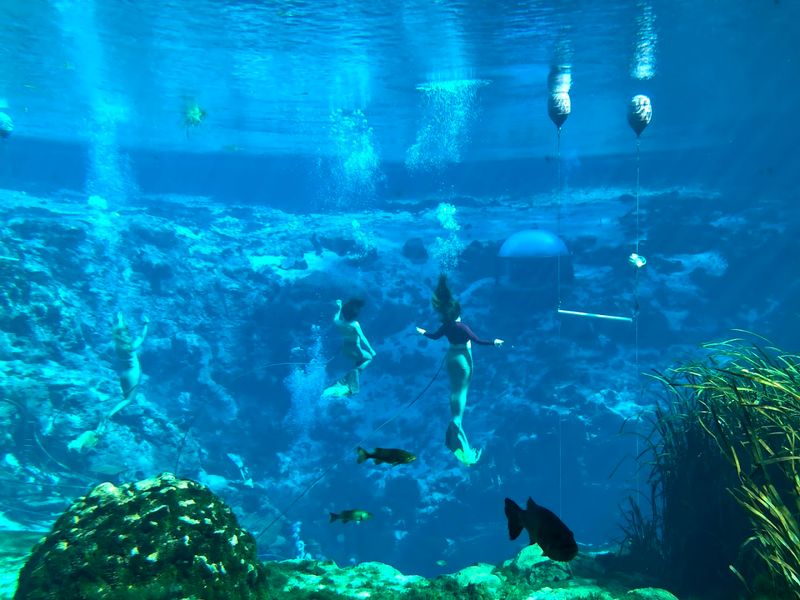
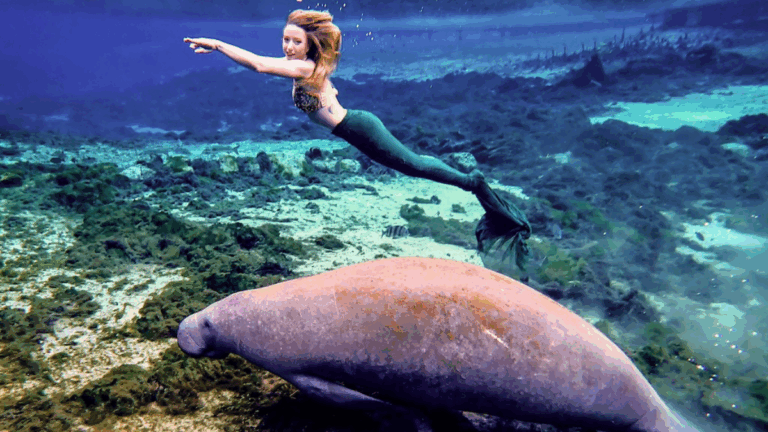
Real mermaids exist in Florida, and they’ve been performing underwater since 1947. Weeki Wachee Springs built its reputation on a delightfully bizarre concept: women breathing through air hoses while performing ballet, eating bananas, and drinking soda 15 feet below the surface.
What started as a roadside attraction during Florida’s tourism boom became an iconic piece of Sunshine State culture.
The spring pumps 117 million gallons of crystal-clear water daily, creating natural theater for the mermaid shows. Visitors sit in an underground auditorium with windows looking into the spring, watching performers with elaborate tails execute choreographed routines to music.
It’s campy, retro, and absolutely charming in a way that modern entertainment rarely achieves.
Newton Perry, a former Navy frogman, invented the breathing technique that makes the shows possible. He trained the first mermaids to hold poses while taking breaths from hidden air hoses, creating an illusion that captivated audiences during the golden age of American road trips.
The shows haven’t changed much since then, which is exactly their appeal.
Beyond the mermaid theater, the park offers kayaking, swimming, and a riverboat cruise down the Weeki Wachee River. The spring maintains a constant 74-degree temperature year-round, and the water clarity lets you see fish and turtles swimming alongside your boat.
The whole experience feels like visiting a time capsule from when Florida tourism meant quirky attractions rather than corporate theme parks.
The mermaids still smile and wave from their underwater kingdom, proving some magic never goes out of style.
4. Solomon’s Castle – Ona
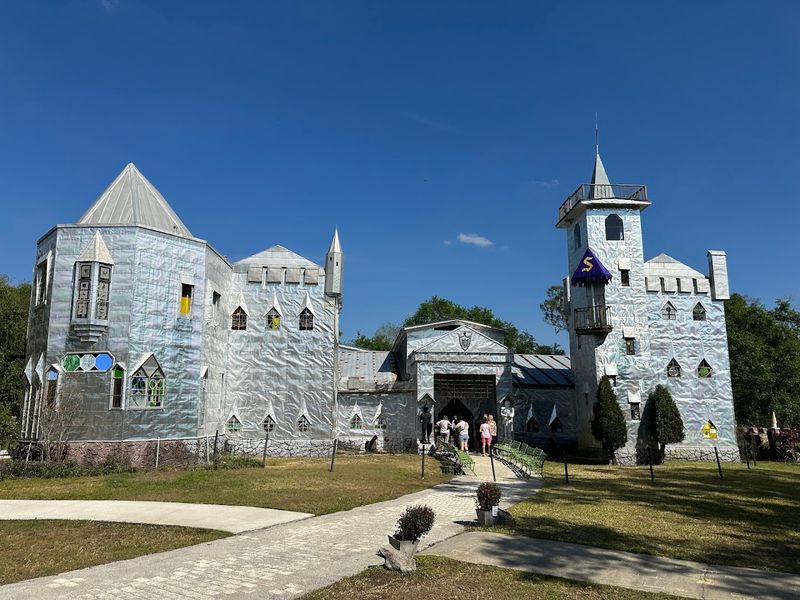
In the middle of nowhere sits a castle built entirely from discarded newspaper printing plates, the fever dream of sculptor Howard Solomon. Driving through Hardee County’s cattle country, you’d never expect to find a three-story aluminum fortress gleaming in the sun, but that’s exactly what makes it magical.
Solomon started building his home and workshop in 1972, and it evolved into one of Florida’s most eccentric roadside wonders.
Every inch of the castle showcases Solomon’s playful genius. The walls shimmer with thousands of recycled printing plates, creating a patchwork of text and images.
Inside, you’ll find sculptures made from car parts, stained glass windows crafted from bottles, and enough puns and wordplay to make you groan and laugh simultaneously. Solomon, who passed away in 2016, was as much comedian as artist, and his personality permeates every corner.
The Boat in the Moat restaurant sits in an actual boat beside the castle, serving sandwiches and desserts to visitors who’ve made the trek off Florida’s beaten path. Tours led by family members reveal the stories behind Solomon’s creations—like the chandelier made from old cameras or the knight fashioned from oil drums.
Each piece demonstrates that art doesn’t require expensive materials, just imagination and determination.
What makes Solomon’s Castle truly special is its stubborn individuality. Solomon built exactly what he wanted, where he wanted, without committee approval or market research.
The castle stands as a monument to creative freedom, proving that one person’s vision can transform a patch of rural Florida into something extraordinary.
It’s weird, wonderful, and completely authentic—qualities increasingly rare in today’s homogenized tourist landscape.
5. Coral Castle – Homestead
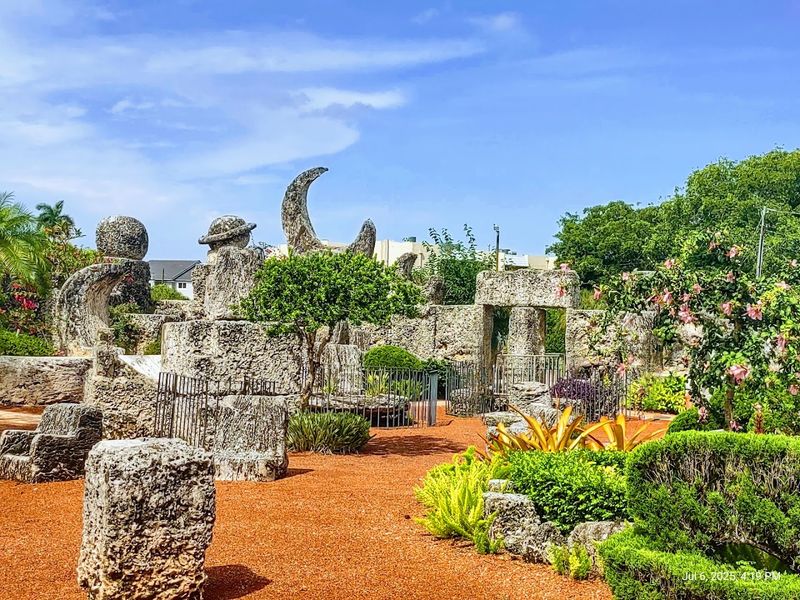
Edward Leedskalnin carved over 1,100 tons of coral rock by hand, mostly at night, and nobody knows exactly how he did it. Between 1923 and 1951, this five-foot-tall Latvian immigrant created a complex of massive stone structures using tools he made himself, never allowing anyone to watch him work.
The mystery surrounding Coral Castle’s construction has fascinated engineers, conspiracy theorists, and tourists for decades.
The stones are enormous—the largest weighs about 30 tons—yet Leedskalnin moved and positioned them alone without modern machinery. He carved chairs, tables, a sundial, a moon fountain, and even a nine-ton gate so perfectly balanced that a child could push it open with one finger.
Some pieces demonstrate sophisticated understanding of astronomy and magnetism, adding to the site’s enigmatic appeal.
Leedskalnin claimed he’d discovered the secrets of the pyramid builders, but he took those secrets to his grave. He built the castle as a monument to his lost love, a Latvian girl named Agnes who broke their engagement.
The romantic tragedy underlying the technical achievement adds emotional weight to the mystery. Every heart-shaped table and carved rose represents his heartbreak transformed into stone.
Walking through Coral Castle feels like exploring an ancient ruin, except this one has a documented creator and relatively recent origin. Tour guides share theories about Leedskalnin’s methods—from magnetic levitation to simple mechanical advantage—but none fully explain his accomplishments.
The castle proves that one determined person with enough time and obsession can create something that baffles experts generations later.
It’s Florida’s Stonehenge, a puzzle carved from the earth itself.
6. The Ringling – Sarasota
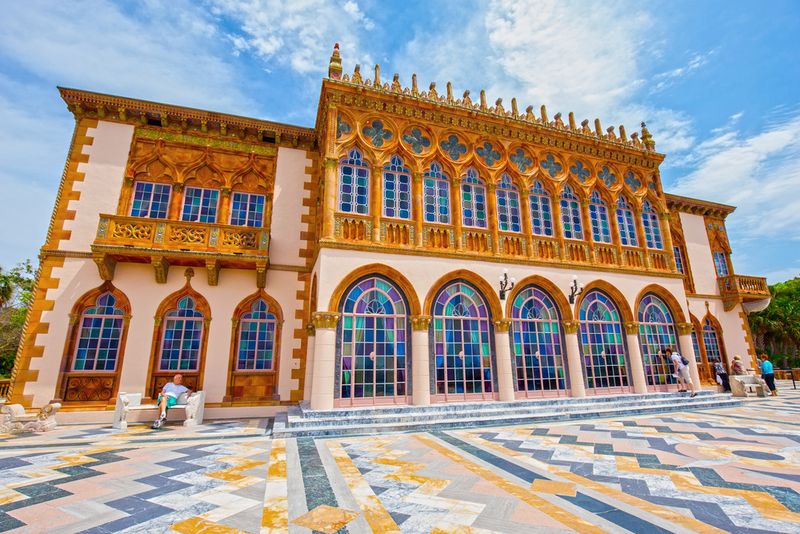
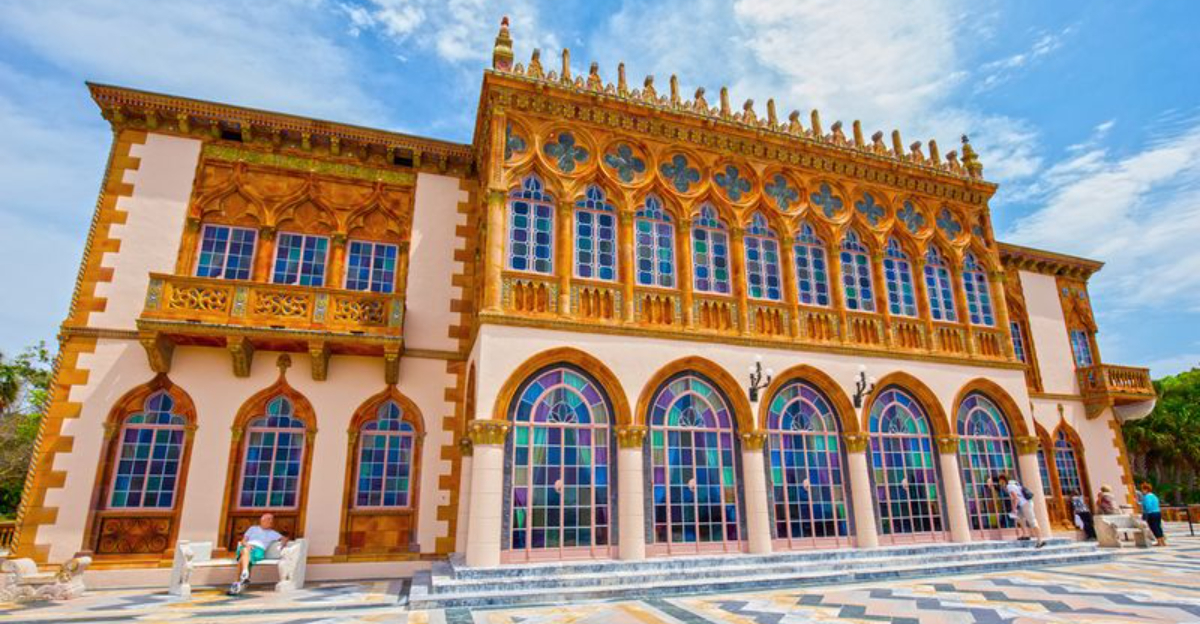
John Ringling didn’t just run a circus—he built an empire and used his fortune to create a cultural complex that still dazzles visitors today. The Ringling estate encompasses a Venetian Gothic mansion, a world-class art museum, a circus museum, and 66 acres of bayfront gardens.
When the circus magnate and his wife Mable settled in Sarasota during the 1920s, they transformed the city into Florida’s cultural capital.
Ca d’Zan, the Ringling mansion, looks like it sailed across the Atlantic from Venice. With 56 rooms, Venetian glass chandeliers, and a tower offering panoramic views of Sarasota Bay, the house captures the excess and optimism of the Jazz Age.
The name means “House of John” in Venetian dialect, and every detail reflects the Ringlings’ sophisticated taste and circus-earned wealth.
The Museum of Art houses one of America’s finest collections of Baroque paintings, including works by Rubens, van Dyck, and Velázquez. John Ringling personally acquired many pieces during European buying trips, building a collection that rivals institutions in much larger cities.
The museum’s architecture alone—inspired by Italian Renaissance villas—makes it worth visiting.
The Circus Museum celebrates the Ringling Brothers’ legacy with vintage wagons, costumes, and posters from the golden age of big-top entertainment. You can trace the evolution of American circus culture through artifacts that once traveled by railroad across the country.
The whole complex demonstrates how circus profits could fund high culture, and how one family’s vision could enrich an entire community.
Sarasota became “The Circus City” because the Ringlings chose to share their success rather than just display it.
7. Edison and Ford Winter Estates – Fort Myers
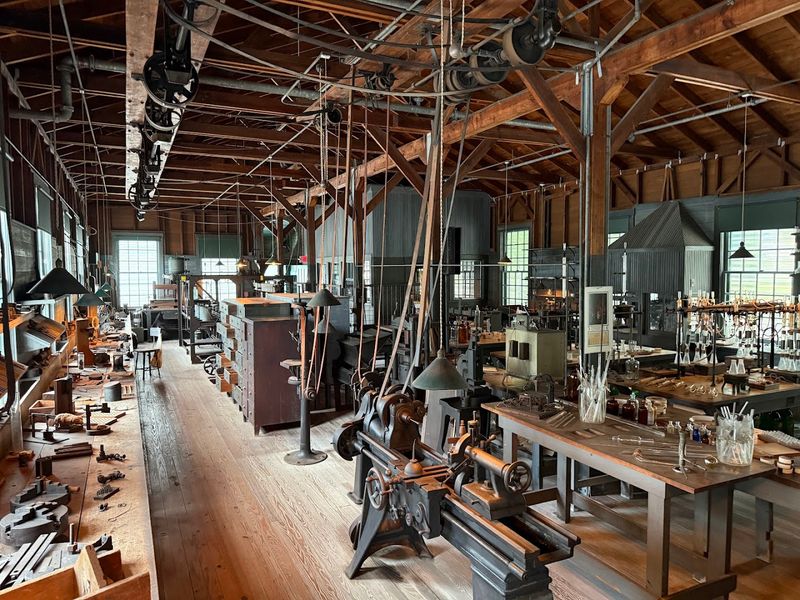
Two of America’s greatest inventors spent their winters as neighbors in Fort Myers, and their adjacent estates preserve that remarkable friendship. Thomas Edison bought property along the Caloosahatchee River in 1885, seeking a warm climate for winter work and relaxation.
He convinced his friend Henry Ford to buy the house next door in 1916, creating a neighborhood where electric lights and automobiles were literally invented and refined.
Edison’s laboratory still contains equipment he used for experiments, including his work on rubber plants to create domestic tire production. The inventor tested thousands of plant species in his botanical garden, searching for alternatives to imported rubber.
You can walk through spaces where one of history’s most prolific inventors actually worked, surrounded by original equipment and personal belongings.
The gardens showcase plants from around the world, including massive banyan trees that Edison planted himself. The largest has grown to cover almost an acre, its aerial roots creating a natural cathedral of shade.
Edison’s obsession with botany transformed the property into a living laboratory that still educates visitors about plant science and sustainable materials.
Ford’s simpler estate next door provides contrast to Edison’s experimental focus. The automotive pioneer’s home reflects his practical nature and appreciation for Edison’s genius.
The two men often sat together under the banyan trees, discussing ideas that would shape the 20th century. Their winter retreats became informal think tanks where innovation happened naturally, between fishing trips and garden strolls.
Visiting both estates reveals how creativity thrives in places that balance work with beauty, proving that even geniuses needed Florida sunshine to recharge their extraordinary minds.
8. Fairchild Tropical Botanic Garden – Coral Gables
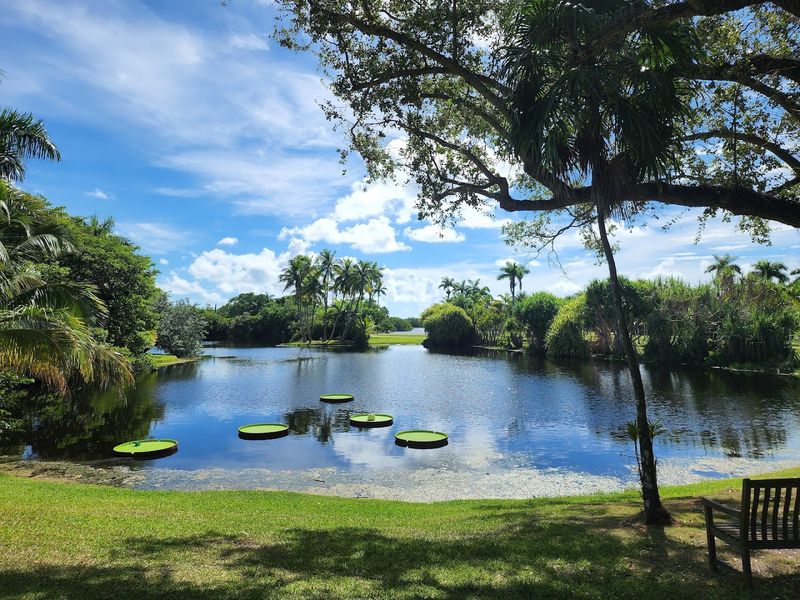
Dr. David Fairchild spent his life hunting plants in the world’s most remote corners, and this 83-acre garden represents his greatest hits. Established in 1938, Fairchild Tropical Botanic Garden preserves one of the world’s finest collections of tropical plants, from towering palms to rare cycads that predate dinosaurs.
The garden functions as both a scientific research center and a stunning public space where Miami residents escape urban chaos.
Walking the winding paths feels like touring multiple continents in one afternoon. The tropical rainforest exhibit recreates conditions from Central America and Southeast Asia, complete with elevated walkways through the canopy.
The palm collection includes species from every continent where palms grow naturally, many of them endangered in their native habitats but thriving here in South Florida’s similar climate.
Fairchild’s legacy extends beyond pretty plants. As a USDA explorer, he introduced mangoes, avocados, and flowering trees that now define Florida’s landscape.
The garden continues his mission, researching tropical plant conservation and teaching visitors about species threatened by climate change and habitat loss. Science happens here, not just tourism.
The garden hosts events year-round, from plant sales where serious collectors hunt rarities to concerts on the lawn at sunset. Families spread blankets under trees while butterflies drift between flowers.
Photographers wait for perfect light to capture the Wings of the Tropics conservatory, where hundreds of butterflies fly freely among blooming orchids. What makes Fairchild magical isn’t just the plants—it’s how the garden demonstrates that preserving biodiversity and creating beauty aren’t separate goals.
They’re the same mission, and visitors leave understanding that protecting tropical plants means protecting wonder itself.
9. Vizcaya Museum & Gardens – Miami
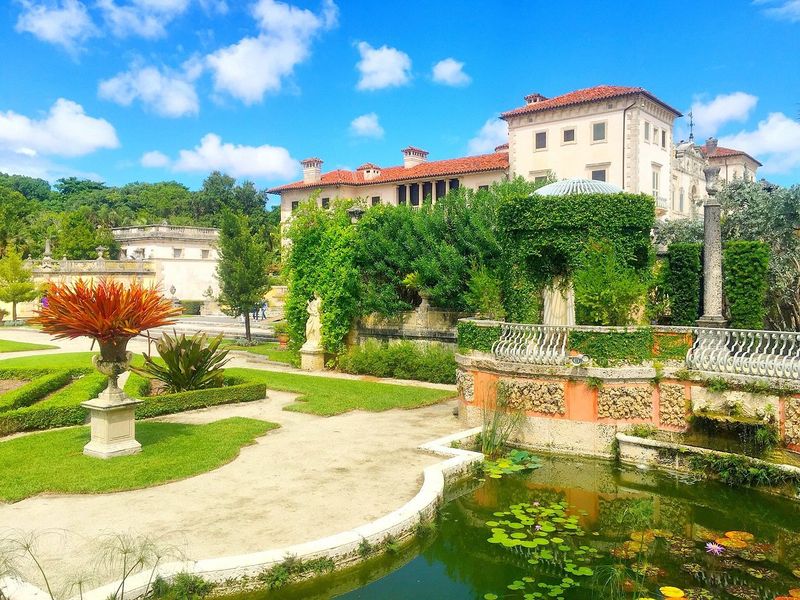
James Deering’s winter villa looks like it’s been overlooking Biscayne Bay for centuries, but it was actually completed in 1922. The agricultural machinery heir created a European fantasy in the subtropics, building a 34-room Italian Renaissance palace filled with centuries-old art and furniture.
Vizcaya represents the Gilded Age dream of instant history—wealth so vast it could import entire rooms from European estates and reassemble them in Florida.
The villa’s interior dazzles with tapestries, paintings, and decorative arts spanning 2,000 years. Each room reflects a different European style, from Renaissance Italy to Rococo France.
Deering and his designer Paul Chalfin scoured Europe for authentic pieces, creating an American palazzo that rivals anything in the Old World. The attention to detail extends to hidden modern conveniences—Vizcaya had elevators, telephones, and central heating, all concealed behind Renaissance facades.
The formal gardens combine Italian and French landscaping traditions with tropical plants that would never survive in Europe. Stone sculptures and fountains create focal points throughout the ten-acre garden, while native Florida vegetation softens the formal geometry.
The stone barge floating in the bay serves as a breakwater and sculptural statement, protecting the shoreline while adding theatrical flair.
What makes Vizcaya more than a rich man’s folly is how it captured Florida’s transformation from frontier to sophisticated destination. Deering employed over 1,000 workers during construction, helping establish Miami as a winter resort for America’s elite.
The estate demonstrates how Florida attracted wealth by promising endless summer in palatial settings.
Today Vizcaya functions as a museum and event space, its magic available to anyone willing to step through the gates and pretend, for an afternoon, that they’re European nobility vacationing in paradise.
10. Butterfly World – Coconut Creek
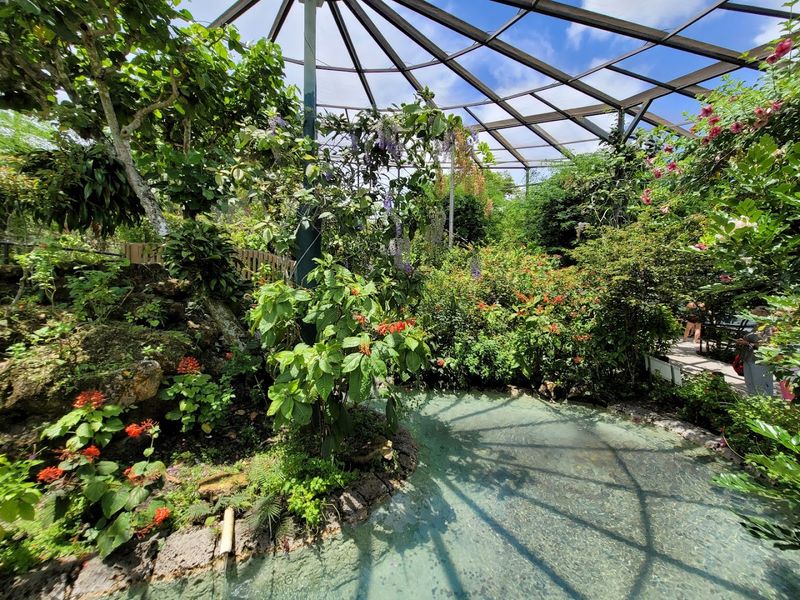
Thousands of butterflies from around the world flutter freely through screened aviaries that recreate their native habitats. Butterfly World opened in 1988 as the first butterfly park in the Western Hemisphere, and it remains one of the largest, with multiple climate-controlled environments housing species from tropical rainforests to temperate gardens.
Walking through feels like stepping into a living kaleidoscope where color and motion surround you.
The main aviary reaches three stories high, filled with flowering plants that provide nectar for resident butterflies. Blue morphos the size of your hand flash iridescent wings as they glide past.
Owl butterflies with eyespots that resemble predator faces rest on tree trunks. Delicate glasswing butterflies with transparent wings hover like tiny ghosts.
Some species live only days as adults, making every visit unique—you’ll never see exactly the same butterflies twice.
Beyond butterflies, the park showcases other insects often overlooked or feared. The insect museum displays beetles wearing jewel-toned armor and walking sticks that perfectly mimic branches.
The bug zoo lets visitors hold giant cockroaches and watch leaf-cutter ants march with their harvested cargo. These exhibits transform creepy-crawlies into fascinating creatures worth appreciating rather than squashing.
The breeding laboratories visible through windows show the complete butterfly lifecycle. You can watch caterpillars munching leaves, chrysalises hanging like jade ornaments, and newly emerged butterflies pumping fluid into crumpled wings.
Understanding metamorphosis up close makes the flying adults even more miraculous. Butterfly World creates magic by slowing visitors down, making them notice the intricate details of creatures most people only glimpse briefly.
In a state famous for speed and spectacle, sometimes the real enchantment comes from standing still and letting beauty land on your shoulder.