12 Florida Museums for People Who Hate Museums
Traditional museums can feel stuffy and boring, with endless glass cases and long-winded plaques that put you to sleep. But Florida has a secret weapon: museums that throw the rulebook out the window. These spots let you climb, touch, explore, and snap photos instead of just shuffling quietly past roped-off displays.
Whether you’re into optical illusions, weird artifacts, or hands-on science experiments, these 12 museums prove that learning can actually be fun.
1. Paradox Museum Miami

Forget staring at paintings behind velvet ropes. Paradox Museum Miami turns you into the artwork, placing you inside giant optical illusions that mess with your brain in the best way possible. Every room challenges what you think you know about perspective, gravity, and reality itself.
You’ll walk through spaces where you appear to shrink or grow, defy physics, or exist in impossible dimensions. The exhibits are designed for participation, not observation. Bring your phone because every corner offers a photo opportunity that’ll make your followers do a double-take.
Groups love this place because everyone gets equally confused and amazed. There’s no pressure to understand complicated art history or scientific jargon. You just step into the illusions, strike a pose, and let your eyes play tricks on you.
The entire experience feels more like an interactive playground than a traditional museum. Kids and adults get the same thrill from discovering how each illusion works. By the time you leave, you’ll question everything you thought you knew about perception, and you’ll have a camera roll full of mind-bending proof.
2. FloridaRAMA

FloridaRAMA takes everything weird and wonderful about Florida and cranks it up to eleven. This isn’t your grandma’s museum experience—it’s an immersive art adventure where neon lights, hidden passages, and bizarre Florida folklore collide in the most unexpected ways.
Imagine Meow Wolf decided to celebrate the Sunshine State’s strangest stories. You’ll wander through rooms that blend art, mythology, and local legends into something completely original. Each space tells a story, but you discover it by exploring, not by reading wall text.
Secret doors lead to new dimensions of Florida weirdness. One moment you’re in a glowing swamp scene, the next you’re surrounded by retro beach vibes mixed with cosmic elements. The whole place encourages curiosity and rewards people who poke around corners.
This spot works perfectly for anyone who gets bored standing still. You’re meant to touch things, open drawers, and follow your instincts through the maze of rooms. It’s part art gallery, part escape room, and completely unlike any museum you’ve visited before.
Leave your expectations at the door and just let Florida’s strangeness wash over you.
3. Museum of Illusions Orlando

Walking into the Museum of Illusions Orlando feels like stepping into a world where physics took a vacation. Dozens of specially designed rooms challenge your perception and create photo opportunities that seem impossible until you’re standing right in them.
The upside-down rooms are crowd favorites, making it look like you’re walking on the ceiling or defying gravity entirely. Other exhibits play with size, making you appear giant next to your friends or shrinking you down to miniature proportions. Every installation is built for interaction and designed to confuse your senses in delightful ways.
Families appreciate how accessible everything is. Young kids and teenagers get equally excited about the exhibits, and adults find themselves laughing at the absurdity of it all. There’s no age limit on enjoying a good optical trick.
Unlike traditional museums where touching is forbidden, this place encourages hands-on participation. You’ll spend more time posing and experimenting than reading explanations. The staff knows all the best angles for photos, so don’t hesitate to ask for tips.
Plan for at least an hour because once you start exploring the illusions, time becomes just another thing that doesn’t make sense.
4. Ripley’s Believe It or Not! Orlando

Robert Ripley spent decades collecting the world’s strangest objects, and Orlando’s location showcases some of the most unbelievable finds. Shrunken heads, two-headed animals, bizarre artifacts from around the globe—this place celebrates the weird without apology.
Every gallery presents something that makes you question reality. You’ll see genuine oddities alongside interactive exhibits that let you test your own abilities against world record holders. The collection spans everything from natural anomalies to human achievements that seem too wild to be true.
What makes this different from typical museums is the tone. Instead of sterile scientific explanations, you get stories that emphasize the bizarre and entertaining aspects of each item. The displays are theatrical, sometimes darkly humorous, and always designed to provoke reactions.
Skeptics and believers alike find something to marvel at here. Some exhibits come with proof and documentation, while others leave you wondering. That uncertainty adds to the fun rather than detracting from it.
The experience moves quickly because each item grabs your attention immediately. You won’t spend time deciphering academic language or straining to understand context. Everything is presented for maximum impact, making it perfect for people with short attention spans or museum fatigue.
5. Titanic: The Artifact Exhibition
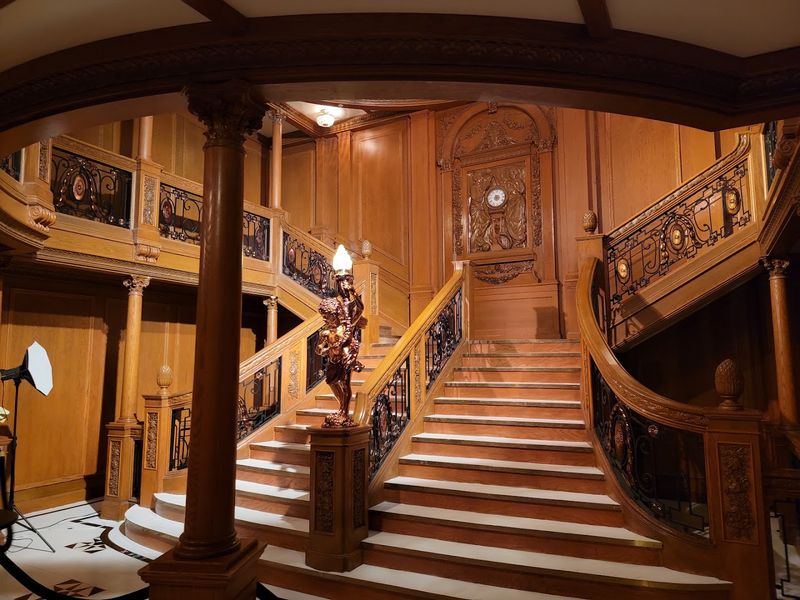
History textbooks can’t compete with walking through actual recreated rooms from the Titanic. This exhibition brings the famous ship’s story to life through carefully reconstructed interiors and genuine artifacts recovered from the wreck site two miles below the Atlantic.
When you enter, you receive a boarding pass with a real passenger’s name. As you explore the exhibit, you’ll discover whether your assigned passenger survived or perished. This personal connection transforms distant history into something emotionally immediate.
The recreated spaces include the grand staircase, first-class cabins, and third-class quarters, giving you a sense of the ship’s dramatic class divisions. You can touch an iceberg, feel the freezing water temperature, and stand on sloped decks that simulate the ship’s final moments. These interactive elements make the tragedy tangible rather than abstract.
Real artifacts—jewelry, luggage, ship components—connect you directly to the people who sailed on that doomed voyage. Each item has a story, and the exhibition tells them without unnecessary drama. The facts are compelling enough on their own.
By the end, you’ll understand why the Titanic’s story still resonates over a century later. This isn’t a dusty history lesson; it’s an immersive experience that honors the passengers while satisfying your curiosity about the disaster.
6. Phillip & Patricia Frost Museum of Science
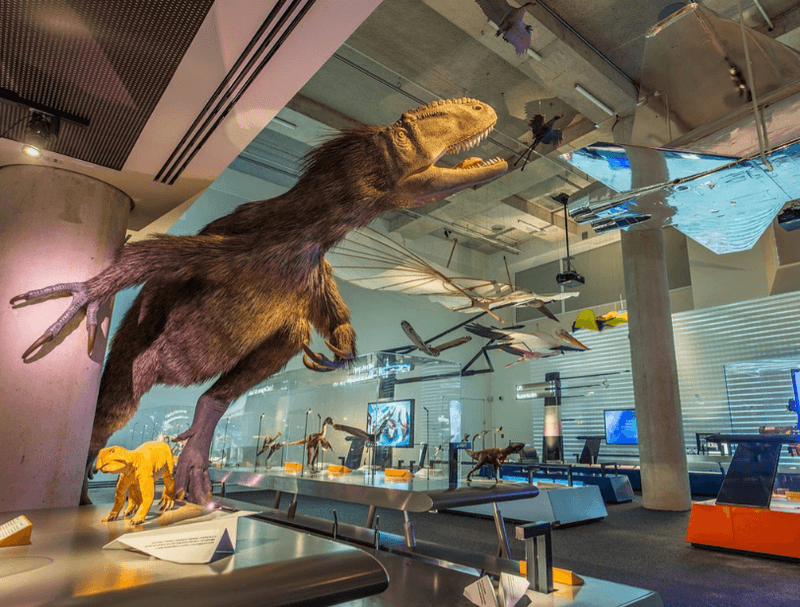
Three major attractions under one roof sounds too good to be true, but the Frost Museum of Science delivers. The aquarium, planetarium, and hands-on science exhibits create an all-day adventure that never feels like traditional museum-going.
The three-story aquarium steals the show with its Gulf Stream tank, where you can watch sharks, rays, and sea turtles glide overhead and around you. The viewing angles change as you move between floors, creating new perspectives on the same marine environment. It’s more immersive than most standalone aquariums.
The planetarium uses cutting-edge technology to transport you across the universe. Shows change regularly, covering everything from black holes to the search for alien life. The dome screen surrounds you completely, making space exploration feel like a personal journey rather than a lecture.
Between those headliners, you’ll find galleries packed with interactive exhibits about physics, biology, and technology. Everything is designed for touching, experimenting, and discovering. There are no “look but don’t touch” signs here.
The museum’s modern design and waterfront location add to the appeal. Large windows bring in natural light and offer views of Biscayne Bay, preventing that closed-in feeling some museums create. You could easily spend an entire day here without getting bored or exhausted.
7. Museum of Discovery and Science
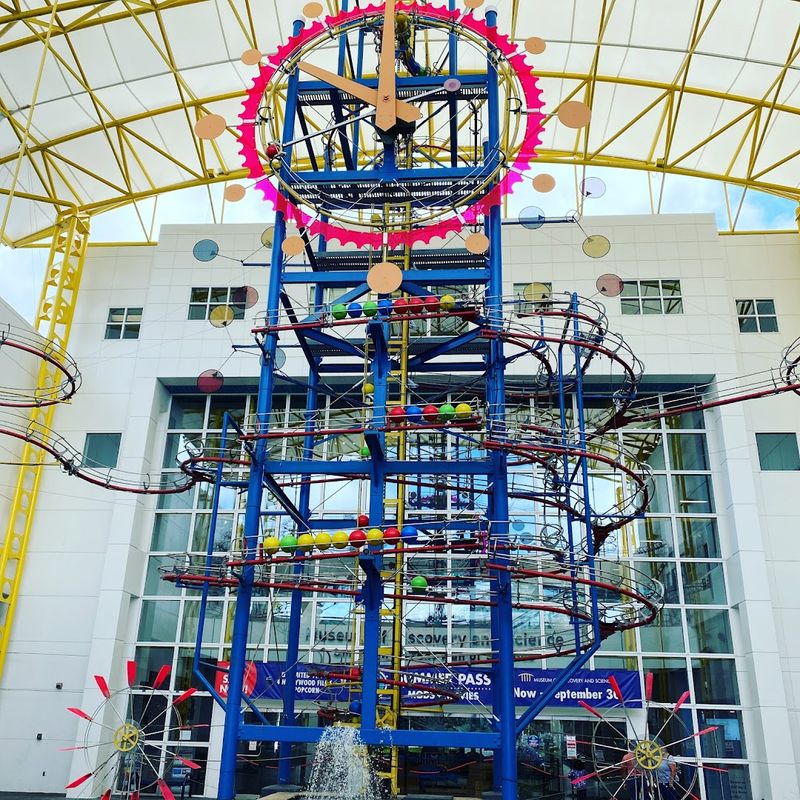
Fort Lauderdale’s Museum of Discovery and Science operates on a simple principle: learning happens best when you’re having too much fun to notice you’re learning. Flight simulators, live animal encounters, and constantly updated STEM exhibits keep visitors engaged from the moment they walk in.
The flight simulator experience lets you pilot a plane through various scenarios, from smooth cruising to emergency landings. It’s realistic enough to give you appreciation for what pilots do, but accessible enough that anyone can try it. No prior experience required, just a willingness to grip the controls and see what happens.
Live animals throughout the museum add unpredictability to your visit. You might encounter an alligator demonstration, watch otters play, or learn about Florida’s native species from knowledgeable staff. These aren’t static displays—the animals are active, and their handlers share fascinating details about their behaviors and habitats.
The IMAX theater shows films that take advantage of the massive screen and powerful sound system. After exploring the exhibits, settling into a theater seat for an immersive documentary feels like the perfect break.
Exhibits rotate regularly, so repeat visitors always find something new. The museum targets curious minds of all ages, making it equally appealing to kindergarteners and adults who never outgrew their love of pressing buttons and experimenting.
8. Orlando Science Center
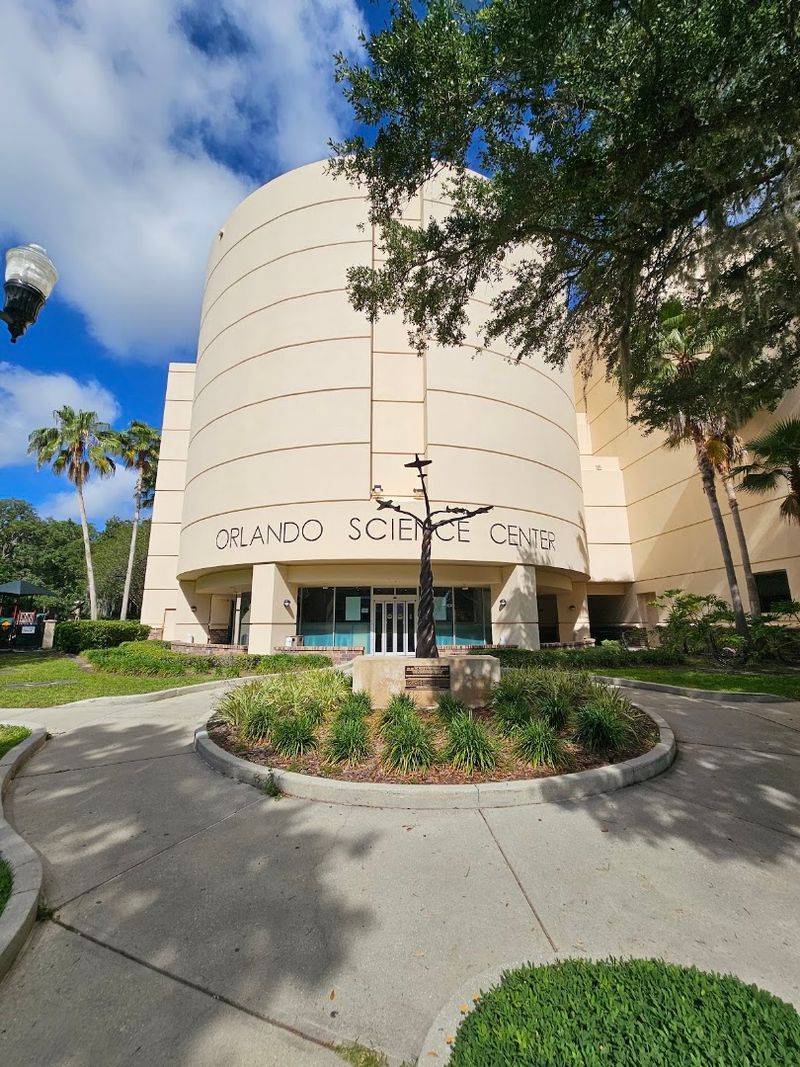
Four floors of hands-on exhibits sound overwhelming, but the Orlando Science Center organizes everything so well that exploration feels natural rather than exhausting. Each level focuses on different scientific concepts, from physics to biology to engineering, all presented through interactive displays that beg to be touched and tested.
Live science demonstrations happen throughout the day, turning abstract concepts into entertaining shows. Watching liquid nitrogen freeze objects instantly or seeing electricity arc through the air makes science memorable in ways textbooks never could. The presenters know how to work a crowd, mixing education with showmanship.
The exhibits change regularly, which gives locals a reason to return and ensures first-time visitors see current technology and discoveries. You might build structures to test earthquake resistance, explore the human body through interactive displays, or conduct simple experiments that reveal complex principles.
Giant-screen films add another dimension to the experience. The theater shows nature documentaries and space explorations that benefit from the enormous screen and surround sound. It’s a nice way to rest your feet while still learning something new.
What sets this place apart is the balance between education and entertainment. You never feel lectured to, but you leave knowing more than when you arrived. The center proves that science doesn’t have to be boring or intimidating when it’s presented with creativity and enthusiasm.
9. National Naval Aviation Museum

Pensacola’s National Naval Aviation Museum houses one of the world’s largest collections of military aircraft, spread across enough space to leave you awestruck. Hundreds of planes from different eras fill massive hangars, each one representing a piece of aviation and military history.
The sheer size of these machines impresses even people who think they don’t care about planes. Standing beneath a massive bomber or next to a fighter jet gives you a visceral understanding of the engineering and courage involved in naval aviation. Photos don’t do justice to the scale.
Blue Angels history gets special attention, with exhibits dedicated to the Navy’s famous flight demonstration squadron. You can see their aircraft up close and learn about the precision and skill required to perform their aerial acrobatics. Videos of their performances play throughout the exhibit, capturing the speed and synchronization that make them legendary.
Some cockpits are open for viewing, letting you see the cramped quarters and complex instruments pilots managed while flying combat missions. Flight simulators scattered throughout the museum offer a taste of what it’s like to control these powerful machines.
Best of all, admission is free. You could spend hours exploring without spending a dime, making it one of Florida’s best museum values. The museum respects your time and intelligence, presenting history without excessive patriotic theatrics or dumbed-down explanations.
10. IMAG History & Science Center
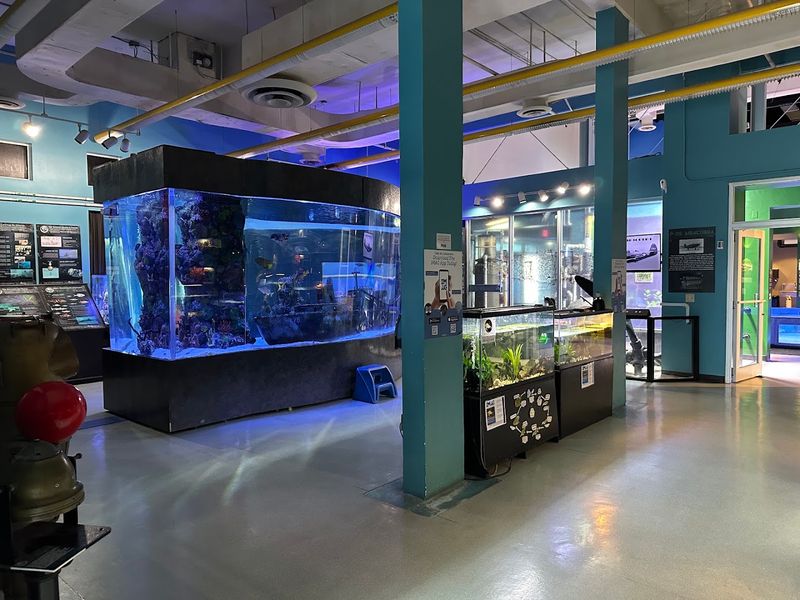
Fort Myers’ IMAG History & Science Center blends natural science with local history, creating a museum experience that feels uniquely Southwest Florida. Touch tanks let you interact with marine creatures, weather simulators show you what hurricanes feel like, and live animal encounters bring you face-to-face with Florida’s wildlife.
The touch tanks are the main draw for many visitors. Feeling a stingray glide past your hand or watching hermit crabs scuttle across your palm creates connections that looking at aquariums never could. Staff members supervise the tanks and share information about each species, answering questions and ensuring the animals stay healthy and comfortable.
Weather exhibits let you experience Florida’s famous storms in a controlled environment. Step into a hurricane simulator to feel the wind speeds that make these storms so dangerous, or learn about the science behind thunderstorms and lightning. These interactive displays make meteorology exciting instead of abstract.
Live animal encounters throughout the day feature snakes, birds, and other Florida natives. Handlers explain each animal’s role in the ecosystem and often debunk common myths. Holding a snake or watching a bird of prey up close tends to change people’s perspectives on creatures they might normally fear.
The center keeps things fresh by rotating exhibits and adding new interactive elements regularly. It’s small enough to visit in a couple of hours but engaging enough that you won’t feel rushed or bored.
11. The Dalí Museum
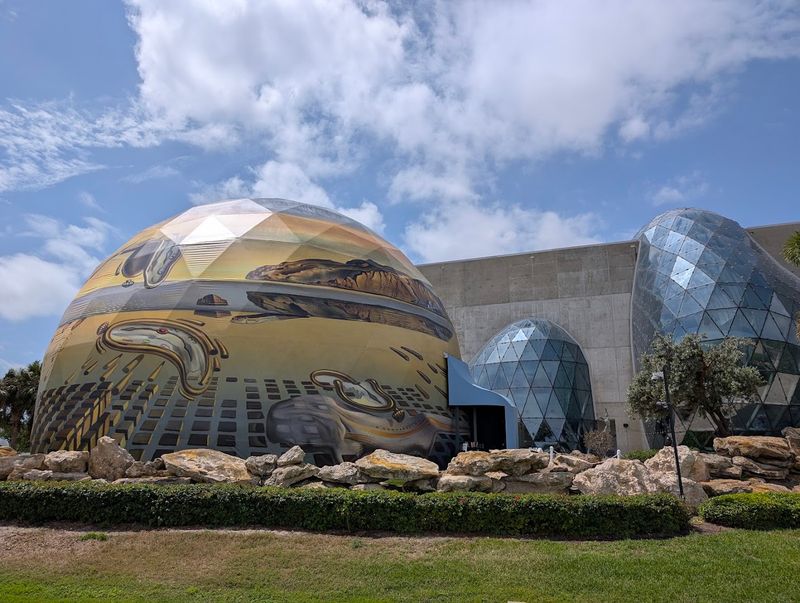
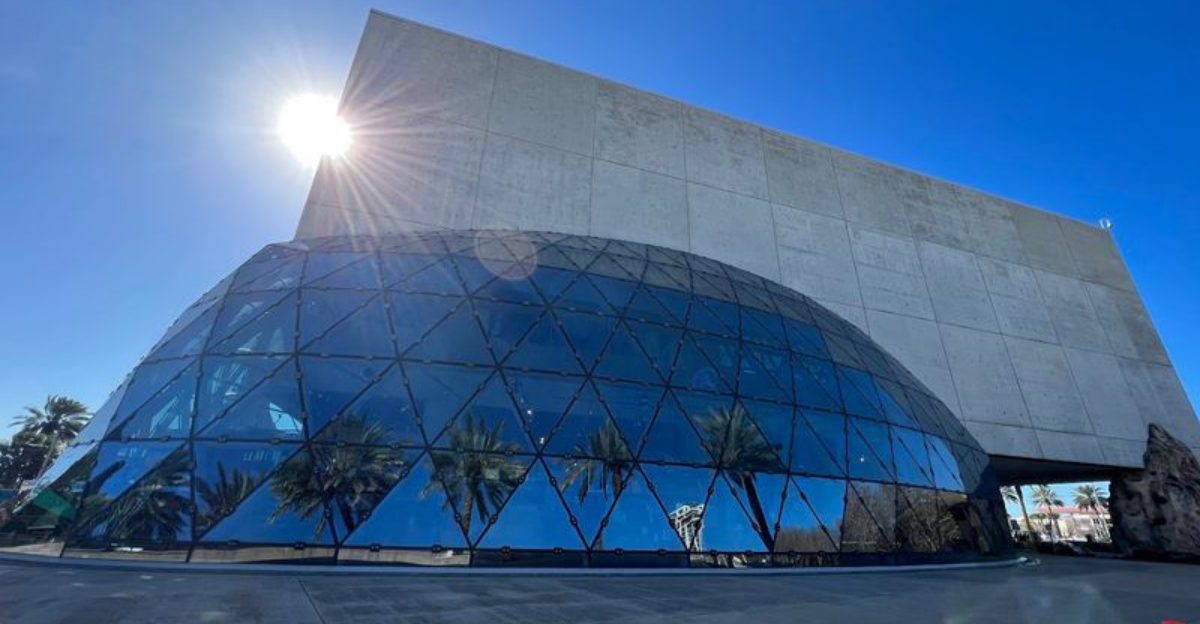
Salvador Dalí’s surrealist masterpieces might sound intimidating, but St. Petersburg’s Dalí Museum presents them in ways that hook even confirmed art skeptics. The collection includes melting clocks, impossible elephants, and dreamscapes that look like they emerged from someone’s fever dreams—all displayed in a building as architecturally striking as the art inside.
The museum’s design itself deserves attention. A massive glass structure called “The Enigma” spirals up from the building’s exterior, creating a landmark visible from across downtown St. Petersburg. Inside, natural light floods the galleries, making the art feel alive rather than trapped behind glass.
Digital experiences and immersive installations supplement the traditional paintings and sculptures. You can step into Dalí’s world through virtual reality exhibits or watch his artwork come to life through projection mapping. These modern touches make the art accessible without dumbing it down.
What makes this museum work for art skeptics is how Dalí’s work naturally provokes reactions. You don’t need an art history degree to appreciate melting watches or elephants on spider legs. The images stick in your brain whether you understand their deeper meaning or not.
Guided tours and audio guides offer context without being pretentious. The museum staff clearly loves Dalí’s work but presents it with enthusiasm rather than academic stuffiness. You’ll leave remembering specific paintings and probably questioning your own dreams for a while.
12. Ponce de Leon Inlet Lighthouse & Museum

Climbing 203 steps to the top of one of America’s tallest lighthouses gives you a workout and a reward most museums can’t match. Ponce de Leon Inlet Lighthouse stands 175 feet tall, offering panoramic Atlantic Ocean views that make the climb worthwhile even for people who hate exercise.
The lighthouse itself is beautifully preserved, with its distinctive red brick exterior and classic maritime architecture. As you ascend the spiral staircase, you can pause at landings to catch your breath and read about the lighthouse’s history. The climb builds anticipation for the view waiting at the top.
Once you reach the observation deck, the 360-degree vista stretches for miles. You’ll see the Atlantic Ocean, the Intracoastal Waterway, and the surrounding barrier islands from a perspective that makes you understand why lighthouses were so crucial for navigation. On clear days, the view seems endless.
The museum portion includes restored lighthouse keeper dwellings and exhibits about maritime history. You can explore the actual living quarters where lighthouse keepers and their families resided, giving you a glimpse into their isolated but important lives. Artifacts and photographs fill in the details about daily operations and the technology that kept ships safe.
This isn’t a passive museum experience. You’re climbing, exploring buildings, and earning those ocean views through physical effort. It’s perfect for people who prefer doing over observing.