More Than 140 Years Later, This Florida General Store Still Feels Frozen in Time
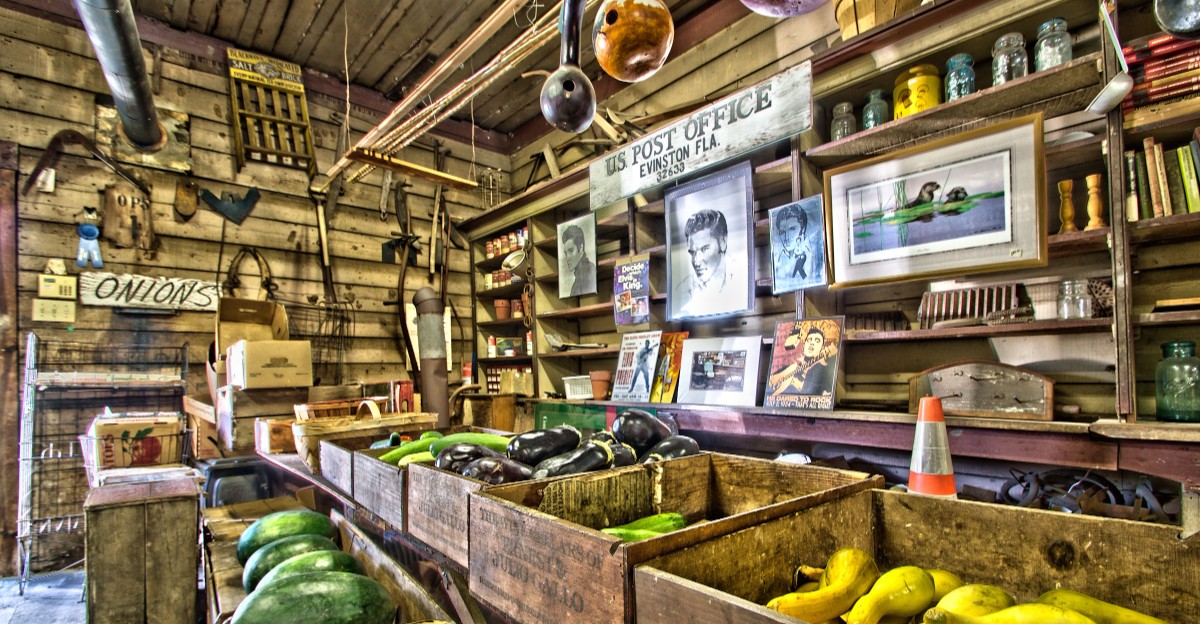
Wood and Swink Store and Post Office in Evinston is the kind of place that makes modern Florida feel very far away. Dating to 1882, this historic country store has served generations of residents and travelers while holding onto much of the character that made small-town general stores community gathering places. Step inside and the appeal comes from the details: old wooden floors, vintage fixtures, shelves of everyday goods, and the unmistakable feeling that the building has changed far less than the world around it.
The working post office adds another layer of authenticity, keeping the property connected to the practical role it has played in Evinston for well over a century. Rather than feeling staged like a museum, the store remains tied to everyday community life. That makes browsing especially memorable because visitors are experiencing a genuine piece of rural Florida history rather than a recreation.
For road-trippers who enjoy overlooked places with real stories behind them, Wood and Swink Store and Post Office is worth slowing down for. More than 140 years after opening, it still offers a rare glimpse of the Florida that existed long before highways, theme parks, and sprawling shopping centers.
A Living Time Capsule Since 1882
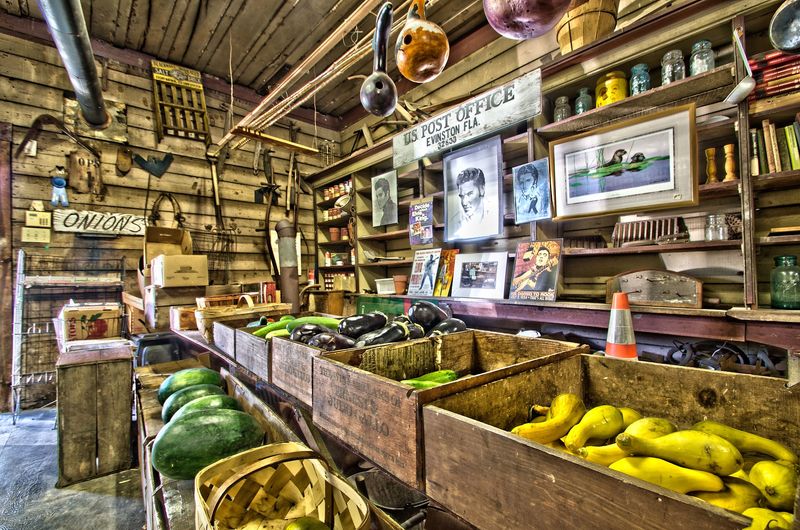
Built in 1882, this general store has witnessed more than fourteen decades of Florida history unfold right outside its doors. The building itself stands as a testament to craftsmanship from another era, when structures were built to last generations rather than years. Every creak in the floorboards tells a story, and the worn wooden counters have supported countless conversations between neighbors who gathered here not just to shop, but to connect.
What makes this place truly special is that it hasn’t been turned into some sanitized tourist attraction. The Wood family has maintained the store’s authentic character while keeping it functional for the community. You won’t find gift shop trinkets or manufactured nostalgia here.
Instead, you’ll discover genuine artifacts from the past century still sitting exactly where they were placed decades ago.
The interior remains virtually unchanged since 1933, when Frederick V. Wood and Paul K. Swink purchased the property.
Though Swink sold his share less than two years later, the name stuck and became part of local lore. Walking through today feels surreal because so few places like this survive modern development pressures.
Visitors often mistake it for a museum at first glance, but this is a working establishment that still serves the Evinston community. The combination of historical preservation and practical function creates an atmosphere you simply cannot find anywhere else. It’s not trying to recreate the past, it actually is the past, still living and breathing in the present.
The store appeared in the 1991 film Doc Hollywood starring Michael J. Fox, which introduced this hidden gem to audiences beyond Florida. Even after that Hollywood moment, Wood and Swink refused to change its character or commercialize the experience.
That commitment to authenticity is precisely what keeps people coming back generation after generation, seeking a genuine connection to Florida’s frontier heritage.
The Oldest Post Office Boxes Still in Service
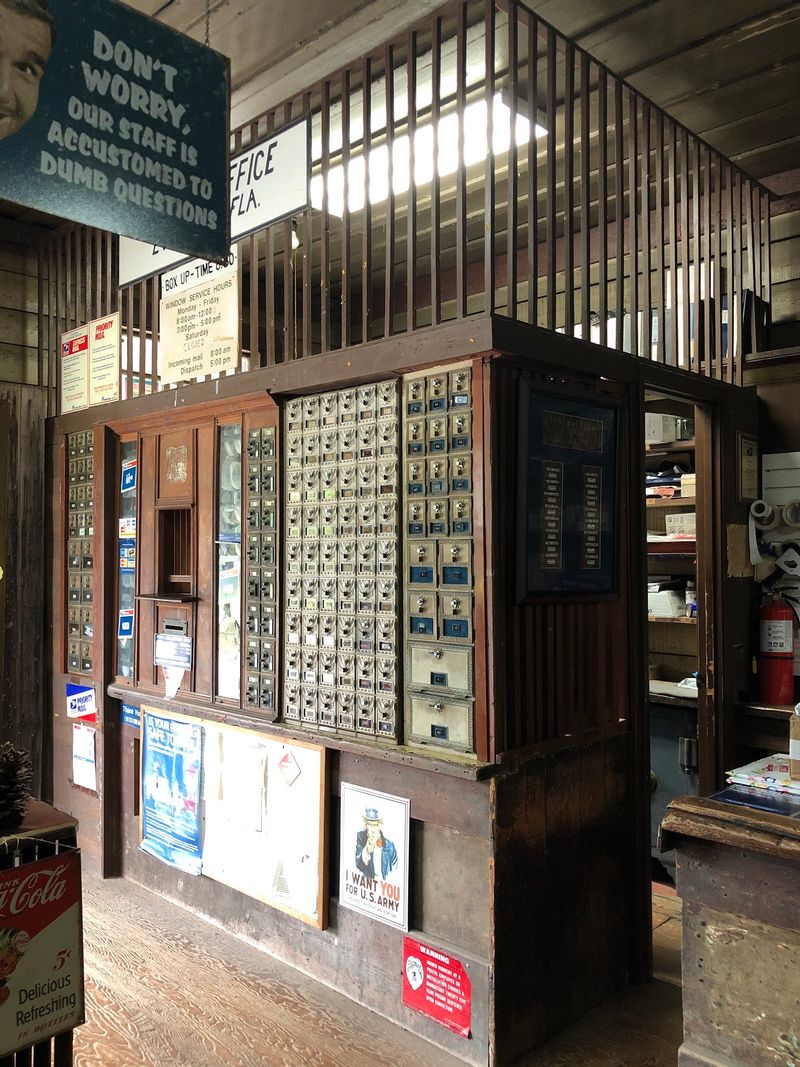
The original 16 post office boxes installed when this location became an official U.S. Post Office still function today, serving local residents just as they have for well over a century. These aren’t replicas or decorative pieces.
They’re the actual brass and wood boxes that pioneers used to collect their mail when Evinston was a bustling rural community surrounded by citrus groves and cattle ranches.
Running your fingers across these boxes connects you directly to countless Floridians who stood in this exact spot waiting for letters from distant relatives or important business correspondence. The craftsmanship is remarkable, with intricate lock mechanisms that still work smoothly despite their age. Additional boxes have been added over the years to accommodate the community’s needs, but those original sixteen remain the heart of the operation.
Evinston has no rural mail delivery routes, which means every single piece of mail for the area comes through this post office. That makes Wood and Swink an essential gathering place where neighbors run into each other, catch up on local news, and maintain the kind of community bonds that have largely disappeared in our digital age. It’s not unusual to see folks linger after collecting their mail, chatting with whoever happens to be around.
Frederick V. Wood became Florida’s longest-serving postmaster in history, dedicating his life to ensuring this tiny post office kept the community connected. His daughter-in-law Wilma Sue Wood continued the tradition, becoming postmaster herself and co-owning the store with her husband Fred Wood Jr. starting in 1990.
Today, family members still run the operation, making this a true multigenerational commitment to public service.
When you mail a postcard from here, it gets stamped with a piece of living history. Many visitors purchase stamps or send letters to themselves as souvenirs, knowing their correspondence passed through one of Florida’s most remarkable surviving postal facilities.
Vintage Merchandise Frozen in Time
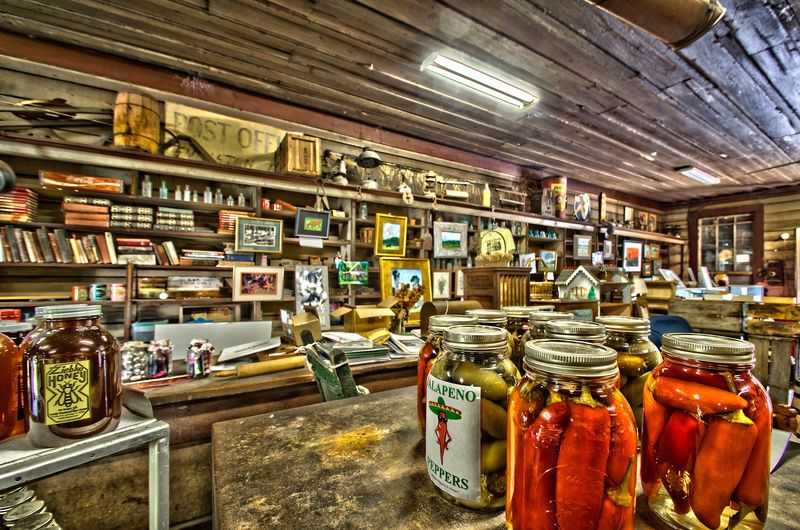
Boxes of laundry detergent from the 1940s sit on shelves alongside canned goods that haven’t been manufactured in decades. These aren’t for sale, they’re part of the store’s unintentional museum of American consumer culture. Wandering the aisles feels like archaeological exploration, discovering brands your grandparents might have used and packaging designs that remind you how much advertising has changed over the years.
The store does sell some items, including local delicacies like guava jam, postcards featuring the store itself, and occasionally copies of The Yearling printed in the 1970s. Marjorie Kinnan Rawlings, who wrote that Pulitzer Prize-winning novel, lived less than ten miles away in Cross Creek. Her presence in the area adds another layer of literary history to this already storied location.
What’s fascinating is how the Wood family decided which merchandise to preserve versus what to sell. There’s no formal system or curatorial approach. Items simply remained on shelves as the years passed, gradually transforming from inventory into artifacts.
This organic process of preservation feels more authentic than any planned museum exhibit could achieve.
Some visitors find the dusty, crowded shelves charming while others expect a more polished experience. That’s precisely the point, though. This isn’t designed for Instagram aesthetics or tourist expectations.
It’s a genuine snapshot of rural Florida commerce from another era, preserved not through careful restoration but through simple continuity of family ownership.
On Wednesdays, the store offers fresh produce, maintaining its original purpose as a place where locals can obtain necessities. That blend of historical preservation and practical function demonstrates how heritage sites can remain relevant to their communities rather than becoming sterile attractions that only outsiders visit. The merchandise tells stories about changing tastes, forgotten brands, and the evolution of American retail over more than a century.
The Wood Family Legacy
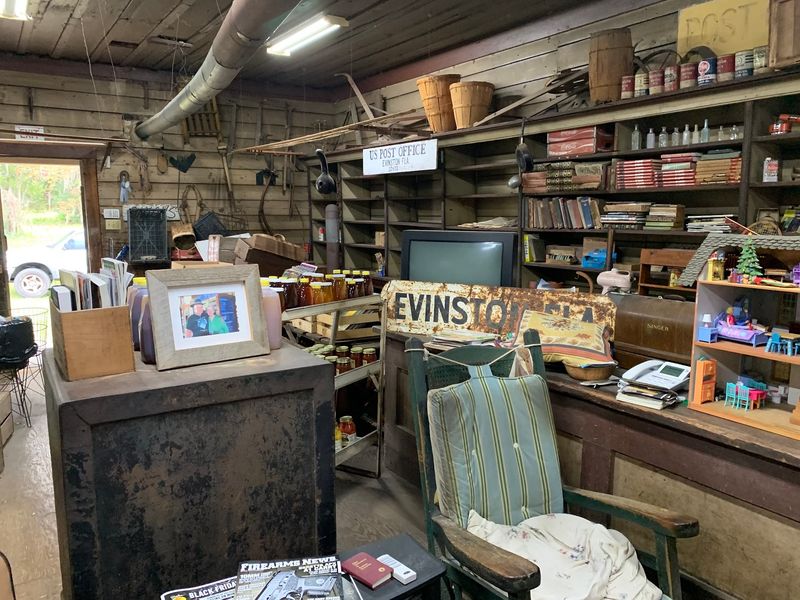
Since 1910, the Wood family has owned and operated this store, making it one of the longest continuous family ownerships of any commercial property in Florida. That’s five generations of commitment to a single location and purpose. In an era when family businesses regularly get sold to corporations or shuttered when founders retire, this longevity is nothing short of remarkable.
Frederick V. Wood didn’t just run a store, he became the backbone of the Evinston community. His tenure as postmaster set records for the entire state of Florida, and he was known for knowing every resident by name and treating each piece of mail as important.
That personal touch created loyalty that transcended mere commercial transactions.
When visitors stop by today, they often meet members of the Wood family who still work there. These aren’t hired employees going through the motions, they’re people whose entire lives have been shaped by this building and its history. Their stories about growing up in the store, learning the post office operations, and deciding to continue the family tradition add depth that no historical marker could convey.
Fred Wood Jr. and his wife Wilma Sue Wood took over operations in 1990, maintaining the same commitment to authenticity and community service that defined previous generations. They understood that their role wasn’t just retail or postal service, it was cultural preservation. Every decision they made about what to change or keep the same affected how future generations would understand Old Florida.
The family’s dedication faces constant challenges. Limited operating hours reflect the reality of running a small operation in a tiny town. They’re open Monday through Friday from 1 to 5 PM and Saturday mornings from 8 to 10 AM.
These aren’t convenient hours for most tourists, but they work for the local community the store actually serves. That prioritization of residents over visitors demonstrates the family’s values and ensures the store remains a genuine community asset rather than a tourist trap.
Old Florida Along the Route 441 Corridor
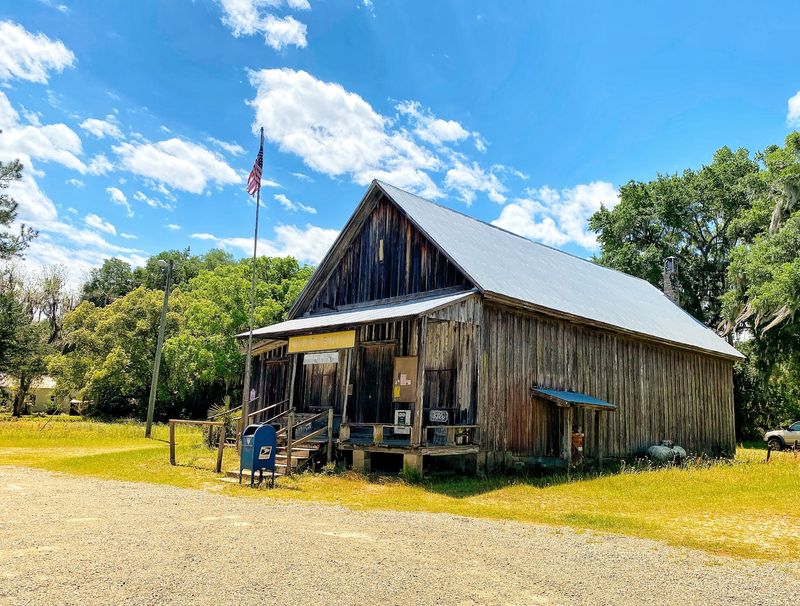
Wood and Swink sits along U.S. Highway 441, a route that once served as a main artery through Florida before interstate highways redirected most traffic. This road connected small agricultural communities that thrived on citrus, cattle, and timber.
Driving this stretch today offers glimpses of what Florida looked like before theme parks and coastal development transformed the state’s identity.
The store is perfectly positioned for Old Florida road trips that include nearby attractions like Micanopy, McIntosh, and the Marjorie Kinnan Rawlings Historic State Park in Cross Creek. These destinations form a circuit that history enthusiasts and literature fans find deeply rewarding. Unlike the commercialized attractions that dominate much of Florida tourism, these sites require some effort to reach and appreciate, which keeps them relatively uncrowded.
Evinston itself barely qualifies as a town, it’s more of a crossroads with a handful of buildings. That isolation has protected Wood and Swink from development pressures that might have forced modernization or closure. The surrounding landscape remains agricultural, with horse pastures and old homesteads creating scenery that hasn’t changed dramatically in decades.
An old packing house sits adjacent to the post office, another reminder of the citrus industry that once dominated this region. Before freezes and diseases devastated Florida’s interior citrus groves, facilities like these processed fruit that would be shipped north by rail. The building stands mostly unused now, a ghost of economic activity that sustained communities like Evinston for generations.
Visitors planning a trip should understand that this area moves at its own pace. There are no chain restaurants or gas stations nearby. Cell phone service can be spotty.
That’s part of the appeal for people seeking authentic experiences, but it requires some preparation. Bring water, plan your route carefully, and allow extra time because you’ll want to stop and absorb the atmosphere rather than rushing through on a tight schedule.
Meeting Mr. Mike and the Storytelling Tradition
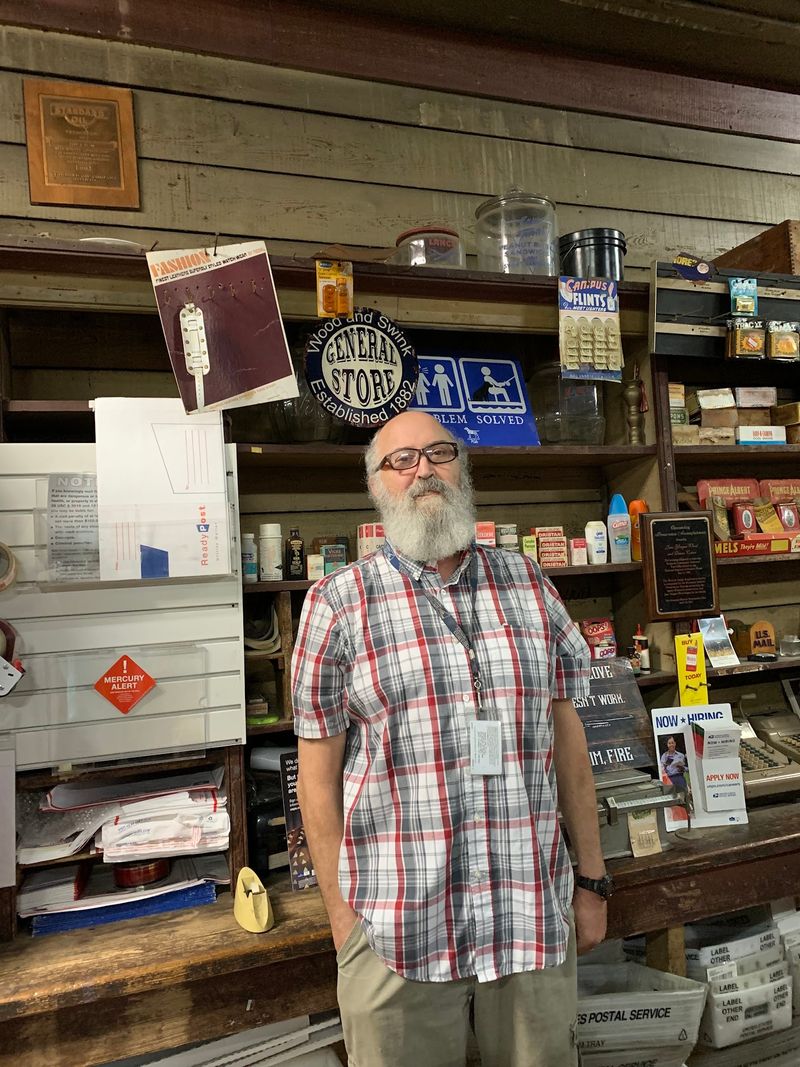
Part of what makes visiting Wood and Swink special is the chance to meet whoever is working that day and hear firsthand stories about the store’s history. Reviews frequently mention “Mr. Mike” and other family members who take time to share anecdotes about the building, the community, and the changes they’ve witnessed over the decades. This oral history tradition transforms a simple stop into an educational experience.
These aren’t rehearsed tourism speeches. They’re genuine conversations that unfold naturally when someone shows interest. You might learn about the time the store flooded, or hear about famous visitors who stopped by, or discover connections between local families that go back five generations.
The details vary depending on who you talk to and what questions you ask.
During one visitor’s stop, mail was actually delivered while they were browsing, and local patrons came in to check their boxes. Watching this daily ritual unfold provides context that you simply cannot get from reading about the place online. You see how the store functions as a social hub where neighbors exchange news and maintain relationships that extend far beyond postal transactions.
The storytelling extends to the building itself. Someone might point out specific merchandise and explain when it was made or why it never sold. They’ll show you features of the original construction that reveal building techniques from the 1880s.
These details bring the space to life in ways that static displays never could.
Not every visitor gets the full storytelling experience, it depends on how busy things are and whether you arrive when someone has time to chat. That unpredictability is part of the authentic nature of the place. It’s not a programmed attraction with scheduled tours.
It’s a working store where interactions happen organically, making each visit unique and memorable in different ways.
Mailing a Postcard to Yourself
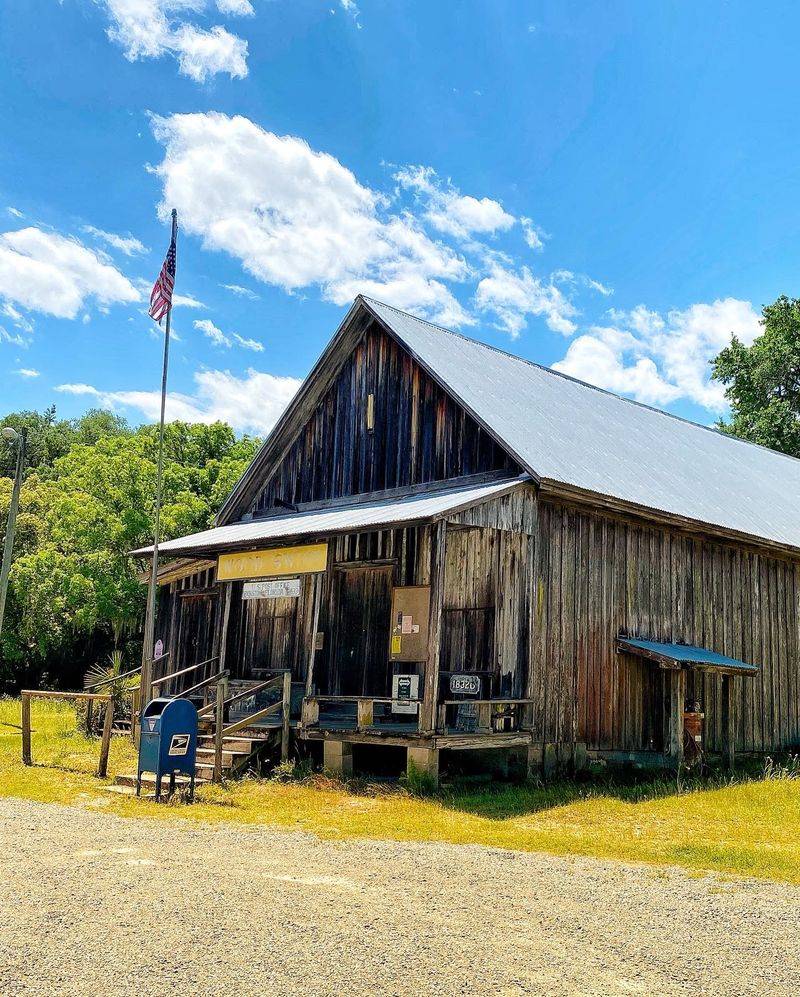
One of the most popular activities for visitors is purchasing and mailing a postcard to themselves from this historic post office. It’s a tangible souvenir that arrives days later as a reminder of your visit. When that postcard shows up in your mailbox at home, stamped and processed through one of Florida’s oldest continuously operating postal facilities, it carries a weight that digital photos simply cannot match.
The store sells postcards featuring images of the building itself, allowing you to send a picture of where you’re standing. Some people write detailed messages about their experience, while others simply note the date and location. Either way, you’re participating in a postal tradition that connects you to everyone who has mailed letters from this spot over the past 140-plus years.
The cancellation stamp itself becomes part of the souvenir, marking your correspondence with the Evinston postmark. Stamp collectors and postal history enthusiasts specifically seek out these cancellations because of the location’s historical significance. Even if you’re not a collector, there’s something satisfying about knowing your postcard passed through a facility that has processed mail since the 1880s.
Families often make this a tradition during road trips through rural Florida. Parents explain to children how people once relied entirely on mail for communication, and the act of writing and sending a physical postcard becomes a teachable moment about history and technology. Kids who have never received anything except packages get excited about checking the mailbox for their postcard’s arrival.
The cost is minimal, just the price of the postcard and a stamp, but the memory lasts far longer than most expensive tourist experiences. Years later, people rediscover these postcards in drawers or photo albums and remember their visit to this remarkable place. That lasting impact is what makes Wood and Swink more than just another roadside attraction, it’s a place that creates genuine connections to Florida’s past.
Planning Your Visit to a Working Landmark
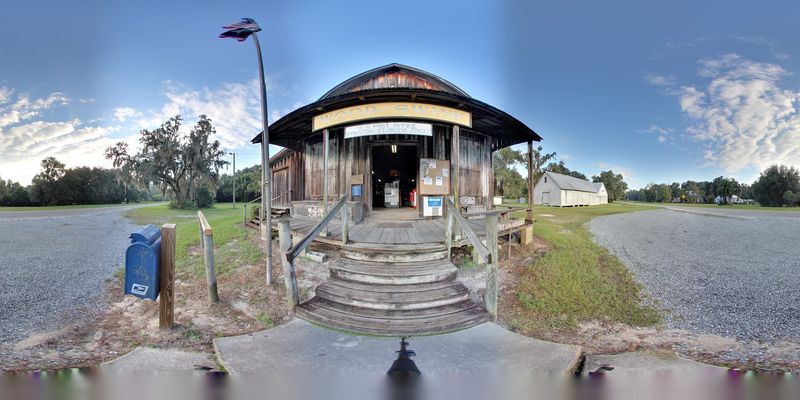
Before heading to Wood and Swink, check their limited operating hours to avoid disappointment. They’re open Monday through Friday from 1 to 5 PM and Saturday mornings from 8 to 10 AM. The store is closed Sundays and all federal postal holidays.
These restricted hours reflect the reality of operating a small family business in a rural area, so planning ahead is essential.
The address is 18320 SE County Road 225 in Evinston, which is located between Gainesville and Ocala in north-central Florida. GPS coordinates will get you there, but don’t expect much signage or development around the area. You’re heading into genuine rural Florida, so make sure you have a full tank of gas and any supplies you might need.
Plan to spend at least 30 minutes if you want to properly experience the store and potentially hear some of its history. If you’re just passing through and stopping for a quick look, 15 minutes might suffice. However, most visitors find themselves lingering longer than expected once they start exploring and conversing with whoever is working that day.
There’s a small park adjacent to the store that one reviewer mentioned contains a vintage metal slide that evokes memories of childhood burns and waxed paper. These kinds of unexpected details add to the time-capsule feeling of the entire location. Everything here seems to exist outside the normal flow of modern life.
Photography is generally welcomed, though it’s courteous to ask before taking pictures inside the post office area. Many visitors want to document the vintage merchandise and original fixtures, and the Wood family understands that the visual appeal is part of what makes the location special. Just be respectful of any customers conducting actual postal business and don’t interfere with operations.
This is a working facility first and a tourist attraction second, which is precisely what makes it worth visiting.