A Giant Strawberry Water Tower Is Hiding in Florida, and It’s Worth a Look
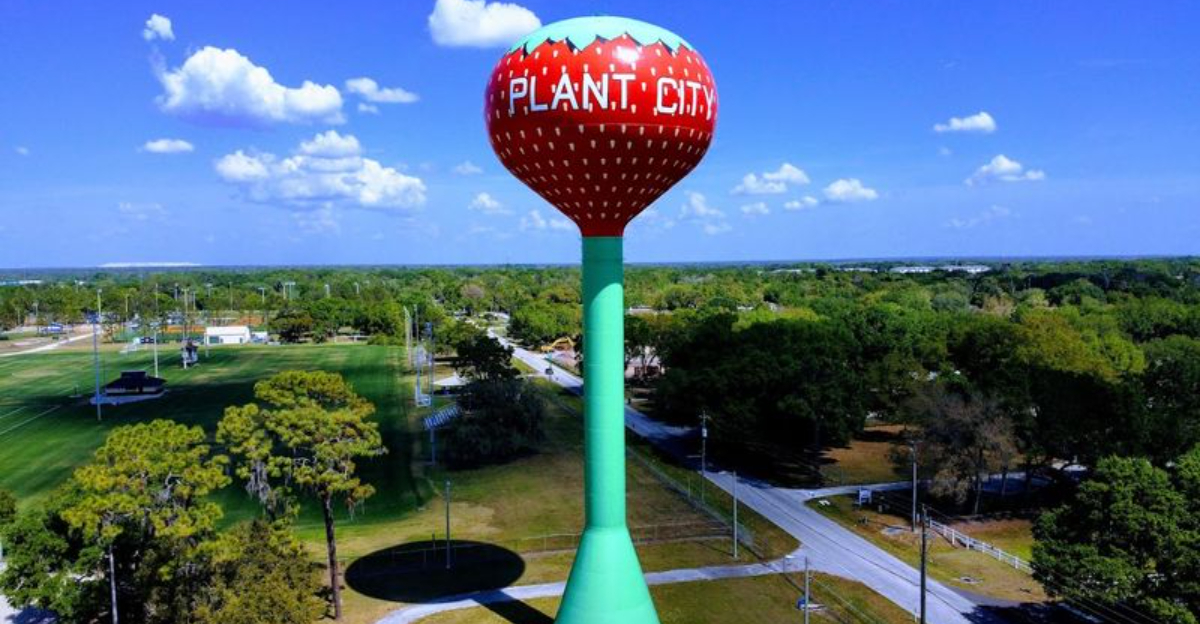
Tucked away in Plant City, Florida, stands one of the state’s most delightful roadside attractions: a massive water tower painted to look like a perfectly ripe strawberry. This quirky landmark has become a beloved symbol of the town’s deep agricultural roots and its claim as the Winter Strawberry Capital of the World. Whether you’re a Florida native hunting for hidden gems or a visitor craving something uniquely Floridian, this giant berry is calling your name.
1. A Landmark Born from Local Pride
Plant City didn’t just wake up one day and decide to paint a water tower like fruit. The town has earned its reputation as a strawberry powerhouse, producing millions of pounds of berries each year. When city planners needed a new water tower back in the day, someone had the brilliant idea to honor that heritage in the most eye-catching way possible.
The result? A 150-foot-tall strawberry that’s impossible to miss from the highway. Locals drive past it daily without giving it much thought, but first-time visitors always do a double-take.
It’s not every day you see functional infrastructure dressed up as produce.
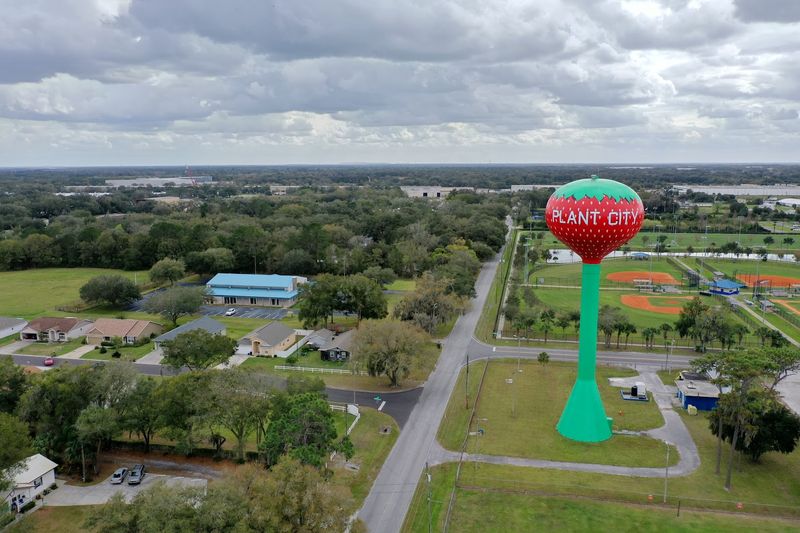
The tower sits near East Cherry Street, surrounded by sports fields and green space. It’s become such an iconic part of the city’s identity that Plant City residents feel genuine pride when they spot it. For a town built on agriculture, this oversized berry represents more than just whimsy—it’s a celebration of community, hard work, and Florida’s farming legacy that continues to thrive today.
2. Perfect Photo Op for Social Media
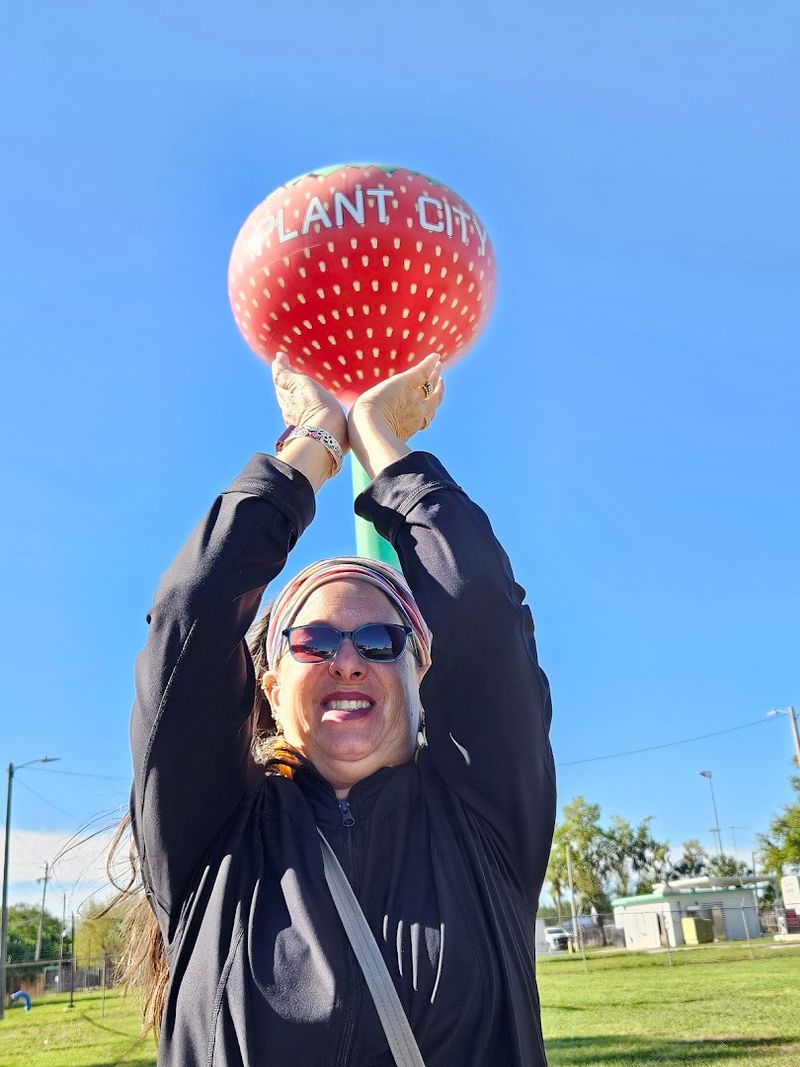
Anyone scrolling through Florida travel hashtags has probably stumbled across this berry beauty. The strawberry water tower has become an Instagram darling, and for good reason. Its vibrant red paint job pops against Florida’s typically blue skies, creating a picture-perfect backdrop that practically begs for a photo session.
Visitors love posing in front of the tower with creative angles—some pretend to hold it like they’re picking a giant strawberry, while others use it as a colorful background for family portraits. The surrounding park offers plenty of open space to get the right shot without obstacles blocking your view.
Pro tip: visit during golden hour when the late afternoon sun makes the red paint glow even more brilliantly. The lighting transforms an already photogenic structure into something truly spectacular. Morning visits work well too, especially if you want fewer people in your shots.
Don’t forget to tag your location when you post. Plant City residents get a kick out of seeing their hometown landmark trending, and you’ll be contributing to Florida’s collection of wonderfully weird roadside attractions.
3. Open 24 Hours, Because Strawberries Never Sleep
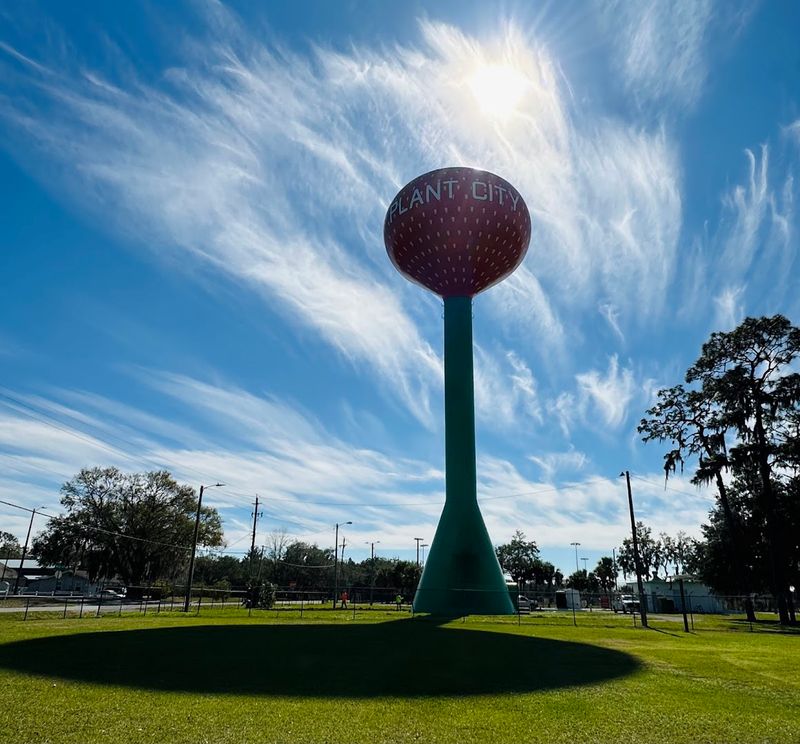
Here’s something you don’t often hear about tourist attractions: this one never closes. The strawberry tower stands ready for admirers any time of day or night. Whether you’re an early bird who loves sunrise adventures or a night owl looking for something different to do at 2 AM, the tower welcomes all comers.
Late-night visits offer their own special charm. The tower is visible from nearby roads, and while the park itself might be dark, the structure remains an impressive silhouette against the night sky. Some visitors report that evening drives past the tower have become a comforting ritual during their Plant City commutes.
The 24-hour accessibility means you can plan your visit around your schedule without worrying about operating hours or closed gates. Traveling through Central Florida at odd hours? Make a quick detour to check this off your Florida bucket list.
That said, daytime visits are recommended for the best experience and photos. The surrounding Edward Medard Park offers amenities like restrooms and walking paths that are more enjoyable when the sun’s up and everything’s fully visible and accessible.
4. More Than Just a Tower—It’s a Park
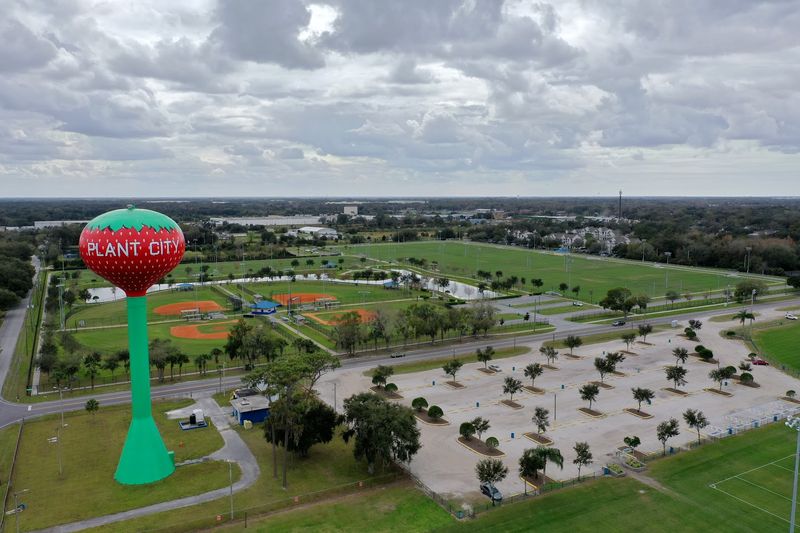
Many visitors arrive expecting just a water tower and nothing else. Surprise—you’re actually visiting Edward Medard Park, a sprawling recreational area that happens to feature Florida’s most famous berry. The park covers substantial ground with soccer fields, walking trails, and open green spaces perfect for picnics or letting kids burn off energy.
Families appreciate that there’s more to do than snap a quick photo and leave. Children can run around the fields while parents relax on the grass with the tower looming overhead. Several reviews mention the park’s newer playground area tucked toward the back, past the soccer fields, which offers modern equipment and shaded seating.
Sports enthusiasts use the well-maintained fields regularly for soccer games and practices. On weekends, you might catch local teams in action, adding to the community atmosphere. The walking paths provide a pleasant route for exercise with the unusual landmark serving as your constant companion.
One reviewer did mention occasional flooding issues after heavy rains, so check the weather before planning an extended park visit. Otherwise, the combination of quirky landmark and functional recreation area makes this spot a genuine two-for-one deal.
5. A Quick Stop That Kids Absolutely Love
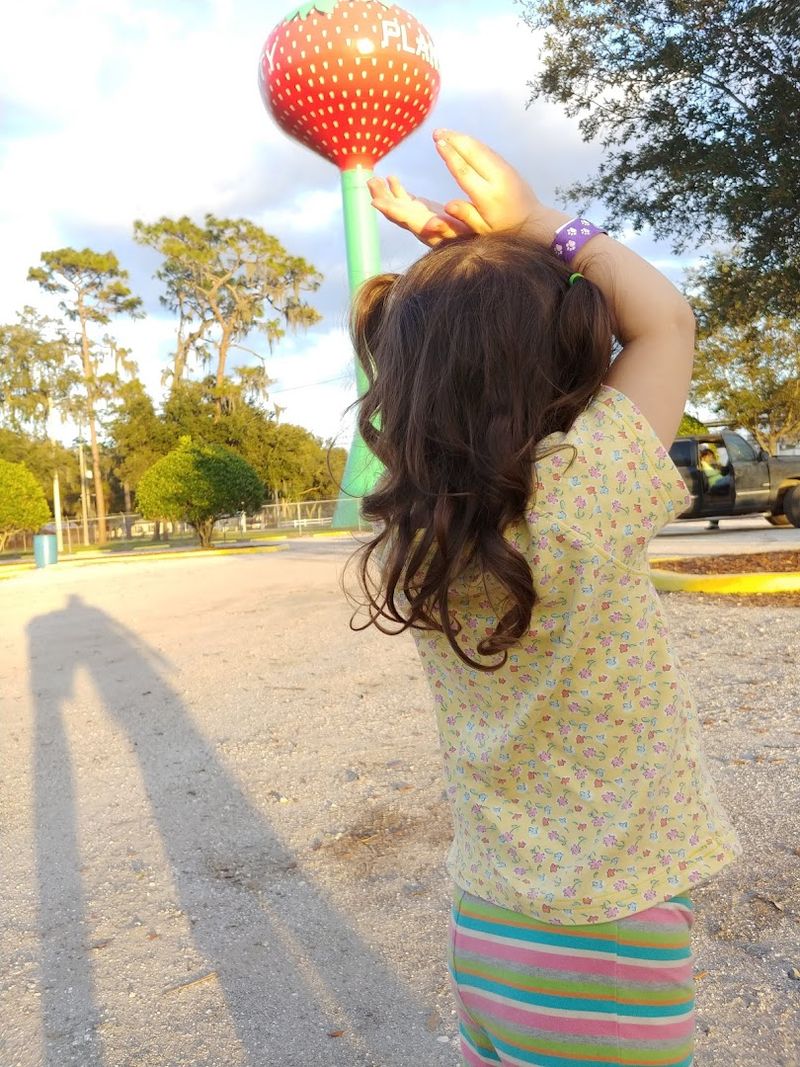
Road trips with kids require strategic planning, and this strawberry tower delivers as a brilliant pit stop. Multiple parent reviews emphasize how much children light up when they spot the enormous fruit. It’s the kind of unexpected sight that breaks up long drives and gives little ones something to talk about for miles afterward.
The novelty factor works magic on restless passengers. “Look, a giant strawberry!” is apparently all it takes to transform cranky backseat complaints into excited chatter. Parents report that even teenagers who claim they’re too cool for roadside attractions crack a smile at this one.
The surrounding park space means kids can actually get out and stretch their legs rather than just viewing from the car window. They can run around, use up some energy, and approach the tower from different angles. It’s functional and fun—a rare combination when traveling with children.
Pack some actual strawberries for a themed snack while you’re there. Kids find it hilarious to eat regular-sized berries while standing under their gigantic cousin. These small touches turn a simple rest stop into a memorable family moment that beats another boring gas station break any day.
6. Finding It Is Half the Fun
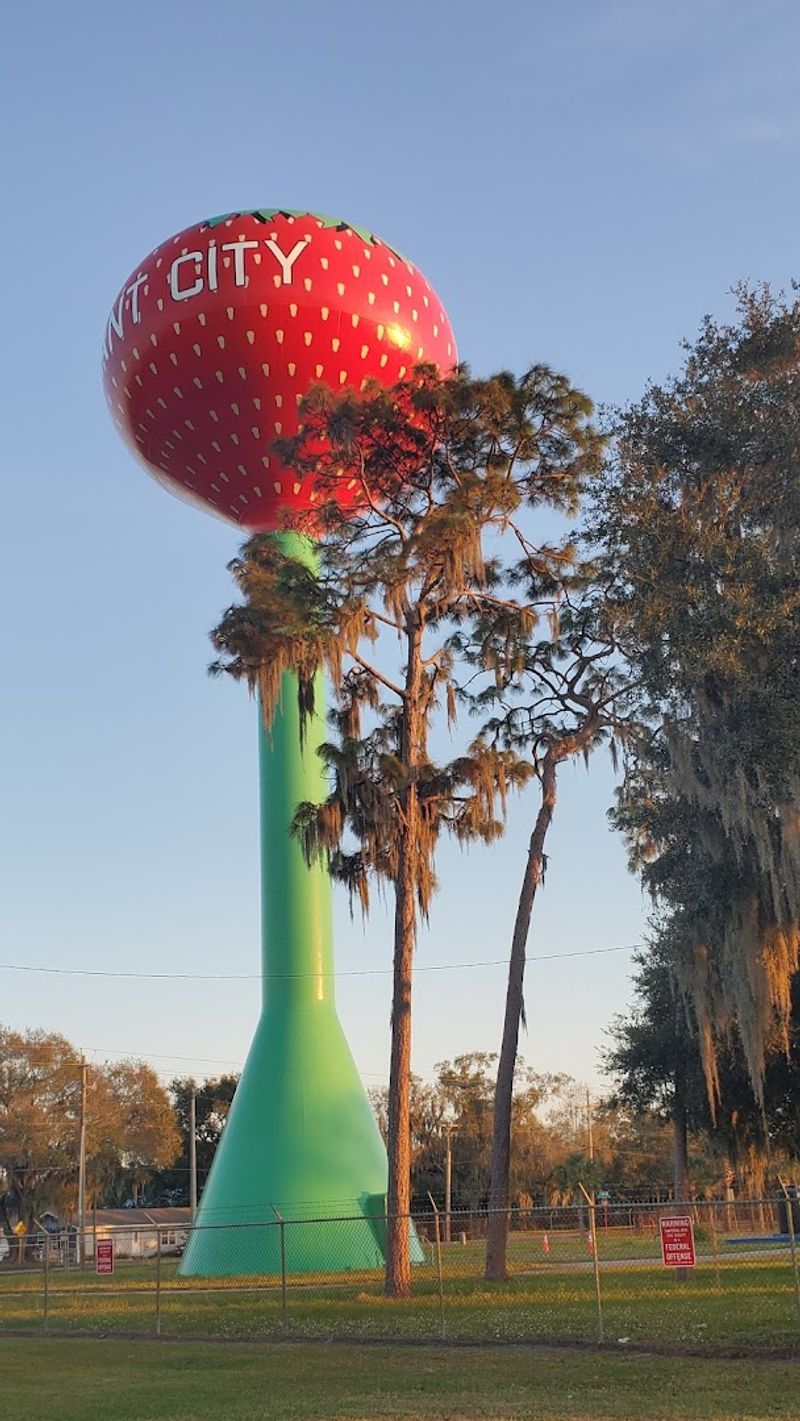
Located at 2602 East Cherry Street, the tower isn’t exactly hidden, but it’s not smack in the middle of downtown either. It sits in a more residential and recreational area, which means you’ll need to navigate deliberately rather than stumble upon it accidentally. That’s part of what makes finding it feel like a small treasure hunt.
GPS coordinates work perfectly if you plug them in: 28.0264845, -82.097128. Most navigation apps recognize “Plant City Water Tower” or “Edward Medard Park” as destinations. The tower rises high enough that once you’re in the general vicinity, you can spot it from several blocks away, making those final turns easier.
Some reviewers mention that power lines obstruct the view from certain angles, which can be frustrating for photographers seeking the perfect unobstructed shot. Walk around the park perimeter to find clearer sightlines. The extra steps are worth it for better photos without wires cutting through your composition.
Parking is plentiful near the main fields, though one visitor noted that the newer playground area farther back has limited nearby parking. Plan to walk a bit if you want to explore the entire park beyond just the tower itself.
7. A Historical Landmark with Modern Charm
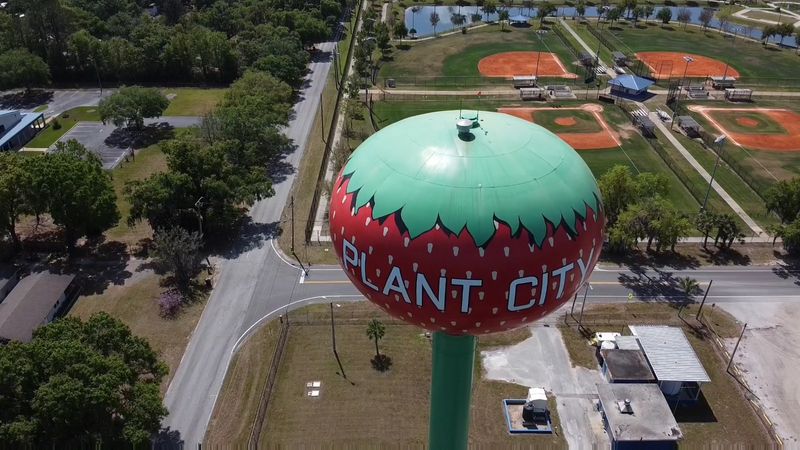
Google officially categorizes this as a historical landmark, which might seem funny for a painted water tower, but the designation reflects its importance to Plant City’s identity. The structure has stood for decades, watching the town grow and change while remaining a constant symbol of local agricultural pride.
The tower’s paint job requires regular maintenance to keep it looking fresh and vibrant. City crews periodically touch up the red paint and green leafy crown to ensure it remains photo-worthy for the steady stream of visitors. That ongoing care demonstrates how much the community values this unusual landmark.
With a 4.5-star rating from 36 reviews, the tower clearly resonates with people who make the trip. Most complaints focus on park conditions like flooding rather than the tower itself, which consistently earns praise. One reviewer called it “a berry fancy water tower,” and honestly, that sums it up perfectly.
The landmark status also means it’s protected and preserved for future generations. Plant City recognizes that this quirky water tower has become irreplaceable to the town’s character, transforming functional infrastructure into something that brings joy and puts their community on the map.
8. Why Plant City Chose a Strawberry
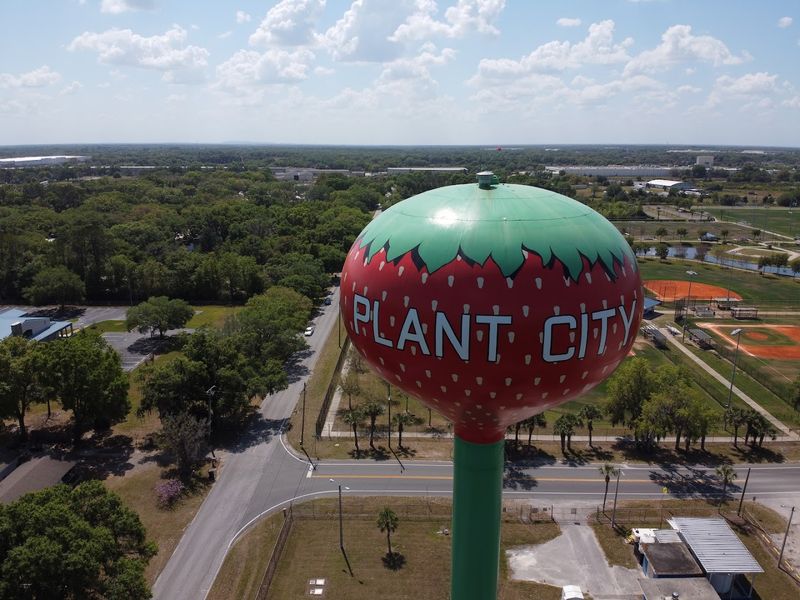
Plant City doesn’t just like strawberries—it’s basically built on them. Every spring, the town hosts the Florida Strawberry Festival, drawing hundreds of thousands of visitors who come to celebrate the berry harvest. The region’s sandy soil and mild winter climate create ideal growing conditions for producing some of the sweetest strawberries in America.
Local farms ship strawberries nationwide during peak season, making Plant City a crucial player in Florida’s agricultural economy. When you bite into a winter strawberry from the grocery store, there’s a solid chance it came from fields surrounding this very water tower. The farming tradition runs deep here, spanning generations of families who’ve worked the land.
Painting the water tower as a strawberry wasn’t just cute—it was smart branding. The landmark reinforces Plant City’s identity and gives visitors an immediate visual understanding of what makes this town special. It’s become a point of pride that residents genuinely cherish rather than view as kitsch.
So when you visit, remember you’re not just seeing a painted water tower. You’re witnessing a community’s love letter to the crop that built their town, supports their families, and continues to define Plant City’s place in Florida’s agricultural landscape.