Follow This Jacksonville Trail to a Hidden, Peaceful Pond at the End
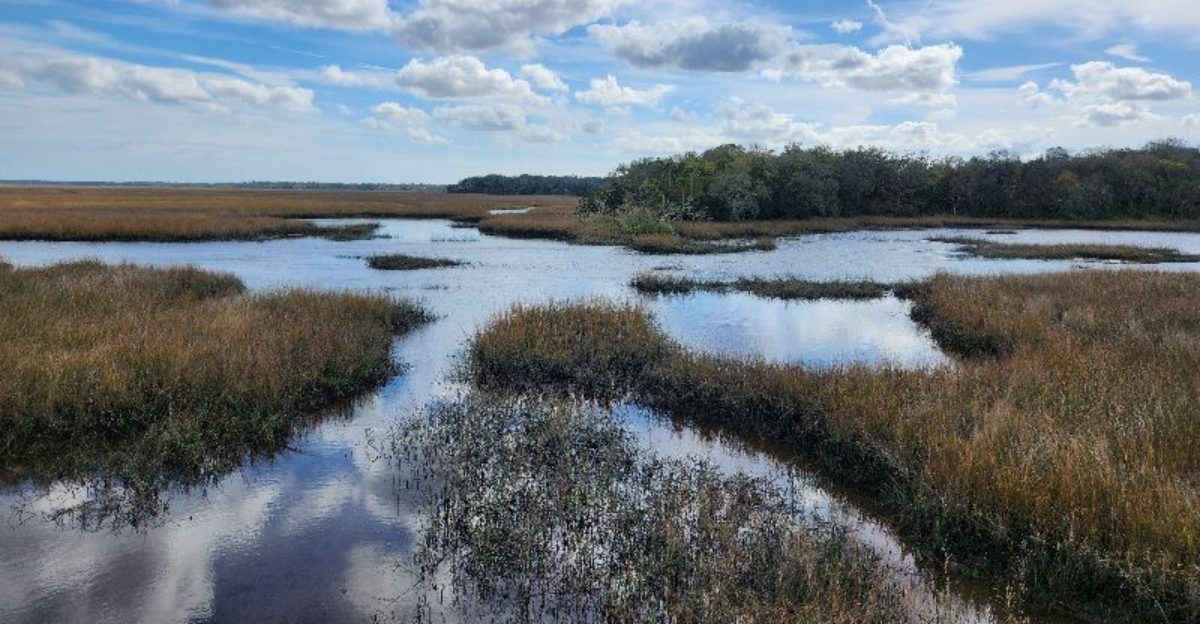
Tucked away in Jacksonville’s Fort Caroline area, Spanish Pond Trailhead is one of those rare spots that feels like a secret even locals haven’t fully discovered. Part of the Timucuan Ecological and Historic Preserve, this trail winds through lush Florida forest before rewarding hikers with a tranquil pond at the finish.
Whether you’re a weekend warrior, a dog parent looking for a shaded stroll, or just someone craving a quiet escape from city life, this trail delivers. Rated 4.8 stars by over 400 visitors, it’s clear that Spanish Pond is doing something very right.
The Trail Itself: What to Expect Before You Lace Up
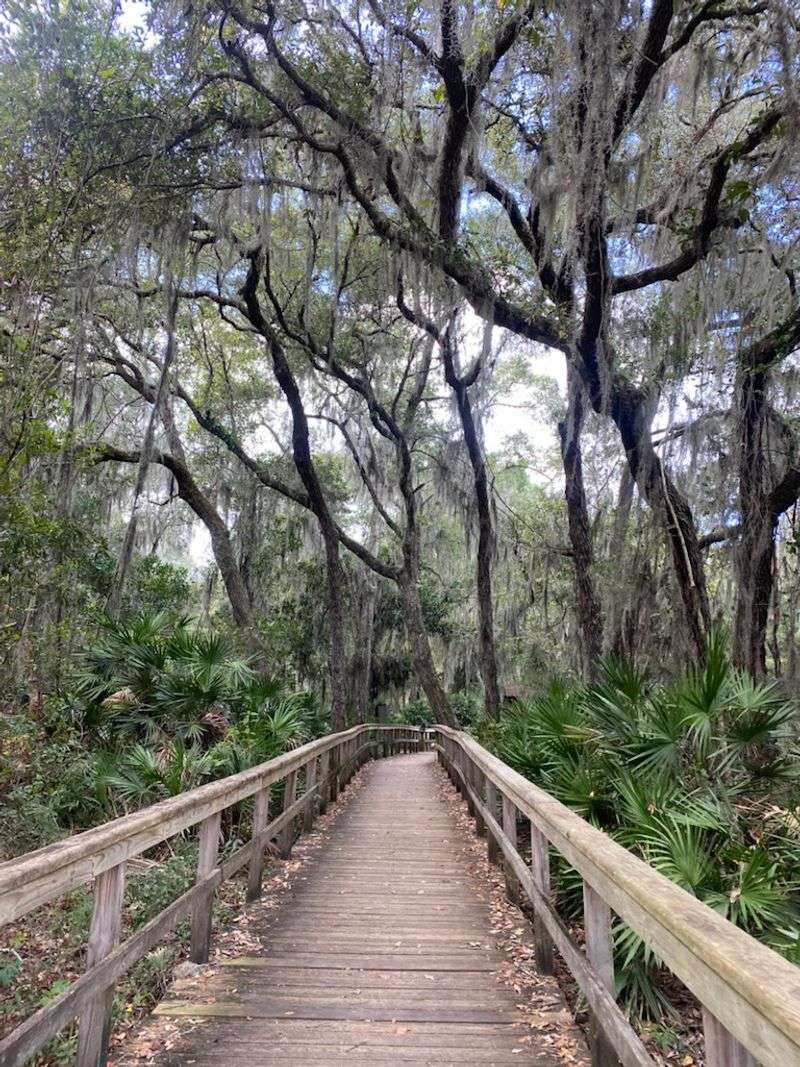
Before you ever set foot on the path, knowing what you’re walking into makes the whole experience way better. Spanish Pond Trailhead sits in Jacksonville’s 32225 zip code, right across the street from Fort Caroline National Memorial, and it’s part of the larger Timucuan Preserve trail network.
The main red-marked trail is roughly 1.7 miles one way to the Theodore Roosevelt area entrance, but savvy hikers can string together loops for a total of around 4 to 4.5 miles.
The terrain here is genuinely varied for Florida standards. You’ll move through sandy stretches, shaded forest corridors, elevated boardwalks, and even some mild hills — yes, actual elevation changes that most Northeast Florida trails simply don’t offer.
Tree roots break the surface frequently, so watching your footing isn’t optional. Comfortable, closed-toe shoes with grip are strongly recommended.
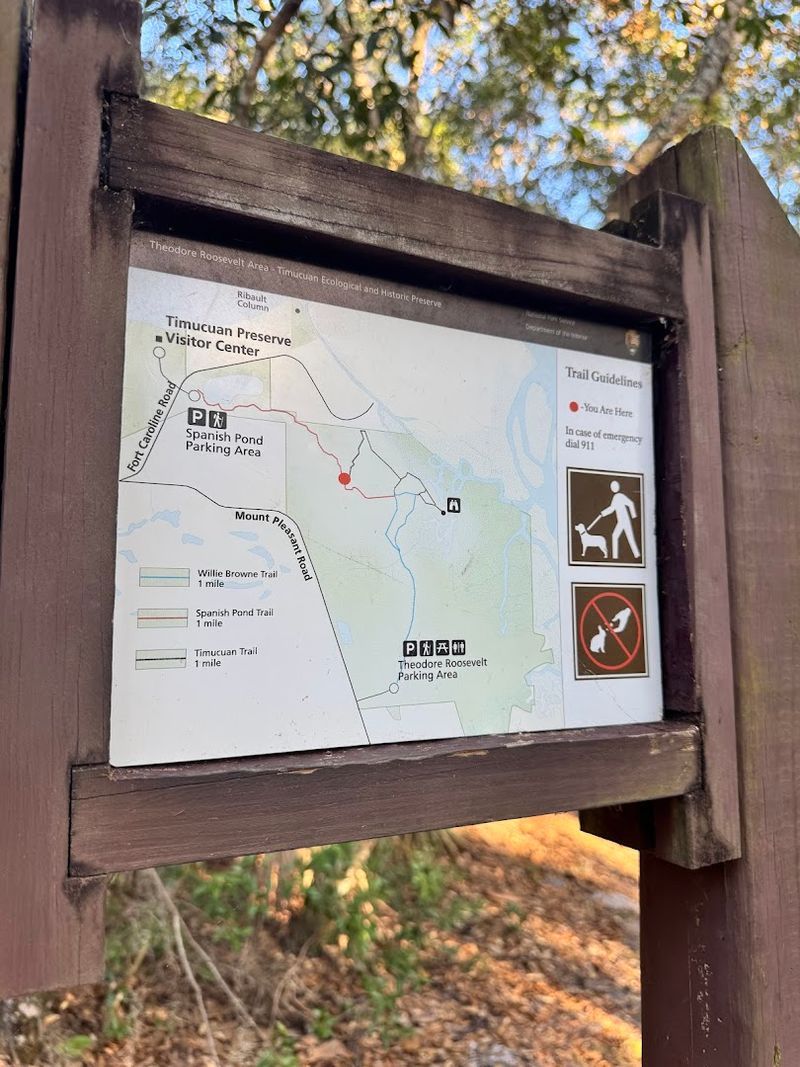
Color-coded trail markers keep navigation manageable. Red marks the Spanish Pond Trail, blue leads to the Theodore Roosevelt area, and black is a connector loop that takes you out to a scenic peninsula with a water lookout platform.
The green trail is permanently closed. Multiple trail maps are posted along the route, which is a huge help when you’re trying to figure out which way leads to the pond.
The trailhead opens at 9 AM Wednesday through Sunday and is closed on Mondays and Tuesdays. There are no restrooms at the Spanish Pond trailhead itself — those are located at the Roosevelt end — so plan accordingly.
Parking is limited to a small lot, so arriving early on weekends is a smart move. The trail is free to enter, which honestly makes it feel even more like a hidden gem worth protecting.
The Hidden Pond: The Peaceful Reward Waiting at the End
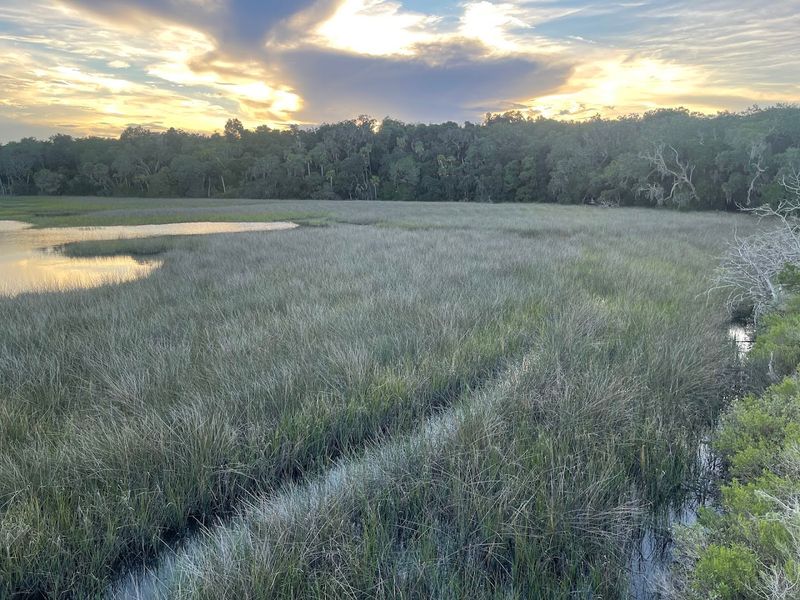
There’s something almost cinematic about the moment Spanish Pond comes into view. After winding through dense subtropical forest, roots, and sandy terrain, the quiet water appears like the trail’s personal punchline — in the best possible way.
The pond sits within the Timucuan Preserve and carries both natural beauty and historical significance tied to the area’s deep past.
The stillness around the pond is the kind that actually slows your breathing down. No crowds, no noise — just water, trees, and the occasional bird call bouncing across the surface.
Early morning visitors consistently describe it as peaceful and almost meditative, especially on weekday mornings when foot traffic is minimal. Arriving right at the 9 AM opening gives you the best shot at having the pond nearly to yourself.
Wildlife sightings near the water are common. Frogs, turtles, and a wide range of birds tend to hang around the pond’s edges, and patient visitors sometimes spot snakes gliding along the banks.
This is Florida, after all — the wildlife is part of the deal, and it genuinely adds to the experience rather than taking away from it.
The area around the pond also holds layers of history connected to the Timucuan people and early Spanish presence in the region. The name itself is a nod to that colonial-era past, giving the spot a depth that goes beyond just pretty scenery.
Guided Saturday tours led by rangers like Rodney bring this history to life in a way that’s genuinely engaging, not textbook-dry. Even if you skip the tour, standing at the pond’s edge with that context in mind changes how you see the place entirely.
It transforms a nice walk into something that actually stays with you.
Elevation and Terrain: Why This Trail Stands Out in Florida
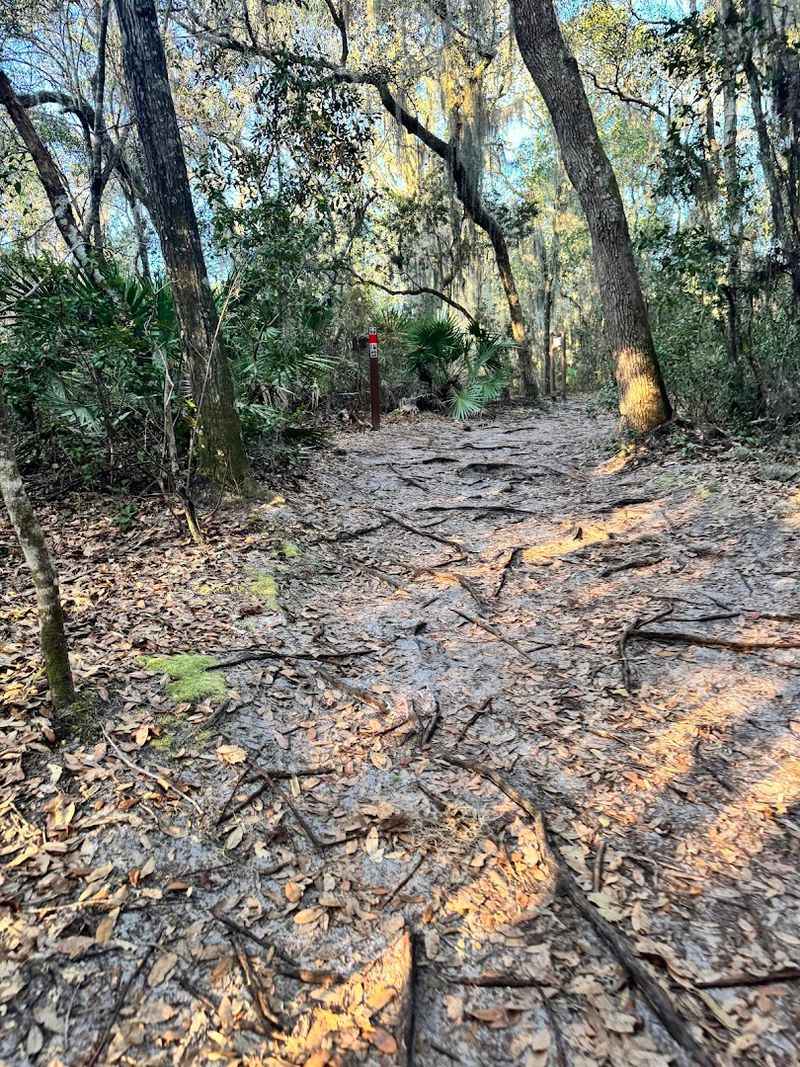
Ask any Jacksonville hiker what they miss most about trails outside Florida, and elevation is almost always the answer. Most local trails are pancake-flat, which is fine for a casual stroll but gets old fast if you want a real workout.
Spanish Pond Trailhead is a genuine exception, and that’s a big part of why regulars keep coming back.
The trail features noticeable elevation changes — nothing mountain-level, but enough to get your heart rate up and give your legs something to work against. Reviewers consistently call it one of the only trails in Northeast Florida with actual hills, and that reputation has earned it a loyal following among runners and fitness hikers.
The inclines are short but real, and the descent back down through rooted terrain keeps you mentally engaged the whole time.
Sandy sections add another layer of physical challenge. Walking on loose sand burns more energy than a paved path, and it gives the trail a raw, natural character that feels authentically Floridian.
Combine that with the boardwalk sections over marshy ground, and you’ve got a trail that genuinely cycles through different surface types in a single outing.
The roots are the trail’s most talked-about feature — and not always in a good way. Exposed roots crisscross the path frequently, especially under the denser tree canopy sections.
They’re a trip hazard worth taking seriously, particularly for anyone with ankle instability or younger kids running ahead. Trekking poles can be a solid addition if you’re prone to rolling an ankle on uneven ground.
Despite the moderate challenge, most reviewers rate the trail as accessible to a wide range of fitness levels. Taking your time, staying aware of your footing, and pausing at the benches scattered along the route makes the experience enjoyable for almost anyone willing to show up ready to hike.
Wildlife and Nature: What’s Living Along the Trail
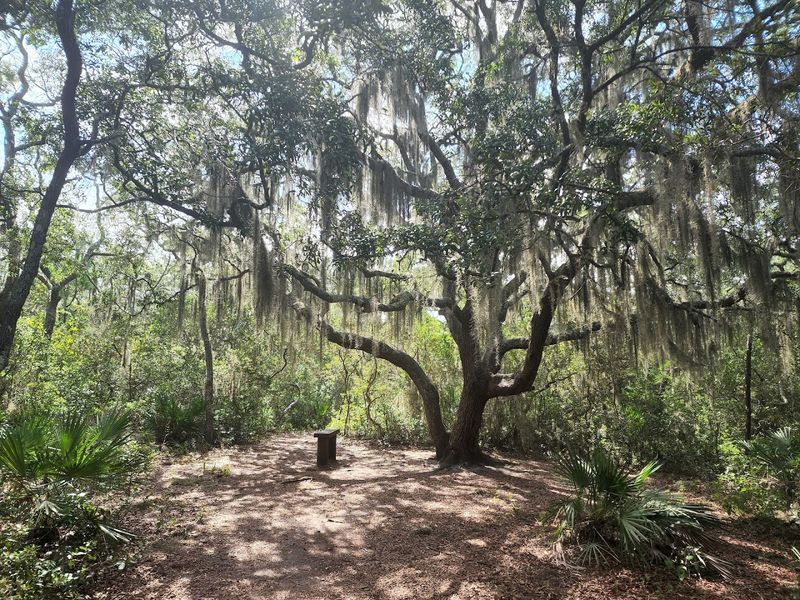
One of the quieter thrills of hiking Spanish Pond Trail is never quite knowing what’s going to appear around the next bend. The Timucuan Preserve is a living ecosystem, and the trail cuts right through the middle of it.
Hikers have spotted bald eagles circling above the St. Johns River section, which is easily one of the most jaw-dropping wildlife moments you can have this close to a major Florida city.
Rabbits are common along the wooded stretches, often darting across the trail early in the morning before the foot traffic picks up. Owls and hawks make regular appearances, and the bird diversity throughout the preserve is impressive enough to make birders genuinely excited.
A pair of bald eagles spotted on a December morning hike was enough to make one reviewer declare the trail an absolute must-revisit.
The pond area draws its own crowd of creatures. Frogs call from the water’s edge, turtles bask on logs, and the occasional snake moves through the underbrush or along the bank.
Cool snakes, as one reviewer specifically put it — and honestly, that energy is the right one. Encountering native wildlife in its actual habitat is a privilege, not a problem.
Butterflies are abundant during warmer months, fluttering through the sunny clearings between forested sections. The vegetation itself is part of the spectacle — a dense mix of palms, pines, and native Floridian plants that creates what multiple visitors have described as a genuine rainforest feel.
Spanish moss hangs from the older trees, adding that distinctly Southern gothic atmosphere that makes Florida’s natural spaces so visually striking.
Tick awareness is worth mentioning, especially for dog owners. A January visit documented multiple deer ticks on dogs after the hike, so a thorough check after the trail is genuinely important regardless of season.
Guided Saturday Tours: Meet Ranger Rodney and Learn the Real Story
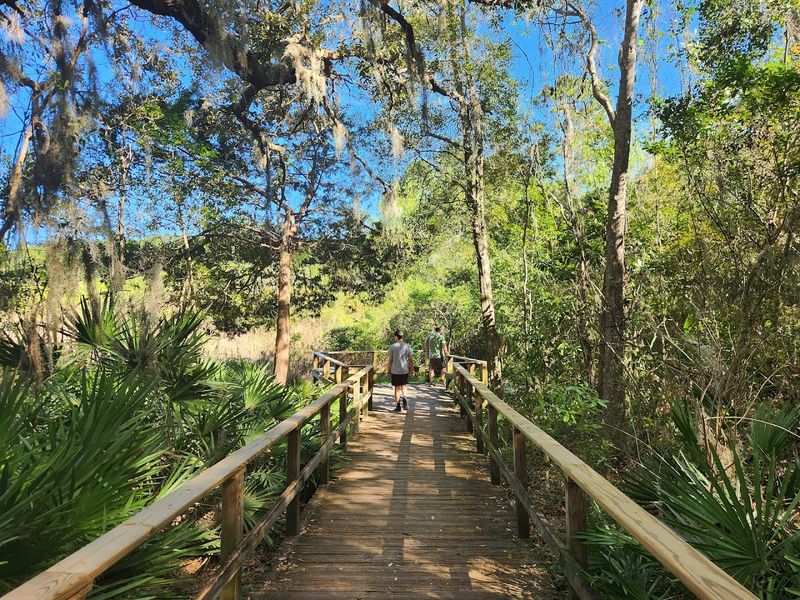
Some trails you hike. Some trails you experience.
The difference at Spanish Pond often comes down to a single person: Ranger Rodney. Every Saturday at 1:00 PM, a guided tour departs from the trailhead, and if you’ve never taken it, you’re honestly missing the best version of this hike.
Rodney’s tours cover the area’s layered history — from the Timucuan people who originally inhabited this land to the Spanish colonial presence that gave the pond its name. He walks visitors through different ecosystems, identifies native trees, points out wildlife signs, and connects the landscape to the human stories embedded in it.
Reviewers who’ve joined the tour repeatedly describe it as a transformative experience rather than just an informational walk.
What stands out most in visitor accounts isn’t just the knowledge Rodney brings — it’s his approach. When one hiker’s son experienced ankle pain mid-tour, Rodney paused without hesitation, offered help, and waited patiently before continuing.
He greets other hikers warmly along the way and has a natural ability to make the history feel personal rather than academic. That kind of ranger energy is genuinely rare and worth seeking out.
The tours are free, like everything else at Spanish Pond. Groups tend to be small, which means you actually get real engagement rather than shouting questions at the back of a crowd.
Showing up a few minutes before 1 PM on a Saturday gives you the best chance of joining before the group heads out.
Even if history isn’t usually your thing, hearing about Willie Brown, the local ecosystems, and the layered significance of this particular stretch of Florida land has a way of reframing the entire hike. The trail becomes a story you’re walking through rather than just a path you’re covering.
Dog-Friendly Hiking: Bringing Your Pup Along the Trail
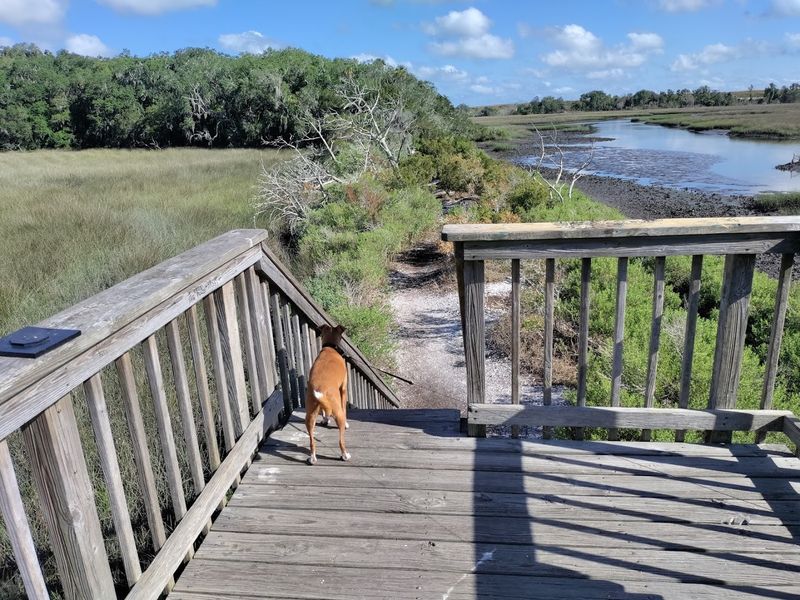
Good news for dog owners: Spanish Pond Trailhead is leashed-dog friendly, and the trail’s shaded canopy makes it a genuinely comfortable outing for four-legged hikers even during warmer months. The wide path accommodates dogs without crowding, and the variety of smells along a forest trail like this is basically sensory paradise for any dog with a nose.
The trail surface does come with some considerations for pets. Exposed roots can be tricky for dogs with shorter legs or older joints, and sandy sections require a bit more effort than firm ground.
Keeping your dog on a short leash through the rooted areas helps prevent them from tangling or tripping, and it keeps the trail safer for other hikers too.
Waste management is worth taking seriously here. The trail is free and well-maintained largely because visitors respect it — and a few reviewers have noted the frustrating sight of bagged dog waste left on the trail rather than carried out.
A simple solution: attach a small secondary bag to your leash or backpack to carry waste all the way to a proper bin. It keeps the trail clean for everyone, including other dogs.
Tick checks after the hike are non-negotiable for dogs. One January visit resulted in multiple deer ticks on two dogs, which is a good reminder that even off-peak months carry a risk.
Running a thorough check from paws to ears before getting back in the car is a solid habit regardless of season.
Water for your dog is your responsibility to bring — there are no dog water stations at the trailhead. Packing a collapsible bowl and a bottle of water ensures your pup stays hydrated, especially during the warmer months when even a shaded trail can get warm by midday.
Plan accordingly and this trail becomes a regular favorite for both of you.
The Observation Deck and St. Johns River Views
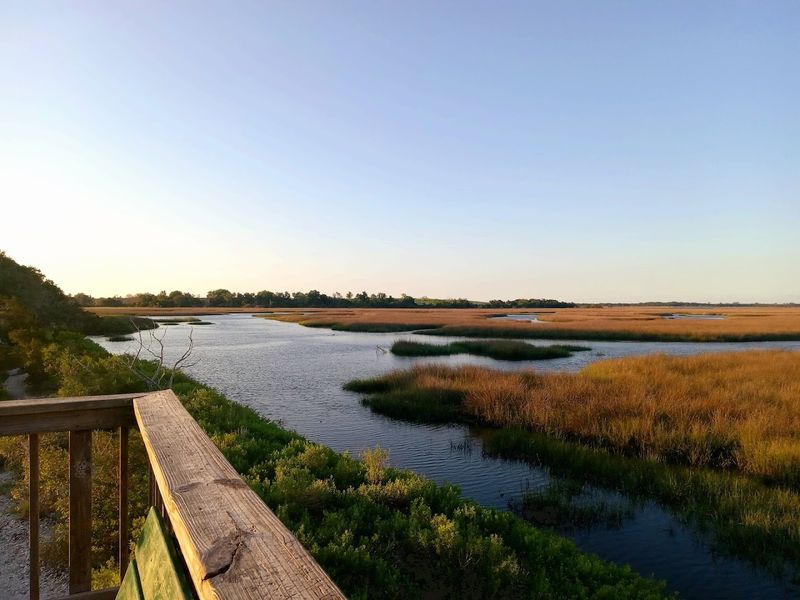
The observation deck is one of those trail features that earns its reputation. After winding through the forest and past the pond, the black connector trail leads out to a scenic peninsula where a wooden lookout platform gives you an unobstructed view of the surrounding wetlands and the St. Johns River beyond.
It’s the kind of view that makes you stop mid-sentence and just stare for a minute.
The tidal marsh stretches out in every direction from the platform, with grasses shifting in the breeze and the river glinting in the distance. This is also prime territory for bald eagle sightings — the open water and thermals above the river make it ideal hunting ground for raptors.
Binoculars are worth throwing in your pack for this section specifically.
The black trail that leads to the deck is a loop, so it circles back to the junction where the red and blue trails meet rather than leaving you to backtrack. That loop structure makes the observation deck a natural midpoint reward rather than a detour, and the trail signage makes it easy to follow without second-guessing your route.
Some sections near the marsh do flood during high tide, which is worth checking if you’ve had recent rain or plan to visit during tidal peaks. A few visitors have noted wet patches along the lower stretches near the water, so waterproof footwear or trail shoes with drainage can save you from soggy socks.
The boardwalk sections help, but they don’t cover every low-lying area.
One reviewer noted that a loop from the parking lot to the observation deck and back takes roughly 50 minutes at a moderate walking pace. That makes this a perfectly manageable outing even on a shorter schedule, and the payoff at the deck makes every muddy step worth it.
Tips, Timing, and Everything Else You Need Before You Go
Getting the most out of Spanish Pond Trailhead starts before you even pull into the parking lot. The trail is open Wednesday through Sunday, 9 AM to 5 PM, and closed on Mondays and Tuesdays.
Showing up right at 9 AM on a weekday is the move if you want the trail mostly to yourself — one group described an early-morning December hike as quiet, peaceful, and completely bug-free, which is pretty much the Florida hiking jackpot.
Bug spray is a legitimate necessity during warmer months. Spring through early fall brings mosquitoes and other insects that can turn a pleasant hike into a slap-fest.
Sunscreen matters too, even on the shaded sections, since Florida’s UV index doesn’t care about tree cover. Water is essential — bring more than you think you need, especially if you’re planning to cover the full loop or bring a dog along.
Parking is limited at the Spanish Pond Trailhead lot. Weekends can fill up fast, so arriving early is the practical move.
The lot is shaded, which is a small but genuinely appreciated detail on a hot Florida day. There are no restrooms at the Spanish Pond side — the nearest facilities are at the Theodore Roosevelt trailhead at the far end of the blue trail, so factor that into your planning.
The AllTrails app is useful for navigation, especially if you’re new to the color-coded trail system. Cell service is generally available, but downloading the trail map offline before heading in is a smart backup.
The trail is bigger than it looks on a map, and a few visitors have mentioned getting turned around near dusk, which is a situation worth avoiding entirely.
The trail is free, family-friendly, stroller-accessible on most surfaces, and connected to Fort Caroline National Memorial across the road. Stack both visits together and you’ve got a genuinely full Jacksonville day trip.