I Refuse to Believe These 11 Strange Attractions Could Exist Anywhere but Florida
Florida has earned its reputation as America’s weirdest state, and honestly, that’s not an insult—it’s a badge of honor. Nowhere else will you find mermaids performing underwater ballet, a castle built entirely from discarded printing plates, or monkeys roaming free while humans stay caged. These bizarre roadside stops and unusual attractions prove that Florida operates by its own set of rules, where the strange becomes normal and the impossible somehow exists.
1. Weeki Wachee Springs State Park (Weeki Wachee)
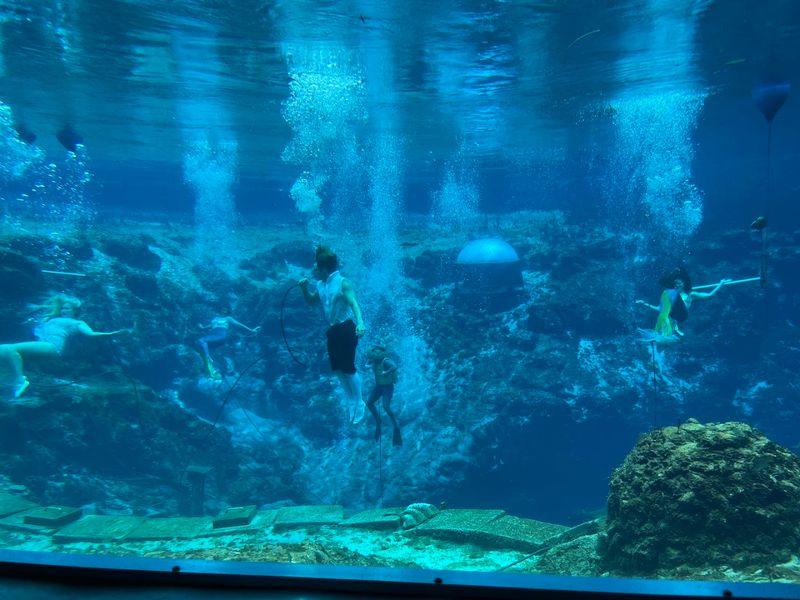
Professional performers wearing shimmering tails swim gracefully through crystal-clear spring water while breathing from hidden air hoses—creating an underwater ballet that’s been mesmerizing visitors since 1947. Watching from a submerged theater with windows looking directly into the spring feels surreal, like peering into a fantasy world that somehow exists in real life. The mermaids flip, spin and even eat bananas underwater during their carefully choreographed shows.
This isn’t some cheesy tourist trap thrown together last week. Weeki Wachee has been perfecting the art of underwater performance for decades, training women to hold their breath, smile continuously and make swimming with a tail look effortless. The natural spring provides a stunning backdrop with its impossibly blue water and occasional curious fish swimming past.
Weather and water conditions can affect show schedules, so checking ahead prevents disappointment. The park also offers kayaking and a water park for visitors who want more than mermaid magic. Watching grown women transform into mythical creatures while you sit in an air-conditioned underwater theater remains one of Florida’s most delightfully weird experiences—proof that some childhood dreams actually do come true.
2. Skunk Ape Research Headquarters (Ochopee)
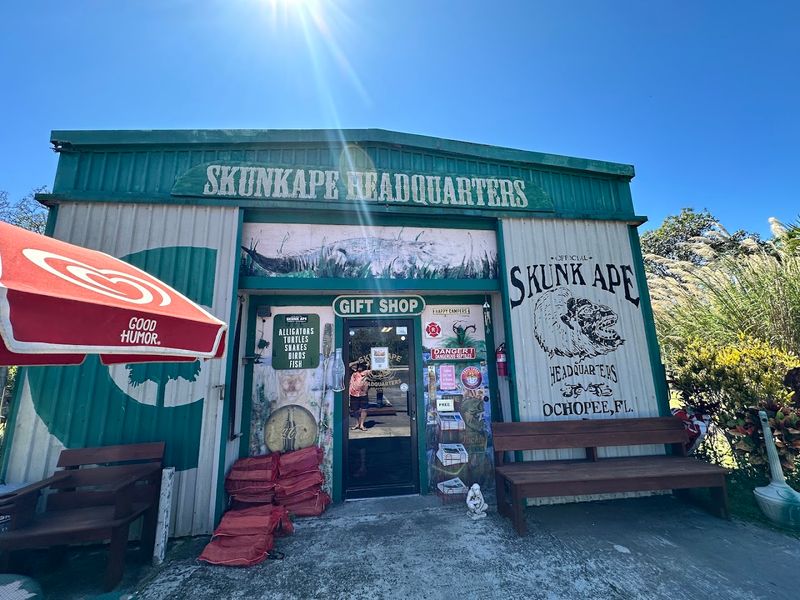
Deep in Everglades wilderness sits a tin-roofed building dedicated entirely to Florida’s answer to Bigfoot—a seven-foot-tall, foul-smelling creature locals call the Skunk Ape. The owner genuinely believes in this swamp-dwelling cryptid and has collected decades worth of blurry photos, plaster footprint casts and eyewitness testimonies. Walking through feels like stepping into someone’s obsession, which makes it absolutely fascinating.
Beyond the Skunk Ape memorabilia, you’ll find live alligators, snakes and other reptiles in outdoor enclosures. The surrounding campground attracts both believers hoping for a sighting and skeptics who appreciate the commitment to Florida weirdness. Display cases overflow with newspaper clippings, hand-drawn maps marking sightings and letters from people swearing they’ve encountered the creature.
The whole operation embraces its fringe status without apology. You won’t find polished museum displays or interactive touchscreens—just raw enthusiasm for a legend that refuses to die. Whether the Skunk Ape exists remains hotly debated, but this roadside headquarters definitely exists, making it the perfect stop for anyone who loves cryptozoology, quirky Americana or just appreciates Florida’s commitment to the bizarre.
It’s earnest, strange and completely unforgettable.
3. Monkey Jungle (Miami)
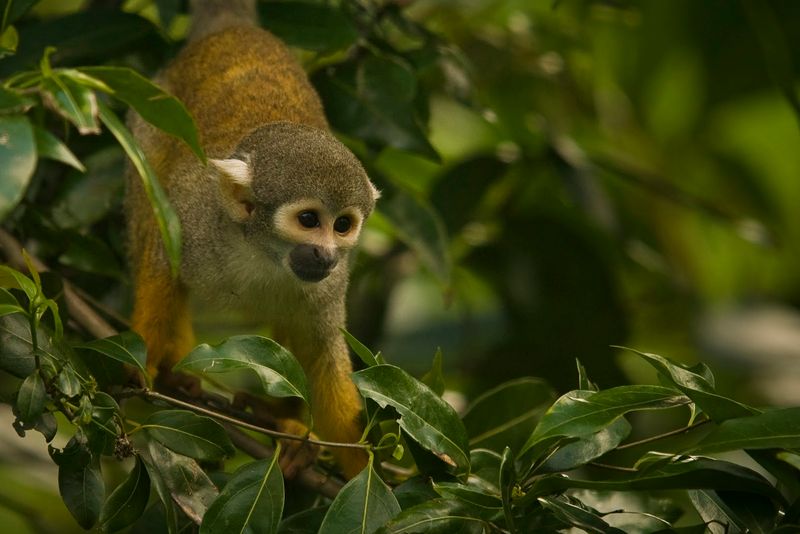
Most zoos put animals behind bars, but Monkey Jungle flipped that concept completely—here, primates swing freely through thirty acres of tropical hammock while humans shuffle through screened tunnels like the caged creatures. This role reversal creates an oddly humbling experience as monkeys literally look down on you from overhead branches. The attraction opened in 1933 and has maintained this unusual setup ever since.
Several primate species call this place home, from tiny squirrel monkeys to larger capuchins. They climb, play, eat and occasionally stare at passing visitors with expressions that seem almost judgmental. Watching them interact naturally while you’re confined to pathways highlights how most zoo experiences typically work—except with the power dynamics reversed.
Daily shows demonstrate natural behaviors and intelligence, though weather sometimes affects scheduling. The humid Miami environment keeps the forest lush and jungle-like, adding authenticity to the experience. Staff members share conservation information and answer questions about the different species.
Walking through those enclosed tunnels while monkeys roam overhead feels delightfully weird. It’s educational, thought-provoking and uniquely Florida—because where else would someone decide that caging the humans made more sense than caging the monkeys? The concept remains as fresh and strange today as it was ninety years ago.
4. Coral Castle Museum (Homestead)
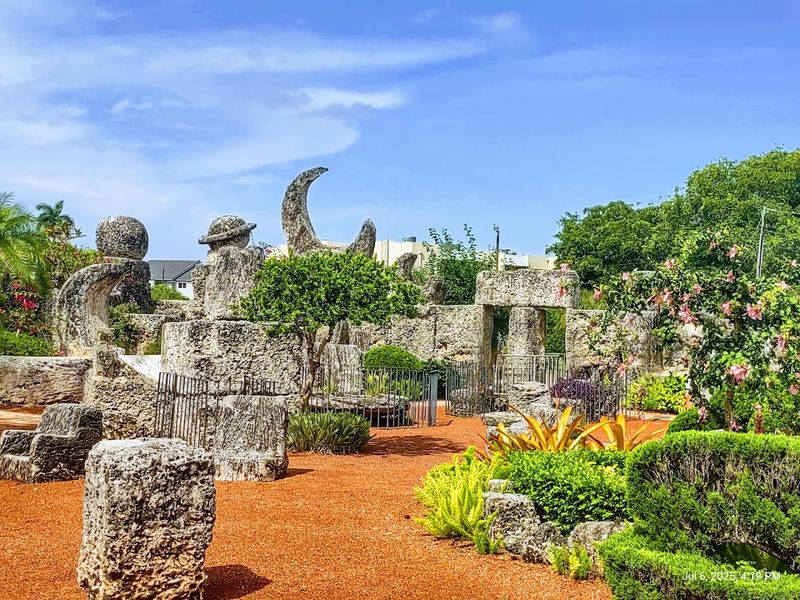
Between 1923 and 1951, a five-foot-tall Latvian immigrant named Edward Leedskalnin somehow quarried, carved and assembled over 1,100 tons of coral rock into elaborate sculptures—all by himself, mostly at night, using homemade tools. Nobody knows exactly how he managed this impossible feat. The stones fit together so precisely that no mortar was needed, and some pieces weigh multiple tons yet balance on single points.
Walking through the castle reveals Edward’s engineering genius and heartbreak-fueled obsession. He built everything for a woman who left him, channeling rejection into architectural wonder. Coral thrones, celestial carvings, a functioning sundial and a nine-ton revolving gate so perfectly balanced that a child could push it open—each piece demonstrates knowledge that shouldn’t have been possible for one small man working alone.
Theories about his methods range from practical physics to magnetic levitation to alien assistance. Edward claimed to understand the secrets of pyramid construction, but he took those secrets to his grave. The castle stands as physical proof of his work, yet remains mysteriously unexplainable.
Daily tours explore the grounds and share Edward’s story. The coral sculptures have weathered decades while maintaining their mystery. It’s romantic, baffling and undeniably impressive—a monument to what obsession and determination can create, even if we’ll never understand how.
5. Solomon’s Castle (Ona)
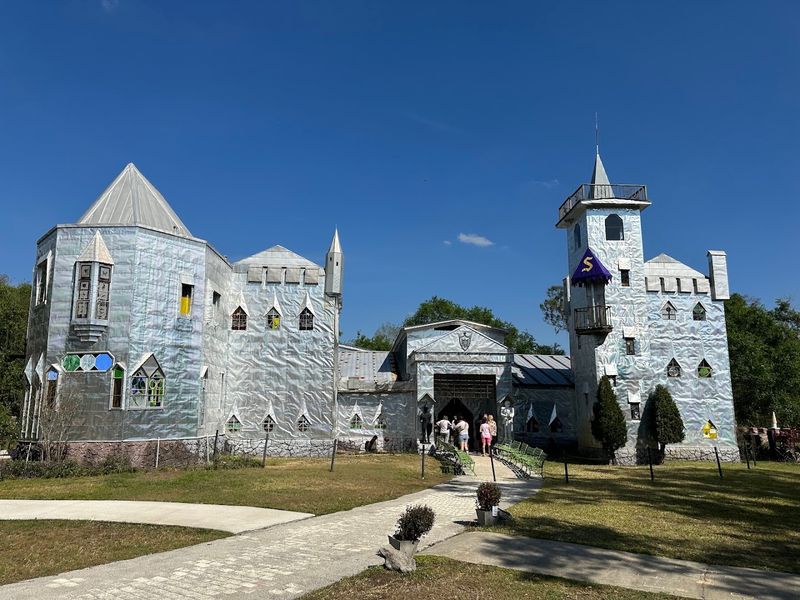
Artist Howard Solomon spent decades constructing a three-story castle from discarded aluminum printing plates, creating a structure that gleams like a disco ball in the middle of rural Hardee County. The castle rises unexpectedly from Florida woodland, its metallic exterior reflecting sunlight in ways that seem almost extraterrestrial. This wasn’t commissioned by wealthy patrons—Howard built it himself as both home and gallery for his eccentric artwork.
Inside, pun-filled sculptures and stained-glass windows showcase Howard’s playful sense of humor. Every corner reveals another unexpected creation, from repurposed materials transformed into whimsical art to clever wordplay incorporated into the designs. The whole place feels like wandering through one man’s delightfully strange imagination made physical.
Outside sits the Boat in the Moat—a restaurant shaped like a Spanish galleon floating in an actual moat. Yes, you read that correctly. Visitors can eat lunch inside a landlocked ship while overlooking a silver castle, which might be the most Florida sentence ever written.
Howard passed away in 2016, but his daughter continues operating the attraction seasonally. Tours reveal both the castle’s construction story and Howard’s artistic philosophy. The entire property celebrates creativity, self-expression and the beautiful weirdness that happens when someone pursues their vision without worrying about conventional expectations.
It’s folk art architecture at its finest and strangest.
6. Robert the Doll at Fort East Martello Museum (Key West)
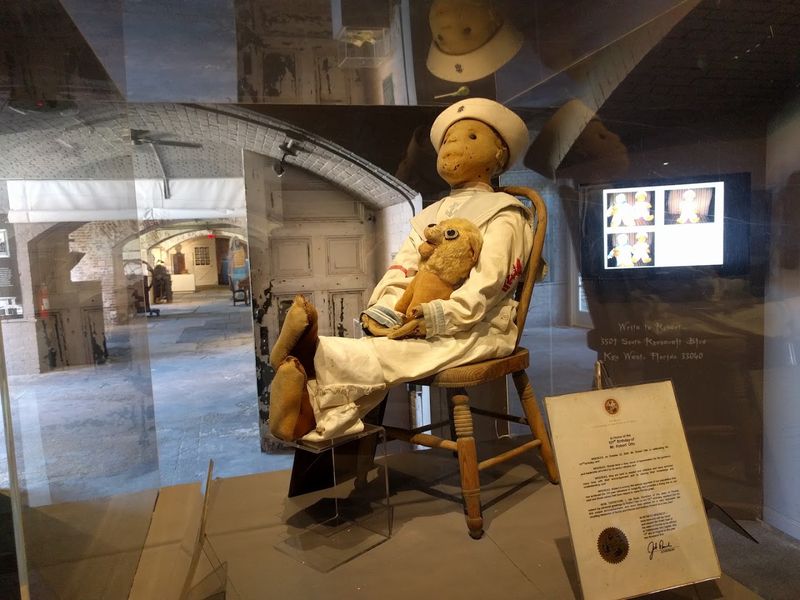
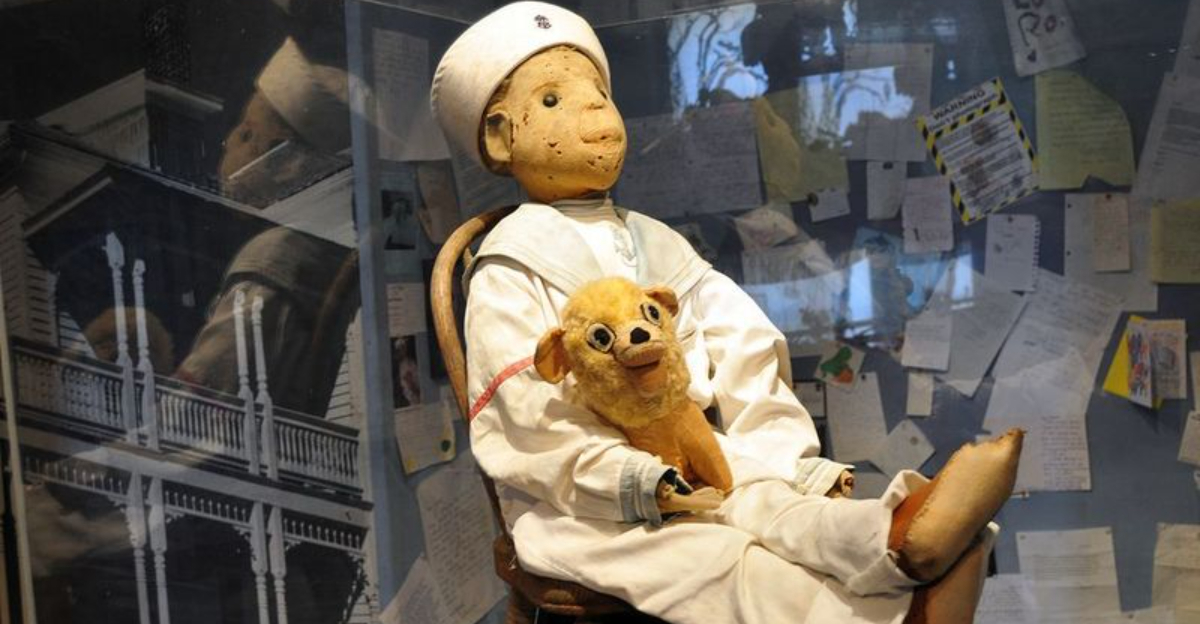
Thousands of visitors travel to Key West specifically to see a century-old doll in a sailor suit—and many later send him apology letters after experiencing unexplained misfortunes. Robert belonged to Key West painter Robert Eugene Otto in the early 1900s, and stories of the doll moving, changing expressions and causing bad luck have accumulated for decades. Whether you believe in haunted objects or not, Robert’s glass case at Fort East Martello Museum radiates an undeniably creepy energy.
Letters and notes cover the walls around his display, written by former visitors begging Robert’s forgiveness for photographing him without permission or mocking his reputation. People blame him for car accidents, job losses, relationship problems and mysterious illnesses. The museum staff takes these concerns seriously, instructing visitors to ask Robert’s permission before taking photos.
His button eyes seem to follow you around the room—a trick of positioning, perhaps, but unsettling nonetheless. The worn sailor suit and aged fabric add to his eerie presence. Some visitors report camera malfunctions or feeling watched while near his case.
The museum opens daily and houses other Key West history exhibits, but Robert remains the star attraction. Whether he’s genuinely haunted or just benefits from decades of accumulated legend, he’s become one of America’s most famous allegedly cursed objects. Approaching his case feels genuinely unnerving, which is exactly what you want from a haunted doll experience.
7. Gatorland (Orlando)
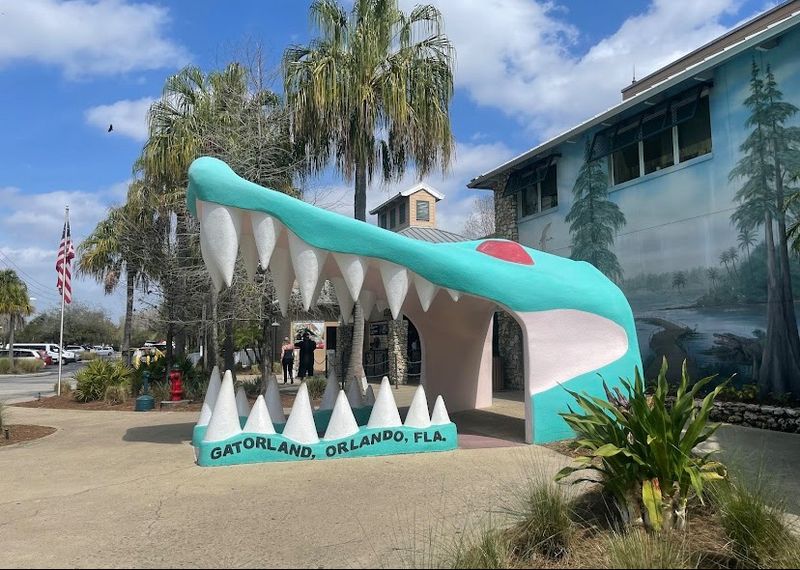
Since 1949, Gatorland has proudly embraced its role as Orlando’s less-polished, more authentically Florida alternative to the nearby corporate theme parks. Thousands of alligators and crocodiles sprawl across breeding marshes, ponds and enclosures while visitors walk elevated boardwalks overhead. The iconic entrance—a giant gator mouth you walk through—sets the tone for old-school roadside attraction charm mixed with legitimate reptile education.
Shows happen throughout the day, including the famous Gator Jumpin’ demonstration where massive reptiles launch themselves from the water to snatch suspended food. Trainers share information about behavior, conservation and biology while getting remarkably close to powerful predators. The Screamin’ Gator Zip Line sends brave visitors soaring over alligator enclosures, combining adrenaline with the slight terror of dangling above hungry reptiles.
The breeding marsh provides crucial habitat for nesting alligators and serves as an educational resource. Baby gators, snakes, birds and other Florida wildlife round out the experience. It’s not trying to compete with Disney’s technology or Universal’s movie magic—Gatorland succeeds by being unapologetically itself.
Daily operation means you can visit year-round, though summer heat makes early morning or late afternoon more comfortable. The park maintains its vintage character while meeting modern animal care standards. It’s touristy without being fake, educational without being boring, and perfectly captures Florida’s relationship with its most famous reptilian residents.
8. Dinosaur World (Plant City)
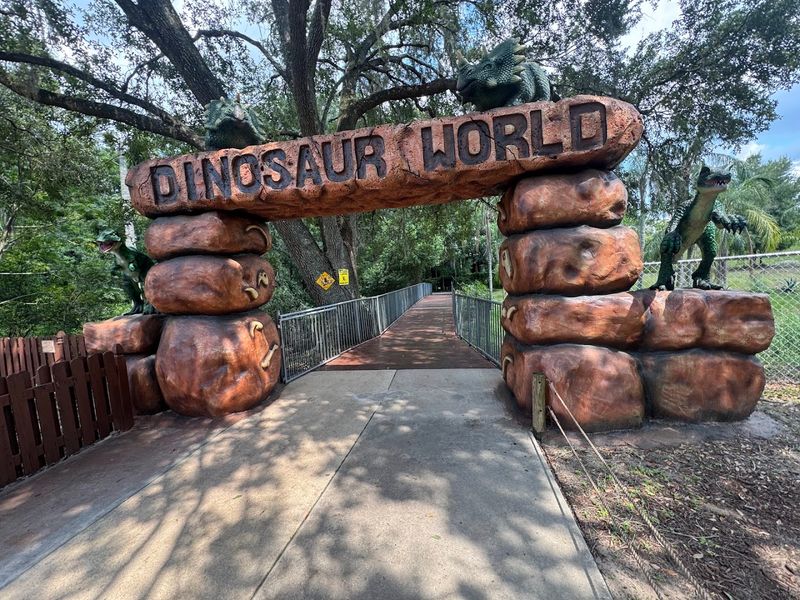
More than 200 life-size dinosaur replicas hide throughout wooded trails just off Interstate 4, creating a Jurassic forest that catches drivers completely off-guard. From the highway, you might spot a Brachiosaurus head peeking above the trees and wonder if you’re hallucinating. Pull in, and you’ll discover a surprisingly extensive prehistoric park where T-rexes lurk behind palmettos and Triceratops graze near picnic areas.
The dinosaurs vary in quality and scientific accuracy, but that’s part of the charm. Some look impressively realistic while others embrace their roadside-attraction roots with bright paint and slightly goofy expressions. Kids don’t care about paleontological precision—they just love wandering trails and encountering enormous reptiles around every corner.
Beyond the outdoor exhibits, the park includes fossil digging activities, a playground and a museum area with skeletal displays. It’s educational in an accessible way, sparking interest in natural history without requiring advanced degrees to appreciate. The shaded trails make it more comfortable than many Florida outdoor attractions during summer months.
Open daily except Christmas, Dinosaur World serves as a perfect road-trip break between Tampa and Orlando. It’s not trying to be a high-tech theme park—just a fun, slightly kitschy celebration of giant extinct reptiles. The fact that it exists alongside Florida’s modern alligators and crocodiles creates an amusing timeline collision of prehistoric and contemporary predators.
9. WhimzeyLand (Safety Harbor)
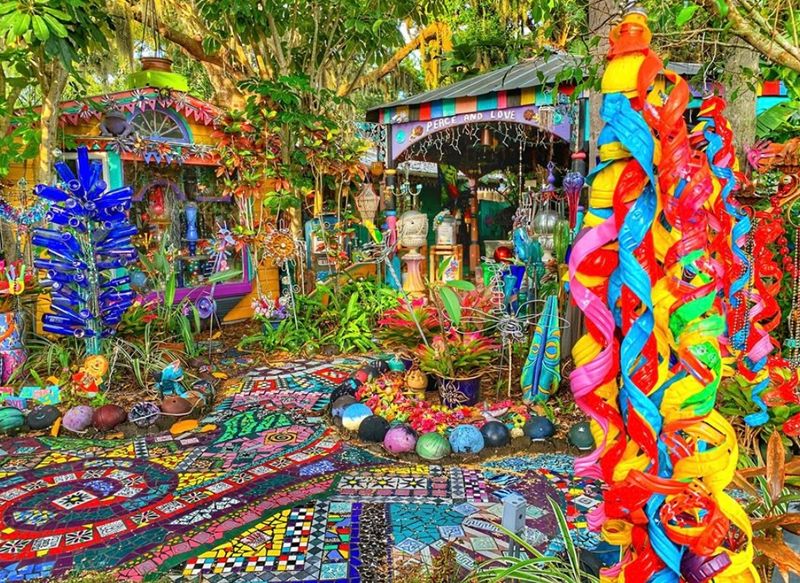
Artist Todd Ramquist and his partner Kiaralinda transformed their modest Safety Harbor home into an explosion of mirror mosaics, painted pathways, sculptures and hundreds of decorated bowling balls. Every surface sparkles with embedded glass, creating a kaleidoscope effect that shifts as you move. The front yard alone contains enough visual stimulation to overwhelm your senses in the best possible way—it’s folk art maximalism taken to glorious extremes.
Bowling balls painted with intricate designs cover the property like a bizarre crop. Some perch on pillars, others cluster in gardens, and all demonstrate the obsessive creativity that defines the entire project. Mirror fragments catch sunlight and scatter rainbow reflections across neighboring surfaces.
Sculptures emerge from unexpected corners, and painted pathways guide visitors through the sensory overload.
The exterior is always visible from the street, allowing passersby to appreciate the spectacle. Guided tours provide deeper insight into the artists’ process and vision. Todd and Kiaralinda didn’t create WhimzeyLand for Instagram fame or tourist dollars—they built it as a genuine expression of artistic passion that happened to become a local landmark.
It represents Florida’s thriving tradition of self-taught visionary art, where individuals transform ordinary spaces into extraordinary environments. The sheer dedication required to cover an entire property in handcrafted mosaics and art deserves respect. WhimzeyLand proves that art doesn’t need gallery walls or institutional approval—sometimes the most memorable creativity happens in suburban front yards.
10. Barberville Yard Art Emporium (Pierson)
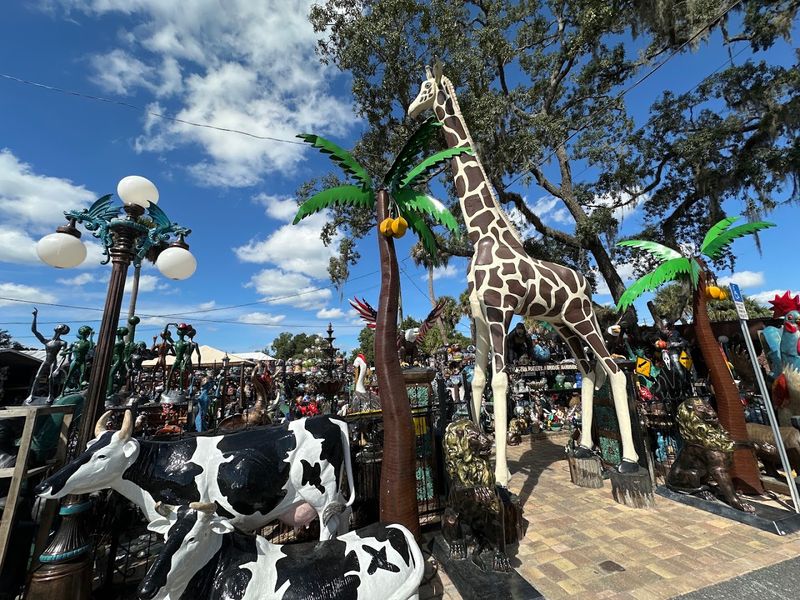
Three acres of rural property overflow with towering metal animals, enormous statues, colorful pottery, fountains and creatures that defy easy categorization. Barberville Yard Art Emporium operates as both working business and accidental art installation, where the line between merchandise and permanent display blurs beautifully. Driving past on Highway 17 confronts you with a visual assault of giraffes, dragons, roosters and abstract forms competing for attention.
The sheer density of objects creates a treasure-hunt atmosphere. Metal sculptures tower overhead while smaller pieces cluster at ground level. Pottery in every color imaginable fills tables and shelves.
Garden art ranges from elegant to wonderfully tacky, often within the same display. It’s overwhelming in the way that the best roadside attractions should be—too much to process in one visit.
Unlike museum collections with careful curation, this place embraces abundance and chaos. Want a six-foot metal rooster? They’ve got several.
Need a concrete fountain shaped like a dolphin? Multiple options available. The inventory constantly changes as pieces sell and new creations arrive, making each visit different.
Seven-day operation means you can stop anytime to browse or just gawk at the spectacle. The owners clearly love what they do, maintaining a space that celebrates creativity, excess and the joy of decorative objects. It’s part garden center, part folk art installation, part fever dream—and completely, perfectly Florida in its refusal to tone anything down.
11. The Presidents Hall of Fame (Clermont)
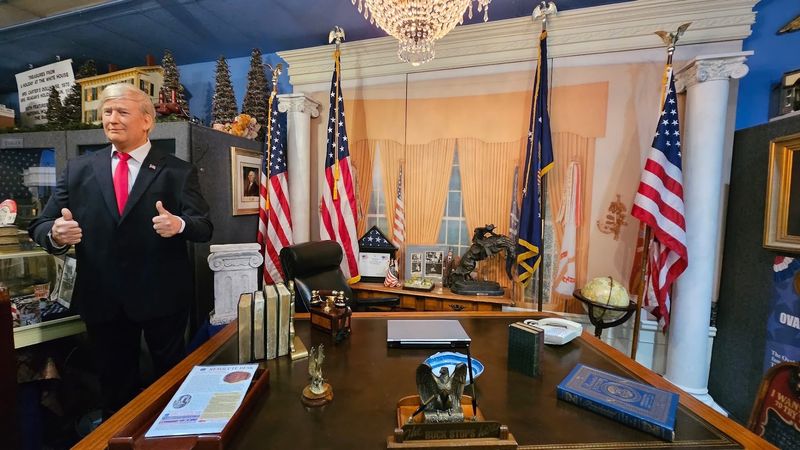
This gloriously dated roadside museum combines presidential wax figures, a giant Mount Rushmore replica, patriotic oddities and an exceptionally detailed miniature White House under one roof. Walking inside feels like time-traveling to 1960s Americana, when roadside attractions celebrated history with earnest enthusiasm and zero irony. The wax presidents range from reasonably accurate to slightly melted-looking, but that’s part of the vintage charm.
The miniature White House deserves special mention for its obsessive attention to detail. Tiny furniture, microscopic paintings and scaled-down architectural features recreate the presidential residence with impressive craftsmanship. You could spend an hour examining individual rooms through the viewing windows.
It’s the kind of labor-intensive attraction that nobody would build today, making its survival even more precious.
Beyond the main exhibits, random presidential memorabilia fills display cases—campaign buttons, commemorative plates, newspaper clippings and artifacts of varying historical significance. The Mount Rushmore replica towers outside, visible from the highway and utterly impossible to miss. Everything about the place screams classic Florida roadside attraction, preserved like a time capsule from tourism’s golden age.
Current listings show it remains open in 2026, defying expectations in an era of digital entertainment and virtual experiences. The Presidents Hall of Fame survives through pure nostalgic appeal and the determination to keep celebrating American history in the most wonderfully outdated way possible. It’s educational, kitschy and irreplaceable—exactly what great roadside attractions should be.