Just 2 Hours from Jacksonville, a Prehistoric Florida Spring Feels Like a Hidden World
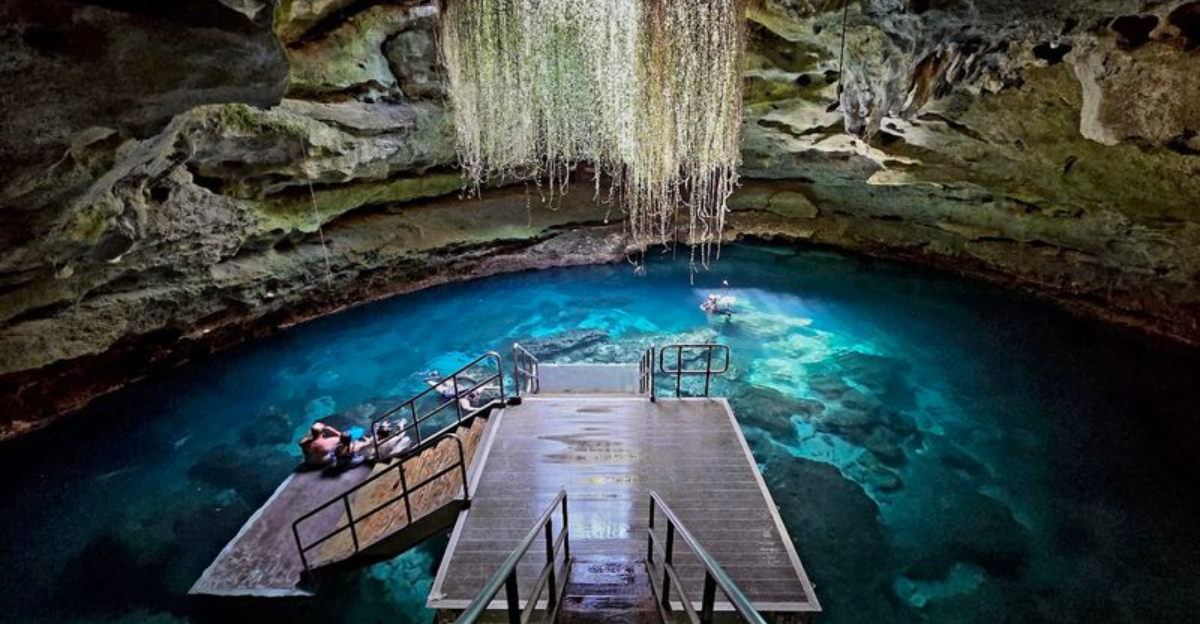
Tucked away in Williston, Florida, Devil’s Den Prehistoric Spring is one of those places that makes you feel like you stumbled onto a secret the rest of the world hasn’t found yet.
About two hours from Jacksonville and just 30 minutes from Gainesville, this underground cave pool has been drawing curious adventurers, snorkelers, and scuba divers for decades.
The spring sits inside a collapsed sinkhole, and the moment you descend those wooden stairs and see crystal-clear 72-degree water glowing beneath you, the outside world completely disappears.
Whether you’re a seasoned diver or someone who just wants to float and stare at ancient rock formations, this prehistoric gem delivers something genuinely unforgettable.
The Underground Cave Pool Experience
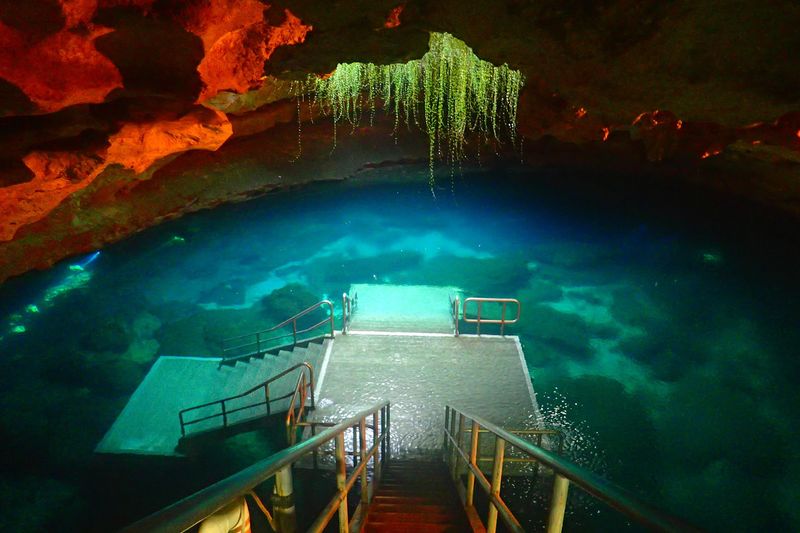
Stepping down into Devil’s Den for the first time is the kind of moment people talk about for years. You walk down a wooden staircase carved into the earth, and suddenly you’re standing inside a prehistoric cavern where the air smells cool and ancient and the water glows an almost electric shade of blue-green.
Nothing quite prepares you for how surreal it feels.
The pool itself sits inside a natural limestone sinkhole, and the water stays a constant 72 degrees Fahrenheit year-round. That temperature means the spring is refreshingly cool during Florida’s brutal summers and surprisingly comfortable during cooler months.
Swimmers and snorkelers share the space with scuba divers, and somehow it never feels chaotic — the underground setting creates a naturally calm, almost reverent atmosphere.
Visibility inside the den is exceptional, largely because the bottom is rocky rather than sandy. Swimmers kicking around don’t stir up sediment, so the water stays clear no matter how many people are in it.
You can see fossil beds, rock ledges, and small fish darting through the depths with almost no effort.
The light show is the real headline act. When the sun climbs higher in the sky and shines directly through the opening at the top of the cavern, shafts of light pierce the water and turn everything into shimmering gold and teal.
Reviewers have compared it to scenes from Avatar, and honestly, that’s not an exaggeration. Booking a mid-morning or early afternoon slot gives you the best chance of catching this magical lighting effect.
Early morning visits are beautiful too, but the spring is darker and moodier before the sun gets high enough to reach the water. Either way, the experience is completely one of a kind.
Snorkeling at Devil’s Den: What to Know Before You Go
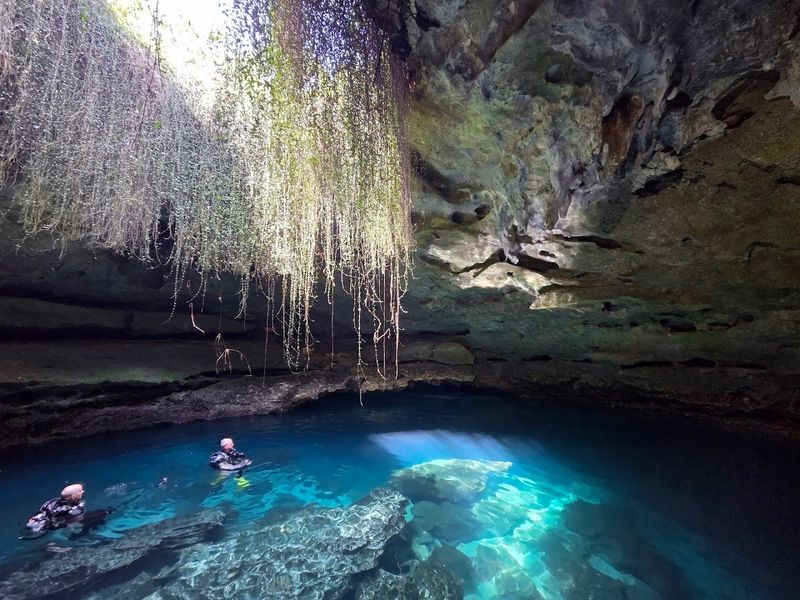
Snorkeling inside a prehistoric cave sounds intimidating, but plenty of first-timers leave saying it was the coolest thing they’ve ever done in Florida. The key is going in prepared.
Reservations are required, and they fill up fast — sometimes an entire week in advance during peak season. Booking your slot on the Devil’s Den website before you arrive is non-negotiable if you want to actually get in the water.
Each reservation gives your group a 90-minute window inside the den. That’s plenty of time to explore the underwater rock formations, spot fish and the occasional turtle, and just float around taking everything in.
Floating devices are not allowed, so every person in the water needs to be a confident swimmer. The staircase entry area can be neck-deep, and the cave pool goes much deeper toward the center, so this isn’t a spot for non-swimmers or very young children who aren’t strong in the water.
You can bring your own snorkel gear or rent equipment on-site from the dive shop. Masks, fins, and wetsuits are all available for rental, which is convenient if you’re traveling light.
A wetsuit or long suit is worth considering — 72 degrees feels cold when you first get in, even if you adjust after a few minutes. Several reviewers suggest booking the 11 AM slot or slightly later to catch the best natural lighting inside the cavern.
Underwater photography is absolutely worth attempting here. The clarity of the water combined with the natural light beams creates conditions that make even a basic waterproof camera produce stunning shots.
Some visitors say the photos look so otherworldly that friends back home assume they were taken somewhere in Mexico or the Caribbean, not central Florida.
Scuba Diving the Prehistoric Cavern
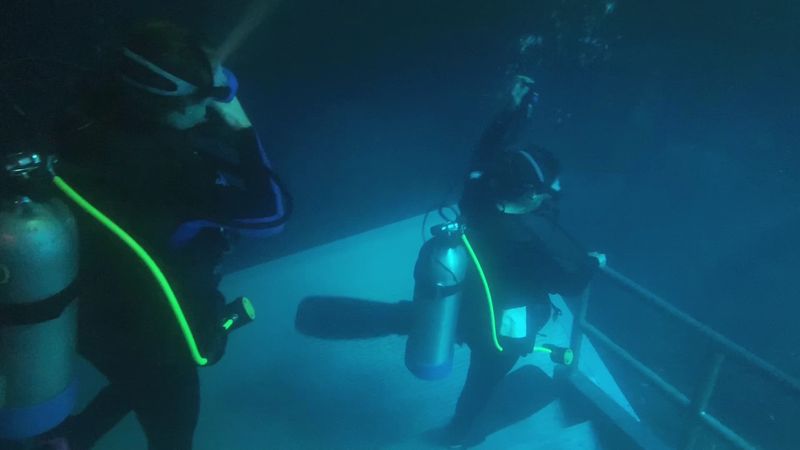
For certified scuba divers, Devil’s Den occupies a very specific spot on the bucket list — the kind of place you hear whispered about at dive shops and then spend months planning a trip to visit. The spring is classified as a cavern dive, meaning natural light from the opening above is always visible, which makes it accessible to open-water certified divers without requiring a specialty cave certification.
The dive shop on-site is fully equipped to handle everything from gear rentals to tank refills. Staff are described in multiple reviews as knowledgeable, organized, and genuinely helpful, especially for divers who want to get properly outfitted for the spring’s 72-degree water temperature.
Wetsuits are strongly recommended even for divers accustomed to warmer conditions — the cold becomes noticeable during longer dives at depth.
What makes the dive genuinely special is the geology. The limestone walls are studded with ancient rock formations, and fossil beds line parts of the cavern floor.
The water clarity means you can study these features in remarkable detail without needing to get uncomfortably close. Fish and turtles move freely through the space, completely unbothered by divers, which creates encounters that feel surprisingly intimate.
Weekends tend to attract more scuba divers than weekdays, so if snorkeling is your priority, a weekday visit gives you a less crowded experience. Divers who want the den mostly to themselves should consider a Monday through Thursday slot.
The campground on-site is a popular choice for dive groups who want to make a full weekend of it — staying overnight means you can catch multiple sessions and explore the surrounding area at a relaxed pace.
The combination of camping and diving makes Devil’s Den feel less like a day trip and more like a proper adventure.
The Geology and Prehistoric History of the Site
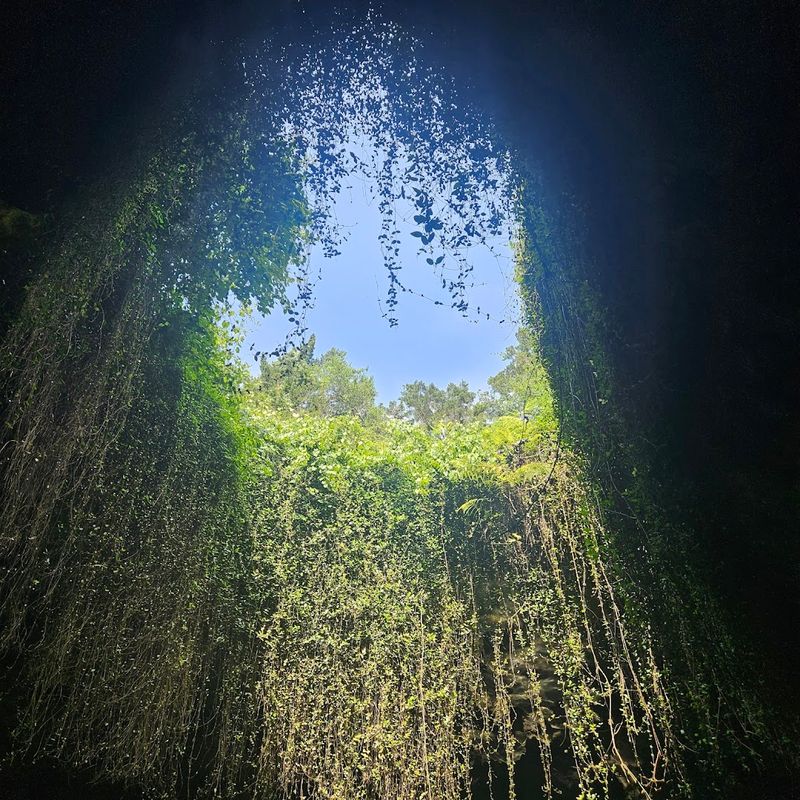
Devil’s Den earned its prehistoric nickname for good reason. The site is a dry cave karst window — essentially a collapsed portion of an ancient underground spring system that has been slowly forming over thousands of years.
The limestone formations inside the cavern are the result of water and mineral deposits working together across enormous stretches of geological time, and the fossil beds on the cavern floor contain remains from animals that lived in Florida long before humans arrived.
Fossils found at sites like this one across Florida have included remains from extinct megafauna — giant ground sloths, prehistoric horses, and other Ice Age creatures that once roamed the peninsula. The name Devil’s Den itself carries a bit of local folklore flavor, evoking something dark and mysterious lurking beneath the earth.
In reality, the cavern is breathtaking rather than ominous, though the ancient energy of the place is genuinely palpable when you’re floating inside it.
The constant 72-degree water temperature is a direct result of the spring’s connection to Florida’s Floridan Aquifer system, one of the largest and most productive aquifer systems in the world.
Groundwater filtered through layers of limestone for years emerges at this stable temperature regardless of season, which is why the spring has been a reliable water source and gathering point for wildlife and humans alike for thousands of years.
Understanding a little of this backstory before you visit makes the experience richer. Floating above fossil beds and rock formations that predate human civilization by millennia gives the whole trip a different kind of weight.
It’s not just a cool swim — it’s a genuinely rare opportunity to be physically present inside a piece of deep Florida history that most people never get to see up close.
Camping at Devil’s Den: The Full Overnight Experience
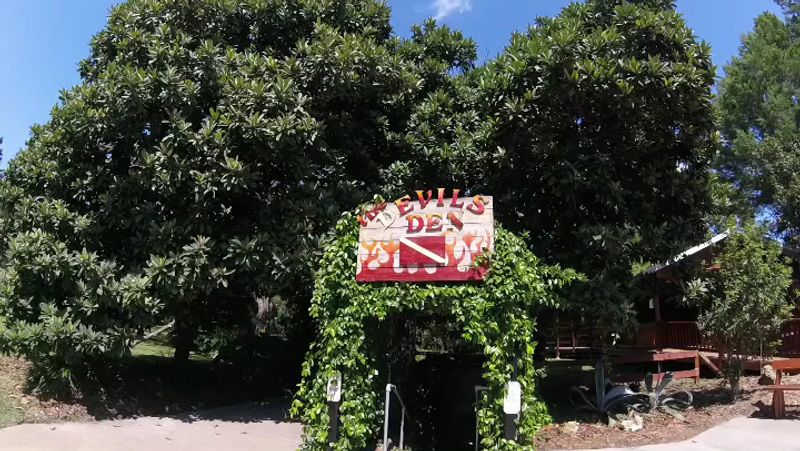
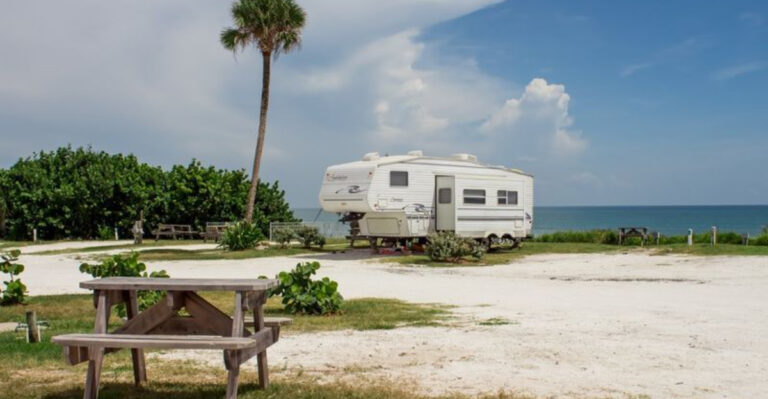
Plenty of visitors treat Devil’s Den as a quick day trip, but staying overnight on the property completely changes the energy of the visit. The campground is well-maintained and offers both tent sites and full RV hookup spots, with pull-through slots that reviewers specifically recommend for RV travelers.
Tent sites run around $44, and the campground fills up during peak season, so booking ahead is just as important as reserving your spring time slot.
Staying on-site means you can catch the spring at different times of day without the pressure of a long drive home. Morning sessions have a moodier, quieter atmosphere before the sun fully illuminates the cavern, while midday visits deliver that famous Avatar-blue light show.
Having the flexibility to experience both without rushing back to a hotel is a genuine advantage that day-trippers miss out on entirely.
The campground itself is quiet and shaded, with a laid-back atmosphere that attracts a mix of dive groups, families, and solo travelers looking to unplug. Facilities include showers in the restrooms, grills, and picnic areas — everything you need for a comfortable stay without being overly fancy.
The overall vibe is relaxed and unpretentious, which matches the spirit of the place perfectly.
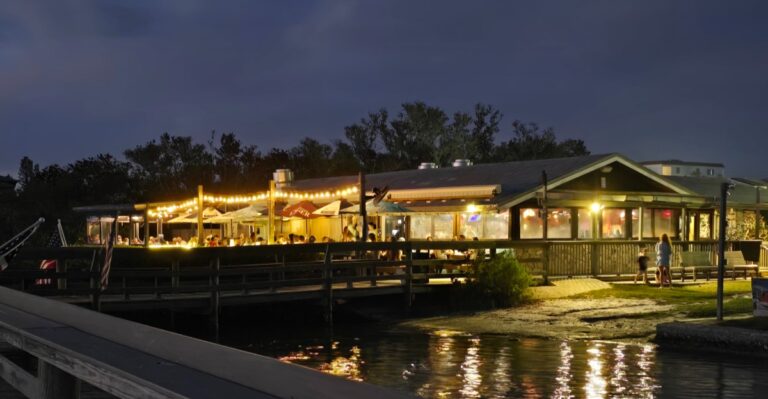
One practical note: food options on-site can be limited depending on timing. A food truck sometimes operates around lunchtime, but it’s not guaranteed.
Packing snacks, meals, and plenty of water is a smart move for anyone planning a full day or overnight stay. There’s a small on-site store for essentials, but the nearest town services are a short drive away in Williston.
Coming prepared means you can stay focused on the experience rather than scrambling for lunch between dive sessions.
Timing Your Visit for the Best Light and Fewest Crowds
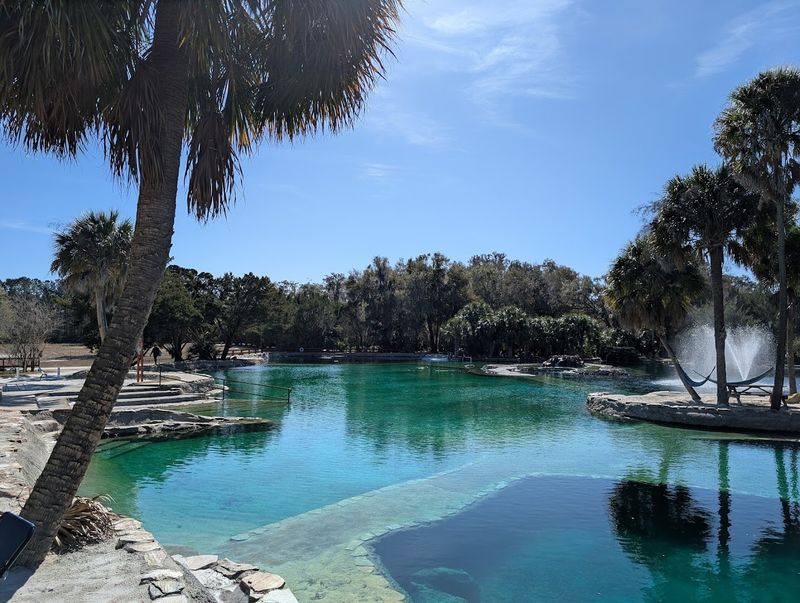
Ask anyone who has visited Devil’s Den more than once and they’ll tell you the same thing: timing is everything. The spring’s most iconic visual — shafts of sunlight cutting through the cave opening and turning the water into glowing shades of blue and green — only happens when the sun is positioned directly above the cavern.
That window typically falls between late morning and early afternoon, making the 11 AM to 1 PM range the sweet spot for photography and pure visual impact.
Early morning slots, like the 8 AM opening time, have their own appeal. The den is quieter, wildlife is more active before the crowd arrives, and turtles and larger fish are easier to spot before swimmers disturb the water.
The trade-off is that the water appears darker and the famous light beams haven’t started yet. Some visitors love the moody, almost mysterious quality of the early morning spring; others feel they missed the main event without the full sunlight effect.
Weekday visits are noticeably less crowded than weekends, when scuba diving groups tend to dominate the reservation slots. Monday through Thursday sessions give snorkelers more space and a calmer overall experience.
If a weekend visit is your only option, booking the very first slot of the day helps you get ahead of the crowds before the den fills up.
Seasonal timing also plays a role. Summer weekends are the busiest period by far, with reservations sometimes selling out a full week in advance.
Spring and fall visits offer a nice balance of good weather and slightly thinner crowds. Winter visits are surprisingly pleasant — the spring’s constant temperature makes it comfortable year-round, and the cooler air outside makes the relatively warm underground water feel even more welcoming than usual.
John’s Lagoon and the Expanding Oasis Area
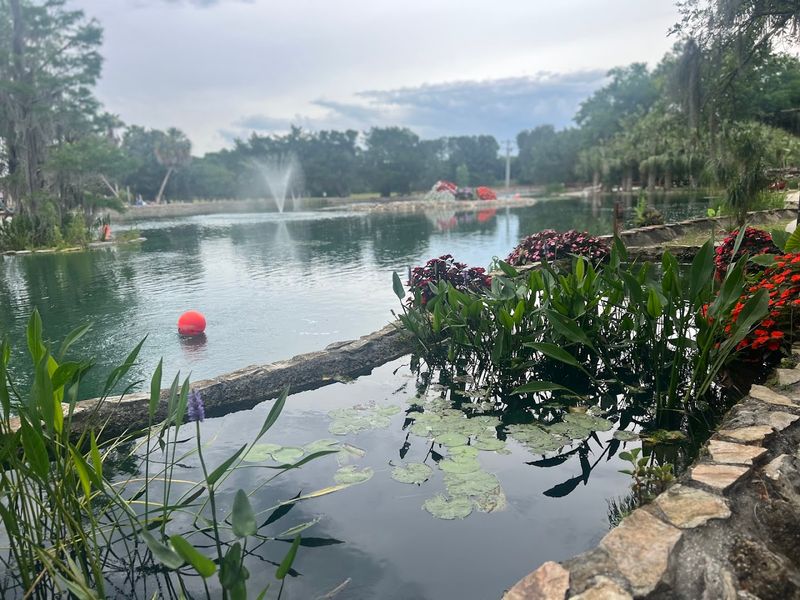
Beyond the famous underground cavern, Devil’s Den has been quietly expanding its above-ground offerings in a way that’s turning the property into a more complete destination.
John’s Lagoon — sometimes called John’s Oasis — is a man-made pond adjacent to the main spring area that adds a second swimming option for visitors who want more time in the water after their den session wraps up.
It’s a newer addition, and the property is still developing it into something more polished.
One reviewer who recently completed their open-water scuba certification at the den mentioned being excited to return specifically to explore the John’s Oasis area, which suggests it’s already generating buzz among repeat visitors.
Another review noted that the lagoon could benefit from improved filtration, which is a fair and honest observation — the man-made pond doesn’t have the same pristine clarity as the natural spring, and managing water quality in an above-ground pond is a different challenge entirely.
The property also features a regular swimming pool near the parking area, a beach volleyball court, and multiple picnic areas with grills. These amenities make Devil’s Den feel more like a full-day destination rather than just a 90-minute cave experience.
Families with kids who aren’t strong enough swimmers for the deep cavern can still have a great time using the pool and outdoor spaces while other group members head underground.
The overall direction of the property is clearly toward becoming a more developed destination resort, as one reviewer described it. The bones are already excellent — the natural spring alone is enough to justify the trip.
But the expanding above-ground infrastructure means each return visit has the potential to offer something new, which is exactly the kind of evolution that keeps a place relevant and worth revisiting for years to come.
Practical Tips for Planning Your Devil’s Den Trip
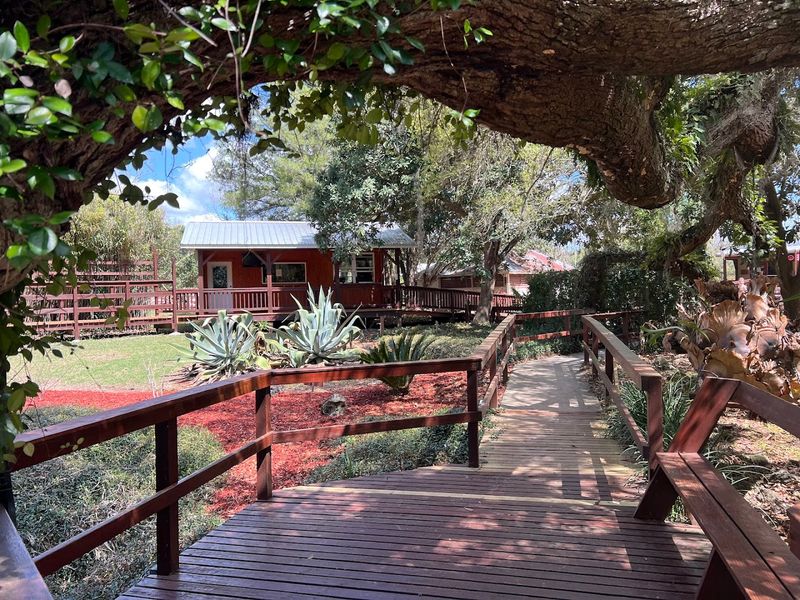
Getting the most out of a Devil’s Den visit comes down to a handful of details that make a big difference between a smooth, memorable trip and a frustrating one. Reservations are the single most important thing to handle before anything else.
The spring operates on a timed-entry system, and slots fill up quickly — sometimes an entire week out during summer. The Devil’s Den website at devilsden.com is where you book, and a small deposit secures your spot with the balance paid at the ticket window on arrival.
Bring water shoes if you plan to spend time in the above-ground pond area, where the bottom can be uneven. Towels, a change of clothes, and snacks are all worth packing since food options on-site aren’t always guaranteed.
A wetsuit or long-sleeved rash guard makes a noticeable difference in comfort — 72-degree water sounds mild but feels genuinely cold, especially for kids or anyone who runs cold naturally. Wetsuits are available for rent if you don’t own one.
The property is located at 5390 NE 180th Ave in Williston, Florida, and the drive from Jacksonville takes roughly two hours on mostly straightforward roads. From Gainesville, it’s a quick 30 to 40-minute trip, making it an easy half-day excursion from either city.
Cell reception exists on the property, which is reassuring for those who can’t fully disconnect.
One bonus worth noting: the Kanapaha Botanical Gardens in Gainesville is close enough to combine into a single day trip if you want to pair two very different kinds of natural beauty. Several reviewers specifically mentioned hitting both spots in one day and finding the combination well worth it.
Devil’s Den charges $25 per person for snorkeling access, which feels more than reasonable given how genuinely singular the experience is.