This Quiet Florida Stop Is the Kind of Place You’d Never Expect to Find
Most people blow right past Yeehaw Junction without a second glance, and honestly, that’s part of its charm. Tucked into the wide-open flatlands of Osceola County, this tiny census-designated place sits where U.S.
Highway 441 meets the Florida Turnpike — a crossroads that’s been quietly holding its own for over a century. With a population of just 235 as of the 2020 census, Yeehaw Junction is the kind of place that makes you slow down, look around, and wonder what you’ve been missing all along.
The Name That Stops Everyone in Their Tracks
Before you even get there, the name alone does the heavy lifting. Yeehaw Junction — say it out loud and just try not to smile.
It sounds like something cooked up for a theme park, but this place is as real as the cattle ranches that surround it. The name has roots in the Seminole word “yaha,” which some historians connect to the area’s Indigenous history, though the exact origin remains a topic of local discussion.
What makes the name so memorable isn’t just the wordplay — it’s how perfectly it fits the personality of the place. You’re not walking into a polished tourist town with manicured sidewalks and gift shops on every corner.
You’re rolling into a dot on the map where the wind moves through the palmettos and time runs a little slower than everywhere else.
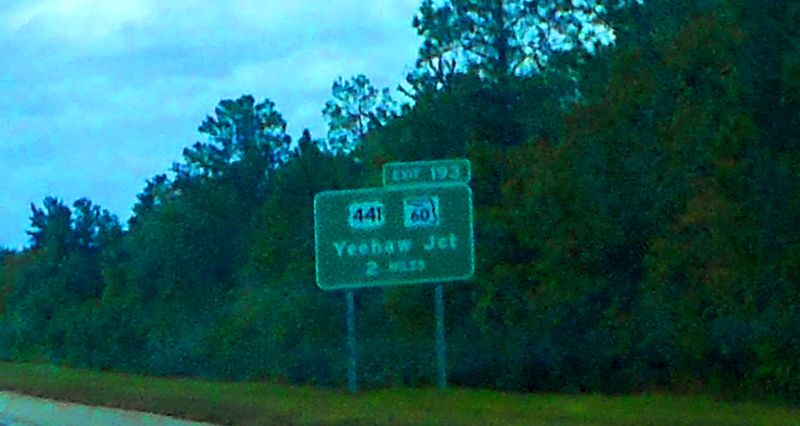
Travelers heading south on the Florida Turnpike often spot the exit sign and do a double take. Some pull over just to snap a photo.
Others come looking for a quirky story to bring home from their Florida road trip. The name has earned Yeehaw Junction a reputation that stretches well beyond its 235 residents, popping up on “weirdest town names in Florida” lists with impressive regularity.
There’s something refreshing about a place that leans into its identity without trying too hard. Yeehaw Junction doesn’t need a rebrand or a marketing campaign.
The name is the campaign. And for a town this small sitting at one of Florida’s most traveled crossroads, that’s a pretty powerful thing to have going for it.
The name alone keeps people curious, and curiosity is what gets boots on the ground.
A Crossroads With Real History Behind It
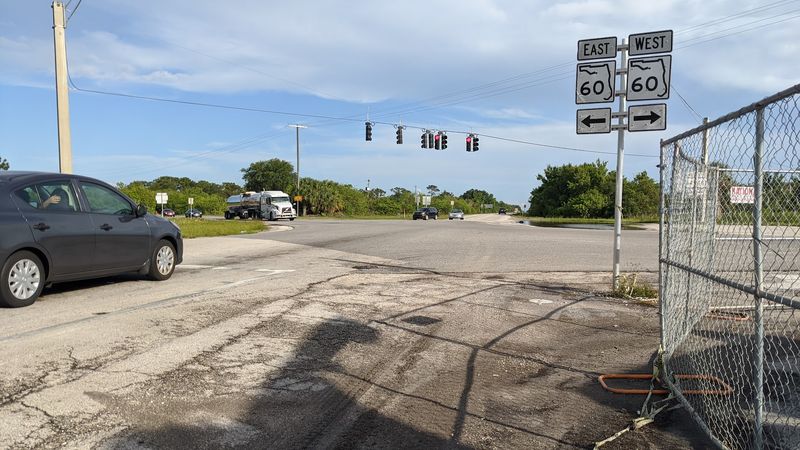
Long before GPS rerouted everyone onto the fastest path possible, Yeehaw Junction was already doing what crossroads do best — connecting people moving in different directions. The intersection of U.S.
Highway 441 and State Road 60 made this spot a natural gathering point for ranchers, travelers, and workers crossing central Florida’s interior. That geographic reality shaped everything about how this small community developed.
Back in the late 1800s, cattle drives moved through this region regularly. Florida was — and still is — a major cattle-producing state, and the open ranges of Osceola County were prime territory.
Drovers and cowboys needed places to stop, rest, and resupply, and Yeehaw Junction answered that call long before the highways arrived. The land here tells a story that most Florida tourists never get to hear because they’re too busy racing toward the coast.
The Florida Turnpike eventually changed the flow of traffic dramatically, funneling thousands of vehicles past the area daily. That steady stream of passing travelers gave Yeehaw Junction a new kind of relevance — not as a destination in itself, but as a pit stop with genuine character.
Fuel stations and a handful of services filled in around the interchange, keeping the crossroads functional for a modern era.
What’s striking is how much history this small patch of land holds without making a big fuss about it. There are no bronze plaques lining a heritage trail here.
The history lives in the landscape — the flat, wide-open terrain that cattle once crossed freely, the ancient oaks that predate the pavement, and the sense that this place has quietly watched Florida grow up around it without losing its own identity in the process.
The Desert Inn: Florida’s Most Unexpected Historic Gem
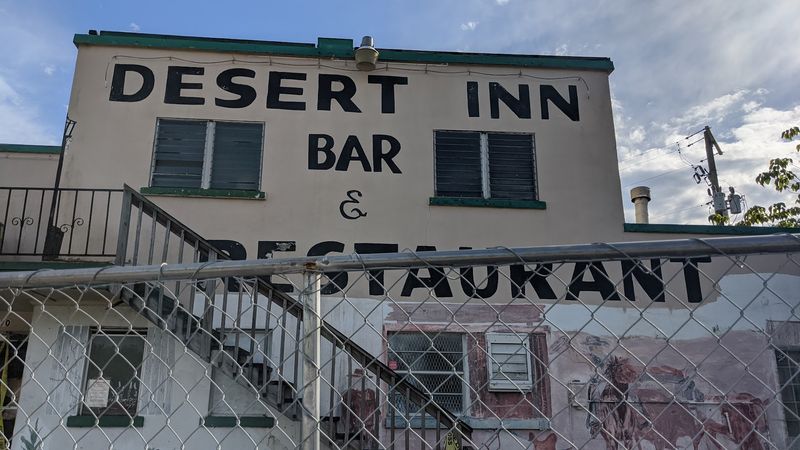
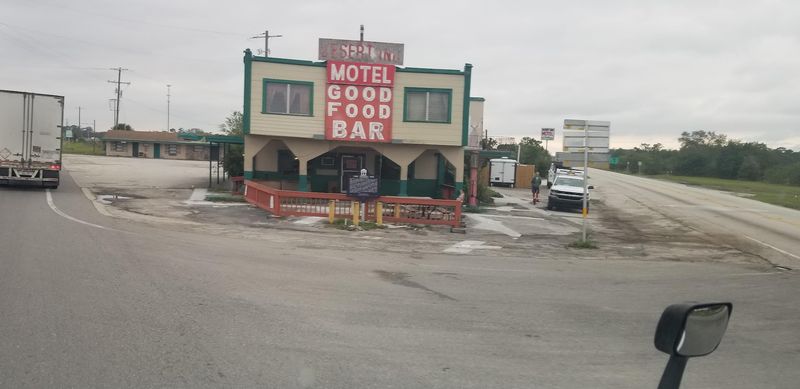
If Yeehaw Junction has one crown jewel, it’s the Desert Inn — and calling it unexpected might be the understatement of the decade.
This weathered, two-story wooden building has been standing at this crossroads since the late 1800s, and it earned a spot on the National Register of Historic Places, which is not something you’d guess from the outside.
It looks like it belongs in a Western film, not in the middle of Florida’s cattle country.
Originally built to serve travelers and workers moving through the region, the Desert Inn functioned as a hotel, bar, and general gathering spot for generations. The building has seen a lot — cattle drivers, early tourists, highway workers, and locals who just needed a cold drink and a place to sit.
Its survival through Florida’s rapid development is almost miraculous given how many old structures across the state have been bulldozed to make room for strip malls.
The architecture alone is worth a slow walk around. The wraparound porch, the worn wooden planks, the old-school signage — all of it feels like a time capsule.
For history lovers and architecture enthusiasts, stumbling onto the Desert Inn feels like finding a secret that the rest of Florida somehow forgot to share with the world.
Over the years, the building has gone through various phases of operation and closure, which has kept its future uncertain at times. But its historic designation has helped anchor it in place.
Whether it’s fully open or just standing watch over the intersection, the Desert Inn remains the most compelling reason to actually get off the highway and spend a few minutes in Yeehaw Junction rather than just reading the exit sign as you zoom past.
Cattle Country That Most Florida Visitors Never See
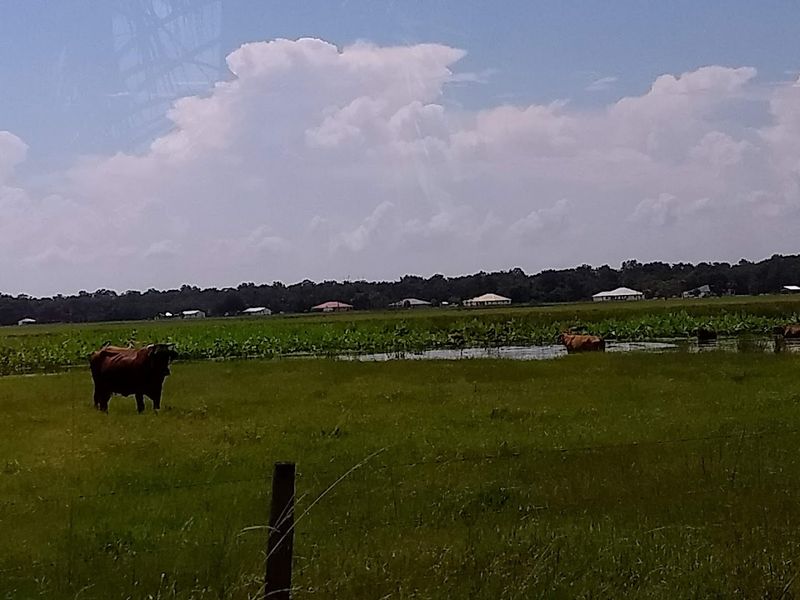
Mention Florida to most people and their minds jump straight to beaches, theme parks, and retirement communities. But drive through Osceola County’s interior and you’ll find a completely different Florida — one built on ranches, cattle, and wide-open land that stretches as far as the eye can see.
Yeehaw Junction sits right in the heart of this working landscape, and it’s a side of the state that rarely makes it onto anyone’s vacation itinerary.
Florida is actually one of the oldest cattle-ranching states in the country. Spanish explorers introduced cattle here in the 1500s, and the tradition never really stopped.
The Florida Cracker cattle breed — tough, lean, and well-adapted to the heat and humidity — developed right here in this kind of environment. Ranches around Yeehaw Junction carry that legacy forward today, operating on land that has supported livestock for generations.
Driving along U.S. 441 near Yeehaw Junction, it’s common to spot cattle grazing on both sides of the road, with little more than a fence separating them from the passing traffic. Sandhill cranes pick their way through the pastures.
Red-tailed hawks circle overhead. The whole scene feels genuinely wild in a way that manicured Florida tourist zones simply cannot replicate.
For anyone who wants to understand what Florida looked like before the theme parks and condo towers arrived, this stretch of Osceola County is as close as you’ll get. The ranching culture here isn’t a performance or a tourist attraction — it’s just daily life.
And there’s something deeply grounding about watching working land do what it’s always done, quietly and without any need for an audience or a hashtag.
Wildlife Around Every Corner of the Junction
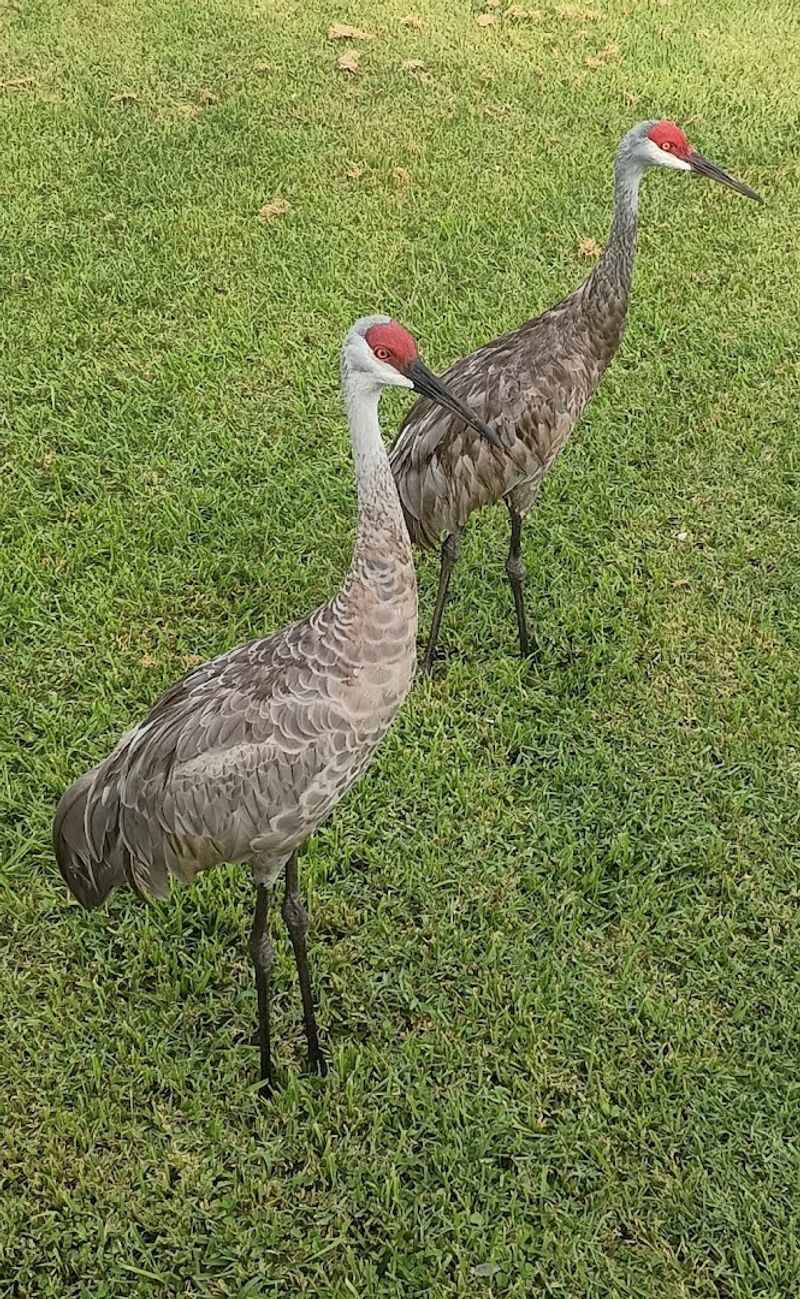
You don’t need to be a hardcore birder or a wildlife photographer to appreciate what’s living and moving around Yeehaw Junction. The area sits within a stretch of central Florida that supports an impressive range of native species, simply because the land here hasn’t been completely paved over.
Open pastures, wetland edges, and scrub habitats all come together in a way that makes wildlife sightings feel routine rather than rare.
Sandhill cranes are practically a greeting committee in this part of Osceola County. They walk through fields and along roadsides with the kind of casual confidence that suggests they know exactly who was here first.
Bald eagles are spotted regularly, circling above the flatlands or perched in the tops of tall pines. White-tailed deer move through the scrub edges at dawn and dusk, and gopher tortoises — a keystone species in Florida’s ecosystem — dig their burrows in the sandy uplands nearby.
The proximity to the Kissimmee River basin and its surrounding floodplain adds another layer of ecological richness to the area. Wading birds, including great blue herons and snowy egrets, work the shallow wetlands with elegant patience.
Florida softshell turtles bask on muddy banks. Even alligators make occasional appearances in the drainage ditches that line the local roads, because this is still very much their territory.
What makes this wildlife experience different from a state park visit is the lack of infrastructure around it. There’s no boardwalk, no interpretive signage, no gift shop at the end.
You’re just driving through living Florida, watching animals go about their business. For anyone who finds that kind of raw, unfiltered nature more compelling than a curated exhibit, Yeehaw Junction delivers without even trying.
The Population Count That Puts Things in Perspective
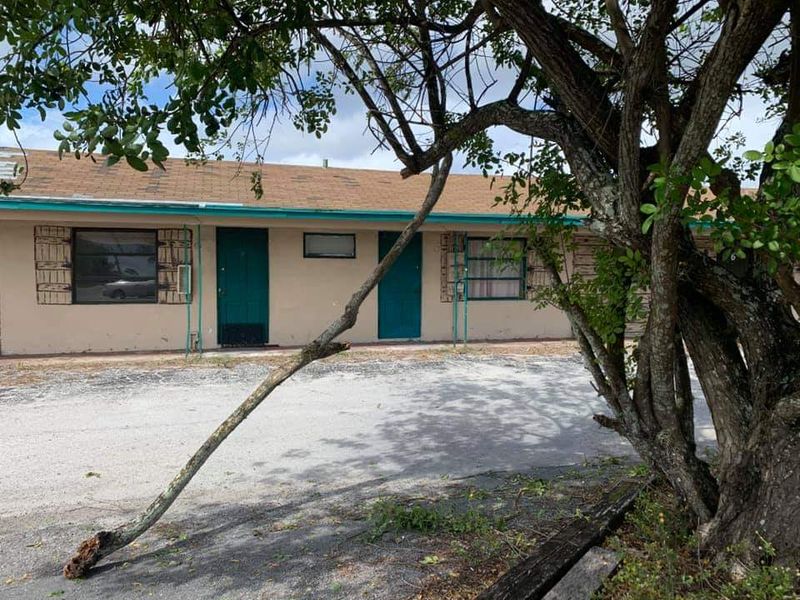
Two hundred and thirty-five people. That’s the official population of Yeehaw Junction according to the 2020 U.S.
Census. To put that in perspective, a single floor of a large Miami condo building might house more residents than this entire census-designated place.
And yet, Yeehaw Junction has its own identity, its own history, and its own presence on the map in a way that thousands of larger communities simply don’t.
The census history here is actually a little quirky. During the 2000 census count, Yeehaw Junction was mistakenly lumped in with Buenaventura Lakes CDP, which meant the correct population data for the area wasn’t recorded at all that cycle.
It’s a small administrative footnote, but it also says something about how easy it is for tiny communities like this one to get overlooked — even by the systems designed to count them.
Living in a place with a population this small comes with a particular rhythm. Neighbors know each other.
The nearest grocery store is a drive away. Big-box retail is not part of the daily landscape.
For some people, that sounds like a hardship. For others, it sounds like exactly the kind of life they’ve been searching for — quiet, unhurried, and connected to something real.
There’s a growing appreciation across the country for places that haven’t been swallowed by suburban sprawl, and Yeehaw Junction fits that description without even trying to market itself as such. Its small population isn’t a sign of failure or neglect — it’s evidence that not every Florida community needs to be a destination to matter.
Sometimes a place earns its spot on the map simply by being exactly what it is, year after year, without apology.
Why Road Trippers Keep Coming Back to This Exit
Road trips through Florida’s interior don’t get the same Instagram attention as drives along A1A or the Overseas Highway. But anyone who has spent real time crossing the state on U.S. 441 or the Florida Turnpike knows there’s a different kind of reward waiting in the middle — and Yeehaw Junction is a big part of that payoff.
It’s the exit that makes you feel like you found something most people missed.
Part of the appeal is the contrast. After miles of flat highway lined with the same chain gas stations and fast-food signs, pulling off at Yeehaw Junction feels like stepping into a different era.
The Desert Inn stands where it’s always stood. The cattle graze without concern for the traffic noise.
The sky opens up in that particular way it only does in Florida’s wide interior, where there’s nothing tall enough to interrupt the horizon.
Seasoned Florida road trippers often build the stop into their route on purpose. It becomes a reliable reset — a place to stretch your legs, take in something genuinely different, and remember that Florida is a much bigger and stranger state than the tourist corridors suggest.
The quirky name helps, too. Telling someone you stopped at Yeehaw Junction is automatically a better story than saying you grabbed coffee at a highway rest area.
The junction also serves as a useful landmark for navigating the state’s interior. Whether you’re heading toward Lake Okeechobee, cutting across to the Treasure Coast, or making your way north through cattle country, Yeehaw Junction tends to appear on the route.
And once you’ve stopped there even once, you’ll find yourself looking for that exit sign again on every future drive through central Florida.