These 12 Florida Tropical Gardens Are Bursting With Color All Through August
August in Florida might bring steamy afternoons, but it also delivers spectacular garden displays that thrive in the heat. While other parts of the country watch their flowers wilt under summer sun, Florida’s tropical gardens explode with vibrant blooms and lush greenery.
From coral-hued hibiscus to exotic orchids and towering palms, these twelve botanical treasures showcase nature’s most dazzling colors when you need them most.
1. Fairchild Tropical Botanic Garden – Coral Gables
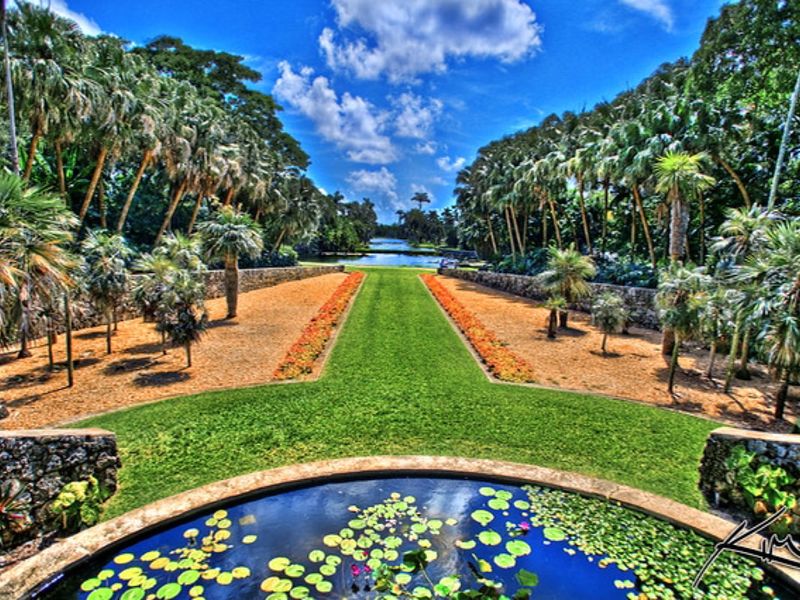
Spread across 83 acres of prime South Florida real estate, Fairchild stands as one of the premier tropical gardens in the entire United States. The collection here goes way beyond pretty flowers—you’ll find rare palms, cycads, and flowering trees from every tropical region on Earth.
August brings out the garden’s true personality, with heliconias standing tall in fiery reds and oranges, while gingers perfume the humid air.
The butterfly garden practically vibrates with activity during these warm months. Monarchs, swallowtails, and zebra longwings dance between passion vines and milkweed, creating living kaleidoscopes against the green backdrop.
The Wings of the Tropics conservatory keeps things interesting year-round, but August’s outdoor displays steal the show.
Fairchild’s lakes and ponds add another dimension to your visit. Water lilies bloom in shades of pink, white, and yellow, their massive pads floating like natural rafts.
The reflection of royal palms and rainbow eucalyptus trees in the still water creates photo opportunities that don’t need filters.
Don’t miss the rainforest section, where the canopy provides welcome shade and the understory plants show off their colorful foliage. Bromeliads cling to tree trunks, their centers holding tiny pools of water that become mini ecosystems.
The garden also hosts art installations throughout the grounds, blending human creativity with nature’s own masterpieces in ways that surprise and delight visitors of all ages.
2. Flamingo Gardens – Davie
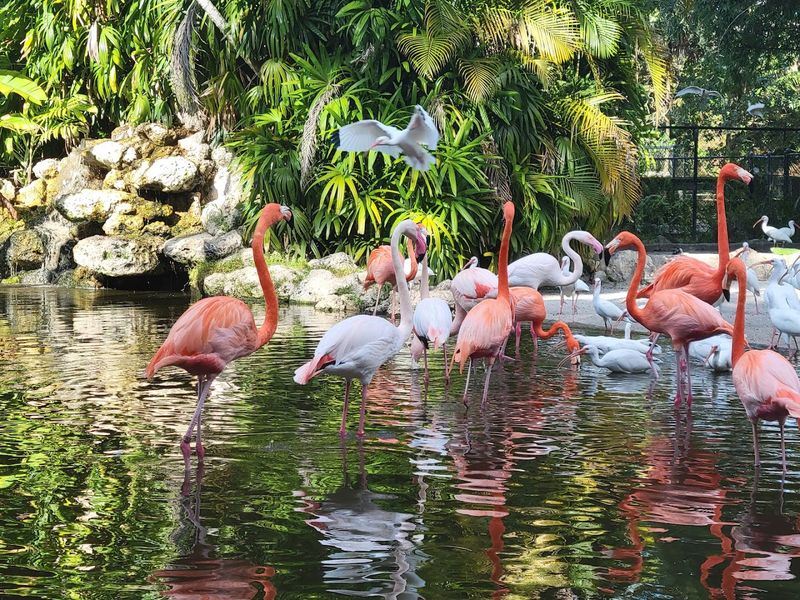
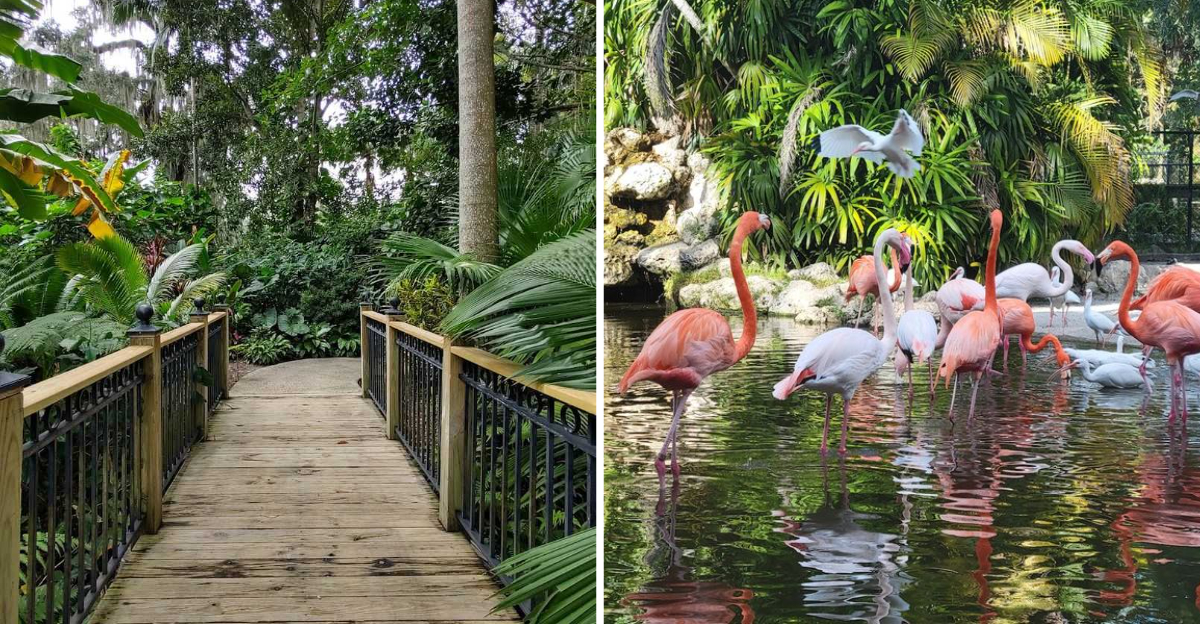
Where else can you watch flamingos strut past butterfly orchids while peacocks scream in the background? Flamingo Gardens combines botanical beauty with wildlife encounters that make every visit feel like an adventure.
The 60-acre site started as a weekend retreat in 1927 and has grown into a certified arboretum showcasing the largest collection of Florida native plants anywhere.
August turns the champion trees into living umbrellas, offering shade while you explore winding paths through tropical hardwood hammocks. The massive ficus trees alone are worth the trip, their aerial roots creating natural sculptures that kids love to photograph.
Crotons show off their most intense colors during these hot months, with leaves swirled in red, orange, yellow, and green.
The Everglades Wildlife Sanctuary portion houses injured animals that can’t return to the wild. Alligators bask near the water’s edge, while wading birds fish in shallow ponds surrounded by blooming swamp lilies.
The flamingo flock—the garden’s namesake—gathers in a dedicated area where their pink plumage pops against tropical foliage.
Free-roaming peacocks add unexpected color as they fan their tail feathers and parade across the lawns. The historic Wray Home, built in 1933, sits at the garden’s heart, offering glimpses into Old Florida life.
Guided tram tours run throughout the day, perfect for visitors who want expert commentary without wearing themselves out in the heat.
3. Harry P. Leu Gardens – Orlando
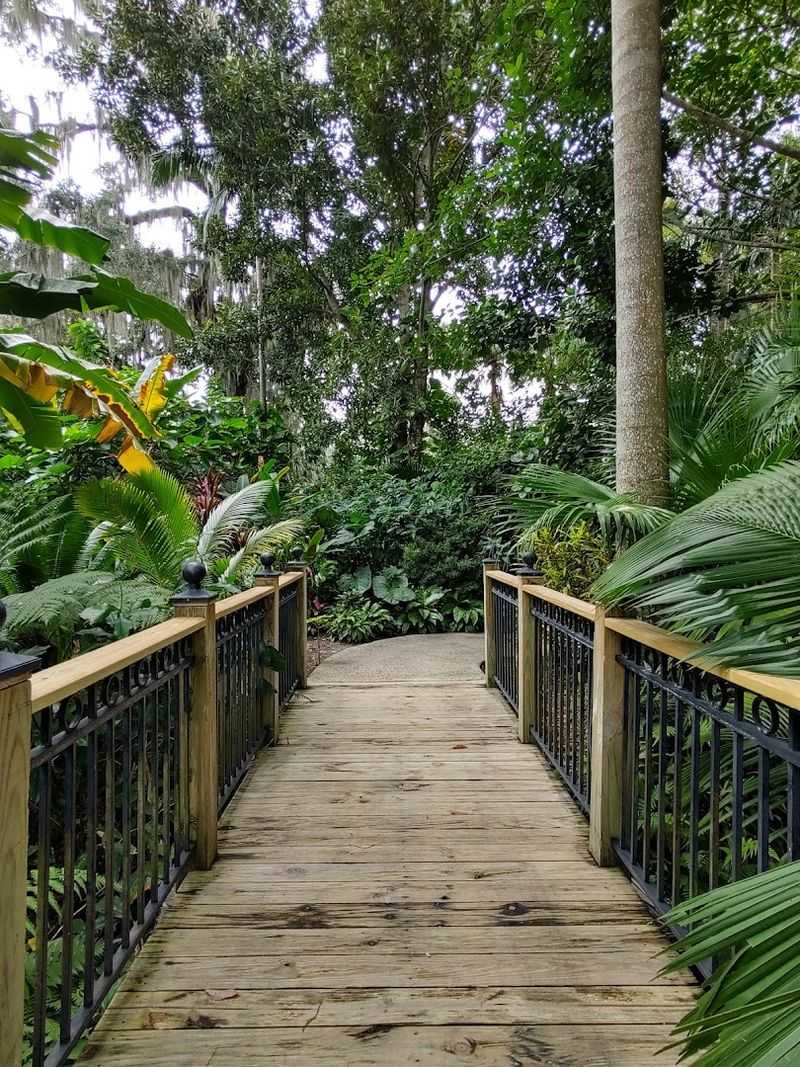
Tucked away from Orlando’s theme park frenzy, Harry P. Leu Gardens offers 50 acres of peaceful plant collections that locals guard like a secret.
The property centers around a historic house museum, but the real stars grow in the ground. August might challenge the famous rose garden, but the tropical section absolutely thrives, bursting with colors that make you forget the temperature.
The butterfly garden becomes a hotspot during these months, designed specifically to attract native species with their favorite nectar plants. Passion vines climb trellises while pentas and firebush create landing pads in shades of red, pink, and orange.
Watch for giant swallowtails, the largest butterflies in North America, floating between blooms like yellow and black kites.
Lake Rowena forms the garden’s eastern border, and the shoreline walk provides both breezes and beautiful views. Bald cypress trees rise from the water, their knees creating natural sculptures, while water lilies bloom in the shallows.
The tropical stream garden mimics a jungle creek, with moisture-loving plants crowding the banks in a riot of textures and colors.
Don’t skip the palm garden, where species from around the world show off their architectural forms. Some have bright red crownshafts, others sport golden stems, and a few produce colorful fruits that attract wildlife.
The garden also maintains a significant camellia collection, though you’ll appreciate those more in cooler months when they bloom.
4. Florida Botanical Gardens – Largo
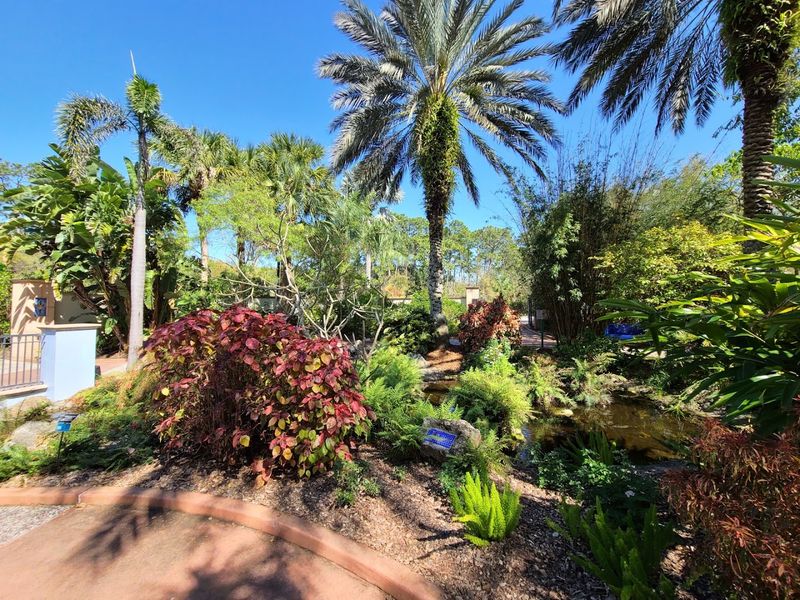
Here’s something rare in Florida—a completely free botanical garden that doesn’t skimp on quality or variety. Florida Botanical Gardens sprawls across 100 acres in Pinellas County’s Largo, offering themed gardens that educate while they entertain.
August showcases the tropical garden at its absolute peak, with heat-loving plants reaching maximum size and bloom production.
The wedding garden draws photographers year-round, but summer brings extra drama with towering crape myrtles in full bloom and colorful crotons lining the paths. Brides might sweat a bit during August ceremonies, but the backdrop compensates with layers of pink, purple, and white flowers.
The herb garden releases intense fragrances in the heat, with basil, rosemary, and lemongrass perfuming the air.
Kids gravitate toward the children’s garden, where interactive elements teach plant science through play. Sunflowers tower overhead in late summer, their faces tracking the sun’s movement across the sky.
The bromeliad garden displays hundreds of varieties, many sending up colorful flower spikes during these warm months.
Native plant enthusiasts appreciate the Florida native garden, which proves that indigenous species can match any exotic import for color and interest. Firebush attracts hummingbirds with tubular orange flowers, while beautyberry produces clusters of bright purple fruits.
The succulent garden demonstrates drought-tolerant landscaping, with aloes and agaves creating sculptural forms that need minimal water. Educational signs throughout explain each plant’s role in Florida’s ecosystem, making every visit a learning experience.
5. The Kampong – Coconut Grove
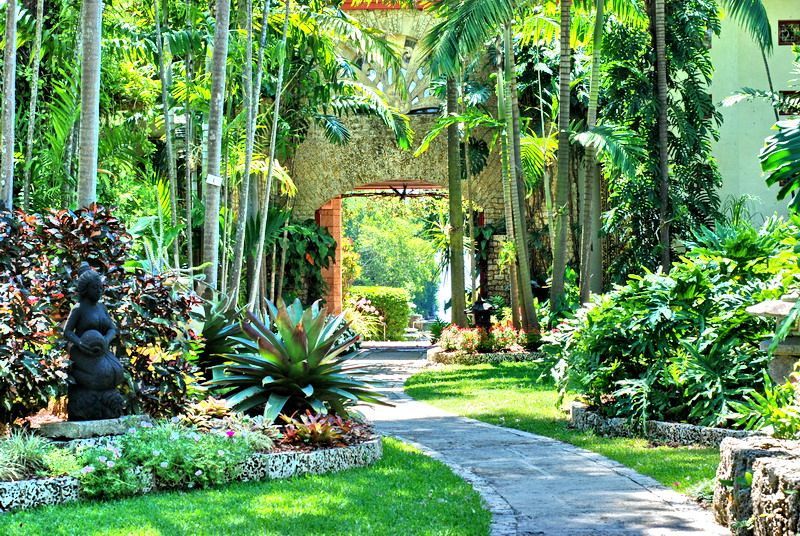
David Fairchild—the botanist behind Fairchild Garden—called this waterfront estate home, and his plant-collecting obsession shows in every corner. The Kampong (Malay for village) sits on nine acres overlooking Biscayne Bay, packed with rare fruit trees, flowering plants, and palms that Fairchild gathered from expeditions around the world.
August heat makes the tropical species feel right at home.
The mango collection alone justifies a visit, with dozens of varieties ripening during summer months. You can’t pick them, but the fragrance of ripe mangoes mixed with blooming jasmine creates an intoxicating atmosphere.
Bamboo groves rustle in the breeze, providing natural sound effects and cooling shade along narrow pathways.
Fairchild’s original home still stands, a coral rock structure that blends into the garden rather than dominating it. Tours of the house reveal his personal collections and photographs from plant-hunting expeditions.
The real treasure, though, grows outside—champion trees, some planted by Fairchild himself, that have reached massive proportions over the decades.
Bay breezes keep things slightly cooler here than inland gardens, and the water views add a special element. Mangroves line the shore, their roots creating nurseries for fish and crabs.
The garden maintains Fairchild’s original vision of showcasing useful tropical plants—not just pretty flowers, but species that feed, shelter, or medicine people in tropical regions. August brings many of these plants into fruit, demonstrating their practical value alongside their beauty.
6. McKee Botanical Garden – Vero Beach
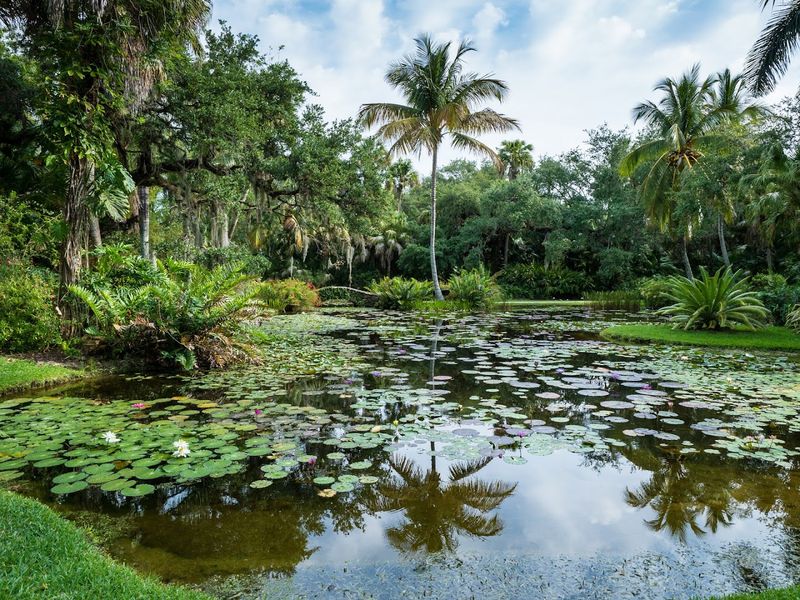
McKee opened in 1932 as one of Florida’s first tourist attractions, drawing visitors with exotic plants and rustic charm before Disney existed. After decades of neglect, the garden was rescued and restored in the 1990s, and now those 18 acres shine again with both historic character and modern horticultural excellence.
August transforms the water lily pond into a masterpiece of floating color.
The lily collection includes both tropical and hardy varieties, their blooms ranging from pure white to deep burgundy. Some flowers reach dinner-plate size, held above the water on sturdy stems, while their pads spread across the pond’s surface.
Koi swim below, adding flashes of orange and white to the aquatic display.
Bamboo reaches for the sky throughout the garden, some species growing several inches per day during summer’s heat and rain. The rustling sound as wind moves through the canes creates a soundtrack that relaxes even the most stressed visitors.
Bromeliads cluster on trees and in garden beds, many sending up bright flower spikes in shades of red, pink, and yellow.
The Hall of Giants showcases McKee’s original vision—a massive timber structure housing tropical plants that need protection from occasional cold snaps. Inside, the microclimate stays warm and humid year-round, perfect for orchids, ferns, and other moisture-lovers.
The Spanish-style architecture throughout the garden provides Instagram-worthy backdrops, with fountains, arches, and tile work that complement rather than compete with the plants.
7. Naples Botanical Garden – Naples
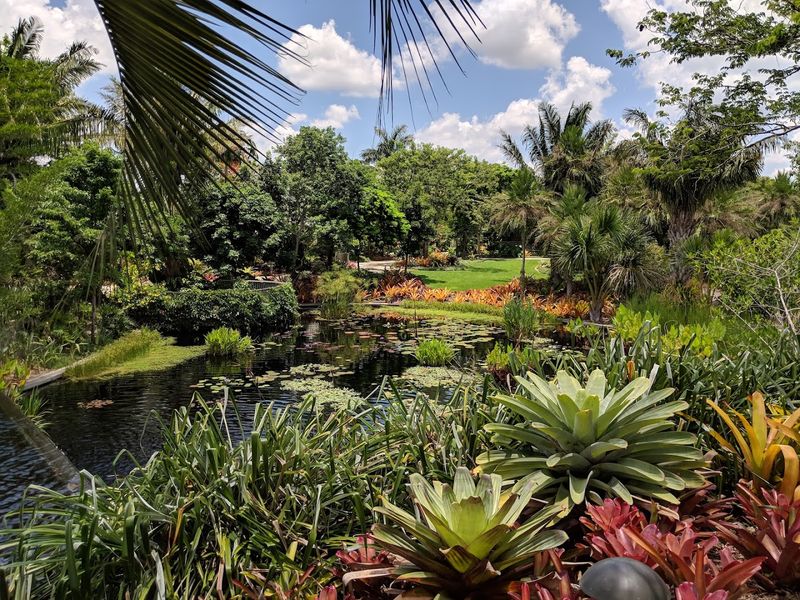
Organized by geographic regions, Naples Botanical Garden takes you on a world tour without leaving Southwest Florida. The 170-acre site includes gardens representing the tropics of Asia, Brazil, the Caribbean, and Florida, each showcasing plants native to those regions.
August’s heat and humidity make every section feel authentic, as if you’ve actually traveled to distant jungles.
The Asian garden features a traditional pavilion surrounded by bamboo, gingers, and ornamental grasses that sway in the breeze. Water features add soothing sounds, while colorful koi patrol the ponds.
Lotus flowers bloom in summer, their pink petals opening each morning and closing by afternoon in a daily ritual.
Brazil’s garden section explodes with bromeliads—hundreds of species creating layers of color and texture. Many bloom during August, their flower spikes rising above rosettes of leaves in electric reds, oranges, and pinks.
The Caribbean garden focuses on palms and flowering trees, many bearing fruits that attract birds and butterflies.
Florida’s native section proves that indigenous plants can compete with any exotic import for beauty. Saw palmettos, coontie, and beautyberry create a naturalistic landscape that requires less water and maintenance than traditional gardens.
The children’s garden includes interactive water features that kids appreciate during hot afternoons. The Kapnick Brazilian Garden’s restoration project showcases sustainable practices, demonstrating how gardens can educate about environmental conservation while providing beauty and recreation for visitors of all ages.
8. Marie Selby Botanical Gardens Downtown Sarasota Campus – Sarasota
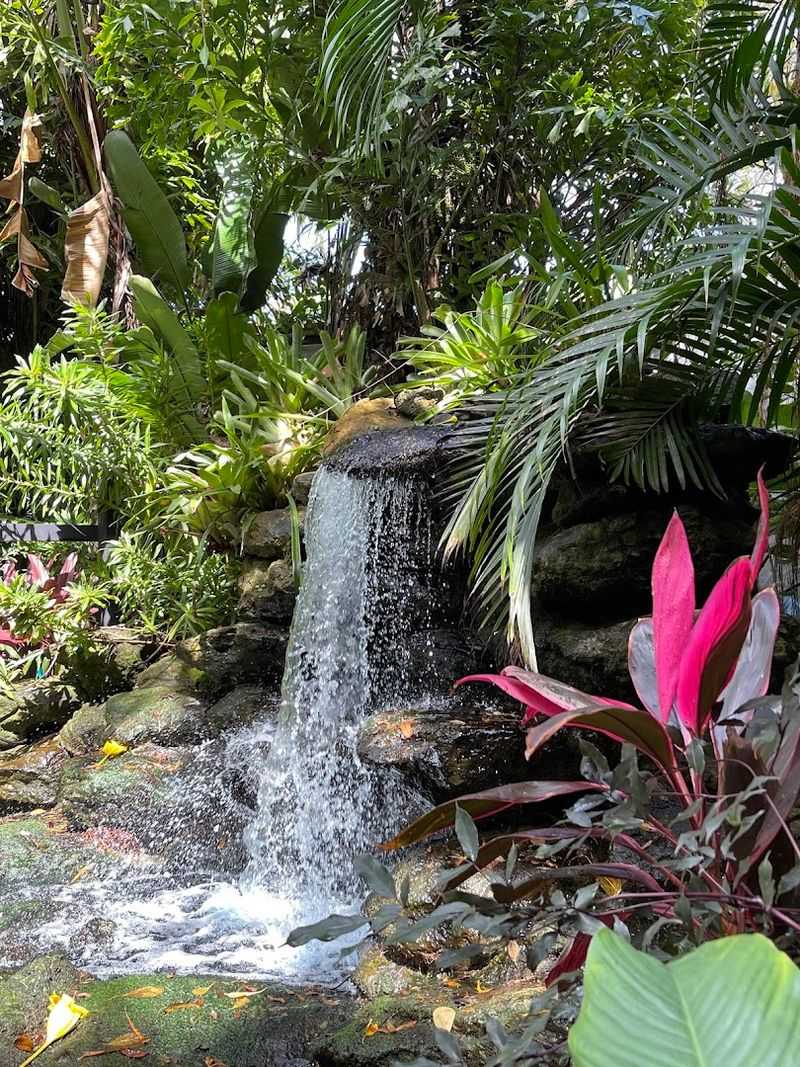
Perched on Sarasota Bay’s edge, Selby Gardens specializes in epiphytes—plants that grow on other plants without harming them. The orchid collection ranks among the world’s finest, with thousands of species and hybrids rotating through displays.
August brings many tropical orchids into bloom, their flowers lasting weeks in the humid heat.
The banyan grove creates a cathedral-like space, with aerial roots dropping from branches to form natural columns. These trees, originally from Asia, have adapted perfectly to Florida’s climate, providing shade and habitat for countless birds and insects.
Bromeliads cling to the banyan’s bark, adding splashes of color to the massive trunks.
Bay breezes keep temperatures slightly more tolerable here than inland locations, and the waterfront location adds visual interest beyond the plants. Pelicans dive for fish just offshore, while herons stalk the shallows looking for easy meals.
The tropical conservatory houses plants that need extra warmth and humidity, creating a jungle environment even during Florida’s brief cool snaps.
Selby’s research program focuses on epiphyte conservation, working to protect threatened species in their native habitats. The education component shows throughout the garden, with signs explaining each plant’s ecological role and conservation status.
The newly expanded campus includes modern facilities that complement the historic bayfront property, offering event spaces, research labs, and improved visitor amenities. August visits reward early risers who arrive before the heat peaks, enjoying cooler temperatures and better light for photography.
9. Key West Tropical Forest & Botanical Garden – Key West
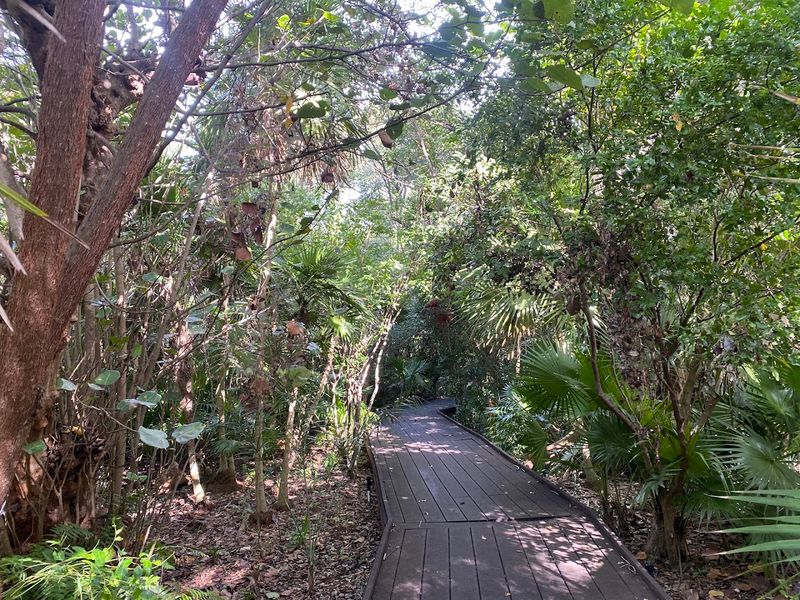
As the only frost-free botanical garden in the continental United States, this Key West treasure showcases plants that can’t survive anywhere else in the Lower 48. The 15-acre site preserves the last tropical hardwood hammock in the Keys, protecting endangered species while educating visitors about this unique ecosystem.
August’s heat and humidity create perfect conditions for the garden’s specialized residents.
The butterfly conservatory houses species that depend on specific host plants found only in South Florida and the Caribbean. Giant swallowtails, zebra longwings, and rare Miami blues flutter between native flowers, demonstrating the connection between butterflies and their food plants.
Conservation efforts here have helped bring several species back from the brink of extinction.
Native orchids cling to tree branches throughout the hammock, many blooming during summer months. These aren’t the showy hybrids you see in garden centers—they’re smaller, more subtle species perfectly adapted to Florida’s climate.
The endangered Key tree cactus grows here, one of the rarest cacti in North America, producing white flowers that bloom at night.
Trails wind through different habitats, from dense hammock to coastal dunes, each supporting different plant communities. Gumbo limbo trees shed their copper-colored bark, earning the nickname tourist tree.
The garden’s mission focuses on conservation and education, working to protect Keys ecosystems threatened by development and climate change. Despite the heat, August offers the most authentic experience of this tropical environment.
10. Sunken Gardens – St. Petersburg
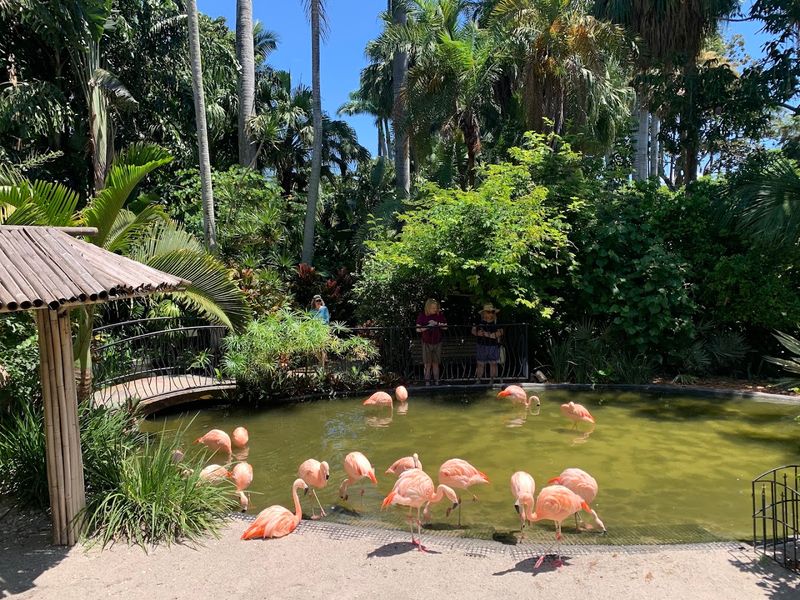
This four-acre garden sits in a natural sinkhole, creating a microclimate that stays cooler and more humid than surrounding areas. Opened in 1935 as a tourist attraction, Sunken Gardens has entertained generations with its dense plantings and quirky Florida charm.
August finds the garden at maximum lushness, with plants growing so vigorously they nearly swallow the pathways.
The flamingo flock adds personality and color, their pink feathers contrasting beautifully with green foliage. These birds aren’t native to Florida, but they’ve become symbols of the state’s tropical character.
Parrots squawk from aviaries, while koi patrol the ponds, their mouths opening hopefully whenever visitors approach.
Winding paths descend into the sinkhole, where temperatures drop noticeably as you walk deeper into the garden. Ferns cascade from retaining walls, while orchids and bromeliads cling to tree trunks overhead.
The density of plantings creates a jungle atmosphere, making you forget you’re in the middle of St. Petersburg.
Historic buildings dot the property, remnants of the garden’s roadside attraction days when Florida tourism meant family-owned wonders rather than corporate theme parks. The collection includes over 50,000 tropical plants representing species from around the world.
Banana plants bear fruit, hibiscus blooms in every color imaginable, and gingers perfume the humid air. The garden’s compact size makes it perfect for visitors who want tropical immersion without marathon walking, and the sunken design provides natural shade during the hottest hours.
11. Mounts Botanical Garden – West Palm Beach
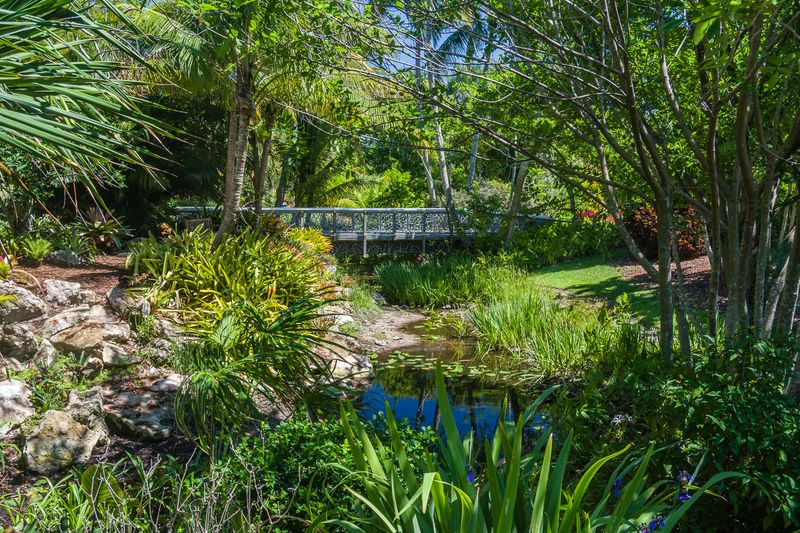
Palm Beach County’s oldest and largest public garden spreads across 14 acres, offering both cultivated displays and natural areas that showcase South Florida’s plant diversity. Mounts focuses on tropical and subtropical species that thrive in the region’s climate, making it a living laboratory for homeowners seeking landscaping ideas.
August demonstrates which plants truly love Florida’s summer conditions.
The citrus grove produces fruit during various seasons, but summer brings fragrant blooms that perfume the entire garden. Butterfly and hummingbird gardens buzz with activity as pollinators work the flowers for nectar.
Native milkweed hosts monarch caterpillars, their striped bodies munching leaves while preparing for transformation into butterflies.
The tropical fruit pavilion displays species most people only encounter at specialty markets—star fruit, lychee, longan, and jackfruit trees bearing massive fruits that can weigh 40 pounds. Educational signs explain each fruit’s origin, cultivation requirements, and culinary uses.
The herb garden demonstrates that many tropical herbs actually prefer Florida’s climate over temperate zones.
Water conservation gardens show how to create beautiful landscapes while using less irrigation—important in a state where water management challenges continue growing. Native plant sections prove that indigenous species offer colors and forms equal to any exotic import.
The garden hosts workshops throughout the year, teaching propagation, pruning, and pest management using sustainable practices. Membership provides free admission and supports the garden’s educational mission, making it easy to visit repeatedly as different plants come into bloom throughout the seasons.
12. Kanapaha Botanical Gardens – Gainesville
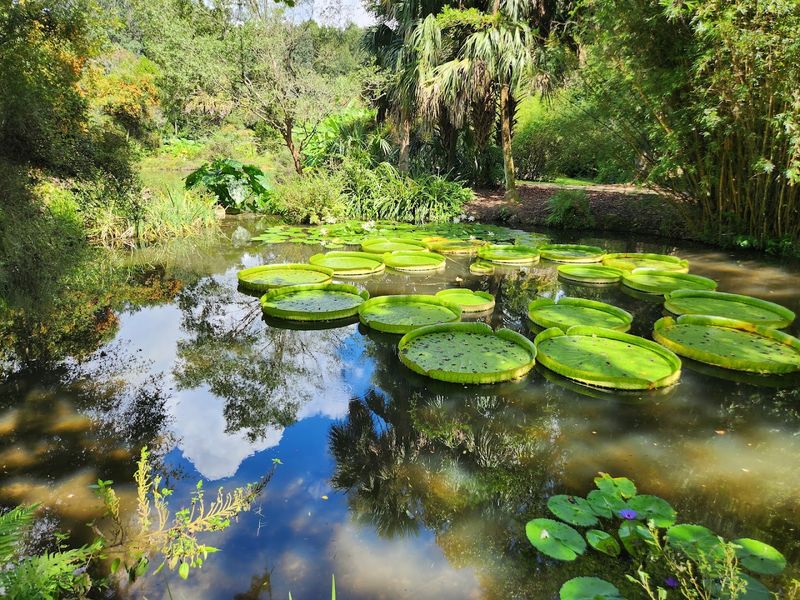
North Central Florida’s climate differs from the tropical south, but Kanapaha’s 68 acres prove that stunning gardens can thrive here too. The terrain rolls gently, unusual for Florida, creating varied microclimates that support diverse plant collections.
August finds the water lily pond at peak performance, with massive Victoria lilies spreading pads six feet across.
The bamboo garden contains one of the largest collections in the Southeast, with species ranging from tiny groundcovers to giants that reach 70 feet tall. Walking through the bamboo creates an otherworldly experience, as culms arch overhead and rustle in the breeze.
Some varieties feature colorful canes—yellow, black, or striped—adding visual interest beyond the green foliage.
The sunken garden descends into a natural bowl, creating a protected space where tender plants survive occasional freezes. Tropical species that shouldn’t grow this far north thrive in this microclimate, demonstrating how smart garden design can expand planting possibilities.
The herb garden showcases both culinary and medicinal species, many releasing intense fragrances when the heat rises.
A two-mile trail system winds through different habitats, from upland pine forests to wetland edges. Native azaleas bloom in spring, but summer brings different flowers—coneflowers, black-eyed Susans, and native hibiscus in shades of pink and white.
The garden’s educational mission includes teaching sustainable landscaping practices and native plant conservation. August visits require sun protection and water, but the garden’s size and diversity reward those willing to brave the heat with discoveries around every corner.