This Famous Florida Keys Beach Waits at the End of an Old Railroad Bridge
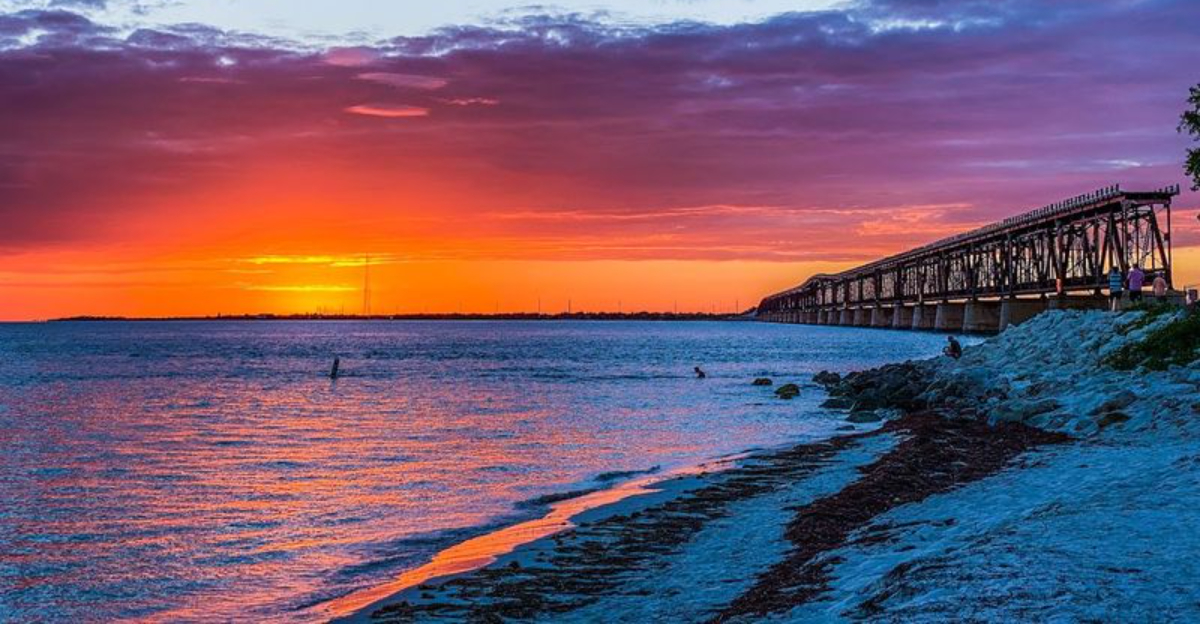
Tucked into the heart of the Florida Keys, Bahia Honda State Park is one of those places that feels almost too good to be true. Crystal-clear turquoise water, powdery white sand, and the ghostly remains of an old railroad bridge stretching into the sky — it has everything.
The park sits on Big Pine Key near mile marker 37, and it draws visitors from all over the world who come chasing that perfect Keys experience. Whether you are snorkeling, camping, or just soaking up the sun, Bahia Honda delivers in every single way.
The Old Bahia Honda Railroad Bridge
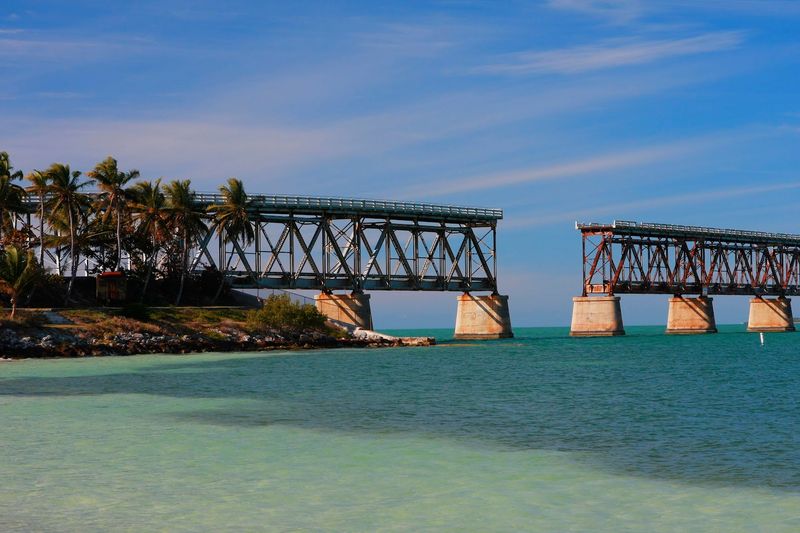
There is something almost cinematic about standing on the shore of Bahia Honda State Park and looking up at the crumbling remains of Henry Flagler’s old Florida East Coast Railway bridge. The structure looms overhead like a relic from another world, its massive arched spans still reaching across the channel with a quiet kind of authority.
It was built in the early 1900s and was once considered a marvel of American engineering.
Flagler’s Overseas Railroad connected Miami all the way to Key West, and the Bahia Honda span was one of the most challenging sections to complete. The deep-water channel here forced engineers to build the bridge higher than most others along the route, which is why the roadbed sat so far above the water.
That unusual height is actually what saved it from complete demolition — the modern highway simply could not be built on top of it.
After the Labor Day Hurricane of 1935 destroyed much of the railway, the bridge was eventually converted into part of the Overseas Highway. Drivers used it for decades before a newer, safer bridge was constructed nearby.
Today, a portion of the old bridge is open to visitors who want to walk out over the water and take in the view from above. The perspective from up there is absolutely stunning — you can see the shallow flats, the dark blue channel, and the park’s famous sandy beaches all at once.
Historians and architecture lovers find the bridge just as fascinating as beach-goers do. The rusted steel, cracked concrete, and weathered pilings tell a story that no museum exhibit could fully capture.
Standing out on that old bridge, you genuinely feel the weight of Florida history beneath your feet.
Sandspur Beach — The Star of the Show
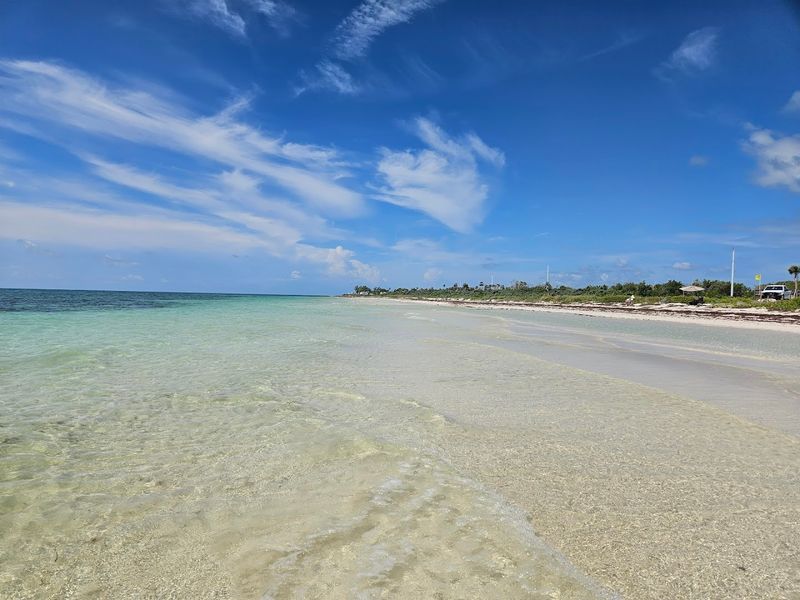
Ask any Florida Keys local to name the most beautiful beach in the archipelago, and a good number of them will point you straight to Sandspur Beach. Located on the Atlantic side of Bahia Honda State Park, this beach has earned its reputation with zero exaggeration.
The sand here is genuinely soft, the kind that squeaks when you walk on it, and the water shifts from pale green near the shore to deep cobalt blue further out.
What makes Sandspur stand apart from other Florida beaches is the combination of natural scenery and accessibility. There are no high-rise hotels blocking the horizon, no loud beach bars, and no jet ski rentals buzzing past every five minutes.
Just open sky, warm water, and the occasional pelican gliding overhead. For families with young kids, the gradual slope into the water makes it easy to wade in safely without worrying about sudden drop-offs.
The beach also benefits from the park’s protected status, which keeps the environment cleaner and less disturbed than most public beaches. Seagrass beds just offshore support sea turtles, rays, and all kinds of fish, so even just floating near the surface gives you a glimpse into a thriving underwater world.
Snorkeling gear rentals are available nearby, making it easy to explore without hauling your own equipment from home.
Early mornings at Sandspur are particularly magical. The light hits the water at a low angle, the air is still cool, and you might have the whole stretch nearly to yourself.
Watching the sunrise from here — with the old railroad bridge silhouetted in the distance — is the kind of moment that people come back to the Keys chasing again and again. It genuinely earns every bit of praise it receives.
Snorkeling and the Looe Key Reef Connection
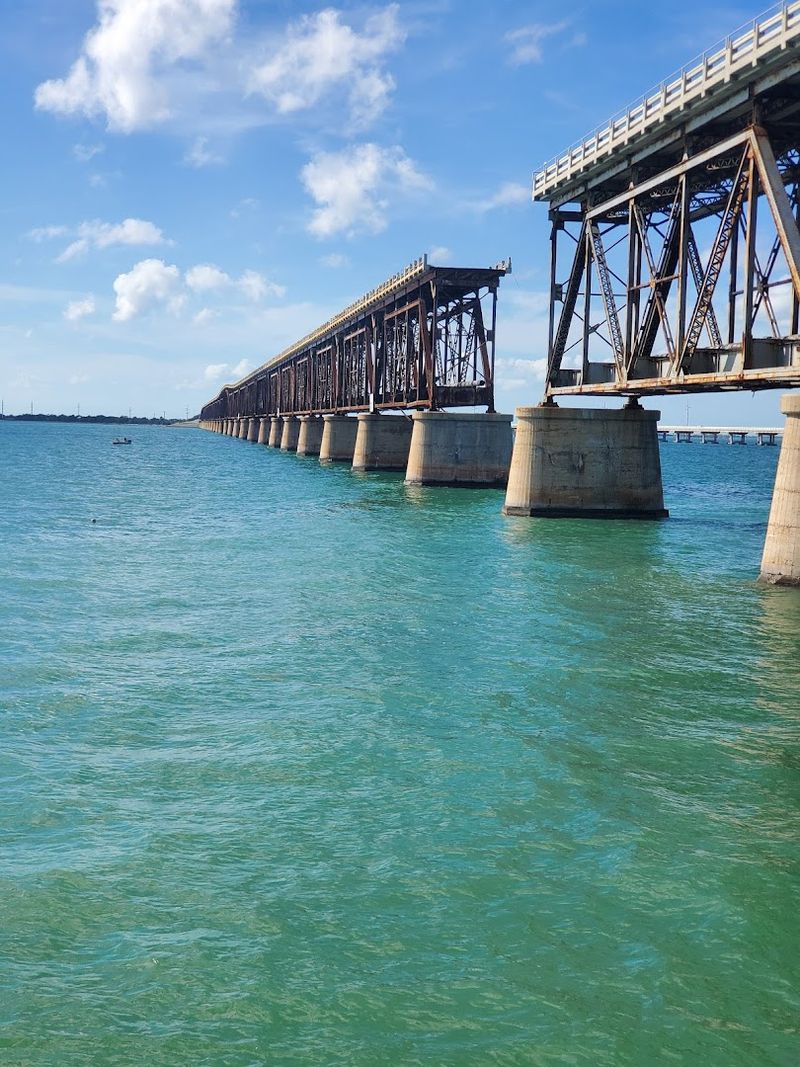
Bahia Honda State Park is not just a beach destination — it is also a launchpad for some of the best snorkeling in the entire Florida Keys. The park sits close to Looe Key National Marine Sanctuary, one of the healthiest sections of the Florida Reef Tract.
Boat trips run directly from the park’s marina, making it surprisingly easy to get out to the reef without having to drive far or book through an outside company.
Looe Key gets its name from the HMS Looe, a British frigate that ran aground on the reef back in 1744. Today, the reef is a protected underwater paradise full of staghorn coral, brain coral, sea fans, and an almost absurd variety of tropical fish.
Parrotfish, angelfish, grouper, and the occasional nurse shark all call this area home. The visibility on a calm day can stretch beyond 30 feet, making it ideal for both beginners and experienced snorkelers.
Back closer to shore, the shallow flats around the park itself offer their own rewards. Snorkeling off the beach near the old bridge pilings turns up surprising finds — small reef fish shelter around the concrete structures, and the seagrass beds attract manatees during cooler months.
It is not uncommon to round a piling and come face to face with a sea turtle cruising along the bottom, completely unbothered by your presence.
The park’s rental shop keeps things simple by offering snorkel sets at reasonable prices. Staff can point you toward the best spots depending on the tide and wind conditions that day.
Whether you are an experienced diver stepping down to snorkeling or a first-timer nervous about getting in the water, the reef system around Bahia Honda makes for an unforgettable introduction to Florida’s underwater world.
Camping Under the Stars at Bahia Honda
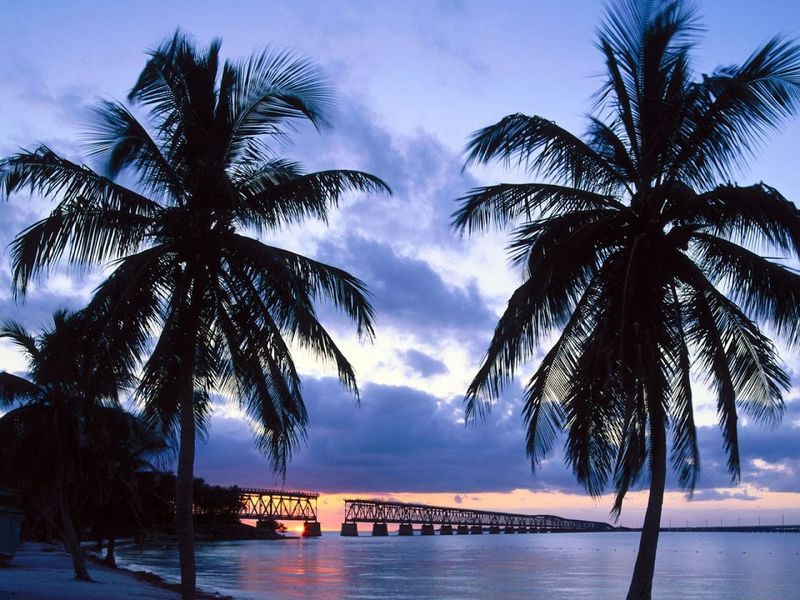
Camping at Bahia Honda State Park is the kind of experience that ruins you for ordinary campgrounds. The park offers several camping areas, including sites right on the water where you can fall asleep to the sound of gentle waves and wake up to a sunrise over the Atlantic.
There is honestly no alarm clock better than that.
The Sandspur camping area sits closest to the famous beach and fills up fast, especially on weekends and during the winter snowbird season. Reservations through the Florida State Parks system are essential — walk-ins are rarely possible during peak months.
The sites accommodate tents, pop-up campers, and some RVs, though the park has size limitations, so it is worth checking the specifics before you pack up the big rig.
Each campsite comes with basic amenities: a picnic table, a fire ring, and access to restrooms and showers. The facilities are clean and well-maintained, which is not always a given at state park campgrounds.
A small camp store near the marina carries essentials like firewood, ice, and snacks for those moments when you realize you forgot something critical.
What really elevates camping here is the setting. There are very few artificial lights nearby, which means the night sky over Bahia Honda is genuinely dark and full of stars.
On a clear night, the Milky Way stretches overhead in a way that feels almost unreal if you are used to city skies. Campers who stay for multiple nights often say the first evening is breathtaking, but by the third night it starts to feel like home.
The combination of tropical warmth, ocean sounds, and natural darkness makes this one of Florida’s most sought-after camping spots, and the competition for reservations proves it.
The Wildlife That Calls the Park Home
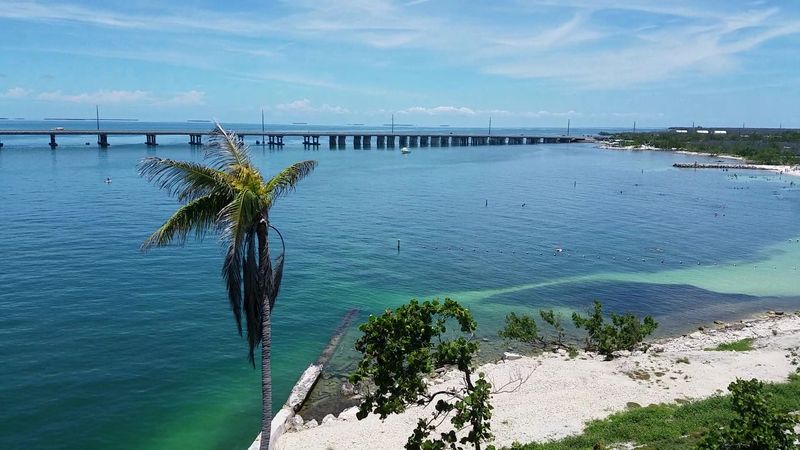
Bahia Honda State Park is a certified wildlife hotspot, and not just underwater. The park protects a rare mix of habitats — tropical hardwood hammock, silver palm forest, mangroves, and open water — that together support an impressive roster of animals.
Birders especially love this place, and for good reason.
The great white heron, a Florida Keys specialty, can often be spotted wading along the shoreline in the early morning. Ospreys nest on channel markers near the marina and can be watched diving for fish with remarkable precision.
During migration season, the park becomes a temporary home for warblers, vireos, and other songbirds that drop into the hammock to rest after crossing open water. Serious birders show up with binoculars and life lists, treating the park with the same reverence that beach-goers reserve for Sandspur.
In the water, the biodiversity is equally impressive. Bottlenose dolphins frequently pass through the channel near the old bridge, sometimes surfing the bow wave of passing boats.
Manatees move into the shallower, warmer areas during winter months, and patient visitors who sit quietly on the shoreline sometimes get extended views of these slow-moving giants. Loggerhead and green sea turtles nest on the beaches during summer, and the park takes turtle nesting seriously — sections of beach may be roped off during nesting season to protect eggs.
Land-dwelling wildlife includes the Key deer, a miniature subspecies of white-tailed deer that lives only in the Lower Keys. While the deer are more commonly seen on nearby Big Pine Key, they do occasionally wander into the park.
Seeing one for the first time is always a surprise — they are about the size of a large dog, and their calm, unhurried attitude makes them feel like they own the place. Honestly, in the Keys, they kind of do.
Kayaking and Paddleboarding the Calm Flats
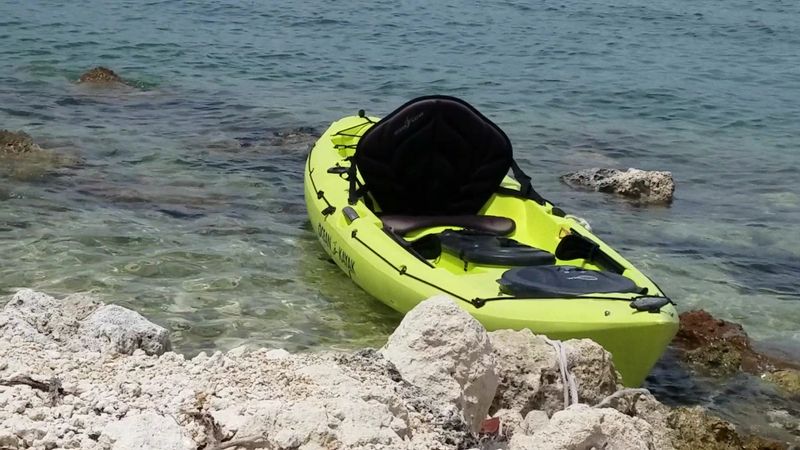
Flat, clear, warm, and loaded with sea life just below the surface — the waters around Bahia Honda State Park were basically designed for paddleboarding and kayaking. The calm Gulf-side flats are ideal for beginners, while more adventurous paddlers can work their way around the mangrove edges or out toward the channel for a more challenging experience.
The park’s concession area rents both kayaks and paddleboards, which is a huge convenience for visitors who do not want to haul gear across the state. Staff can offer guidance on where to go based on your experience level and the current conditions.
On calm mornings, the water is so clear that you can see every blade of seagrass and every starfish beneath you as you glide along — it feels less like paddling and more like floating above an aquarium.
One of the most popular routes takes paddlers under the old railroad bridge and around the perimeter of the park. From water level, the bridge looks even more dramatic than it does from the beach.
The arches tower overhead, barnacle-covered and weathered, while small fish dart through the shadows below. It is the kind of scenery that makes you stop paddling and just stare for a moment.
Mangrove tunnels on the Gulf side add another dimension to the experience. These tight, shaded waterways require a bit of maneuvering, but the payoff is a completely different world from the open beach.
Inside the tunnels, the light filters green through the leaves, and juvenile fish hide among the roots in dense schools. Birding from a kayak in these areas is also surprisingly productive — herons and egrets hold their ground even as you drift quietly past.
Mornings are the best time to go before the afternoon wind picks up and chops the water.
The Silver Palm Nature Trail
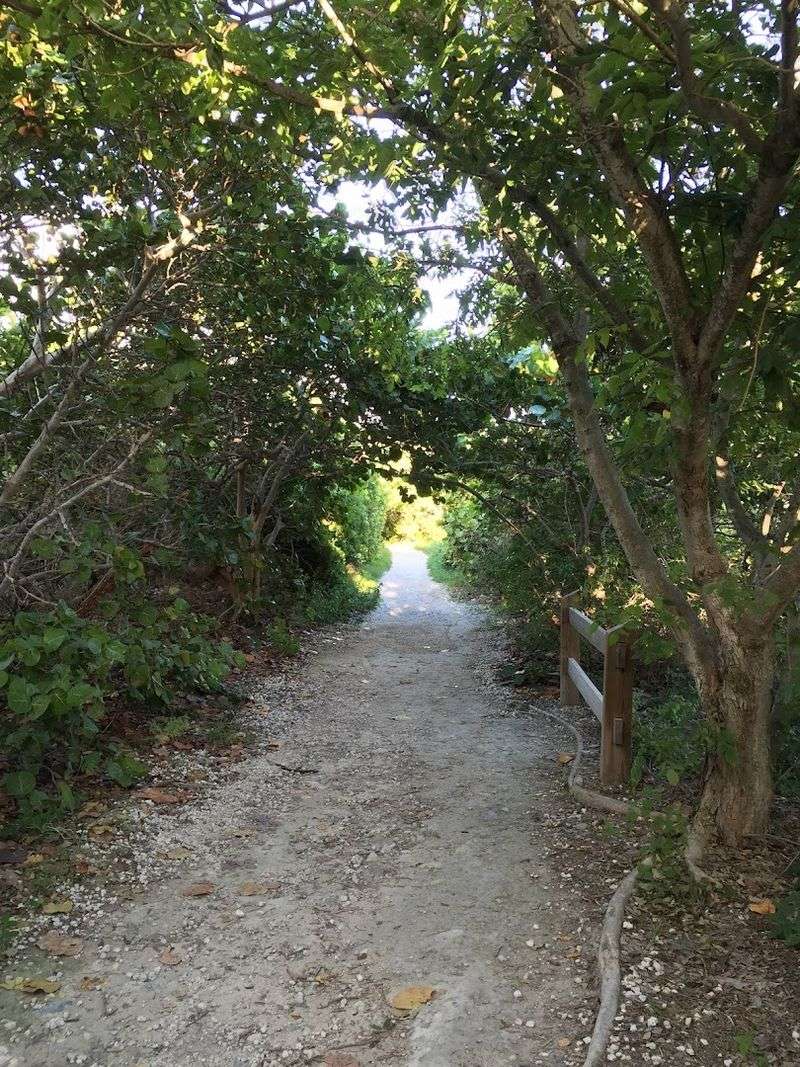
Not everyone who visits Bahia Honda State Park heads straight for the water, and the Silver Palm Nature Trail is exactly why. This short hiking trail winds through one of the rarest plant communities in the United States — a tropical hardwood hammock dotted with silver palms that grow naturally only in the Florida Keys and a few spots in the Bahamas.
Walking through it feels genuinely different from anywhere else in the continental US.
The trail is relatively short, under a mile, but it is packed with interesting stops. Interpretive signs explain the plant life along the way, identifying species like Jamaica dogwood, blolly, and sea lavender.
The silver palm itself is easy to recognize — its fronds have a distinctive metallic sheen on the underside that catches the light in a way that feels almost artificial. Seeing one up close for the first time tends to stop people in their tracks.
The trail also passes through areas where you can spot land crabs scuttling across the path, butterflies nesting in the vegetation, and the occasional ground dove scratching through the leaf litter. The shade inside the hammock makes it noticeably cooler than the open beach, which is a welcome relief during the warmer months.
Wearing bug spray is strongly recommended, especially in the early morning and late afternoon when mosquitoes are most active.
What makes this trail special beyond its plant life is the sense of solitude it offers. On a busy beach day when Sandspur is crowded with families and snorkelers, the Silver Palm Trail stays quiet.
You might share the path with a curious butterfly or a foraging heron, but human foot traffic stays low. For anyone who wants to understand what the Florida Keys looked like before the highway arrived, this trail offers a genuine and unhurried glimpse into that original landscape.
Planning Your Visit — What to Know Before You Go
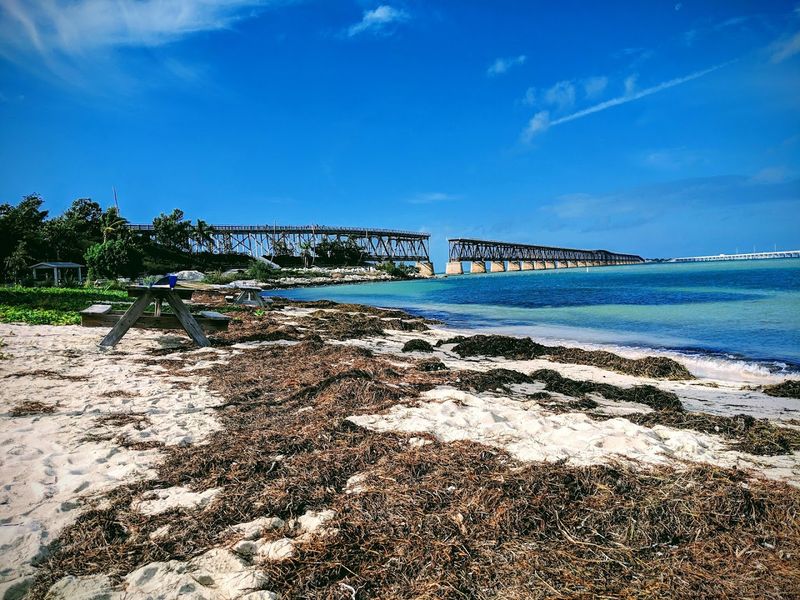
Bahia Honda State Park is located at the south end of Big Pine Key near mile marker 36.8 on the Overseas Highway, about two hours south of Miami and roughly 35 miles north of Key West. The drive down US-1 through the Keys is an experience in itself, with water visible on both sides and the old bridges stretching into the distance.
Give yourself a full day here — half a day is never quite enough.
The park charges a per-vehicle entrance fee, which covers access to the beach, trails, and picnic areas. The fee is reasonable by Florida State Parks standards and is worth every cent given the quality of the facilities.
Parking can fill up quickly on weekends and holidays, particularly between November and April when snowbirds and spring breakers flood the Keys. Arriving before 9 a.m. is the safest strategy if you want a good parking spot and a less crowded beach experience.
Facilities inside the park include clean restrooms, outdoor showers for rinsing off after the beach, a marina, a small gift shop, and the concession stand that handles rentals and snorkel boat bookings. Bringing your own food and drinks is allowed and encouraged — there are covered picnic pavilions with tables and grills available on a first-come, first-served basis.
A few pavilions can be reserved in advance for group gatherings.
Cell service inside the park can be spotty depending on your carrier, so downloading offline maps or saving the park’s information before you arrive is a smart move. The park’s official website through Florida State Parks has up-to-date information on hours, fees, and any temporary closures.
Pets are allowed in some areas but not on the beach, and leash rules are strictly enforced. Come prepared, stay flexible, and you will leave with one of the best Florida Keys memories you have ever made.