This Florida Landmark Looks Like It Was Plucked Straight From Russia
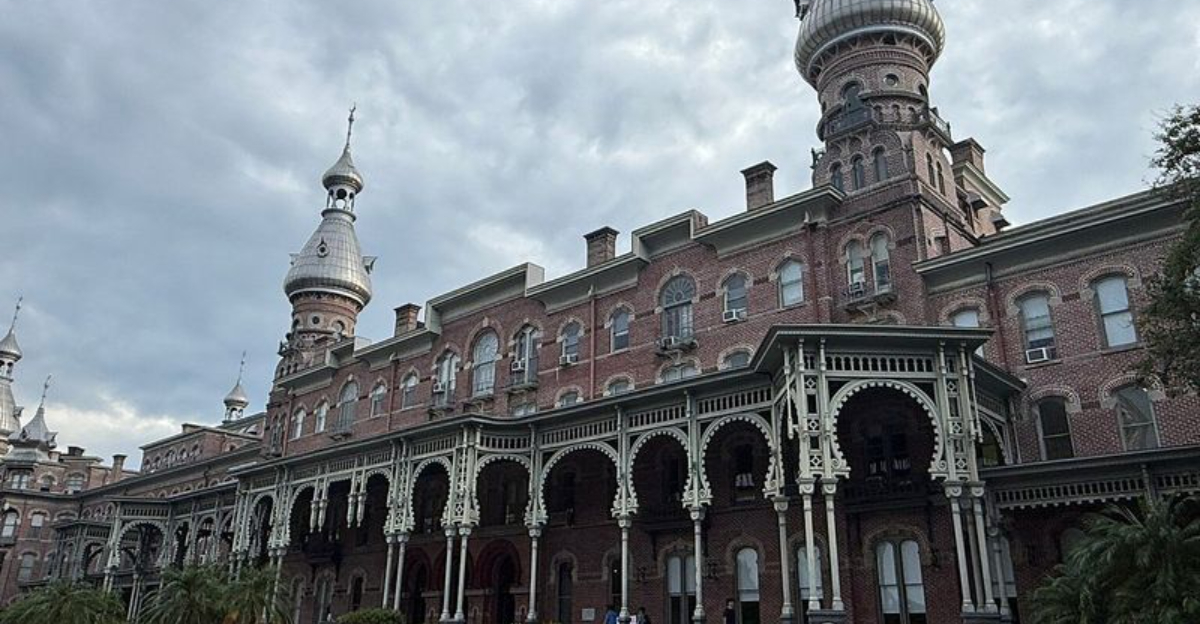
Tampa has a secret that looks more Moscow than Miami. The Henry B. Plant Museum sits right in the heart of the city with silver minarets piercing the Florida sky and ornate domes that could fool you into thinking you took a wrong turn somewhere over the Atlantic.
Built in 1891 as a luxury hotel, this Moorish Revival masterpiece was Henry Plant’s bold vision to turn Tampa into a winter playground for the wealthy, and boy, did he deliver something unforgettable.
1. Architecture That Defies Geography
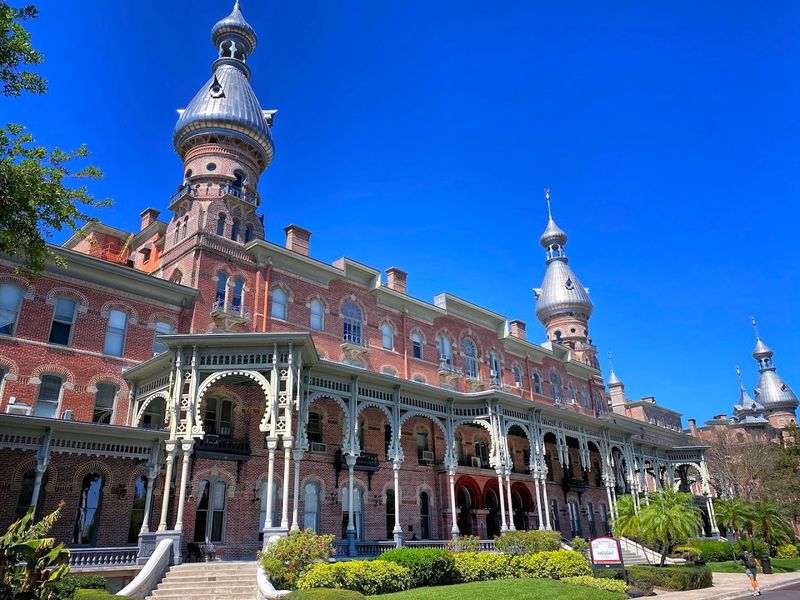
Henry Plant spent three million dollars in 1891 money to create something Tampa had never seen. The silver minarets and crescent-topped domes rise above the palm trees like they wandered away from the Kremlin and decided Florida suited them better. Every arch, every column, every decorative detail screams exotic luxury from another continent entirely.
The Moorish Revival style was Plant’s deliberate choice to make his Tampa Bay Hotel stand out from every other resort in America. He succeeded wildly. Walking up to this building feels like stepping through a portal, especially when the afternoon sun catches those gleaming silver spires and makes them glow against the blue sky.
The building stretches along the Hillsborough River with a commanding presence that still turns heads over a century later. Thirteen minarets mark the roofline, each one a exclamation point declaring that ordinary was never Plant’s style. The red brick contrasts beautifully with the ornamental details, creating a visual feast that photographs can barely capture.
Today the structure houses both the museum and the University of Tampa, but that exterior remains unchanged. It is a time capsule of ambition frozen in brick and mortar.
2. Gilded Age Opulence Preserved Inside
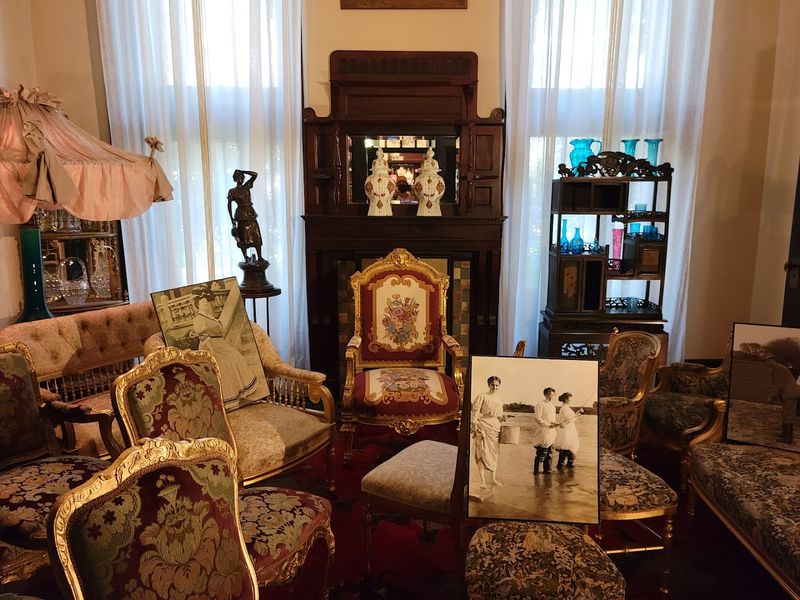
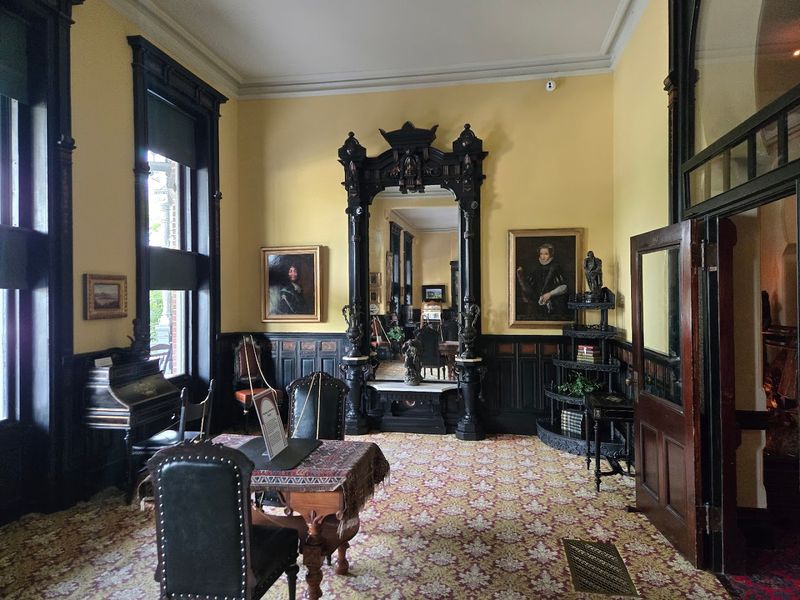
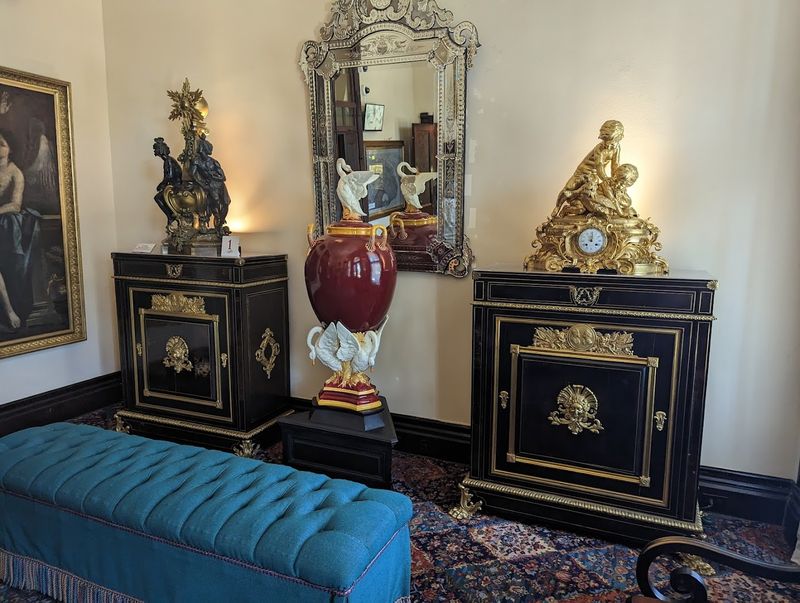
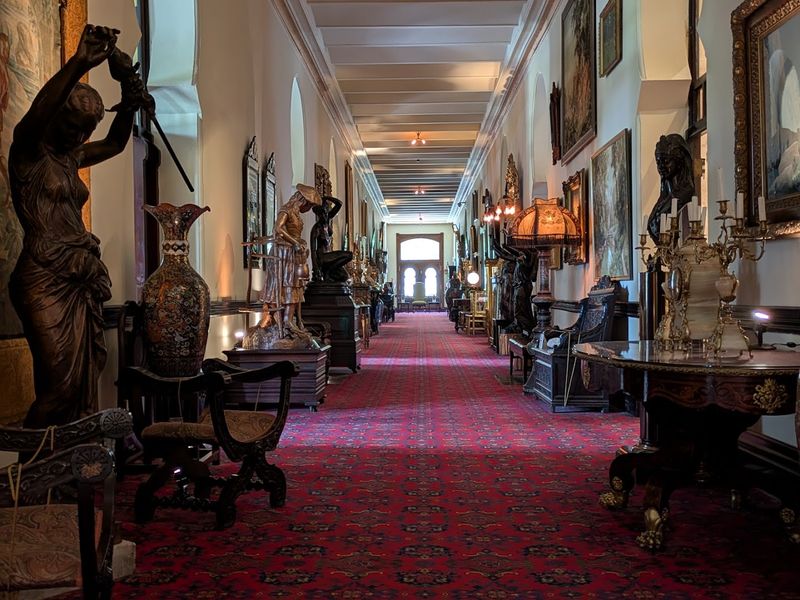
Step inside and the museum transports you straight into 1891 when wealthy northerners escaped winter by riding Plant’s railroad south to his palace hotel. Original furniture fills the rooms, from hand-carved beds to velvet settees that cost more than most people earned in a year. The collection includes pieces from Europe, Asia, and beyond because Plant believed his guests deserved to experience the world without leaving Tampa.
Each room tells a different story of Gilded Age excess. One space showcases Japanese art and furnishings that Plant collected during his travels. Another displays ornate mirrors and chandeliers that once reflected candlelight during lavish dinner parties.
The attention to detail is staggering, down to the authentic wallpaper patterns and window treatments.
What makes this museum special is how complete the picture feels. You are not looking at random antiques behind velvet ropes. You are seeing actual rooms arranged as they were when Theodore Roosevelt stayed here during the Spanish-American War in 1898.
The museum staff has researched extensively to ensure historical accuracy.
The small size actually works in the museum’s favor. Every item gets proper attention, every room feels intentional, and nothing overwhelms you with too much information at once.
3. The Man Behind The Vision
Henry Bradley Plant built an empire on rails and ambition. Born in 1819, he started as a steamboat captain’s son and worked his way up through the railroad industry with relentless determination. By the time he turned his attention to Florida, he had already conquered much of the South’s transportation network.
Plant saw what others missed. While everyone focused on Florida’s east coast, he looked west to Tampa and saw potential for a winter resort destination connected by his railroad lines. He invested millions into infrastructure, bringing trains, steamship lines, and this magnificent hotel to a sleepy port town that most northerners had never heard of.
The museum dedicates significant space to explaining Plant’s impact on Tampa and Florida’s development. His railroad opened up the Gulf Coast to tourism and commerce in ways that transformed the entire region. Without Plant’s vision and wallet, Tampa might have remained a backwater for decades longer.
Visitors learn that Plant competed directly with Henry Flagler, who was developing Florida’s east coast at the same time. Their rivalry pushed both men to create increasingly elaborate hotels and attractions. Plant’s death in 1899 ended his expansion plans, but his legacy literally stands tall in Tampa today.
4. Victorian Christmas Transforms The Experience
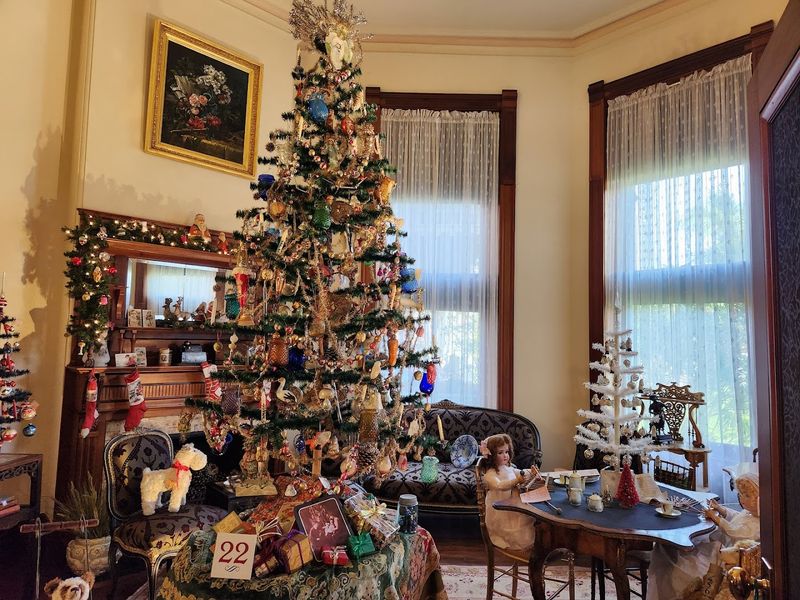
Every holiday season the museum goes all out with Victorian Christmas decorations that make the already impressive interiors absolutely magical. Dozens of decorated trees fill the rooms, each one themed to represent different aspects of Victorian holiday traditions. The ornaments are historically accurate, from glass baubles to handmade paper decorations that Victorians actually used.
The Victorian Christmas Stroll event draws crowds who purchase tickets months in advance. For twenty dollars you get to wander through rooms transformed into winter wonderlands, complete with period-appropriate greenery, ribbons, and candles. Live carolers sometimes perform, adding authentic soundtrack to the visual feast surrounding you.
What sets this apart from generic holiday displays is the educational component. Each decorated space teaches visitors how wealthy Victorians celebrated Christmas differently than we do today. You learn about traditions that have disappeared and customs that evolved into modern practices.
The scavenger hunt keeps kids engaged while adults soak in the historical details.
Even the gift shop gets into the spirit with Victorian-inspired ornaments and decorations for sale. The museum staff clearly loves this event and their enthusiasm shows in every carefully placed ribbon and thoughtfully arranged display. Visiting during Christmas season turns a good museum into an unforgettable experience.
5. Audio Tours Bring History To Life
The museum offers a fantastic audio tour accessible through your own smartphone, which means no fumbling with clunky equipment or waiting for devices to charge. You simply scan a code, pull up the tour on your phone, and start exploring at your own pace. Each room has a corresponding audio segment that provides context and stories you would otherwise miss.
The narration goes beyond dry facts to share interesting anecdotes about the hotel’s heyday. You hear about famous guests who stayed in specific rooms, wild parties that scandalized Tampa society, and the logistics of running a luxury hotel in 1890s Florida before air conditioning or modern plumbing. The stories make the artifacts come alive in ways that simple placard descriptions never could.
What visitors appreciate most is the flexibility. You can skip ahead if something does not interest you, replay segments if you want to hear details again, or pause the tour to examine items more closely. Families with kids find this especially helpful since everyone can move at their own speed without holding up the group.
The audio quality is excellent and the information feels professionally researched without being stuffy. Museum staff clearly put serious effort into creating content that educates and entertains simultaneously, which is harder than it sounds.
6. Theodore Roosevelt Slept Here
In 1898 the Tampa Bay Hotel became military headquarters during the Spanish-American War, and Colonel Theodore Roosevelt himself stayed here while organizing his Rough Riders for the Cuba campaign. The museum preserves this fascinating chapter of American history with dedicated exhibits showing how a luxury hotel transformed into a war planning center practically overnight.
Imagine wealthy tourists in evening gowns suddenly sharing hallways with soldiers in uniform. The contrast must have been surreal. Plant allowed the military to take over large sections of his hotel, and officers used the elegant parlors to strategize their Cuban invasion while troops camped on the grounds outside.
The museum displays photographs from this period showing uniformed men lounging on the hotel’s famous veranda, their rifles stacked against ornate columns designed for champagne-sipping socialites. You see Roosevelt’s imposing figure in several images, his famous mustache already well-established even before his presidency. These photographs capture a weird moment when war and luxury collided in Tampa.
This military connection adds unexpected depth to the museum’s story. The building witnessed not just leisure and luxury but also significant historical events that shaped American foreign policy. Roosevelt’s presence here links this Tampa landmark directly to the broader sweep of national history in ways most local museums cannot claim.
7. University Campus Wrapped Around History
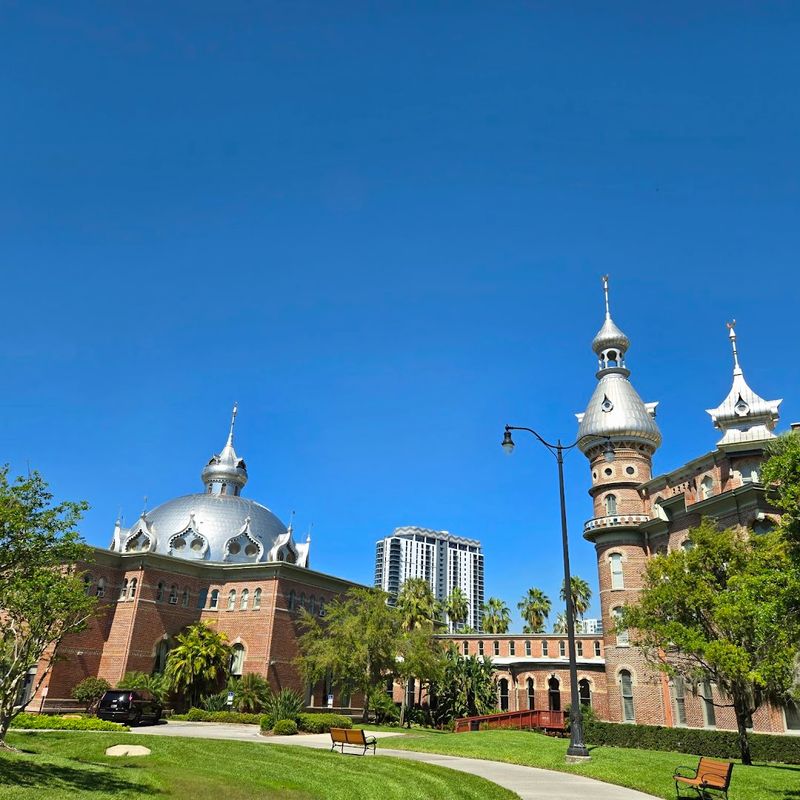
The University of Tampa has occupied Plant Hall since 1933, which creates an unusual situation where college students attend classes in a National Historic Landmark. The museum occupies just one wing of the massive building while dorms, classrooms, and administrative offices fill the rest. This arrangement means the architecture stays maintained and used rather than slowly crumbling like so many historic buildings.
Walking the grounds, you see students rushing to class past ornate Victorian architecture, their backpacks and laptops contrasting hilariously with the 1890s setting. The university takes its stewardship seriously, maintaining the building’s exterior character while adapting interiors for modern educational needs. It works surprisingly well, preserving history while keeping the structure alive and functional.
The park fronting the building offers gorgeous views perfect for photographs. Students study on the lawns where wealthy hotel guests once strolled, and the minarets provide a distinctive backdrop that makes University of Tampa one of the most photogenic campuses in America. The juxtaposition of old and new creates energy that purely preserved museums sometimes lack.
Visitors can walk the exterior and grounds freely even when the museum is closed, which means you can admire that Russian-looking architecture anytime. Just respect that it is an active campus, not a theme park, and students have classes to attend.
8. Small Museum With Big Impact
Multiple reviews mention the museum’s compact size, and honestly, that is part of its charm. You can thoroughly experience everything in sixty to ninety minutes without feeling rushed or exhausted. The curators chose quality over quantity, displaying the most interesting pieces rather than overwhelming visitors with endless rooms of similar items.
Every artifact earns its place here. Nothing feels like filler or random donations cluttering up space. The Asian art collection includes genuine treasures Plant collected during his travels.
The Victorian furniture represents the finest craftsmanship of its era. The photographs and documents tell Tampa’s transformation story with clarity and purpose.
The admission price of twelve dollars feels like a bargain for what you experience. The building alone is worth that, and the exhibits add substantial value. Military members get in free as part of the Blue Star Museum program, and the second Tuesday of each month sometimes offers special admission deals worth checking their website to confirm.
The gift shop punches above its weight with unique items you will not find elsewhere. Visitors mention discovering Dolce and Gabbana items alongside the hotel’s own coffee line and Victorian-inspired ornaments. The staff throughout the museum consistently receives praise for being knowledgeable, friendly, and genuinely enthusiastic about sharing Plant’s story with visitors who take the time to ask questions.