This Florida Trail Packs Sinkholes, Secret Caves, and Stunning Scenery into a Short Hike
Just south of Tallahassee, tucked inside the Apalachicola National Forest, lies one of Florida’s most underrated outdoor gems.
The Sinkhole Trail at Leon Sinks Geological Area takes hikers through a landscape that feels almost otherworldly, with massive sinkholes, hidden cave openings, and crystal-blue water pools scattered along a well-marked path.
At only $5 per car, it delivers serious bang for your buck. Whether you’re a seasoned hiker or just looking for something way more interesting than a flat beach walk, this trail has something genuinely surprising around every bend.
The Big Dismal Sinkhole: Florida’s Most Dramatic Hole in the Ground
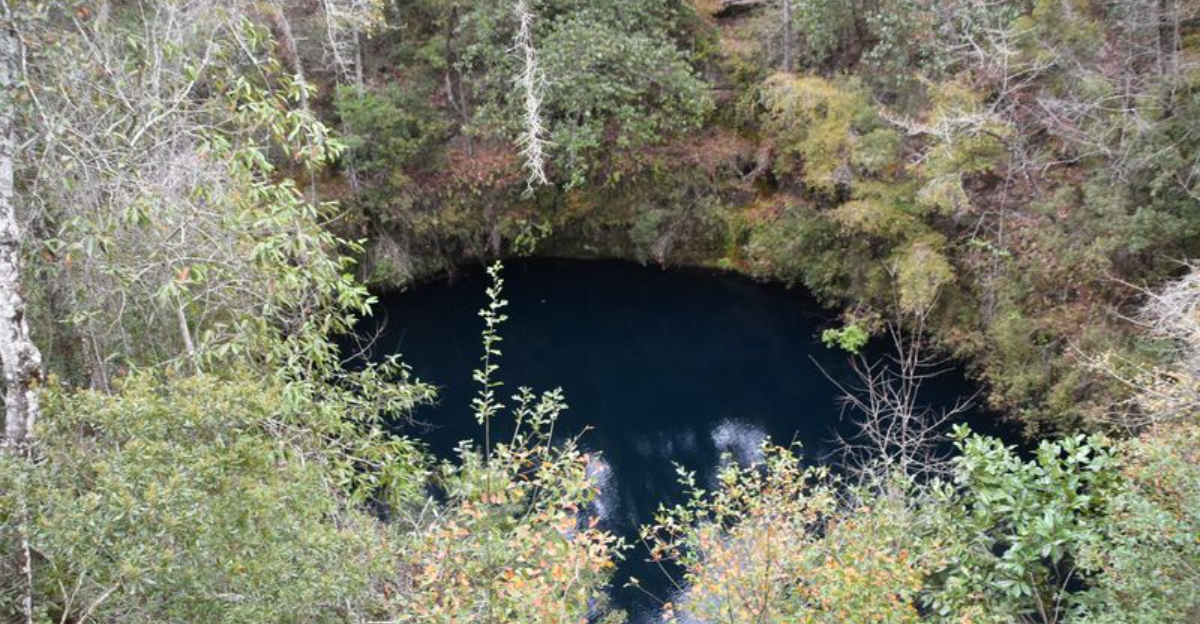
Some things earn their names honestly, and the Big Dismal Sinkhole is one of them. Standing at the edge and peering down into its shadowy, vegetation-lined walls feels less like a nature walk and more like stumbling onto a movie set.
It’s the kind of geological feature that stops people mid-sentence.
Formed over thousands of years as slightly acidic groundwater slowly dissolved the limestone bedrock beneath Florida’s surface, this sinkhole is a textbook example of karst topography. The Floridan Aquifer System, one of the most productive aquifer systems in the world, lies beneath this very ground.
Knowing that makes the view even more mind-bending.
Hikers who take the full Sinkhole Trail loop will pass by Big Dismal as one of the trail’s marquee stops. A viewing area lets you get close enough to appreciate its scale without taking any unnecessary risks.
The surrounding forest frames it perfectly, especially in the early morning when soft light filters through the canopy.
Reviewers consistently call it the coolest feature on the trail, and it’s easy to see why. The sheer size of the depression, combined with the eerie stillness that seems to settle around it, creates an atmosphere unlike anything else in North Florida.
Bring a camera, because a phone screenshot simply will not do it justice.
Plan to spend a few extra minutes here rather than rushing past. The benches nearby give you a chance to sit, take it all in, and maybe think about the slow, powerful geological forces that shaped this landscape over millennia.
It’s one of those spots that reminds you Florida has a lot more going on underground than most people realize.
Hammock Sink: The Blue-Water Beauty Half a Mile In
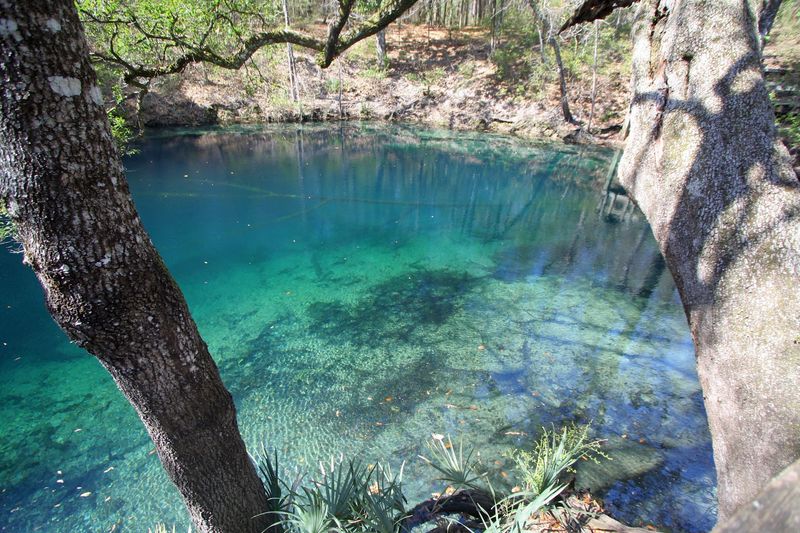
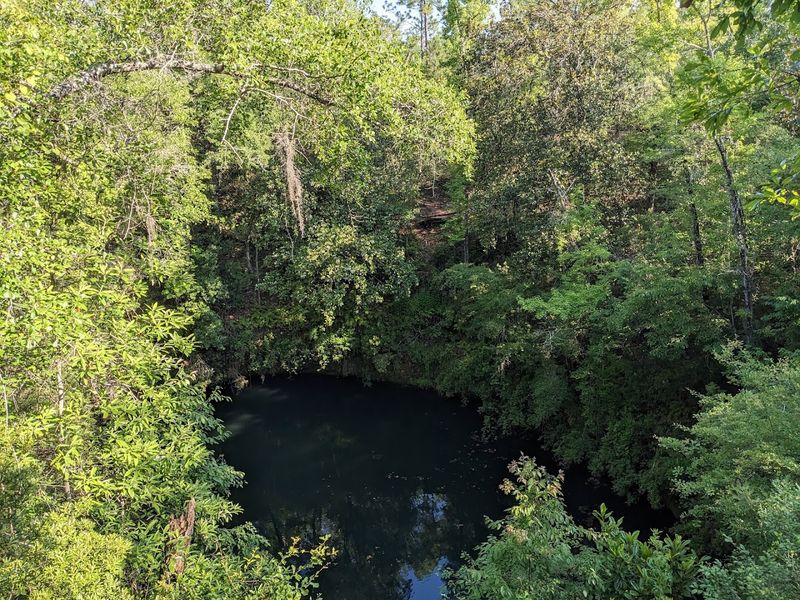
Not everyone has time for a five-mile loop, and honestly, Hammock Sink makes a compelling argument that you don’t need it. Located just half a mile from the trailhead, this wet sinkhole greets hikers with a pool of impossibly blue water that looks more Caribbean than Central Florida.
It sets the tone for everything that follows.
Wet sinkholes like Hammock Sink form when the depression drops below the local water table, filling naturally with groundwater. The striking blue-green color comes from the clarity of that groundwater and the way light interacts with the limestone walls below the surface.
No filter needed, no photo editing required.
What makes Hammock Sink especially satisfying is the accessibility. Families with young kids, casual walkers, or people who just want a quick taste of what Leon Sinks has to offer can reach it without committing to the full trail.
A short side path leads to a viewing area where you can get a solid look at the water below without scrambling down unstable terrain.
Visiting after a heavy rain adds a different kind of drama. The water level rises, the colors deepen, and the whole scene takes on a moody, atmospheric quality.
One reviewer described the sinkholes as dark and striking right after a downpour, which is honestly a different kind of beautiful worth experiencing if you time it right.
Swimming is not allowed at any of the sinkholes, so don’t show up expecting a swim spot. But the visual payoff alone is more than worth the short walk.
Hammock Sink is the kind of place that makes first-time visitors immediately start planning a return trip to see the rest of the trail.
Gopher Hole Cave: The Secret Underground World You Can Actually Peer Into
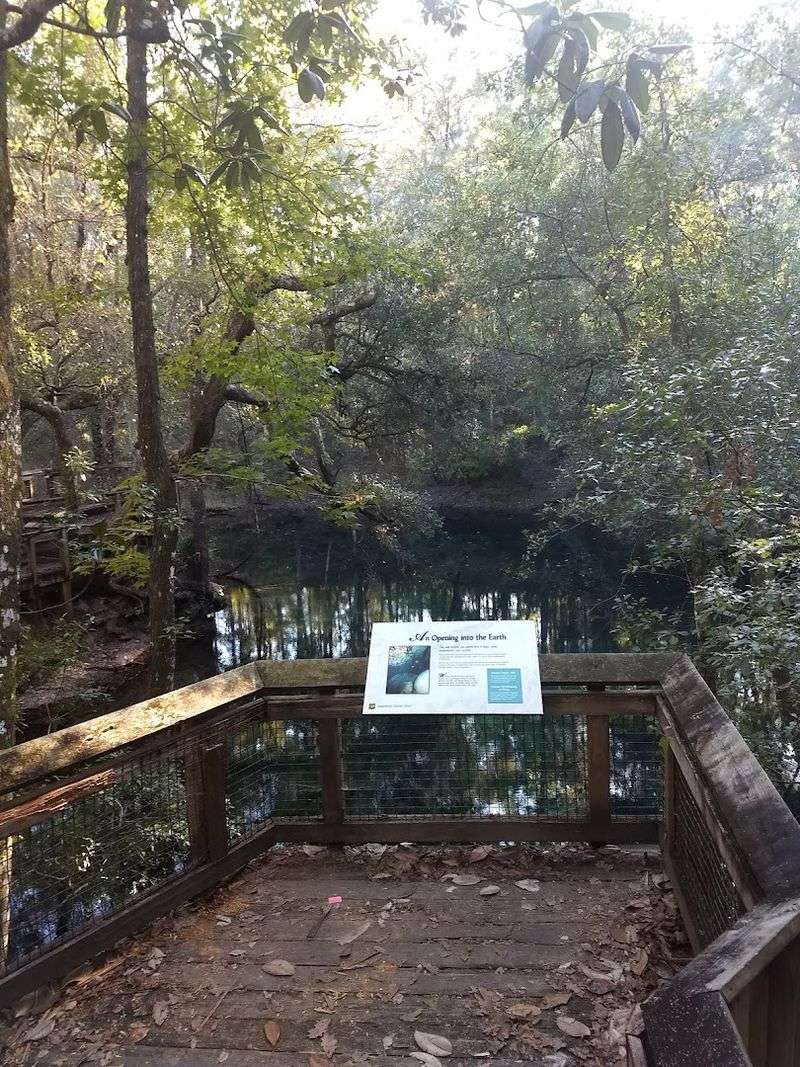
Forget everything you thought you knew about Florida being flat and boring underground. The Gopher Hole cave entrance sits just 0.2 miles from the parking area, making it the fastest payoff on the entire trail.
Walk up, crouch down, and peer into a genuine cave system carved out by water moving through ancient limestone.
Visitors who have explored it describe spotting a white crayfish inside, which tells you something remarkable about what lives in these hidden subterranean spaces. Albino or depigmented cave creatures are a real phenomenon in karst systems, where darkness over thousands of generations removes the need for pigmentation entirely.
Finding one here feels like a genuine discovery.
The cave is close enough to the trail that even families with small children can check it out without any serious hiking commitment. One reviewer hiked to Gopher Hole and back with kids aged two, seven, and nine, calling it an easy ten-minute round trip from the parking lot.
That’s about as accessible as a cave experience gets.
You won’t be spelunking deep into the earth here. The experience is more about getting close, shining a light in, and letting your imagination fill in the rest.
The limestone formations around the entrance give a good sense of the geological forces at work, and the informational plaques nearby add helpful context about how caves like this form in Florida’s karst landscape.
The camp host at Leon Sinks has been known to stop by and give families a spontaneous geology lesson on the spot, which sounds like one of those unexpectedly great moments that make a hike memorable. Gopher Hole punches well above its size for sheer wow factor.
The Disappearing Stream: Nature’s Own Magic Trick
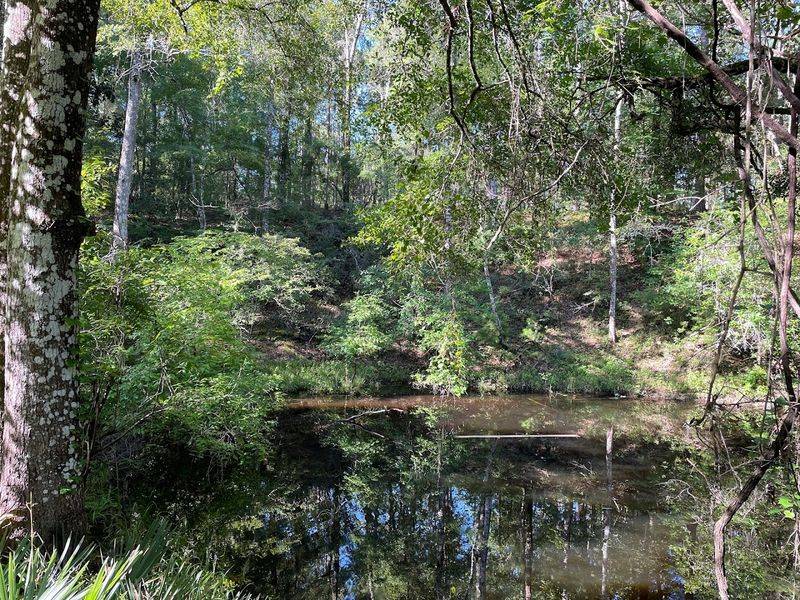
There’s a spot along the Sinkhole Trail where a stream simply vanishes into the earth, and watching it happen in real time is genuinely disorienting in the best possible way. The disappearing stream is one of the trail’s shorter side paths, but experienced hikers call it worth every extra minute it takes to find.
What you’re witnessing is a classic karst feature known as a swallet or stream sink, where surface water flows directly into an opening in the limestone bedrock. From there, it joins the vast underground network of the Floridan Aquifer, eventually resurging somewhere else entirely, sometimes miles away.
Florida’s entire freshwater system works like this on a massive scale.
Standing at the point where the water disappears gives you a visceral understanding of something most people only read about in textbooks. There’s no dramatic waterfall or crashing current, just a quiet, steady stream doing something that looks like it shouldn’t be physically possible.
It’s subtle, but that subtlety is part of what makes it stick with you.
The surrounding forest at this section of the trail tends to be quieter and less trafficked than the main sinkhole overlooks. That adds a sense of genuine exploration to the detour, like you’ve found something slightly off the beaten path even though it’s clearly marked on the trail map.
Early morning visits here have a foggy, almost mystical quality.
Reviewers consistently mention the informational plaques placed throughout the trail as a highlight, and the disappearing stream area benefits from some of the best interpretive signage on the route. Bring curious kids or curious adults, because the questions this feature raises about Florida’s geology are endlessly interesting.
Dry Sinkholes vs. Wet Sinkholes: Understanding What You’re Actually Looking At
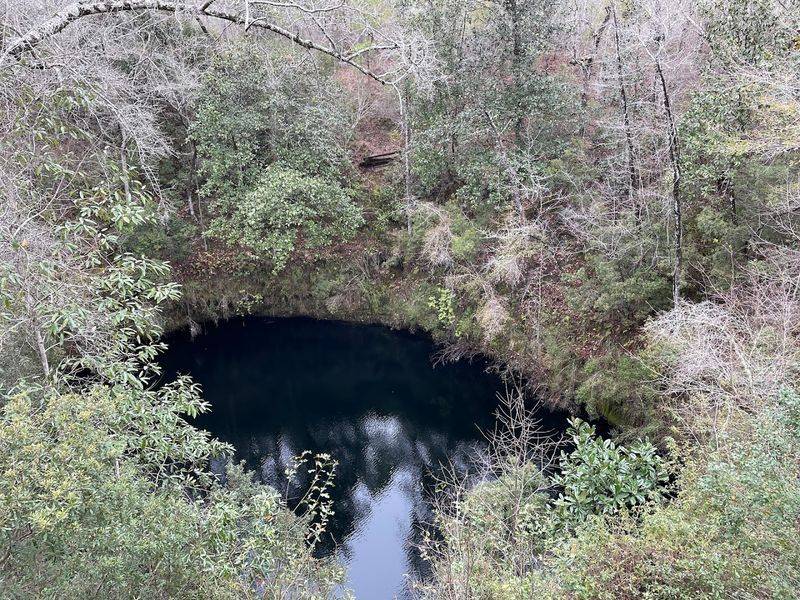
One of the things that separates the Sinkhole Trail from a typical nature walk is how much it actually teaches you while you’re moving through it. Leon Sinks features both dry and wet sinkholes, and understanding the difference between them transforms the experience from a pretty hike into a genuine geology lesson.
Dry sinkholes form when the overlying ground collapses into a void in the limestone but remains above the water table. They look like bowls or depressions in the forest floor, sometimes dramatically steep-sided, sometimes more gradual.
Wet sinkholes, by contrast, drop below the water table and fill with groundwater, creating those striking blue pools that show up in every trail photo.
Each sinkhole along the trail is marked with a numbered post and a corresponding informational plaque. Reviewers consistently highlight these plaques as one of the trail’s best features, turning what could be a passive walk into something interactive and educational.
Reading them while standing directly beside the feature they describe makes the information click in a way that a classroom never quite manages.
Florida has more sinkholes than almost any other state, largely because so much of the peninsula sits on top of soluble limestone. The Leon Sinks area gives visitors a concentrated, accessible window into that geological reality.
Seeing multiple sinkholes in various stages and types within a single hike makes the patterns visible in a way that’s hard to forget.
For anyone who has ever driven past a sinkhole news story and wondered how exactly these things happen, this trail answers that question better than any documentary. Come curious, read the signs, and leave with a completely different understanding of what’s happening beneath your feet every day in Florida.
Trail Logistics: Everything You Need to Know Before You Go
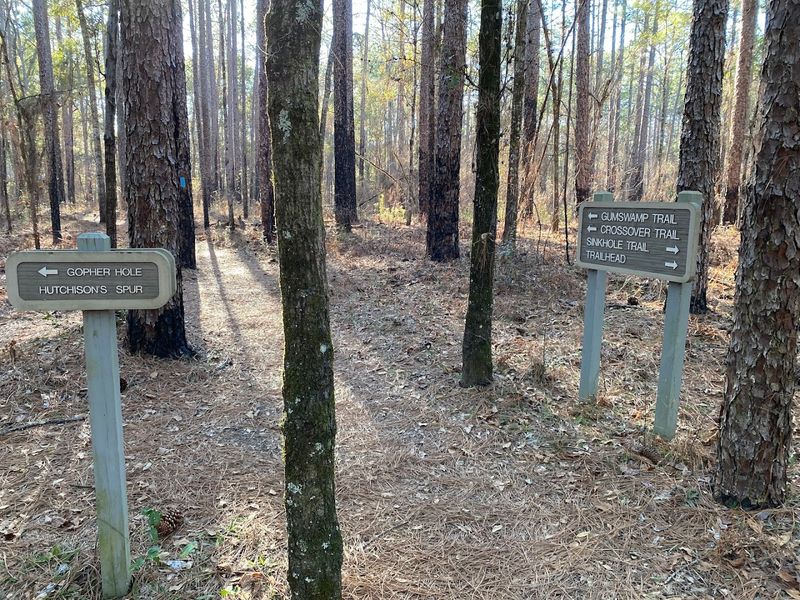
Getting the practical details right before a hike makes the whole experience smoother, and the Sinkhole Trail has a few quirks worth knowing in advance. The park is located at 6605 Crawfordville Rd, Tallahassee, FL 32305, and it opens daily at 8 AM, closing at 6 PM.
Give yourself enough time to complete your chosen route before that closing time rolls around.
Parking costs $5 per vehicle, paid via a cash or check envelope at the entrance drop box. No card readers, no mobile pay, no ATM on-site, so stop at a bank or ATM before you head out.
Arriving without cash means turning around, which would be a genuinely frustrating outcome given how good the trail is.
The full Sinkhole Trail loop runs approximately 4.5 to 5.5 miles depending on which side paths you take. Most hikers complete it in two to two and a half hours at a comfortable pace.
If that feels like too much, the first half mile delivers Hammock Sink and the Gopher Hole cave, giving you a satisfying experience with minimal commitment.
Dogs are welcome but must stay leashed throughout. Clean restrooms and water fountains are available in the main parking lot, so you can top off your bottles before heading out.
Bring more water than you think you need, especially between May and September when Florida heat is no joke.
Tick awareness is genuinely important here. At least one reviewer pulled several ticks off after completing the loop, so long pants and insect repellent are strongly recommended regardless of season.
The trail is well-marked and easy to follow, rated 4.6 stars across more than 230 reviews, making it one of the most consistently praised hikes in the Tallahassee area.