This Historic Florida Castle Once Held a Famous Native American Leader Prisoner
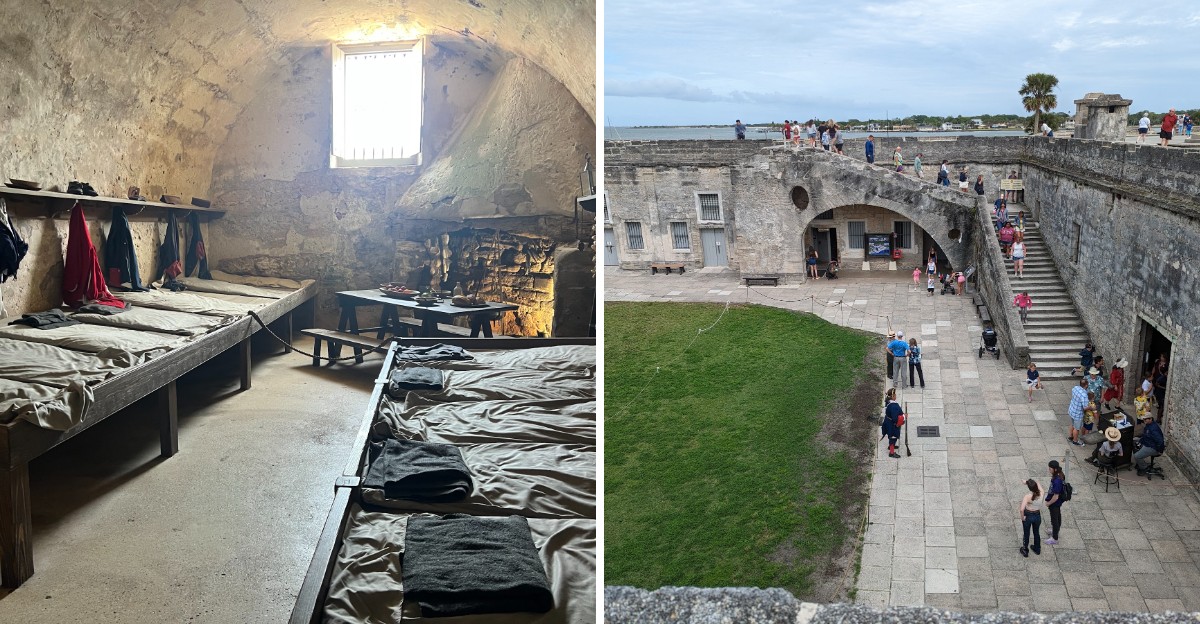
In 1837, the Seminole leader Osceola was held inside a stone fort built from crushed seashells. That fort still stands today. You can walk through it.
The walls are made of coquina, a rock packed with tiny shells. When English forces attacked the fort in 1702, its coquina walls absorbed cannonball impacts instead of shattering. I love that a fort made of beach bits beat back an army.
This place sits on the Florida coast, staring out over a calm bay. Rangers still fire historic cannons from the top deck. Kids can earn Junior Ranger badges while grown-ups soak in centuries of stories.
I can’t imagine standing in those cool, thick rooms without wondering who stood there before. Soldiers, families, and prisoners all left their mark. So who else passed through these shell-covered walls?
1. A Seminole Leader’s Story Lives Inside These Walls
Osceola became one of the best-known Native American leaders in American history. In late 1837, he was captured under a white flag of truce and brought to Castillo de San Marcos National Monument.
The capture shocked many Americans at the time. Plenty of people felt the U.S. Army had broken a basic rule of fair dealing.
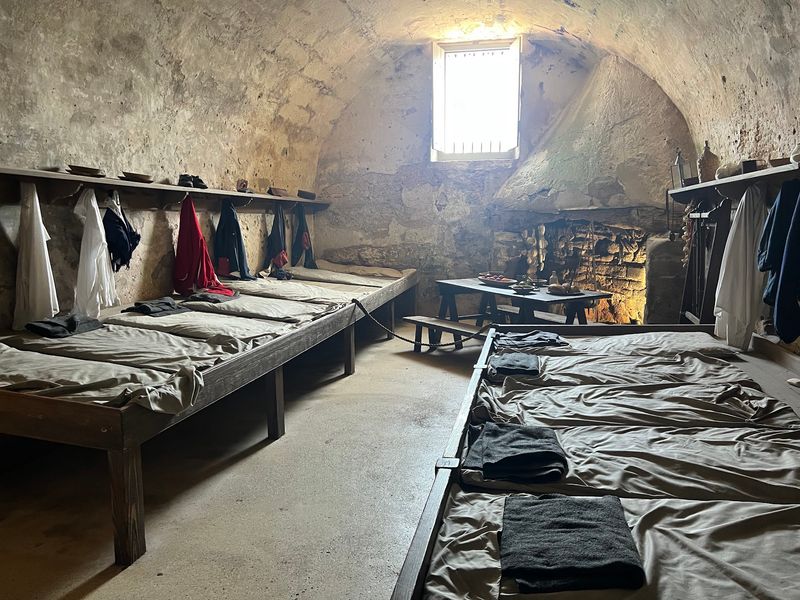
Osceola was held at the fort, which the Americans then called Fort Marion. Other Seminole people were held there too. Some of them, led by Coacoochee, also known as Wildcat, pulled off a daring escape through a narrow window.
That escape still sounds like something from a movie. The group reportedly squeezed through a small opening high in a cell wall. Osceola stayed behind and was later moved to Fort Moultrie in South Carolina.
Inside the fort, exhibits help explain the Seminole story with care. It’s a chapter that’s honest, heavy, and important for anyone who visits Florida.
Take a quiet moment in those rooms. The stone stays cool, but the history feels very alive. Ask a ranger about the escape, because they love sharing the details.
2. Seashells Built This Fort, And Cannonballs Couldn’t Stop It
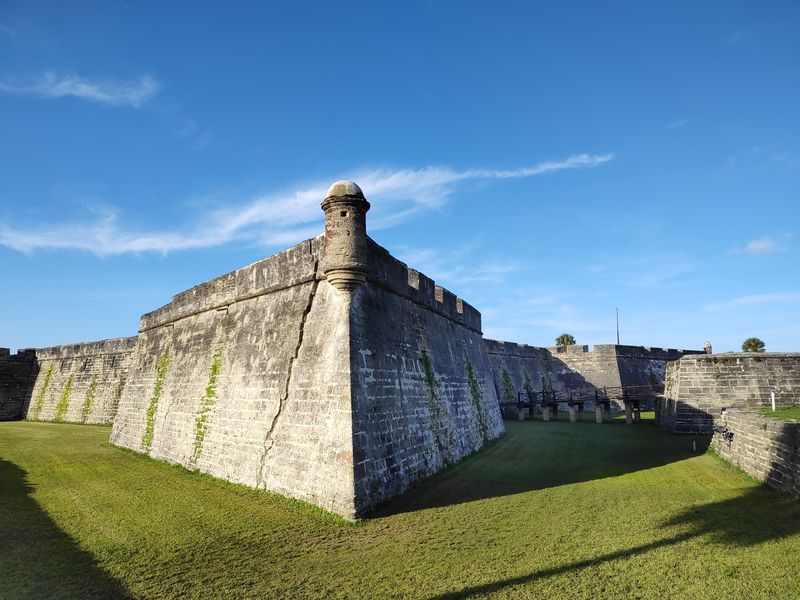
Crushed shells and sand pressed together over thousands of years. That natural rock, called coquina, is what Spanish builders used for the walls.
Workers quarried the stone on nearby Anastasia Island. Then they hauled it across the water to build the fort.
Construction began in 1672 and wrapped up in 1695. That makes it the oldest masonry fort in the continental United States. Pretty impressive for a building made of beach leftovers.
The real magic showed up in 1702. English forces surrounded St. Augustine in 1702 and bombarded the fort, but failed to break through its coquina walls. The soft, spongy coquina absorbed the hits instead of cracking apart.
Some people joke that the fort basically caught the cannonballs. That’s not far from the truth. The British tried again in 1740 and still couldn’t take it by force.
Look closely at the walls without touching them. You’ll spot tiny shell pieces right in the stone. It’s one of the coolest science lessons you’ll find on any field trip.
Bring a phone for close-up photos. Those shell patterns make surprisingly great pictures.
3. The Cannon Crew Puts On A Booming Good Show
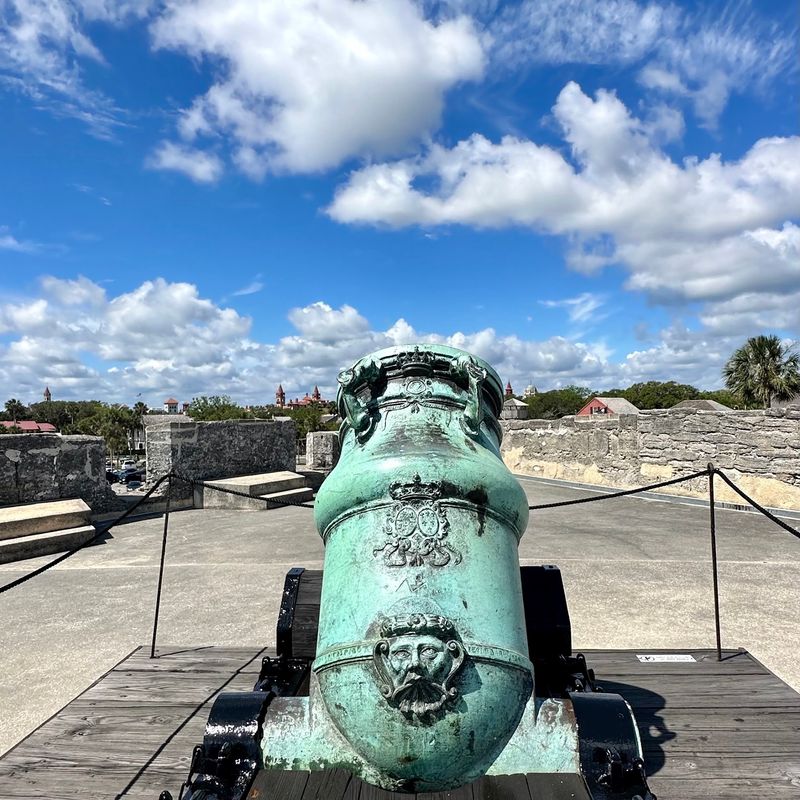
Boom. That sound rolls across the bay when the cannon crew fires from the gun deck.
Costumed volunteers and rangers dress like Spanish soldiers from the colonial era. They walk through each loading step, one careful command at a time.
The demonstrations usually happen on weekends, with times posted by the park. It’s smart to check the schedule before your trip. Weather can also change plans, since safety comes first.
Watching the crew work feels like a living history class. You’ll see how many people it took to fire one big gun. Each person had a job, and teamwork mattered a lot.
Cover your ears if loud noises bother you. Little kids might want a parent close by when the moment arrives.
After the firing, the crew often chats with visitors. This is your chance to ask questions about uniforms, tools, or daily soldier life.
Arrive a little early to grab a good viewing spot along the deck. The best views fill up fast once people hear the crew gathering. Trust me, it’s worth the wait.
4. Climb Up Top For Breezy Bay Views
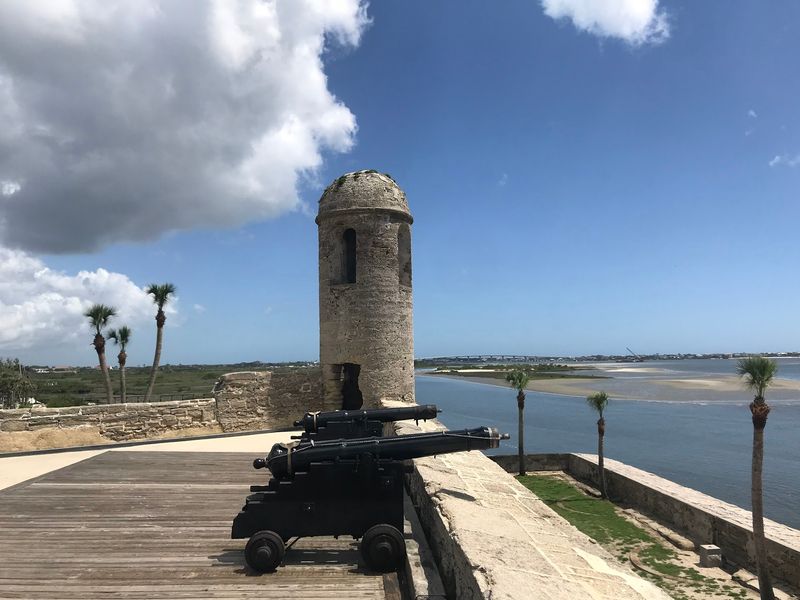
Some of the best views in town come with cannons attached. The gun deck sits on top of the fort and looks right out over Matanzas Bay.
Spanish soldiers once stood here watching for ships. Today, you can watch boats drift by and see the Bridge of Lions in the distance.
Getting up there takes a climb up a sloped ramp and stairs. The surfaces are hard stone, so comfy shoes really help. Take your time, especially on hot days.
Speaking of heat, Florida sun doesn’t mess around. There’s little shade on the deck, so pack sunscreen and a water bottle. A hat is a great idea too.
The corners of the fort have pointed bastions with small sentry towers. Peek inside one and imagine standing guard all night long. Spooky and cool at the same time.
This spot makes a perfect photo backdrop. Line up the old cannons with the bay behind them for a classic shot.
Pause here for a few minutes before heading down. The breeze off the water feels amazing after exploring the rooms below.
5. Rooms Below Reveal How Soldiers Really Lived
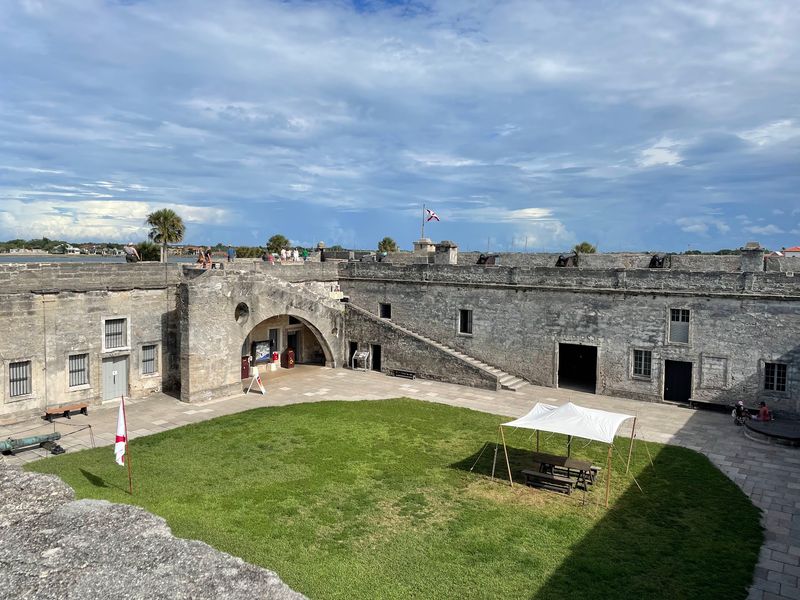
Down on the lower level, life in the fort gets real. Rooms surround a big open courtyard, and each one tells a different part of the story.
You’ll find spaces showing barracks, storage, and a chapel. Signs explain what happened in each room and who used it.
The rooms stay cooler than the sunny deck above. Thick coquina walls do a nice job keeping some of the heat outside. That’s a welcome break on a steamy Florida afternoon.
Exhibits cover more than one time period. Spain built the fort, but Britain and the United States also controlled it later. Each group left its own mark on the place.
Look for the powder magazine, where gunpowder was once stored. It’s a tight, closed-in space with a pretty wild backstory.
Reading every sign can take a while, and that’s okay. Many families spend an hour or more exploring at their own pace.
Moving through the rooms in order helps the story make sense. Grab a park map at the entrance so you don’t miss anything good along the way.
6. Junior Rangers Get Their Own Mission Here
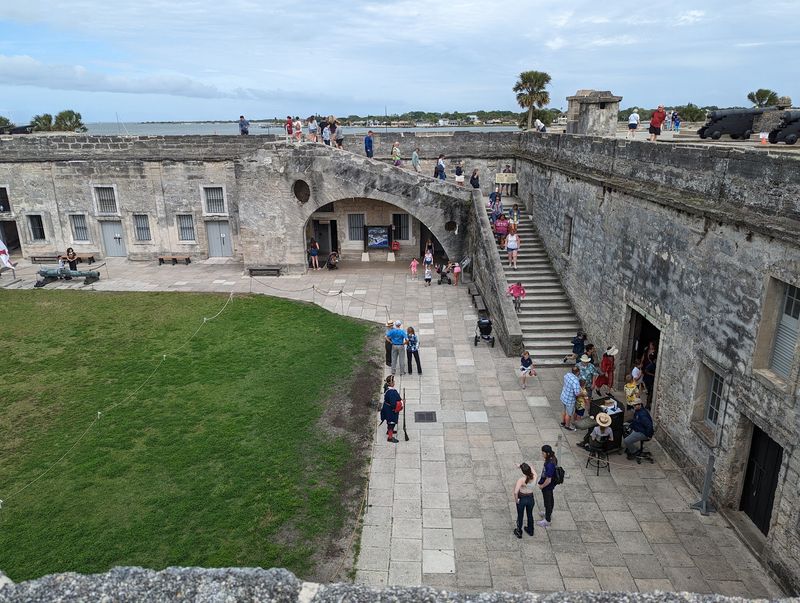
Kids get a job at this fort, and it comes with a badge. The National Park Service offers a Junior Ranger program for young visitors.
Children pick up an activity booklet and complete fun tasks while exploring. Once finished, they can be sworn in by a ranger.
The activities send kids hunting for details around the fort. They’ll look at walls, cannons, and exhibits with fresh eyes. It’s a clever way to keep young minds busy.
Parents might learn a few things along the way too. Honestly, some of the questions could stump plenty of adults.
Rangers here clearly enjoy helping young explorers. Don’t be shy about asking them for hints or extra stories.
This program works great for families with different ages. Older kids can read signs, while younger ones look for shapes and objects.
The badge makes a fun, free souvenir from your trip. Plenty of families collect them from national parks across the country. Starting a collection at one of the oldest forts in America sounds like a pretty great first step.
7. Cross The Drawbridge And Mind The Moat
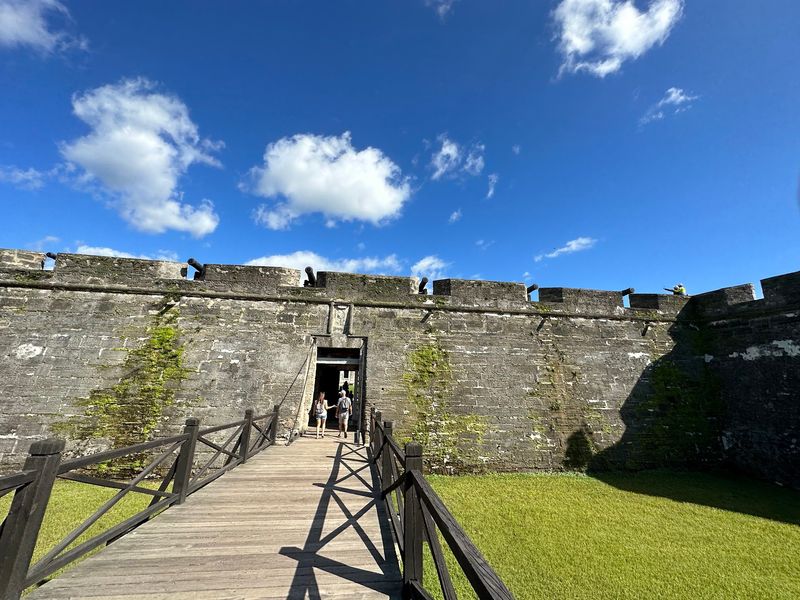
Getting inside means crossing a drawbridge, which instantly feels like a castle adventure. Below it sits a wide moat that once helped keep attackers away.
The moat around Castillo de San Marcos National Monument is mostly dry today. Grass grows where soldiers once had a tough barrier to protect the walls.
Look at the fort from above on a map, and you’ll notice a star shape. Those pointed corners, called bastions, let defenders cover every side. Smart design for the late 1600s.
Outside the main entrance stands a defensive area called the ravelin. It added another layer of protection right in front of the gate.
The heavy entrance setup reminds you this was serious military business. Still, it’s hard not to grin while walking over a real drawbridge.
Snap a photo from the bridge looking back at the entrance. It’s one of the most recognizable views in Florida.
Take a lap around the grounds outside too. The green lawns give you a great look at the walls and the full size of the fort.
8. Plan Smart Before You Head To The Fort
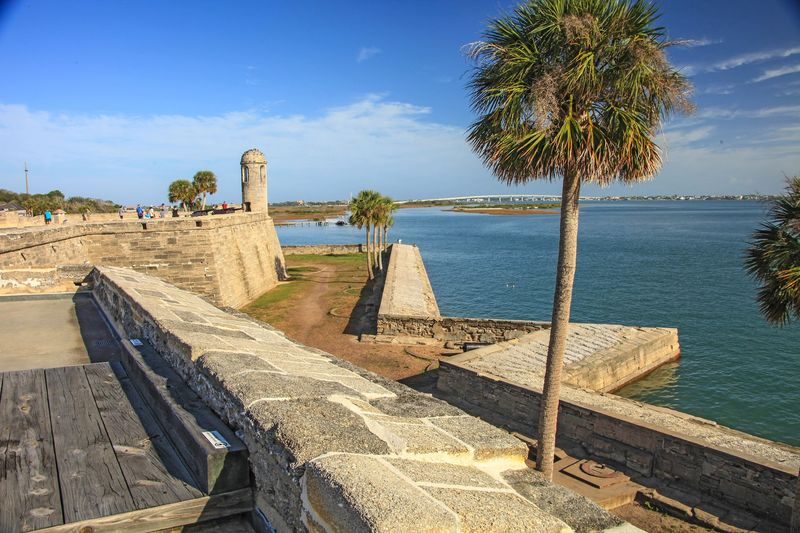
A little planning goes a long way here. The fort is generally open from 9 AM to 5 PM, except on Thanksgiving and Christmas Day, so morning visits help you beat the afternoon heat.
You’ll find it at 11 S Castillo Dr, St. Augustine, FL 32084. It sits right along the bayfront in the historic downtown area.
An entrance fee applies for adults, while kids 15 and under get in free. Your ticket is good for multiple days, which is handy for longer trips. Check the National Park Service for current details.
Parking near the fort can be tricky. The small lot fills fast, and spaces are paid by the hour. A nearby parking garage offers another option a short walk away.
Restrooms are inside the fort, past the entrance. Plan breaks with that in mind, especially with little ones.
Expect plenty of walking on hard stone surfaces. Stairs lead to the upper deck, so some areas may be tough for certain visitors.
Bring water, sunscreen, and patience. With those three, you’re set for a great day of exploring.
9. Keep The Adventure Going Around The Oldest City
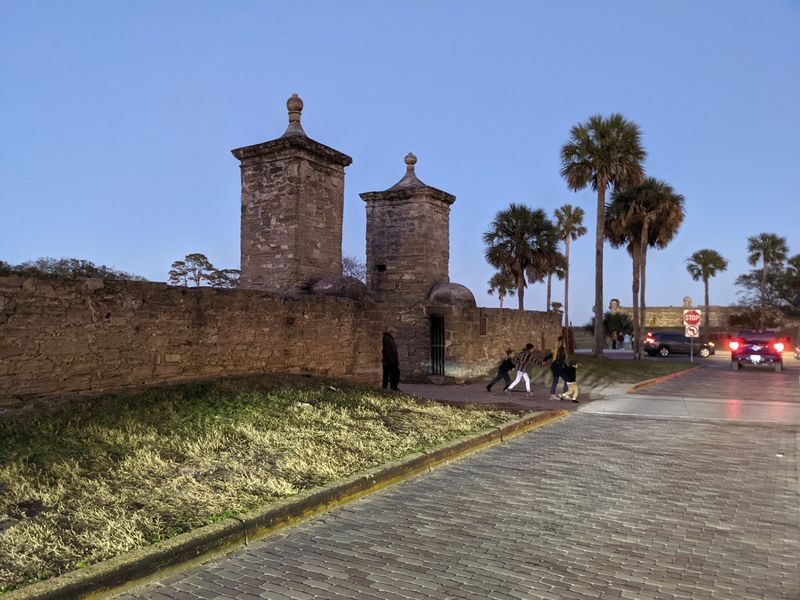
St. Augustine is called the oldest continuously occupied European-founded city in the continental United States. Spain founded it in 1565, long before the fort went up.
Once you leave the fort, history keeps showing up around every corner. St. George Street sits just across the road and is filled with shops and old buildings.
The Colonial Quarter nearby brings the Spanish colonial days to life. Kids and adults can explore hands-on history there.
Want more water views? A stroll along the bayfront leads toward the Bridge of Lions. It’s a lovely walk, especially when the evening light hits the water.
The city gates, called the City Gate, stand near the fort too. They mark the old entrance to the walled town.
Pairing the fort with a walk downtown makes for a full, fun day. Plenty of families park once and explore everything on foot.
Castillo de San Marcos National Monument anchors it all. After seeing the fort, the rest of this Florida city starts to make a lot more sense. Every street seems to point back to those shell walls.