You’ll Want to Photograph Every One of These 8 Charming Florida Covered Bridges
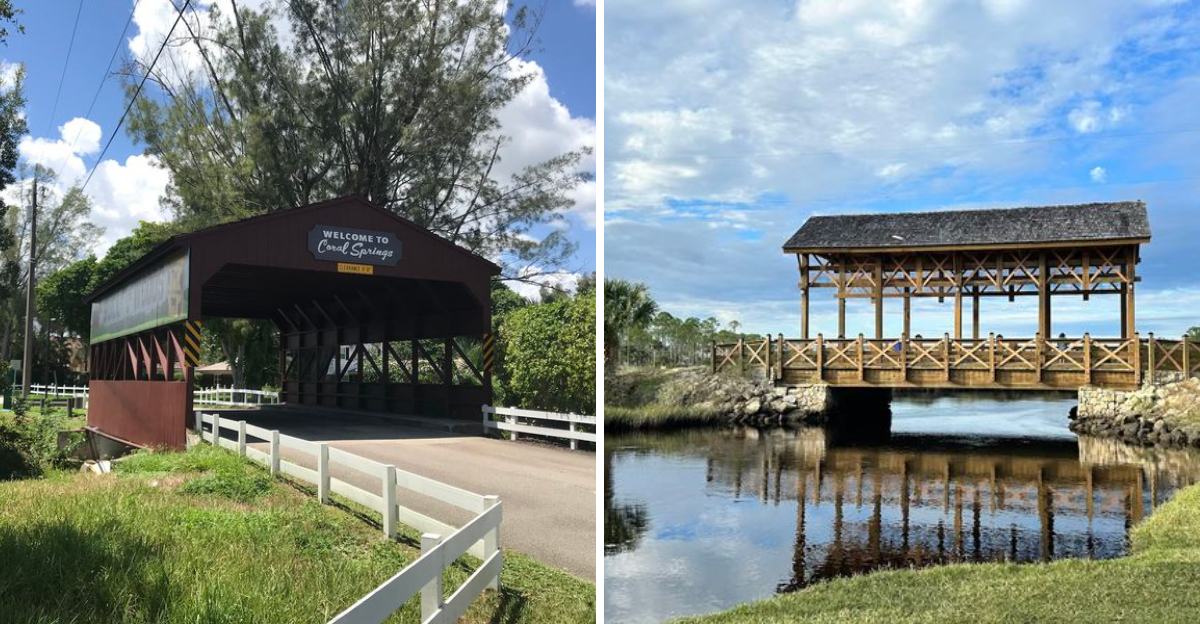
Florida might not be the first state that comes to mind when you think of covered bridges, but the Sunshine State has a handful of these charming wooden structures tucked away in parks, nature preserves, and along scenic trails. Most were built in recent decades as community landmarks or trail features, yet they still capture that nostalgic, old-fashioned appeal that makes them perfect photo subjects. Whether you’re a photographer hunting for your next great shot or simply someone who loves discovering hidden corners of Florida, these eight covered bridges offer beautiful backdrops and peaceful settings worth seeking out.
1. Coral Springs Historic Covered Bridge (Coral Springs)
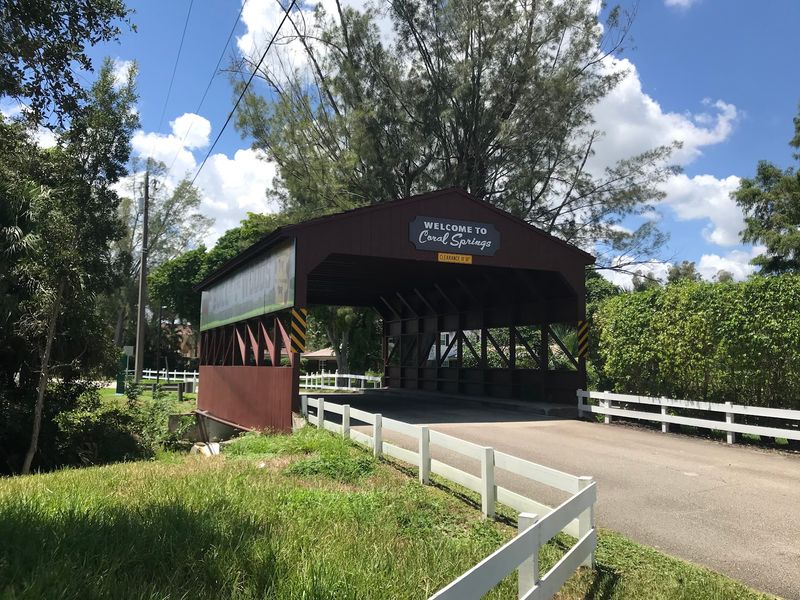
Standing proudly in barn-red paint since 1964, this 40-foot bridge holds the title of Coral Springs’ very first permanent structure. Long before shopping centers and neighborhoods filled the landscape, this covered crossing marked the beginning of what would become a bustling South Florida city. Today it’s recognized as a Florida Heritage Site, and the city proudly notes it’s the only covered bridge in the state situated in a public right-of-way.
The bridge’s compact size makes it easy to photograph from multiple angles without much walking. Its bright red exterior pops beautifully against Florida’s blue skies and green palms, creating a striking contrast you won’t find with natural wood finishes. The surrounding area is well-maintained and accessible, so you can set up your tripod or snap quick phone shots without any fuss.
Visit during golden hour for warm, glowing light that makes the red paint practically glow. Early mornings tend to be quieter if you want the bridge all to yourself for uninterrupted shooting. The historic significance adds depth to your photos, turning a simple bridge shot into a piece of local history.
Bring a wide-angle lens to capture the full structure and its surroundings in one frame, or zoom in on architectural details like the roof beams and support posts for more intimate compositions.
2. Covered Bridge Park Bridge (Parkland)
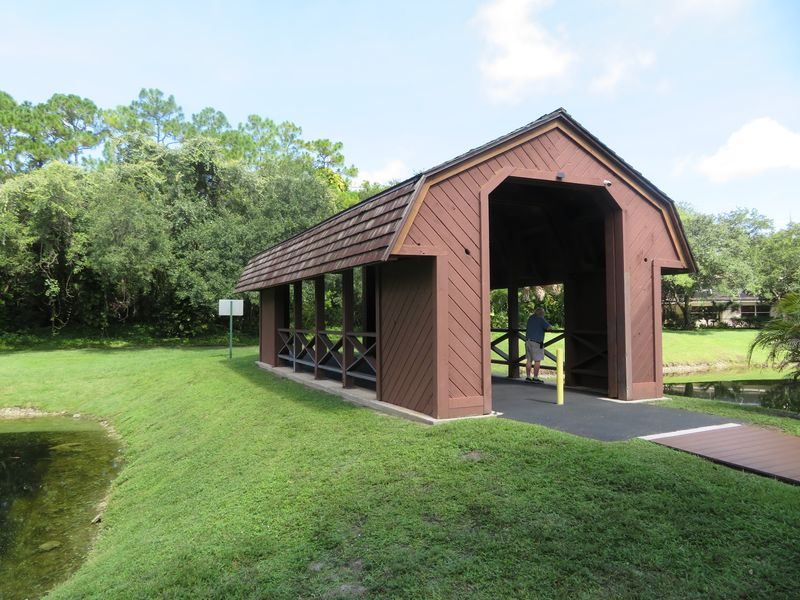
Parkland built this rustic wooden crossing specifically to serve as a visual anchor for the entire community. Unlike bridges that were later converted into park features, this one was designed from the ground up as a landmark, and the city maintains the surrounding Covered Bridge Park as a tranquil green space centered entirely around the structure. Walking trails wind through the area, offering multiple vantage points for photographers.
The natural wood finish gives this bridge an authentic, timeless quality that pairs beautifully with the surrounding Florida vegetation. You’ll find it nestled among trees and native plants, creating a softer, more organic look compared to painted structures. The park’s peaceful atmosphere makes it ideal for longer photo sessions where you can experiment with different times of day and lighting conditions.
Trails loop around the bridge, so you can circle the entire structure and find your favorite angle. Try shooting through the trees for a partially obscured view that adds mystery and depth to your composition. The greenery provides natural framing elements that draw the eye straight to the bridge.
Overcast days work surprisingly well here, as the soft light prevents harsh shadows on the wood and brings out rich tones in the foliage. Pack a macro lens if you want to capture details like weathered wood grain or interesting textures where nature meets architecture.
3. Princess Place Preserve Covered Bridge (Palm Coast)
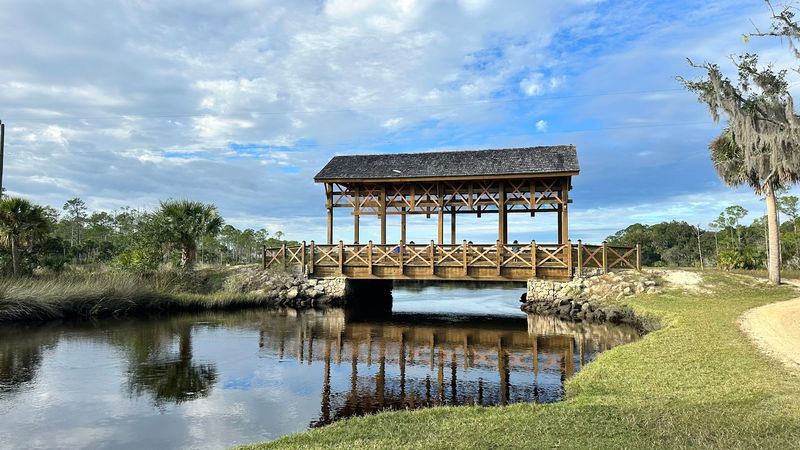
If you’re hunting for the most photogenic covered bridge in Florida, this timber crossing at Princess Place Preserve might just take the crown. The bridge spans actual water within a sprawling 1,500-acre preserve filled with marshes, oak hammocks, and classic Old Florida scenery that looks like it hasn’t changed in centuries. Flagler County even routes visitors across this covered bridge when accessing certain parts of the preserve, making it a functional piece of infrastructure that also happens to be gorgeous.
Water reflections alone make this bridge worth the trip. On calm days, you can capture mirror-like images of the wooden structure doubled in the water below, creating symmetrical compositions that feel almost magical. The surrounding wetlands provide constantly changing light and color depending on the season and weather, so no two visits will give you identical photos.
Wildlife photography opportunities abound here as well. Birds, turtles, and other marsh creatures frequent the area, and patient photographers can often catch animals near or even under the bridge. Sunrise shoots are particularly rewarding when mist rises off the water and soft light filters through the preserve’s ancient trees.
Bring waterproof boots if you want to explore different angles along the banks. The preserve’s natural beauty means your bridge photos will feel wild and unspoiled rather than manicured and park-like.
4. Greynolds Park Covered Bridge (North Miami Beach)
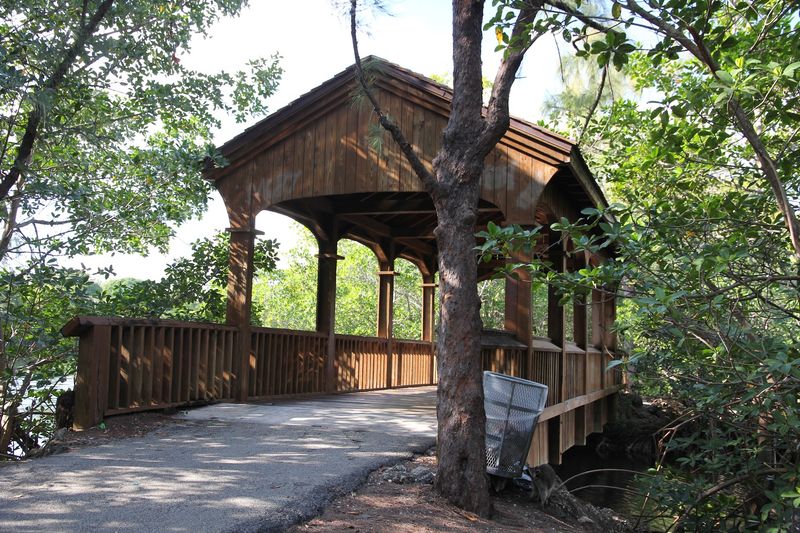
Finding a rustic covered bridge tucked into the tropical landscape of South Florida feels wonderfully unexpected, like stumbling onto a piece of Appalachia that somehow wandered south. Miami-Dade’s Greynolds Park materials identify this covered crossing near the Oleta River, and historic state photographs document the structure stretching back through the decades. The contrast between traditional covered bridge architecture and South Florida’s palm-filled scenery creates unique photo opportunities you simply won’t find anywhere else in the state.
The surrounding park offers much more than just the bridge itself. You’ll discover limestone rock formations, mangrove-lined waterways, and plenty of shade under mature tropical trees. This variety means you can spend an entire morning or afternoon shooting different subjects while making the covered bridge your centerpiece.
The park’s popularity with locals adds human interest elements to your photos if you’re interested in capturing people enjoying the space.
Afternoon light filtering through palm fronds creates dappled patterns on the bridge’s wooden surfaces, adding visual interest and texture to your shots. Try positioning yourself to include both the bridge and some of the park’s distinctive limestone features in the same frame. The river setting provides water elements without requiring a trip to a remote preserve.
Weekday mornings typically see fewer visitors, giving you cleaner shots of the bridge itself without needing to wait for crowds to clear.
5. Lafayette Heritage Trail Covered Bridge (Tallahassee)
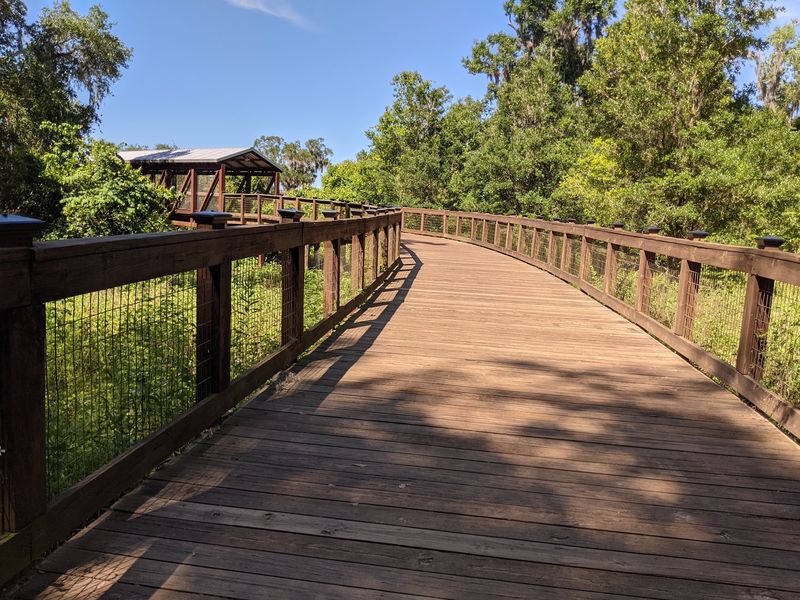
Reached via the J.R. Alford Greenway, this elevated wooden crossing sits dramatically high above active railroad tracks with views stretching toward Piney Z Lake. The height gives photographers a unique perspective you won’t get with ground-level bridges, and Visit Tallahassee specifically recommends this spot as a picturesque setting for special photos.
That official endorsement tells you everything you need to know about how photogenic locals consider this structure.
The elevated position means you’re essentially shooting from a natural observation deck. You can frame the railroad tracks below as leading lines that draw the eye through your composition, or turn the opposite direction to capture lake views framed by the bridge’s wooden beams. The structure’s height also means you’re often shooting at or above tree-canopy level, offering perspectives that feel fresh and different from typical ground-based bridge photography.
Train enthusiasts can potentially time their visit to catch passing trains below, adding motion and interest to bridge photos. The greenway setting means you’ll likely encounter cyclists and joggers, so consider whether you want to include them as scale references or wait for quieter moments. Late afternoon sun creates long shadows across the bridge deck and highlights the wood’s natural grain beautifully.
Bring a polarizing filter to manage reflections if you’re shooting toward the lake, and consider a longer lens to compress the perspective and make distant elements feel closer and more dramatic.
6. Betton Nature Center Covered Bridge (Tallahassee)
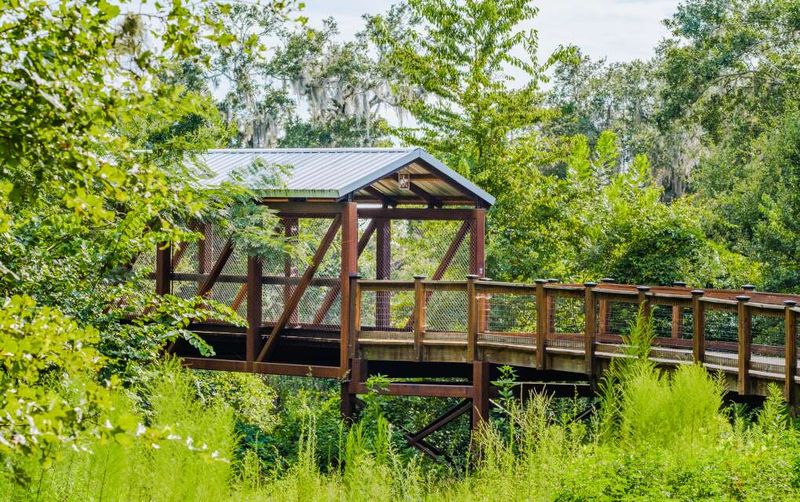
Tucked into leafy neighborhood trails, this smaller covered crossing at Betton Nature Center feels like a secret waiting to be discovered. The 40-foot bridge serves as the centerpiece of a nature center that includes walking paths, native habitat restoration areas, and plenty of greenery that changes character with Florida’s subtle seasons. Its more intimate scale and neighborhood setting give it a different personality than the larger, more dramatic bridges elsewhere in the state.
The nature center’s educational mission means you’ll find interpretive signs and native plantings that can add context and interest to your photography. Wildflowers in spring and changing foliage in fall (yes, even North Florida gets some color) provide seasonal variety that keeps the bridge looking fresh across multiple visits. The smaller size actually works in photographers’ favor, as you can capture the entire structure in a single frame without needing ultra-wide lenses or backing up into traffic.
Neighborhood trails mean this spot tends to be quieter than major parks, though you’ll still encounter local walkers and nature lovers who appreciate the peaceful setting. Morning light filters beautifully through the tree canopy, creating soft, even illumination that’s forgiving for less experienced photographers. The native habitat surrounding the bridge attracts butterflies, birds, and other wildlife that can enhance your shots.
Consider shooting in vertical orientation to emphasize the bridge’s height and the surrounding trees that frame it naturally from above.
7. Banana Creek Covered Bridge on Fort Fraser Trail (Polk County)
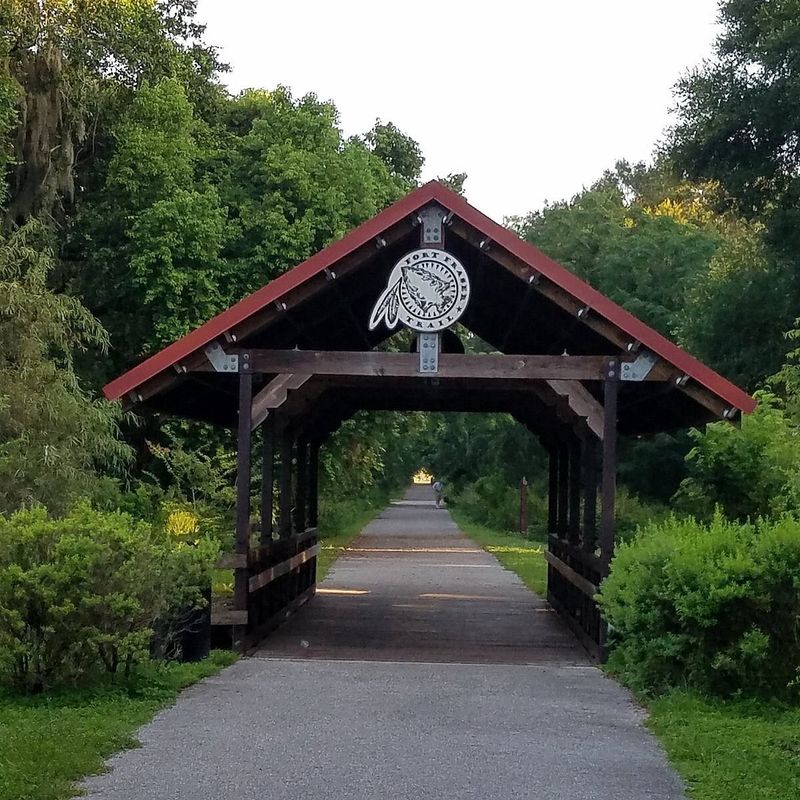
Part of the paved Fort Fraser Trail connecting Lakeland and Bartow, this covered crossing at Banana Creek retains the distinctive look of old railroad infrastructure while serving modern trail users. Regional planning documents specifically identify this as one of two covered bridges along the Fort Fraser Trail, making it easy to plan a photo outing that bags both structures in a single trip. The paved trail means easy access for photographers carrying gear, and the rail-trail setting provides that linear, going-somewhere feeling that adds narrative to your images.
The creek crossing itself offers water elements and natural scenery that break up what might otherwise be a very utilitarian trail experience. Depending on recent rainfall, the creek can range from a gentle trickle to a more robust flow, giving you different looks across seasons. The covered structure provides welcome shade for trail users, and that functional aspect can add human interest if you choose to include cyclists or walkers in your compositions.
Rail-trails tend to be flat and straight, which means you can shoot down the trail in either direction for vanishing-point perspectives with the bridge as your focal point. The Banana Creek bridge’s railroad heritage gives it slightly different architectural details than bridges built purely as park features. Look for elements like heavy timber construction and practical, no-nonsense design that reflects its transportation roots.
Early morning or late afternoon visits avoid midday heat and provide better light for photography along this exposed trail section.
8. Old Horatio Avenue Covered Bridge (Maitland)
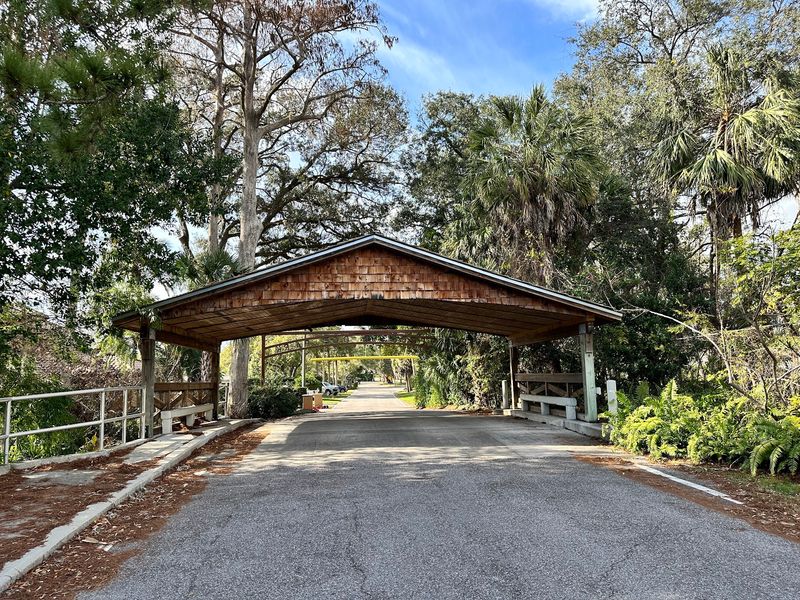
Tucked into a quiet corner of Maitland, the Old Horatio Avenue Covered Bridge feels like one of those places you could easily drive past without realizing what you missed. The bridge sits beside Nina Canal, surrounded by greenery and the peaceful paths of Covered Bridge Park.
The setting is part of what makes this stop worth seeking out. Covered Bridge Park is a small 1.5-acre green space with walking trails and several places to sit, so it works well for a slow stroll rather than a full-day outing. The park is also next to the Jim Houser Azalea Gardens and connects with Minnehaha Park through a pedestrian tunnel beneath Horatio Avenue.
The covered bridge itself crosses the canal linking Lake Minnehaha and Lake Maitland, adding an unexpectedly rustic touch to this residential part of Central Florida. A pathway follows the water beside the bridge, making it easy to explore the surrounding parkland on foot.
Come for the bridge, but give yourself a little extra time to wander. Between the canal, shaded greenery, and neighboring gardens, this is the kind of understated Florida stop that feels pleasantly removed from the busier attractions around Orlando. One thing to know before visiting: Covered Bridge Park does not have its own parking lot, so plan your stop accordingly.