10 Massive Florida Lakes That Could Easily Be Mistaken for Oceans
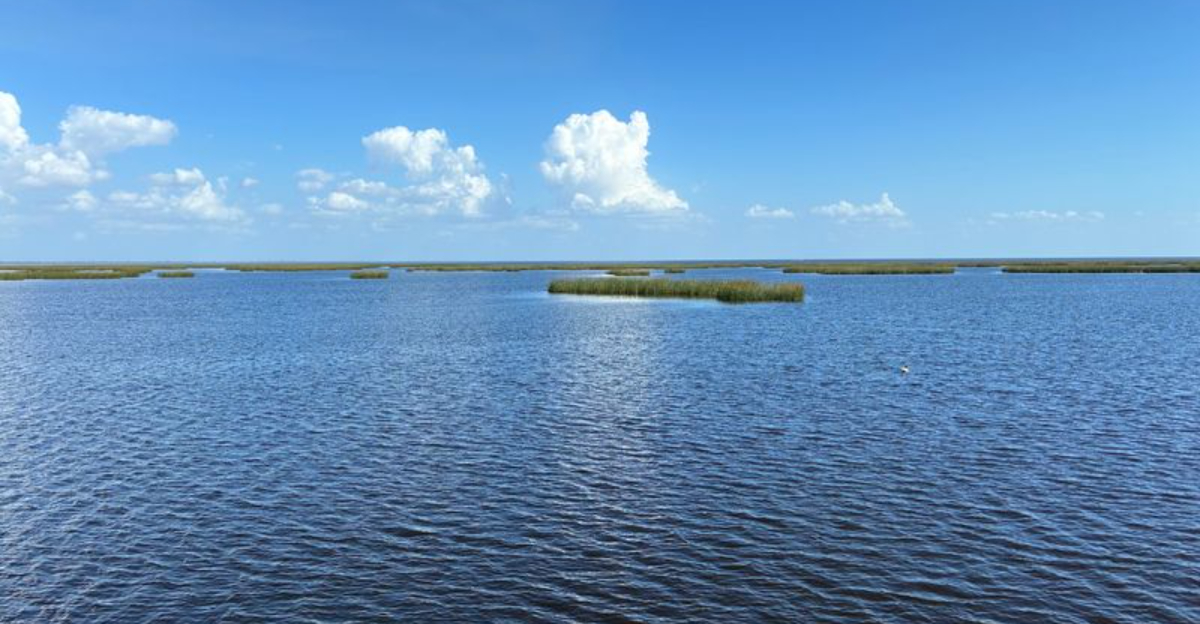
Florida is famous for its beaches, but some of the state’s largest lakes are so massive they can fool you into thinking you’re staring at the ocean. When you stand on the shore of these giants, the water stretches so far that the opposite side vanishes into the horizon. Whether you’re fishing, boating, or just soaking in the view, these lakes offer a sense of scale and wildness that rivals the coast.
1. Lake Okeechobee (South-Central Florida)
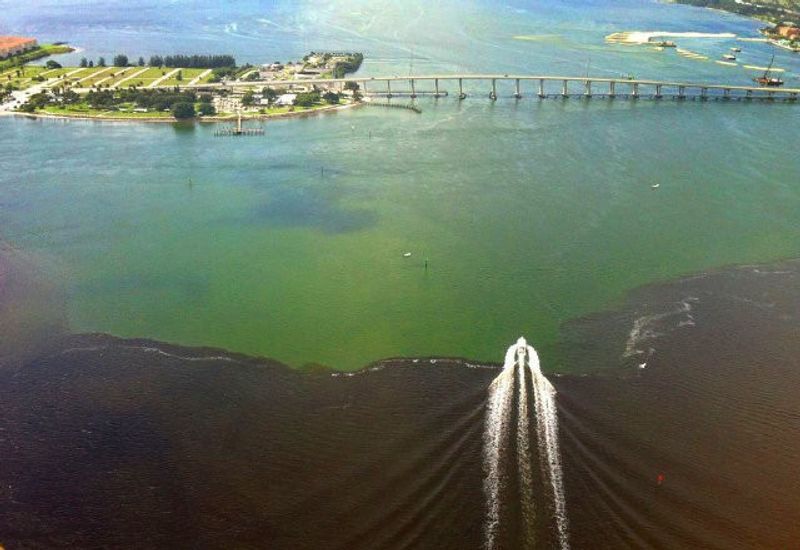
Standing on the shore of Lake Okeechobee feels like facing the Atlantic. The water spreads out so wide that the far side completely disappears, leaving nothing but blue stretching into the sky. Locals call it the “Liquid Heart” of Florida, and once you see it, the nickname makes perfect sense.
This lake covers more than 730 square miles, making it the largest freshwater lake in Florida and the second-largest entirely within the lower 48 states. Its sheer size creates weather patterns, supports entire ecosystems, and plays a critical role in South Florida’s water supply. The shallow depth averages just nine feet, but that doesn’t make it any less impressive when you’re out on the water.
Fishermen love Okeechobee for its legendary bass, and the lake hosts major tournaments year-round. Boaters navigate carefully because sudden storms can whip up waves that feel surprisingly ocean-like. The surrounding communities, from Clewiston to Okeechobee City, have built their identities around this massive body of water.
Levees ring much of the lake, offering elevated views that only emphasize how far the water reaches. On a clear day, you might spot wading birds dotting the shallows, but you still won’t see the other side. Lake Okeechobee doesn’t just look like an ocean from certain angles; it commands the same kind of respect and awe.
2. Lake George (Volusia & Putnam Counties)
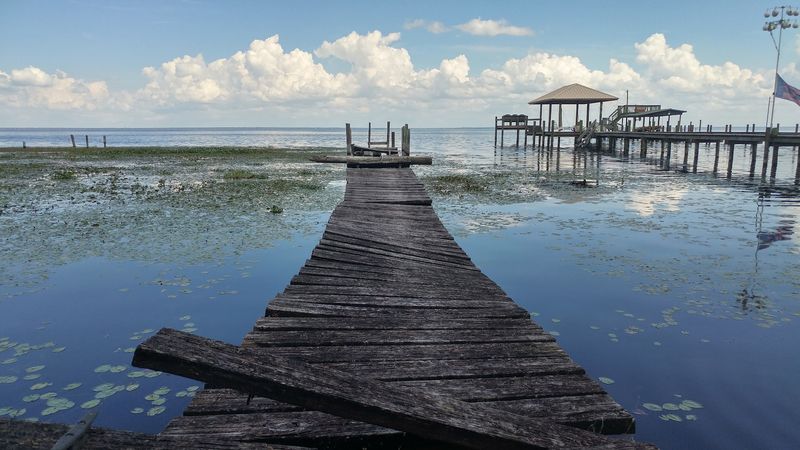
Part of the St. Johns River system, Lake George opens up into a watery expanse that catches first-time visitors off guard. The lake runs about 10 miles long and six miles wide at its broadest point, and when you’re out in the middle, it’s easy to forget you’re nowhere near salt water. The horizon curves away just like it does at the beach.
This is Florida’s second-largest lake, and it sits in a particularly scenic stretch of the state where natural Florida still dominates the landscape. Cypress trees line portions of the shore, while other sections give way to marshes teeming with wildlife. Manatees cruise through during cooler months, and ospreys dive for fish year-round.
Boaters appreciate the wide-open runs Lake George offers, especially compared to narrower river sections upstream and downstream. You can open up the throttle and feel the wind without worrying about tight turns or heavy traffic. Anglers target everything from bass to catfish, and the lake’s connection to the river system means fish move through constantly.
Small towns like Georgetown and Satsuma dot the shoreline, offering quiet boat ramps and old-Florida charm. When the sun sets over Lake George, painting the water in shades of orange and pink, you’d swear you were watching it sink into the Gulf.
3. Lake Kissimmee (Polk & Osceola Counties)
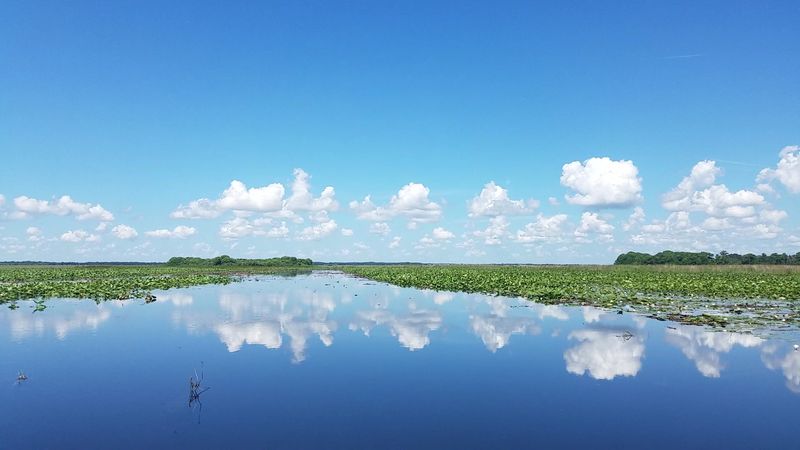
Wild and sprawling, Lake Kissimmee gives you that untamed Florida vibe that’s harder to find these days. The lake covers roughly 35,000 acres, but what really sets it apart is the vast marsh system surrounding it. From many vantage points, you see water blending into wetlands that stretch for miles, creating an almost endless horizon of green and blue.
This lake sits in the headwaters of the Kissimmee River, which eventually feeds into Lake Okeechobee. The entire area remains largely undeveloped, protected as part of a massive conservation effort to preserve the Everglades ecosystem. That means fewer buildings, fewer people, and a whole lot more nature.
Airboat tours launch from the area, skimming across shallow water and sawgrass while guides point out alligators, eagles, and the occasional bobcat. Fishing here feels different too because you’re surrounded by wilderness instead of subdivisions. Bass, crappie, and bluegill thrive in the lake’s fertile waters.
Lake Kissimmee State Park sits on the eastern shore, offering camping, hiking, and a glimpse into 1876 Florida at a recreated cow camp. Rangers in period clothing demonstrate life as it was for early cattle ranchers. Whether you’re paddling a canoe or just standing on the shore, the sheer scale of water and wilderness makes this lake feel oceanic in its wildness.
4. Lake Apopka (Orange & Lake Counties)
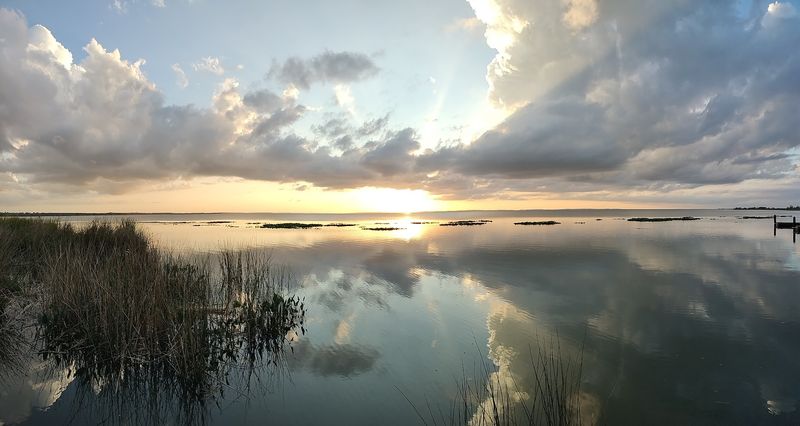
Northwest of Orlando, Lake Apopka spreads across more than 30,000 acres, offering some seriously impressive big-water views. Historically, this lake played a huge role in Central Florida’s development, and despite past pollution challenges, ongoing restoration efforts have brought back much of its natural beauty. Standing on the north shore, you can barely make out the southern edge on a hazy day.
The lake’s size creates its own weather micro-patterns, with afternoon thunderstorms building over the water during summer months. Boaters keep an eye on the sky because conditions can shift quickly when you’re surrounded by that much open water. The shallow depth, averaging around six feet, means waves can kick up fast when the wind picks up.
Birdwatchers flock to the Lake Apopka Wildlife Drive, a loop road along the lake’s northern shore that offers incredible opportunities to spot herons, ibises, and dozens of other species. The wetlands here serve as critical habitat, and the views across the water rival anything you’d find along the coast. Sunrise over Lake Apopka draws photographers from across the region.
Fishing has rebounded as water quality improved, with anglers targeting bass and bluegill once again. The communities around the lake, from Winter Garden to Mount Dora, benefit from the cooling breezes and scenic vistas this massive lake provides.
5. Lake Istokpoga (Highlands County)
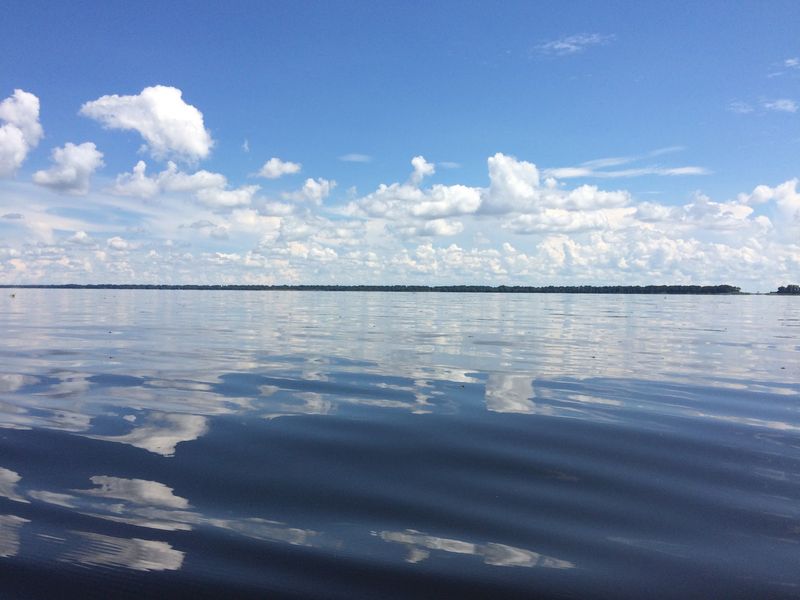
Down in Highlands County, Lake Istokpoga stretches across 27,000 acres of Central Florida wilderness. Bass fishermen know this lake well because it consistently produces trophy fish, but even non-anglers appreciate just how big and open the water feels. The lake’s name comes from a Seminole word meaning “people died,” a reference to battles fought in the area long ago.
Shallow and weedy in many spots, Istokpoga averages only about four feet deep, though some channels go deeper. That shallow profile creates perfect habitat for bass, bluegill, and other freshwater species. It also means you can see the lake bottom in many areas, watching fish move through the grass beds below your boat.
The surrounding landscape remains largely rural, with cattle ranches and orange groves dotting the countryside. This keeps development minimal and preserves that old-Florida character. Several fish camps and small resorts line the shore, offering boat ramps and basic accommodations for anglers who come from all over the state.
When you’re out in the middle of Istokpoga on a calm morning, the water mirrors the sky so perfectly it’s hard to tell where one ends and the other begins. The horizon seems impossibly distant, and if you didn’t know better, you might think you’d somehow ended up on a very calm day in the Gulf of Mexico.
6. Lake Seminole (Florida-Georgia Border)
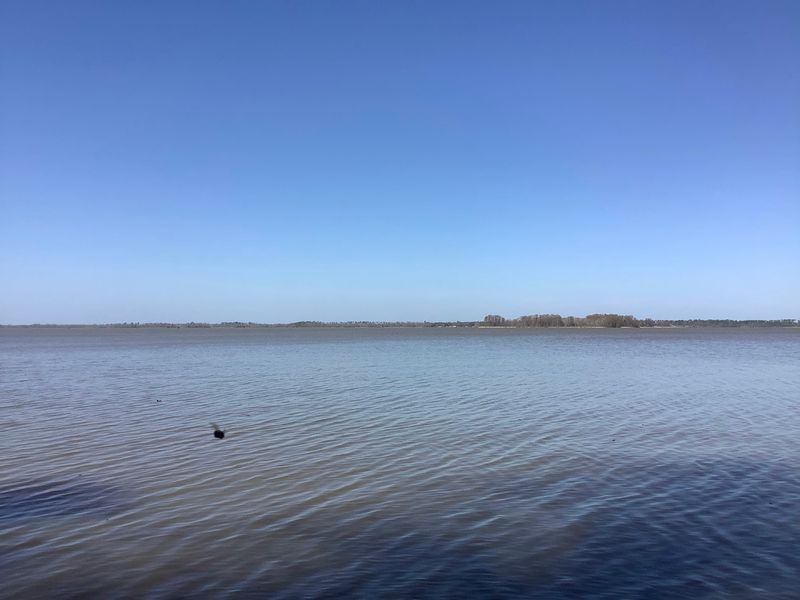
Where Florida, Georgia, and Alabama meet, Lake Seminole spreads out across 37,500 acres of prime fishing and boating territory. This reservoir formed when the Jim Woodruff Dam was built on the Chattahoochee and Flint Rivers, creating a sprawling lake that feels more like a flooded forest than a typical impoundment. Islands, stumps, and cypress trees dot the water, creating a maze of channels and open areas.
The sheer size of Lake Seminole means you can spend days exploring without covering it all. Some sections open up into broad expanses where the water stretches to tree-lined shores so distant they blur into the horizon. Other areas wind through tight channels where overhanging branches create tunnels of shade.
Bass tournaments draw competitors year-round because the lake produces consistently big fish. Crappie fishing is equally popular, especially around the submerged timber and brush piles scattered throughout. The lake also supports healthy populations of catfish, bream, and striped bass.
Three Rivers State Park sits on the Florida side, offering camping and a boat ramp with easy access to the main lake. The park’s location provides stunning sunset views across the water, with the distant shore barely visible as the sun drops. Ospreys and bald eagles nest in the area, and it’s not uncommon to see them diving for fish right in front of you.
7. Lake Tohopekaliga (Kissimmee)
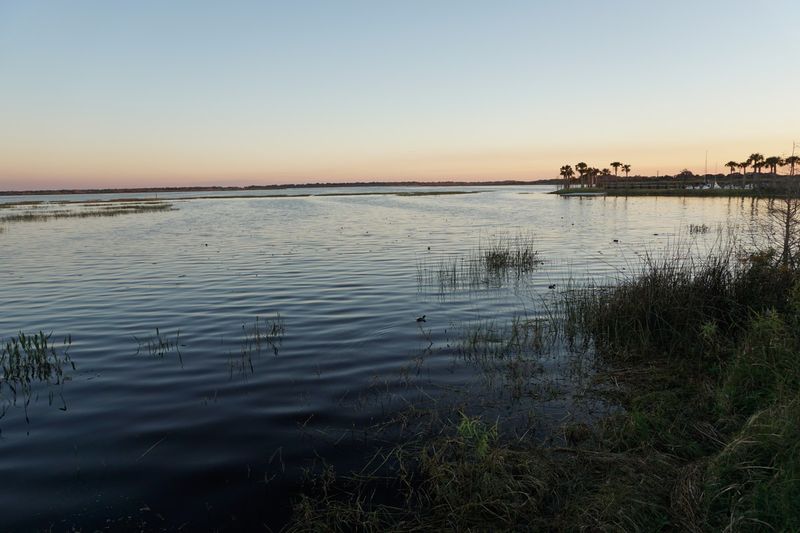
Better known simply as Lake Toho, this 22,000-acre giant sits right in Kissimmee and ranks as one of Florida’s most famous bass fishing destinations. Anglers from around the world come here chasing trophy largemouth, and the lake rarely disappoints. But beyond the fishing reputation, Lake Toho impresses with its sheer scale and the way it opens up into broad sections that feel surprisingly oceanic.
The lake connects to a chain of waters that eventually flow south toward the Everglades, making it part of a much larger ecosystem. Shallow grass flats cover much of the lake, providing perfect cover for bass and other fish. When you’re running across the open water on a boat, the grass beds seem to go on forever.
Kissimmee’s lakefront has developed significantly over the years, with parks, restaurants, and marinas taking advantage of the water views. Lakefront Park offers a pleasant walking area with a lighthouse, though the structure is decorative rather than functional. Still, it provides a great spot to appreciate just how far the water extends.
Summer afternoons bring thunderstorms that roll across Lake Toho with impressive displays of lightning. Experienced boaters know to head in early because the lake’s size means you can be miles from shore when storms develop. On calm days, though, the glassy surface reflects clouds and sky in a way that makes the horizon disappear entirely.
8. Lake Harris (Lake County)
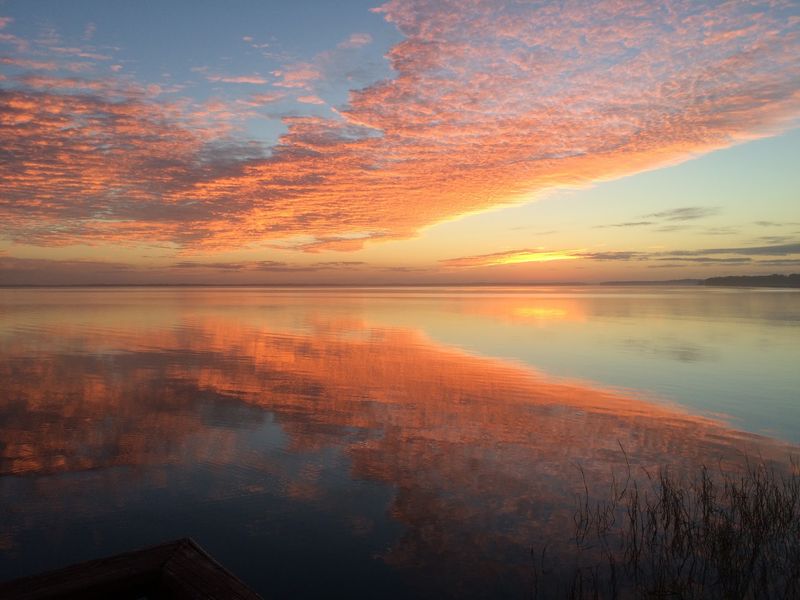
Part of the famous Harris Chain of Lakes, Lake Harris covers about 13,000 acres in Lake County and delivers some of the most sweeping water views in Central Florida. The lake connects to several other bodies of water, creating a boater’s paradise where you can cruise for hours without retracing your path. In the widest sections, the opposite shore fades into a hazy line that could easily be mistaken for a distant coastline.
Historic towns like Leesburg and Tavares sit along the shore, offering waterfront dining and charming downtown areas. The area has attracted visitors since the late 1800s, when steamboats carried tourists up from the St. Johns River. That legacy continues today, with the lake serving as the centerpiece for the region’s tourism and recreation.
Fishing remains excellent, with bass, crappie, and bluegill all thriving in Harris’s clear waters. The lake stays relatively clean compared to some other Central Florida lakes, partly due to ongoing conservation efforts and the natural filtering provided by connected wetlands. Water skiing and wakeboarding are popular too, especially in the broader, deeper sections.
Sunsets over Lake Harris have inspired countless photographs, with the water turning shades of gold and crimson as the day ends. Waterfront restaurants fill up with diners hoping to catch the show, and it’s easy to understand why. When the sun melts into that distant horizon, it’s hard to believe you’re looking at a landlocked lake.
9. Crescent Lake (Flagler & Putnam Counties)
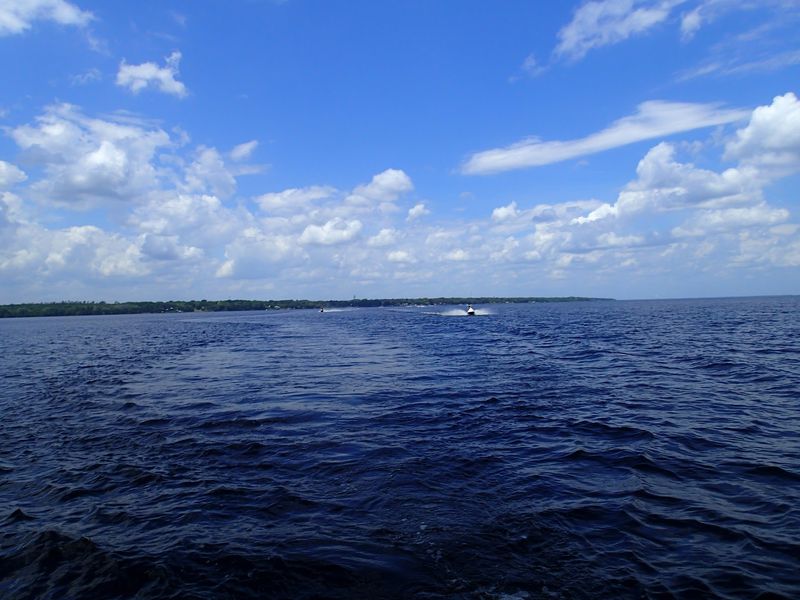
Long, broad, and beautifully undeveloped, Crescent Lake stretches for about 15 miles along the border of Flagler and Putnam Counties. Connected to the St. Johns River system, this lake offers impressive stretches of uninterrupted water surrounded by forests and wetlands. The name comes from its curved shape, but when you’re out on the water, what strikes you most is the sheer width and length.
The town of Crescent City sits on the western shore, a quiet community that feels frozen in time. Historic homes line the waterfront, and a small downtown area offers a glimpse of old Florida charm. The lake has drawn visitors for more than a century, with wealthy Northerners once building winter retreats along its shores.
Fishing here targets bass, bream, and catfish, with the lake’s connection to the river bringing in a variety of species. The water stays relatively clear, and the natural shoreline supports healthy populations of wading birds, turtles, and alligators. Paddlers love exploring the quieter coves and inlets where cypress trees create cathedral-like spaces.
On calm mornings, the lake’s surface becomes a perfect mirror, reflecting the sky and trees in stunning detail. The silence can be profound, broken only by the call of a loon or the splash of a jumping fish. Despite being just an hour from the coast, Crescent Lake feels remote and wild, its vast water creating a sense of isolation and scale that rivals the ocean itself.
10. Lake Monroe (Sanford)
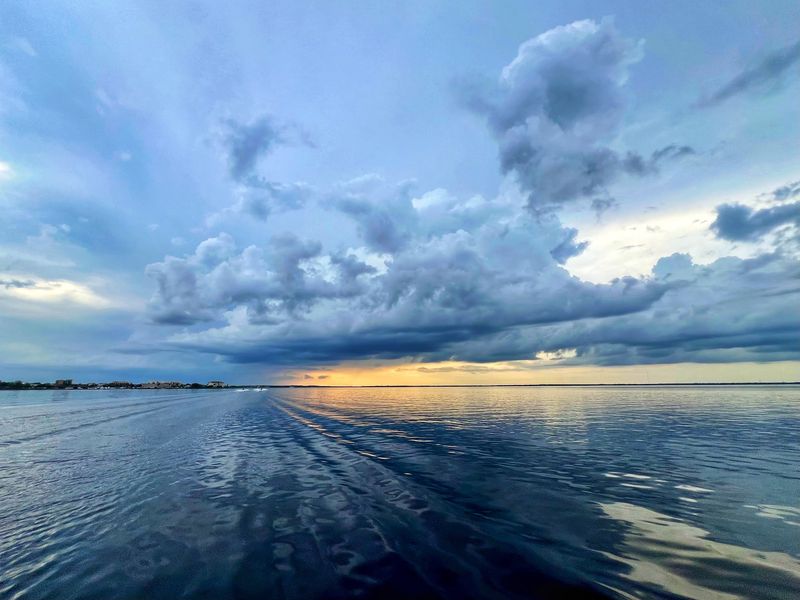
Technically a wide section of the St. Johns River, Lake Monroe spreads across the northern edge of Sanford and provides some genuinely enormous open-water views. The lake covers roughly 9,400 acres, and from Sanford’s historic waterfront, the far shore seems impossibly distant. This has been a gathering place for thousands of years, first for Native Americans and later for settlers who recognized the strategic importance of such a large, navigable body of water.
Downtown Sanford has embraced its lakefront location, creating parks, a marina, and a riverwalk that draws locals and visitors alike. Restaurants with outdoor seating offer front-row views of the water, and on weekends, the area buzzes with activity. Boat tours launch from the marina, taking passengers out onto the lake and up the river to spot manatees and alligators.
The lake’s size creates excellent sailing conditions, and you’ll often see sailboats tacking across the water on breezy afternoons. Powerboaters enjoy the open runs, while kayakers stick closer to shore, exploring the marshes and tributaries that feed into the lake. Fishing produces bass, catfish, and the occasional gar, with some truly massive specimens lurking in the deeper channels.
Sunset from Sanford’s waterfront rivals anything the coast has to offer. The water glows in shades of orange and purple, and the distant shoreline fades to a dark silhouette. Standing there, watching the light change, you’d never guess you’re inland.