10 Florida Day Trips Where $10 Is All You Need to Get In
Florida is packed with natural wonders that won’t empty your wallet. You can explore lush gardens, crystal-clear springs, ancient geological formations, and trails teeming with wildlife without spending more than the cost of lunch. These ten state parks prove that the best adventures don’t require a big budget, just a full tank of gas and a sense of curiosity.
1. Washington Oaks Gardens State Park (Palm Coast)
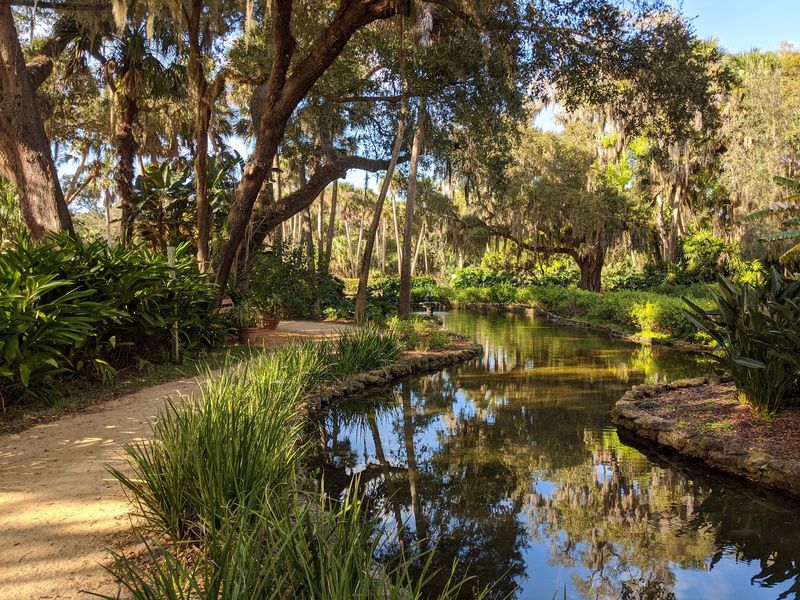
Just five bucks gets you into one of Florida’s most photogenic coastal retreats. Washington Oaks sits where formal gardens meet wild shoreline, creating a landscape that feels both curated and untamed. The ornamental gardens burst with azaleas, camellias, and bird of paradise, while massive live oaks draped in Spanish moss frame every turn.
Walk down to the beach and you’ll find something rare along Florida’s Atlantic coast: a shoreline made of coquina rock formations instead of pure sand. These honeycomb-patterned rocks create tide pools at low tide, perfect for spotting crabs and small fish. The waves crash against the ancient stone, carving new patterns with every storm.
The park’s river-to-sea trail connects the Matanzas River side to the ocean, winding through coastal hammock thick with palmetto and cabbage palms. Spring brings the most dramatic garden blooms, but any season works for exploring the trails or picnicking under the oaks. Pack a lunch and claim a shaded table overlooking the water.
Photography enthusiasts love the mix of manicured beauty and rugged coastline. Sunrise casts golden light across the coquina rocks, while afternoon shade under the oak canopy offers relief from Florida’s heat.
2. Devil’s Millhopper Geological State Park (Gainesville)
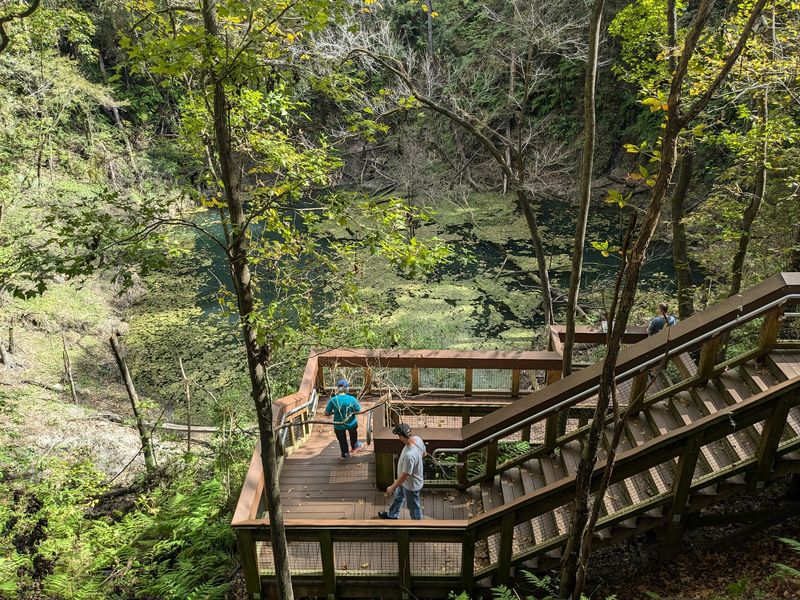
For just four dollars per car, you can descend into a miniature rainforest hidden 120 feet below ground. Devil’s Millhopper is a massive limestone sinkhole that formed thousands of years ago when the cavern ceiling collapsed. Now it’s a bowl-shaped depression where twelve different streams trickle down the walls, creating an ecosystem unlike anything else in North Florida.
The wooden staircase spirals down 232 steps, taking you through distinct climate zones as you descend. Temperatures drop noticeably at the bottom, where ferns, mosses, and shade-loving plants thrive in the constant moisture. The air feels different here, cooler and damper, almost prehistoric.
Look closely at the sinkhole walls and you’ll spot fossilized shells and bones embedded in the limestone, remnants of ancient seas that once covered Florida. The streams that flow down create small waterfalls, their constant trickle providing a soundtrack to your exploration. Educational plaques along the descent explain the geology and ecology.
The climb back up is a workout, but benches at intervals let you catch your breath and take in the layered vegetation. Visit on a weekday morning to have the place mostly to yourself. The park stays relatively cool even in summer thanks to the natural air conditioning of the sinkhole.
3. Koreshan State Park (Estero)
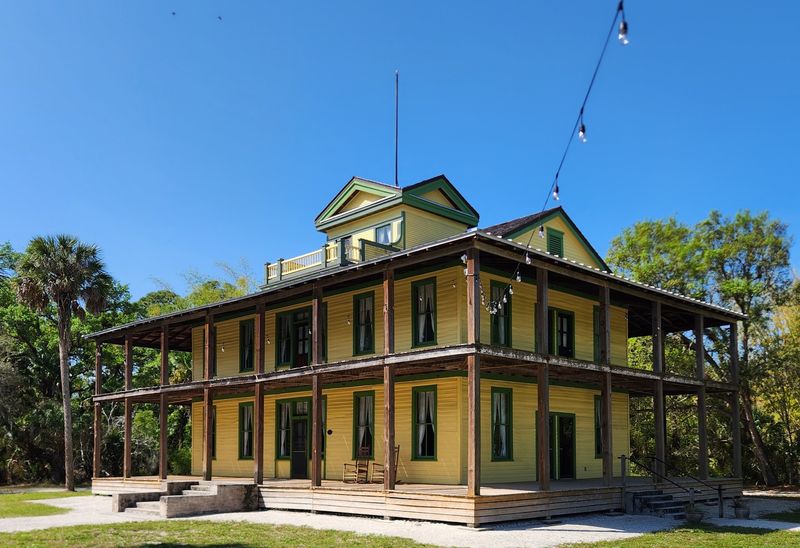
Five dollars buys you entry to one of Florida’s strangest historical chapters. Koreshan was once home to a utopian community that believed we live inside a hollow Earth. The settlement thrived in the late 1800s and early 1900s, leaving behind beautifully preserved buildings that now sit empty but filled with stories.
Wander through the historic structures, including the Planetary Court, the Art Hall, and the Founder’s House, all painted white and surrounded by tropical landscaping the Koreshans planted over a century ago. Massive bamboo groves tower overhead, planted by the settlers and now creating cathedral-like tunnels of green. The community’s gardens featured exotic plants from around the world, many of which still flourish.
Beyond the historic settlement, the park offers trails along the Estero River where you might spot manatees during cooler months. Kayak and canoe rentals are available if you want to paddle the dark, tannin-stained water. The river winds through mangrove tunnels that feel like portals to old Florida.
Camping is available if you want to extend your visit, but day-trippers find plenty to explore in a few hours. The combination of quirky history and natural beauty makes this park memorable. Bring bug spray, especially in summer when mosquitoes claim the riverside trails.
4. Ravine Gardens State Park (Palatka)
Palatka’s hidden gem costs just five dollars and offers terrain you won’t expect in Florida. Ravine Gardens features steep-sided ravines carved by natural springs, creating dramatic elevation changes rare in the flattest state. Paved paths wind down into these ravines where azaleas explode with color every spring, transforming the park into a floral wonderland.
The azalea collection includes over 100,000 plants representing numerous varieties, planted during the Great Depression as a Works Progress Administration project. Peak bloom typically arrives in February and March, but the park’s natural beauty persists year-round. Even without flowers, the ravines themselves impress with their unexpected depth and the way sunlight filters through the canopy.
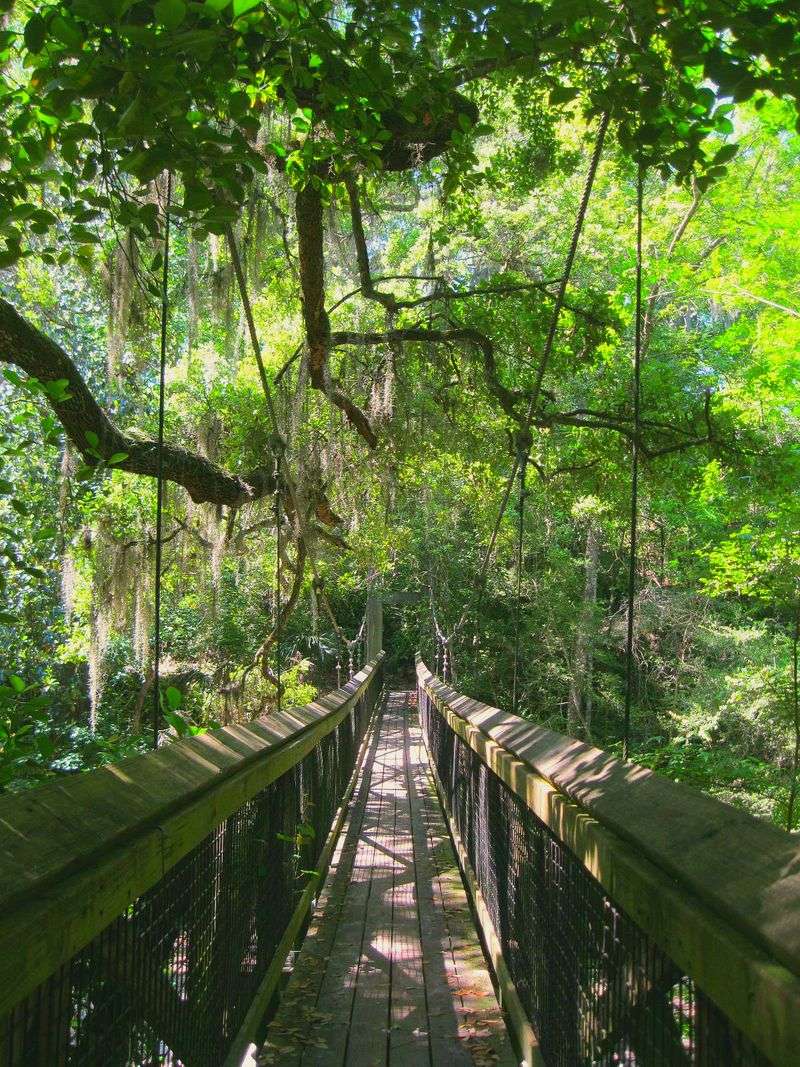
Two suspension footbridges cross the ravines, offering elevated views of the gardens below and the occasional thrill of gentle swaying. Trails range from easy paved loops to more challenging natural-surface paths that climb the ravine walls. Wildlife includes turtles sunning on logs, wading birds along the creek, and the constant chatter of songbirds.
The formal garden areas near the entrance feature manicured lawns and specimen trees, perfect for picnics. A small museum explains the park’s history and the ambitious project that transformed raw ravines into cultivated beauty. Visit on a spring weekday to avoid crowds during peak bloom season.
5. Rainbow Springs State Park (Dunnellon)
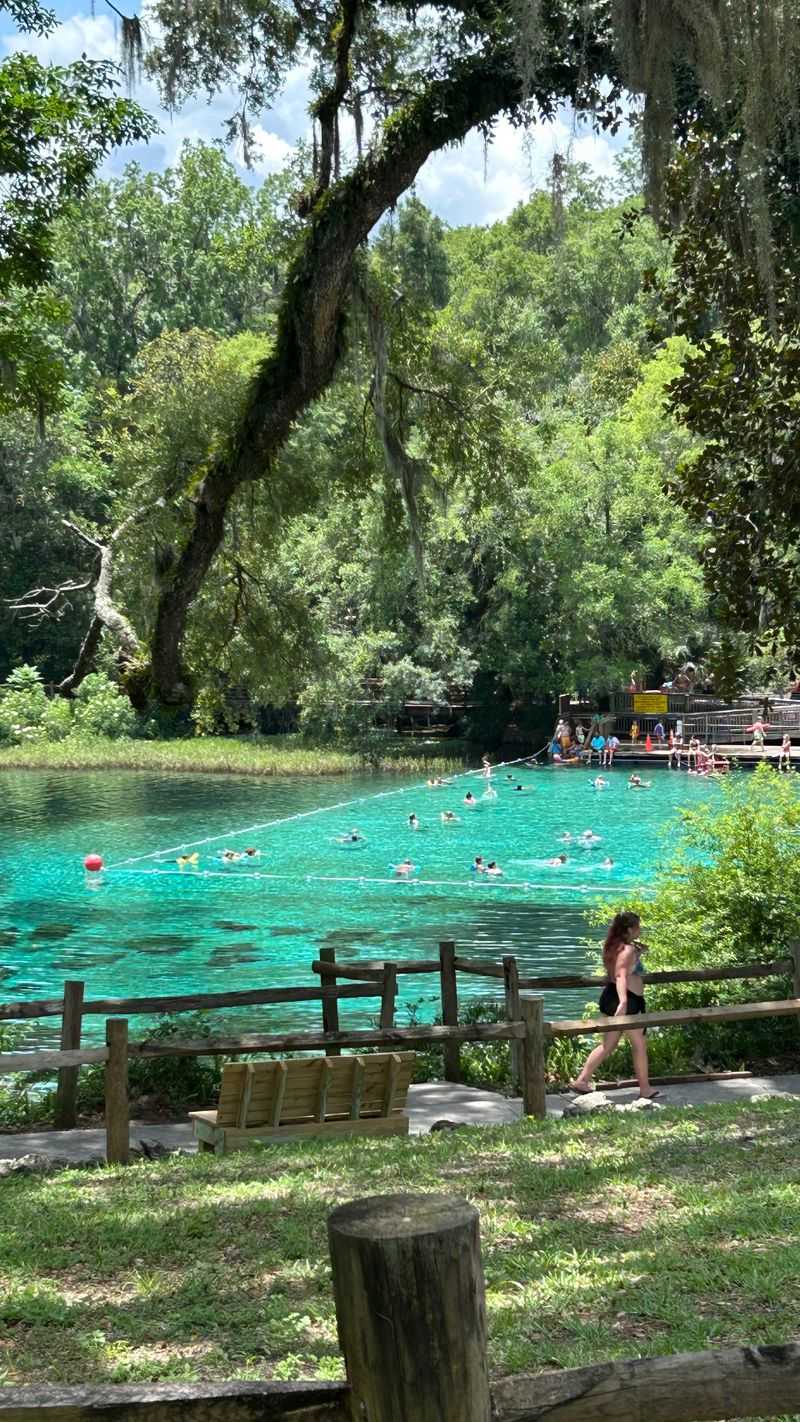
Rainbow Springs pumps out 400 million gallons of crystal-clear water daily, creating one of Florida’s most stunning swimming holes for just five dollars. The spring maintains a constant 72 degrees year-round, refreshingly cool in summer and surprisingly warm on winter mornings. Visibility extends for dozens of feet underwater, revealing aquatic plants swaying in the current and fish darting between the vegetation.
The main swimming area features a roped-off section where kids can safely splash while stronger swimmers venture into deeper water. A sandy beach area provides space for sunbathing between dips. The water’s clarity makes snorkeling irresistible, even though the spring isn’t as deep as some others.
Tubing the Rainbow River is the other major draw, though tube rentals come at an additional cost. The four-mile float takes you through overhanging trees and past limestone outcroppings, with the spring’s clear water creating an aquarium effect. Day-use reservations are required and often book up weeks in advance during summer, so plan ahead.
Gardens and trails wind through the upland areas, remnants of the old Rainbow Springs attraction that operated here before the state purchased the property. Waterfalls and landscaped pools add to the scenery. Arrive early on summer weekends because the park reaches capacity quickly.
Bring water shoes for the rocky spring bottom.
6. Paynes Prairie Preserve State Park (Micanopy)
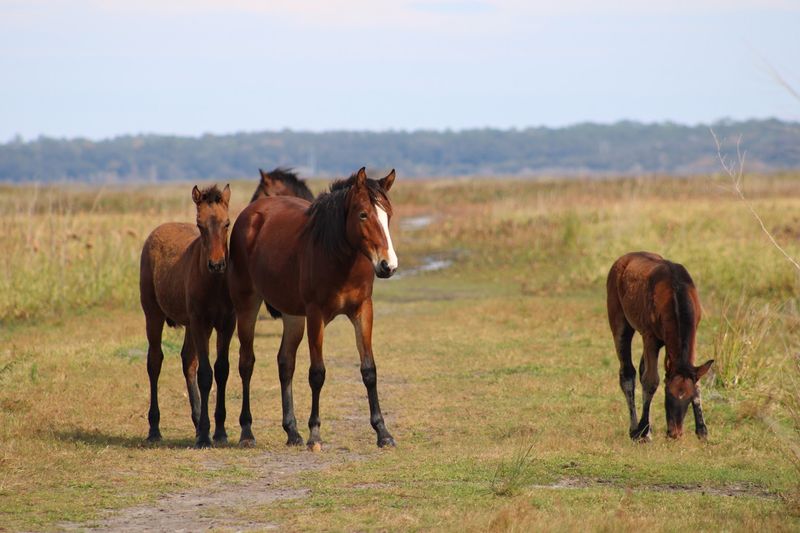
Six dollars gets you into 21,000 acres of wilderness where bison and wild horses roam free. Paynes Prairie is a massive basin that floods and drains with the seasons, creating a constantly changing landscape. From the observation tower, the vista stretches to the horizon, an unusual sight in tree-covered Florida.
The preserve hosts an improbable collection of large mammals. American bison were reintroduced to recreate the herds that once grazed here centuries ago. Wild horses descended from Spanish stock wander the prairie edges.
White-tailed deer appear at dawn and dusk. Alligators claim the wetter areas, sometimes visible from the boardwalks and trails.
Over 270 bird species have been recorded here, making it a premier birding destination. Sandhill cranes stride through the grasslands, their rattling calls echoing across the basin. Winter brings massive flocks of waterfowl.
Raptors patrol from above, hunting the prairie’s abundant small mammals.
Several trails offer different experiences, from the short boardwalk at La Chua Trail where gators congregate to the longer Cone’s Dike Trail that circles part of the basin. The visitor center provides context about the preserve’s ecology and history. Bring binoculars because wildlife spotting requires patience and distance.
Summer heat can be intense on the exposed prairie, so cooler months offer more comfortable hiking.
7. De Leon Springs State Park (De Leon Springs)
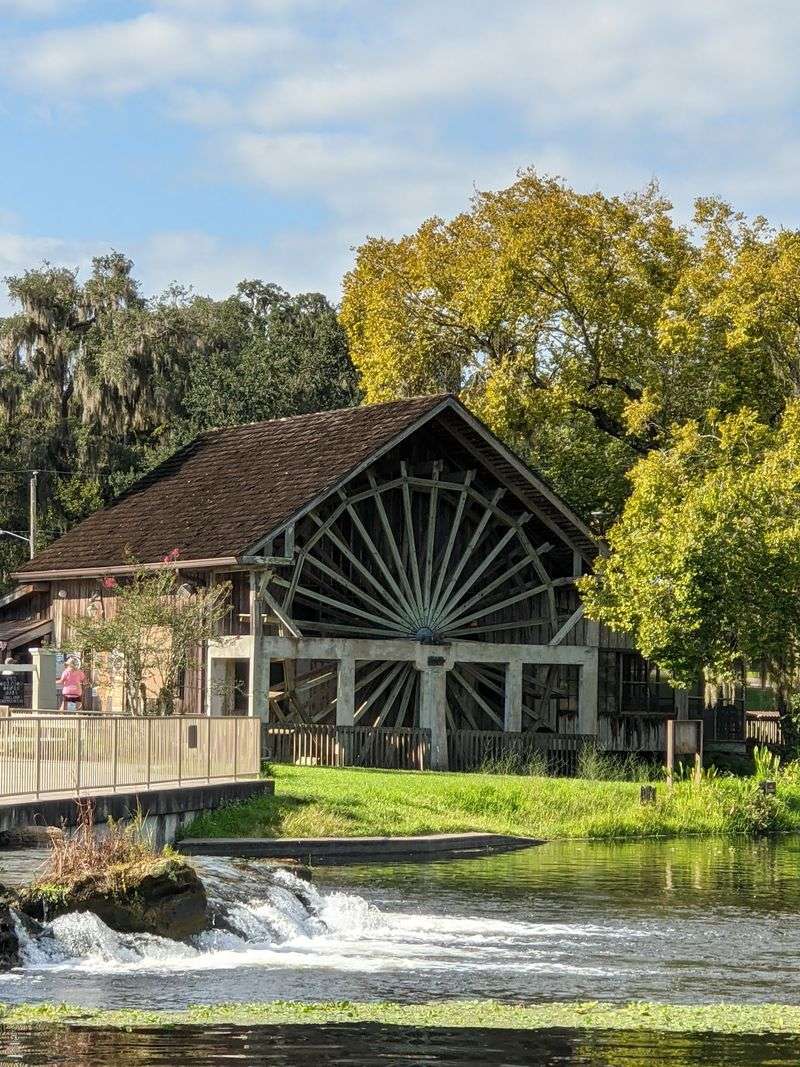
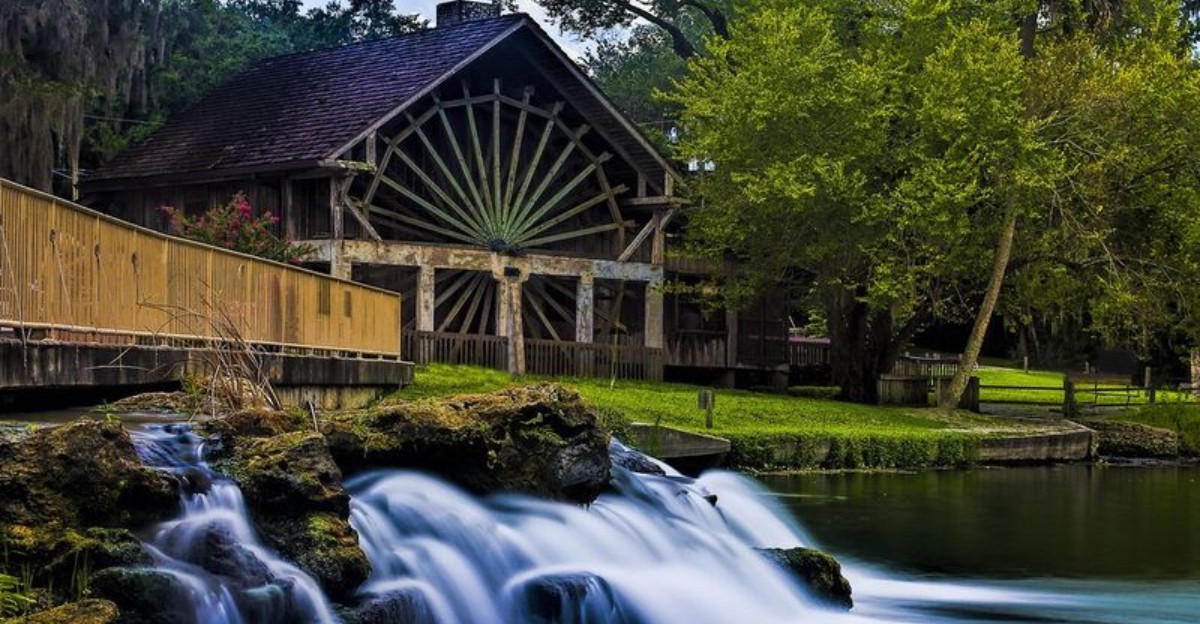
For six dollars you get a spring-fed swimming hole and the chance to cook your own pancakes at the Old Spanish Sugar Mill restaurant inside the park. The spring pumps 19 million gallons daily, filling a large pool that stays a constant 72 degrees. Stone walls built by the Civilian Conservation Corps in the 1930s contain the swimming area, giving it a vintage resort feel.
The pool reaches depths of about 20 feet in spots, perfect for diving and underwater swimming. Cypress trees shade portions of the spring, while open areas catch the sun. Families spread out on the grassy banks between swims.
The water’s clarity lets you watch fish and turtles going about their business below.
The sugar mill restaurant deserves its own visit. Each table has a built-in griddle where you cook your own pancakes, choosing from batters like whole wheat, blueberry, or chocolate chip. It’s interactive dining that kids love, though weekend waits can stretch long.
Make reservations if possible.
Beyond swimming and eating, the park offers trails through hardwood forest and along the spring run. Kayakers and canoers paddle the spring’s outflow into Lake Woodruff. The spring’s history stretches back centuries, from Native American settlements through Spanish missions to a mid-century tourist attraction.
Educational displays in the visitor center detail this evolution.
8. Highlands Hammock State Park (Sebring)
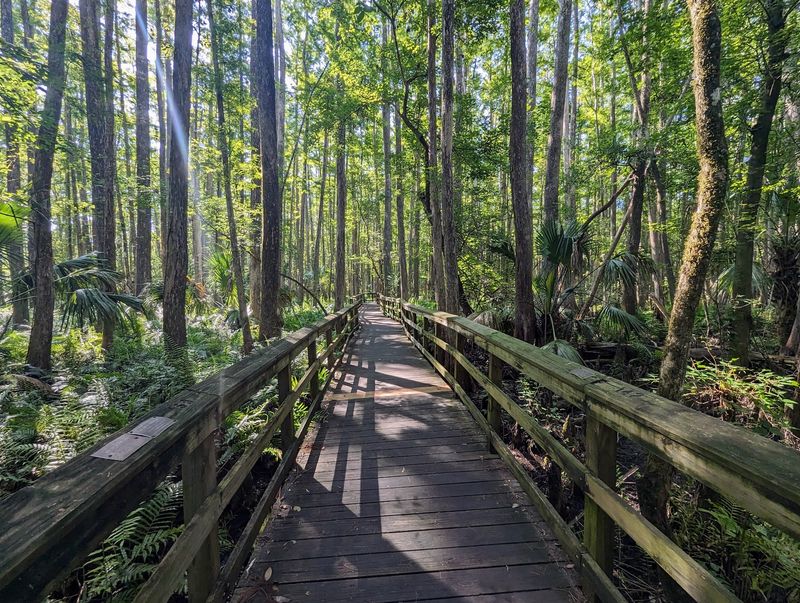
Highlands Hammock preserves one of Florida’s last stands of old-growth forest, accessible for just six dollars. Massive live oaks hundreds of years old create a canopy so thick that the forest floor stays dim even at midday. Spanish moss drapes from every branch, swaying in breezes that barely penetrate the dense vegetation.
The park’s boardwalk trails keep your feet dry while leading through different habitats. The cypress swamp boardwalk winds between giant bald cypress trees standing in dark water, their knees jutting up like wooden stalagmites. Ferns and air plants colonize every available surface.
The hammock trails showcase the hardwood forest, where palms and oaks intermingle.
Wildlife sightings are common. Deer browse in the understory. Armadillos rootle through leaf litter.
Wading birds stalk the swamp edges. Alligators lurk in the darker pools. The Civilian Conservation Corps built much of the park’s infrastructure in the 1930s, including the still-used museum and many of the trails.
Nine different trails offer options from short nature walks to longer hikes. The paved loop drive lets you see highlights without leaving your car, though you’ll miss the forest’s sensory details. Visit during the week to experience the trails in relative solitude.
The ancient forest’s quiet feels profound, broken only by birdsong and wind in the canopy.
9. Silver Springs State Park (Silver Springs)
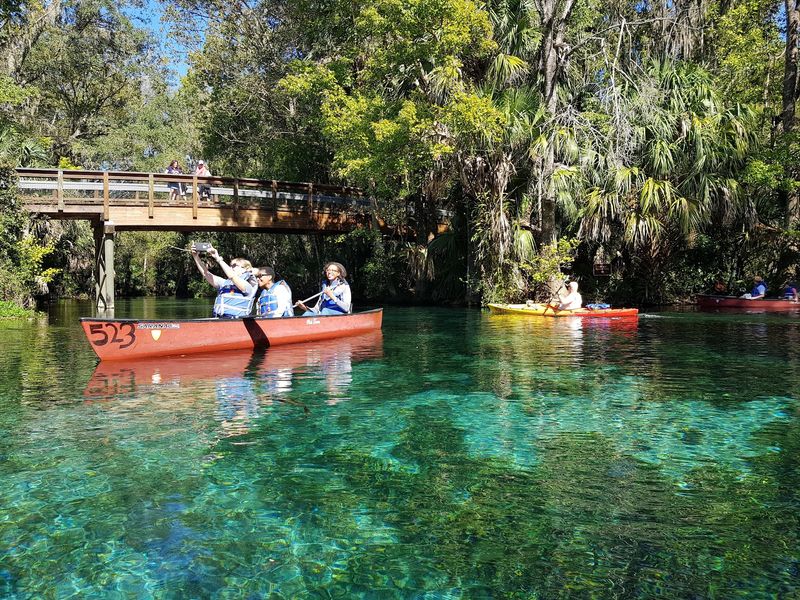
At eight dollars per vehicle, Silver Springs is the priciest on this list but still under ten bucks. This is Florida’s original tourist attraction, famous since the 1800s for water so clear you can see the bottom in depths exceeding 80 feet. The springs discharge over 550 million gallons daily, creating the massive Silver River.
Glass-bottom boat tours are the classic way to experience the springs, offering views into the underwater world without getting wet. These tours cost extra beyond park admission, but wandering the park and viewing the springs from shore is free once you’re in. The spring basin’s clarity remains stunning, with limestone formations and aquatic vegetation visible in incredible detail.
The park offers kayak and canoe rentals for paddling the river, where you’ll drift past cypress-lined banks and likely spot turtles, alligators, and wading birds. Monkeys inhabit the riverbanks, descendants of releases decades ago for a Tarzan movie shoot. They’re wild and best observed from a distance.
Several trails wind through the property, including paths to the springs’ headwaters and through upland forest. The museum chronicles the springs’ role in Florida history and Hollywood, with dozens of movies filmed here. Summer weekends draw crowds, but weekday mornings offer a more peaceful experience.
The water’s constant 72 degrees makes winter visits appealing when the warm spring creates steam in cool air.
10. Edward Ball Wakulla Springs State Park (Wakulla Springs)
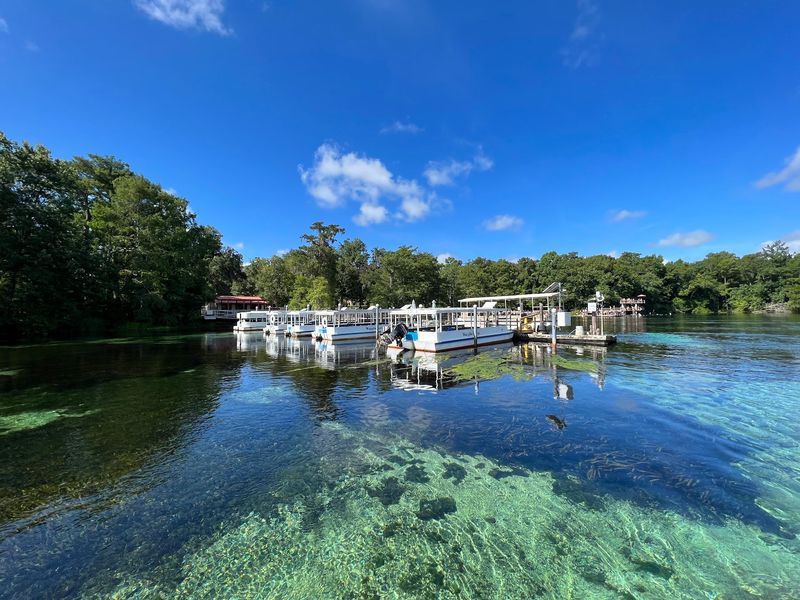
Six dollars opens the gate to one of the world’s largest and deepest freshwater springs. Wakulla Springs’ basin plunges to depths over 185 feet, with an extensive cave system that divers have explored for miles. The water’s clarity on calm days creates an optical illusion where the bottom appears much closer than it actually is.
Swimming is allowed in a designated area roped off from the main spring basin. The 70-degree water feels refreshing year-round, though winter swimmers find it warmer than the air. A diving platform and beach area make this a proper swimming hole, not just a place to look.
Lifeguards are on duty during operating hours.
The historic Wakulla Springs Lodge, built in 1937, anchors the park with its Spanish Mediterranean architecture and marble lobby. The lodge restaurant serves meals if you want to extend your visit. Even if you don’t stay overnight, walking through the lodge is worthwhile for its old Florida atmosphere.
Riverboat tours cruise the Wakulla River, narrated by guides who point out alligators, manatees in winter, and countless bird species. These tours cost extra but provide access to areas you can’t reach on foot. The river’s dark water contrasts with the spring’s clarity, both fed by the same aquifer.
Tarzan movies were filmed here in the 1940s, and guides share stories from those productions.