Florida’s Most Underrated Experience Could Be This Stunning 338-Mile Drive
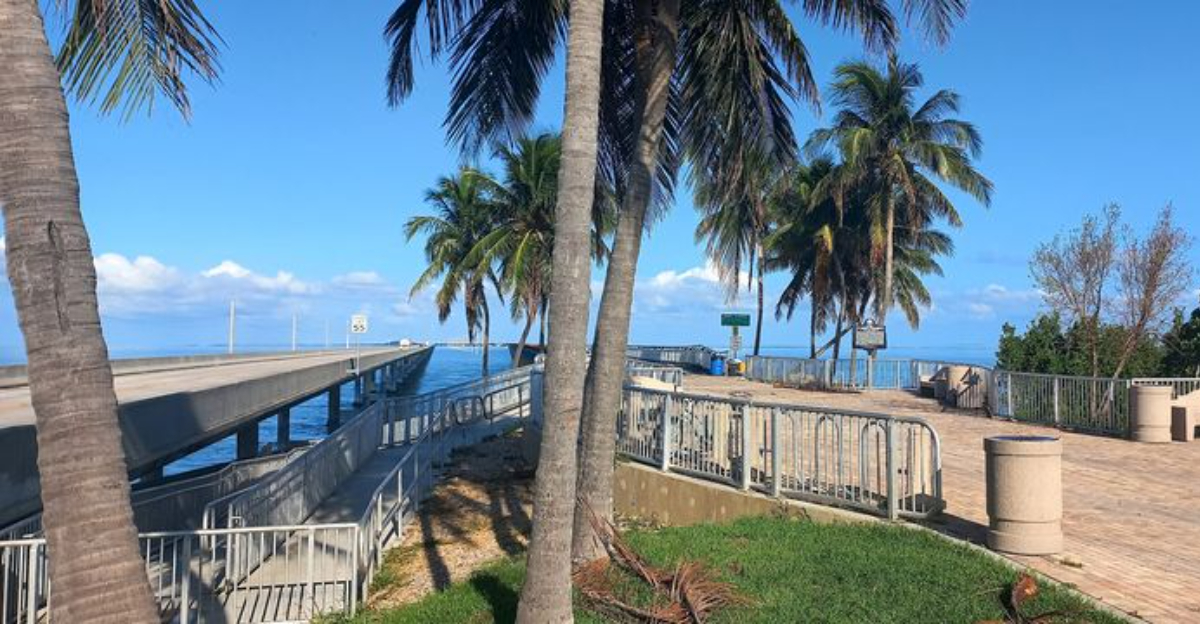
Most people think of Florida and picture theme parks or crowded beaches, but there’s a drive that quietly steals the show every single time. The Overseas Highway stretches roughly 113 miles through the Florida Keys, carrying travelers over shimmering open water on a road built atop an old railroad structure.
Part of the legendary Route 1, this scenic corridor connects the mainland all the way down to Key West in a way that feels almost surreal. If you’ve never added this road trip to your bucket list, now is absolutely the time.
The History Behind the Road That Replaced a Railroad
Before cars ruled the Keys, a train did. Henry Flagler’s Florida East Coast Railway was one of the most ambitious engineering feats of the early 1900s, stretching iron rails across open water all the way to Key West.
People called it the “Eighth Wonder of the World,” and honestly, that title wasn’t too far off.
Then came the Labor Day Hurricane of 1935, one of the most powerful storms ever recorded in the United States. It destroyed massive sections of the railroad, and rebuilding the rail line was simply too expensive.
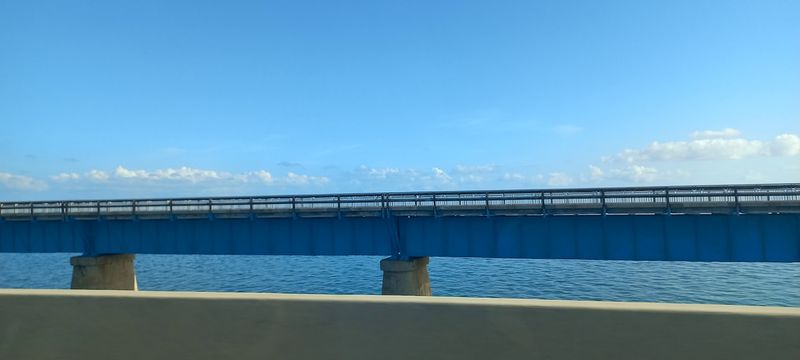
Instead of letting the infrastructure go to waste, engineers used the old railroad bridges as a foundation for a new roadway.
That decision gave birth to what we know today as the Overseas Highway. The State of Florida purchased the railroad’s remains in 1935 and opened the road to vehicles in 1938.
Drivers suddenly had a paved path through the Keys for the first time, and the region was never the same again.
Knowing this history while you drive makes the experience feel completely different. You’re not just cruising over water — you’re rolling over the bones of a century-old railroad dream that refused to disappear.
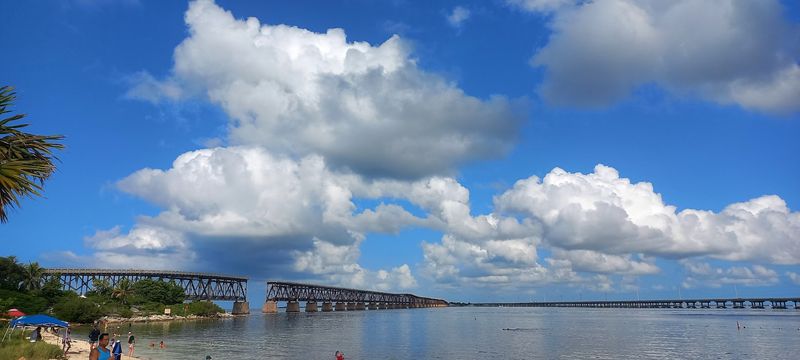
Some of the original Flagler bridges are still visible alongside the modern road, standing quietly like monuments to an era when building the impossible was just another Tuesday in Florida.
Stopping at Pigeon Key, a tiny island near Marathon, gives you the best up-close look at this history. It was once a worker camp for the railroad crew and now operates as a museum.
Spending even an hour there adds serious depth to an already remarkable drive.
Seven Mile Bridge: The Crown Jewel of the Overseas Highway
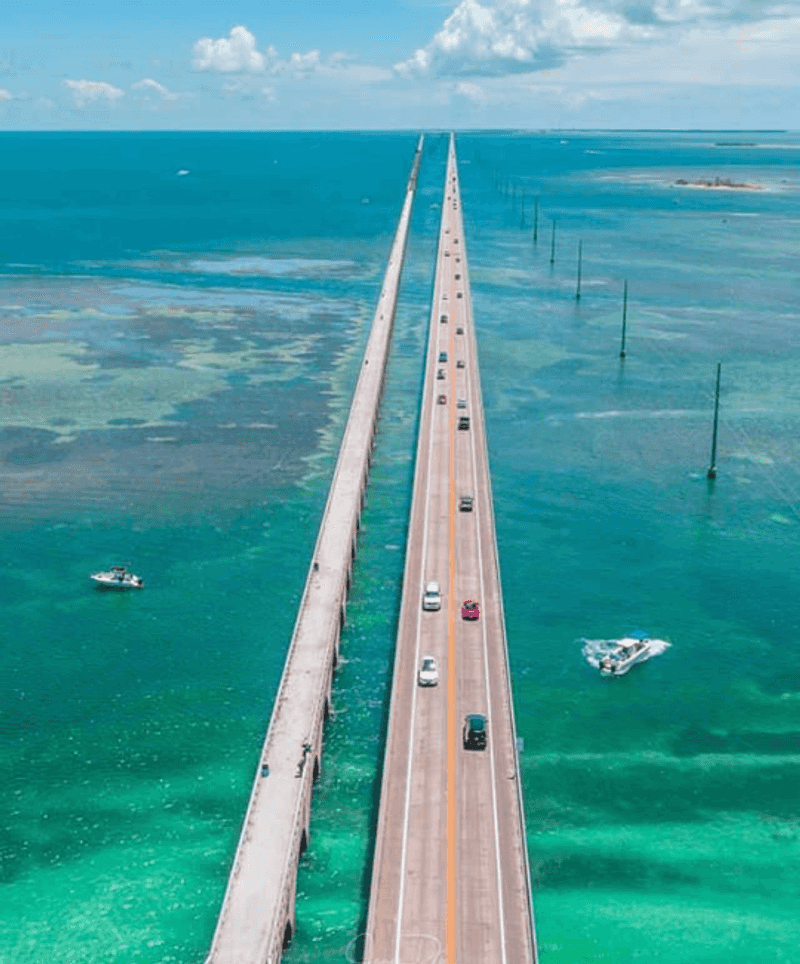
Few road experiences in America match the feeling of driving across Seven Mile Bridge. At roughly 6.79 miles long, it spans the gap between Knight’s Key and Little Duck Key, hovering above some of the most electric blue-green water you’ll ever see.
The first time you hit that open stretch with nothing but ocean on both sides, your jaw will drop — guaranteed.
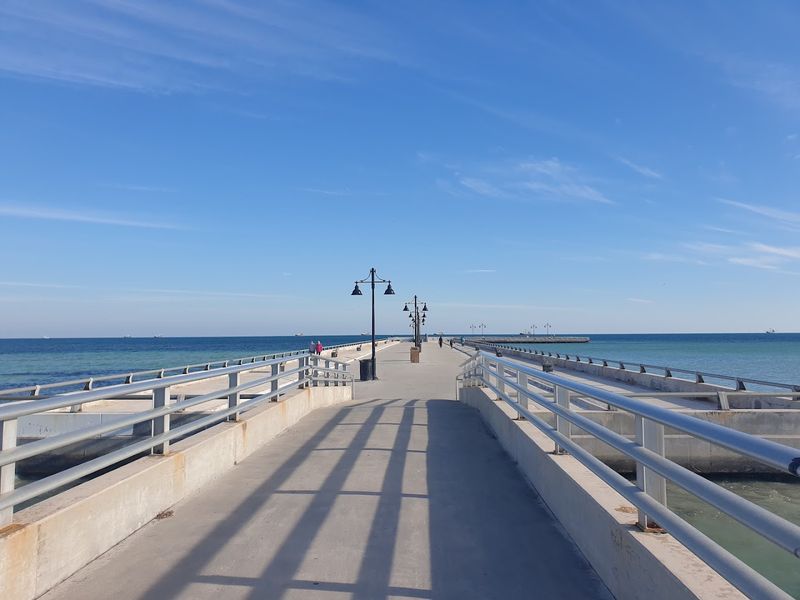
Built in 1982, the current bridge replaced the original Flagler-era structure that ran parallel to it. That old bridge still exists and has been partially converted into a fishing pier and walking path.
On clear days, you can spot anglers lining the old span while you zoom past on the new one, which creates this oddly cinematic split-screen effect.
Sunrise and sunset hits different out here. Photographers and road-trippers alike plan their drive specifically around golden hour, because the light bouncing off the water turns everything into a painting.
If you’re heading southbound toward Key West, try timing your arrival at the bridge just before the sun dips below the horizon.
The bridge has appeared in multiple films and TV shows over the decades, including the 1994 movie “True Lies” with Arnold Schwarzenegger. A helicopter chase scene was famously filmed here, and locals love pointing that out to first-time visitors.
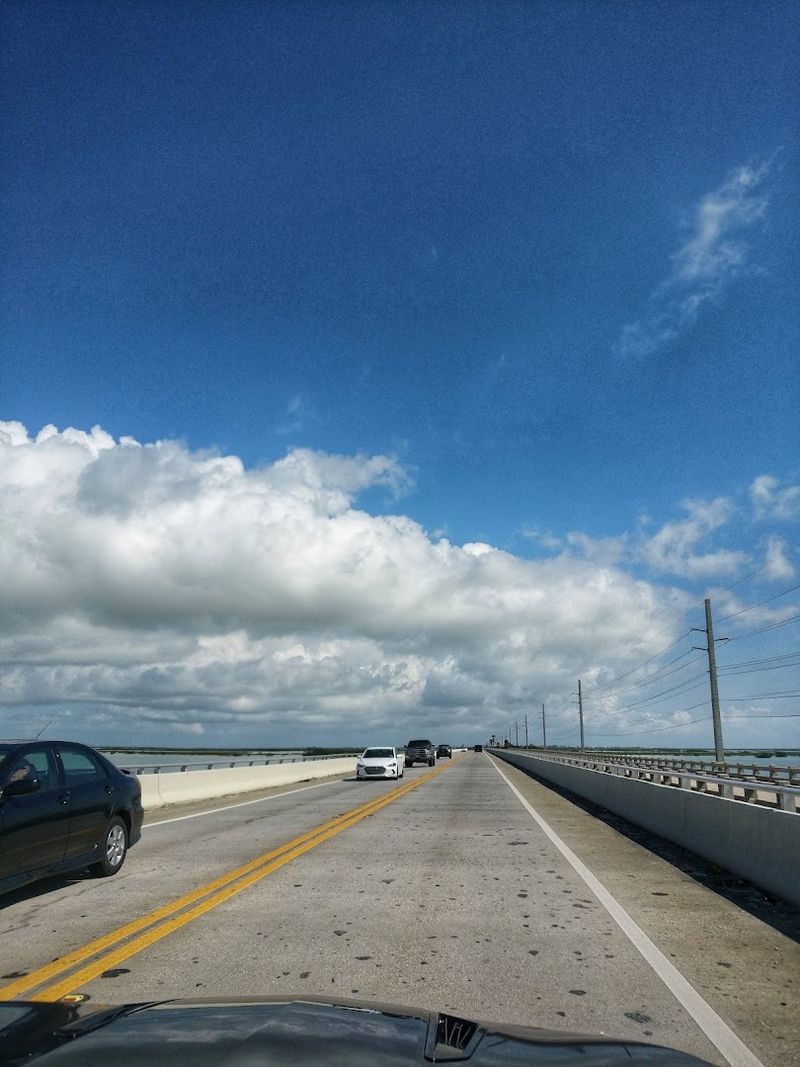
Speed limits drop to around 45 mph on the bridge, which might feel slow — but trust the process. Slowing down means more time to absorb the view, and the panoramic sweep of open water stretching to both horizons is something your eyes will want to hold onto as long as possible.
This bridge alone is worth planning an entire road trip around.
Wildlife Encounters You Won’t Find Anywhere Else in the Country
The Overseas Highway doesn’t just pass through beautiful scenery — it cuts straight through some of the most ecologically unique habitat in North America. The animals you’ll encounter along this drive exist nowhere else on Earth, and that’s not an exaggeration.
It’s one of those rare road trips where pulling over for wildlife is practically part of the itinerary.
Big Pine Key is home to the Key deer, a miniature subspecies of white-tailed deer that stands about two feet tall at the shoulder. These tiny creatures are federally endangered and protected within the National Key Deer Refuge.
Seeing one trot across the road or graze near the highway shoulder is one of those moments that feels straight out of a dream.
The waters surrounding the highway are equally alive. Pull over at any of the many small bridges or pull-offs and look down — you’ll often spot tarpon, bonefish, rays, and even reef sharks cruising just below the surface.
The clarity of the water in the Keys makes it feel like you’re looking through glass at a live aquarium.
Brown pelicans are almost constant companions on this drive, gliding low over the water in formation like they own the place. Great blue herons stand statue-still on bridge railings, and ospreys circle overhead hunting for their next meal.
Birders absolutely love this route.
American crocodiles, which are far rarer than alligators, have been spotted in the brackish waters near the northern Keys. This is one of the only places in the continental United States where they live in the wild.
The biodiversity along this highway is genuinely staggering, and slowing down to notice it turns a simple drive into something unforgettable.
The Best Stops Along the Way from Key Largo to Key West
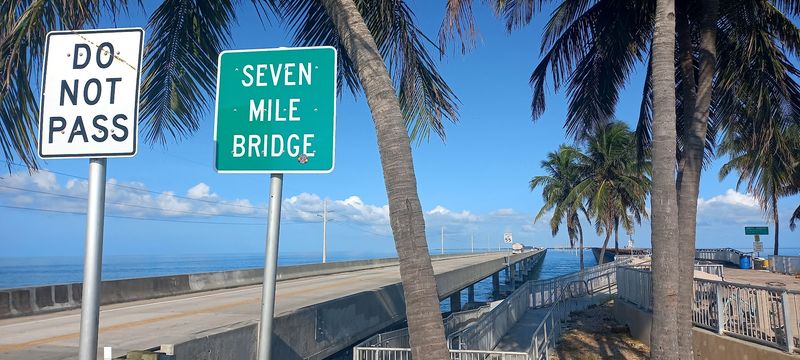
Driving the Overseas Highway without stopping is like skipping every chapter in a great book and jumping straight to the last page. The communities strung along this route each have their own personality, and spending time in them is what separates a good road trip from an epic one.
Key Largo kicks things off as the first Key you hit heading south. It’s the self-proclaimed “Diving Capital of the World,” and for good reason — John Pennekamp Coral Reef State Park sits right here, offering snorkeling and scuba access to living coral reefs just offshore.
Even if you’re not a diver, the glass-bottom boat tours are absolutely worth a detour.
Islamorada, known as the “Village of Islands,” comes next and delivers a laid-back vibe with world-class sport fishing. The sunsets from Robbie’s Marina are legendary among locals, and feeding the enormous tarpon that gather at the dock is a quirky experience that kids and adults both love equally.
Marathon sits near the midpoint and serves as a solid base for exploring the middle Keys. The Turtle Hospital here rescues and rehabilitates injured sea turtles, and their guided tours give visitors an intimate look at conservation work that’s genuinely moving.
Then there’s Key West, the grand finale. The southernmost city in the continental United States pulses with energy — Duval Street nightlife, the Ernest Hemingway Home, the Southernmost Point buoy, and a sunset celebration at Mallory Square that draws crowds every single evening.
Key West earns its reputation as a destination, but the drive to get there is just as much the point. Every stop along the way adds a new layer to an already extraordinary journey.
Fishing the Overseas Highway: A Paradise for Anglers
Ask any serious angler about the Florida Keys, and watch their eyes light up. The waters surrounding the Overseas Highway are widely considered some of the finest fishing grounds in the entire world, and that reputation has been earned over generations of legendary catches.
Whether you’re a weekend warrior or a tournament regular, this stretch of water delivers.
The highway itself becomes a fishing platform at several points. The old Seven Mile Bridge, now a pedestrian walkway, is one of the most popular fishing spots in the Keys.
Anglers line up along the railing at dawn hoping to hook tarpon, snook, or permit in the swift tidal currents below. No boat required — just a rod, some patience, and a good pair of sunglasses.
Flats fishing around Islamorada and the backcountry waters near Key Largo attracts anglers from across the globe. The shallow, clear flats are home to bonefish, permit, and tarpon — the “Holy Trinity” of fly fishing.
Landing all three on a single trip is called a “Grand Slam,” and it’s considered one of the most coveted achievements in the sport.
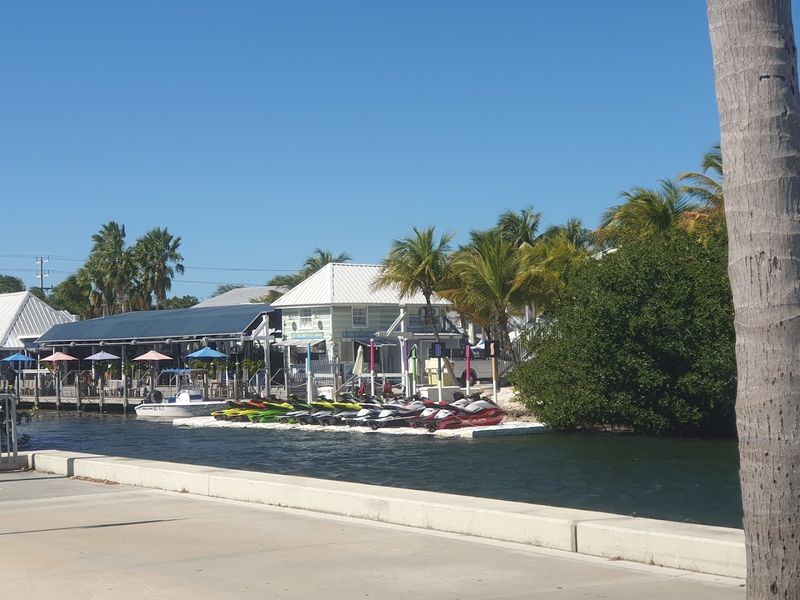
Charter boats operate out of nearly every marina along the highway, offering half-day and full-day trips for offshore species like mahi-mahi, wahoo, and sailfish. The Gulf Stream runs relatively close to the Keys, pushing warm, fish-rich water right into casting range.
Deep-sea trips are surprisingly accessible from this road.
Even casual visitors who have never held a fishing rod find themselves tempted to toss a line off a bridge or pier. Bait shops dot the highway with friendly staff who are always happy to point newcomers in the right direction.
Fishing here isn’t just a hobby — it’s practically a cultural identity.
Snorkeling and Diving Along the Only Living Coral Reef in the Continental US
Beneath the surface of the water flanking the Overseas Highway lies an entirely different world — one that most road-trippers completely miss. The Florida Reef Tract runs parallel to the Keys and represents the only living barrier coral reef in the continental United States.
It’s also the third largest coral reef system on the planet, stretching roughly 360 miles.
John Pennekamp Coral Reef State Park in Key Largo was actually the first undersea park established in the United States, created back in 1963 to protect the reef from damage. Snorkeling and scuba tours launch from here daily, dropping visitors into crystal-clear water above staghorn coral, brain coral, and sea fans teeming with parrotfish, angelfish, and moray eels.
Looe Key National Marine Sanctuary near Big Pine Key is another standout spot that draws divers who prefer a less crowded experience. The coral formations here are dense and colorful, and visibility on calm days can stretch to 50 feet or more.
Underwater photographers absolutely love this location.
You don’t need scuba certification to enjoy the reef. Snorkeling gets you surprisingly close to the action in many spots, especially in shallow areas where brain coral heads rise near the surface.
Most tour operators provide all equipment and brief newcomers thoroughly before hitting the water.
The reef faces real environmental pressures from warming ocean temperatures and human impact, which makes visiting it feel both thrilling and meaningful. Many tour companies incorporate reef conservation education into their excursions, giving visitors context for what they’re seeing.
Coming face to face with a living coral reef — one that has existed for thousands of years — puts the entire Overseas Highway experience into a much bigger perspective. It’s a reminder that this drive isn’t just about the road.
Tips for Planning Your Overseas Highway Road Trip Like a Local
Timing your trip can make or break the whole experience. The Florida Keys run on a different rhythm than the rest of the state, and knowing when to go — and what to expect — saves a lot of headaches.
Winter months from December through April bring the most pleasant weather and the biggest crowds, so booking accommodations well in advance during that window is non-negotiable.
Summer is hot and humid, but it’s also when you’ll find lower hotel rates and thinner traffic on the highway. Afternoon thunderstorms are common in summer, but they usually clear fast.
Many locals actually prefer the off-season for its quieter roads and more relaxed energy throughout the Keys.
The highway itself is essentially one long road — US-1 — so getting lost is almost impossible. Mile markers run from MM 126 near Florida City down to MM 0 in Key West, and locals use these markers to give directions instead of street addresses.
Learning this system early makes navigation feel effortless and adds a fun insider layer to the trip.
Gas stations become less frequent the further south you go, so filling up whenever your tank drops below half is smart practice. Cell service can also get spotty in certain stretches, especially in the lower Keys.
Downloading offline maps before you leave the mainland is a genuinely useful move.
Budget more time than you think you need. Most first-timers underestimate how many pull-offs, overlooks, and spontaneous stops they’ll want to make.
The Overseas Highway rewards slow travelers far more than those rushing to reach Key West. Pack snacks, keep a camera within reach, wear sunscreen, and resist the urge to skip anything that looks interesting — because on this drive, almost everything is.