This Historic 1600s Spanish Fort Is One Of Florida’s Greatest Hidden Treasures
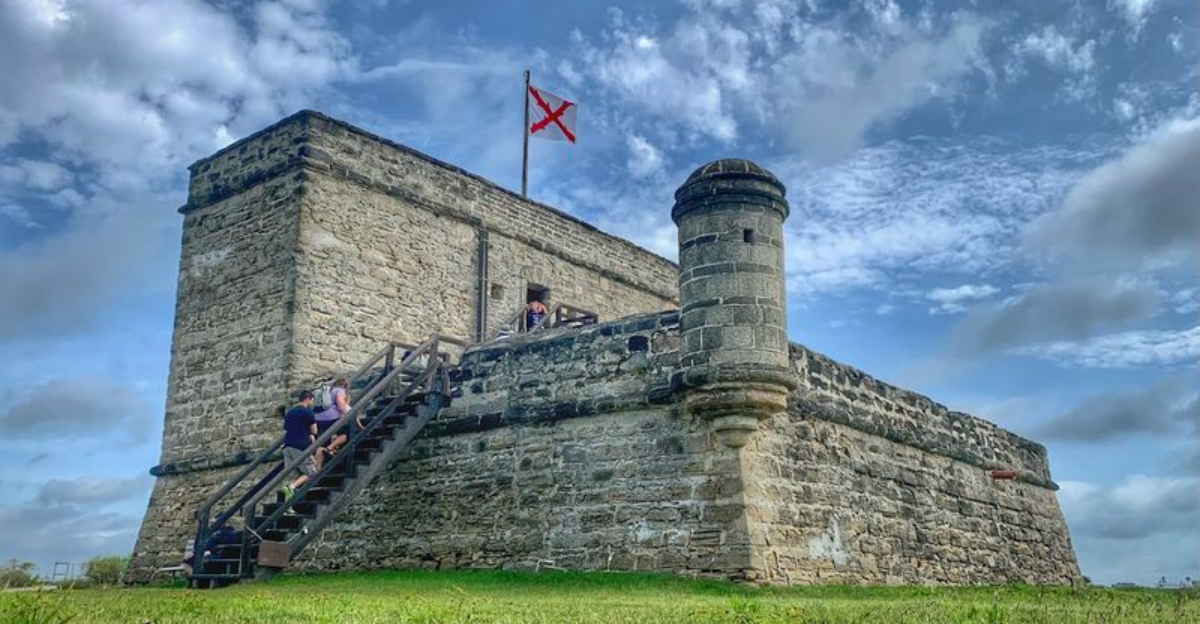
While millions of visitors flock to Florida’s famous beaches and attractions every year, one of the state’s most fascinating historic landmarks remains surprisingly overlooked. Fort Matanzas National Monument, tucked away just south of St. Augustine, has been standing guard since the 1700s, preserving the story of Spain’s efforts to defend Florida’s Atlantic coast.
Reaching the fort is part of the adventure, with visitors taking a free ferry ride across the Matanzas River before exploring the remarkably preserved coquina stone fortress. Surrounded by salt marshes, scenic waterways, and abundant wildlife, Fort Matanzas offers much more than a history lesson.
Walking through its compact rooms and climbing to the rooftop reveals sweeping views that once helped soldiers watch for approaching ships. Informative ranger programs, peaceful nature trails, and the tranquil setting make it easy to spend several relaxing hours here.
Whether you’re passionate about colonial history or simply looking for a unique destination beyond Florida’s usual tourist hotspots, Fort Matanzas National Monument is a memorable stop that brings centuries of history to life in one of the state’s most beautiful coastal settings.
Free Ferry Ride Across Matanzas Inlet
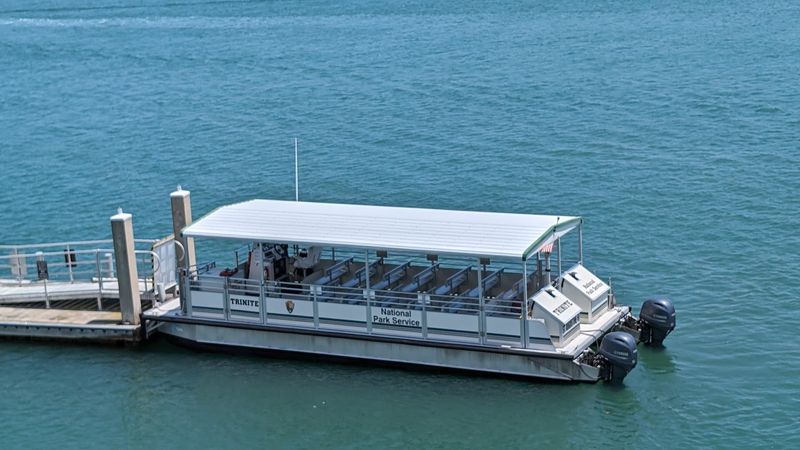
Getting to Fort Matanzas is half the adventure. Park rangers operate a free ferry service that carries up to 40 passengers across the Matanzas Inlet every hour on the half-hour.
The short 10-minute cruise glides over calm waters, offering stunning views of the surrounding salt marshes and barrier islands.
Tickets are available only on a first-come, first-served basis at the visitor center, and they go fast. Early morning arrivals have the best shot at snagging spots on the first departures.
If you miss the early wave, expect to wait an hour or two between available slots, especially during peak tourist season or when school groups book out entire crossings.
The ferry ride itself feels like stepping back in time. Rangers and volunteers share fascinating stories about the fort’s strategic importance and the soldiers who once manned this remote outpost.
Keep your eyes on the water—dolphins, manatees, and sea turtles frequently make appearances, turning the crossing into an unexpected wildlife safari.
No reservations are accepted in advance, which means showing up at the park entrance before opening gives you the best advantage. Some visitors arrive early and park in line at the gate, then dash inside once the doors open to claim their preferred time slot.
It’s a system that rewards the eager and the early risers.
The entire round-trip experience takes about an hour, including 50 minutes of exploration time on the island. Restrooms and water are available at the visitor center parking lot but not at the fort itself, so plan accordingly.
The ferry runs daily during operating hours, but always check the National Park Service website beforehand—occasional weather or maintenance closures can interrupt service.
There’s something genuinely special about approaching a centuries-old fortress by boat, just as Spanish soldiers once did. The anticipation builds with every passing wave, and by the time you step onto the island dock, you’re primed for discovery.
Exploring The Compact Coquina Stone Fortress
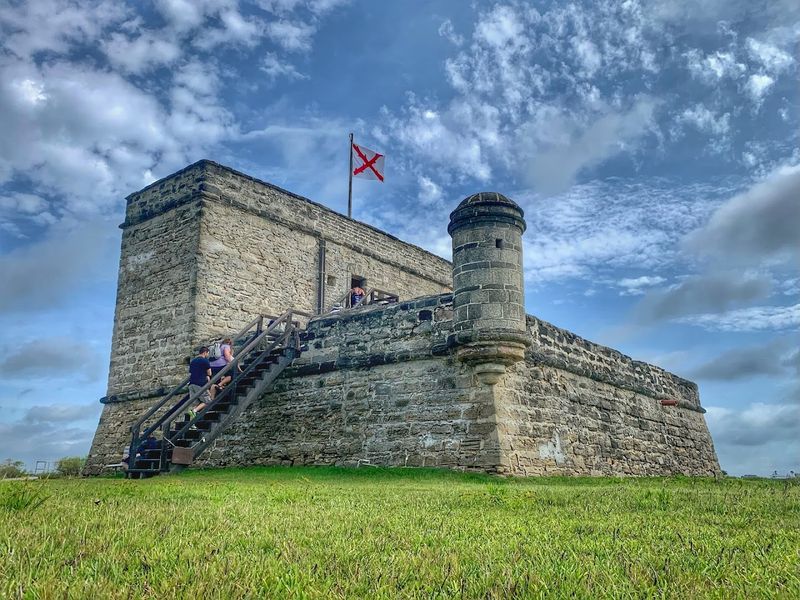
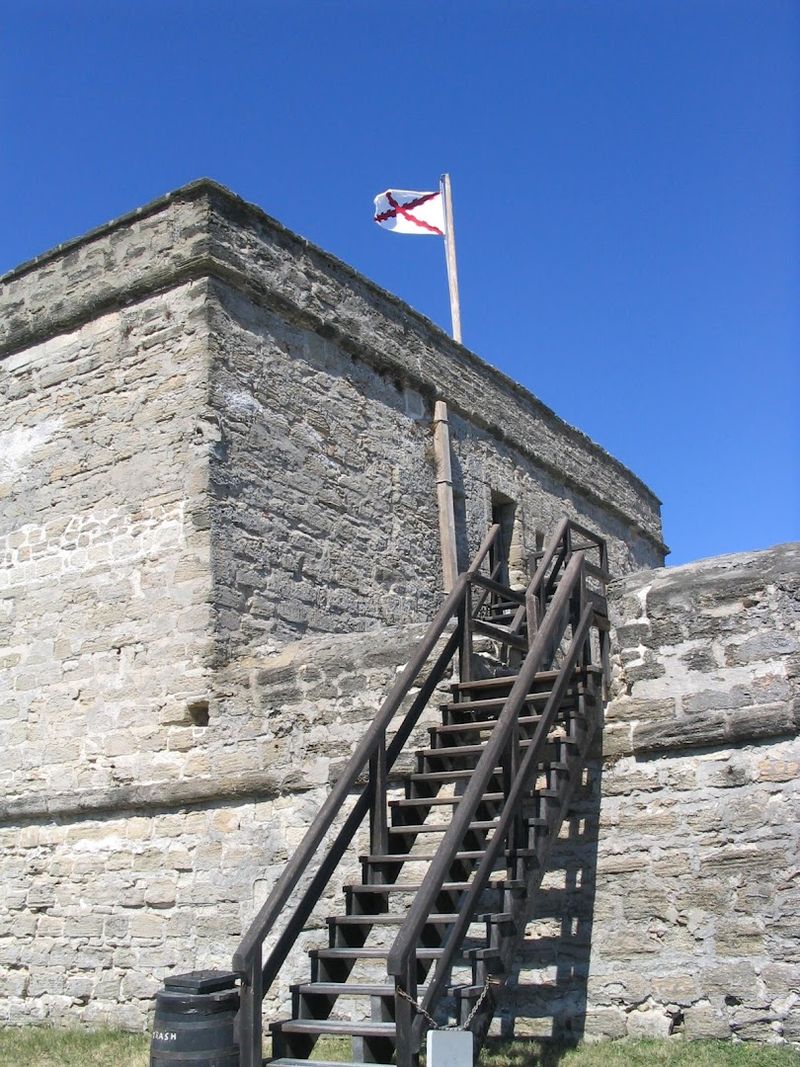
Fort Matanzas may be small, but what it lacks in size it makes up for in authenticity and atmosphere. Constructed from coquina—a unique sedimentary rock formed from compressed shells—the fort’s walls have withstood hurricanes, salt spray, and nearly three centuries of coastal weather.
Walking through its narrow, cool corridors feels like touching history directly.
Only seven soldiers were stationed here at any given time, tasked with watching for enemy ships approaching from the south. Their living quarters were cramped, their duties monotonous, yet their presence was critical.
This wasn’t a grand military installation—it was a strategic lookout, built for function over form.
Climbing to the upper levels requires squeezing through tight spaces and ascending a steep wooden ladder. It’s not for anyone uncomfortable with confined areas, but those who make the climb are rewarded with panoramic views of the Atlantic Ocean, the inlet, and the surrounding marshlands.
Standing atop the gun deck, you can almost hear the echoes of Spanish sentries scanning the horizon for British sails.
Rangers lead informative tours that bring the fort’s story to life. They explain how the structure was built, why this location mattered, and what daily life looked like for the soldiers isolated on this windswept island.
The presentations are engaging, clear, and perfectly paced for both adults and kids curious about colonial Florida.
Unlike heavily commercialized historic sites, Fort Matanzas retains a raw, unpolished quality. There are no gift shops on the island, no snack bars, no distractions.
It’s just you, the fort, and the relentless rhythm of the Atlantic. That simplicity is precisely what makes it so powerful.
The restoration work has been handled with care, preserving the fort’s original character while ensuring visitor safety. Every stone, every shadow, every weathered surface tells a story of survival and strategic importance in Spain’s colonial empire.
Pristine Beaches And Coastal Trails
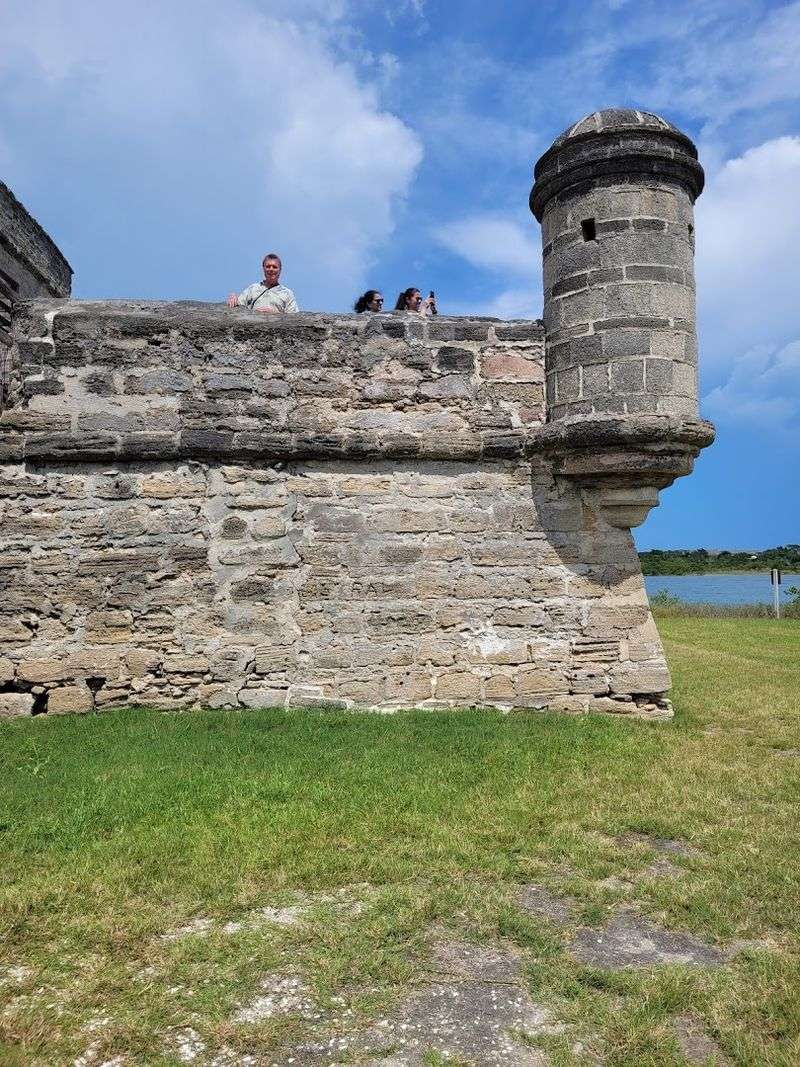
Beyond the fort itself, Fort Matanzas National Monument protects over 300 acres of unspoiled barrier island ecosystem. The beaches here are refreshingly untouched—no high-rise condos, no beach bars, no crowds fighting for towel space.
Just soft sand, rolling waves, and the kind of tranquility that’s increasingly rare along Florida’s developed coastline.
Visitors waiting for their ferry slot often wander down to the beach to kill time, and it’s a worthy diversion. The shoreline stretches in both directions, offering peaceful strolls where your only company might be shorebirds and the occasional beachcomber.
On weekdays or early mornings, you might have entire stretches to yourself.
The Coastal Hammock Trail provides an easy, shaded walk through native vegetation. Well-maintained wooden boardwalks wind through maritime forest, offering glimpses of the area’s rich biodiversity.
Birders find this spot especially rewarding—herons, egrets, ospreys, and dozens of other species call this habitat home year-round.
The trail is accessible for most fitness levels and wheelchair-friendly in sections, making it an inclusive option for families and visitors with mobility considerations. Interpretive signs along the route explain the ecology and history of the barrier island environment, turning a simple nature walk into an educational experience.
During warmer months, the heat can be intense, so early morning or late afternoon visits offer the most comfortable conditions. Bring water, sunscreen, and bug spray—the mosquitoes can be aggressive in the marsh areas, especially during summer.
But the minor inconveniences pale compared to the reward of experiencing Florida’s natural coast as it existed before development.
Photography enthusiasts will find endless opportunities here. The interplay of light on the dunes, the texture of weathered driftwood, the vibrant greens of the hammock forest—every turn presents another composition.
It’s the kind of place that invites you to slow down, breathe deeply, and remember why Florida’s natural beauty drew people here in the first place.
Ranger-Led Programs And Educational Experiences
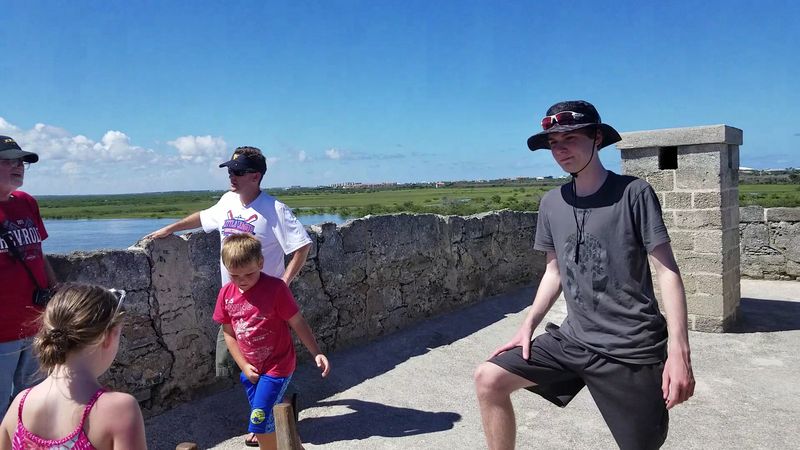
Rangers at Fort Matanzas aren’t just knowledgeable—they’re genuinely passionate about sharing this slice of history. Their presentations transform what could be a simple fort tour into an immersive journey back to 1742.
They explain military tactics, colonial politics, and daily survival challenges with storytelling flair that keeps even fidgety kids engaged.
The educational programs here rival those at much larger national parks. Rangers connect the fort’s specific purpose to the broader narrative of Spanish Florida, British expansion, and the complex chess game of colonial empires.
You’ll learn why this particular inlet mattered, how the fort was constructed without modern tools, and what happened during its brief moments of military action.
Volunteers supplement the ranger staff, offering additional perspectives and answering questions with patience and enthusiasm. Many are retired teachers or local history buffs who bring their own expertise to the experience.
Their love for the site is contagious, and their willingness to engage with visitors of all ages enhances the overall visit.
Special programs occasionally focus on specific aspects of fort life—weaponry demonstrations, construction techniques, or the role of Native Americans and enslaved people in Spanish Florida. These deeper dives offer repeat visitors fresh reasons to return and provide educators with rich material for follow-up classroom discussions.
The visitor center near the parking area features exhibits, artifacts, and a small bookstore where you can purchase National Park Passport stamps and historical publications. Staff members here are equally helpful, offering tips on timing your ferry ride and suggesting other nearby historical sites worth exploring.
What stands out most is the approachability of everyone involved. There’s no stuffiness, no talking down to visitors, no rushing through presentations.
Rangers and volunteers genuinely want you to understand and appreciate what makes this place special. They answer questions thoroughly, share personal anecdotes, and create an atmosphere where curiosity is encouraged.
For homeschooling families and educators, Fort Matanzas offers exceptional learning opportunities that go far beyond textbook descriptions of colonial America.
Strategic Military History And Colonial Significance
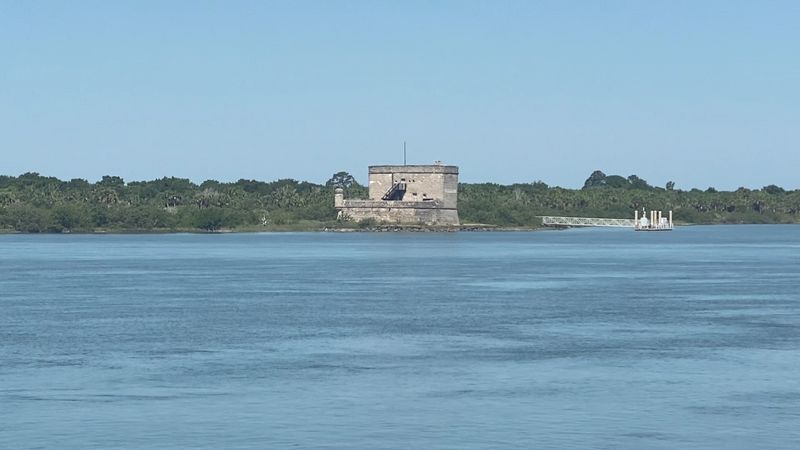
Understanding why Fort Matanzas exists requires stepping back into the geopolitical tensions of the 1700s. Spain controlled Florida, Britain controlled the colonies to the north, and the two empires eyed each other with constant suspicion.
St. Augustine, as Spain’s northernmost outpost, needed protection not just from the obvious approach by sea but from the sneaky back entrance via Matanzas Inlet.
In 1740, British General James Oglethorpe attempted to capture St. Augustine by landing troops south of the city and marching overland. The attack failed, but it exposed a critical vulnerability.
Spanish authorities realized they needed a permanent presence at this southern waterway to prevent future surprise attacks.
Construction began in 1740 and finished in 1742, employing enslaved Africans and local labor to quarry and shape the coquina blocks. The result was a two-story watchtower with cannon platforms capable of sinking any ship foolish enough to attempt passage.
Though the fort never faced another major military engagement, its mere presence served as an effective deterrent.
The name “Matanzas” itself carries dark history—it translates to “slaughters” in Spanish, commemorating a 1565 massacre of French Huguenot settlers by Spanish forces near this location. That brutal event established Spanish dominance in Florida and set the stage for centuries of colonial control.
Only seven soldiers manned the fort at any time, rotating in from St. Augustine for month-long shifts. Their isolation was profound—cut off from civilization, surrounded by mosquitoes and heat, with nothing but the horizon to watch.
Yet their vigilance protected the entire city from southern invasion.
By 1821, when Spain ceded Florida to the United States, Fort Matanzas had outlived its military usefulness. It sat abandoned for decades before being designated a National Monument in 1924, ensuring its preservation for future generations.
Today it stands as one of the best-preserved examples of Spanish colonial military architecture in North America.
Wildlife Watching And Natural Beauty
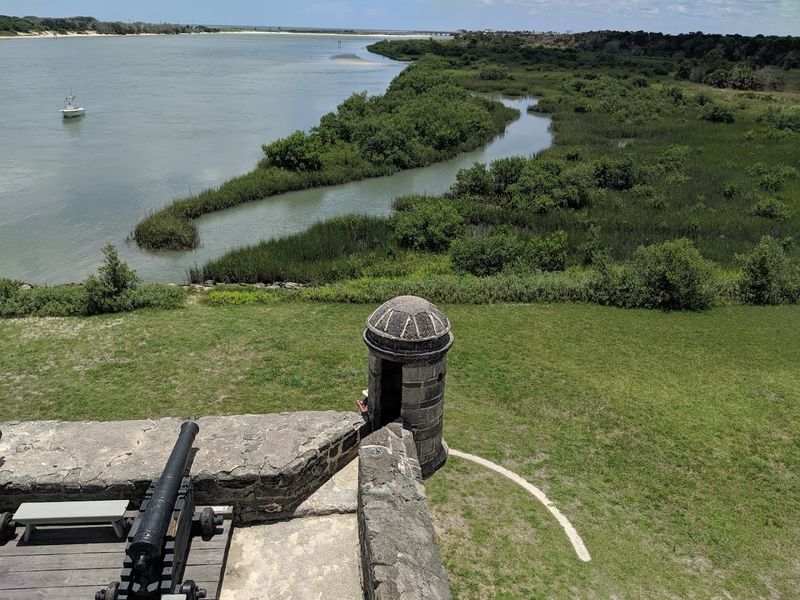
Fort Matanzas National Monument isn’t just about history—it’s a thriving wildlife sanctuary. The protected marshlands, beaches, and waters create perfect habitat for an impressive array of species.
Visitors frequently spot bottlenose dolphins playing in the inlet, their dorsal fins cutting graceful arcs through the water during ferry crossings.
Manatees drift through the warm shallows, especially during cooler months when they seek refuge from chilly ocean temperatures. These gentle giants often surface near the ferry, delighting passengers with their curious, whiskered faces.
Sea turtles nest on the beaches during summer, and lucky visitors might witness hatchlings making their desperate dash to the ocean.
Birders consider this area a goldmine. Over 200 species have been documented within monument boundaries, from common brown pelicans and laughing gulls to rarer sightings of roseate spoonbills and painted buntings.
The salt marshes teem with wading birds—great blue herons, snowy egrets, and white ibises stalk the shallows with patient precision.
Ospreys nest in the area, their massive stick platforms visible atop dead trees and channel markers. Watching these fish-hunting raptors plunge into the water and emerge with wriggling prey is a highlight for many nature enthusiasts.
During migration seasons, the island becomes a temporary home for countless songbirds refueling on their long journeys.
The biodiversity extends beyond the charismatic megafauna. Fiddler crabs scuttle across mudflats, ghost crabs patrol the beach at dusk, and horseshoe crabs—living fossils unchanged for millions of years—wash up along the shoreline.
The ecosystem here functions as it has for millennia, largely unaffected by human development.
Photography opportunities abound, whether you’re capturing a perfect sunrise over the inlet, a dolphin breach, or the intricate patterns of marsh grasses swaying in the breeze. The natural beauty provides constant counterpoint to the historical attractions, reminding visitors that this landscape has witnessed centuries of human drama while remaining fundamentally wild and resilient.
Practical Visitor Information And Tips
Fort Matanzas National Monument operates daily from 9 AM to 5:30 PM, and admission is completely free—no entrance fees, no parking charges, nothing. This National Park Service site survives on federal funding and donations, so contributing to the donation box helps maintain programs and preservation efforts.
Parking can be tight, especially during peak tourist seasons and weekends. The main lot fills quickly, but overflow parking is available near the entrance with a short walk to the visitor center.
Arriving before opening or during weekday mornings gives you the best chance at convenient parking and early ferry tickets.
Ferry tickets are distributed only in person on the day of your visit—no advance reservations, no online booking. This system can be frustrating for planners but ensures fairness.
Get to the visitor center as soon as it opens, grab your tickets for your preferred time, then explore the trails or beach while you wait.
The monument is located at 8635 A1A South, about 14 miles south of downtown St. Augustine. The drive down A1A is scenic, passing beaches and coastal development before reaching the more natural setting of the monument.
There are restaurants and shops nearby if you need to grab lunch while waiting for your ferry time.
Dress for the weather and bring sun protection—Florida sun is intense, and there’s limited shade at the fort itself. Comfortable walking shoes are essential, especially if you plan to explore the trails.
The ferry ride is generally smooth, but those prone to seasickness might want to take precautions.
Restrooms and drinking water are available at the visitor center but not on the island, so use facilities before boarding the ferry. The visitor center also sells National Park Passport books for $15—a popular collectible among park enthusiasts.
Before visiting, check the National Park Service website or call (904) 471-0116 to confirm ferry schedules. Occasional weather events, maintenance, or staffing issues can interrupt service.
Two days each week typically see no ferry operations, so advance checking prevents wasted trips.