Walk Among Historic Fighter Jets at This Free Florida Air Force Museum
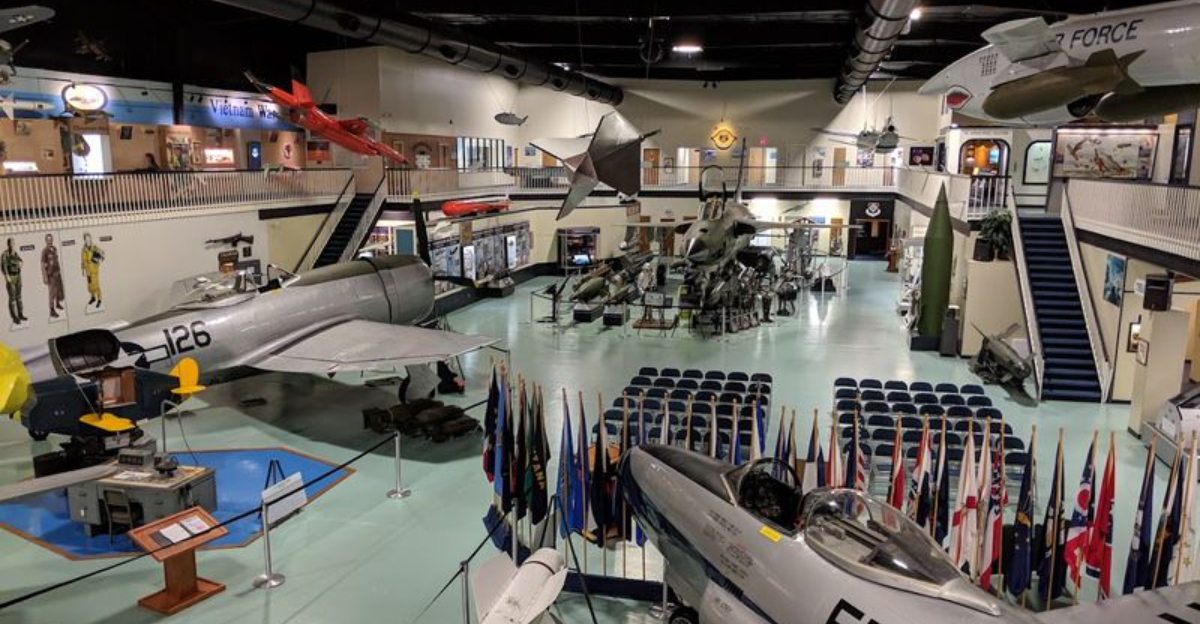
History and aviation come together at the Air Force Armament Museum at Eglin Air Force Base, where visitors can explore one of Florida’s most impressive collections of military aircraft and weapons systems. Admission is free, making it an easy stop for families, history enthusiasts, and aviation fans alike. Inside and outside the museum, you’ll find legendary fighter jets, bombers, missiles, and fascinating exhibits that trace the evolution of air combat and military technology.
Walking among these iconic aircraft offers a rare opportunity to experience aviation history up close while learning about the innovations and missions that helped shape the U.S. Air Force.
SR-71 Blackbird and Outdoor Aircraft Collection
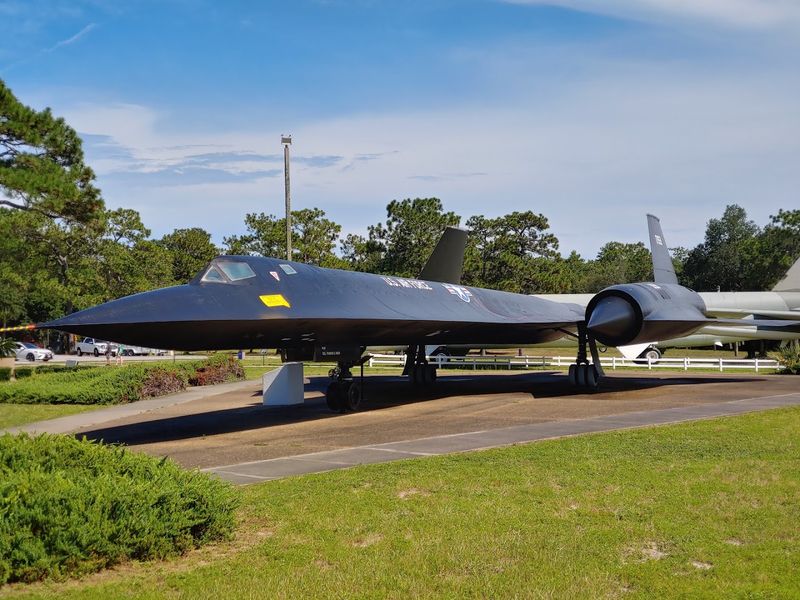
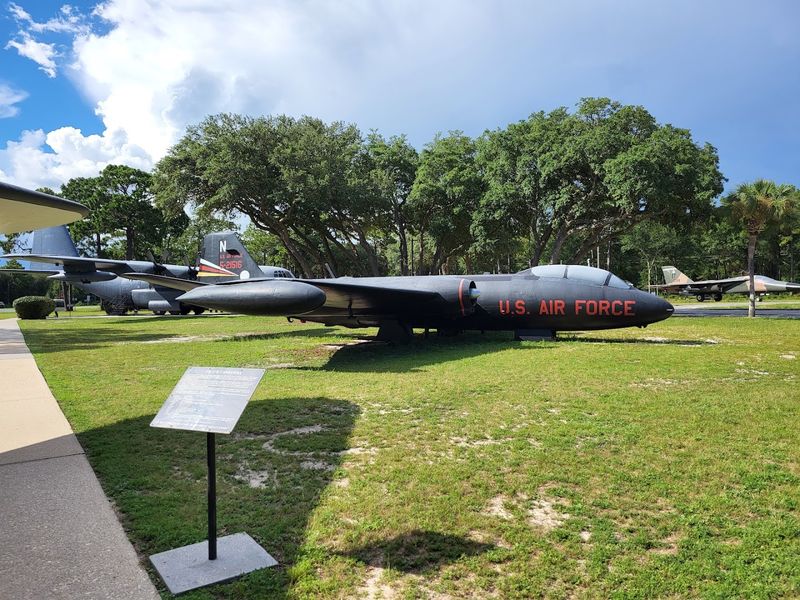
Standing in the outdoor aircraft park, you’ll come face-to-face with the SR-71 Blackbird, a jet so fast and sleek it looks like it belongs in a science fiction movie rather than a museum. This legendary spy plane could fly at over three times the speed of sound and cruise at altitudes where pilots could see the curvature of the Earth. The fact that you can walk right up to it, photograph it from every angle, and appreciate its engineering brilliance without any ropes or barriers makes this experience genuinely special.
But the Blackbird is just the beginning of what awaits outside. Surrounding the museum building, you’ll find a B-52 Stratofortress that towers over everything, a rare P-47N Thunderbolt, an F-105D Thunderchief, dual F-15 Eagles, and many more aircraft representing different eras of military aviation. Each plane tells its own story through informative plaques that explain its role in history, technical specifications, and combat service.
Families love this outdoor area because kids can run around safely while getting up close to machines they’ve only seen in movies or video games. Parents appreciate that the aircraft are arranged in a way that makes it easy to navigate with strollers, and there’s plenty of shade from the Florida sun in strategic spots. The outdoor collection is completely free to explore, even if you choose not to go inside the main museum building.
Photography enthusiasts should bring their cameras because the lighting conditions throughout the day create dramatic shots of these historic machines. Early morning and late afternoon offer particularly beautiful golden-hour opportunities. Many visitors report spending an hour or more just walking the outdoor displays before even stepping inside, and it’s easy to understand why when you’re surrounded by such an impressive gathering of aviation history.
Two-Story Indoor Museum Exhibits
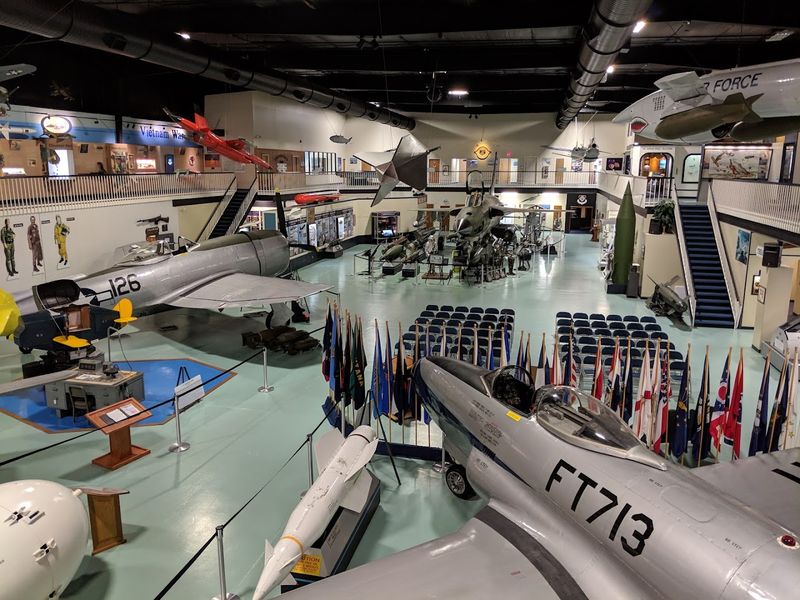
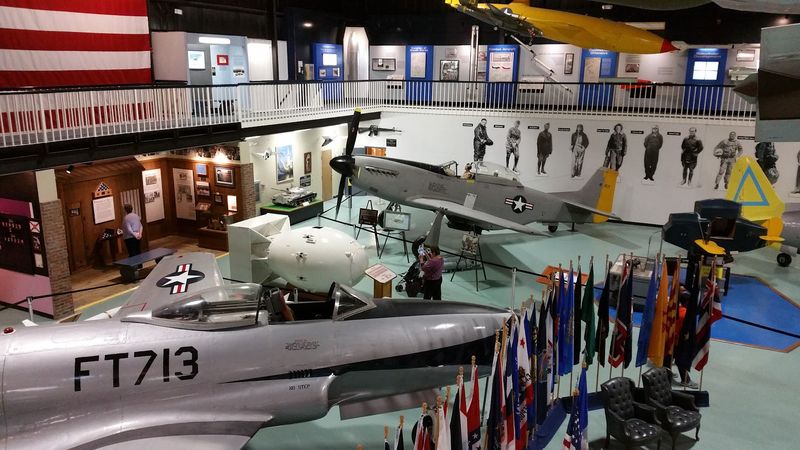
Step inside the air-conditioned main building and you’ll discover why visitors regularly spend over an hour exploring the indoor exhibits. The two-story museum houses an incredible collection of armaments, aviation artifacts, historical displays, and full-size aircraft that couldn’t survive outdoors. The climate control is a welcome relief from Florida’s heat, making this the perfect midday stop when the sun gets too intense outside.
The ground floor focuses heavily on the armament side of the museum’s mission, showcasing everything from early bombs and missiles to modern precision-guided munitions. You’ll see a full-scale Fat Man atomic bomb replica that drives home just how massive these weapons were. Napalm canisters, cluster bombs, and guided missiles are displayed with detailed explanations of how they work and their historical context.
What sets this museum apart from others is the depth of information provided at each exhibit. Volunteers and staff members, many of them Air Force veterans, are stationed throughout the museum ready to answer questions and share personal stories that bring the displays to life. Their firsthand knowledge adds layers of understanding you simply can’t get from reading plaques alone.
The second floor continues the journey through aviation history with additional artifacts, photographs, and exhibits covering conflicts from World War I through recent operations in Afghanistan and Iraq. Interactive displays keep younger visitors engaged while educational panels provide the kind of detail that history enthusiasts crave. The museum does an excellent job balancing entertainment with education, never dumbing down the content but presenting it in accessible ways.
Don’t rush through the indoor portion. The sheer volume of information and artifacts deserves your attention, and the comfortable environment makes it easy to take your time absorbing everything this remarkable collection has to offer.
Completely Free Admission and Donation Model
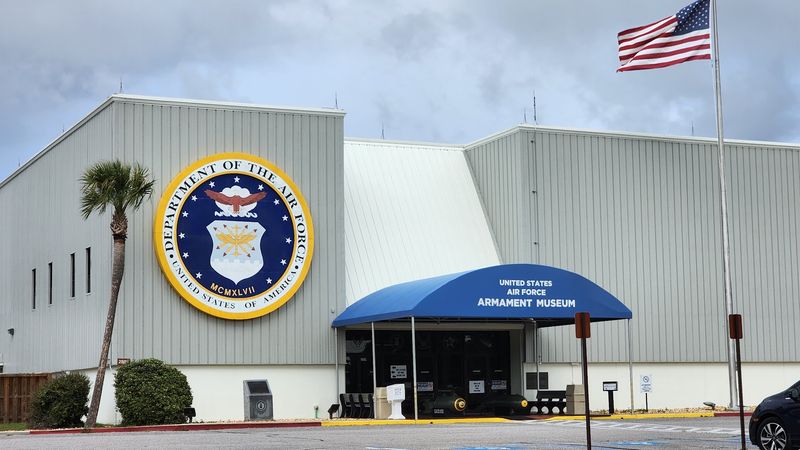
Here’s something that surprises almost every first-time visitor: this world-class museum charges absolutely nothing for admission. Zero. Nada.
While many Florida attractions will lighten your wallet by fifty dollars or more per person, the Air Force Armament Museum operates on an entirely donation-based model, making it accessible to everyone regardless of budget.
You’ll find a donation box in the main lobby where visitors can contribute whatever amount feels right to them. These donations help maintain the facility, preserve the aircraft, and keep the museum running since it doesn’t receive direct government funding. Many visitors report feeling so impressed by the quality and scope of the collection that they happily contribute, knowing their money directly supports this incredible resource.
The free admission extends to the outdoor aircraft park as well. Some people choose to walk around the exterior displays and take photos without ever entering the main building, and that’s perfectly acceptable. There’s no pressure, no ticket booth, no entry fees blocking your experience.
This accessibility makes the museum an ideal destination for families, especially those traveling with multiple children where admission costs can quickly add up. It’s also perfect for locals who want to visit repeatedly without worrying about the expense. One reviewer mentioned bringing their children back multiple times over the years, creating a tradition that wouldn’t be sustainable if admission fees were involved.
The gift shop offers another way to support the museum while taking home meaningful souvenirs. You’ll find everything from toys and model aircraft for kids to commemorative coins, books, and military memorabilia for collectors. Purchases here directly benefit the museum’s operations, so you’re supporting a good cause while getting quality merchandise.
In a state where tourist attractions often feel designed to extract maximum dollars from visitors, this genuinely free experience stands out as something special and refreshingly honest.
Memorial to Army Nurses and Vietnam Service
Amid the powerful aircraft and imposing weaponry sits a quieter memorial that reminds visitors of the human cost behind all this military hardware. The tribute to Army nurses who served in Vietnam, particularly honoring First Lieutenant Sharon Ann Lane, provides a sobering counterpoint to the technological marvels surrounding it. Lane was killed in action just before her 26th birthday, one of eight Army nurses who died during the Vietnam conflict.
This memorial doesn’t shout for attention like the massive bombers nearby, but its presence carries profound weight. It represents the medical personnel who flew into danger zones, treated the wounded under fire, and sometimes paid the ultimate price for their service. The contrast between the steel aircraft and the fragility of human life becomes impossible to ignore when you pause here.
Many visitors report that this memorial shifted their entire perspective on the museum visit. What began as an exciting opportunity to see cool planes and weapons transforms into something more contemplative. The museum doesn’t shy away from the serious realities of warfare, and this memorial serves as a gentle but firm reminder that every aircraft and weapon on display was operated by real people with families, hopes, and futures.
Parents often use this memorial as a teaching moment with their children, explaining the different roles people play in military service beyond combat. It opens conversations about sacrifice, duty, and the many ways individuals serve their country. The museum’s decision to include this tribute shows a commitment to telling the complete story, not just the exciting parts.
Take a moment when you visit to read about Lieutenant Lane and the other nurses honored here. Their service deserves recognition alongside the technological achievements celebrated throughout the rest of the museum, and this small memorial ensures they’re not forgotten among the jets and bombs.
B-17 Flying Fortress and World War II Aircraft
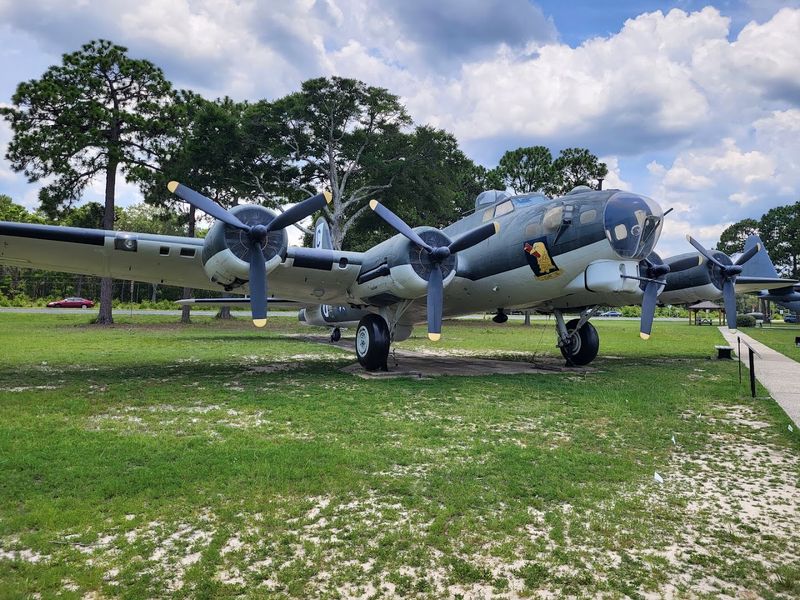
Among the outdoor collection, the B-17 Flying Fortress commands attention with its distinctive profile and the incredible stories it represents. This legendary bomber became the symbol of American air power during World War II, flying daylight bombing missions over Europe when losses were staggering and survival was never guaranteed. Standing beneath its wings, you can almost imagine the ten-man crews who flew these missions knowing the odds were against them.
The B-17 on display gives you a real sense of scale that photos never quite capture. These weren’t small, nimble fighters but massive four-engine bombers designed to carry heavy bomb loads deep into enemy territory. Walking around the aircraft, you’ll notice the gun positions scattered throughout, a reminder that these planes had to defend themselves against swarms of enemy fighters during their missions.
What makes seeing a B-17 in person so powerful is understanding what the crews endured. They flew at high altitudes in unpressurized, unheated cabins where temperatures could drop to forty below zero. They faced anti-aircraft fire that could tear through the fuselage, enemy fighters attacking from all angles, and the constant threat of mechanical failure.
Yet they kept flying, mission after mission.
The museum’s informational plaques explain the B-17’s technical specifications, its combat record, and its place in military aviation history. You’ll learn about famous missions, the evolution of the design through different variants, and why this particular bomber earned such respect from both its crews and its enemies. The level of detail provided helps visitors appreciate not just what they’re looking at but what it meant.
For World War II history enthusiasts, the B-17 alone makes the trip worthwhile. For everyone else, it serves as a tangible connection to a pivotal moment in history, when the outcome of a global conflict literally hung in the balance above European skies.
Knowledgeable Veteran Volunteers and Staff
Walk through the museum and you’ll quickly notice something special about the people working here: many of them are Air Force veterans who bring personal experience and passion to every interaction. These aren’t just employees reading from scripts but individuals who lived the history displayed on these walls and worked with the aircraft parked outside. Their presence transforms the museum from a static collection into a living conversation about military aviation.
One reviewer described overhearing a veteran volunteer explaining the training required to handle certain munitions, details that made the reality of the work feel sharper and more intimate. These volunteers don’t just recite facts; they share stories, answer technical questions with authority, and provide context that you simply can’t get from reading plaques. They might explain what it felt like to work on a particular aircraft or describe the sound a jet engine makes at full throttle.
The staff’s friendliness consistently earns praise in visitor reviews. They’re approachable, eager to help, and genuinely excited to share their knowledge with anyone who shows interest. Kids get the same respectful attention as serious aviation buffs, and no question seems too basic or too technical for them to address.
This welcoming atmosphere makes the museum feel inclusive rather than intimidating.
For veterans visiting the museum, these volunteer interactions often become the highlight of the trip. Shared experiences create instant connections, and conversations between those who served can add emotional depth to the visit. One Air Force veteran reviewer mentioned how the museum brought back fond memories and how valuable these volunteer contributions are to maintaining the facility.
The volunteers’ dedication becomes even more impressive when you remember the museum operates primarily on donations. These individuals choose to spend their time here because they believe in preserving and sharing this history. Their commitment ensures that every visitor gets more than just a self-guided tour; they get access to living history and firsthand knowledge that makes the entire experience richer and more meaningful.
Well-Stocked Gift Shop with Unique Memorabilia
Before you leave, make time to browse the museum’s gift shop, which visitors consistently describe as outstanding and well worth exploring. Unlike typical tourist trap shops filled with generic souvenirs, this store offers carefully curated items that reflect the museum’s focus on aviation history and military service. You’ll find everything from educational toys for children to serious collectibles for enthusiasts.
Model aircraft kits are popular purchases, allowing visitors to take home scaled-down versions of the planes they just saw in person. These range from simple snap-together models for kids to detailed kits that challenge experienced hobbyists. Aviation-themed toys keep younger visitors engaged and give them something tangible to remember their museum experience.
Parents appreciate that these items have educational value beyond just entertainment.
Commemorative coins are another specialty of the shop, with many visitors specifically mentioning picking these up as keepsakes. These coins often feature specific aircraft or commemorate particular military operations, making them meaningful souvenirs rather than throwaway trinkets. Collectors will find items here they won’t see at typical retail stores, including patches, pins, and military memorabilia with authentic connections to Air Force history.
Books covering aviation history, specific aircraft, and military operations line the shelves for those who want to dive deeper into topics that caught their interest during the visit. The selection caters to various knowledge levels, from introductory overviews perfect for younger readers to technical manuals and historical analyses that serious students will appreciate. Staff members can often recommend titles based on your specific interests.
Shopping here serves a dual purpose: you get quality merchandise while supporting the museum’s operations. Since the facility runs on donations and doesn’t receive government funding, gift shop purchases directly contribute to maintaining the exhibits, preserving the aircraft, and keeping this incredible resource free for future visitors. That makes every purchase feel good beyond just acquiring something you want.
Perfect for All Ages and Interests
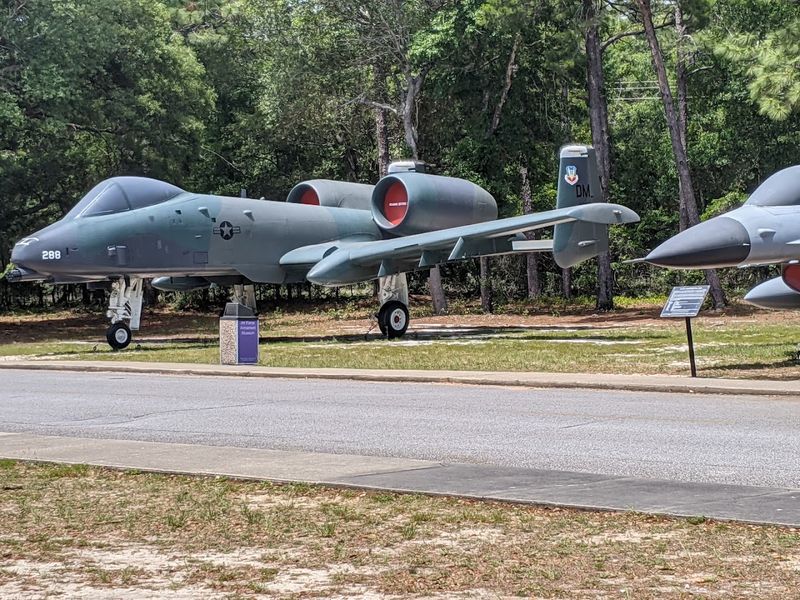
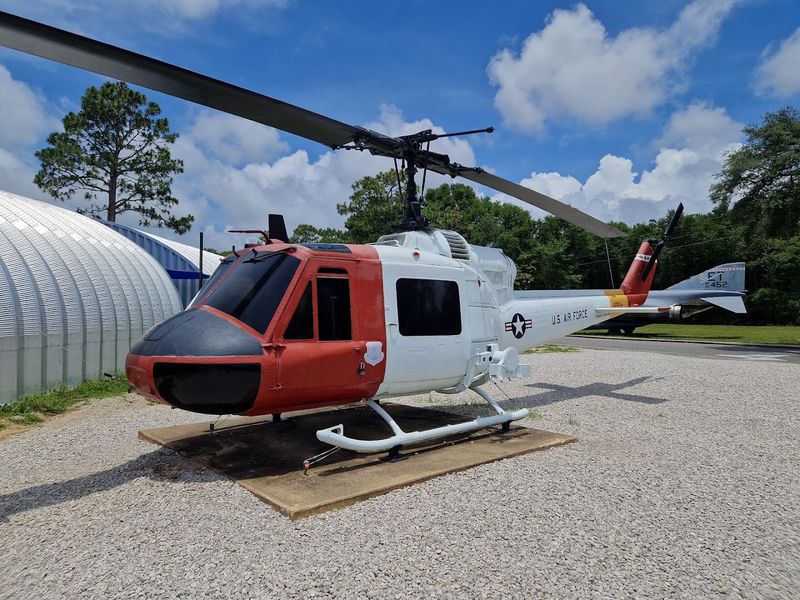
One of the museum’s greatest strengths is its ability to engage visitors across a remarkably wide age range and interest spectrum. Toddlers as young as three years old get excited about the massive planes and helicopters, while octogenarians find themselves transported back to memories of their own service or historical moments they lived through. This isn’t a niche attraction for hardcore aviation geeks; it’s genuinely accessible and interesting to almost anyone.
Families with young children consistently report positive experiences, noting that kids stay engaged throughout the visit. The outdoor aircraft provide space for children to move around and burn energy while still learning, and the variety of exhibits means there’s always something new to capture their attention. Parents don’t have to worry about keeping kids quiet in stuffy indoor spaces since much of the collection can be viewed outside.
Aviation enthusiasts and military history buffs naturally find themselves in heaven here, able to examine rare aircraft up close and study detailed exhibits about weapons systems and tactical operations. The depth of information satisfies those who want to understand technical specifications, historical context, and operational details. You could visit multiple times and still discover new details you missed before.
Even visitors who arrive with no particular interest in military topics often find themselves captivated. The sheer scale and engineering of the aircraft impress anyone who appreciates human achievement and innovation. The historical exhibits connect to broader stories about World War II, the Cold War, and recent conflicts that shaped the modern world.
Understanding how these machines worked and what they accomplished provides insight into major historical events.
Reviewers specifically mention bringing spouses, children, and friends with varying interest levels and everyone finding something to enjoy. The museum succeeds because it offers multiple entry points: cool machines for kids, historical significance for adults, technical details for enthusiasts, and powerful stories for those who connect with the human elements of military service.